Normal Form In DBMS
R.SHESHANK
23R05A6617
Introduction to Normal Form in DBMS
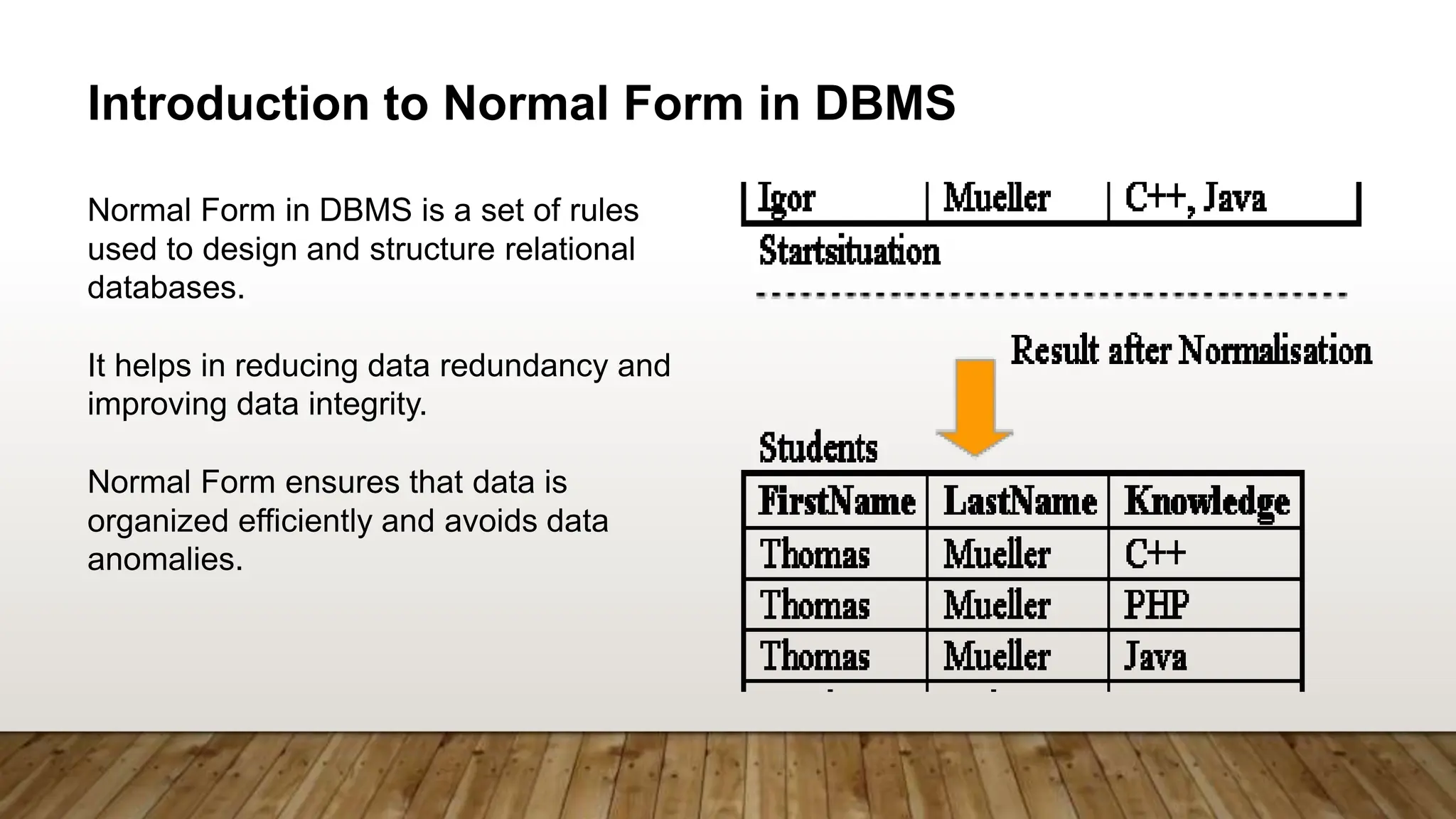
Normal Form in DBMS is a set of rules
used to design and structure relational
databases.
It helps in reducing data redundancy and
improving data integrity.
Normal Form ensures that data is
organized efficiently and avoids data
anomalies.
First Normal Form (1NF)
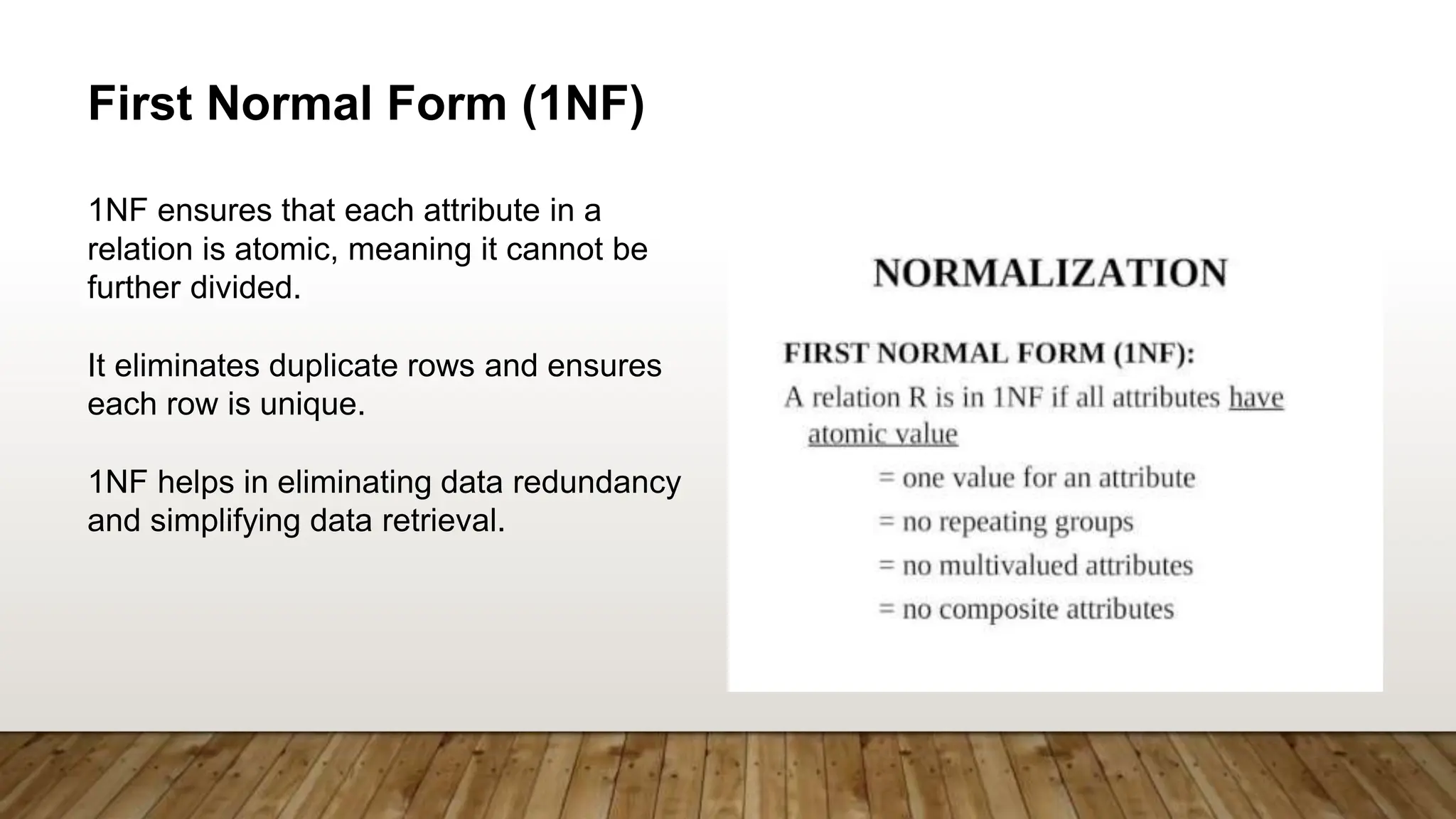
1NF ensures that each attribute in a
relation is atomic, meaning it cannot be
further divided.
It eliminates duplicate rows and ensures
each row is unique.
1NF helps in eliminating data redundancy
and simplifying data retrieval.
Second Normal Form (2NF)
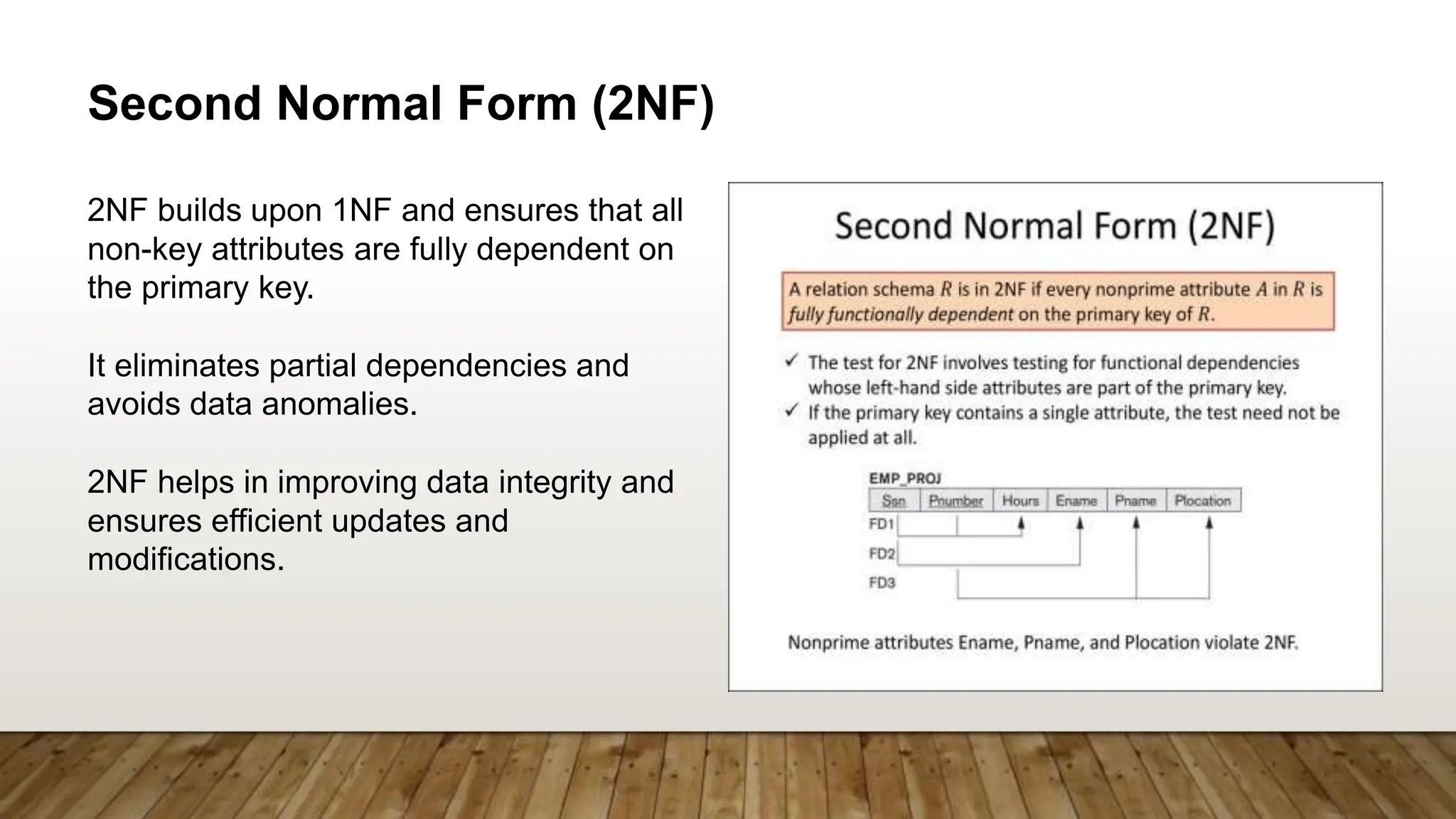
2NF builds upon 1NF and ensures that all
non-key attributes are fully dependent on
the primary key.
It eliminates partial dependencies and
avoids data anomalies.
2NF helps in improving data integrity and
ensures efficient updates and
modifications.
Third Normal Form (3NF)
3NF builds upon 2NF and ensures that
there are no transitive dependencies
between non-key attributes.
It eliminates redundant data and minimizes
data duplication.
3NF helps in maintaining data consistency
and simplifies database design.
Benefits of Normal Form in DBMS
Normal Form helps in improving data
integrity and accuracy.
It reduces data redundancy and saves
storage space.
Normal Form simplifies data retrieval and
supports efficient querying.
Thank
you!!!

normal form of dbms.pptx

  • 1.
    Normal Form InDBMS R.SHESHANK 23R05A6617
  • 2.
    Introduction to NormalForm in DBMS Normal Form in DBMS is a set of rules used to design and structure relational databases. It helps in reducing data redundancy and improving data integrity. Normal Form ensures that data is organized efficiently and avoids data anomalies.
  • 3.
    First Normal Form(1NF) 1NF ensures that each attribute in a relation is atomic, meaning it cannot be further divided. It eliminates duplicate rows and ensures each row is unique. 1NF helps in eliminating data redundancy and simplifying data retrieval.
  • 4.
    Second Normal Form(2NF) 2NF builds upon 1NF and ensures that all non-key attributes are fully dependent on the primary key. It eliminates partial dependencies and avoids data anomalies. 2NF helps in improving data integrity and ensures efficient updates and modifications.
  • 5.
    Third Normal Form(3NF) 3NF builds upon 2NF and ensures that there are no transitive dependencies between non-key attributes. It eliminates redundant data and minimizes data duplication. 3NF helps in maintaining data consistency and simplifies database design.
  • 6.
    Benefits of NormalForm in DBMS Normal Form helps in improving data integrity and accuracy. It reduces data redundancy and saves storage space. Normal Form simplifies data retrieval and supports efficient querying.
  • 7.

Editor's Notes

  • #3 Image source: https://henafi.tecalideherrera.gob.mx/lec-10-first-normal-form-in-dbms-1nf-with-example-normalization-in-dbms/
  • #4 Image source: https://fdocuments.in/document/normalization-first-normal-form-1nf-a-relation-r-is-in-1nf-if-all-attributes.html
  • #5 Image source: https://ppt-online.org/91580
  • #6 Image source: https://www.slideserve.com/tehya/third-normal-form-3nf
  • #7 Image source: http://saylordotorg.github.io/text_essentials-of-geographic-information-systems/s09-02-geospatial-database-management.html