Introduction to NTM
Module 1
Introduction
Non-traditional machining, also
known as the modern machining
method, is a machining method that
uses electricity, heat energy, light
energy, electrochemical energy,
energy, chemical energy, sound
energy, and special mechanical
energy to remove, deform, change
properties, or plate materials.
Non-Traditional Machining
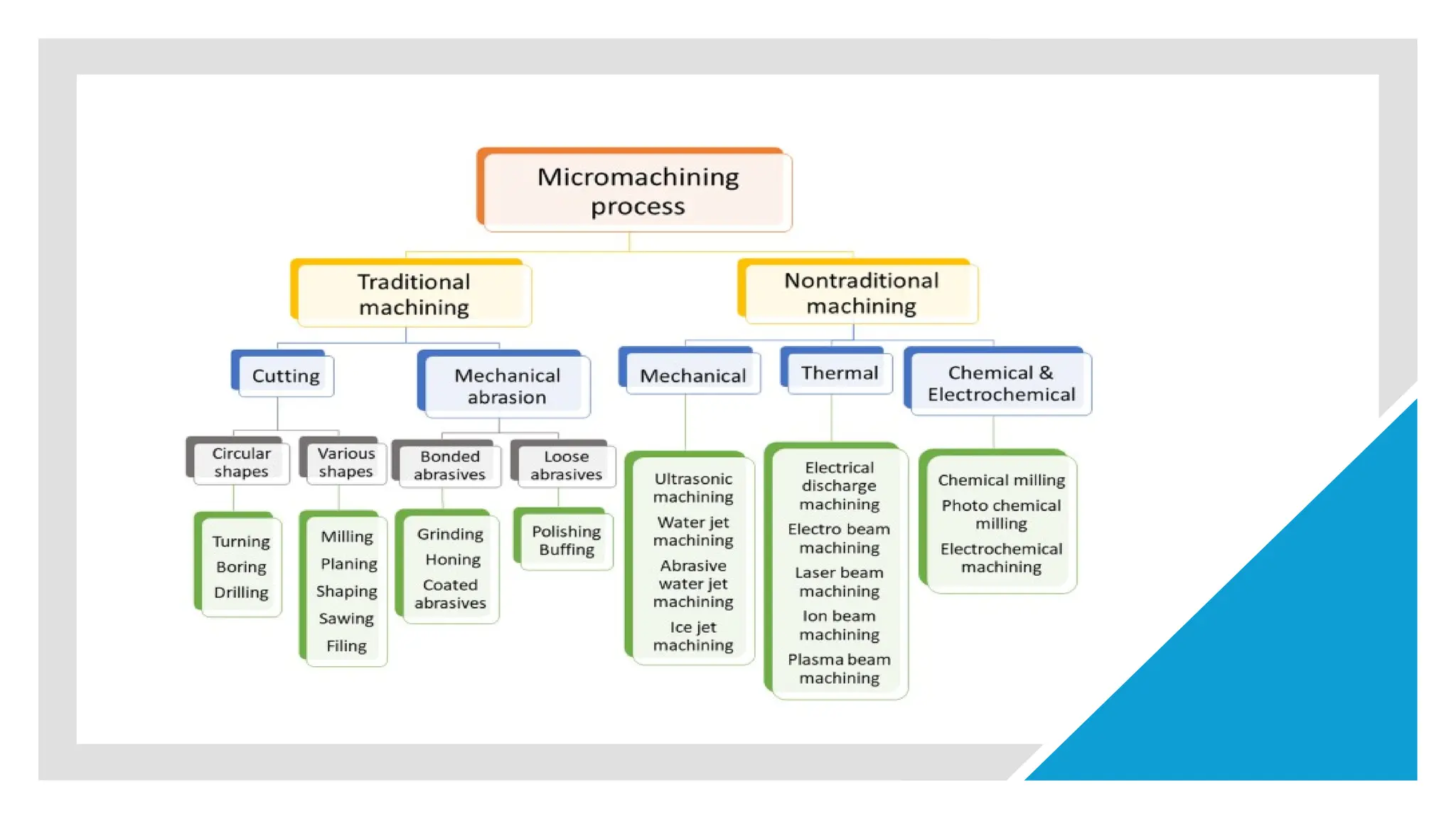
• Traditional methods of machining involve operations such as drilling,
boring, cutting, milling, etc. with the help of traditional tools having a
cutting edge. With the increase in the technology and evolution of time,
these conventional methods of machining became outdated, though
these methods are the basis of the machining process.
• When a component is manufactured with the help of modern technology
and without the use of traditional methods then the machining process is
known as the non-traditional machining process. the non-traditional
machining process is also known as non-conventional machining and
modern machining process
Requirement of the Non-traditional Machining Process
• Though the initial cost of a non-traditional machining plant is high the cost
of maintenance is comparatively low as compared to traditional plants.
• Non-traditional machining processes are the replacement for conventional
machining processes. As they give better results and have higher accuracy.
• The efficiency of the non-traditional machining process is much higher than
the traditional machining processes. Hence making the non-traditional
machining process a requirement in modern days.
• It becomes very difficult to machine hard materials such as tungsten and
uranium using traditional methods. This can be easily done using modern
machining processes.
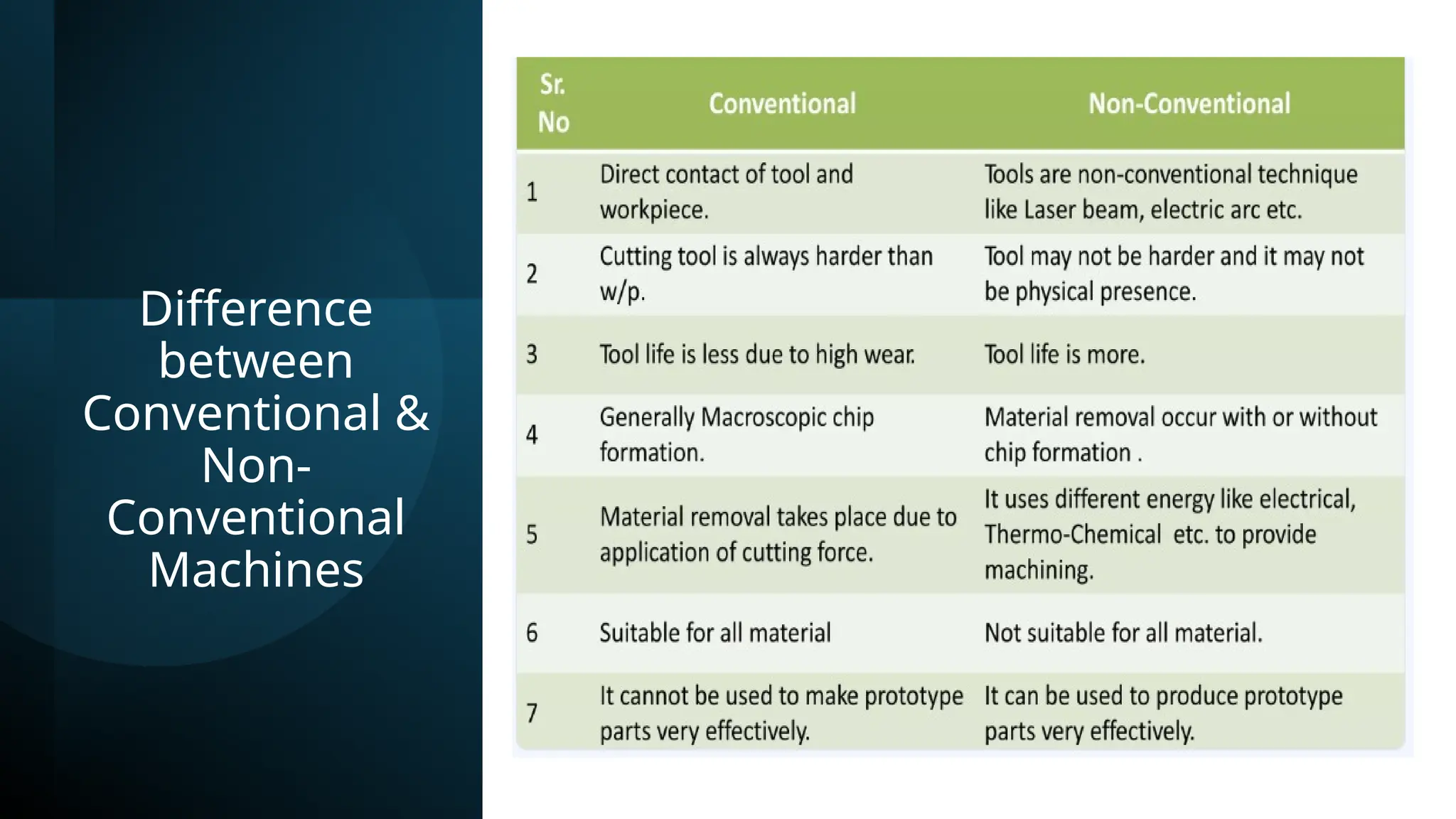
Difference
between
Conventional &
Non-
Conventional
Machines
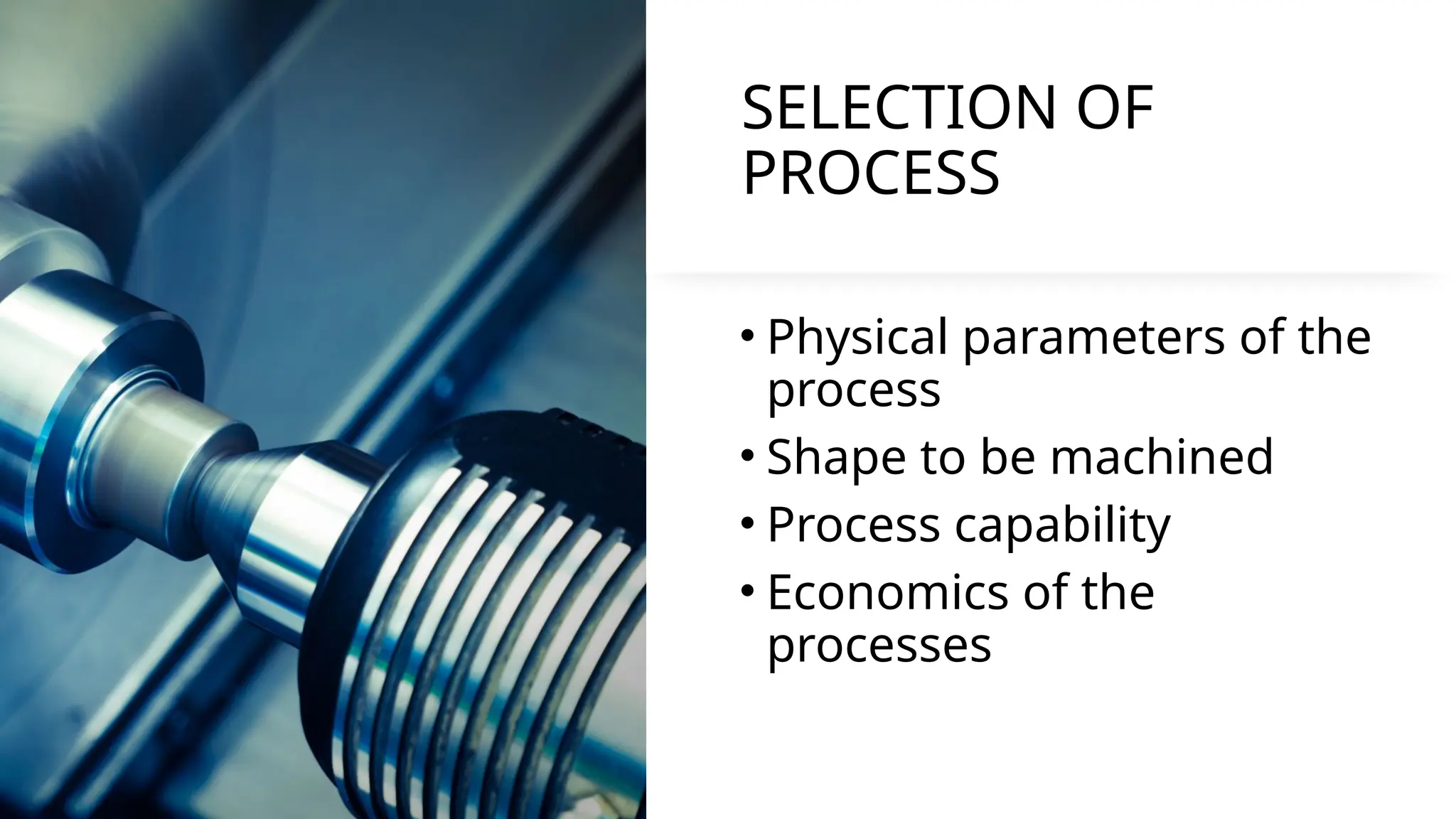
SELECTION OF
PROCESS
• Physical parameters of the
process
• Shape to be machined
• Process capability
• Economics of the
processes
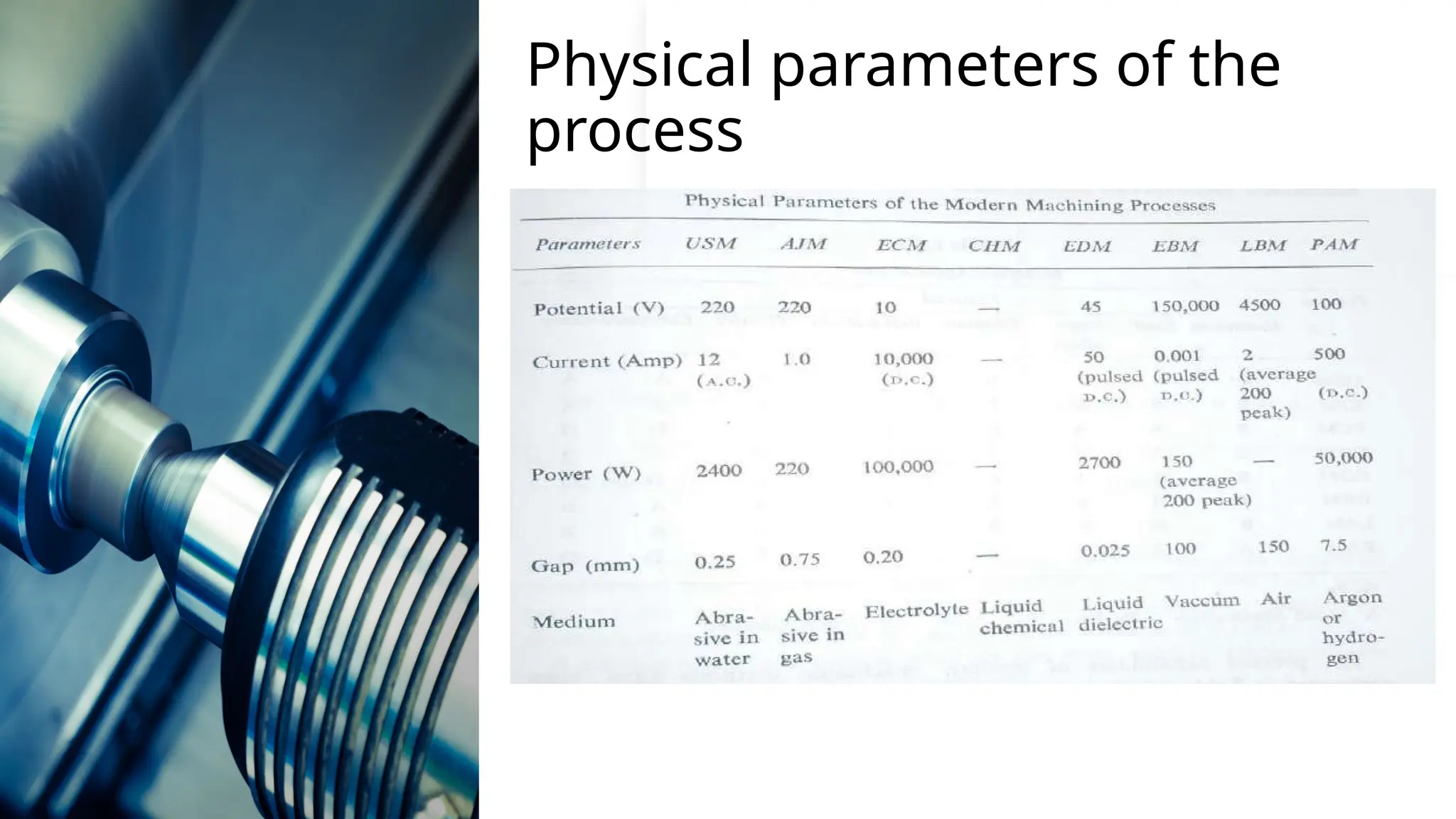
Physical parameters of the
process
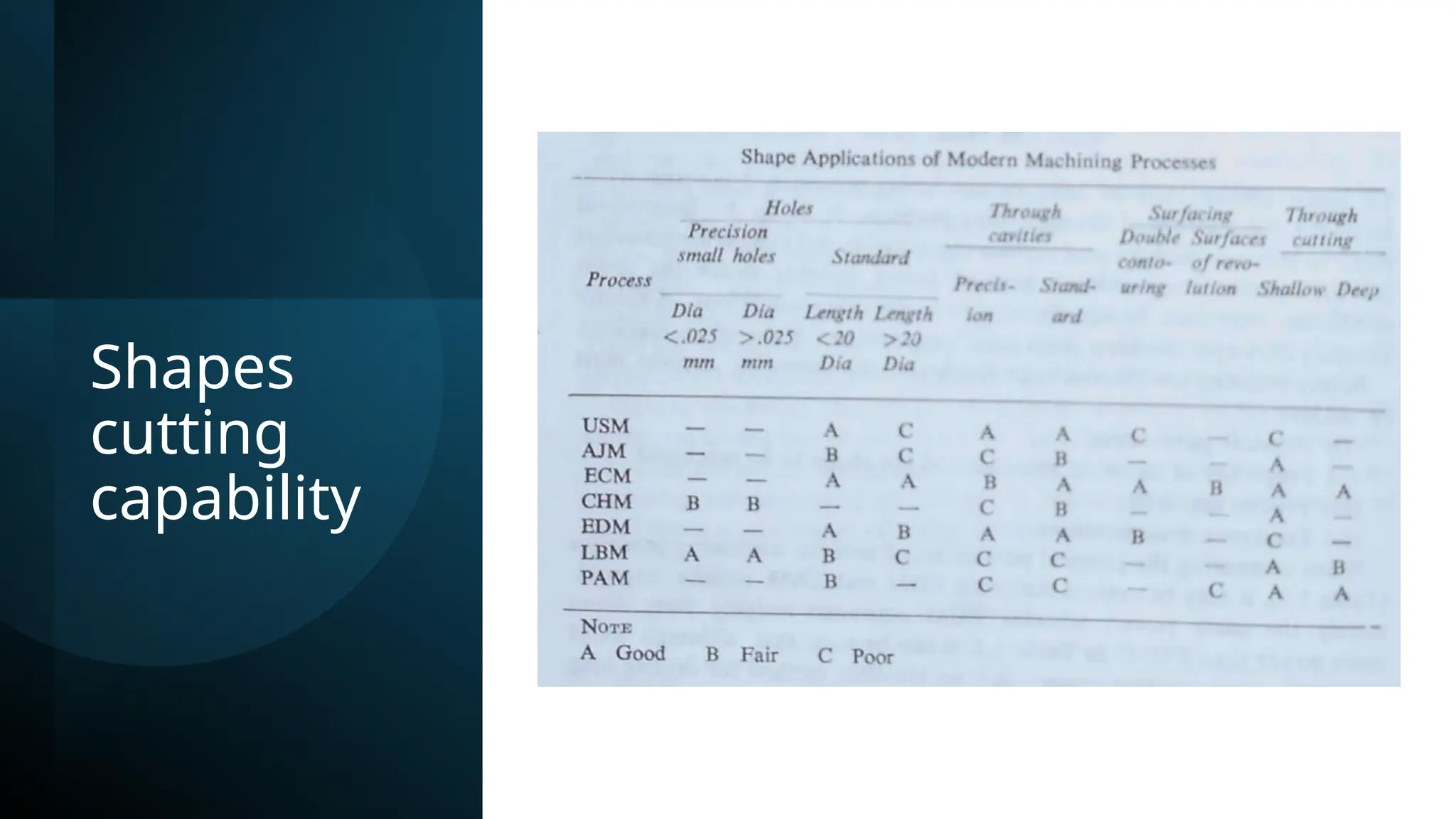
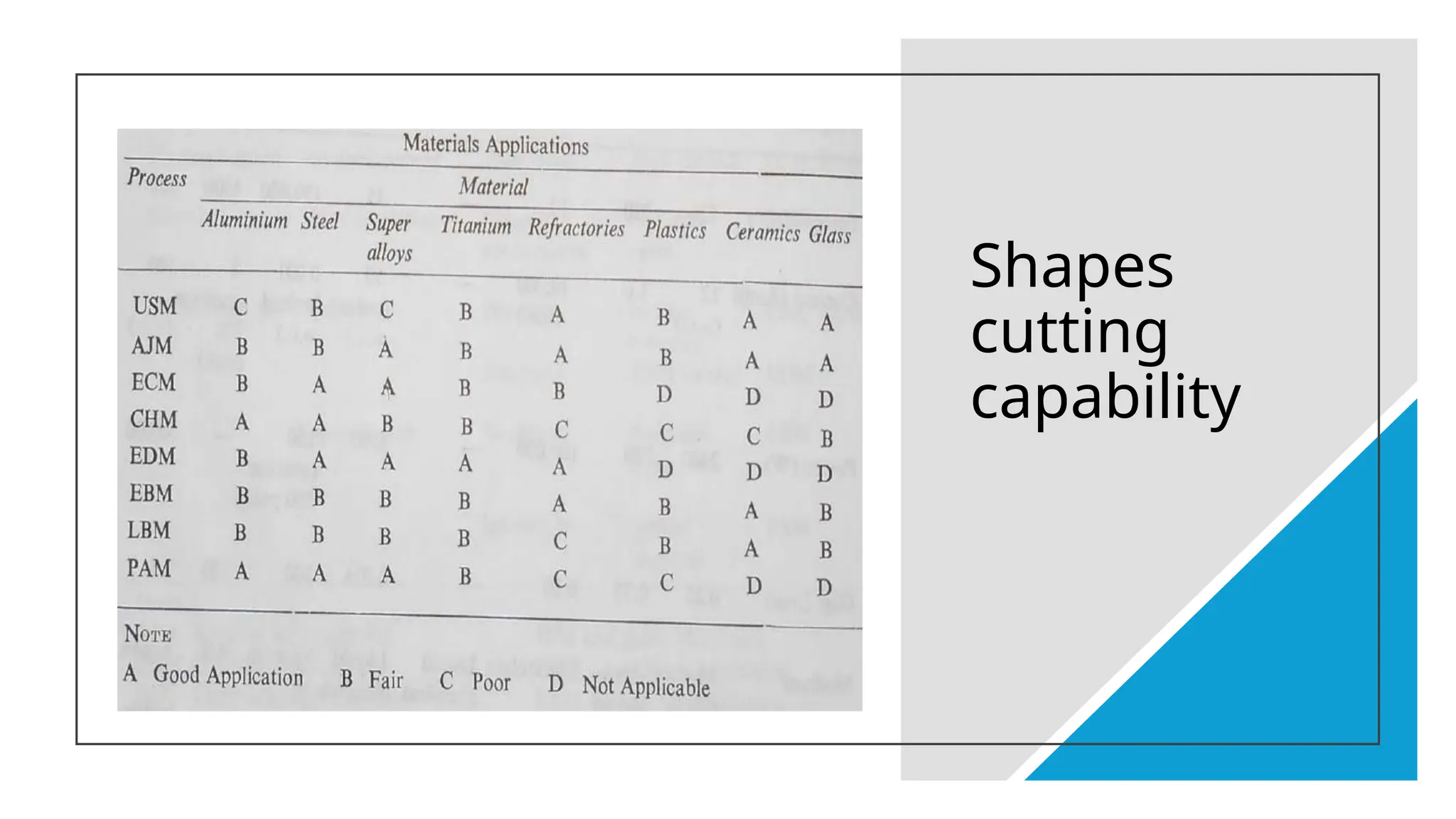
Shapes
cutting
capability
Shapes
cutting
capability
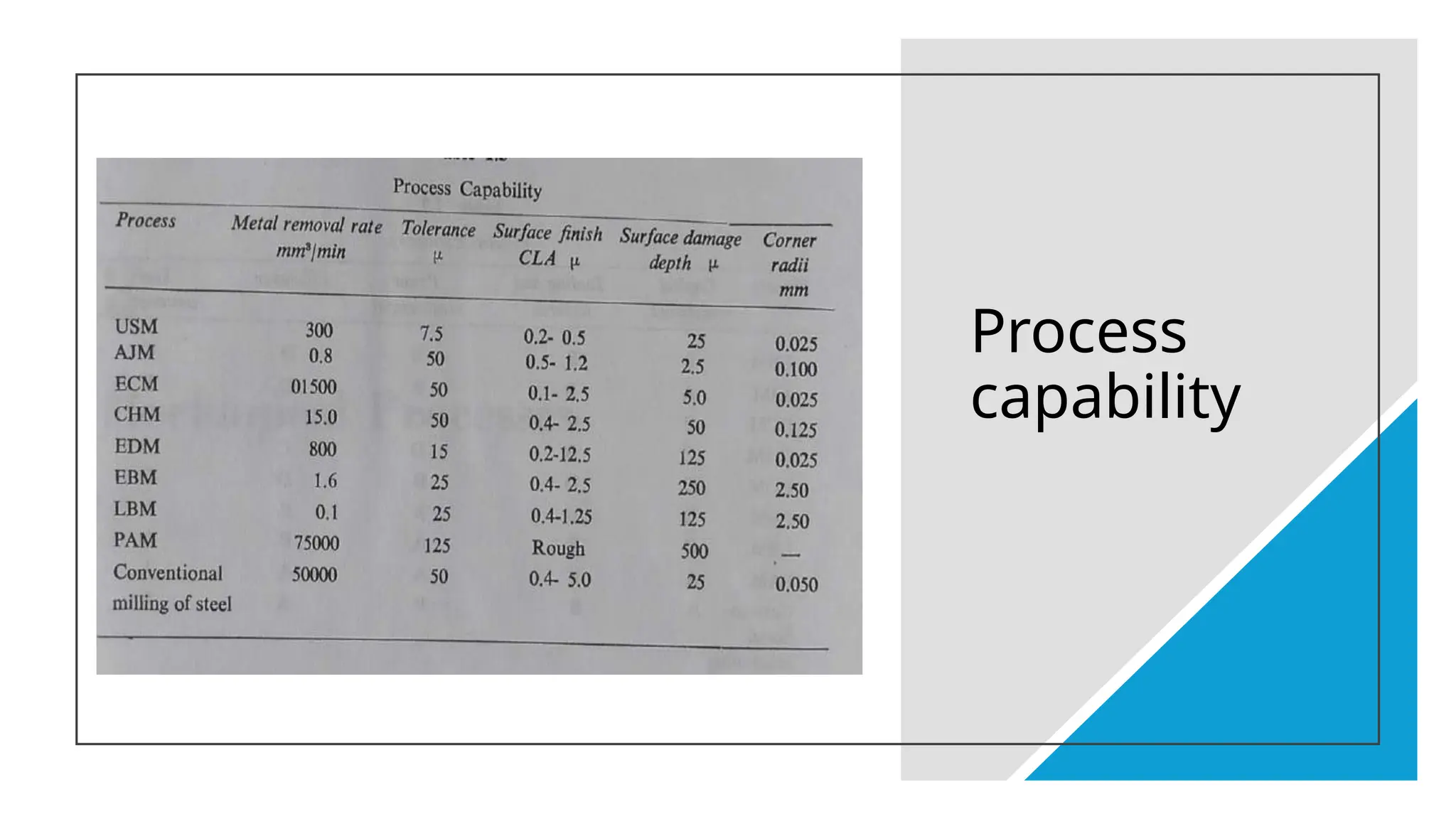
Process
capability
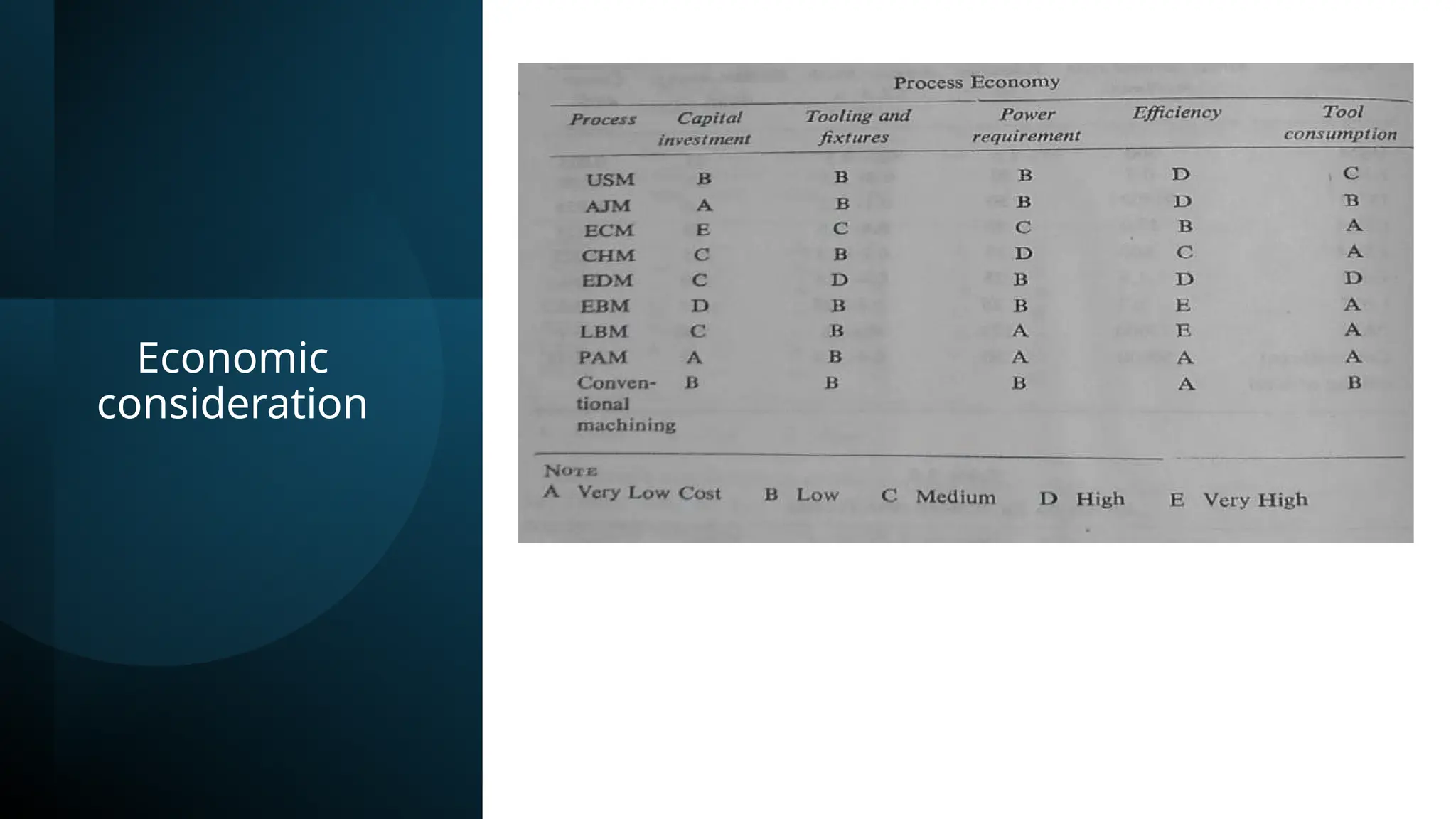
Economic
consideration
Advantages
• High accuracy
The products produced by traditional methods of machining are less accurate
when compared to the products manufactured by non-traditional methods of
machining.
• Less noise
Non-traditional methods of machining play a major role in reducing the noise
pollution of the surrounding area, as they are a better replacement for
traditional machining methods.
• High production
Modern or unconventional methods of machining promote a high production
rate when compared to traditional methods of machining.
• Less waste product
Waste product management becomes very difficult while working on
traditional machines. The chips produced must be disposed of timely which
requires extra effort.
• No wear of the tool
There is no contact between the tool and the workpiece in non-traditional
methods of machining.
Disadvantages
• High initial cost
The initial cost of the setup of a non-traditional machining plant is
higher when compared to a traditional machining plant, as it has many
electronic parts working along with mechanical parts
• High power requirement
The power required to run a non-traditional machining plant is much
higher than to run a traditional machining plant.
• Complex mechanism
Unlike traditional machining methods, non-traditional machining
methods are more complex. The operator must be skilled enough to
handle the processes involved in non-traditional machining methods.
• Lower metal removal rate
The metal removal rate of non-traditional machining methods is
generally low when compared to traditional methods.
• Not suitable for soft materials
The cutting action performed by a non-traditional machining method is
generally due to a localized increase in the temperature of the
workpiece
Applications
 Non-traditional machining methods are used for the design of
dies as it is used to machine hard surfaces. Many of the hard metals
which cannot be machined using traditional methods can be
machined by unconventional machining methods.
 Non-traditional methods are also used in automobile industries for
drilling very small diameter holes of a nozzle of a fuel injection
system. Gears can also be machined using non-traditional
machining methods.
 Many of the non-traditional methods of machining are used for
machining complex designs on thin metal sheets such as Laser
Beam Machining.
 Unconventional machining processes such as Abrasive Jet
Machining can be used for machining fragile materials like glass,
ceramics, and quartz.
 Machining of a cutting tool can also be done using a non-
conventional machining process.
 Modern machining has great importance in aerospace industries,
as it is used to manufacture complex parts of an aircraft.

non traditional machining also known as the modern machining method.

  • 1.
  • 2.
    Introduction Non-traditional machining, also knownas the modern machining method, is a machining method that uses electricity, heat energy, light energy, electrochemical energy, energy, chemical energy, sound energy, and special mechanical energy to remove, deform, change properties, or plate materials.
  • 3.
    Non-Traditional Machining • Traditionalmethods of machining involve operations such as drilling, boring, cutting, milling, etc. with the help of traditional tools having a cutting edge. With the increase in the technology and evolution of time, these conventional methods of machining became outdated, though these methods are the basis of the machining process. • When a component is manufactured with the help of modern technology and without the use of traditional methods then the machining process is known as the non-traditional machining process. the non-traditional machining process is also known as non-conventional machining and modern machining process
  • 4.
    Requirement of theNon-traditional Machining Process • Though the initial cost of a non-traditional machining plant is high the cost of maintenance is comparatively low as compared to traditional plants. • Non-traditional machining processes are the replacement for conventional machining processes. As they give better results and have higher accuracy. • The efficiency of the non-traditional machining process is much higher than the traditional machining processes. Hence making the non-traditional machining process a requirement in modern days. • It becomes very difficult to machine hard materials such as tungsten and uranium using traditional methods. This can be easily done using modern machining processes.
  • 6.
  • 7.
    SELECTION OF PROCESS • Physicalparameters of the process • Shape to be machined • Process capability • Economics of the processes
  • 8.
  • 9.
  • 10.
  • 11.
  • 12.
  • 13.
    Advantages • High accuracy Theproducts produced by traditional methods of machining are less accurate when compared to the products manufactured by non-traditional methods of machining. • Less noise Non-traditional methods of machining play a major role in reducing the noise pollution of the surrounding area, as they are a better replacement for traditional machining methods. • High production Modern or unconventional methods of machining promote a high production rate when compared to traditional methods of machining. • Less waste product Waste product management becomes very difficult while working on traditional machines. The chips produced must be disposed of timely which requires extra effort. • No wear of the tool There is no contact between the tool and the workpiece in non-traditional methods of machining.
  • 14.
    Disadvantages • High initialcost The initial cost of the setup of a non-traditional machining plant is higher when compared to a traditional machining plant, as it has many electronic parts working along with mechanical parts • High power requirement The power required to run a non-traditional machining plant is much higher than to run a traditional machining plant. • Complex mechanism Unlike traditional machining methods, non-traditional machining methods are more complex. The operator must be skilled enough to handle the processes involved in non-traditional machining methods. • Lower metal removal rate The metal removal rate of non-traditional machining methods is generally low when compared to traditional methods. • Not suitable for soft materials The cutting action performed by a non-traditional machining method is generally due to a localized increase in the temperature of the workpiece
  • 15.
    Applications  Non-traditional machiningmethods are used for the design of dies as it is used to machine hard surfaces. Many of the hard metals which cannot be machined using traditional methods can be machined by unconventional machining methods.  Non-traditional methods are also used in automobile industries for drilling very small diameter holes of a nozzle of a fuel injection system. Gears can also be machined using non-traditional machining methods.  Many of the non-traditional methods of machining are used for machining complex designs on thin metal sheets such as Laser Beam Machining.  Unconventional machining processes such as Abrasive Jet Machining can be used for machining fragile materials like glass, ceramics, and quartz.  Machining of a cutting tool can also be done using a non- conventional machining process.  Modern machining has great importance in aerospace industries, as it is used to manufacture complex parts of an aircraft.