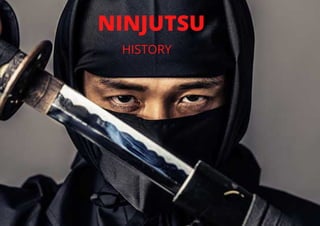
NINJUTSU
HISTORY
Ninjutsu (忍術), also known by the term
Ninpō (忍法), is a Japanese martial art that
emerged from the need to employ spies
(ninjas) during the Japanese medieval
period (6th century). It consisted of a set of
techniques that enabled agents to act in all
situations on a battlefield.
Ninjutsu dates back more
than 900 years, in a
historical context in which
the Samurai, a class of
warriors, dominated Japan.
They controlled the land and
its inhabitants
in a kind of eastern feudalism. The
lord (head of a group of samurai) was
the Daimyō |大名, the only person to
whom the samurai owed respect and
obedience. Ninjutsu was born in
feudal Japan, when Tibetan monks
spread to
several countries in Asia, one of
them China, where the monks, at
the end of the Ming dynasty,
beginning of the Chin dynasty
(Manchu, due to the Manchu
invasion) dedicated themselves to
terrorism , espionage and
resistance
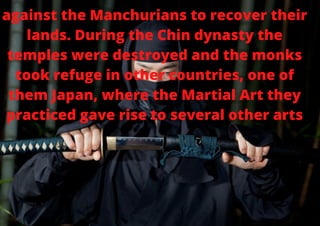
against the Manchurians to recover their
lands. During the Chin dynasty the
temples were destroyed and the monks
took refuge in other countries, one of
them Japan, where the Martial Art they
practiced gave rise to several other arts
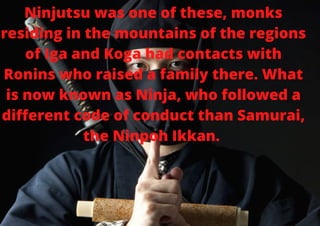
Ninjutsu was one of these, monks
residing in the mountains of the regions
of Iga and Koga had contacts with
Ronins who raised a family there. What
is now known as Ninja, who followed a
different code of conduct than Samurai,
the Ninpoh Ikkan.
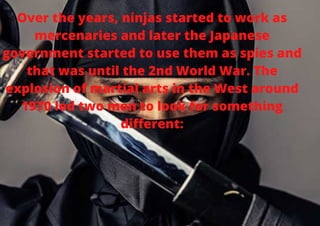
Over the years, ninjas started to work as
mercenaries and later the Japanese
government started to use them as spies and
that was until the 2nd World War. The
explosion of martial arts in the West around
1970 led two men to look for something
different:
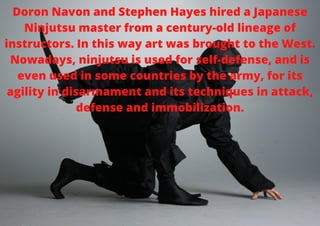
Doron Navon and Stephen Hayes hired a Japanese
Ninjutsu master from a century-old lineage of
instructors. In this way art was brought to the West.
Nowadays, ninjutsu is used for self-defense, and is
even used in some countries by the army, for its
agility in disarmament and its techniques in attack,
defense and immobilization.

NINJUTSU HISTORY

  • 1.
  • 2.
    Ninjutsu (忍術), alsoknown by the term Ninpō (忍法), is a Japanese martial art that emerged from the need to employ spies (ninjas) during the Japanese medieval period (6th century). It consisted of a set of techniques that enabled agents to act in all situations on a battlefield.
  • 3.
    Ninjutsu dates backmore than 900 years, in a historical context in which the Samurai, a class of warriors, dominated Japan. They controlled the land and its inhabitants
  • 4.
    in a kindof eastern feudalism. The lord (head of a group of samurai) was the Daimyō |大名, the only person to whom the samurai owed respect and obedience. Ninjutsu was born in feudal Japan, when Tibetan monks spread to
  • 5.
    several countries inAsia, one of them China, where the monks, at the end of the Ming dynasty, beginning of the Chin dynasty (Manchu, due to the Manchu invasion) dedicated themselves to terrorism , espionage and resistance
  • 6.
    against the Manchuriansto recover their lands. During the Chin dynasty the temples were destroyed and the monks took refuge in other countries, one of them Japan, where the Martial Art they practiced gave rise to several other arts
  • 7.
    Ninjutsu was oneof these, monks residing in the mountains of the regions of Iga and Koga had contacts with Ronins who raised a family there. What is now known as Ninja, who followed a different code of conduct than Samurai, the Ninpoh Ikkan.
  • 8.
    Over the years,ninjas started to work as mercenaries and later the Japanese government started to use them as spies and that was until the 2nd World War. The explosion of martial arts in the West around 1970 led two men to look for something different:
  • 9.
    Doron Navon andStephen Hayes hired a Japanese Ninjutsu master from a century-old lineage of instructors. In this way art was brought to the West. Nowadays, ninjutsu is used for self-defense, and is even used in some countries by the army, for its agility in disarmament and its techniques in attack, defense and immobilization.