NIMBYism
and the transport vision
Councillor Brett Herron,
Mayoral Committee Member:
Transport for Cape Town
July 2016
Southern African Transport Conference
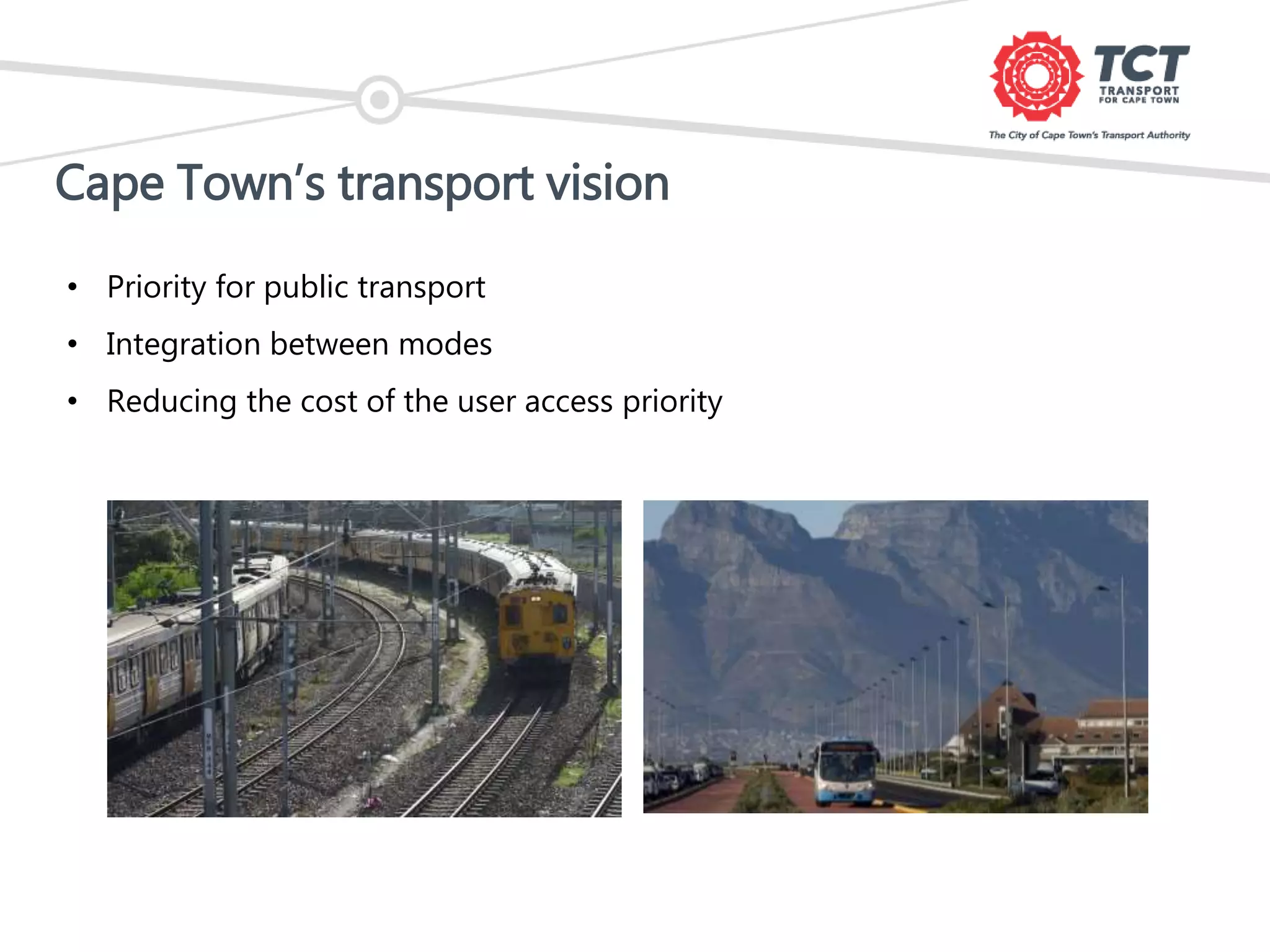
Cape Town’s transport vision
• Priority for public transport
• Integration between modes
• Reducing the cost of the user access priority
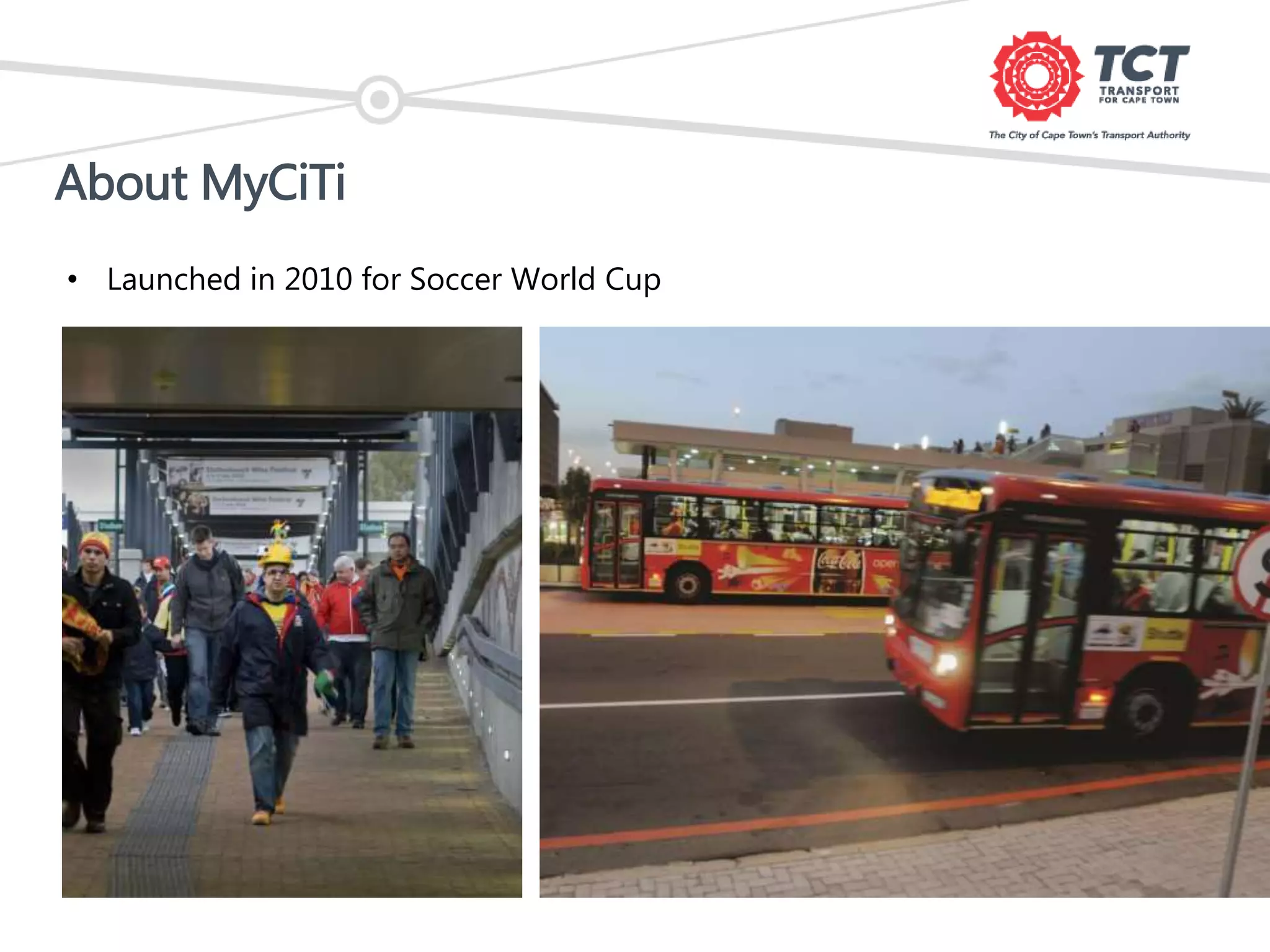
About MyCiTi
• Launched in 2010 for Soccer World Cup
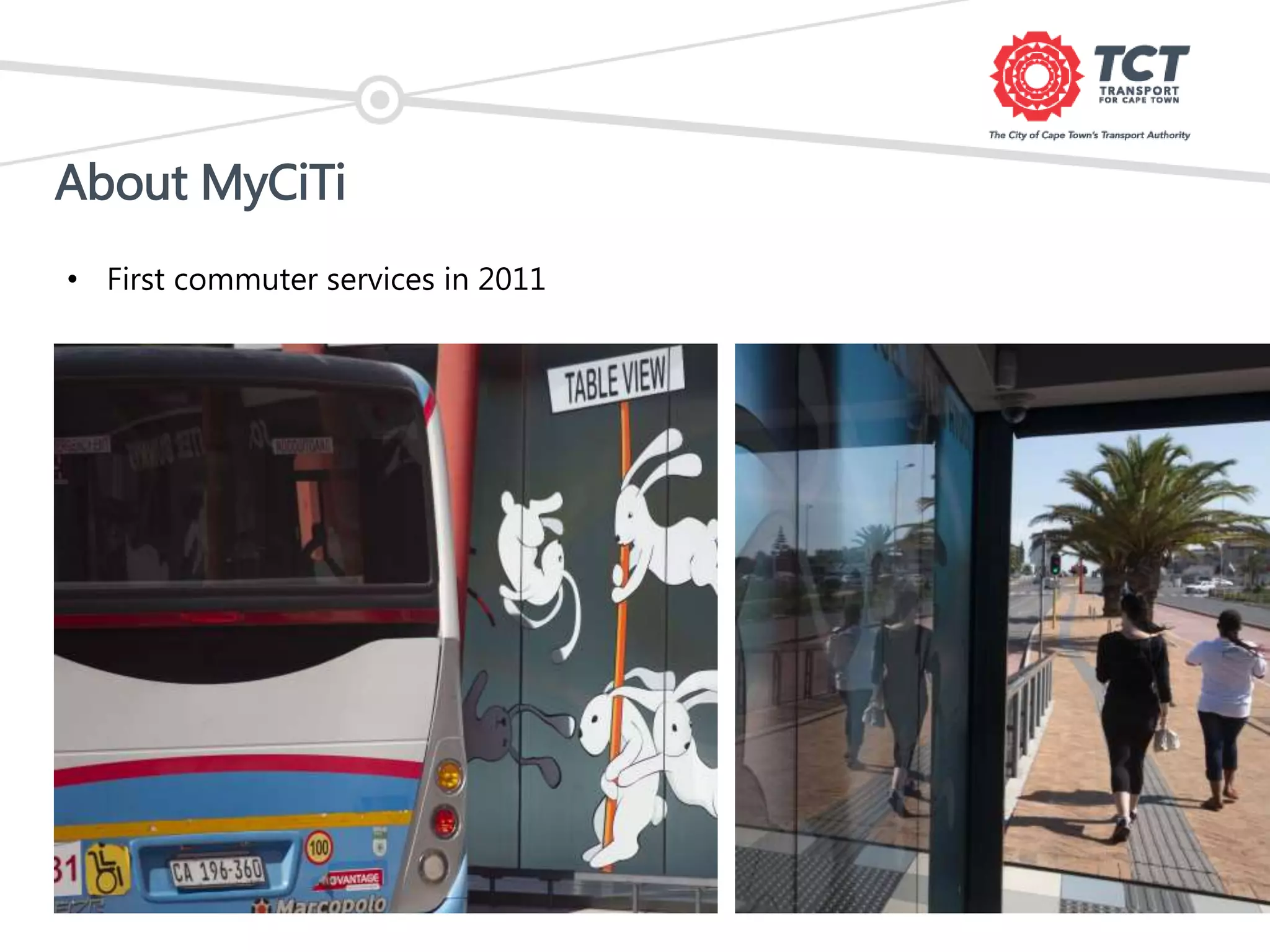
About MyCiTi
• First commuter services in 2011
About MyCiTi
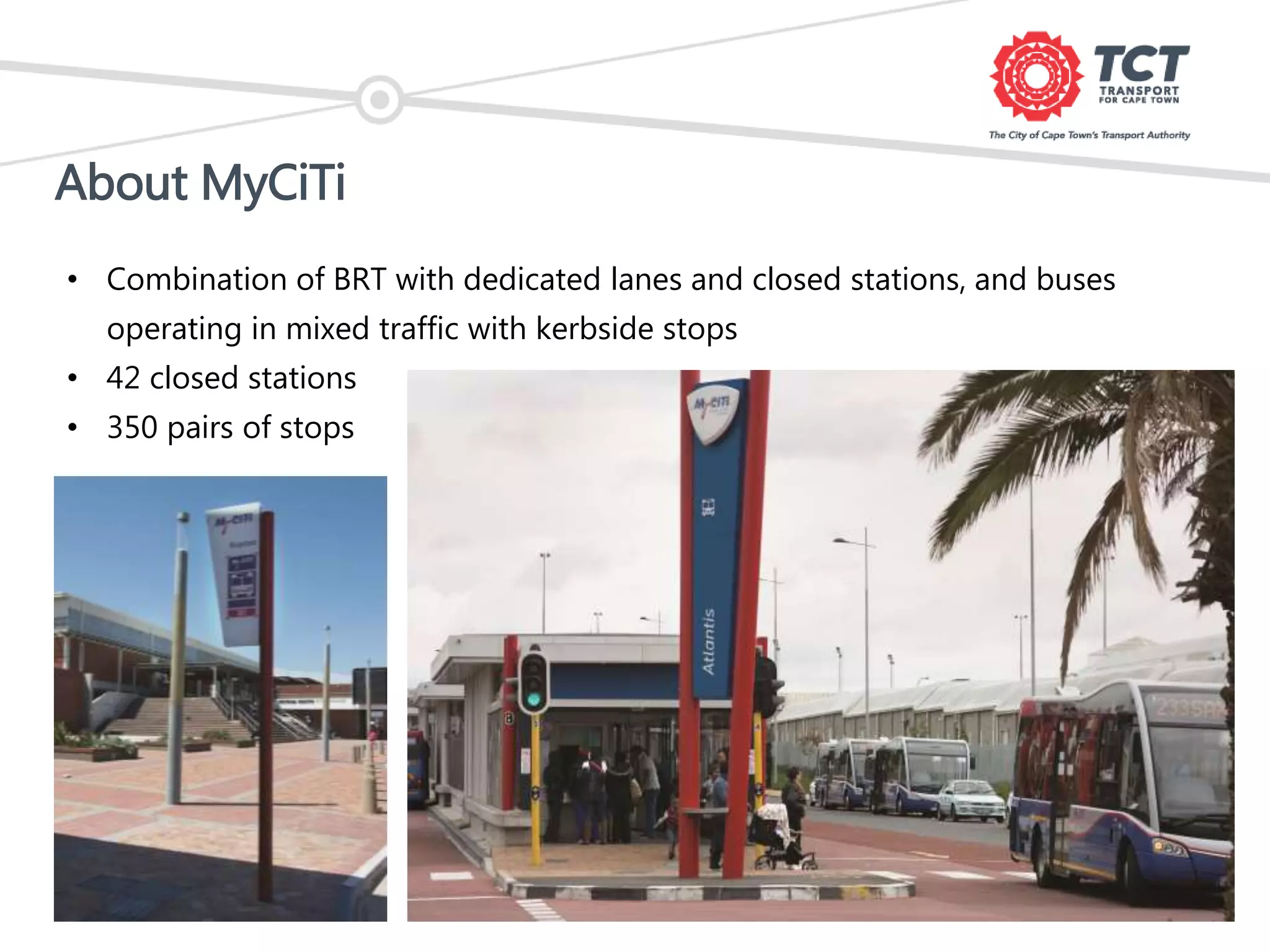
• Combination of BRT with dedicated lanes and closed stations, and buses
operating in mixed traffic with kerbside stops
• 42 closed stations
• 350 pairs of stops
About MyCiTi
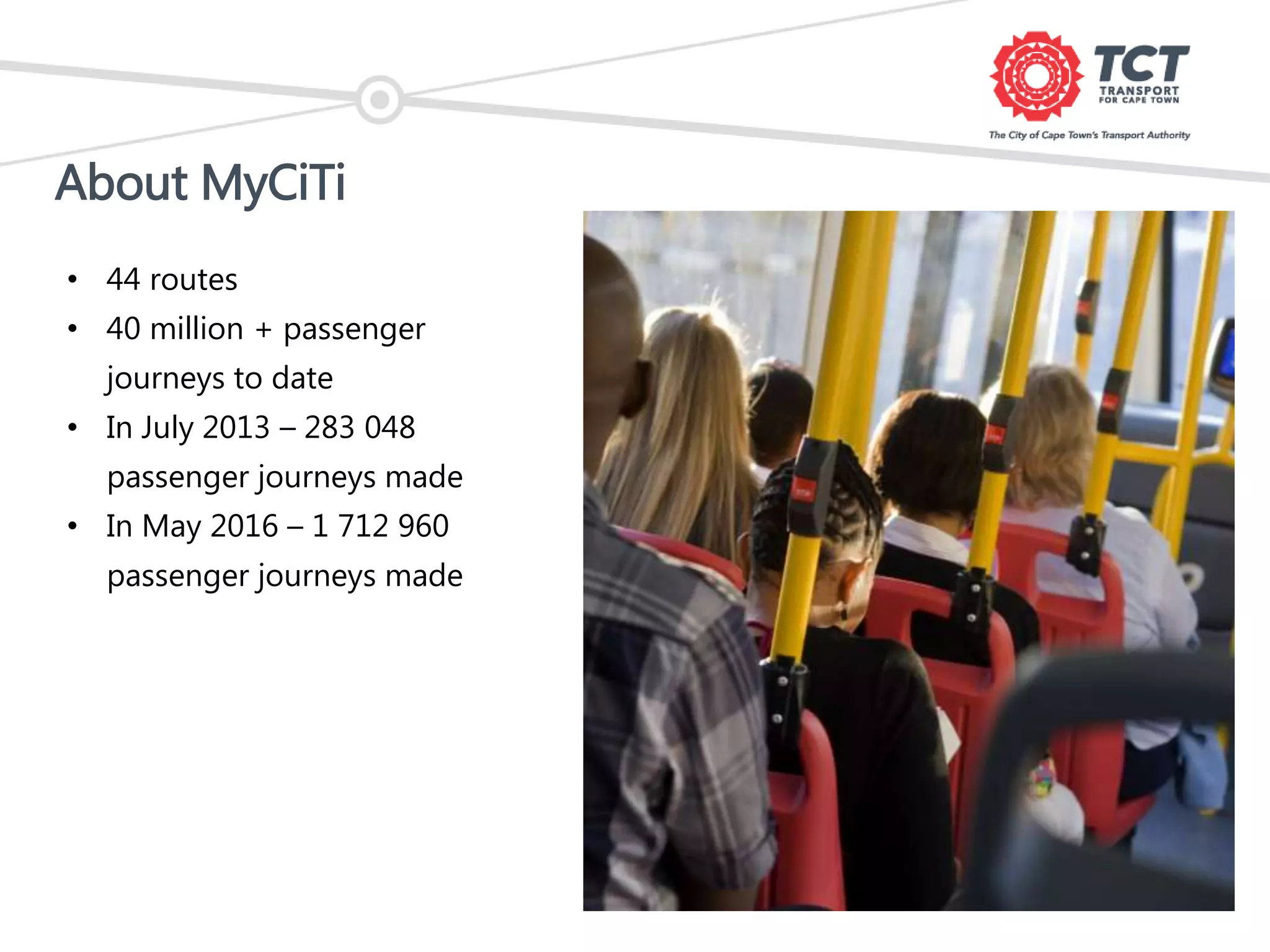
• 44 routes
• 40 million + passenger
journeys to date
• In July 2013 – 283 048
passenger journeys made
• In May 2016 – 1 712 960
passenger journeys made
About MyCiTi
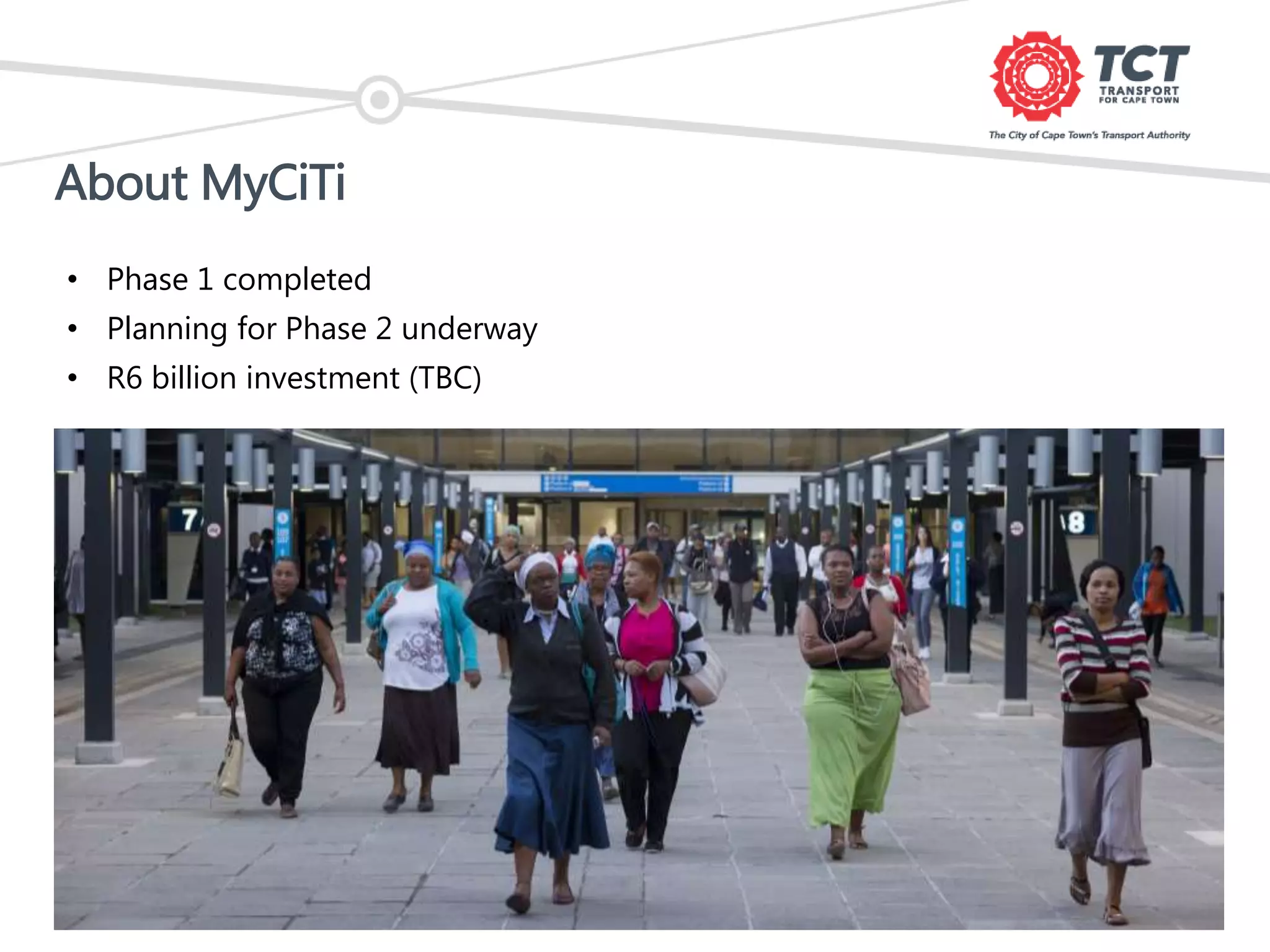
• Phase 1 completed
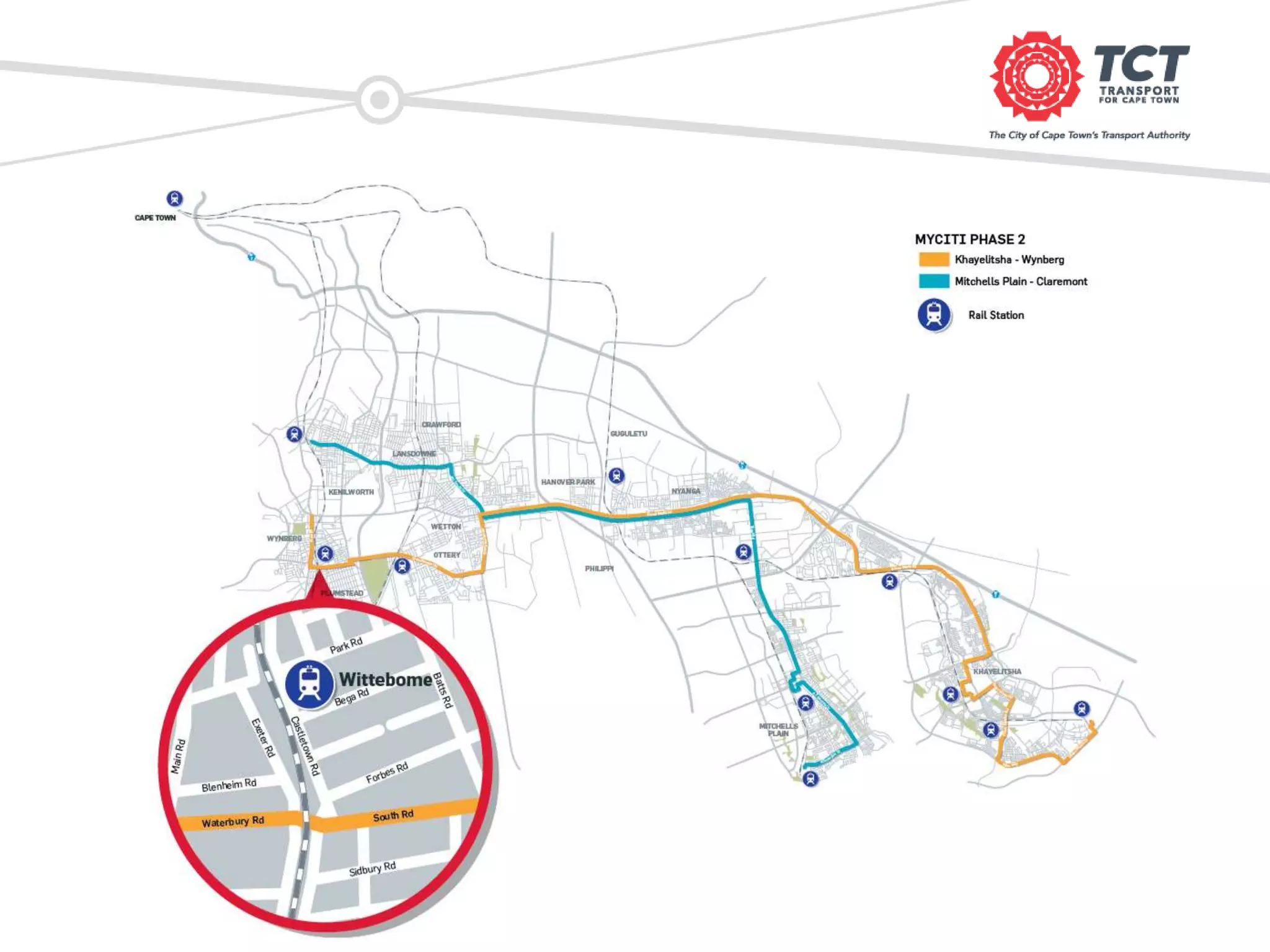
• Planning for Phase 2 underway
• R6 billion investment (TBC)
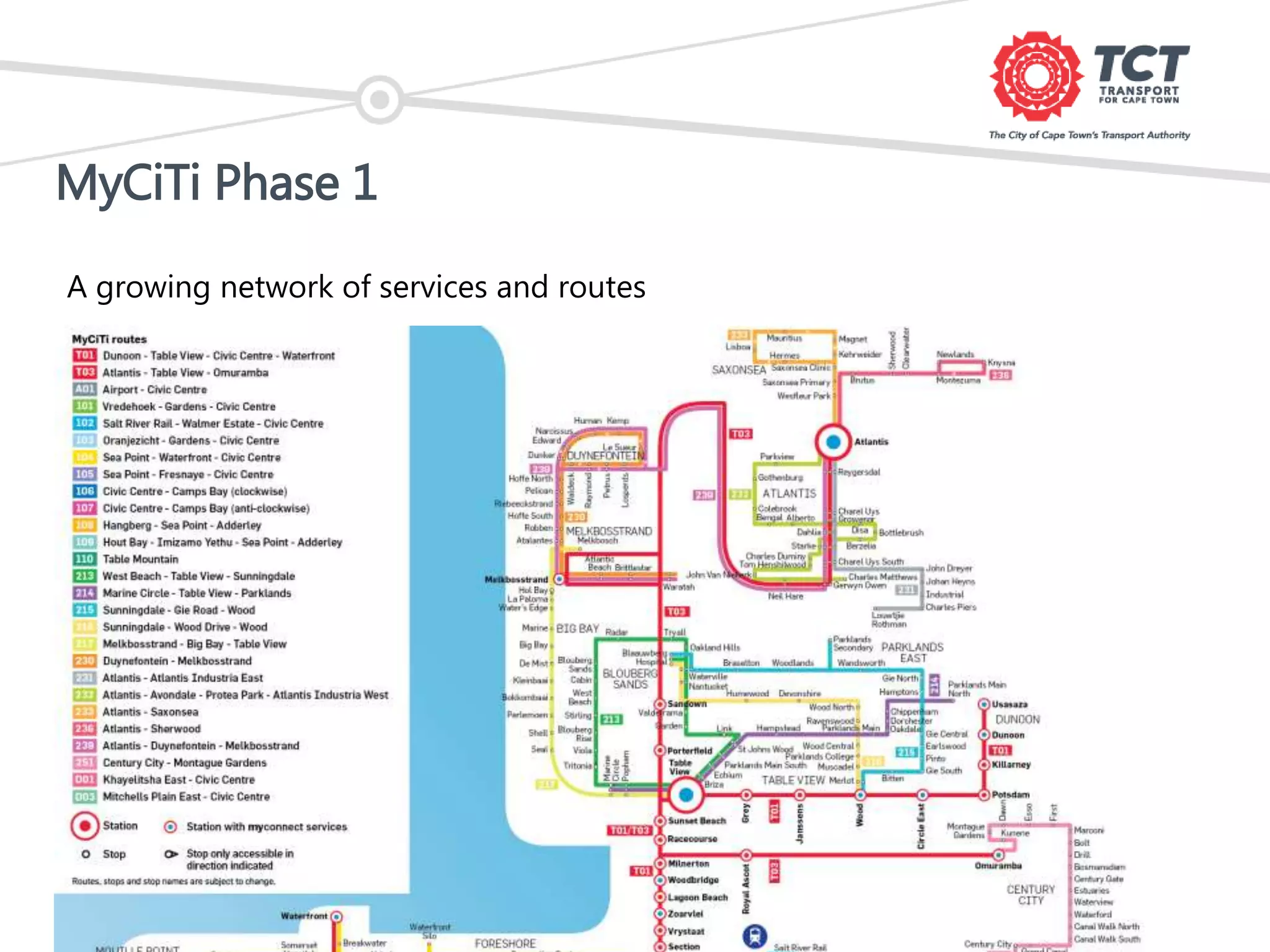
MyCiTi Phase 1
A growing network of services and routes
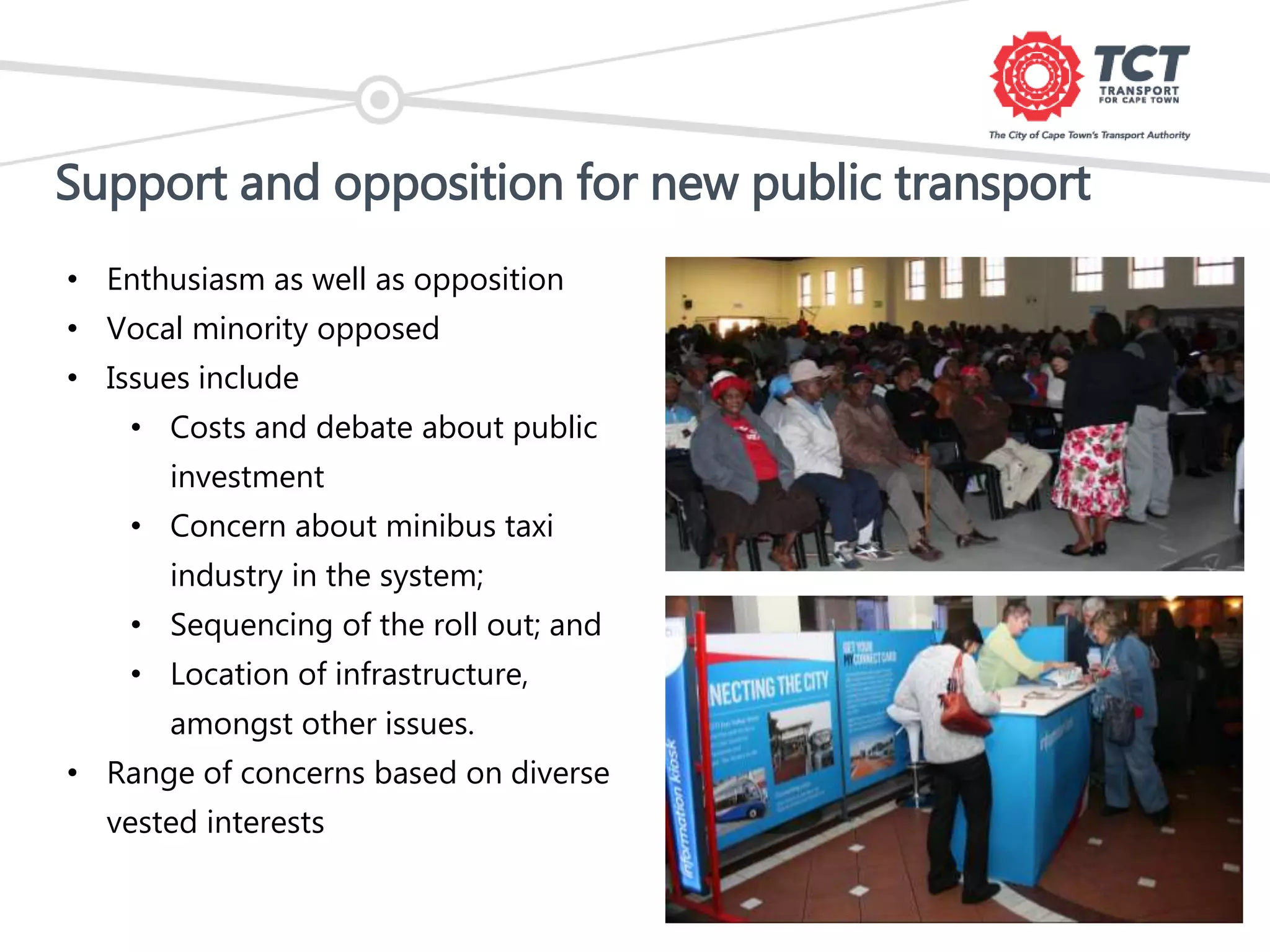
Support and opposition for new public transport
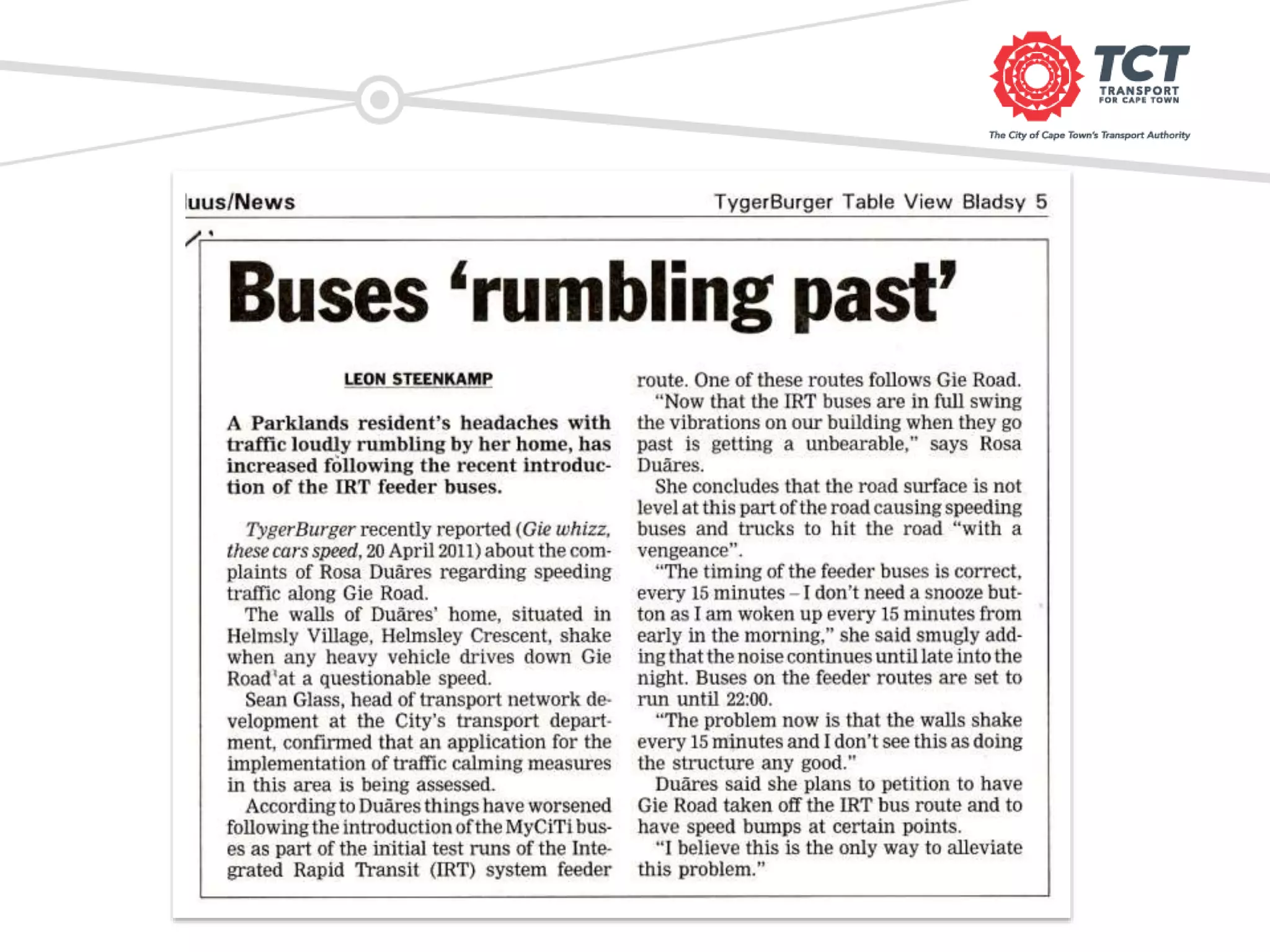
• Enthusiasm as well as opposition
• Vocal minority opposed
• Issues include
• Costs and debate about public
investment
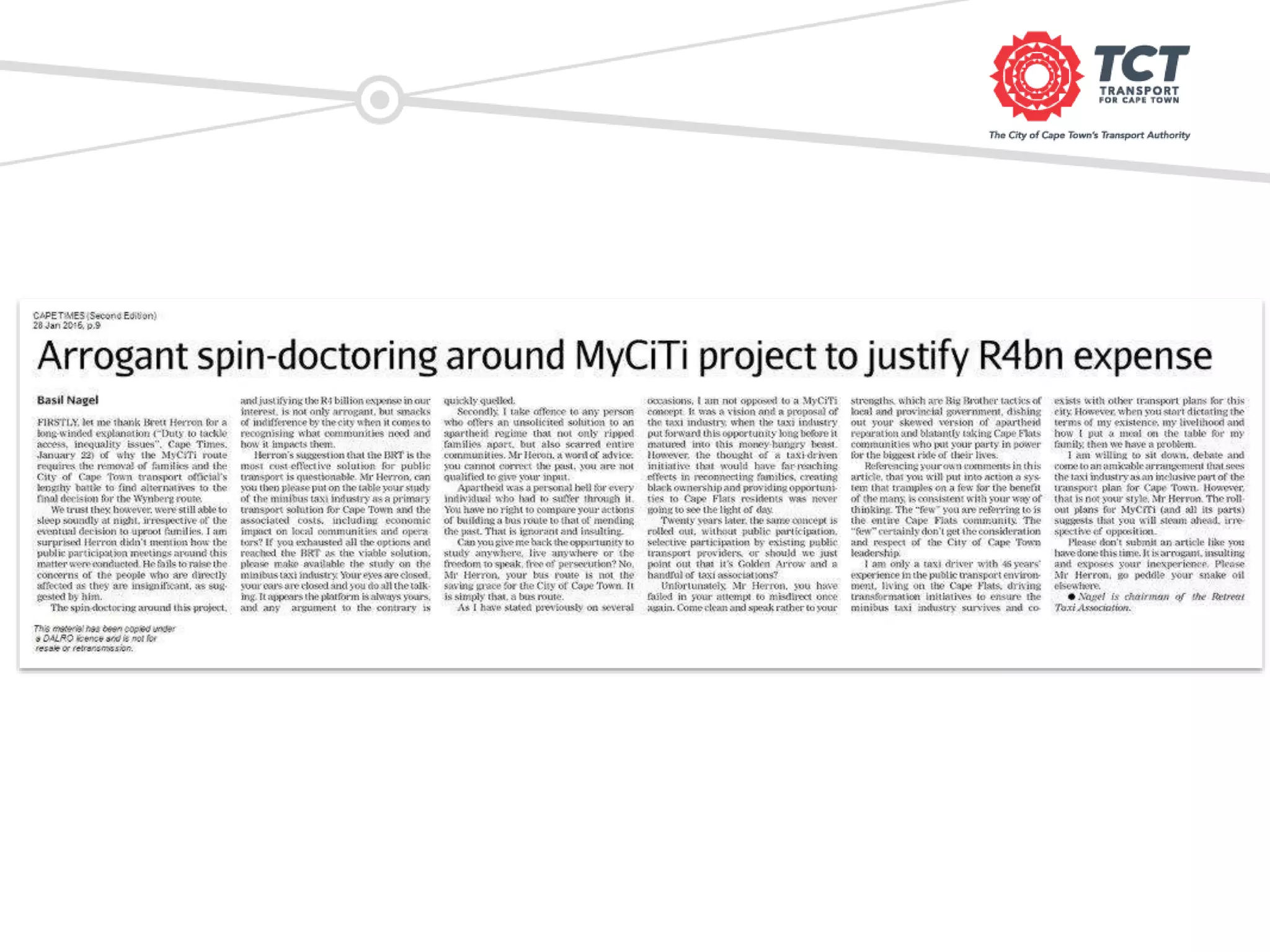
• Concern about minibus taxi
industry in the system;
• Sequencing of the roll out; and
• Location of infrastructure,
amongst other issues.
• Range of concerns based on diverse
vested interests
Early opponents
• Flamingo Vlei
• Vigorous opposition
• Route planned for the
area withdrawn
• Now area markets itself as
being on the system
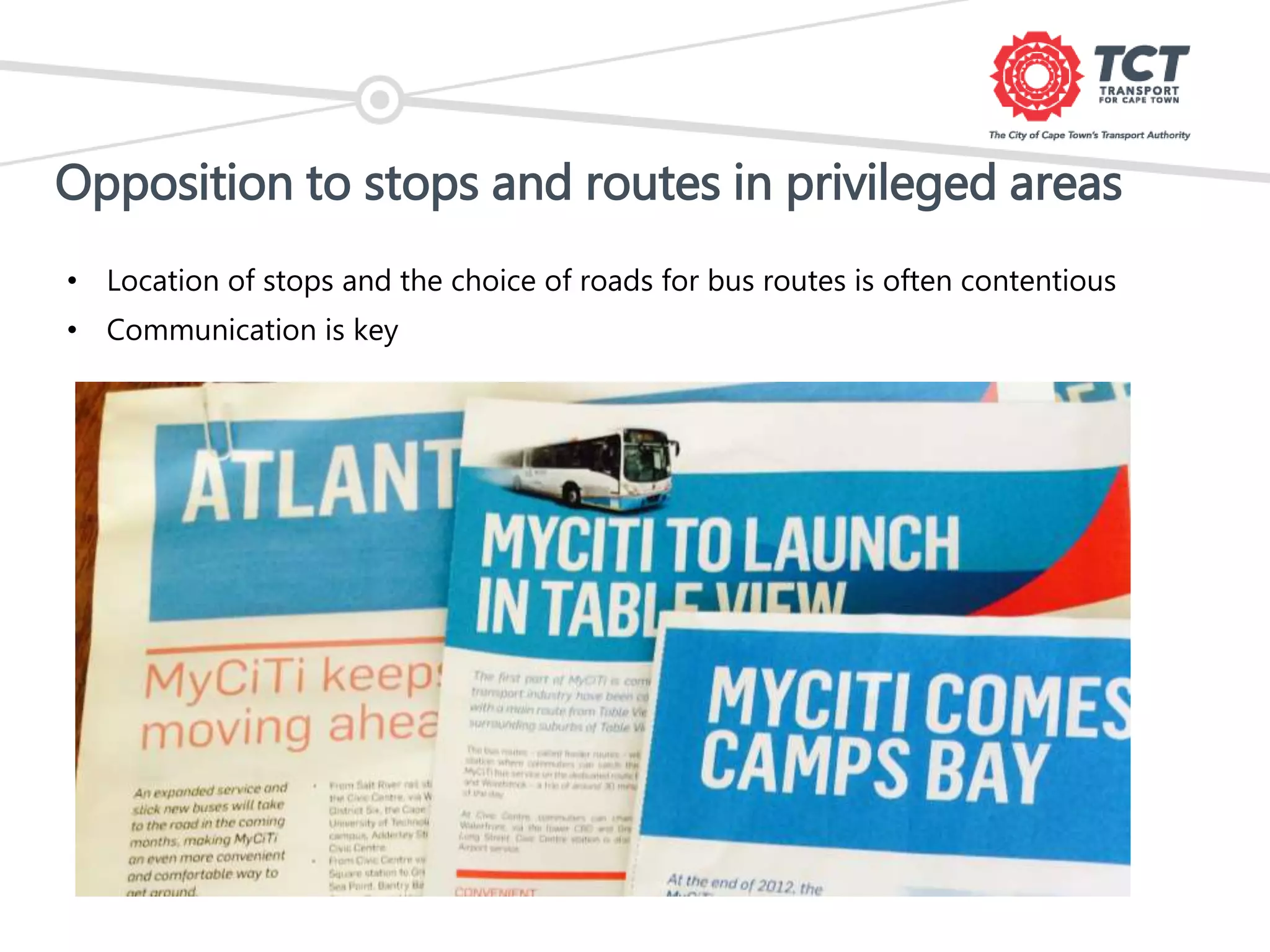
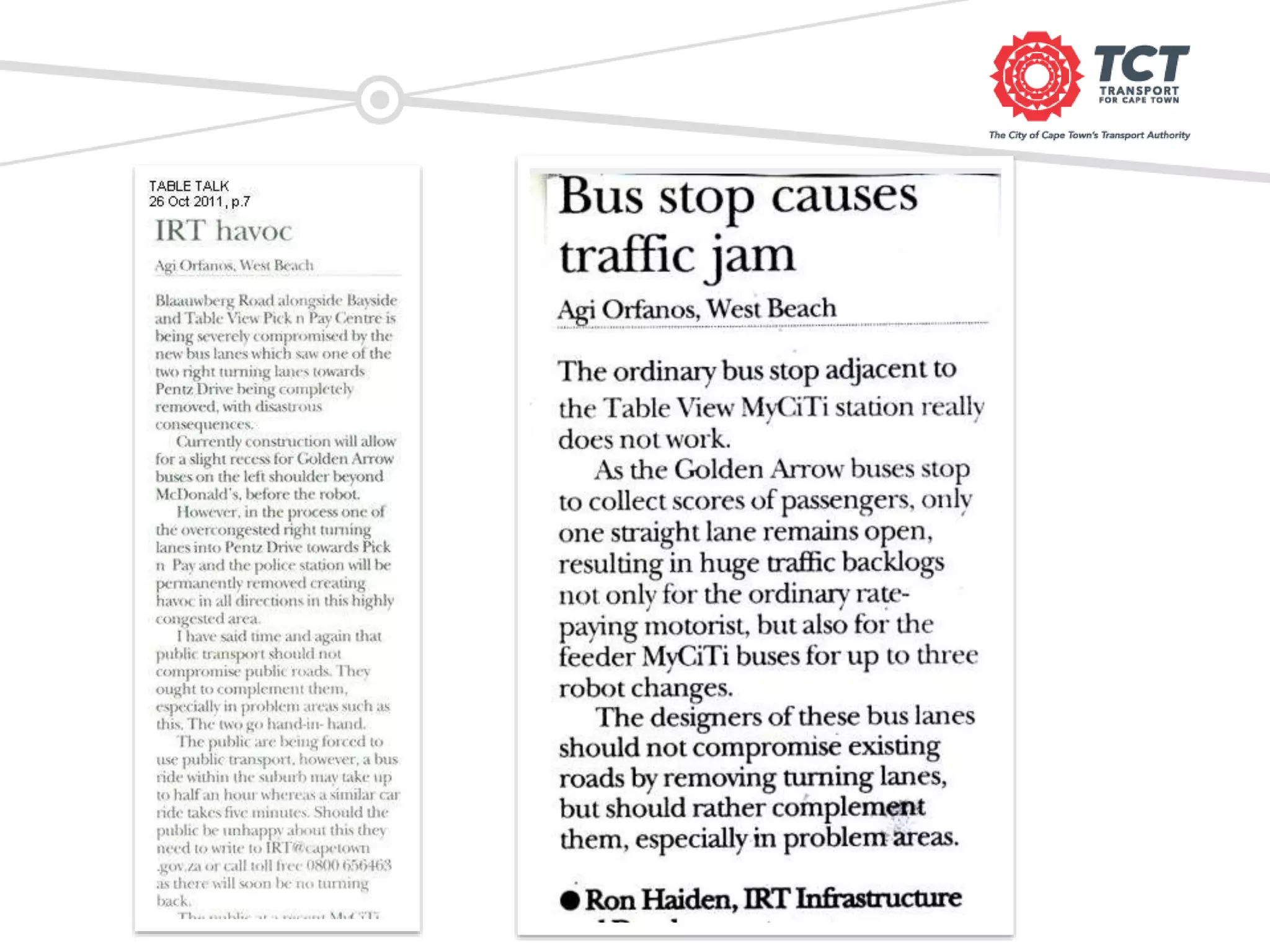
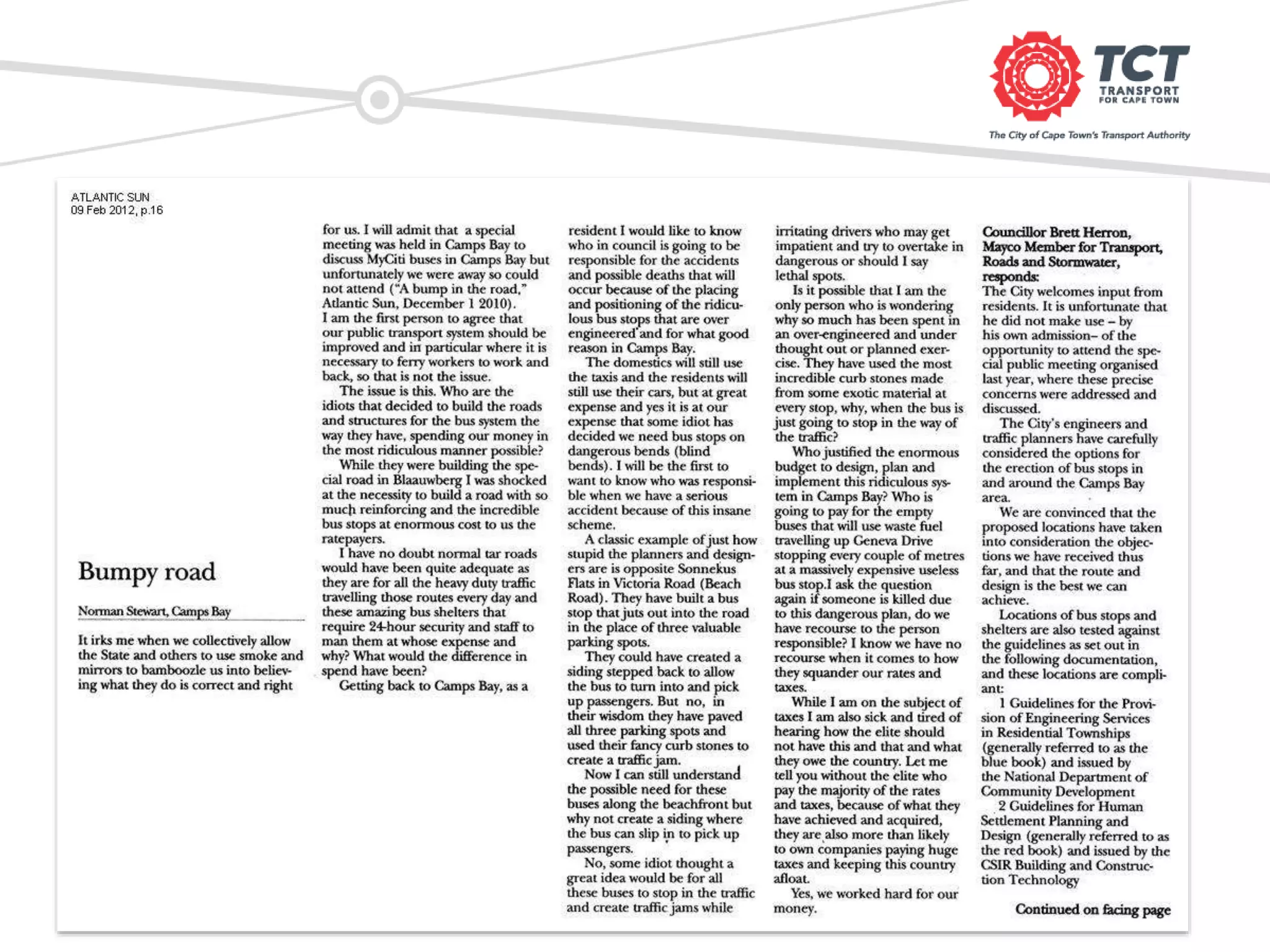
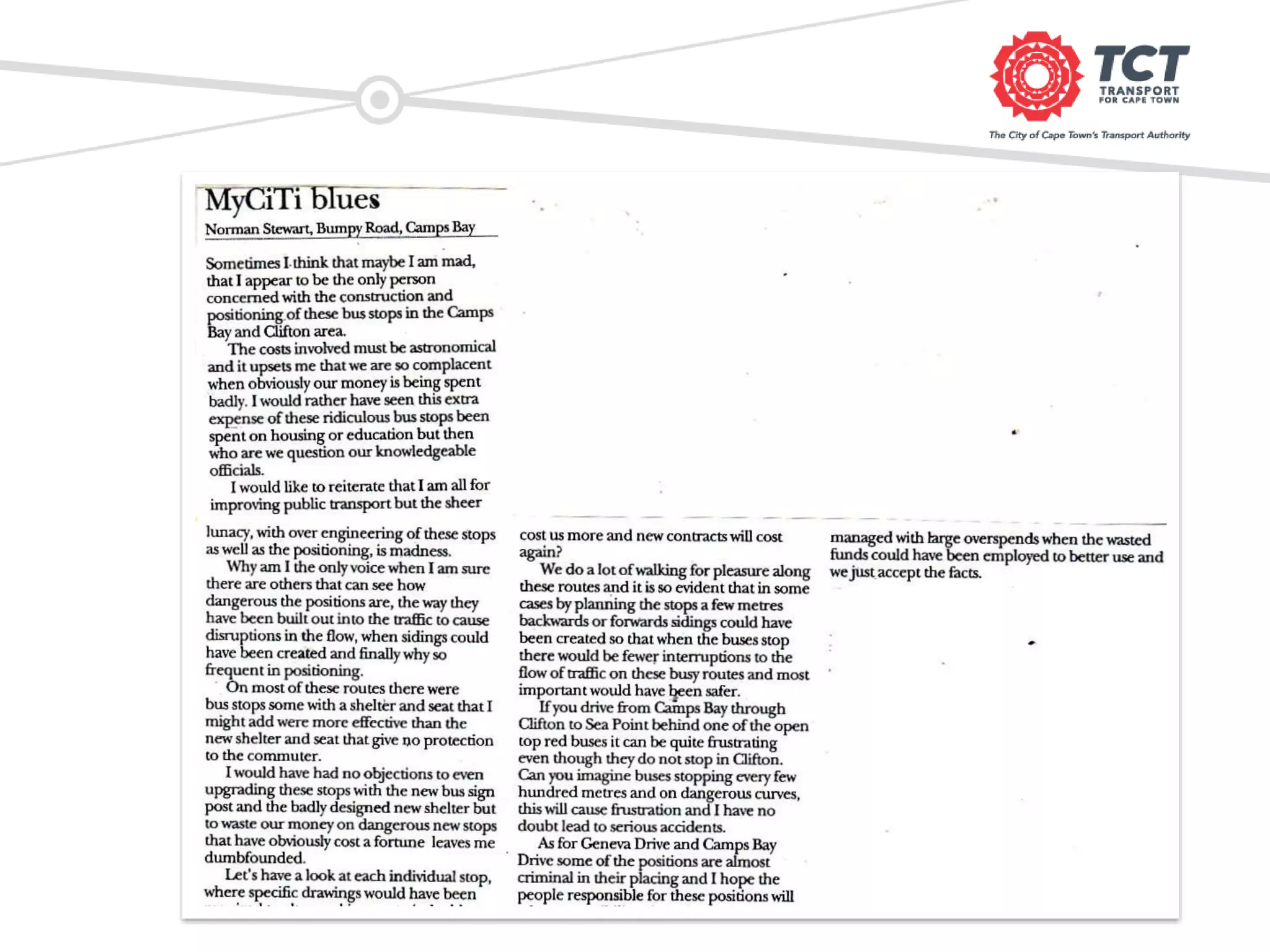
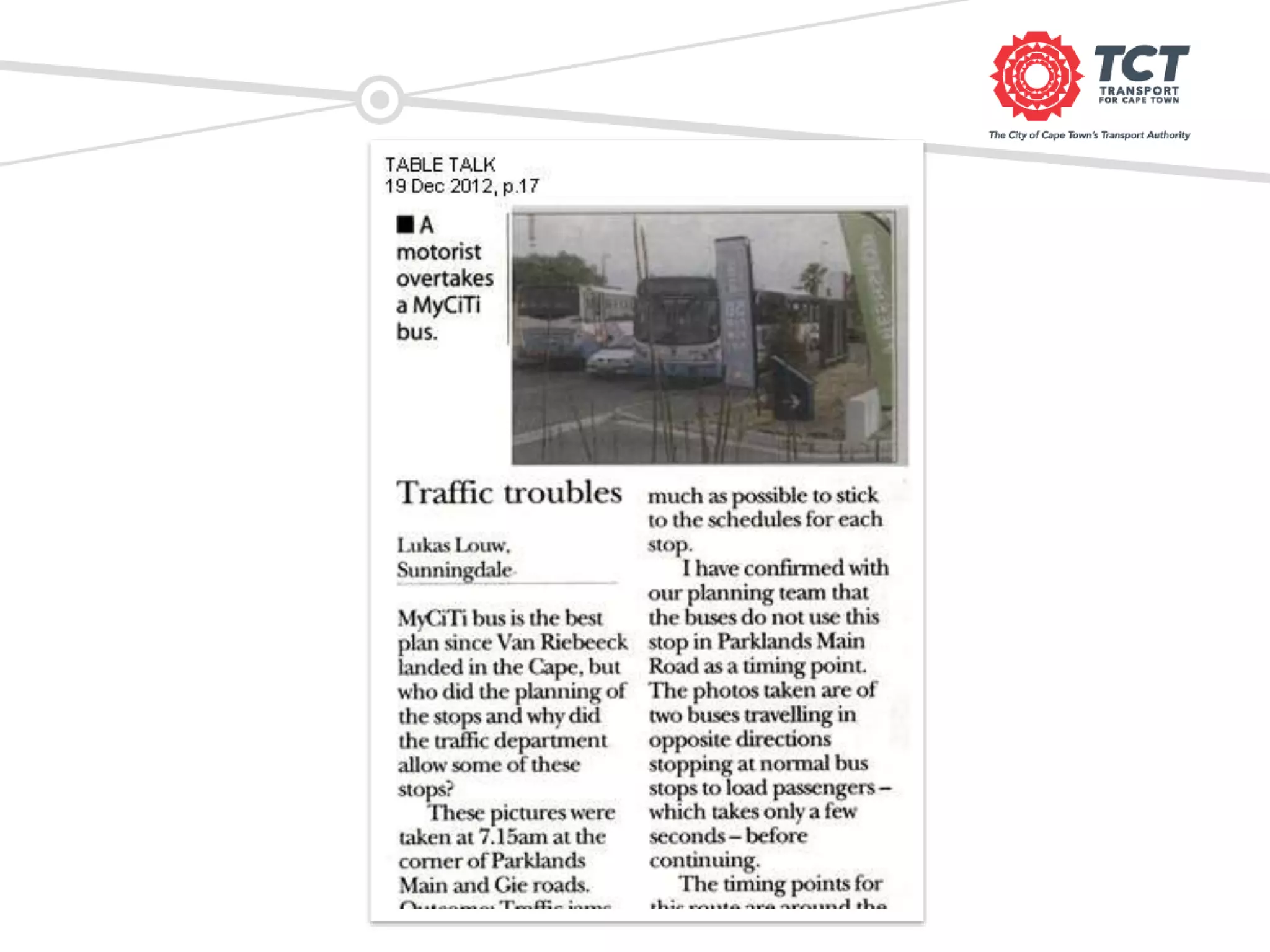
Opposition to stops and routes in privileged areas
• Location of stops and the choice of roads for bus routes is often contentious
• Communication is key
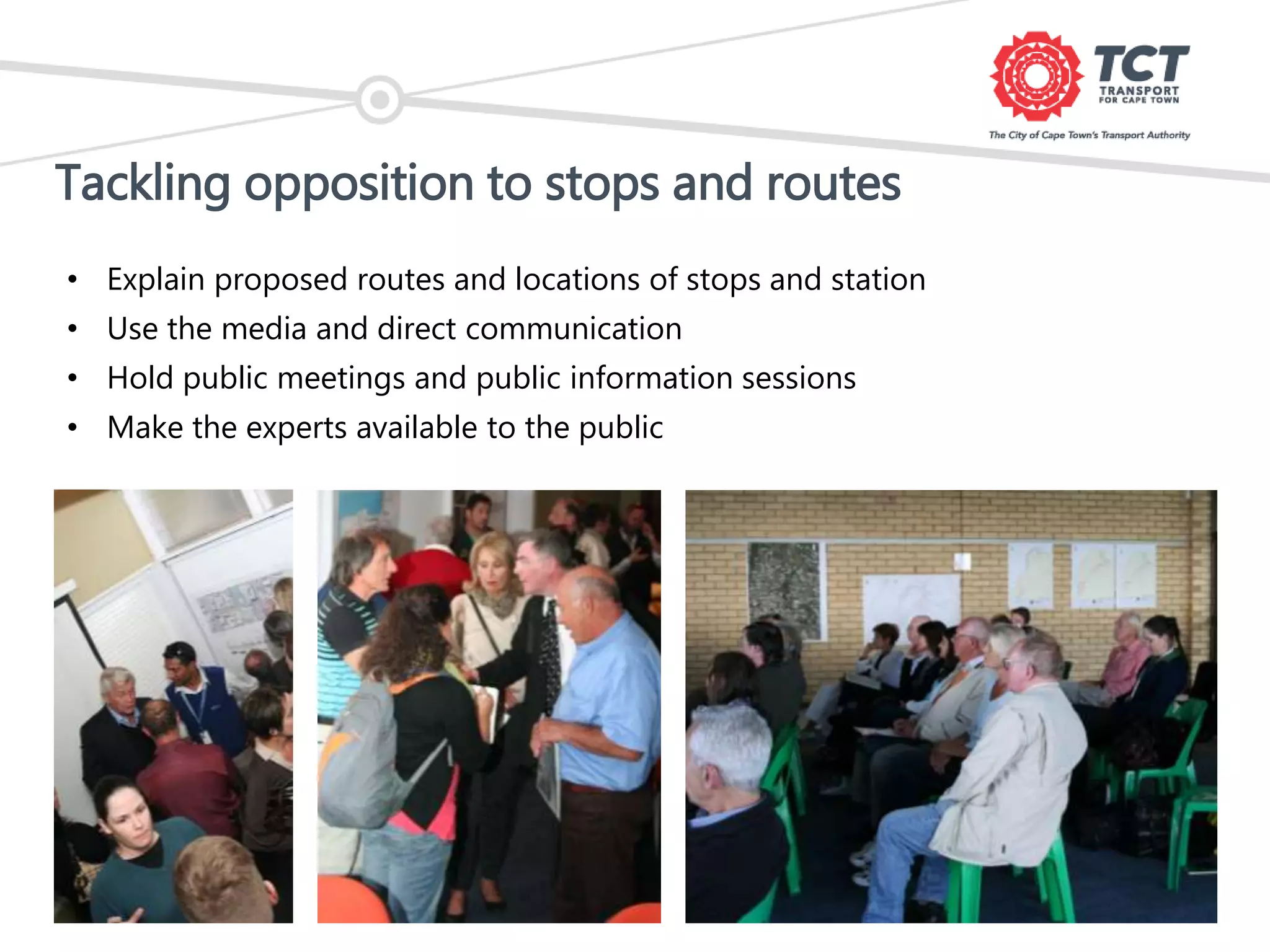
Tackling opposition to stops and routes
• Explain proposed routes and locations of stops and station
• Use the media and direct communication
• Hold public meetings and public information sessions
• Make the experts available to the public
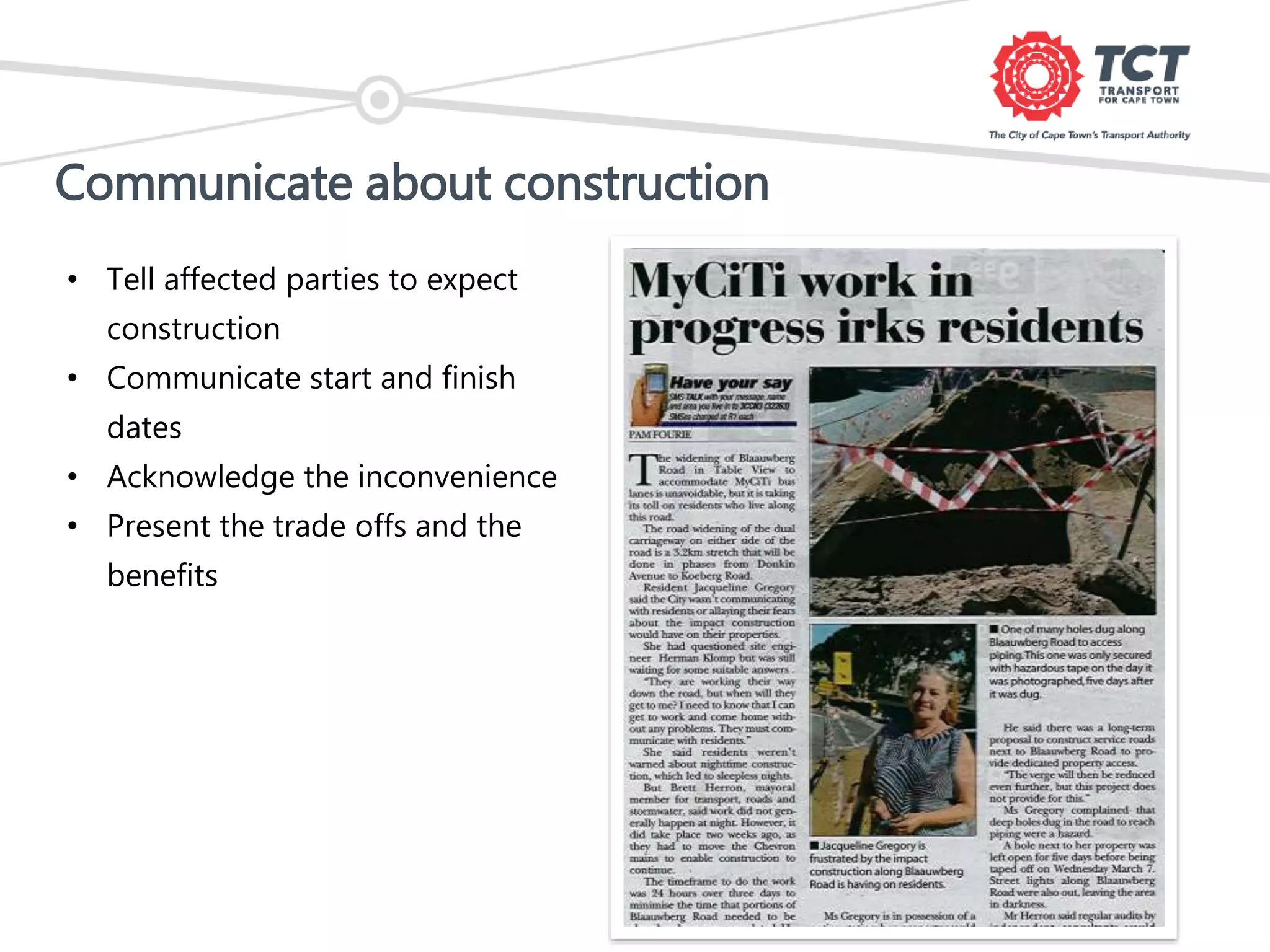
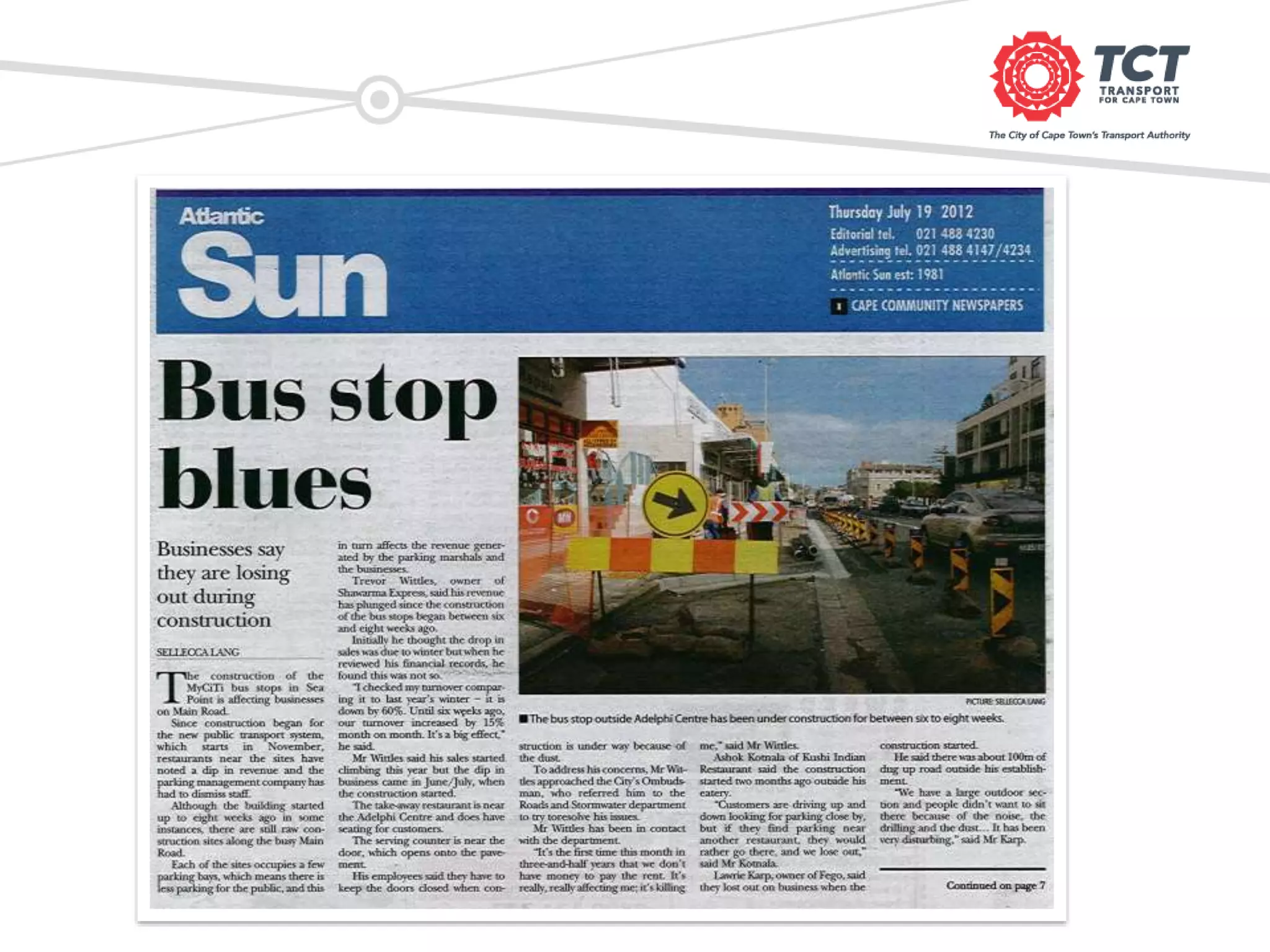
Communicate about construction
• Tell affected parties to expect
construction
• Communicate start and finish
dates
• Acknowledge the inconvenience
• Present the trade offs and the
benefits
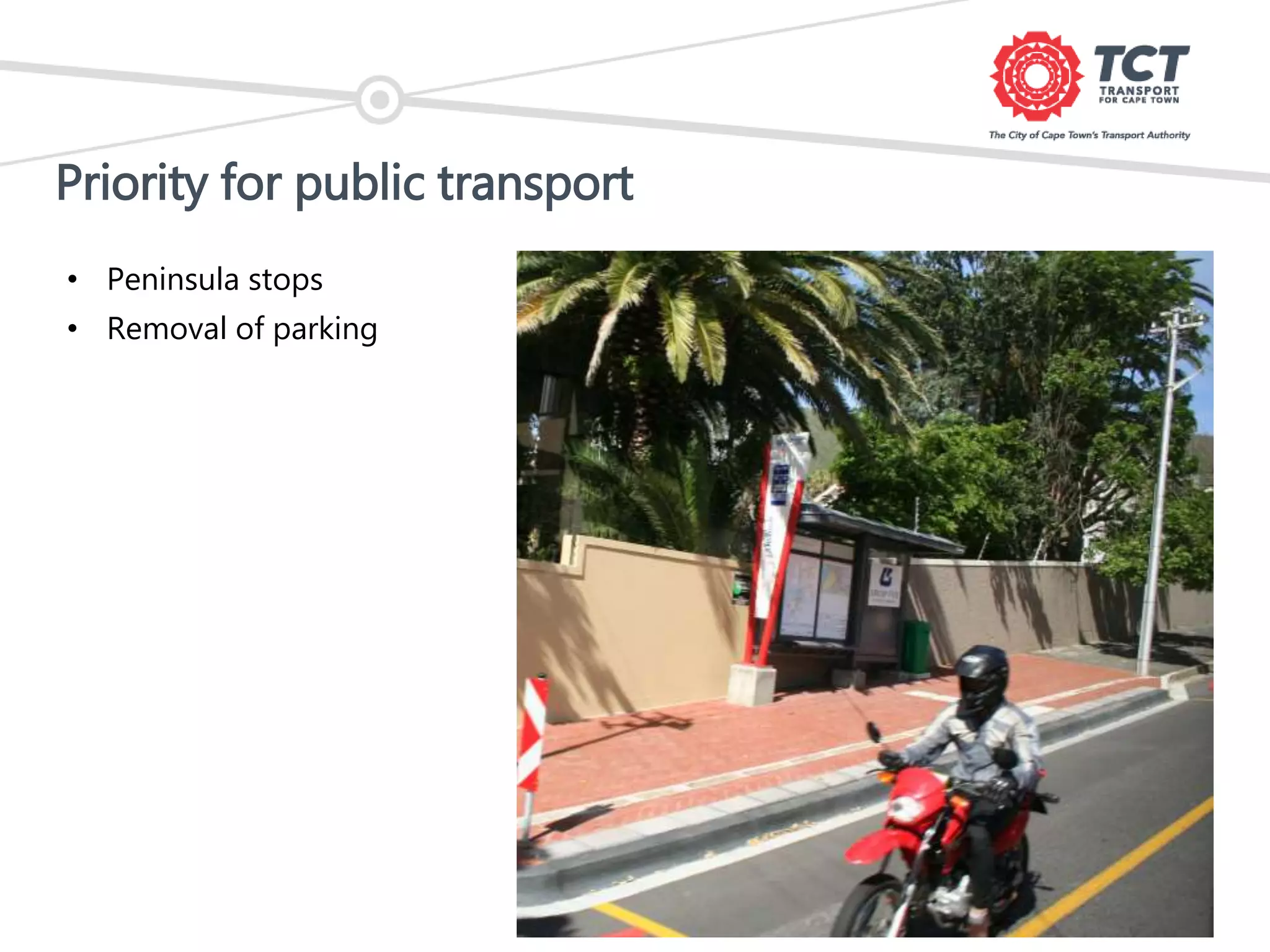
Priority for public transport
• Peninsula stops
• Removal of parking
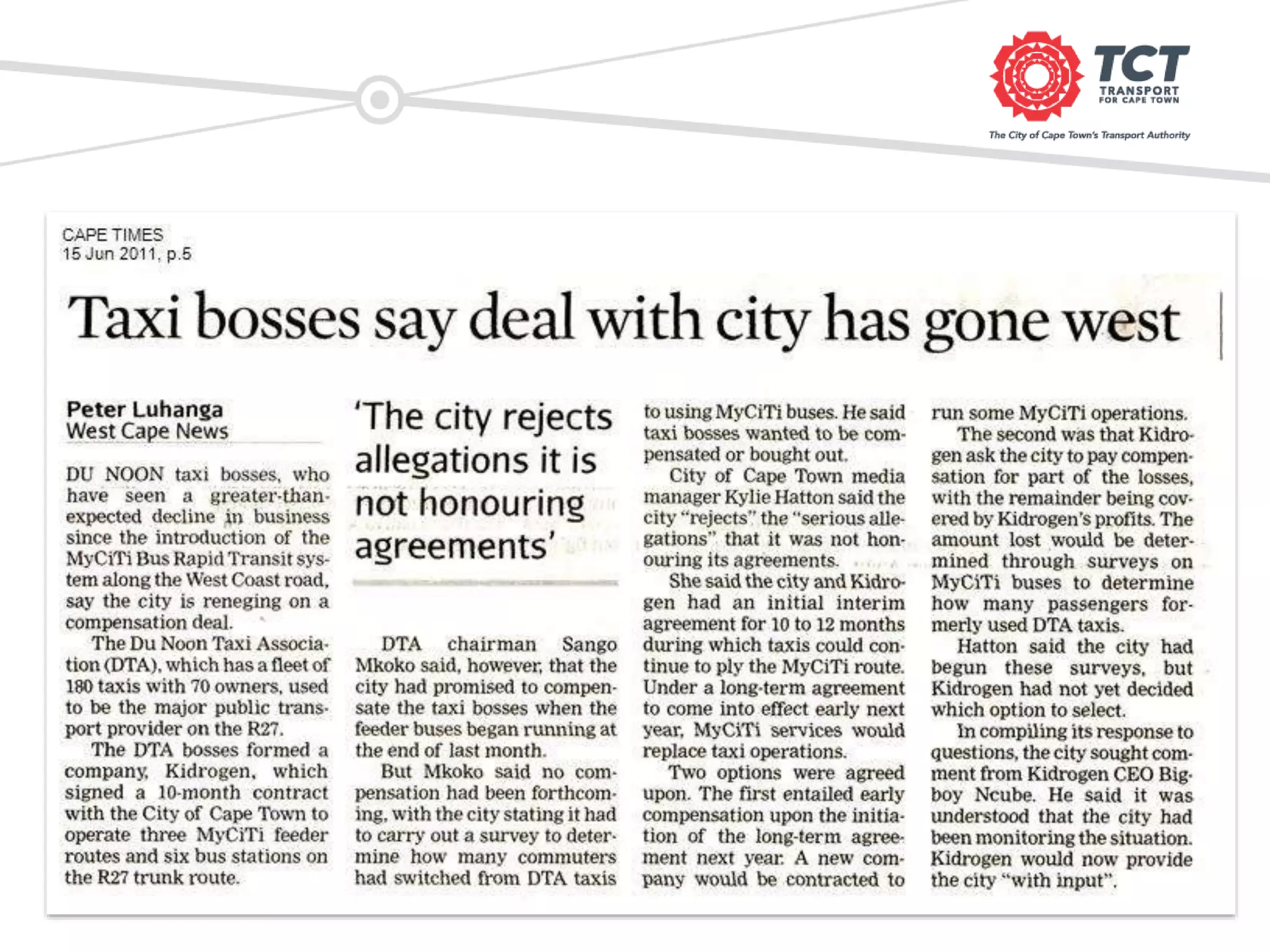
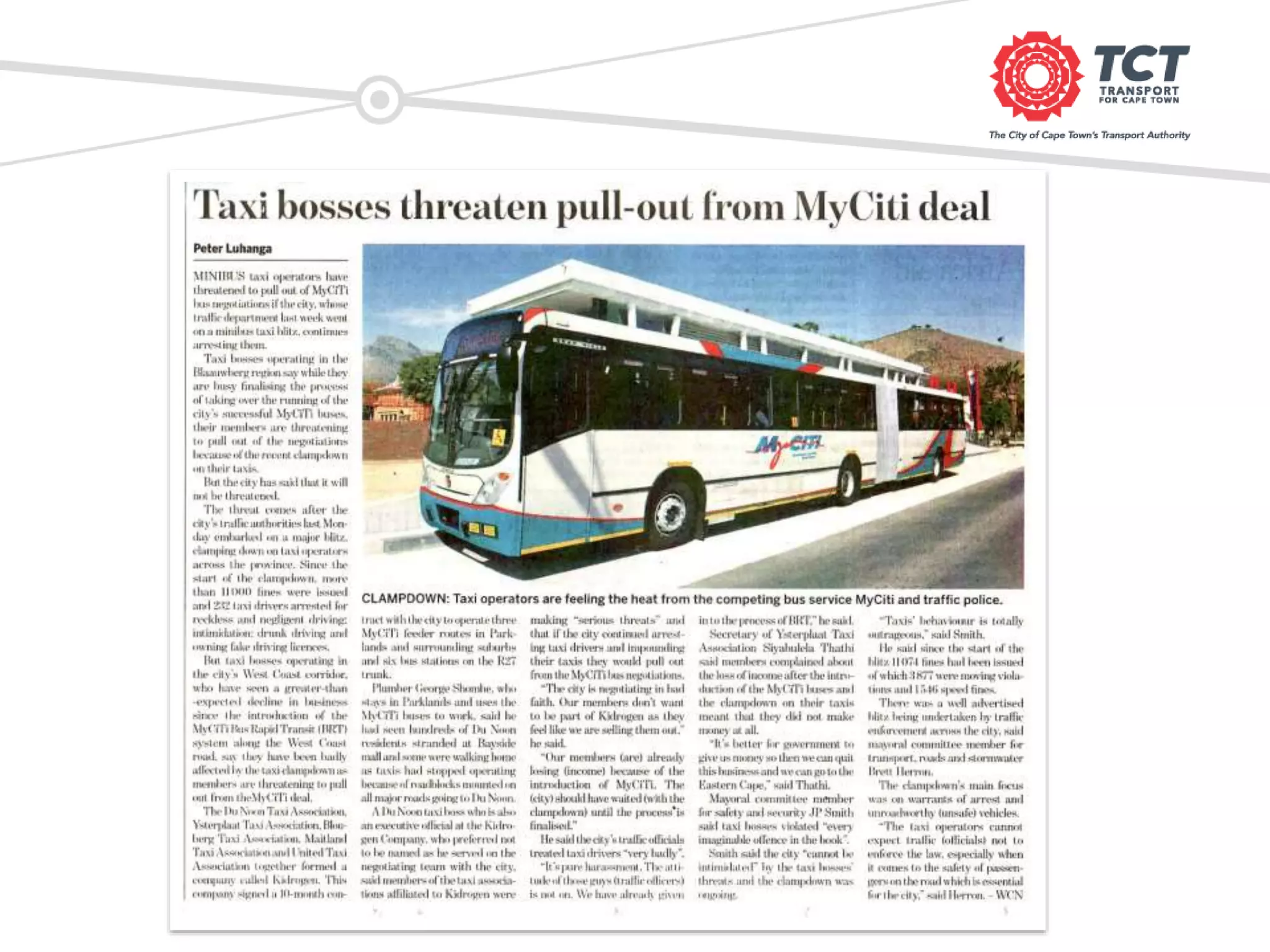
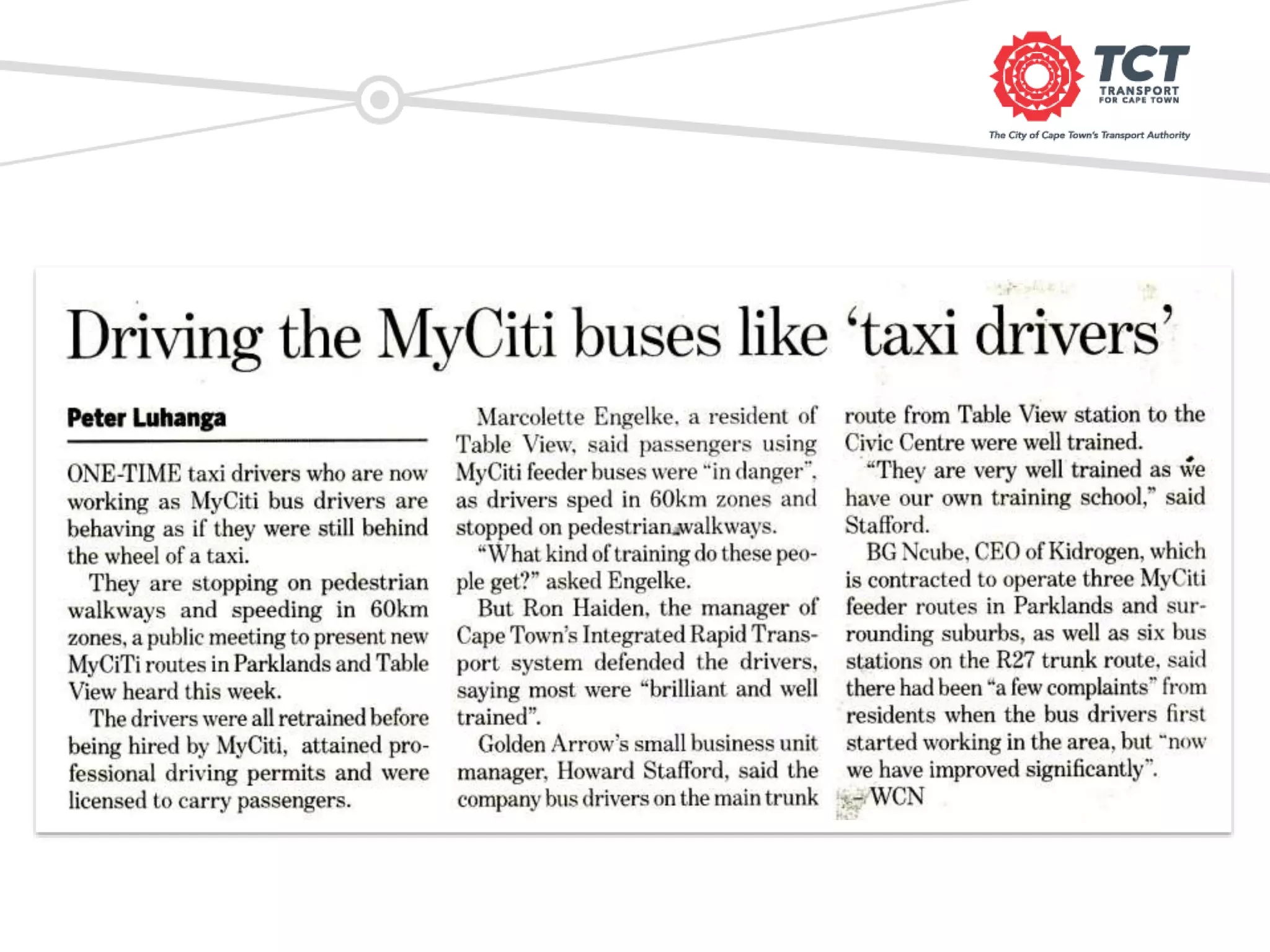
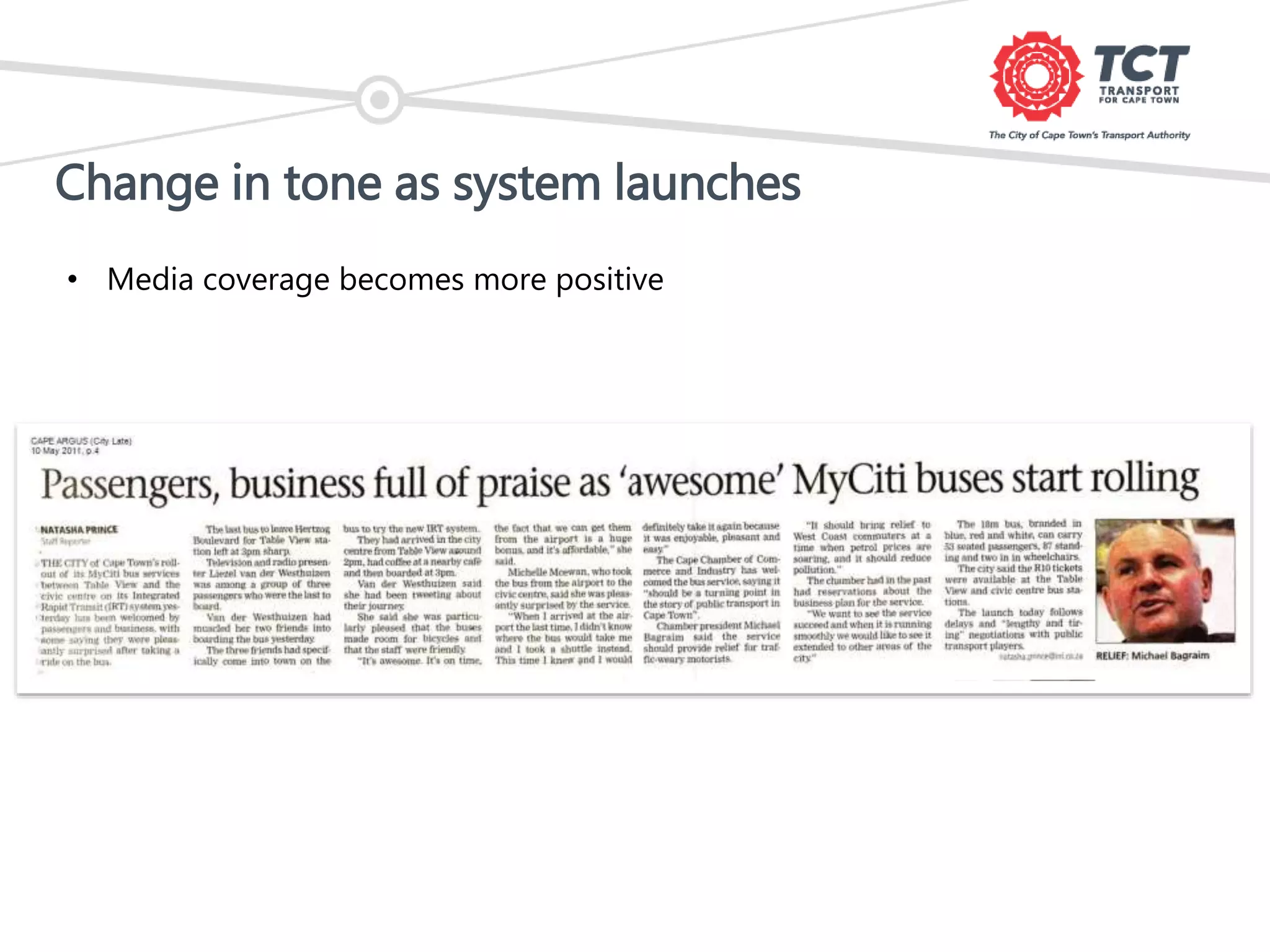
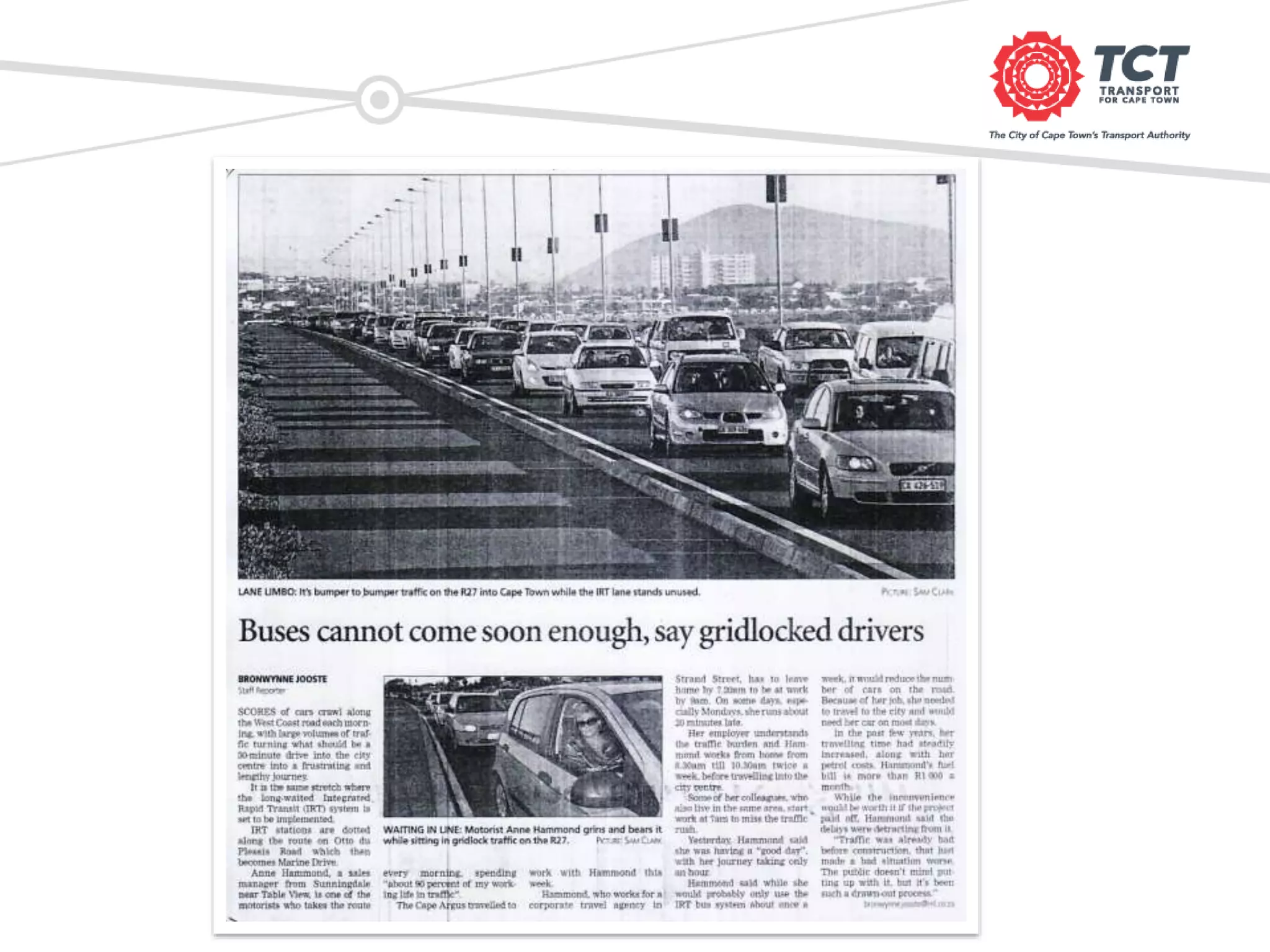
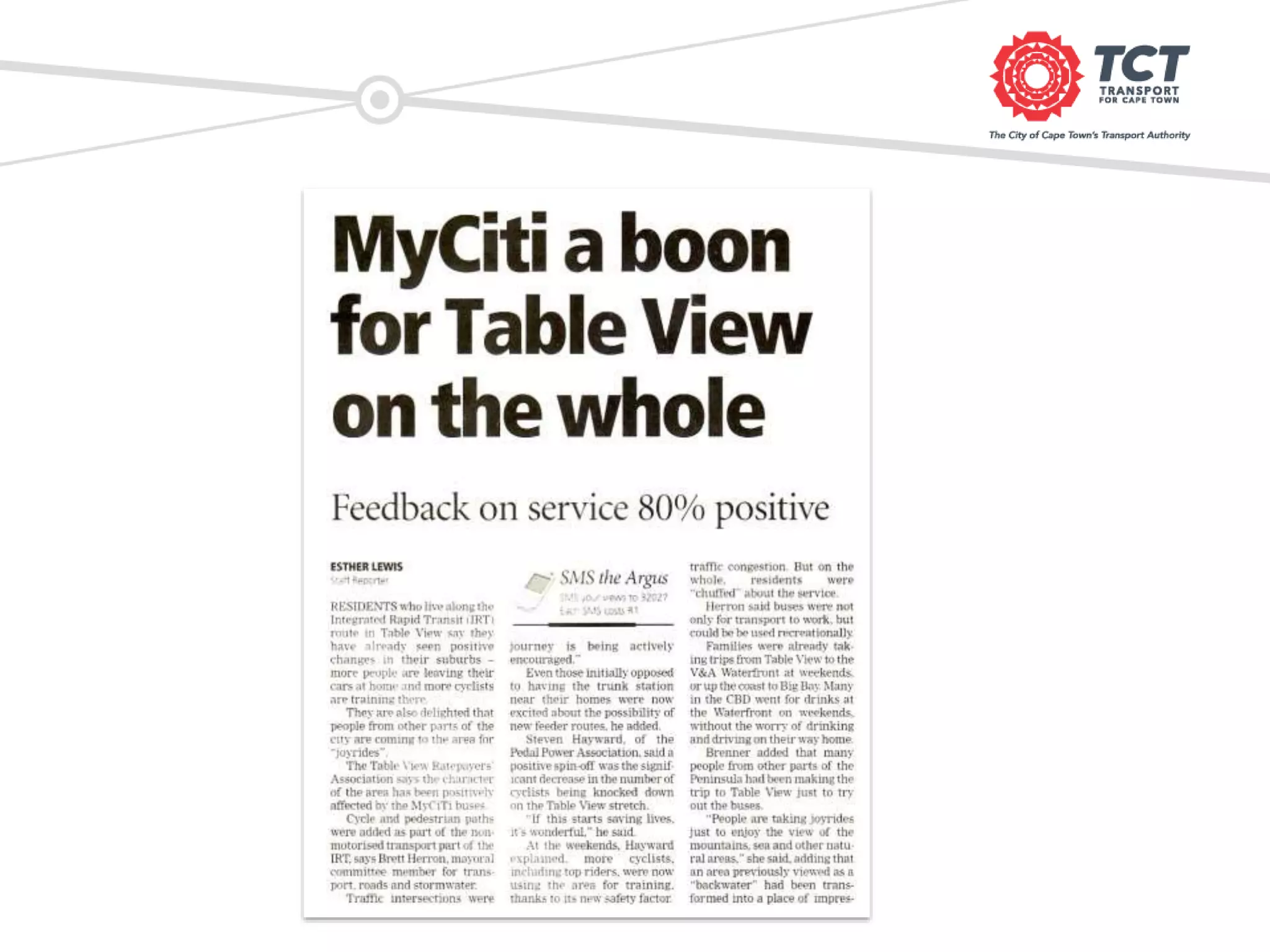
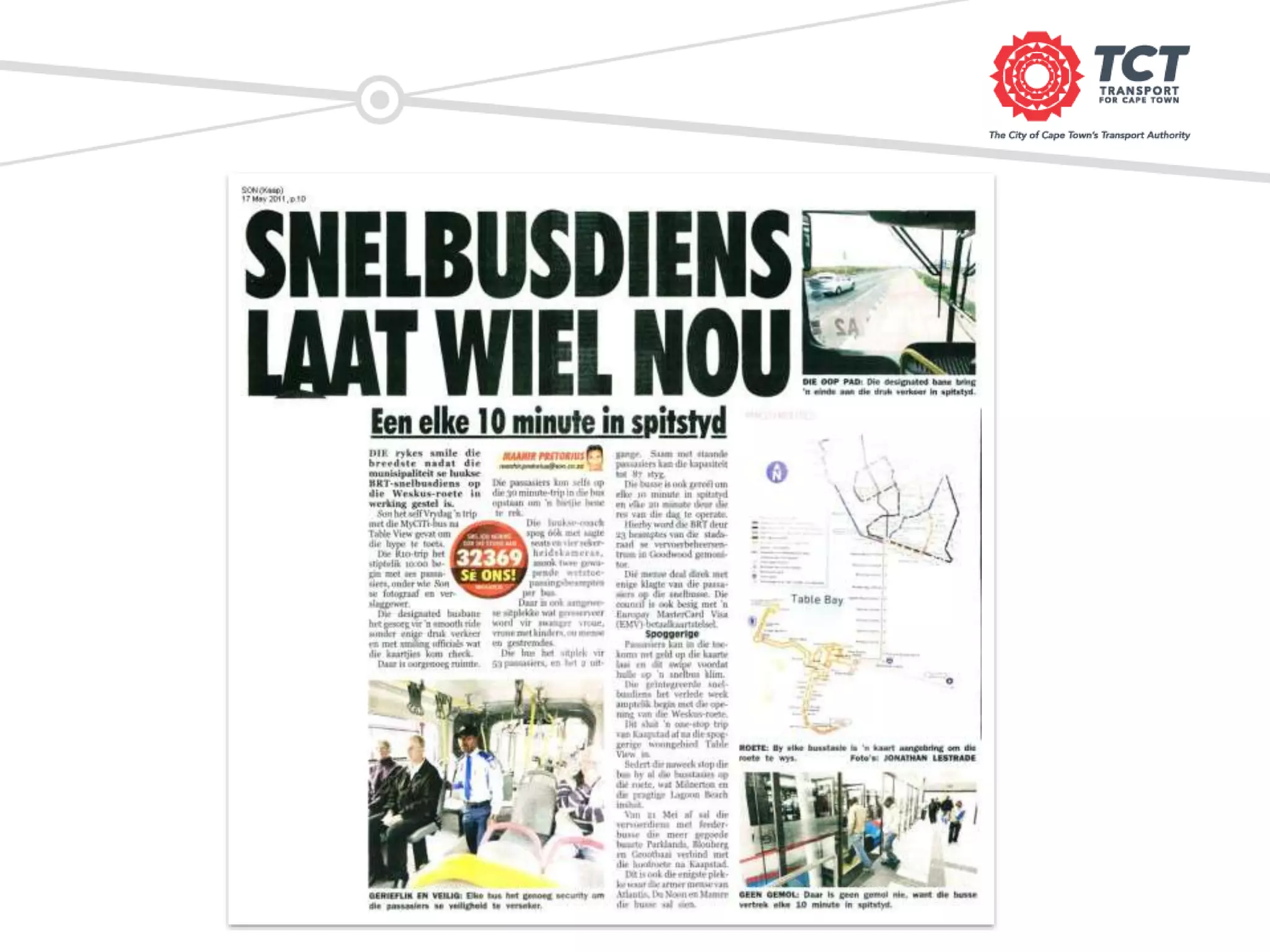
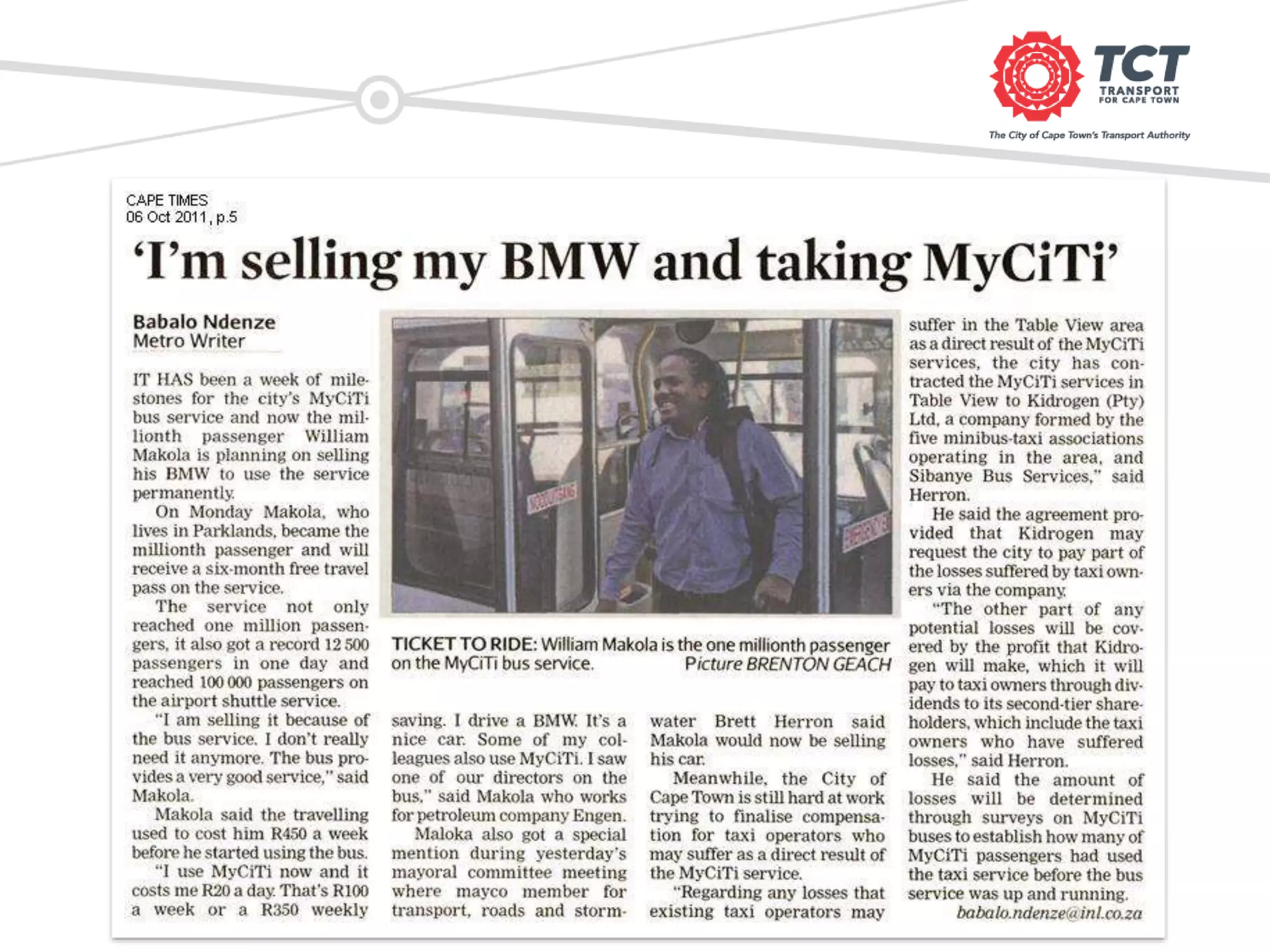
Change in tone as system launches
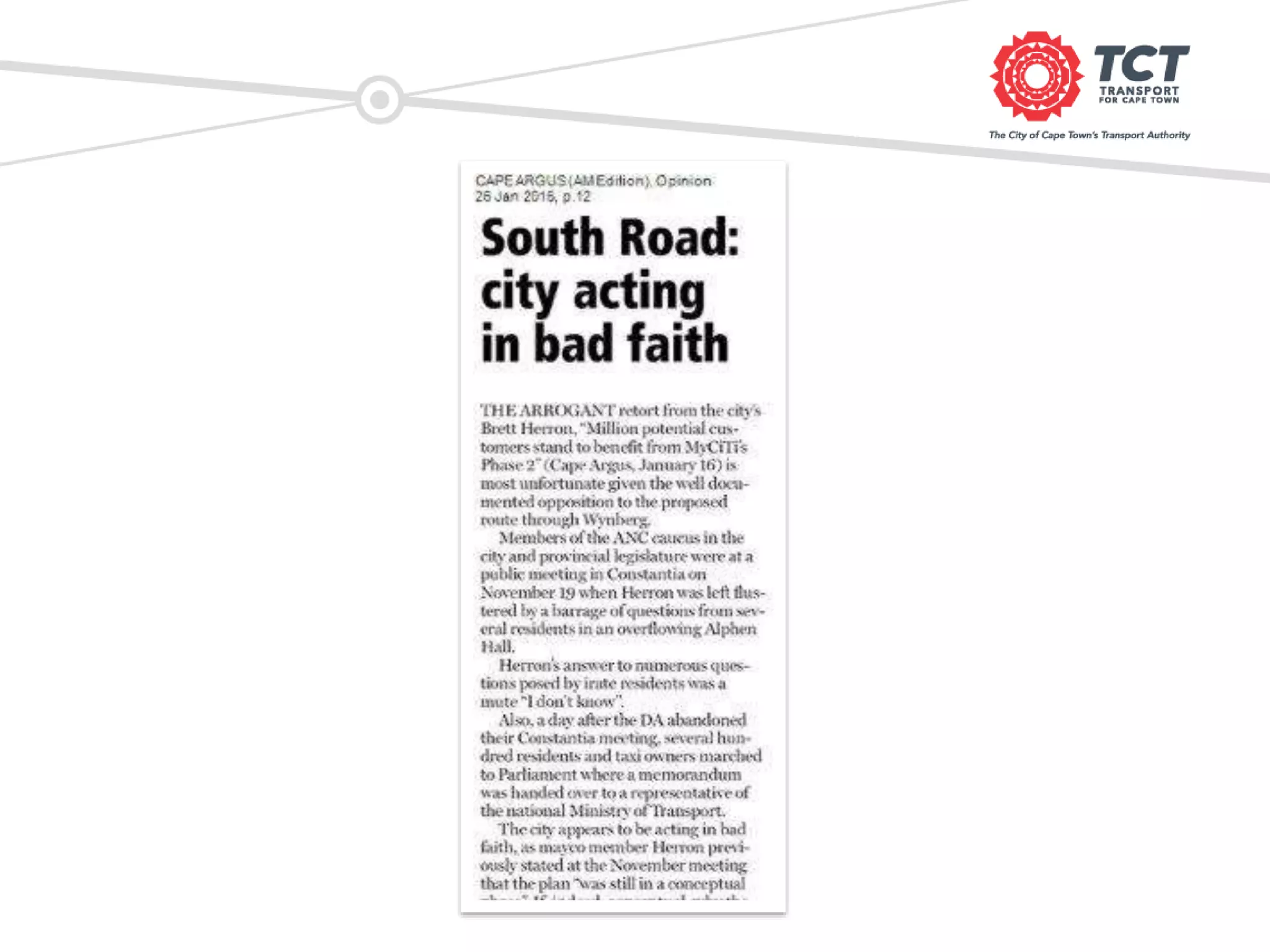
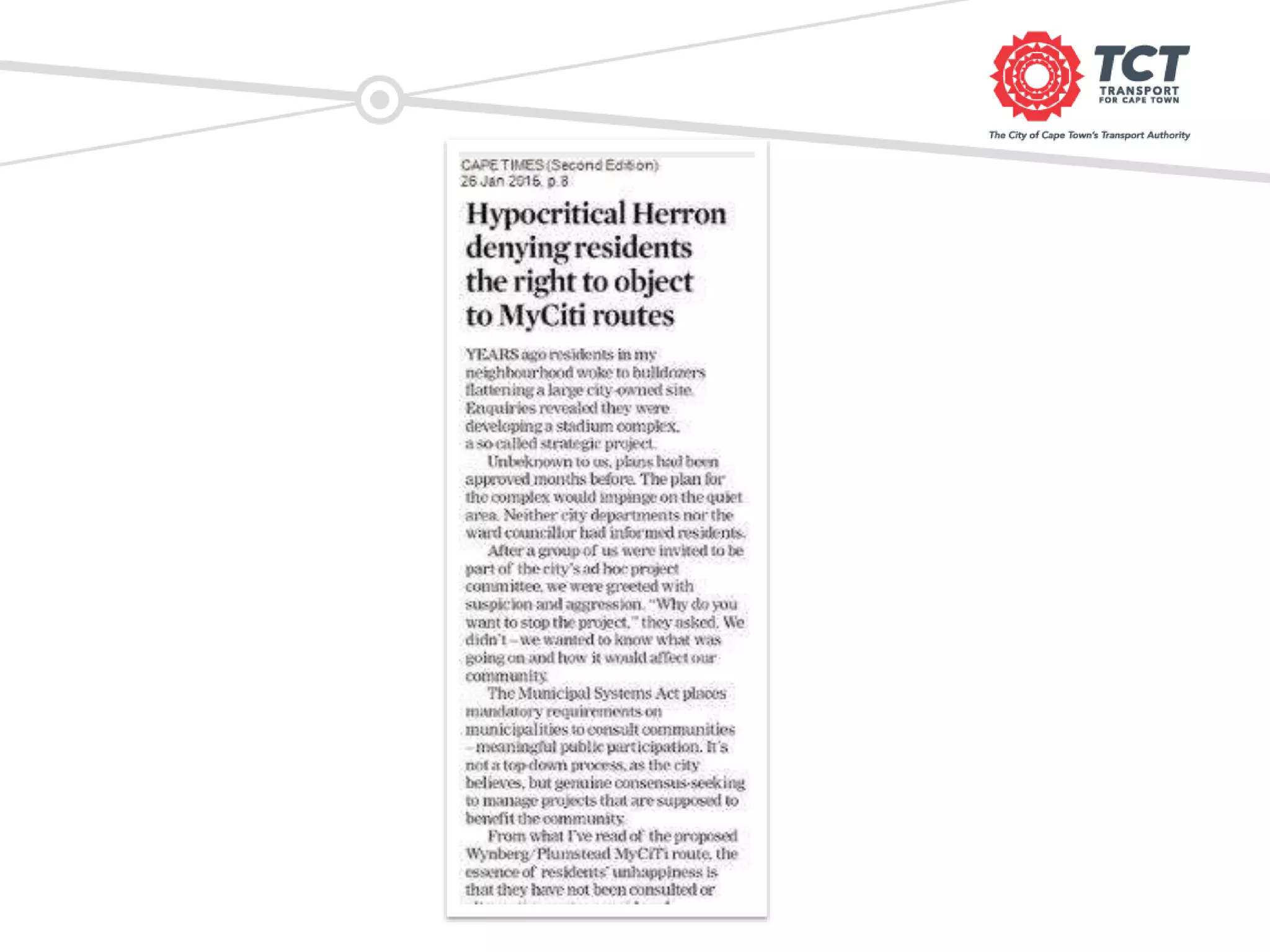
• Media coverage becomes more positive
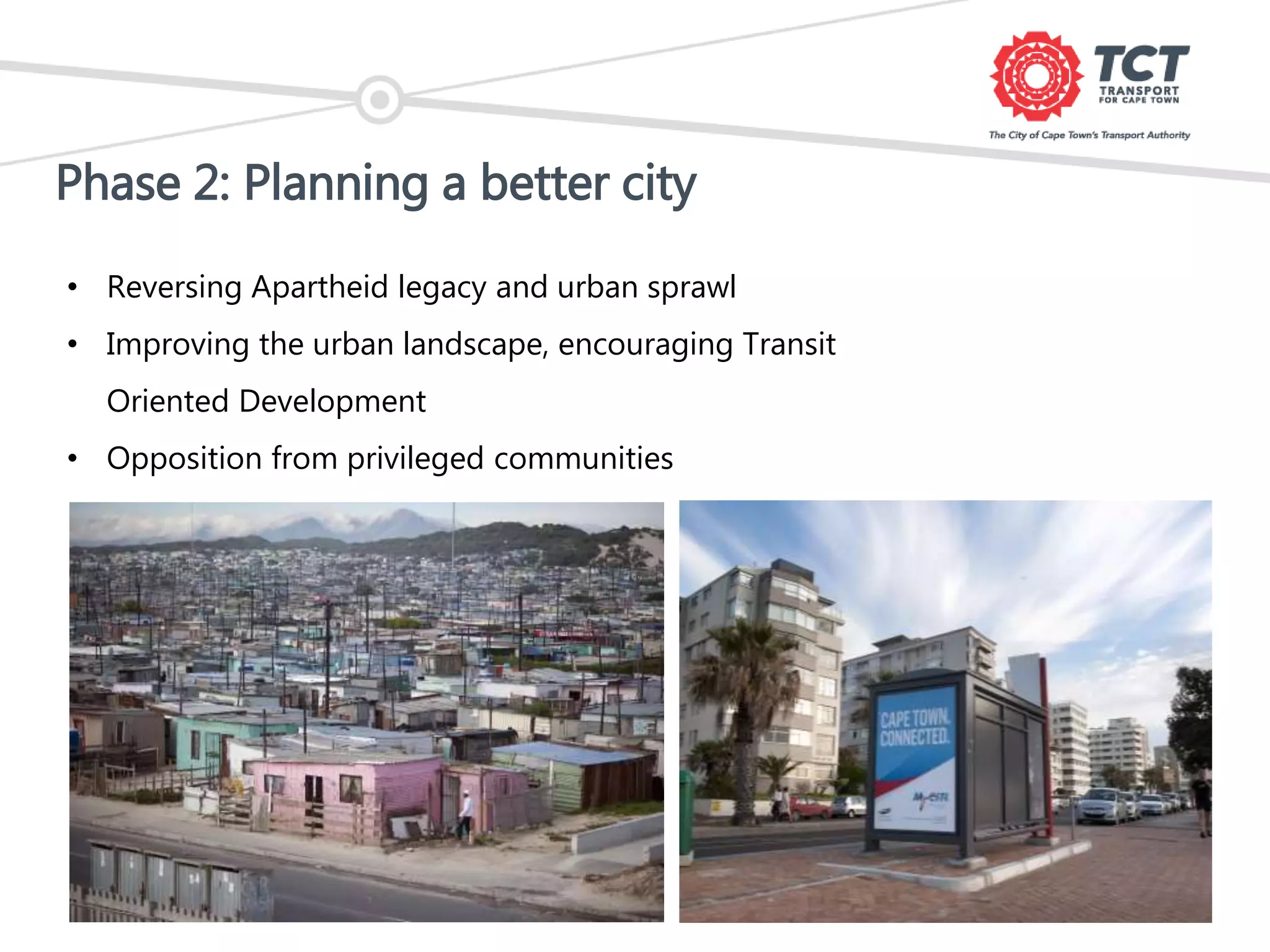
Phase 2: Planning a better city
• Reversing Apartheid legacy and urban sprawl
• Improving the urban landscape, encouraging Transit
Oriented Development
• Opposition from privileged communities
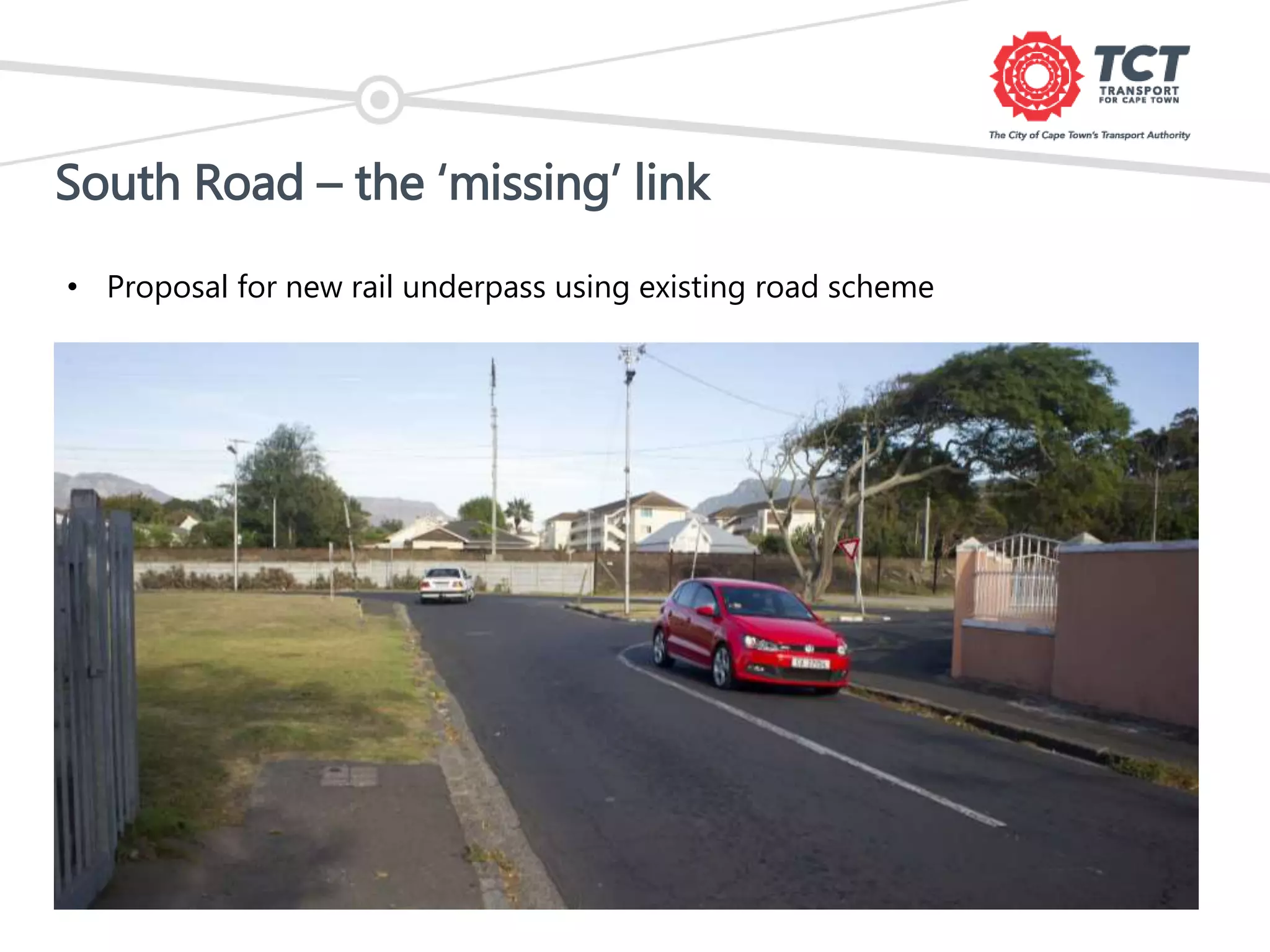
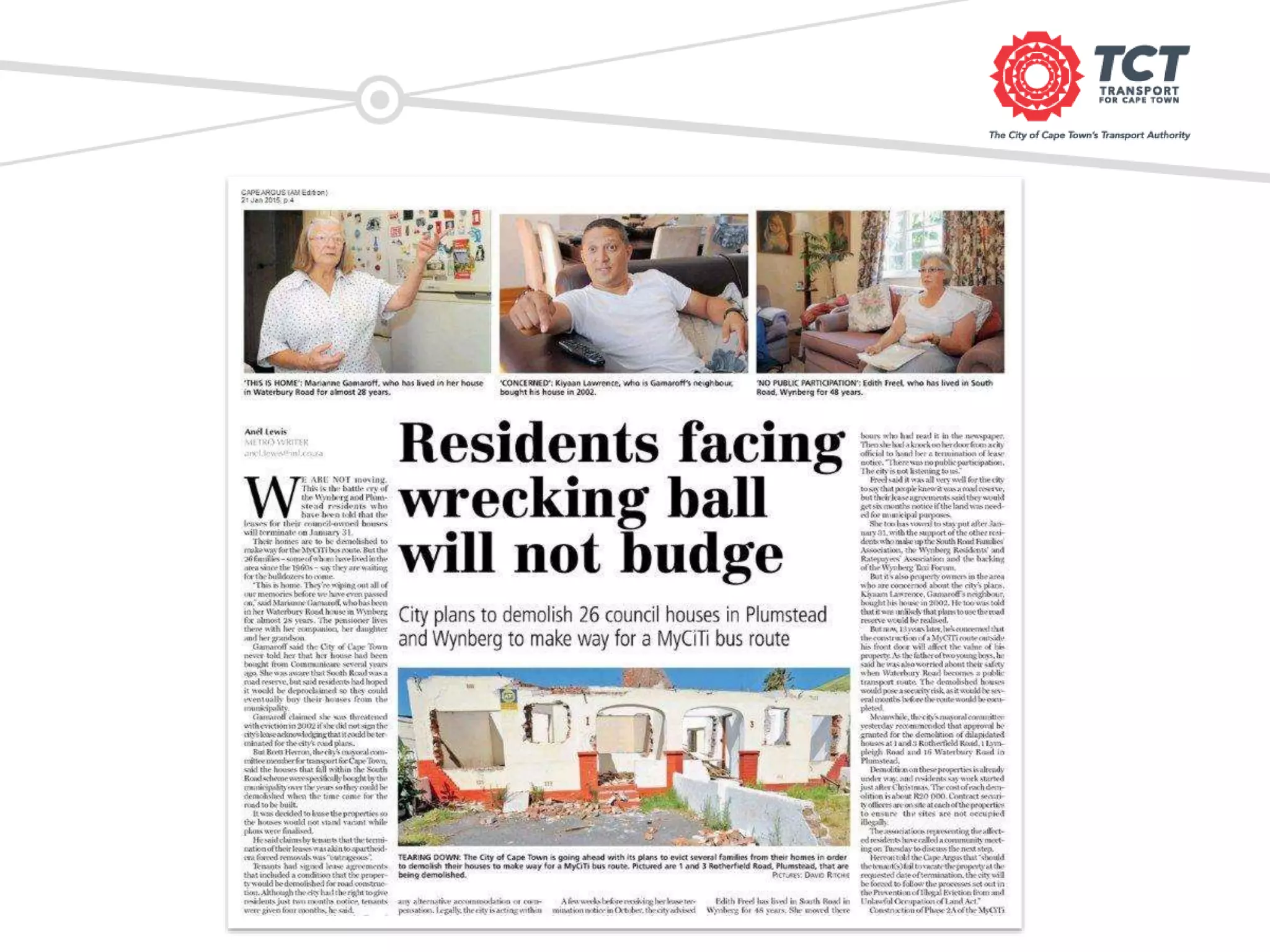
South Road – the ‘missing’ link
• Proposal for new rail underpass using existing road scheme
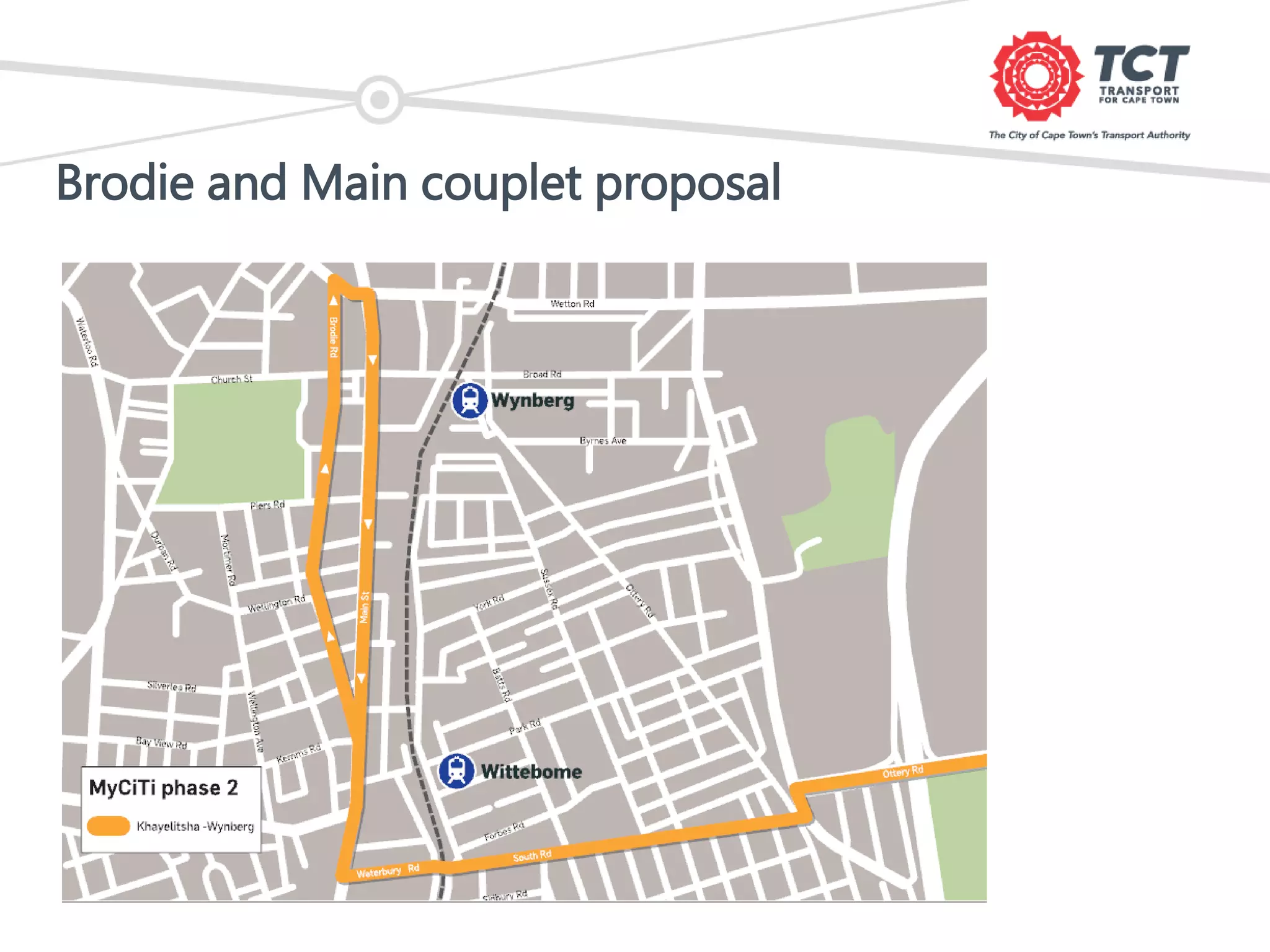
Brodie and Main couplet proposal
The South Road road scheme
• Road scheme approved in 1974
• One of 111 approved schemes across the city
• 368 council owned properties are in road schemes
• Road schemes support economic development and spatial planning
objectives as the city grows
• Process halted due to legal challenge
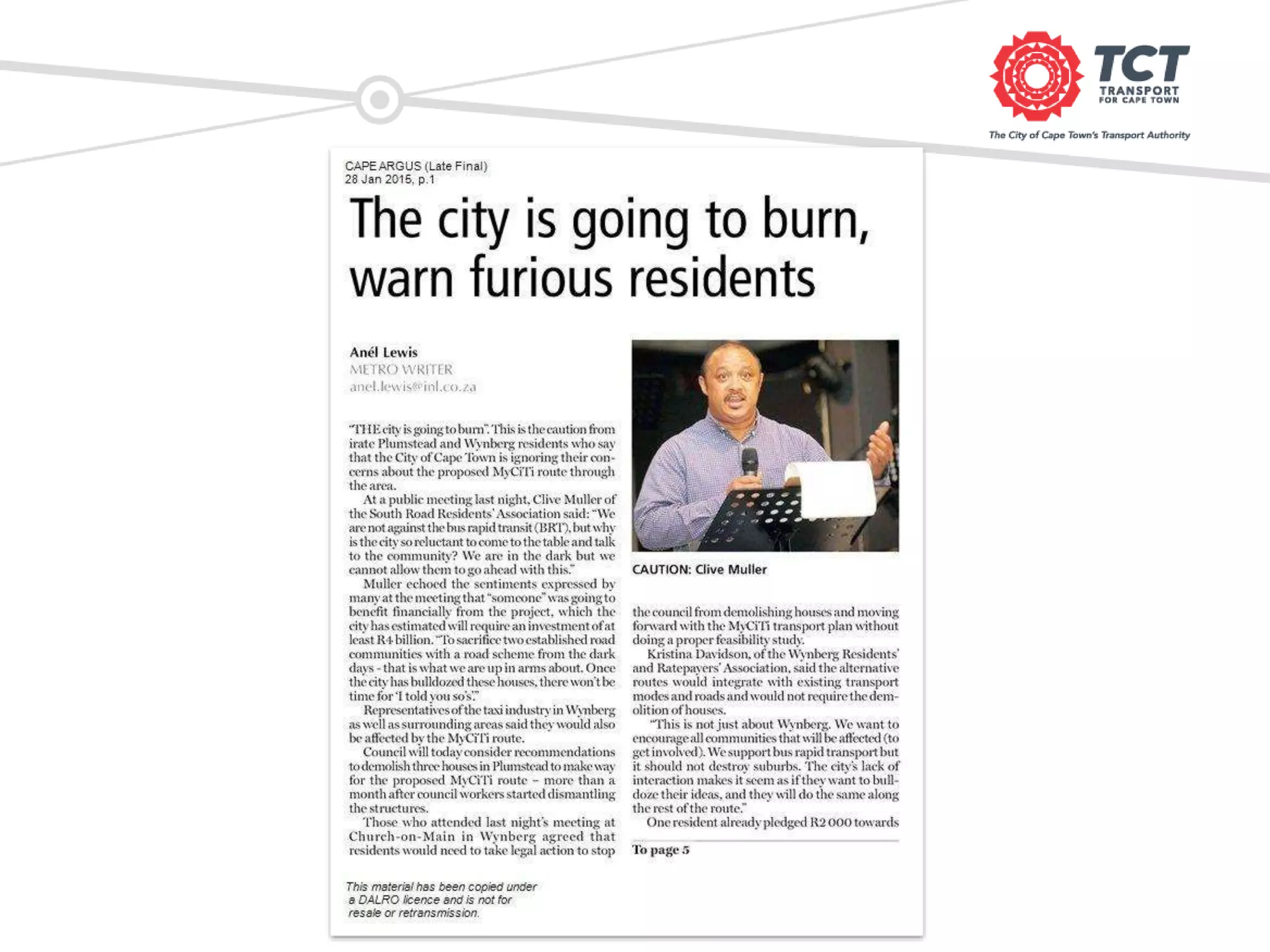
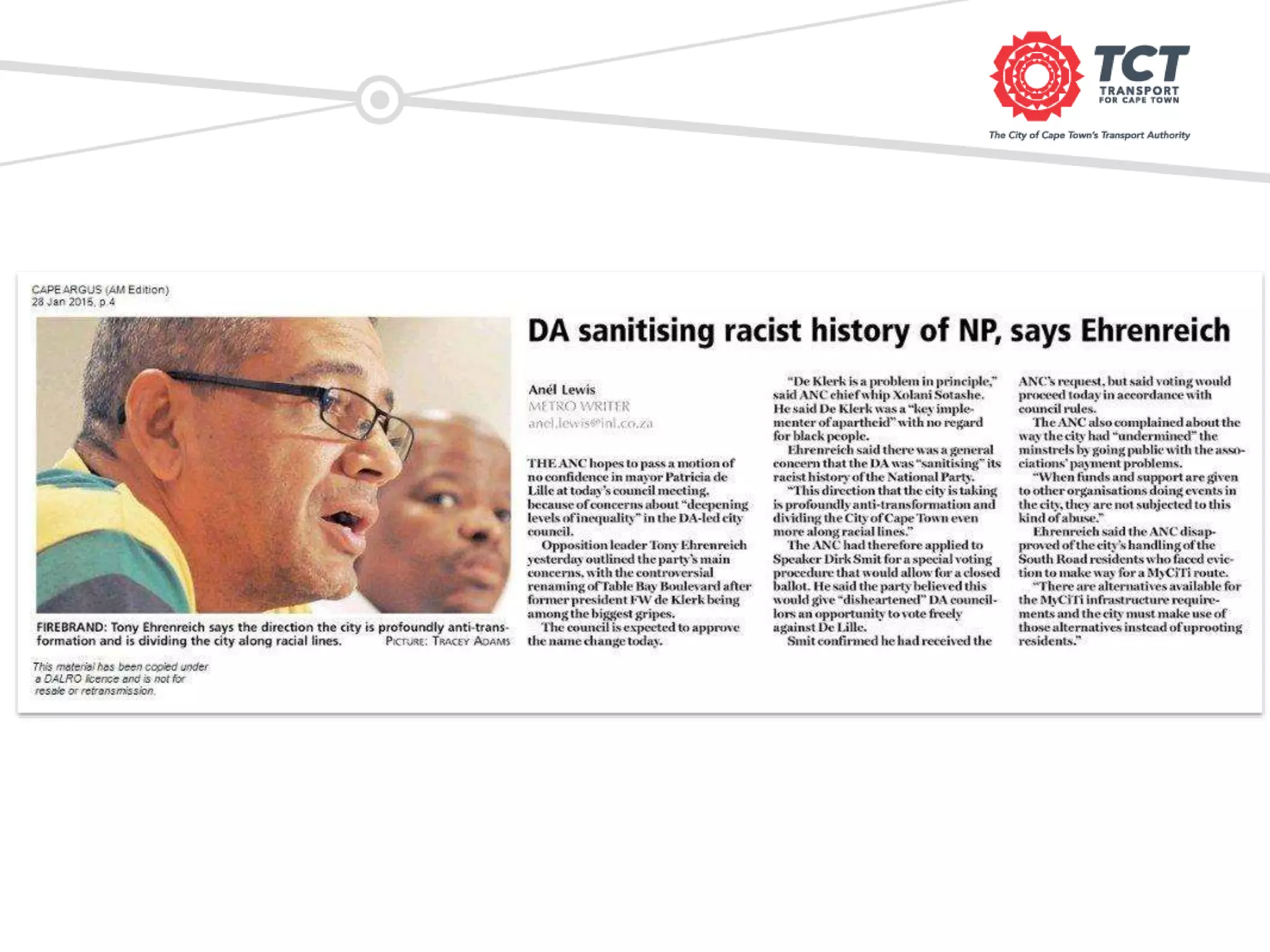
The phase 2 NIMBY challenge
• Dozens of public meetings with communities along the new routes
• Overwhelming support articulated for phase 2 by users of public transport
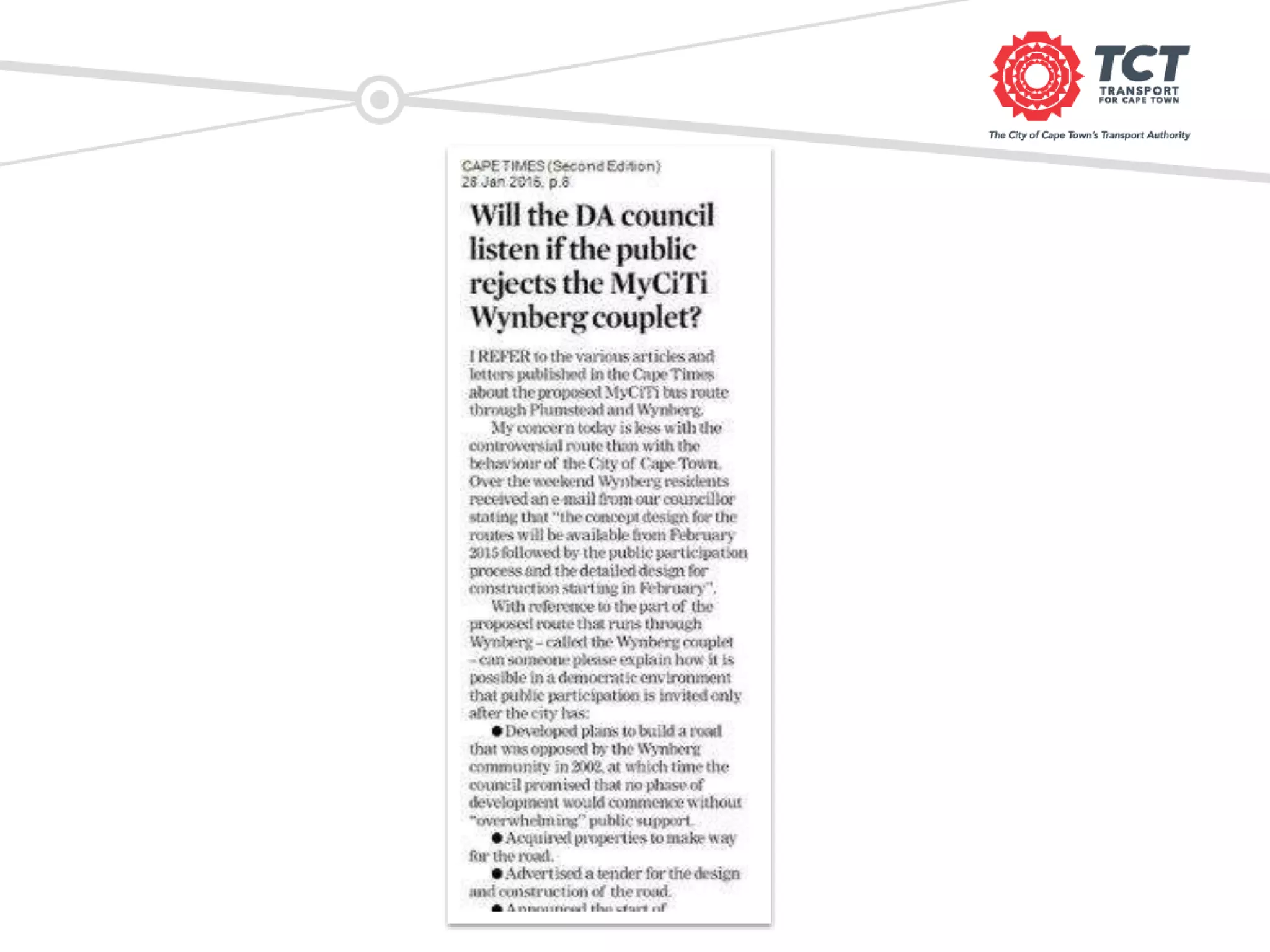
• Major opposition in Wynberg from private car users and privileged
• Objection to South Road underpass and couplet
• Vested interests continue to halt a plan that will link the formerly white
portion of Wynberg with people of the metro south east
• A handful of privileged households vs the interests of thousands denied
access to opportunity because of apartheid spatial planning
Conclusion
• Anticipate kneejerk Nimbyism
• Look for opportunities to build on the common ground that exists
• Ongoing communication is key
• Set aside time to engage with communities and stakeholders
• Those who shout the loudest may not be right
• The vulnerable, the poor and the marginal may not be heard above the more
loudly articulated needs and wants of those with vested interests and
resources
• Public authorities need to act in the public interest and in support of social
and economic development that benefit a broad cross section and creates
new opportunities in our society
Thank you

NIMBYism and the transport vision

  • 1.
    NIMBYism and the transportvision Councillor Brett Herron, Mayoral Committee Member: Transport for Cape Town July 2016 Southern African Transport Conference
  • 2.
    Cape Town’s transportvision • Priority for public transport • Integration between modes • Reducing the cost of the user access priority
  • 3.
    About MyCiTi • Launchedin 2010 for Soccer World Cup
  • 4.
    About MyCiTi • Firstcommuter services in 2011
  • 5.
    About MyCiTi • Combinationof BRT with dedicated lanes and closed stations, and buses operating in mixed traffic with kerbside stops • 42 closed stations • 350 pairs of stops
  • 6.
    About MyCiTi • 44routes • 40 million + passenger journeys to date • In July 2013 – 283 048 passenger journeys made • In May 2016 – 1 712 960 passenger journeys made
  • 7.
    About MyCiTi • Phase1 completed • Planning for Phase 2 underway • R6 billion investment (TBC)
  • 8.
    MyCiTi Phase 1 Agrowing network of services and routes
  • 9.
    Support and oppositionfor new public transport • Enthusiasm as well as opposition • Vocal minority opposed • Issues include • Costs and debate about public investment • Concern about minibus taxi industry in the system; • Sequencing of the roll out; and • Location of infrastructure, amongst other issues. • Range of concerns based on diverse vested interests
  • 10.
    Early opponents • FlamingoVlei • Vigorous opposition • Route planned for the area withdrawn • Now area markets itself as being on the system
  • 11.
    Opposition to stopsand routes in privileged areas • Location of stops and the choice of roads for bus routes is often contentious • Communication is key
  • 12.
    Tackling opposition tostops and routes • Explain proposed routes and locations of stops and station • Use the media and direct communication • Hold public meetings and public information sessions • Make the experts available to the public
  • 13.
    Communicate about construction •Tell affected parties to expect construction • Communicate start and finish dates • Acknowledge the inconvenience • Present the trade offs and the benefits
  • 14.
    Priority for publictransport • Peninsula stops • Removal of parking
  • 24.
    Change in toneas system launches • Media coverage becomes more positive
  • 29.
    Phase 2: Planninga better city • Reversing Apartheid legacy and urban sprawl • Improving the urban landscape, encouraging Transit Oriented Development • Opposition from privileged communities
  • 31.
    South Road –the ‘missing’ link • Proposal for new rail underpass using existing road scheme
  • 32.
    Brodie and Maincouplet proposal
  • 33.
    The South Roadroad scheme • Road scheme approved in 1974 • One of 111 approved schemes across the city • 368 council owned properties are in road schemes • Road schemes support economic development and spatial planning objectives as the city grows • Process halted due to legal challenge
  • 34.
    The phase 2NIMBY challenge • Dozens of public meetings with communities along the new routes • Overwhelming support articulated for phase 2 by users of public transport • Major opposition in Wynberg from private car users and privileged • Objection to South Road underpass and couplet • Vested interests continue to halt a plan that will link the formerly white portion of Wynberg with people of the metro south east • A handful of privileged households vs the interests of thousands denied access to opportunity because of apartheid spatial planning
  • 42.
    Conclusion • Anticipate kneejerkNimbyism • Look for opportunities to build on the common ground that exists • Ongoing communication is key • Set aside time to engage with communities and stakeholders • Those who shout the loudest may not be right • The vulnerable, the poor and the marginal may not be heard above the more loudly articulated needs and wants of those with vested interests and resources • Public authorities need to act in the public interest and in support of social and economic development that benefit a broad cross section and creates new opportunities in our society
  • 43.