NEUROLOGY


THE FAR REACHING IMPACT
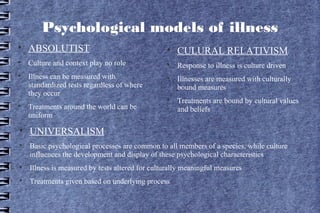
Psychological models of illness

    ABSOLUTIST                                   
                                                     CULURAL RELATIVISM

    Culture and context play no role             
                                                     Response to illness is culture driven

    Illness can be measured with                 
                                                     Illnesses are measured with culturally
    standardized tests regardless of where           bound measures
    they occur
                                                 
                                                     Treatments are bound by cultural values

    Treatments around the world can be               and beliefs
    uniform

    UNIVERSALISM

    Basic psychological processes are common to all members of a species, while culture
    influences the development and display of these psychological characteristics

    Illness is measured by tests altered for culturally meaningful measures

    Treatments given based on underlying process
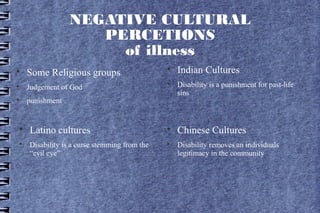
NEGATIVE CULTURAL
                    PERCETIONS
                      of illness

    Some Religious groups
                                              
                                                  Indian Cultures

    Judgement of God
                                              
                                                  Disability is a punishment for past-life
                                                  sins

    punishment



    Latino cultures                           
                                                  Chinese Cultures

    Disability is a curse stemming from the   
                                                  Disability removes an individuals
    “evil eye”                                    legitimacy in the community
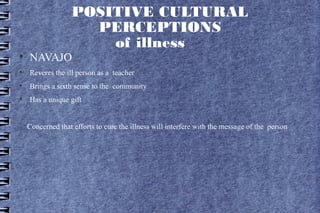
POSITIVE CULTURAL
                     PERCEPTIONS
                       of illness

    NAVAJO

    Reveres the ill person as a teacher

    Brings a sixth sense to the community

    Has a unique gift


    Concerned that efforts to cure the illness will interfere with the message of the person
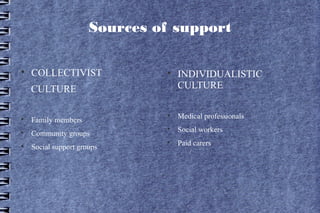
Sources of support


    COLLECTIVIST               
                                   INDIVIDUALISTIC
    CULTURE                        CULTURE

                               
                                   Medical professionals

    Family members
                               
                                   Social workers

    Community groups
                               
                                   Paid carers

    Social support groups
Sources of support


    COLLECTIVIST               
                                   INDIVIDUALISTIC
    CULTURE                        CULTURE

                               
                                   Medical professionals

    Family members
                               
                                   Social workers

    Community groups
                               
                                   Paid carers

    Social support groups
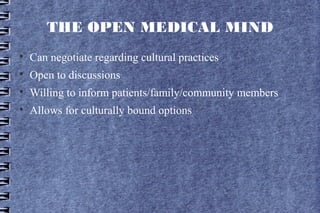
THE OPEN MEDICAL MIND

    Can negotiate regarding cultural practices

    Open to discussions

    Willing to inform patients/family/community members

    Allows for culturally bound options
Erving Goffman

        defined stigma as ‘‘the situation

of the individual who is disqualified from full social

                    acceptance”
CONCEALABILITY

Can the neurological illness be hidden, or is it obvious?
Is the patient bound to a wheelchair?

Can they control their own body functions and movements (spasticity)?

Is there visible paralysis (hemiparesis)?

Is their speech slurred and/or overly loud (Aphasia)?

Is there evidence of incontinence?

Does the patient follow social norms?
COURSE

HOW WILL THE ILLNESS PROGRESS OVER TIME?

Will dementia worsen – cognitive abilities?

Will aphasia progress – comprehend and participate in communication?

Will the Pseudobulbar affect worsen – inappropriate laughing or crying?

Will depression worsen?

Will the ability to follow social norms diminish?
DISRUPTIVENESS

INTERFERENCE WITH USUAL PATTERNS OF SOCIAL INTERACTIONS

Cognitive abilities

Communication abilities

Vascular Dementia

Pseudobulbar affect, sometimes referred to as emotional lability, pathological crying
   and laughing or emotional incontinence.
ORIGIN

PERCEIVED CAUSE AND LEVEL OF RESPONSIBILITY A PERSON HAS FOR

CONTRACTING THE ILLNESS

Poor lifestyle choices – excessive drinking, drugs, sexual behaviors, overweight etc

Perpetual self induced stress

Lack of self-care

Ignored warning signs
PERIL

FEAR AND DANGER ASSOCIATED WITH A PERSON'S ILLNESS

Can that happen to me?

How do I behave now they are sick?

Loss of the person I knew

Fear of embarrassing myself
References

Bergen, D. C. (2008). Neurological Disorders: Public Health Challenges. Archives of Neurology, 65(1), 154.

Duffey, T., & Somody , C. (201). The role of relational-cultural theory in mental health counseling. Journal of Mental Health Counseling,
     33(3), 223-242.

McCabe, M. P., Roberts, C., & Firth, L. (2008). Work and recreational changes among people with neurological illness and their caregivers.
   Disability and Rehabilitation, 30(8), 600-610. doi: 10.1080/09638280701400276.

O’Connor, E. J., & McCabe, M. P. (2011). Predictors of quality of life in carers for people with a progressive neurological illness: A
    longitudinal study. Quality Life Research, 20, 703-711. doi: 0.1007/s11136-010-9804-4.

Rao, D., Choi, S. W., Victorson, D., Bode, R., Peterman, A., Heinemann, A., & Cella, D. (2009). Measuring stigma across neurological
     conditions: the development of the stigma scale for chronic illness (ssci). Quality of Life Research, 18, 585-595. doi: 10.1007/s11136-
     009-9475-1.

Ravindran, N., & Myers, B. (2011). Cultural influences on perceptions of health, illness, and disability: A review and focus on autism. Journal
     of Child and Family Studies, 21(2), 311-319. doi: 10.1007/s10826-011-9477.

Neurology impact

  • 1.
  • 2.
    Psychological models ofillness  ABSOLUTIST  CULURAL RELATIVISM  Culture and context play no role  Response to illness is culture driven  Illness can be measured with  Illnesses are measured with culturally standardized tests regardless of where bound measures they occur  Treatments are bound by cultural values  Treatments around the world can be and beliefs uniform  UNIVERSALISM  Basic psychological processes are common to all members of a species, while culture influences the development and display of these psychological characteristics  Illness is measured by tests altered for culturally meaningful measures  Treatments given based on underlying process
  • 3.
    NEGATIVE CULTURAL PERCETIONS of illness  Some Religious groups  Indian Cultures  Judgement of God  Disability is a punishment for past-life sins  punishment  Latino cultures  Chinese Cultures  Disability is a curse stemming from the  Disability removes an individuals “evil eye” legitimacy in the community
  • 4.
    POSITIVE CULTURAL PERCEPTIONS of illness  NAVAJO  Reveres the ill person as a teacher  Brings a sixth sense to the community  Has a unique gift Concerned that efforts to cure the illness will interfere with the message of the person
  • 5.
    Sources of support  COLLECTIVIST  INDIVIDUALISTIC CULTURE CULTURE  Medical professionals  Family members  Social workers  Community groups  Paid carers  Social support groups
  • 6.
    Sources of support  COLLECTIVIST  INDIVIDUALISTIC CULTURE CULTURE  Medical professionals  Family members  Social workers  Community groups  Paid carers  Social support groups
  • 7.
    THE OPEN MEDICALMIND  Can negotiate regarding cultural practices  Open to discussions  Willing to inform patients/family/community members  Allows for culturally bound options
  • 8.
    Erving Goffman defined stigma as ‘‘the situation of the individual who is disqualified from full social acceptance”
  • 9.
    CONCEALABILITY Can the neurologicalillness be hidden, or is it obvious? Is the patient bound to a wheelchair? Can they control their own body functions and movements (spasticity)? Is there visible paralysis (hemiparesis)? Is their speech slurred and/or overly loud (Aphasia)? Is there evidence of incontinence? Does the patient follow social norms?
  • 10.
    COURSE HOW WILL THEILLNESS PROGRESS OVER TIME? Will dementia worsen – cognitive abilities? Will aphasia progress – comprehend and participate in communication? Will the Pseudobulbar affect worsen – inappropriate laughing or crying? Will depression worsen? Will the ability to follow social norms diminish?
  • 11.
    DISRUPTIVENESS INTERFERENCE WITH USUALPATTERNS OF SOCIAL INTERACTIONS Cognitive abilities Communication abilities Vascular Dementia Pseudobulbar affect, sometimes referred to as emotional lability, pathological crying and laughing or emotional incontinence.
  • 12.
    ORIGIN PERCEIVED CAUSE ANDLEVEL OF RESPONSIBILITY A PERSON HAS FOR CONTRACTING THE ILLNESS Poor lifestyle choices – excessive drinking, drugs, sexual behaviors, overweight etc Perpetual self induced stress Lack of self-care Ignored warning signs
  • 13.
    PERIL FEAR AND DANGERASSOCIATED WITH A PERSON'S ILLNESS Can that happen to me? How do I behave now they are sick? Loss of the person I knew Fear of embarrassing myself
  • 14.
    References Bergen, D. C.(2008). Neurological Disorders: Public Health Challenges. Archives of Neurology, 65(1), 154. Duffey, T., & Somody , C. (201). The role of relational-cultural theory in mental health counseling. Journal of Mental Health Counseling, 33(3), 223-242. McCabe, M. P., Roberts, C., & Firth, L. (2008). Work and recreational changes among people with neurological illness and their caregivers. Disability and Rehabilitation, 30(8), 600-610. doi: 10.1080/09638280701400276. O’Connor, E. J., & McCabe, M. P. (2011). Predictors of quality of life in carers for people with a progressive neurological illness: A longitudinal study. Quality Life Research, 20, 703-711. doi: 0.1007/s11136-010-9804-4. Rao, D., Choi, S. W., Victorson, D., Bode, R., Peterman, A., Heinemann, A., & Cella, D. (2009). Measuring stigma across neurological conditions: the development of the stigma scale for chronic illness (ssci). Quality of Life Research, 18, 585-595. doi: 10.1007/s11136- 009-9475-1. Ravindran, N., & Myers, B. (2011). Cultural influences on perceptions of health, illness, and disability: A review and focus on autism. Journal of Child and Family Studies, 21(2), 311-319. doi: 10.1007/s10826-011-9477.