Cloud Data 
Persistence @ 
Monal Daxini 
Senior Software Engineer 
Cloud Database Engineering 
! 
@monaldax 
50m+ 
Subscribers
Summary 
Netflix OSS 
Microservices 
m@Netflix Season 1, 2 
Cassandra @ Netflix 
Cassandra Best Practices 
Coming Soon…
Start with 
Zero To Cloud With @NetflixOSS 
! 
https://github.com/Netflix-Skunkworks/zerotocloud
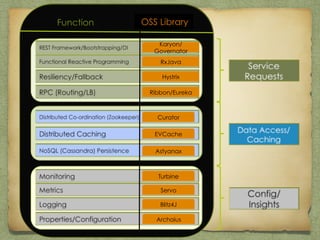
Function OSS Library 
Karyon/ 
Governator 
RxJava 
Hystrix 
Ribbon/Eureka 
Curator 
EVCache 
Astyanax 
Turbine 
Servo 
Blitz4J 
Archaius
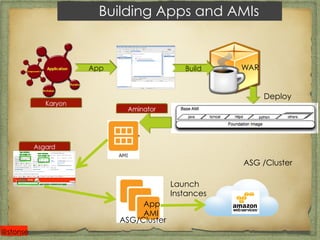
Building Apps and AMIs 
WAR 
ASG /Cluster 
App 
AMI 
ASG/Cluster 
Deploy 
Launch 
Instances 
@stonse
NetflixOSS 
Suro Data Pipeline 
Eureka 
Zuul 
Edda
Micro Services 
Micro services DOES NOT mean better 
Availability 
Need Fault Tolerant Architecture 
Service Dependency View 
Distributed Tracing (Dapper inspired)
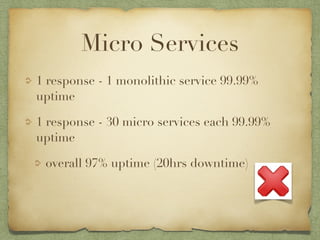
Micro Services 
1 response - 1 monolithic service 99.99% 
uptime 
1 response - 30 micro services each 99.99% 
uptime 
overall 97% uptime (20hrs downtime)
Micro Services 
Actual Scale 
~2 Billion Edge Requests per day 
Results in ~20 Billion Fan out 
requests to 
~100 different MicroServices
Fault Tolerant Arch 
Depedency Isolation 
Aggressive timeouts 
Circuit breakers
MicroServices Container 
Synchronous Asynchronous 
Tomcat RxNetty (UDP TCP WebSockets SSE) 
ThreadPool 
(1 thread per request) 
EventLoops
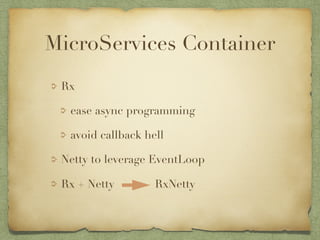
MicroServices Container 
Rx 
ease async programming 
avoid callback hell 
Netty to leverage EventLoop 
Rx + Netty RxNetty
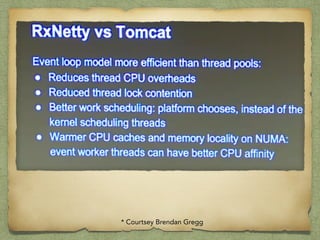
* Courtsey Brendan Gregg
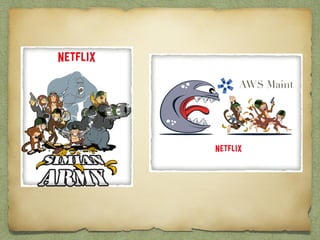
AWS Maint
@Netflix Season-1 
Media Cloud Engineering
Encoding PaaS 
Master - Worker Pattern 
Decoupled by Priority Queues 
with message lease 
State in Cassandra
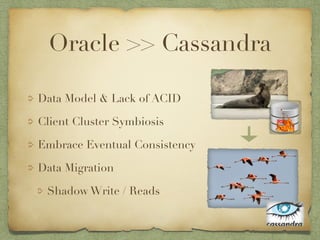
Oracle >> Cassandra 
Data Model & Lack of ACID 
Client Cluster Symbiosis 
Embrace Eventual Consistency 
Data Migration 
Shadow Write / Reads
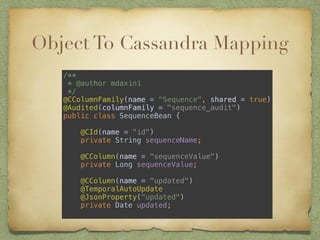
Object To Cassandra Mapping 
/** 
* @author mdaxini 
*/ 
@CColumnFamily(name = “Sequence", shared = true) 
@Audited(columnFamily = "sequence_audit") 
public class SequenceBean { 
@CId(name = "id") 
private String sequenceName; 
@CColumn(name = "sequenceValue") 
private Long sequenceValue; 
@CColumn(name = "updated") 
@TemporalAutoUpdate 
@JsonProperty("updated") 
private Date updated;
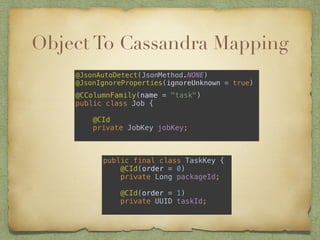
Object To Cassandra Mapping 
@JsonAutoDetect(JsonMethod.NONE) 
@JsonIgnoreProperties(ignoreUnknown = true) 
! 
@CColumnFamily(name = "task") 
public class Job { 
@CId 
private JobKey jobKey; 
public final class TaskKey { 
@CId(order = 0) 
private Long packageId; 
@CId(order = 1) 
private UUID taskId;
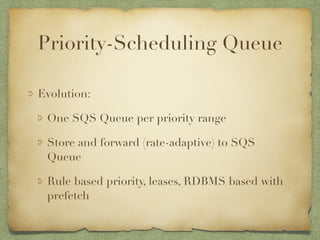
Priority-Scheduling Queue 
Evolution: 
One SQS Queue per priority range 
Store and forward (rate-adaptive) to SQS 
Queue 
Rule based priority, leases, RDBMS based with 
prefetch
Encoding PaaS Farm 
One command deployment and upgrade 
Self Serve 
Homogeneous View of Windows and Linux 
Pioneered Ubuntu - production since 2011
Innovate Fast 
Build for Pragmatic Scale 
Innovate for Business 
Standardize Later*
@Netflix Season-2 
Cloud Database Engineering 
[CDE]
Platform Big Data/Caching & Services 
Cassandra 
Astyanax Priam 
CassJMeter 
Hadoop Platform 
As a Service 
Genie 
Lipstick 
Adapted from a slide by @stonse 
Caching 
Inviso*
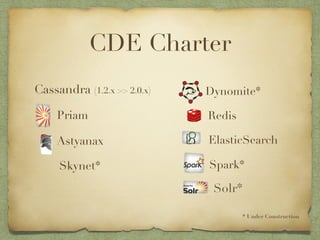
CDE Charter 
Dynomite* 
Redis 
ElasticSearch 
Spark* 
Solr* 
* Under Construction 
Cassandra (1.2.x >> 2.0.x) 
Priam 
Astyanax 
Skynet*
All 
OLTP Data in Cassandra 
! 
Almost!
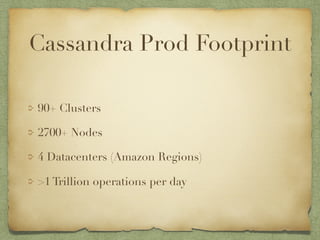
Cassandra Prod Footprint 
90+ Clusters 
2700+ Nodes 
4 Datacenters (Amazon Regions) 
>1 Trillion operations per day
Cassandra Best Practices* 
Usage 
*Practices I have found useful, YMMV
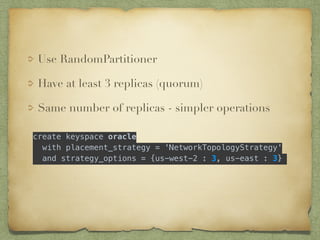
Use RandomPartitioner 
Have at least 3 replicas (quorum) 
Same number of replicas - simpler operations 
! 
create keyspace oracle 
with placement_strategy = 'NetworkTopologyStrategy' 
! 
and strategy_options = {us-west-2 : 3, us-east : 3}
Move to CQL3 from thrift 
Codifies best practices 
Leverage Collections (albeit restricted cardinality) 
Use Key Caching 
As a default turn off Row Caching 
Rename all composite columns in one ALTER 
TABLE statement.
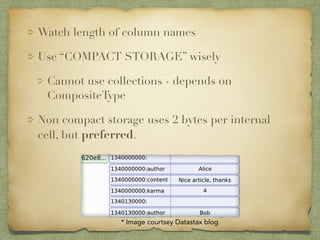
Watch length of column names 
Use “COMPACT STORAGE” wisely 
Cannot use collections - depends on 
CompositeType 
Non compact storage uses 2 bytes per internal 
cell, but preferred. 
! 
! 
* Image courtsey Datastax blog
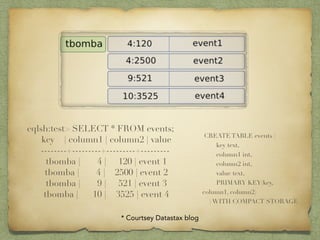
cqlsh:test> SELECT * FROM events; 
key | column1 | column2 | value 
--------+---------+---------+--------- 
tbomba | 4 | 120 | event 1 
tbomba | 4 | 2500 | event 2 
tbomba | 9 | 521 | event 3 
tbomba | 10 | 3525 | event 4 
* Courtsey Datastax blog 
CREATE TABLE events ( 
key text, 
column1 int, 
column2 int, 
value text, 
PRIMARY KEY(key, 
column1, column2) 
) WITH COMPACT STORAGE
Prefer CL_ONE 
data replication within 500ms across the region 
Using quorum reads and writes, then set 
read_repair_chance to 0.0 or very low value. 
Make sure repairs are run often 
Eventual Consistency does not mean hopeful 
consistency
Avoid secondary indexes for high cardinality 
values 
Most cases we set gc_grace_seconds = 10 days 
Avoid hot rows 
detect using node level latency metrics
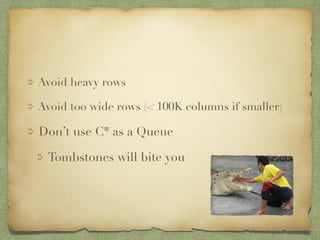
Avoid heavy rows 
Avoid too wide rows (< 100K columns if smaller) 
Don’t use C* as a Queue 
Tombstones will bite you
SizeTieredCompactionStrategy 
write heavy workload 
non-predictable I/O, 2x disk space 
LeveledCompactionStrategy 
read heavy work loads 
predictable I/O, 2x STCS
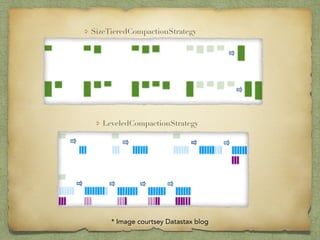
SizeTieredCompactionStrategy 
LeveledCompactionStrategy 
* Image courtsey Datastax blog
Guesstimate and then validate sstable_size_in_mb 
Hint: based on write rate and size 
160mb for LeveledCompactionStrategy 
SizeTieredCompactionStrategy - C* default 50mb
Atomic batches 
no isolation, only atomic for row within 
partition key 
no automatic rollback 
Lightweight transactions
Cassandra Best Practices 
Operations 
*Practices we have found useful, YMMV
If your C* clusters footprint is significant 
must have good automation 
at least a C* semi-expert 
Use cstar_perf to validate your initial clusters 
We don’t use vnodes 
On each node size disk to have 2x of expected 
data - ephemeral ssds no ebs
Monitoring and alerting 
read write latency - co-ordinator & node level 
Compaction stats 
Heap Usage 
Network 
Max & Min Row sizes
Fixed tokens, double the cluster to expand 
Important to size the cluster for app needs 
initially 
benefits of fixed tokens outweighs vnodes 
Take back up of all the nodes 
to allow for eventual consistency on restores 
Note: commitlog by default fsync only ever 10 
seconds
Run repairs before GCGraceSeconds expires 
Throttle compactions and repairs 
Repairs can take a long time 
run a primary range and a Keyspace at a time to 
avoid performance impact.
Schema disagreements - pick the nodes with the 
older date and restart them one at time. 
nodetool reset local schema not persistent on 1.2 
Recyle nodes in aws to prevent staleness 
Expanding to new region 
Launch nodes in new region without 
bootstrapping 
Change Keyspace replication 
Run nodetool rebuild on nodes in new region.
More Info 
http://techblog.netflix.com/ 
http://netflix.github.io/ 
http://slideshare.net/netflix 
https://www.youtube.com/user/NetflixOpenSource 
https://www.youtube.com/user/NetflixIR $$$
??

Netflix at-disney-09-26-2014

  • 1.
    Cloud Data Persistence@ Monal Daxini Senior Software Engineer Cloud Database Engineering ! @monaldax 50m+ Subscribers
  • 2.
    Summary Netflix OSS Microservices m@Netflix Season 1, 2 Cassandra @ Netflix Cassandra Best Practices Coming Soon…
  • 3.
    Start with ZeroTo Cloud With @NetflixOSS ! https://github.com/Netflix-Skunkworks/zerotocloud
  • 4.
    Function OSS Library Karyon/ Governator RxJava Hystrix Ribbon/Eureka Curator EVCache Astyanax Turbine Servo Blitz4J Archaius
  • 5.
    Building Apps andAMIs WAR ASG /Cluster App AMI ASG/Cluster Deploy Launch Instances @stonse
  • 7.
    NetflixOSS Suro DataPipeline Eureka Zuul Edda
  • 8.
    Micro Services Microservices DOES NOT mean better Availability Need Fault Tolerant Architecture Service Dependency View Distributed Tracing (Dapper inspired)
  • 9.
    Micro Services 1response - 1 monolithic service 99.99% uptime 1 response - 30 micro services each 99.99% uptime overall 97% uptime (20hrs downtime)
  • 10.
    Micro Services ActualScale ~2 Billion Edge Requests per day Results in ~20 Billion Fan out requests to ~100 different MicroServices
  • 11.
    Fault Tolerant Arch Depedency Isolation Aggressive timeouts Circuit breakers
  • 12.
    MicroServices Container SynchronousAsynchronous Tomcat RxNetty (UDP TCP WebSockets SSE) ThreadPool (1 thread per request) EventLoops
  • 13.
    MicroServices Container Rx ease async programming avoid callback hell Netty to leverage EventLoop Rx + Netty RxNetty
  • 14.
  • 15.
  • 16.
    @Netflix Season-1 MediaCloud Engineering
  • 17.
    Encoding PaaS Master- Worker Pattern Decoupled by Priority Queues with message lease State in Cassandra
  • 18.
    Oracle >> Cassandra Data Model & Lack of ACID Client Cluster Symbiosis Embrace Eventual Consistency Data Migration Shadow Write / Reads
  • 19.
    Object To CassandraMapping /** * @author mdaxini */ @CColumnFamily(name = “Sequence", shared = true) @Audited(columnFamily = "sequence_audit") public class SequenceBean { @CId(name = "id") private String sequenceName; @CColumn(name = "sequenceValue") private Long sequenceValue; @CColumn(name = "updated") @TemporalAutoUpdate @JsonProperty("updated") private Date updated;
  • 20.
    Object To CassandraMapping @JsonAutoDetect(JsonMethod.NONE) @JsonIgnoreProperties(ignoreUnknown = true) ! @CColumnFamily(name = "task") public class Job { @CId private JobKey jobKey; public final class TaskKey { @CId(order = 0) private Long packageId; @CId(order = 1) private UUID taskId;
  • 21.
    Priority-Scheduling Queue Evolution: One SQS Queue per priority range Store and forward (rate-adaptive) to SQS Queue Rule based priority, leases, RDBMS based with prefetch
  • 22.
    Encoding PaaS Farm One command deployment and upgrade Self Serve Homogeneous View of Windows and Linux Pioneered Ubuntu - production since 2011
  • 23.
    Innovate Fast Buildfor Pragmatic Scale Innovate for Business Standardize Later*
  • 24.
    @Netflix Season-2 CloudDatabase Engineering [CDE]
  • 25.
    Platform Big Data/Caching& Services Cassandra Astyanax Priam CassJMeter Hadoop Platform As a Service Genie Lipstick Adapted from a slide by @stonse Caching Inviso*
  • 26.
    CDE Charter Dynomite* Redis ElasticSearch Spark* Solr* * Under Construction Cassandra (1.2.x >> 2.0.x) Priam Astyanax Skynet*
  • 27.
    All OLTP Datain Cassandra ! Almost!
  • 28.
    Cassandra Prod Footprint 90+ Clusters 2700+ Nodes 4 Datacenters (Amazon Regions) >1 Trillion operations per day
  • 29.
    Cassandra Best Practices* Usage *Practices I have found useful, YMMV
  • 30.
    Use RandomPartitioner Haveat least 3 replicas (quorum) Same number of replicas - simpler operations ! create keyspace oracle with placement_strategy = 'NetworkTopologyStrategy' ! and strategy_options = {us-west-2 : 3, us-east : 3}
  • 31.
    Move to CQL3from thrift Codifies best practices Leverage Collections (albeit restricted cardinality) Use Key Caching As a default turn off Row Caching Rename all composite columns in one ALTER TABLE statement.
  • 32.
    Watch length ofcolumn names Use “COMPACT STORAGE” wisely Cannot use collections - depends on CompositeType Non compact storage uses 2 bytes per internal cell, but preferred. ! ! * Image courtsey Datastax blog
  • 33.
    cqlsh:test> SELECT *FROM events; key | column1 | column2 | value --------+---------+---------+--------- tbomba | 4 | 120 | event 1 tbomba | 4 | 2500 | event 2 tbomba | 9 | 521 | event 3 tbomba | 10 | 3525 | event 4 * Courtsey Datastax blog CREATE TABLE events ( key text, column1 int, column2 int, value text, PRIMARY KEY(key, column1, column2) ) WITH COMPACT STORAGE
  • 34.
    Prefer CL_ONE datareplication within 500ms across the region Using quorum reads and writes, then set read_repair_chance to 0.0 or very low value. Make sure repairs are run often Eventual Consistency does not mean hopeful consistency
  • 35.
    Avoid secondary indexesfor high cardinality values Most cases we set gc_grace_seconds = 10 days Avoid hot rows detect using node level latency metrics
  • 36.
    Avoid heavy rows Avoid too wide rows (< 100K columns if smaller) Don’t use C* as a Queue Tombstones will bite you
  • 37.
    SizeTieredCompactionStrategy write heavyworkload non-predictable I/O, 2x disk space LeveledCompactionStrategy read heavy work loads predictable I/O, 2x STCS
  • 38.
  • 39.
    Guesstimate and thenvalidate sstable_size_in_mb Hint: based on write rate and size 160mb for LeveledCompactionStrategy SizeTieredCompactionStrategy - C* default 50mb
  • 40.
    Atomic batches noisolation, only atomic for row within partition key no automatic rollback Lightweight transactions
  • 41.
    Cassandra Best Practices Operations *Practices we have found useful, YMMV
  • 42.
    If your C*clusters footprint is significant must have good automation at least a C* semi-expert Use cstar_perf to validate your initial clusters We don’t use vnodes On each node size disk to have 2x of expected data - ephemeral ssds no ebs
  • 43.
    Monitoring and alerting read write latency - co-ordinator & node level Compaction stats Heap Usage Network Max & Min Row sizes
  • 44.
    Fixed tokens, doublethe cluster to expand Important to size the cluster for app needs initially benefits of fixed tokens outweighs vnodes Take back up of all the nodes to allow for eventual consistency on restores Note: commitlog by default fsync only ever 10 seconds
  • 45.
    Run repairs beforeGCGraceSeconds expires Throttle compactions and repairs Repairs can take a long time run a primary range and a Keyspace at a time to avoid performance impact.
  • 46.
    Schema disagreements -pick the nodes with the older date and restart them one at time. nodetool reset local schema not persistent on 1.2 Recyle nodes in aws to prevent staleness Expanding to new region Launch nodes in new region without bootstrapping Change Keyspace replication Run nodetool rebuild on nodes in new region.
  • 47.
    More Info http://techblog.netflix.com/ http://netflix.github.io/ http://slideshare.net/netflix https://www.youtube.com/user/NetflixOpenSource https://www.youtube.com/user/NetflixIR $$$
  • 48.