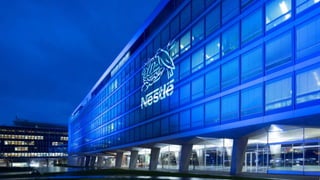
Company: Nestlé
Swiss multinational food
and drink
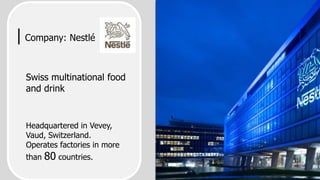
Headquartered in Vevey,
Vaud, Switzerland.
Operates factories in more
than 80 countries.
276 000 employees
worldwide
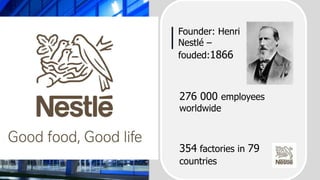
Founder: Henri
Nestlé –
fouded:1866
354 factories in 79
countries
Slogan:
“Good Food, Good Life”
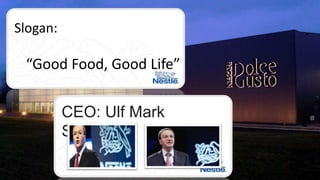
CEO: Ulf Mark
Schneider
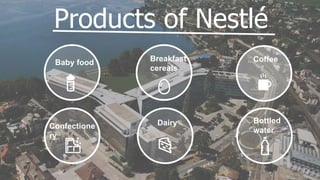
Products of Nestlé
Baby food
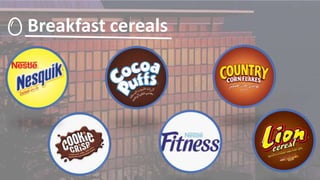
Breakfast cereals
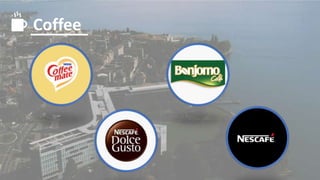
Coffee
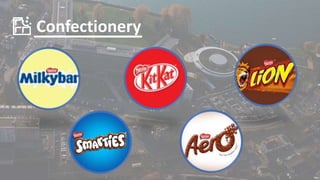
Confectionery
Dairy
Bottled water
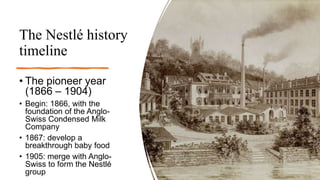
The Nestlé history
timeline
• The pioneer year
(1866 – 1904)
• Begin: 1866, with the
foundation of the Anglo-
Swiss Condensed Milk
Company
• 1867: develop a
breakthrough baby food
• 1905: merge with Anglo-
Swiss to form the Nestlé
group
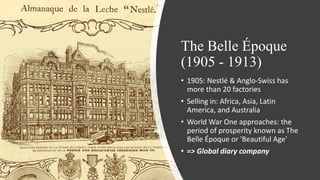
The Belle Époque
(1905 - 1913)
• 1905: Nestlé & Anglo-Swiss has
more than 20 factories
• Selling in: Africa, Asia, Latin
America, and Australia
• World War One approaches: the
period of prosperity known as The
Belle Époque or 'Beautiful Age'
• => Global diary company
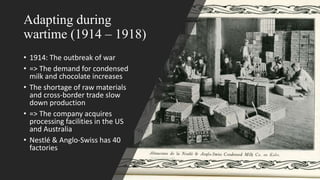
Adapting during
wartime (1914 – 1918)
• 1914: The outbreak of war
• => The demand for condensed
milk and chocolate increases
• The shortage of raw materials
and cross-border trade slow
down production
• => The company acquires
processing facilities in the US
and Australia
• Nestlé & Anglo-Swiss has 40
factories
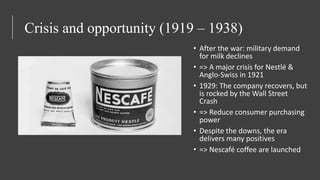
Crisis and opportunity (1919 – 1938)
• After the war: military demand
for milk declines
• => A major crisis for Nestlé &
Anglo-Swiss in 1921
• 1929: The company recovers, but
is rocked by the Wall Street
Crash
• => Reduce consumer purchasing
power
• Despite the downs, the era
delivers many positives
• => Nescafé coffee are launched
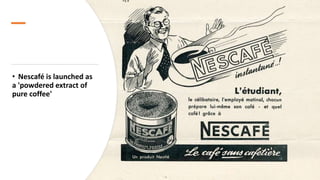
• Nescafé is launched as
a 'powdered extract of
pure coffee'
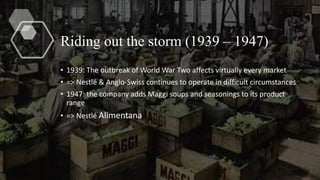
Riding out the storm (1939 – 1947)
• 1939: The outbreak of World War Two affects virtually every market
• => Nestlé & Anglo-Swiss continues to operate in difficult circumstances
• 1947: the company adds Maggi soups and seasonings to its product
range
• => Nestlé Alimentana
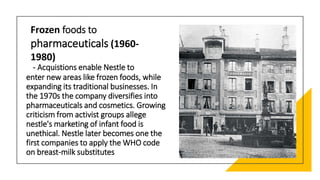
- Acquistions enable Nestle to
enter new areas like frozen foods, while
expanding its traditional businesses. In
the 1970s the company diversifies into
pharmaceuticals and cosmetics. Growing
criticism from activist groups allege
nestle's marketing of infant food is
unethical. Nestle later becomes one the
first companies to apply the WHO code
on breast-milk substitutes
Frozen foods to
pharmaceuticals (1960-
1980)
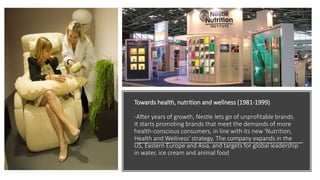
Towards health, nutrition and wellness (1981-1999)
-After years of growth, Nestle lets go of unprofitable brands.
It starts promoting brands that meet the demands of more
health-conscious consumers, in line with its new 'Nutrition,
Health and Wellness' strategy. The company expands in the
US, Eastern Europe and Asia, and targets for global leadership
in water, ice cream and animal food
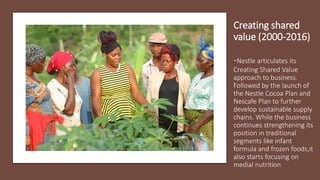
Creating shared
value (2000-2016)
-Nestle articulates its
Creating Shared Value
approach to business.
Followed by the launch of
the Nestle Cocoa Plan and
Nescafe Plan to further
develop sustainable supply
chains. While the business
continues strengthening its
position in traditional
segments like infant
formula and frozen foods,it
also starts focusing on
medial nutrition
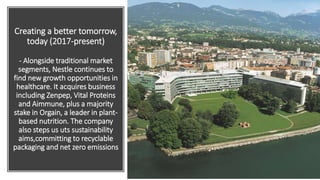
Creating a better tomorrow,
today (2017-present)
- Alongside traditional market
segments, Nestle continues to
find new growth opportunities in
healthcare. It acquires business
including Zenpep, Vital Proteins
and Aimmune, plus a majority
stake in Orgain, a leader in plant-
based nutrition. The company
also steps us uts sustainability
aims,committing to recyclable
packaging and net zero emissions
Thank for
watching

nestle.pptx

  • 2.
    Company: Nestlé Swiss multinationalfood and drink Headquartered in Vevey, Vaud, Switzerland. Operates factories in more than 80 countries.
  • 3.
    276 000 employees worldwide Founder:Henri Nestlé – fouded:1866 354 factories in 79 countries
  • 4.
    Slogan: “Good Food, GoodLife” CEO: Ulf Mark Schneider
  • 5.
  • 6.
  • 7.
  • 8.
  • 9.
  • 10.
  • 11.
  • 12.
    The Nestlé history timeline •The pioneer year (1866 – 1904) • Begin: 1866, with the foundation of the Anglo- Swiss Condensed Milk Company • 1867: develop a breakthrough baby food • 1905: merge with Anglo- Swiss to form the Nestlé group
  • 13.
    The Belle Époque (1905- 1913) • 1905: Nestlé & Anglo-Swiss has more than 20 factories • Selling in: Africa, Asia, Latin America, and Australia • World War One approaches: the period of prosperity known as The Belle Époque or 'Beautiful Age' • => Global diary company
  • 14.
    Adapting during wartime (1914– 1918) • 1914: The outbreak of war • => The demand for condensed milk and chocolate increases • The shortage of raw materials and cross-border trade slow down production • => The company acquires processing facilities in the US and Australia • Nestlé & Anglo-Swiss has 40 factories
  • 15.
    Crisis and opportunity(1919 – 1938) • After the war: military demand for milk declines • => A major crisis for Nestlé & Anglo-Swiss in 1921 • 1929: The company recovers, but is rocked by the Wall Street Crash • => Reduce consumer purchasing power • Despite the downs, the era delivers many positives • => Nescafé coffee are launched
  • 16.
    • Nescafé islaunched as a 'powdered extract of pure coffee'
  • 17.
    Riding out thestorm (1939 – 1947) • 1939: The outbreak of World War Two affects virtually every market • => Nestlé & Anglo-Swiss continues to operate in difficult circumstances • 1947: the company adds Maggi soups and seasonings to its product range • => Nestlé Alimentana
  • 19.
    - Acquistions enableNestle to enter new areas like frozen foods, while expanding its traditional businesses. In the 1970s the company diversifies into pharmaceuticals and cosmetics. Growing criticism from activist groups allege nestle's marketing of infant food is unethical. Nestle later becomes one the first companies to apply the WHO code on breast-milk substitutes Frozen foods to pharmaceuticals (1960- 1980)
  • 20.
    Towards health, nutritionand wellness (1981-1999) -After years of growth, Nestle lets go of unprofitable brands. It starts promoting brands that meet the demands of more health-conscious consumers, in line with its new 'Nutrition, Health and Wellness' strategy. The company expands in the US, Eastern Europe and Asia, and targets for global leadership in water, ice cream and animal food
  • 21.
    Creating shared value (2000-2016) -Nestlearticulates its Creating Shared Value approach to business. Followed by the launch of the Nestle Cocoa Plan and Nescafe Plan to further develop sustainable supply chains. While the business continues strengthening its position in traditional segments like infant formula and frozen foods,it also starts focusing on medial nutrition
  • 22.
    Creating a bettertomorrow, today (2017-present) - Alongside traditional market segments, Nestle continues to find new growth opportunities in healthcare. It acquires business including Zenpep, Vital Proteins and Aimmune, plus a majority stake in Orgain, a leader in plant- based nutrition. The company also steps us uts sustainability aims,committing to recyclable packaging and net zero emissions
  • 23.