Neoclassical and Classical Period 1720 - 1827
The transition… Baroque – instrumental becoming more important than vocal Neoclassical period – instrumental music gained more importance – development of symphony Music – called Classical – art is called Neoclassical Reaction to excess of the monarchy and ornamentation of Baroque Return to order, reason, and structure of music
Classical characteristics Simpler melodies – appealed to a broader audience – not just wealthy upper class Music written specifically for middle class 2 musical forms found  Theme and variations Rondo Orchestra size increased Compositions numbered by order in composition instead of tempo markings
The Composers….. Joseph Haydn Wolfgang Amadeus Mozart Ludwig van Beethoven
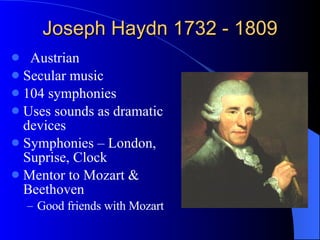
Joseph Haydn 1732 - 1809 Austrian Secular music 104 symphonies Uses sounds as dramatic devices Symphonies – London, Suprise, Clock Mentor to Mozart & Beethoven Good friends with Mozart
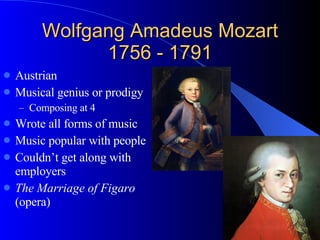
Wolfgang Amadeus Mozart 1756 - 1791 Austrian Musical genius or prodigy Composing at 4 Wrote all forms of music Music popular with people Couldn’t get along with employers The Marriage of Figaro  (opera)
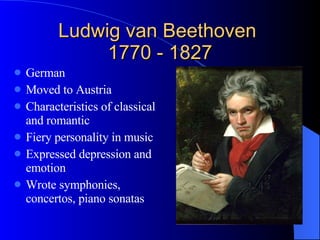
Ludwig van Beethoven  1770 - 1827 German  Moved to Austria Characteristics of classical and romantic Fiery personality in music Expressed depression and emotion Wrote symphonies, concertos, piano sonatas
Melody Short, clearly defined statements Two or more contrasting themes within a movement Built on chord tones Clear cadences
Rhythm Clearly defined Regular rhythm
Texture homophonic
Form Symphonies, concertos, sonatas Broken up into sections (movement) Operas, cantatas, masses
Timbre Small balanced orchestra Piano replaced harpsichord Woodwinds used melodically Brass used as fillers

Neoclassical And Classical Period

  • 1.
    Neoclassical and ClassicalPeriod 1720 - 1827
  • 2.
    The transition… Baroque– instrumental becoming more important than vocal Neoclassical period – instrumental music gained more importance – development of symphony Music – called Classical – art is called Neoclassical Reaction to excess of the monarchy and ornamentation of Baroque Return to order, reason, and structure of music
  • 3.
    Classical characteristics Simplermelodies – appealed to a broader audience – not just wealthy upper class Music written specifically for middle class 2 musical forms found Theme and variations Rondo Orchestra size increased Compositions numbered by order in composition instead of tempo markings
  • 4.
    The Composers….. JosephHaydn Wolfgang Amadeus Mozart Ludwig van Beethoven
  • 5.
    Joseph Haydn 1732- 1809 Austrian Secular music 104 symphonies Uses sounds as dramatic devices Symphonies – London, Suprise, Clock Mentor to Mozart & Beethoven Good friends with Mozart
  • 6.
    Wolfgang Amadeus Mozart1756 - 1791 Austrian Musical genius or prodigy Composing at 4 Wrote all forms of music Music popular with people Couldn’t get along with employers The Marriage of Figaro (opera)
  • 7.
    Ludwig van Beethoven 1770 - 1827 German Moved to Austria Characteristics of classical and romantic Fiery personality in music Expressed depression and emotion Wrote symphonies, concertos, piano sonatas
  • 8.
    Melody Short, clearlydefined statements Two or more contrasting themes within a movement Built on chord tones Clear cadences
  • 9.
    Rhythm Clearly definedRegular rhythm
  • 10.
  • 11.
    Form Symphonies, concertos,sonatas Broken up into sections (movement) Operas, cantatas, masses
  • 12.
    Timbre Small balancedorchestra Piano replaced harpsichord Woodwinds used melodically Brass used as fillers