The Negotiation
Process
The Negotiation Process
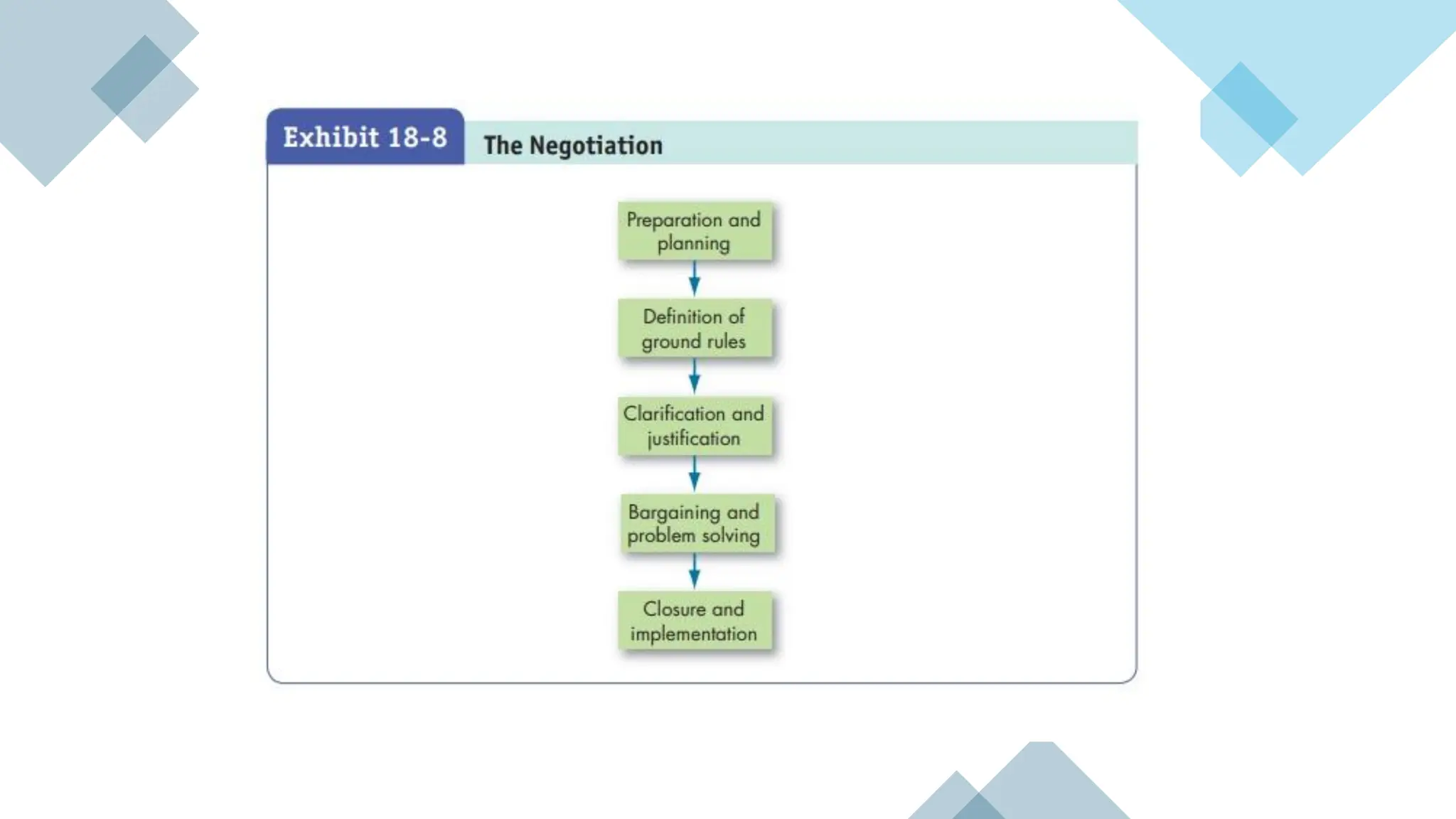
Preparation and Planning
• Before you start negotiating, do your homework. What’s the nature of the conflict? What do you want from the
negotiation? What are your goals? You should also assess what you think are the other party’s goals.
• Once you’ve gathered your information, develop a strategy. You should determine your and the other side’s best
alternative to a negotiated agreement (BATNA). Your BATNA determines the lowest value acceptable to you for a
negotiated agreement. Any offer you receive that is higher than your BATNA is better than an impasse.
Definition of Ground Rules
• Once you’ve done your planning and developed a strategy, you’re ready to define with the other party the ground
rules and procedures of the negotiation itself. Who will do the negotiating? Where will it take place? What time
constraints, if any, will apply? During this phase, the parties will exchange their initial proposals or demands.
The Negotiation Process
Clarificationand Justification
• Whenyou have exchangedinitial positions,you and the other party will explain,amplify, clarify, bolster,and
justify youroriginaldemands.Providethe other party with any documentationthat supportsyourposition.
Bargainingand Problem Solving
• The essence of the negotiation processis the actual give-and-take in trying to hashout an agreement.This is
wherebothparties need to make concessions.
Closure and Implementation
• The final step in the negotiationprocessis formalizingyouragreementand developingproceduresnecessary
forimplementingand monitoringit. Formajor negotiations—fromlabor–managementnegotiationsto
bargainingoverlease terms—this requiresa formalcontract. Forothercases, closureof the negotiation
processis nothingmoreformalthana handshake.

Negotiation Process in Behaviour at Organization-1.pdf

  • 1.
  • 3.
    The Negotiation Process Preparationand Planning • Before you start negotiating, do your homework. What’s the nature of the conflict? What do you want from the negotiation? What are your goals? You should also assess what you think are the other party’s goals. • Once you’ve gathered your information, develop a strategy. You should determine your and the other side’s best alternative to a negotiated agreement (BATNA). Your BATNA determines the lowest value acceptable to you for a negotiated agreement. Any offer you receive that is higher than your BATNA is better than an impasse. Definition of Ground Rules • Once you’ve done your planning and developed a strategy, you’re ready to define with the other party the ground rules and procedures of the negotiation itself. Who will do the negotiating? Where will it take place? What time constraints, if any, will apply? During this phase, the parties will exchange their initial proposals or demands.
  • 4.
    The Negotiation Process ClarificationandJustification • Whenyou have exchangedinitial positions,you and the other party will explain,amplify, clarify, bolster,and justify youroriginaldemands.Providethe other party with any documentationthat supportsyourposition. Bargainingand Problem Solving • The essence of the negotiation processis the actual give-and-take in trying to hashout an agreement.This is wherebothparties need to make concessions. Closure and Implementation • The final step in the negotiationprocessis formalizingyouragreementand developingproceduresnecessary forimplementingand monitoringit. Formajor negotiations—fromlabor–managementnegotiationsto bargainingoverlease terms—this requiresa formalcontract. Forothercases, closureof the negotiation processis nothingmoreformalthana handshake.