1
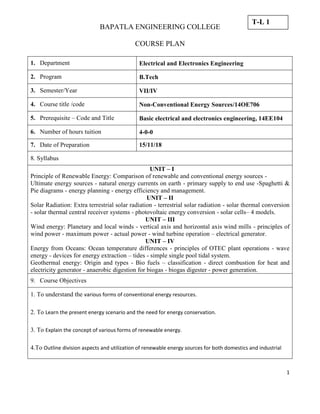
BAPATLA ENGINEERING COLLEGE
COURSE PLAN
1. Department Electrical and Electronics Engineering
2. Program B.Tech
3. Semester/Year VII/IV
4. Course title /code Non-Conventional Energy Sources/14OE706
5. Prerequisite – Code and Title Basic electrical and electronics engineering, 14EE104
6. Number of hours tuition 4-0-0
7. Date of Preparation 15/11/18
8. Syllabus
UNIT – I
Principle of Renewable Energy: Comparison of renewable and conventional energy sources -
Ultimate energy sources - natural energy currents on earth - primary supply to end use -Spaghetti &
Pie diagrams - energy planning - energy efficiency and management.
UNIT – II
Solar Radiation: Extra terrestrial solar radiation - terrestrial solar radiation - solar thermal conversion
- solar thermal central receiver systems - photovoltaic energy conversion - solar cells– 4 models.
UNIT – III
Wind energy: Planetary and local winds - vertical axis and horizontal axis wind mills - principles of
wind power - maximum power - actual power - wind turbine operation – electrical generator.
UNIT – IV
Energy from Oceans: Ocean temperature differences - principles of OTEC plant operations - wave
energy - devices for energy extraction – tides - simple single pool tidal system.
Geothermal energy: Origin and types - Bio fuels – classification - direct combustion for heat and
electricity generator - anaerobic digestion for biogas - biogas digester - power generation.
9. Course Objectives
1. To understand the various forms of conventional energy resources.
2. To Learn the present energy scenario and the need for energy conservation.
3. To Explain the concept of various forms of renewable energy.
4.To Outline division aspects and utilization of renewable energy sources for both domestics and industrial
T-L 1
2
application
5.To Analyse the environmental aspects of renewable energy resources.
6.To understand Solar energy radiation, its interactions .
7.To understand the concept electricity generation from solar energy
8. To understand the concept of PV plant design
9. To understand the operation of wind turbine
10. To understand the design and operation of wind power plant
11. To understand the OTEC plants
12. To understand the different models Geothrmal energy
10. Learning Outcomes
1. Ability to recognize the need of renewable energy technologies and their role in the Greece and
world energy demand.
2. Ability to distinguish between the sustainable energy sources and fossil energy sources with
emphasis on wind and photovoltaic systems.
3. Knowledge of the operating principles of renewable energy production from various renewable
sources, especially
4. Knowledge of security and operational requirements of autonomous and net connected renewable
energy systems.
5. Knowledge of operating principles of solar energy
6. Ability to design simple small solar thermal systems.
7. Ability to design simple small solar PV plant
8.knowledge of operating principles of wind enrgy
9. ability to design small wind mills
10. Ability to distinguish between Wave and ocean energy
3
11. Knowledge on OTEC plants
12. knowledge on Geothrmal energy
11. Teaching – Learning Methods
1. Board & Chalk
2. Student Assignments
3. Web sources
4. LCD
12. Assessment Methods
1. Direct:
1.1 Assignments
1.2 Mid Examinations
1.3 Final Examination
2. Indirect:
2.1 Feedback on course outcome
2.2 Student feedback on faculty
13. LESSON PLAN
Week No. of
Periods
Learning
Outcomes
Unit/module/ Topic(s) Teaching
Methods
Assessment
Methods
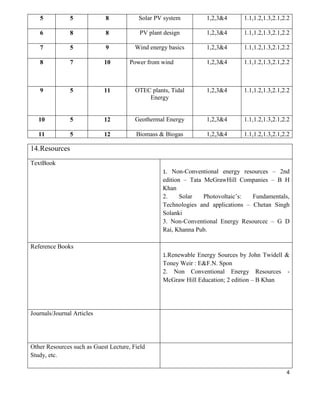
1 3 1,2,3,4,5 Principles of renewable
energy sources
1,2,3&4 1.1,1.2,1.3,2.1,2.2
2 2 1,2,3,4,5 Solar radiation 1,2,3&4 1.1,1.2,1.3,2.1,2.2
3 8 6 Solar energy collectors 1,2,3&4 1.1,1.2,1.3,2.1,2.2
4 3 7 Applications of solar
power
1,2,3&4 1.1,1.2,1.3,2.1,2.2
4
5 5 8 Solar PV system 1,2,3&4 1.1,1.2,1.3,2.1,2.2
6 8 8 PV plant design 1,2,3&4 1.1,1.2,1.3,2.1,2.2
7 5 9 Wind energy basics 1,2,3&4 1.1,1.2,1.3,2.1,2.2
8 7 10 Power from wind 1,2,3&4 1.1,1.2,1.3,2.1,2.2
9 5 11 OTEC plants, Tidal
Energy
1,2,3&4 1.1,1.2,1.3,2.1,2.2
10 5 12 Geothermal Energy 1,2,3&4 1.1,1.2,1.3,2.1,2.2
11 5 12 Biomass & Biogas 1,2,3&4 1.1,1.2,1.3,2.1,2.2
14.Resources
TextBook
1. Non-Conventional energy resources – 2nd
edition – Tata McGrawHill Companies – B H
Khan
2. Solar Photovoltaic’s: Fundamentals,
Technologies and applications – Chetan Singh
Solanki
3. Non-Conventional Energy Resourcec – G D
Rai, Khanna Pub.
Reference Books
1.Renewable Energy Sources by John Twidell &
Toney Weir : E&F.N. Spon
2. Non Conventional Energy Resources -
McGraw Hill Education; 2 edition – B Khan
Journals/Journal Articles
Other Resources such as Guest Lecture, Field
Study, etc.
5
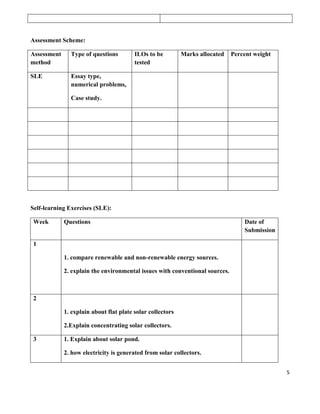
Assessment Scheme:
Assessment
method
Type of questions ILOs to be
tested
Marks allocated Percent weight
SLE Essay type,
numerical problems,
Case study.
Self-learning Exercises (SLE):
Week Questions Date of
Submission
1
1. compare renewable and non-renewable energy sources.
2. explain the environmental issues with conventional sources.
2
1. explain about flat plate solar collectors
2.Explain concentrating solar collectors.
3 1. Explain about solar pond.
2. how electricity is generated from solar collectors.
6
4
1.explain operation of PV cell.
2. What are the factors effecting electricity generated from aPV
cell
5 1. Explain site selection of PV plant
2. Explain site selection of Wind plant
6 1. Explain basic operation of wind mill
2.Explain electrical energy generation from wind mill
7
1.Explain VAWT
2. Explain HAWT
8
1. Explain operating principles OTEC plants
2. explain anaerobic digestion.
Plagiarism Policy:
The similarity of the work should not exceed 20 % of the content. This applies to all the non-
Examinations under observation.

NCES course plan.pdf

  • 1.
    1 BAPATLA ENGINEERING COLLEGE COURSEPLAN 1. Department Electrical and Electronics Engineering 2. Program B.Tech 3. Semester/Year VII/IV 4. Course title /code Non-Conventional Energy Sources/14OE706 5. Prerequisite – Code and Title Basic electrical and electronics engineering, 14EE104 6. Number of hours tuition 4-0-0 7. Date of Preparation 15/11/18 8. Syllabus UNIT – I Principle of Renewable Energy: Comparison of renewable and conventional energy sources - Ultimate energy sources - natural energy currents on earth - primary supply to end use -Spaghetti & Pie diagrams - energy planning - energy efficiency and management. UNIT – II Solar Radiation: Extra terrestrial solar radiation - terrestrial solar radiation - solar thermal conversion - solar thermal central receiver systems - photovoltaic energy conversion - solar cells– 4 models. UNIT – III Wind energy: Planetary and local winds - vertical axis and horizontal axis wind mills - principles of wind power - maximum power - actual power - wind turbine operation – electrical generator. UNIT – IV Energy from Oceans: Ocean temperature differences - principles of OTEC plant operations - wave energy - devices for energy extraction – tides - simple single pool tidal system. Geothermal energy: Origin and types - Bio fuels – classification - direct combustion for heat and electricity generator - anaerobic digestion for biogas - biogas digester - power generation. 9. Course Objectives 1. To understand the various forms of conventional energy resources. 2. To Learn the present energy scenario and the need for energy conservation. 3. To Explain the concept of various forms of renewable energy. 4.To Outline division aspects and utilization of renewable energy sources for both domestics and industrial T-L 1
  • 2.
    2 application 5.To Analyse theenvironmental aspects of renewable energy resources. 6.To understand Solar energy radiation, its interactions . 7.To understand the concept electricity generation from solar energy 8. To understand the concept of PV plant design 9. To understand the operation of wind turbine 10. To understand the design and operation of wind power plant 11. To understand the OTEC plants 12. To understand the different models Geothrmal energy 10. Learning Outcomes 1. Ability to recognize the need of renewable energy technologies and their role in the Greece and world energy demand. 2. Ability to distinguish between the sustainable energy sources and fossil energy sources with emphasis on wind and photovoltaic systems. 3. Knowledge of the operating principles of renewable energy production from various renewable sources, especially 4. Knowledge of security and operational requirements of autonomous and net connected renewable energy systems. 5. Knowledge of operating principles of solar energy 6. Ability to design simple small solar thermal systems. 7. Ability to design simple small solar PV plant 8.knowledge of operating principles of wind enrgy 9. ability to design small wind mills 10. Ability to distinguish between Wave and ocean energy
  • 3.
    3 11. Knowledge onOTEC plants 12. knowledge on Geothrmal energy 11. Teaching – Learning Methods 1. Board & Chalk 2. Student Assignments 3. Web sources 4. LCD 12. Assessment Methods 1. Direct: 1.1 Assignments 1.2 Mid Examinations 1.3 Final Examination 2. Indirect: 2.1 Feedback on course outcome 2.2 Student feedback on faculty 13. LESSON PLAN Week No. of Periods Learning Outcomes Unit/module/ Topic(s) Teaching Methods Assessment Methods 1 3 1,2,3,4,5 Principles of renewable energy sources 1,2,3&4 1.1,1.2,1.3,2.1,2.2 2 2 1,2,3,4,5 Solar radiation 1,2,3&4 1.1,1.2,1.3,2.1,2.2 3 8 6 Solar energy collectors 1,2,3&4 1.1,1.2,1.3,2.1,2.2 4 3 7 Applications of solar power 1,2,3&4 1.1,1.2,1.3,2.1,2.2
  • 4.
    4 5 5 8Solar PV system 1,2,3&4 1.1,1.2,1.3,2.1,2.2 6 8 8 PV plant design 1,2,3&4 1.1,1.2,1.3,2.1,2.2 7 5 9 Wind energy basics 1,2,3&4 1.1,1.2,1.3,2.1,2.2 8 7 10 Power from wind 1,2,3&4 1.1,1.2,1.3,2.1,2.2 9 5 11 OTEC plants, Tidal Energy 1,2,3&4 1.1,1.2,1.3,2.1,2.2 10 5 12 Geothermal Energy 1,2,3&4 1.1,1.2,1.3,2.1,2.2 11 5 12 Biomass & Biogas 1,2,3&4 1.1,1.2,1.3,2.1,2.2 14.Resources TextBook 1. Non-Conventional energy resources – 2nd edition – Tata McGrawHill Companies – B H Khan 2. Solar Photovoltaic’s: Fundamentals, Technologies and applications – Chetan Singh Solanki 3. Non-Conventional Energy Resourcec – G D Rai, Khanna Pub. Reference Books 1.Renewable Energy Sources by John Twidell & Toney Weir : E&F.N. Spon 2. Non Conventional Energy Resources - McGraw Hill Education; 2 edition – B Khan Journals/Journal Articles Other Resources such as Guest Lecture, Field Study, etc.
  • 5.
    5 Assessment Scheme: Assessment method Type ofquestions ILOs to be tested Marks allocated Percent weight SLE Essay type, numerical problems, Case study. Self-learning Exercises (SLE): Week Questions Date of Submission 1 1. compare renewable and non-renewable energy sources. 2. explain the environmental issues with conventional sources. 2 1. explain about flat plate solar collectors 2.Explain concentrating solar collectors. 3 1. Explain about solar pond. 2. how electricity is generated from solar collectors.
  • 6.
    6 4 1.explain operation ofPV cell. 2. What are the factors effecting electricity generated from aPV cell 5 1. Explain site selection of PV plant 2. Explain site selection of Wind plant 6 1. Explain basic operation of wind mill 2.Explain electrical energy generation from wind mill 7 1.Explain VAWT 2. Explain HAWT 8 1. Explain operating principles OTEC plants 2. explain anaerobic digestion. Plagiarism Policy: The similarity of the work should not exceed 20 % of the content. This applies to all the non- Examinations under observation.