Félix Rocha, Verónica Sofía 
(ID: 1739878) 
Ramírez Carranza, Mariana Lisset 
(ID: 1733881) 
Sánchez Ruíz, Sofía Rebeca 
(ID: 1746187) 
Treviño Mendoza, Katya Melissa 
(ID: 1728067) 
Vega Gámez, Génesis Ivonne 
(ID: 1724761) 
Group 104 
Ms. Nashiely Moreira
Nature and ecosystems Abiotic factors Weather 
Endangered species Places to visit Historical places 
 Location 
 Reflection 
 References 
Protected areas Activities
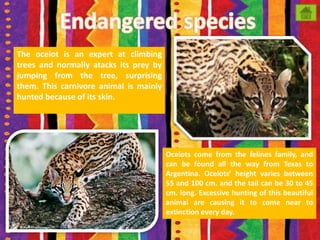
The ocelot is an expert at climbing 
trees and normally atacks its prey by 
jumping from the tree, surprising 
them. This carnivore animal is mainly 
hunted because of its skin. 
Ocelots come from the felines family, and 
can be found all the way from Texas to 
Argentina. Ocelots’ height varies between 
55 and 100 cm. and the tail can be 30 to 45 
cm. long. Excessive hunting of this beautiful 
animal are causing it to come near to 
extinction every day.
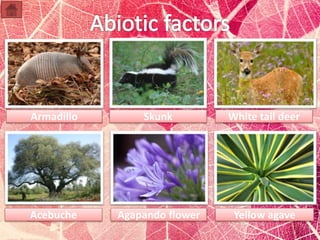
Armadillo Skunk White tail deer 
Acebuche Agapando flower Yellow agave
Location
Matorral Dry jungle Manglar 
Humid mountain forests 
Most part of Nayarit’s territory has a 
very warm climate, that is why it has 
the perfect vegetation for tropical 
species, despise the fact that it has 
vegetation from template origin on its 
surface.
Weather 
 Average temperature: 25°C 
 Average low temperature: 12°C 
 Average high temperature: 35°C 
 Rain is present from May to 
September. 
 Annual average precipitation: 1100 
mm.
Learn more!
Beautiful town with cobbled 
streets, home of native roots 
and tradition keeper. The 
basílica lateranense and the 
ceboruco volcano can be 
found in Jala.
HISTORICAL PLACES 
On March 20, 1905, the first pacific 
strike in Mexico took place in Bellavista, 
Nayarit. Workers in textile factories were 
tired of being mistreated, so they 
organized the first parade for the 
Nayaritan workers. 
The textile factory of Bellavista is now a 
museum that has its own library, where 
the previous historical moment is 
explained with more details.
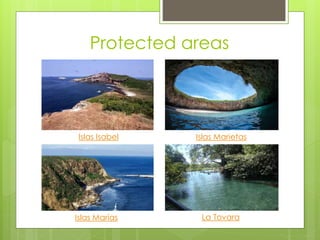
Protected areas 
Islas Isabel Islas Marietas 
Islas Marías 
La Tovara
Islas Isabel 
 These islands were chartered as Nacional Park 
since 1980 because of being a refuge to some 
marine birds that are really vulnerable to 
perturbation factors, reason why only a 
reduced amount of people can stay in the 
island for a certain amount of time.
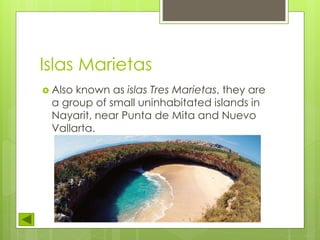
Islas Marietas 
 Also known as islas Tres Marietas, they are 
a group of small uninhabitated islands in 
Nayarit, near Punta de Mita and Nuevo 
Vallarta.
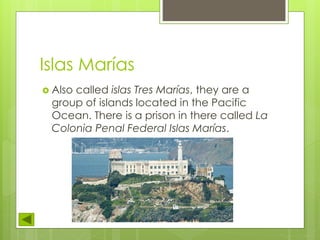
Islas Marías 
 Also called islas Tres Marías, they are a 
group of islands located in the Pacific 
Ocean. There is a prison in there called La 
Colonia Penal Federal Islas Marías.
La Tovara 
 La Tovara is a manantial that can be 
found in San Blas, Nayarit. It gives origin to 
a natural fresh water pond in the base of 
a mountain range.
Tyrolese Golf 
Diving Liberation of turtles
Reflection 
 We realized that even if Nayarit seems little, its 
population surely has increased over the past years. 
According to the INEGI, since the 1930’s Nayarit has 
been growing really fast. 
We should take in count that 
growth always comes with a 
consequence. When there is 
suddenly too many people, then the 
explotation of natural resources 
occurs, and permanent damages 
are made to the environment. 
Maybe Nayarit is not the case, but 
we should still be on guard so that 
their natural areas do not seem 
threatened in any way.
REFERENCES 
• El Occidental. (27 de Marzo de 2010). El Occidental. Recuperado 
el 19 de Noviembre de 2014, de 
http://www.oem.com.mx/eloccidental/notas/n1574237.htm 
• INEGI. (s.f.). Cuéntame... Recuperado el 19 de Noviembre de 
2014, de 
http://www.cuentame.inegi.org.mx/monografias/informacion/na 
y/territorio/recursos_naturales.aspx?tema=me&e=18 
• Reserva Animal. (s.f.). Reserva Animal. Recuperado el 19 de 
Noviembre de 2014, de http://www.animales-en-extincion. 
com/ocelote.html 
• Travel by Mexico. (9 de Septiembre de 2010). Travel by Mexico. 
Recuperado el 19 de Noviembre de 2014, de 
http://www.travelbymexico.com/estados/nayarit 
• Turismo Nayarit. (s.f.). Turismo Nayarit. Recuperado el 19 de 
Noviembre de 2014, de http://turismonayarit.mx/colonial.php 
• http://www.cuentame.inegi.org.mx/monografias/informacion/na 
y/poblacion/dinamica.aspx?tema=me&e=18

Nayarit

  • 1.
    Félix Rocha, VerónicaSofía (ID: 1739878) Ramírez Carranza, Mariana Lisset (ID: 1733881) Sánchez Ruíz, Sofía Rebeca (ID: 1746187) Treviño Mendoza, Katya Melissa (ID: 1728067) Vega Gámez, Génesis Ivonne (ID: 1724761) Group 104 Ms. Nashiely Moreira
  • 3.
    Nature and ecosystemsAbiotic factors Weather Endangered species Places to visit Historical places  Location  Reflection  References Protected areas Activities
  • 4.
    The ocelot isan expert at climbing trees and normally atacks its prey by jumping from the tree, surprising them. This carnivore animal is mainly hunted because of its skin. Ocelots come from the felines family, and can be found all the way from Texas to Argentina. Ocelots’ height varies between 55 and 100 cm. and the tail can be 30 to 45 cm. long. Excessive hunting of this beautiful animal are causing it to come near to extinction every day.
  • 5.
    Armadillo Skunk Whitetail deer Acebuche Agapando flower Yellow agave
  • 6.
  • 7.
    Matorral Dry jungleManglar Humid mountain forests Most part of Nayarit’s territory has a very warm climate, that is why it has the perfect vegetation for tropical species, despise the fact that it has vegetation from template origin on its surface.
  • 8.
    Weather  Averagetemperature: 25°C  Average low temperature: 12°C  Average high temperature: 35°C  Rain is present from May to September.  Annual average precipitation: 1100 mm.
  • 9.
  • 10.
    Beautiful town withcobbled streets, home of native roots and tradition keeper. The basílica lateranense and the ceboruco volcano can be found in Jala.
  • 11.
    HISTORICAL PLACES OnMarch 20, 1905, the first pacific strike in Mexico took place in Bellavista, Nayarit. Workers in textile factories were tired of being mistreated, so they organized the first parade for the Nayaritan workers. The textile factory of Bellavista is now a museum that has its own library, where the previous historical moment is explained with more details.
  • 12.
    Protected areas IslasIsabel Islas Marietas Islas Marías La Tovara
  • 13.
    Islas Isabel These islands were chartered as Nacional Park since 1980 because of being a refuge to some marine birds that are really vulnerable to perturbation factors, reason why only a reduced amount of people can stay in the island for a certain amount of time.
  • 14.
    Islas Marietas Also known as islas Tres Marietas, they are a group of small uninhabitated islands in Nayarit, near Punta de Mita and Nuevo Vallarta.
  • 15.
    Islas Marías Also called islas Tres Marías, they are a group of islands located in the Pacific Ocean. There is a prison in there called La Colonia Penal Federal Islas Marías.
  • 16.
    La Tovara La Tovara is a manantial that can be found in San Blas, Nayarit. It gives origin to a natural fresh water pond in the base of a mountain range.
  • 17.
    Tyrolese Golf DivingLiberation of turtles
  • 18.
    Reflection  Werealized that even if Nayarit seems little, its population surely has increased over the past years. According to the INEGI, since the 1930’s Nayarit has been growing really fast. We should take in count that growth always comes with a consequence. When there is suddenly too many people, then the explotation of natural resources occurs, and permanent damages are made to the environment. Maybe Nayarit is not the case, but we should still be on guard so that their natural areas do not seem threatened in any way.
  • 19.
    REFERENCES • ElOccidental. (27 de Marzo de 2010). El Occidental. Recuperado el 19 de Noviembre de 2014, de http://www.oem.com.mx/eloccidental/notas/n1574237.htm • INEGI. (s.f.). Cuéntame... Recuperado el 19 de Noviembre de 2014, de http://www.cuentame.inegi.org.mx/monografias/informacion/na y/territorio/recursos_naturales.aspx?tema=me&e=18 • Reserva Animal. (s.f.). Reserva Animal. Recuperado el 19 de Noviembre de 2014, de http://www.animales-en-extincion. com/ocelote.html • Travel by Mexico. (9 de Septiembre de 2010). Travel by Mexico. Recuperado el 19 de Noviembre de 2014, de http://www.travelbymexico.com/estados/nayarit • Turismo Nayarit. (s.f.). Turismo Nayarit. Recuperado el 19 de Noviembre de 2014, de http://turismonayarit.mx/colonial.php • http://www.cuentame.inegi.org.mx/monografias/informacion/na y/poblacion/dinamica.aspx?tema=me&e=18