Natural
Resources
BY YANINA LOPEZ R.
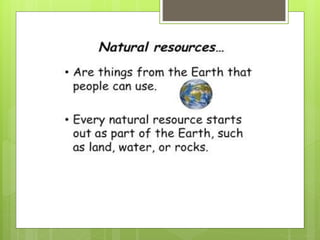
 Natural resources are useful raw materials
that we get from the Earth. They occur
naturally, which means that humans
cannot make natural resources. Instead,
we use and modify natural resources in
ways that are beneficial to us. The
materials used in human-made objects
are natural resources.
Natural Resource Products or Services
Air Wind energy, tires
Animals
Foods (milk, cheese, steak, bacon)
and clothing (wool sweaters, silk
shirts, leather belts)
Coal Electricity
Minerals
Coins, wire, steel, aluminum cans,
jewelry
Natural gas Electricity, heating
Oil
Electricity, fuel for cars and
airplanes, plastic
Plants
Wood, paper, cotton clothing,
fruits, vegetables
Sunlight Solar power, photosynthesis
Water
Hydroelectric energy, drinking,
cleaning
Biotic and Abiotic Natural
Resources
 There are several ways to classify natural
resources, including where they come from and if
they are renewable or not. If natural resources
come from living things or organic materials, then
they are considered biotic resources. Biotic
resources include plants, animals, and fossil fuels.
The three fossil fuels are coal, oil, and natural gas.
 On the other hand, abiotic resources originate
from nonliving and inorganic materials. For
example, air, sunlight, and water are abiotic
natural resources. Minerals (gold, copper, iron,
diamonds) are also considered abiotic.
Renewable natural resources
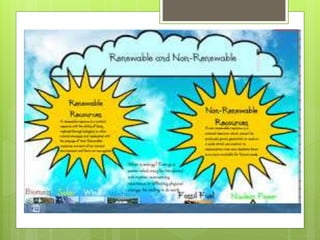
 Renewable resources are those that can
be replenished during our lifetime, such as
sunlight, wind, water, plants, and animals.
The rate at which renewable resources
are replenished may differ. For example,
we will never run out of sun and wind in
our lifetime because the Earth constantly
supplies these resources.
Non-Renewable Natural
Resources
 Nonrenewable Resources: are resources
for which there is a limited supply.
 Examples fossil fuels and nuclear fuels.
LET´S GO TO PRACTICE

NATURAL RESOURCES ( Presentation )

  • 1.
  • 3.
     Natural resourcesare useful raw materials that we get from the Earth. They occur naturally, which means that humans cannot make natural resources. Instead, we use and modify natural resources in ways that are beneficial to us. The materials used in human-made objects are natural resources.
  • 4.
    Natural Resource Productsor Services Air Wind energy, tires Animals Foods (milk, cheese, steak, bacon) and clothing (wool sweaters, silk shirts, leather belts) Coal Electricity Minerals Coins, wire, steel, aluminum cans, jewelry Natural gas Electricity, heating Oil Electricity, fuel for cars and airplanes, plastic Plants Wood, paper, cotton clothing, fruits, vegetables Sunlight Solar power, photosynthesis Water Hydroelectric energy, drinking, cleaning
  • 5.
    Biotic and AbioticNatural Resources  There are several ways to classify natural resources, including where they come from and if they are renewable or not. If natural resources come from living things or organic materials, then they are considered biotic resources. Biotic resources include plants, animals, and fossil fuels. The three fossil fuels are coal, oil, and natural gas.  On the other hand, abiotic resources originate from nonliving and inorganic materials. For example, air, sunlight, and water are abiotic natural resources. Minerals (gold, copper, iron, diamonds) are also considered abiotic.
  • 7.
    Renewable natural resources Renewable resources are those that can be replenished during our lifetime, such as sunlight, wind, water, plants, and animals. The rate at which renewable resources are replenished may differ. For example, we will never run out of sun and wind in our lifetime because the Earth constantly supplies these resources.
  • 8.
    Non-Renewable Natural Resources  NonrenewableResources: are resources for which there is a limited supply.  Examples fossil fuels and nuclear fuels.
  • 10.