NATIONAL PREVENTION OF
  BLINDNESS PROGRAM
I. BACKGROUND
VISION 2020:
  The right to sight
    -is a global initiative to eliminate
avoidable blindness by the year 2020.
AIM: to develop sustainable
comprehensive health care system to
ensure the best possible vision for all
people and thereby improve quality of
life.
PRIORITY: 5 preventable/treatable
 conditions (cataract, refractive errors
 and low vision, trachoma,
 onchocerciasis, and childhood
 blindness)

-by improving the eye care services and
  targeting the 5 diseases globally instead
  of 75M blind people by year 2020. the
  number is calculated to be less than
  25M.
 75% of blindness and visual impairment
  in the philippines is a result of 3
  preventable or treatable conditions:
-CATARACT
-REFRACTIVE ERRORS and LOW
  VISION
-CAUSES OF CHILDHOOD BLINDNESS
If priorityis given to these 3 diseases, then
  in 2020, instead of morethan 790,000
  blind people, it is calculated that there
  will be less than 300,000.
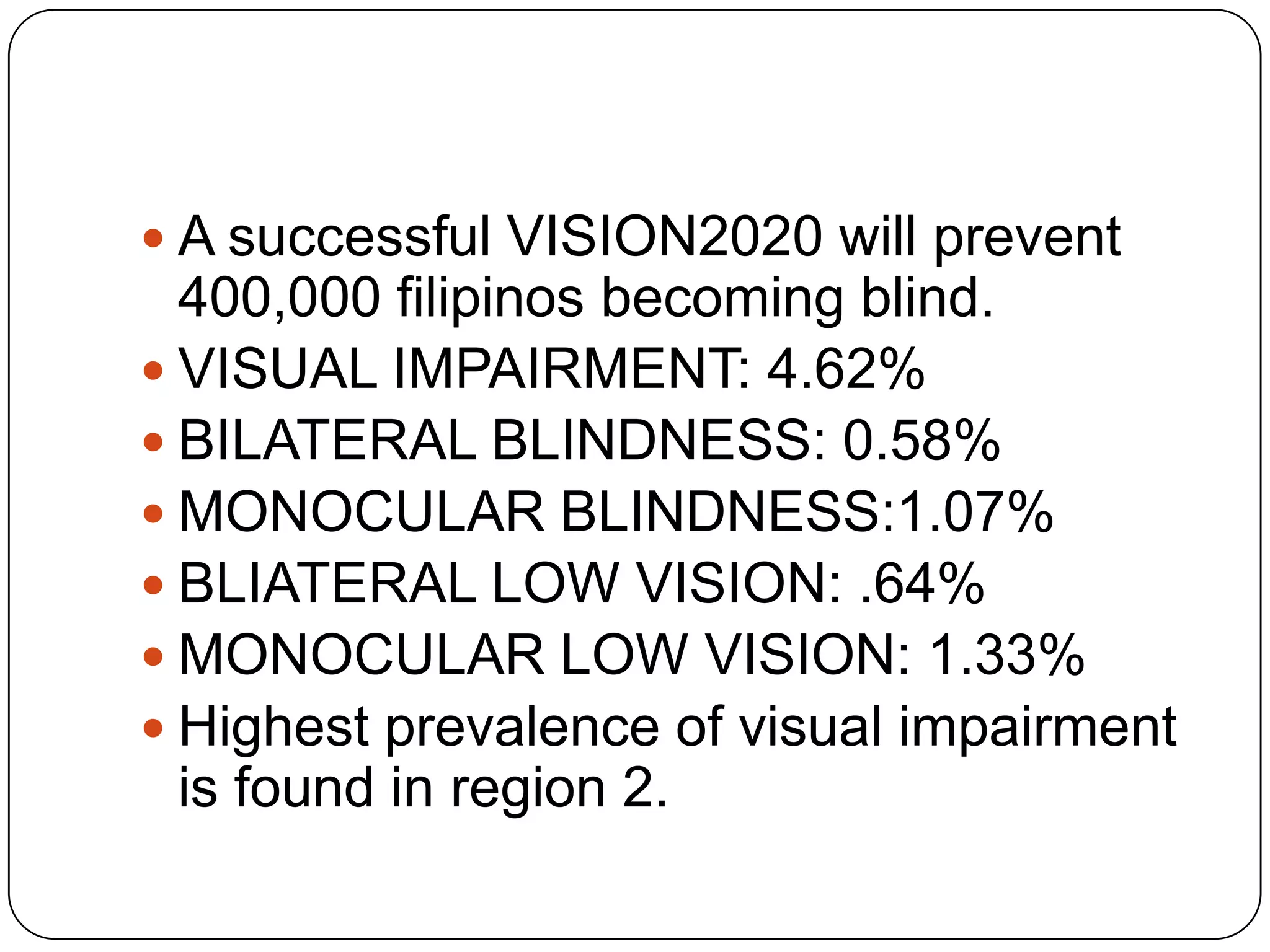
 A successful VISION2020 will prevent
  400,000 filipinos becoming blind.
 VISUAL IMPAIRMENT: 4.62%
 BILATERAL BLINDNESS: 0.58%
 MONOCULAR BLINDNESS:1.07%
 BLIATERAL LOW VISION: .64%
 MONOCULAR LOW VISION: 1.33%
 Highest prevalence of visual impairment
  is found in region 2.
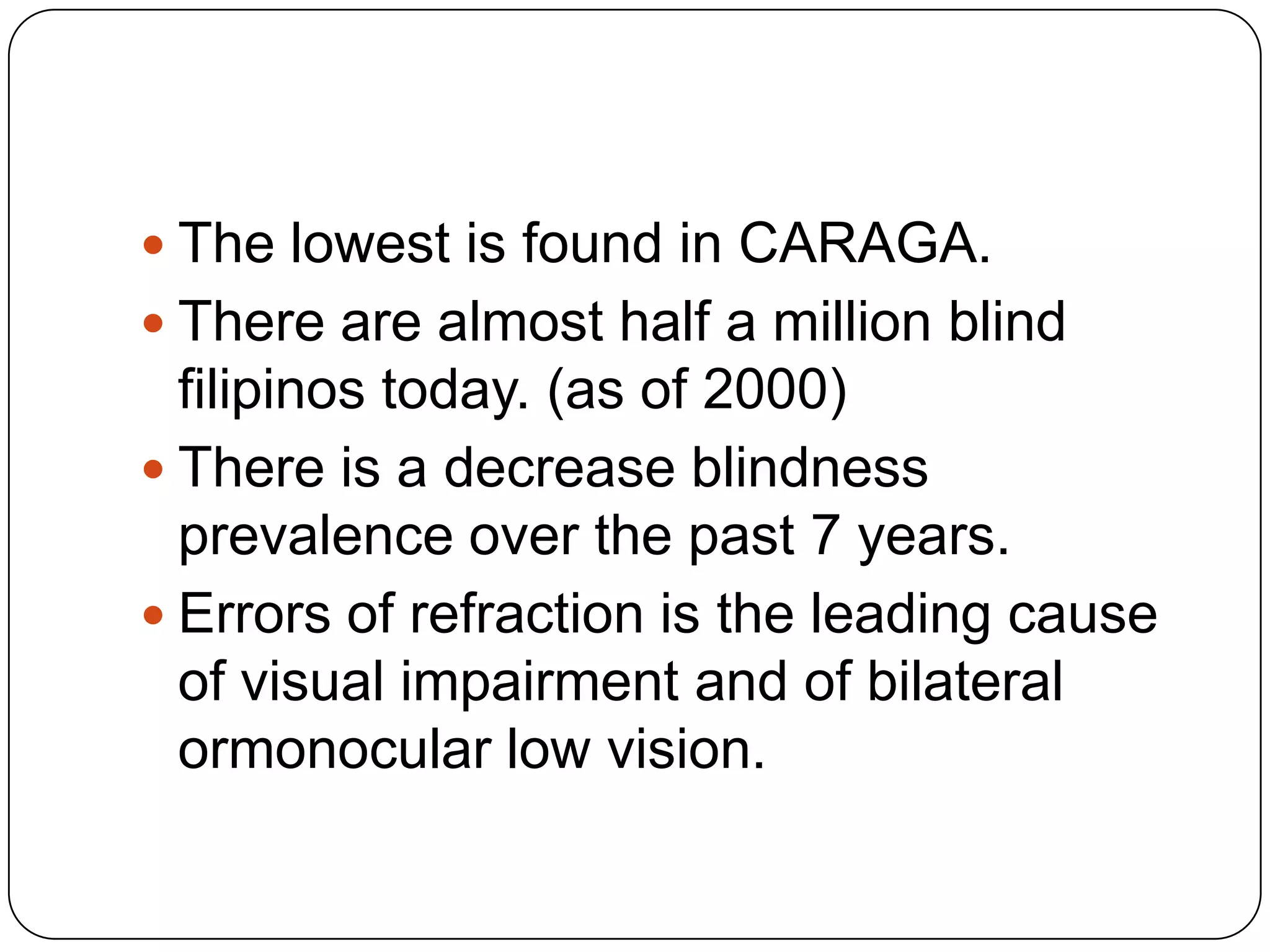
 The lowest is found in CARAGA.
 There are almost half a million blind
  filipinos today. (as of 2000)
 There is a decrease blindness
  prevalence over the past 7 years.
 Errors of refraction is the leading cause
  of visual impairment and of bilateral
  ormonocular low vision.
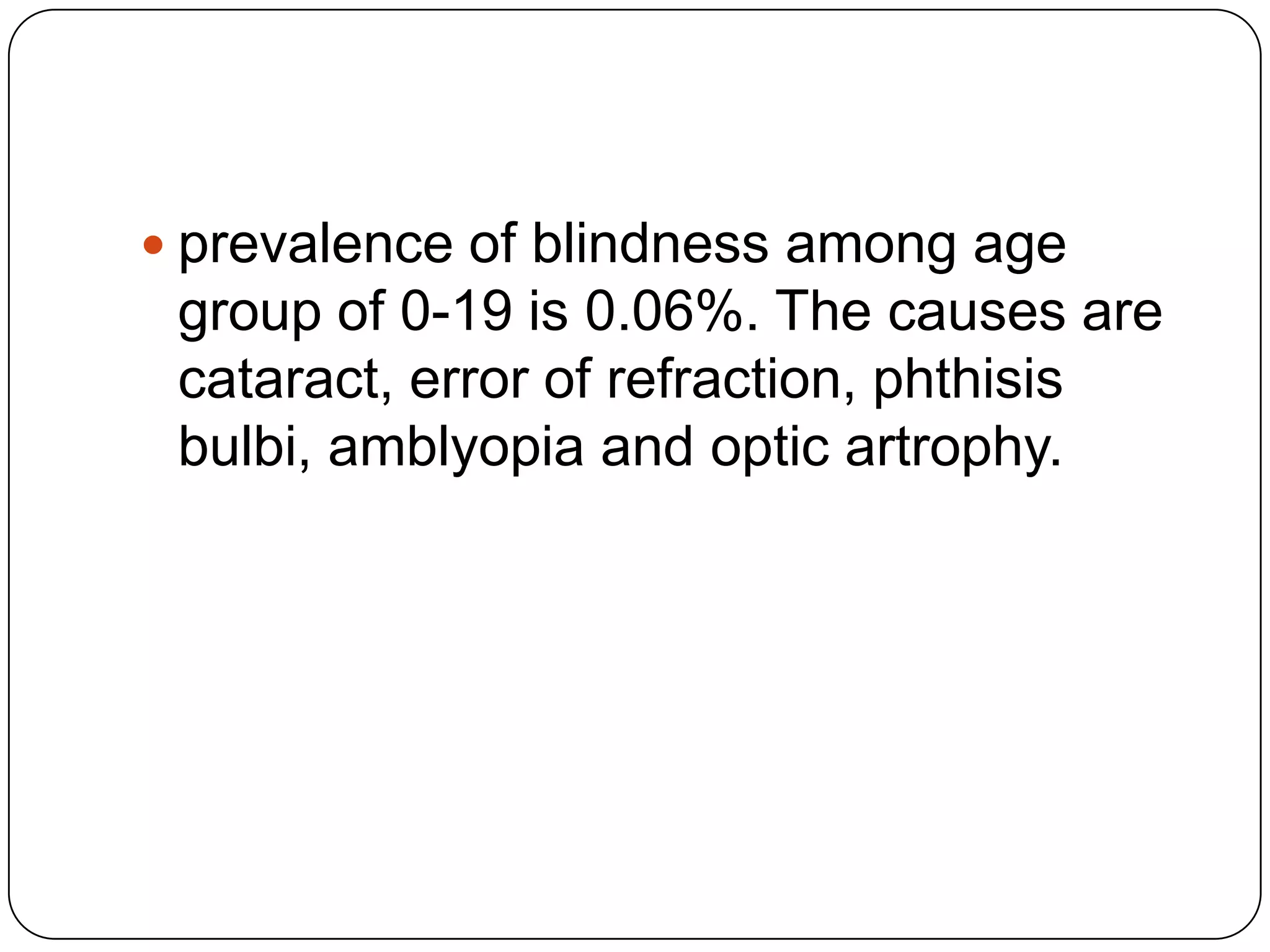
 prevalence of blindness among age
 group of 0-19 is 0.06%. The causes are
 cataract, error of refraction, phthisis
 bulbi, amblyopia and optic artrophy.
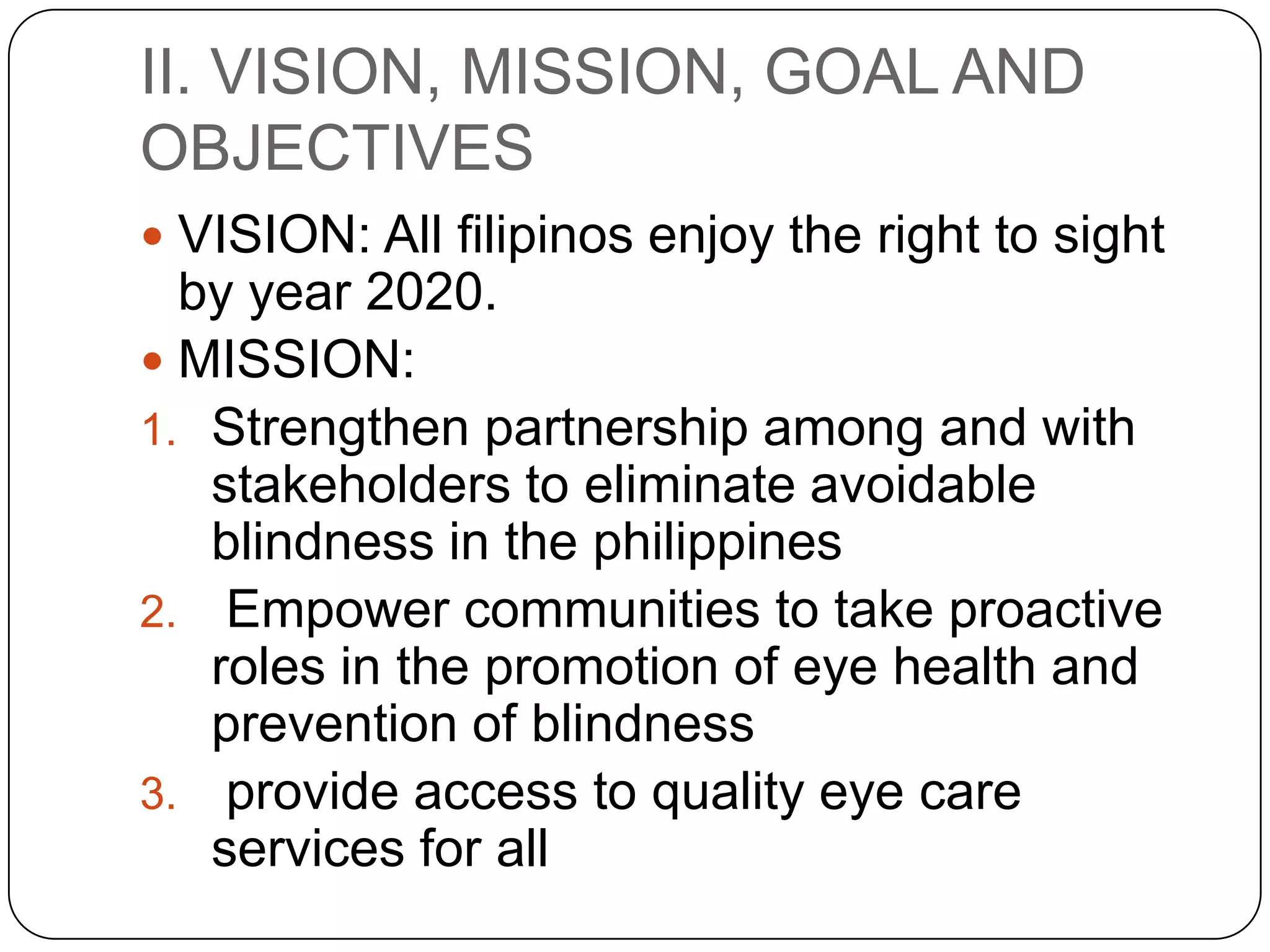
II. VISION, MISSION, GOAL AND
OBJECTIVES
 VISION: All filipinos enjoy the right to sight
  by year 2020.
 MISSION:
1. Strengthen partnership among and with
   stakeholders to eliminate avoidable
   blindness in the philippines
2. Empower communities to take proactive
   roles in the promotion of eye health and
   prevention of blindness
3. provide access to quality eye care
   services for all
4. Work towards poverty alleviation
 through preservation and restoration of
 sight to indigent Filipinos.
GOAL: Reduce the prevalence of
 avoidable blindness in the Philippines
 through the provision of quality eye care
OBJECTIVES:
No. 1: Increase cataract surgical rate from
 730 to 2,500 by the year 2010.
No.2: Reduce visual impairment due to
 refractive errors by 10% by the year
 2010.
No.3: Reduce the prevalence of visual
 disability in children from 0.43% to
 0.20% by the year 2010.
III. INTERVENTIONS BY EYE
DISORDER
1. CATARACT
- Opacification of the normally clear lens of
  the eye, is the most common cause of
  blindness worlwide.
- -cause in 62% of blindness in the
  Philippines
- CURE: Surgery
- INTERVENTIONS:
 a. Increasing awareness about cataract and
  cataract surgery
b. Improving the delivery of cataract services
2. Errors of refraction
- Is the most common cause of visual
  impairment in the country.
- CURE: are corrected either with
  spectacle glasses, contact lenses or
  surgery
- Optometrists
3. Childhood blindness
- The prevalence of blindness among
  children up to age 19 is 0.06% while the
  prevalence of visual impairment in the
  same group is 0.43%
- the problem of childhood blindness is the
  highly specialized services that are needed
  to diagnose and treat it
- screening of children for any sign of visual
  ipmairment my be done by pediatricians,
  school clinics, and health workers.
VISION 2020 Philippines envisions to
eliminate avoidable blindness
through 3 strategies:
a. Ensuring that cataract surgery is
  available, acessible, and affordable to
  everyone.
 b. reduction of the prevalence of cataract,
  blinding error of refraction and vitamin A
  deficiency thru enhanced services
c. Pooling of resources of government
  and non-government agencies to
  address the problem of cataract,
  blinding error or refraction, and vitamin A
  deficiency.

National prevention of blindness program

  • 1.
    NATIONAL PREVENTION OF BLINDNESS PROGRAM
  • 2.
    I. BACKGROUND VISION 2020: The right to sight -is a global initiative to eliminate avoidable blindness by the year 2020. AIM: to develop sustainable comprehensive health care system to ensure the best possible vision for all people and thereby improve quality of life.
  • 3.
    PRIORITY: 5 preventable/treatable conditions (cataract, refractive errors and low vision, trachoma, onchocerciasis, and childhood blindness) -by improving the eye care services and targeting the 5 diseases globally instead of 75M blind people by year 2020. the number is calculated to be less than 25M.
  • 4.
     75% ofblindness and visual impairment in the philippines is a result of 3 preventable or treatable conditions: -CATARACT -REFRACTIVE ERRORS and LOW VISION -CAUSES OF CHILDHOOD BLINDNESS If priorityis given to these 3 diseases, then in 2020, instead of morethan 790,000 blind people, it is calculated that there will be less than 300,000.
  • 5.
     A successfulVISION2020 will prevent 400,000 filipinos becoming blind.  VISUAL IMPAIRMENT: 4.62%  BILATERAL BLINDNESS: 0.58%  MONOCULAR BLINDNESS:1.07%  BLIATERAL LOW VISION: .64%  MONOCULAR LOW VISION: 1.33%  Highest prevalence of visual impairment is found in region 2.
  • 6.
     The lowestis found in CARAGA.  There are almost half a million blind filipinos today. (as of 2000)  There is a decrease blindness prevalence over the past 7 years.  Errors of refraction is the leading cause of visual impairment and of bilateral ormonocular low vision.
  • 7.
     prevalence ofblindness among age group of 0-19 is 0.06%. The causes are cataract, error of refraction, phthisis bulbi, amblyopia and optic artrophy.
  • 8.
    II. VISION, MISSION,GOAL AND OBJECTIVES  VISION: All filipinos enjoy the right to sight by year 2020.  MISSION: 1. Strengthen partnership among and with stakeholders to eliminate avoidable blindness in the philippines 2. Empower communities to take proactive roles in the promotion of eye health and prevention of blindness 3. provide access to quality eye care services for all
  • 9.
    4. Work towardspoverty alleviation through preservation and restoration of sight to indigent Filipinos. GOAL: Reduce the prevalence of avoidable blindness in the Philippines through the provision of quality eye care OBJECTIVES: No. 1: Increase cataract surgical rate from 730 to 2,500 by the year 2010.
  • 10.
    No.2: Reduce visualimpairment due to refractive errors by 10% by the year 2010. No.3: Reduce the prevalence of visual disability in children from 0.43% to 0.20% by the year 2010.
  • 11.
    III. INTERVENTIONS BYEYE DISORDER 1. CATARACT - Opacification of the normally clear lens of the eye, is the most common cause of blindness worlwide. - -cause in 62% of blindness in the Philippines - CURE: Surgery - INTERVENTIONS: a. Increasing awareness about cataract and cataract surgery b. Improving the delivery of cataract services
  • 12.
    2. Errors ofrefraction - Is the most common cause of visual impairment in the country. - CURE: are corrected either with spectacle glasses, contact lenses or surgery - Optometrists
  • 13.
    3. Childhood blindness -The prevalence of blindness among children up to age 19 is 0.06% while the prevalence of visual impairment in the same group is 0.43% - the problem of childhood blindness is the highly specialized services that are needed to diagnose and treat it - screening of children for any sign of visual ipmairment my be done by pediatricians, school clinics, and health workers.
  • 14.
    VISION 2020 Philippinesenvisions to eliminate avoidable blindness through 3 strategies: a. Ensuring that cataract surgery is available, acessible, and affordable to everyone. b. reduction of the prevalence of cataract, blinding error of refraction and vitamin A deficiency thru enhanced services c. Pooling of resources of government and non-government agencies to address the problem of cataract, blinding error or refraction, and vitamin A deficiency.