NCF 2003
O N L A N G U A G E E D U C A T D I O N
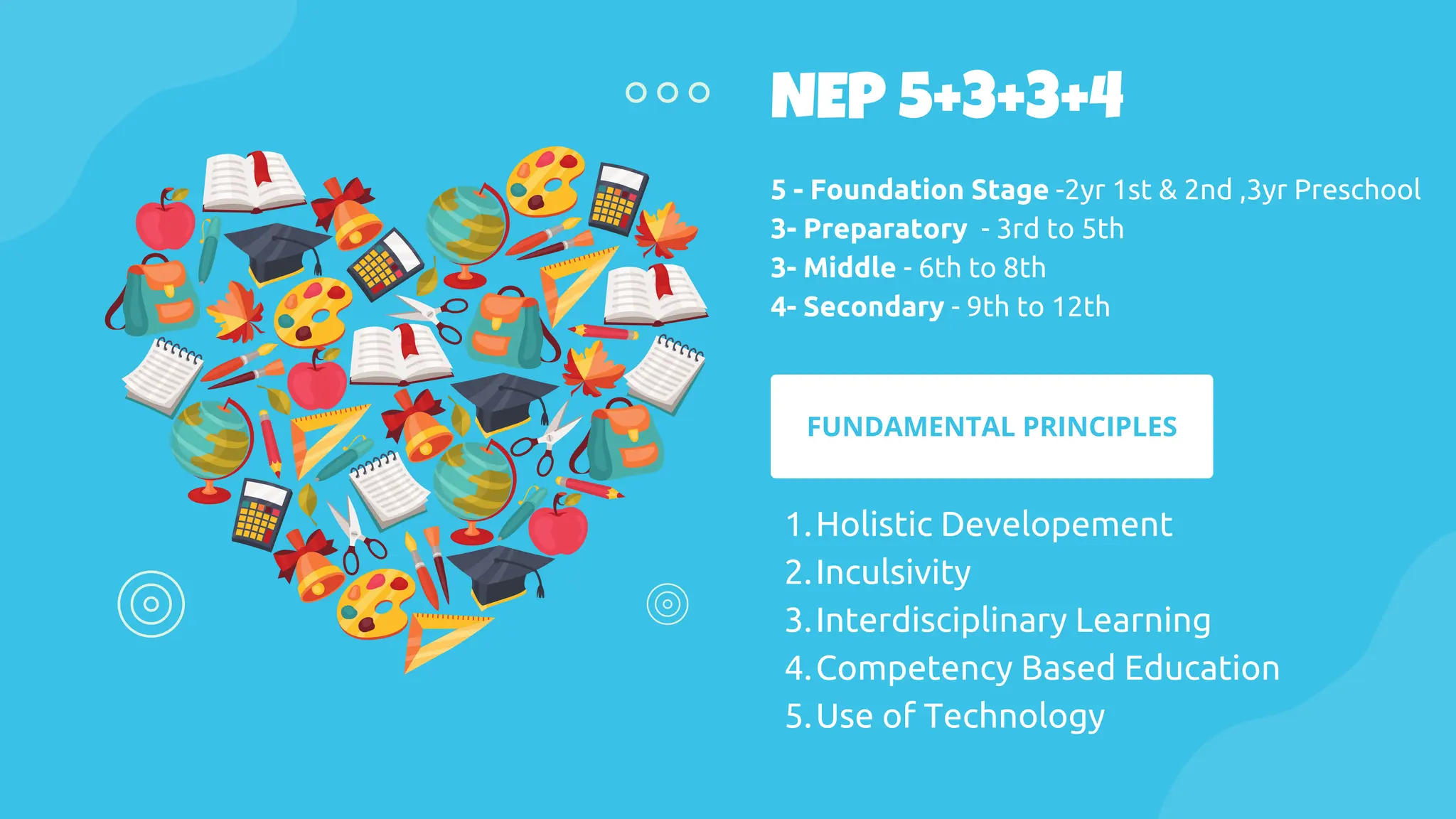
NEP 5+3+3+4
5 - Foundation Stage -2yr 1st & 2nd ,3yr Preschool
3- Preparatory - 3rd to 5th
3- Middle - 6th to 8th
4- Secondary - 9th to 12th
FUNDAMENTAL PRINCIPLES
Holistic Developement
1.
Inculsivity
2.
Interdisciplinary Learning
3.
Competency Based Education
4.
Use of Technology
5.
Objectives
1.Development of curriculum by
modernizing education system
2. Development of Padagogy
focus on Realistic change
3. Assesment
4. Teacher to improve and create
better innovation
Guiding Principles
Ensure Learning shift away from Rote
Learning method
01.
Enriching curriculum beyond Textbook
03.
02.
Connecting knowledge to life outside the
school
04. Making it Hexible and Integrated
AIM
Enable to access understanding knowledge and skills & be creative
1.
Proficiency in multiple language including mother tongue
2.
Holistic Development
3.
Assessment as Learning
4.
for Learning
of Learning
Achieve To
1. ORACY & LITRACY to be Developed
(Development Fluency , Writing, Critical
thinking Comprehension, Capacities )
2. Effective Communication skill
3. Creative Capacity
(prose,Poem,Story,Word,Game,Puzzle etc)
4. Multilingual Capacity
Current Challenges
1. low level of literacy (ability to
read & write)
2. low quality learning material
( rely on text book only)
3. Inadequate level of teacher
preparation
4. focus on context completion
5. memory based assessment
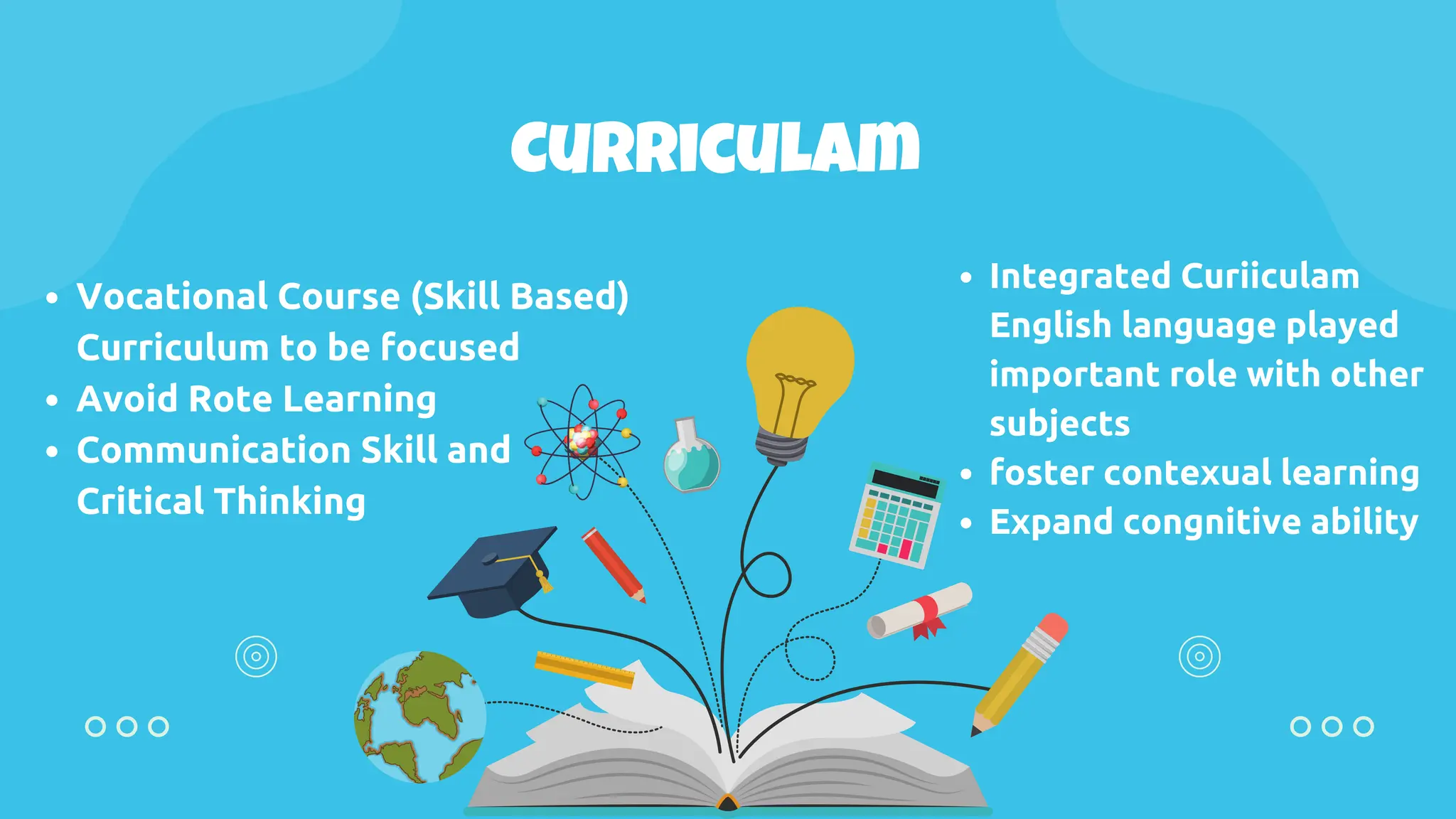
Curriculam
Integrated Curiiculam
English language played
important role with other
subjects
foster contexual learning
Expand congnitive ability
Vocational Course (Skill Based)
Curriculum to be focused
Avoid Rote Learning
Communication Skill and
Critical Thinking
strategy to be adopted
Effective and innovative solutions
through technology
1.
Collaboration among educational,
institutions
2.
Extensive teacher training regularly
3.
Adequate teaching learning material
4.
Technological integrated approach
5.
Digital learning activities another
resource are available
6.
Virtual classroom video conferencing
virtual collaboration
7.
learning standard
( transform India's education landscape )
FUNDAMENTAL STAGE
Touch, See, Feel( Using Five Sense) Drawing, Experience, Picturise, Reading, Writing Etc
PREPARATORY STAGE
Drawing, Conversation, Short, Speech, Anchoring, Visualising
MIDDLE STAGE
Transform skills to learn quickly and engage in collaborative discussion (GD)
Debate, Declamation, Presentation, Analise, interpret
SECONDARY STAGE
Develop effective communication skills
Reasoning, Argumentation, Creative evaluation, Creative Writing, Analysing
Compose Coherent & Well Structured Essay
Critical Analysis, Interpretation, ASL
Foreign Language can be taught like French, German, Japanese or any other
MORE INFORMATIONS
Assessment
Promote and Standarize Teaching Learning Process
Formative Based
1.
Project Based
2.
Continuous Evaluation
3.
Multidisciplinary Project
4.
Experiential Learning
5.
MORE PROFILE
Four Domain areas to be tested LSRW
1.
Semester system to adobt
2.
Examination
To Complete Grade 10th, Students will complete two
essential processes for each of the eight curricular area
1.
9th and 10th will follow on annual structure (a semester
structure)
2.
Standard must clear 8th board exam at end of grade 10th
these assess each of two essential course in each
curriculam area learnt dueing 9th & 10th
3.
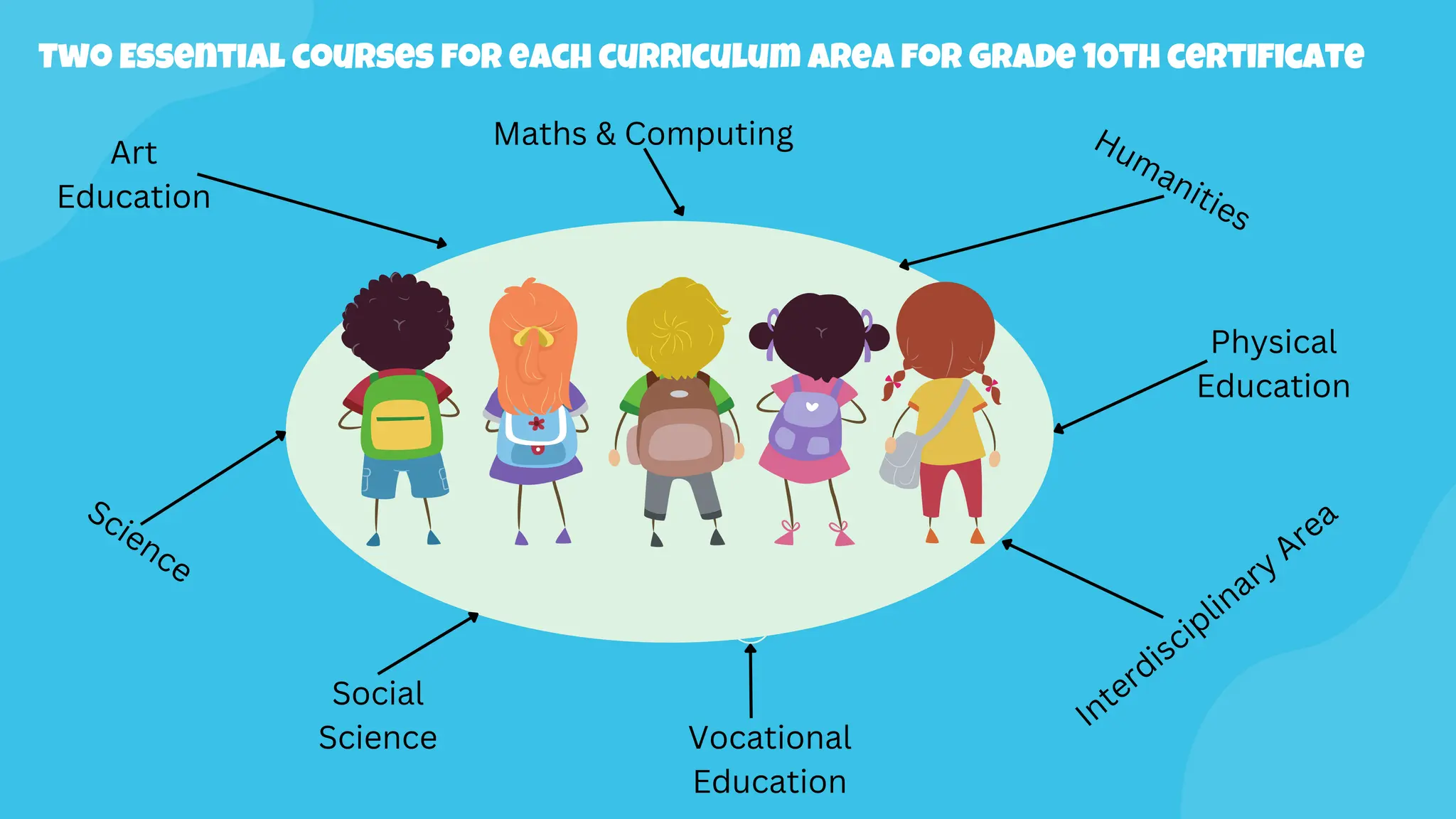
Two Essential courses for each curriculum area for grade 10th certificate
Humanities
Maths & Computing
Vocational
Education
Physical
Education
Art
Education
Science
Social
Science
Interdisciplinary
Area
Thank
You
By Geetanjali Sonawane

national curriculum framework English language

  • 1.
    NCF 2003 O NL A N G U A G E E D U C A T D I O N
  • 2.
    NEP 5+3+3+4 5 -Foundation Stage -2yr 1st & 2nd ,3yr Preschool 3- Preparatory - 3rd to 5th 3- Middle - 6th to 8th 4- Secondary - 9th to 12th FUNDAMENTAL PRINCIPLES Holistic Developement 1. Inculsivity 2. Interdisciplinary Learning 3. Competency Based Education 4. Use of Technology 5.
  • 3.
    Objectives 1.Development of curriculumby modernizing education system 2. Development of Padagogy focus on Realistic change 3. Assesment 4. Teacher to improve and create better innovation
  • 4.
    Guiding Principles Ensure Learningshift away from Rote Learning method 01. Enriching curriculum beyond Textbook 03. 02. Connecting knowledge to life outside the school 04. Making it Hexible and Integrated
  • 5.
    AIM Enable to accessunderstanding knowledge and skills & be creative 1. Proficiency in multiple language including mother tongue 2. Holistic Development 3. Assessment as Learning 4. for Learning of Learning
  • 6.
    Achieve To 1. ORACY& LITRACY to be Developed (Development Fluency , Writing, Critical thinking Comprehension, Capacities ) 2. Effective Communication skill 3. Creative Capacity (prose,Poem,Story,Word,Game,Puzzle etc) 4. Multilingual Capacity
  • 7.
    Current Challenges 1. lowlevel of literacy (ability to read & write) 2. low quality learning material ( rely on text book only) 3. Inadequate level of teacher preparation 4. focus on context completion 5. memory based assessment
  • 8.
    Curriculam Integrated Curiiculam English languageplayed important role with other subjects foster contexual learning Expand congnitive ability Vocational Course (Skill Based) Curriculum to be focused Avoid Rote Learning Communication Skill and Critical Thinking
  • 9.
    strategy to beadopted Effective and innovative solutions through technology 1. Collaboration among educational, institutions 2. Extensive teacher training regularly 3. Adequate teaching learning material 4. Technological integrated approach 5. Digital learning activities another resource are available 6. Virtual classroom video conferencing virtual collaboration 7.
  • 10.
    learning standard ( transformIndia's education landscape ) FUNDAMENTAL STAGE Touch, See, Feel( Using Five Sense) Drawing, Experience, Picturise, Reading, Writing Etc PREPARATORY STAGE Drawing, Conversation, Short, Speech, Anchoring, Visualising MIDDLE STAGE Transform skills to learn quickly and engage in collaborative discussion (GD) Debate, Declamation, Presentation, Analise, interpret SECONDARY STAGE Develop effective communication skills Reasoning, Argumentation, Creative evaluation, Creative Writing, Analysing Compose Coherent & Well Structured Essay Critical Analysis, Interpretation, ASL Foreign Language can be taught like French, German, Japanese or any other MORE INFORMATIONS
  • 11.
    Assessment Promote and StandarizeTeaching Learning Process Formative Based 1. Project Based 2. Continuous Evaluation 3. Multidisciplinary Project 4. Experiential Learning 5. MORE PROFILE Four Domain areas to be tested LSRW 1. Semester system to adobt 2. Examination
  • 12.
    To Complete Grade10th, Students will complete two essential processes for each of the eight curricular area 1. 9th and 10th will follow on annual structure (a semester structure) 2. Standard must clear 8th board exam at end of grade 10th these assess each of two essential course in each curriculam area learnt dueing 9th & 10th 3.
  • 13.
    Two Essential coursesfor each curriculum area for grade 10th certificate Humanities Maths & Computing Vocational Education Physical Education Art Education Science Social Science Interdisciplinary Area
  • 14.