Downloaded 59 times


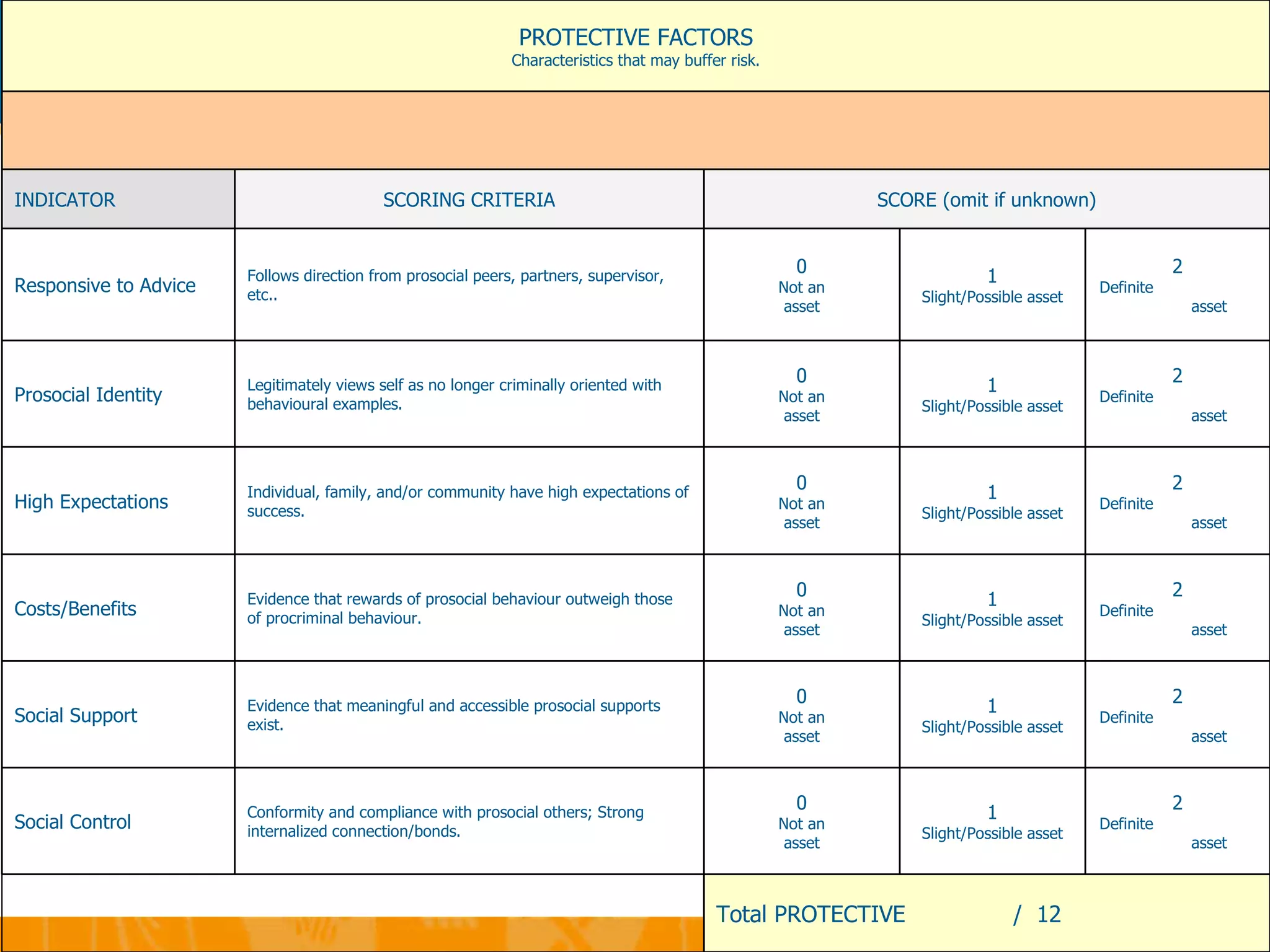


The document discusses several studies related to assessing dynamic risk factors for parolees and offenders. It finds that parole officers can achieve moderate to high accuracy in predicting recidivism when assessing dynamic risk factors, even with limited tools. Multiple reassessments of dynamic risk over time provide better predictions than a single pre-release assessment. Studies also found parole officers focus more on superficial engagement than targeting criminogenic needs and using cognitive behavioral techniques, as associated with reduced recidivism. The document introduces a structured tool called DRAOR for assessing dynamic risk, acute risk, and protective factors.
![[NDC 발표] 모바일 게임데이터분석 및 실전 활용](https://cdn.slidesharecdn.com/ss_thumbnails/20140529-140529031622-phpapp02-thumbnail.jpg?width=640&height=640&fit=bounds)

![[236] 카카오의데이터파이프라인 윤도영](https://cdn.slidesharecdn.com/ss_thumbnails/236-161025031702-thumbnail.jpg?width=640&height=640&fit=bounds)


![Naver속도의, 속도에 의한, 속도를 위한 몽고DB (네이버 컨텐츠검색과 몽고DB) [Naver]](https://cdn.slidesharecdn.com/ss_thumbnails/naver-190916181334-thumbnail.jpg?width=640&height=640&fit=bounds)
![[KAIST 채용설명회] 데이터 엔지니어는 무슨 일을 하나요?](https://cdn.slidesharecdn.com/ss_thumbnails/temp-180502031907-thumbnail.jpg?width=640&height=640&fit=bounds)


