MySQL
Database management sysytem
1
Introduction to MySQL
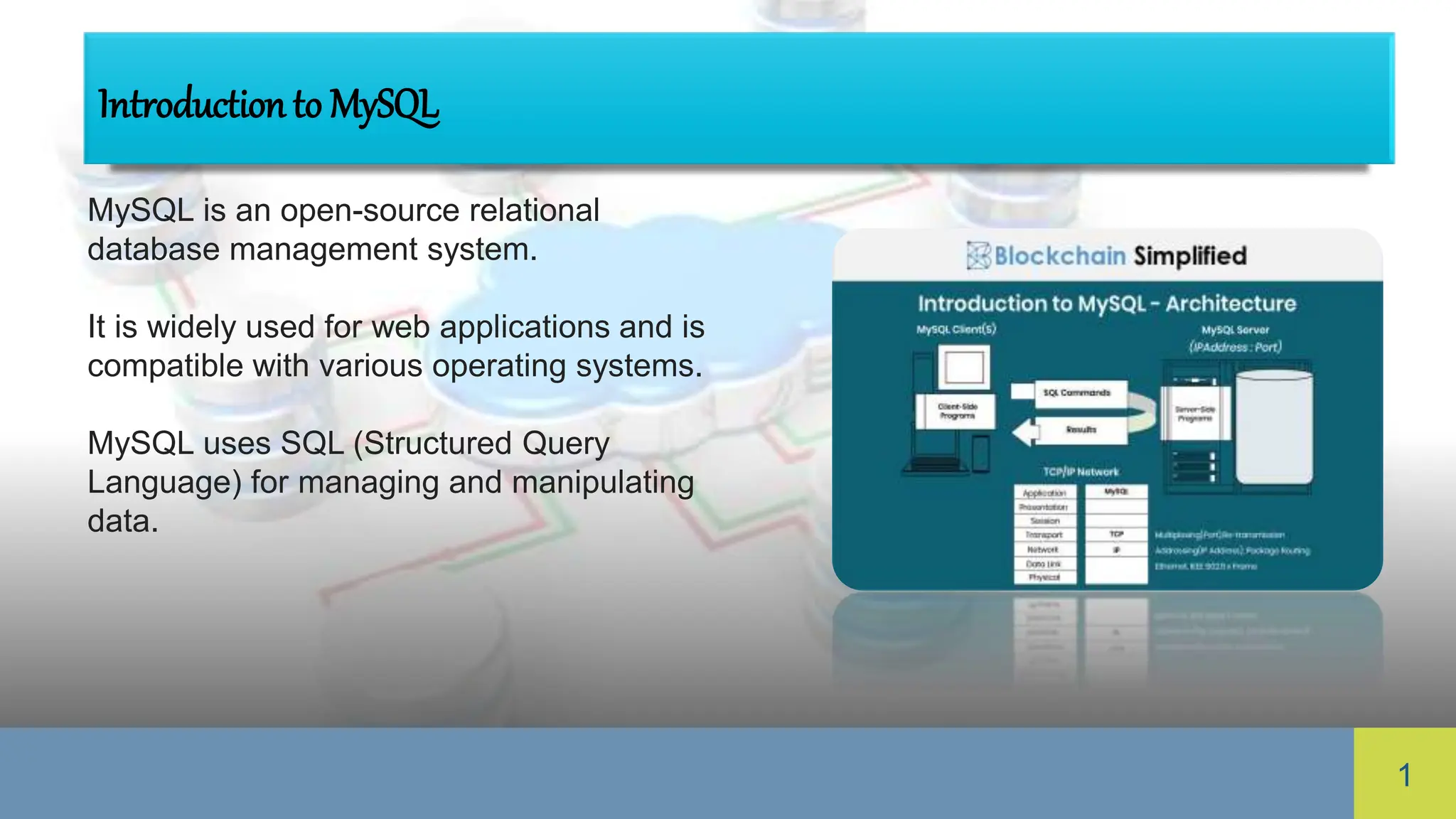
MySQL is an open-source relational
database management system.
It is widely used for web applications and is
compatible with various operating systems.
MySQL uses SQL (Structured Query
Language) for managing and manipulating
data.
2
Features of MySQL
MySQL supports multiple storage engines,
such as InnoDB and MyISAM.
It offers high performance and scalability
for handling large datasets.
MySQL provides strong data security
features, including encryption and user
privileges.
3
MySQL Workbench
MySQL Workbench is a visual tool for
designing, developing, and administering
MySQL databases.
It offers features for data modeling, SQL
development, and database administration
tasks.
MySQL Workbench enhances productivity
by providing a unified interface for
database management.
4
DataTypesin MySQL
MySQL supports various data types,
including integers, strings, dates, and
times.
Each data type has specific properties and
storage requirements.
Choosing the appropriate data type is
crucial for efficient data storage and
retrieval.
5
Indexingin MySQL
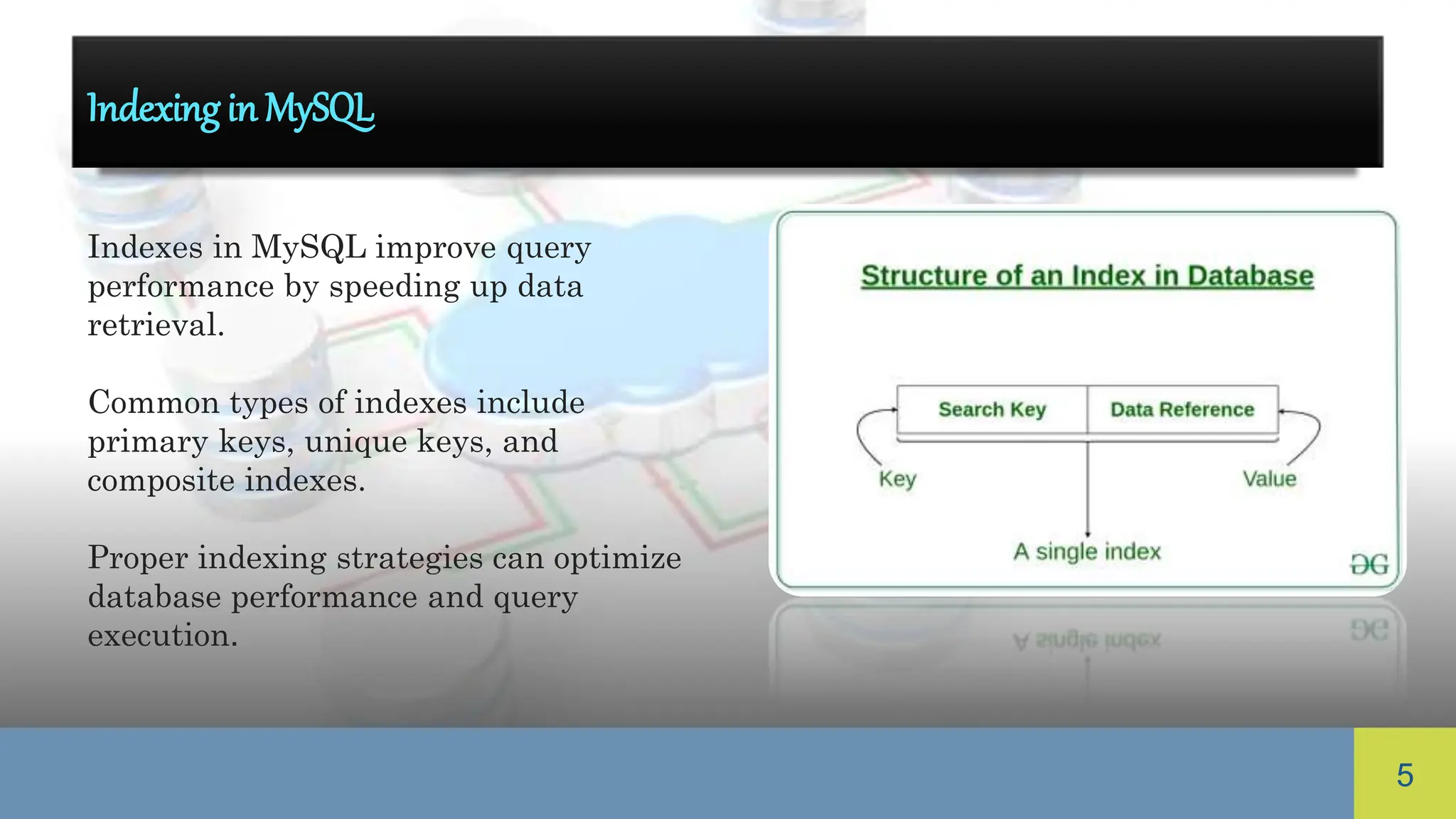
Indexes in MySQL improve query
performance by speeding up data
retrieval.
Common types of indexes include
primary keys, unique keys, and
composite indexes.
Proper indexing strategies can optimize
database performance and query
execution.
6
MySQL SecurityBest Practices
Secure MySQL installations by setting
strong passwords for user accounts.
Limit access privileges to ensure data
confidentiality and integrity.
Regularly update MySQL to patch
security vulnerabilities and protect
against threats.
7
MySQL Replication
MySQL replication allows data to be copied
and synchronized across multiple database
servers.
It enhances data availability, fault tolerance,
and load balancing.
Replication can be configured for master-
slave or master-master setups to meet
different requirements.
8
Backup andRecoveryin MySQL
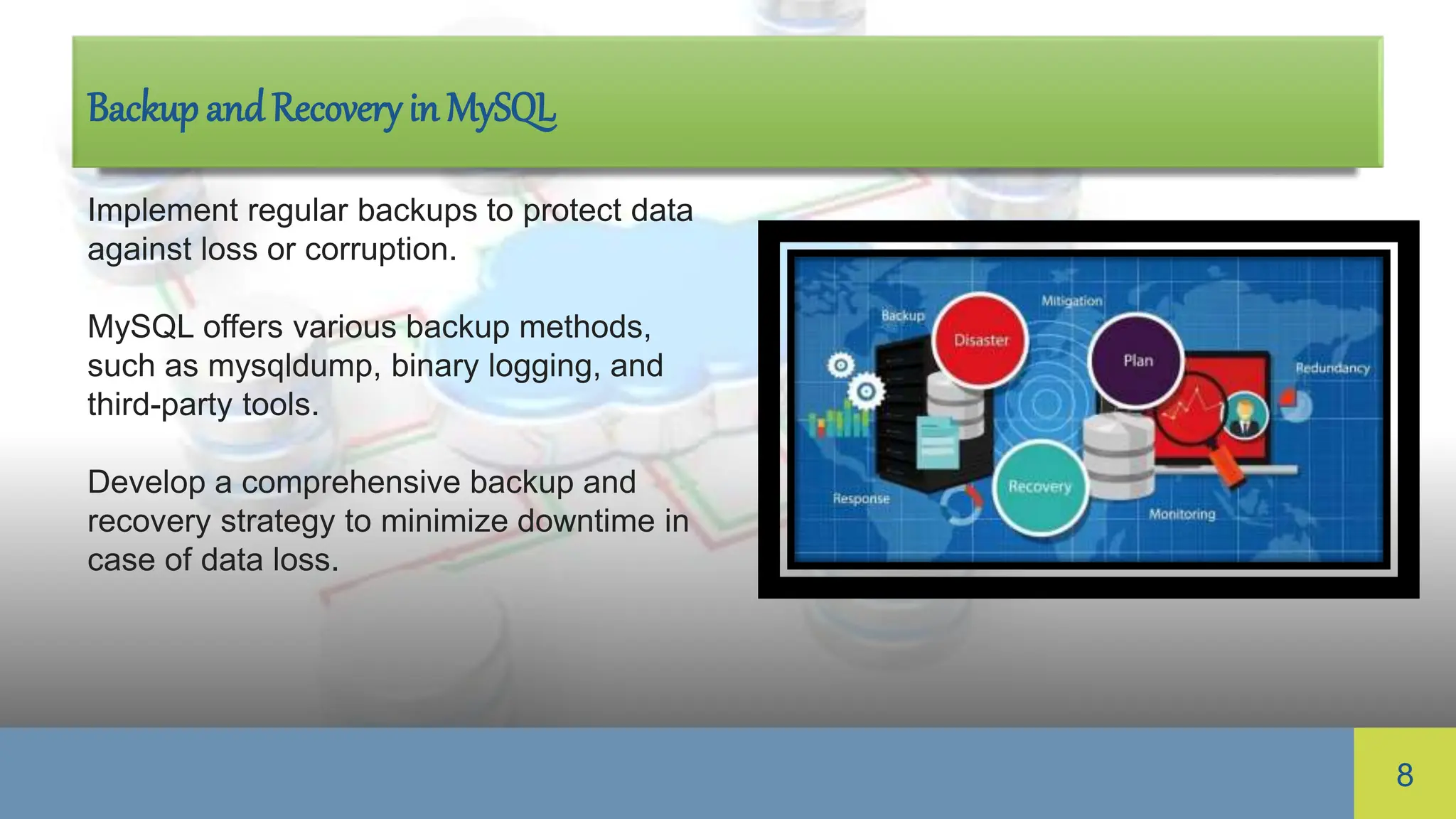
Implement regular backups to protect data
against loss or corruption.
MySQL offers various backup methods,
such as mysqldump, binary logging, and
third-party tools.
Develop a comprehensive backup and
recovery strategy to minimize downtime in
case of data loss.
9
Performance Tuning in MySQL
Optimize MySQL performance by analyzing
query execution plans and indexing
strategies.
Configure server variables, buffer sizes,
and caching mechanisms for efficient
resource utilization.
Monitor server metrics and performance
indicators to identify bottlenecks and
optimize database performance.
10
Conclusion
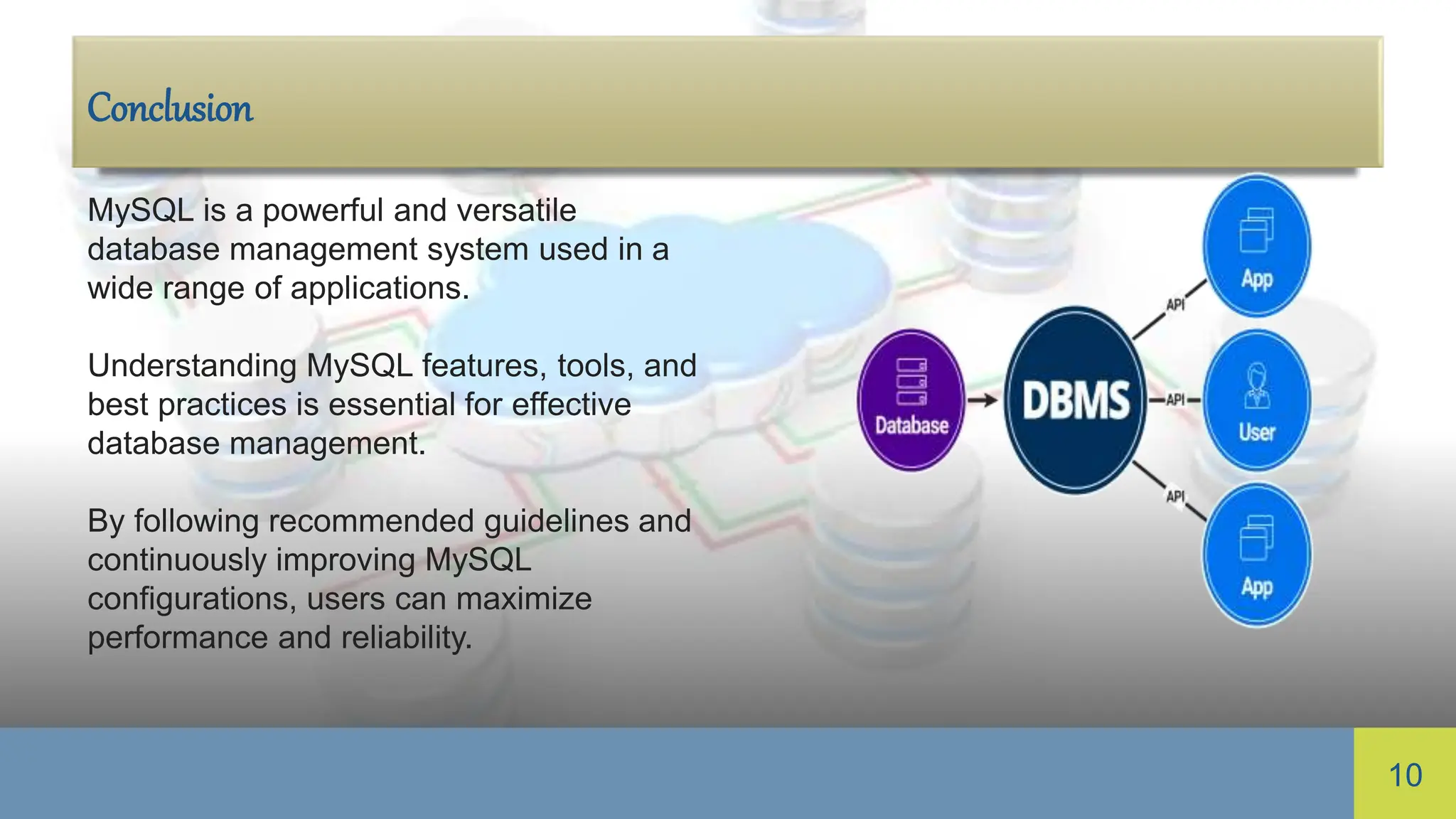
MySQL is a powerful and versatile
database management system used in a
wide range of applications.
Understanding MySQL features, tools, and
best practices is essential for effective
database management.
By following recommended guidelines and
continuously improving MySQL
configurations, users can maximize
performance and reliability.
Mysql introduction and the components etc

  • 1.
  • 2.
    1 Introduction to MySQL MySQLis an open-source relational database management system. It is widely used for web applications and is compatible with various operating systems. MySQL uses SQL (Structured Query Language) for managing and manipulating data.
  • 3.
    2 Features of MySQL MySQLsupports multiple storage engines, such as InnoDB and MyISAM. It offers high performance and scalability for handling large datasets. MySQL provides strong data security features, including encryption and user privileges.
  • 4.
    3 MySQL Workbench MySQL Workbenchis a visual tool for designing, developing, and administering MySQL databases. It offers features for data modeling, SQL development, and database administration tasks. MySQL Workbench enhances productivity by providing a unified interface for database management.
  • 5.
    4 DataTypesin MySQL MySQL supportsvarious data types, including integers, strings, dates, and times. Each data type has specific properties and storage requirements. Choosing the appropriate data type is crucial for efficient data storage and retrieval.
  • 6.
    5 Indexingin MySQL Indexes inMySQL improve query performance by speeding up data retrieval. Common types of indexes include primary keys, unique keys, and composite indexes. Proper indexing strategies can optimize database performance and query execution.
  • 7.
    6 MySQL SecurityBest Practices SecureMySQL installations by setting strong passwords for user accounts. Limit access privileges to ensure data confidentiality and integrity. Regularly update MySQL to patch security vulnerabilities and protect against threats.
  • 8.
    7 MySQL Replication MySQL replicationallows data to be copied and synchronized across multiple database servers. It enhances data availability, fault tolerance, and load balancing. Replication can be configured for master- slave or master-master setups to meet different requirements.
  • 9.
    8 Backup andRecoveryin MySQL Implementregular backups to protect data against loss or corruption. MySQL offers various backup methods, such as mysqldump, binary logging, and third-party tools. Develop a comprehensive backup and recovery strategy to minimize downtime in case of data loss.
  • 10.
    9 Performance Tuning inMySQL Optimize MySQL performance by analyzing query execution plans and indexing strategies. Configure server variables, buffer sizes, and caching mechanisms for efficient resource utilization. Monitor server metrics and performance indicators to identify bottlenecks and optimize database performance.
  • 11.
    10 Conclusion MySQL is apowerful and versatile database management system used in a wide range of applications. Understanding MySQL features, tools, and best practices is essential for effective database management. By following recommended guidelines and continuously improving MySQL configurations, users can maximize performance and reliability.