Kuala Terengganu is the largest city as well as
the state and royal capital of Terengganu state,
Malaysia.
On 1 January 2008, Kuala Terengganu was
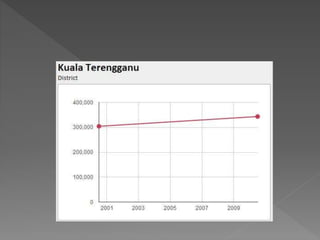
awarded city status. The city has a population of
343,284 and is also the seat of a district of the
same name. Kuala Terengganu is located about
500 kilometers northeast of Kuala Lumpur on
a promontory surrounded on three sides by
the South China Sea.
Blessed with extensive biodiversity, Lake
Kenyir borders western fringe of Taman
Negara, providing nature-based activities for
the adventurous traveller. This setting
provides unique natural landscapes, creating
a serene and idyllic environment to calm and
refresh the spirit.
Waste management is pressing harder with the alarming signal
warning the industry. The success of local recycling
programmes is reliant upon households’ participation.
Recycling of solid wastes is considered as the only method to
recover the waste generated. In recognition of this, doorstepping
approach is used as one the main driver tools towards
increasing households participation. This study was based on
selected residential areas (different level incomes) within Kuala
Terengganu town (Malaysia).
Doorstepping approach was found as an effective tool to
increase the recycling rate not in the capital of Terengganu. The
study was also found that lack of awareness, lack of facilities
and no incentives were found to limit participation in recycling
activities.
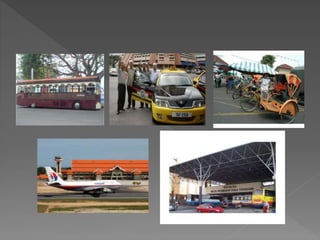
The city is connected to other towns via a good network of roads and
also some ferries that ply the Terengganu River. The Sultan Mahmud
Bridge, a bridge over the Terengganu River, provides a road link to
both banks of the river. On the other side of the Terengganu River,
there is a medium-sized airport called Sultan Mahmud Airport serving
domestic routes although it was granted international status.
Other transport facilities include the Taxicab and Kuala Terengganu
Bus Terminal. Kuala Terengganu is singularly lacking in commuter
services in the form of buses, trains or trams. There is a limited service
tourist bus that plies back and forth to tourist areas such as the Nor
Arfa batik outlet south of the city, and the jetty for ferries to the island
resorts at Redang and Perhentian islands. The city's only taxi rank
stands nearby to the city's only tourist bus terminal in the city centre.
Cars may be hired at Ping Anchorage and at the airport. The city and
suburbs are relatively easy to negotiate by car.
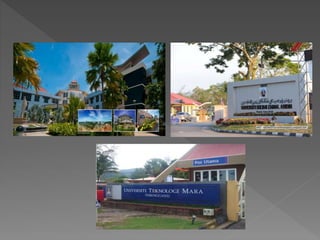
There are several institutes of higher learning in Terengganu. They are either
categorised as Institut Pengajian Tinggi Awam (IPTA); public university or Institut
Pengajian Tinggi Swasta (IPTS); private university. Among public universities which
have campus in Terengganu is the Universiti Sultan Zainal Abidin and Universiti
Malaysia Terengganu. Both universities have campus in Gong Badak, in north Kuala
Terengganu.
Terengganu also had 3 Universiti Teknologi MARA branches, in Kuala Terengganu,
Dungun and Bukit Besi. Also, Terengganu host several private university and
college, such as TATI University College in Kemaman, UCSI Terengganu campus in
Marang, Institut Teknologi Petroleum PETRONAS (INSTEP) in Batu Rakit, Kuala
Terengganu and Kolej Teknologi Bestari in Setiu, Politechnics Sultan Zainal Abidin,
among others.
Secondary school (high school) education is provided by Sekolah Kebangsaan ,
Sekolah Jenis Kebangsaan (National-type School) Chinese primary schools, and
Sekolah Ugama (Religious schools, ]. All of them follow the syllabus and curriculum
provided and regulated by the Malaysian Ministry of Education (Kementerian
Pendidikan Malaysia). Every year the state government spends RM34 million to
develop education in Terengganu. Part of these grants ensures that every eligible
primary school student in Terengganu is able to get a Netbook worth RM1000 to
help in their studies.
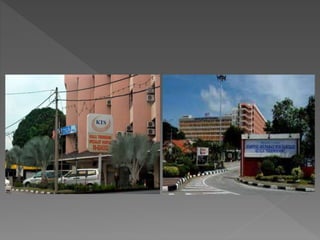
Malaysia's international visitors are advised to
seek medical attention at one of the numerous
private clinics in bigger cities like Kuala
Terengganu.
The quality of medical care provided in
Malaysia's government run hospitals is typically
low by western standards, though it's usually
sufficient for minor problems. Pharmacies are
readily available in most towns and villages
Kuala Terengganu features a tropical rainforest climate that borders on
a tropical monsoon climate. Kuala Terengganu does not quite have a
true dry season month, a requirement for it to be classified as having a
tropical monsoon climate. However the city’s driest month, February,
averages 60 mm of precipitation annually. The city does experience a
relative “dry season” from May through June, while the heaviest
precipitation is seen at the end of the year which sometimes reaches
more than 1,000 mm (39 in) of rainfall for each month in November
and December. Normally massive flood hit all round Terengganu state
occurred during monsoon season with estimated 3-5 series of wave of
floods from November till March.
Kuala Terengganu is generally hot and humid throughout the year
though the city does experience slightly cooler weather during its
rainiest part of the year, from November through January. The city on
average sees roughly more than 3,000 mm (120 in) of the annual
rainfall.
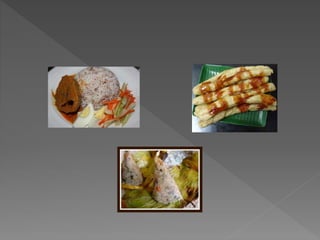
Due to the geographical location and history back
ground, apart from cuisines which representing the
three major races, Terengganu food has shown the
influence of Thai culture and taste. Terengganu has
abundance of rice based dishes such as nasi
dagang, nasi kunyit, nasi kuning, nasi berlauk, nasi
lemak and nasi kerabu. There is laksam, laksa
Terengganu, otak-otak, sata, pulut lepa, ketupat
sotong and kerepok lekor. Dining out is relatively
inexpensive and there are always plenty of choices
range from hotel food to hawker food.
Main economic activities include retail and
wholesale trade in food items, fabric &
apparels, fisheries, agriculture, service
industries, and tourism.
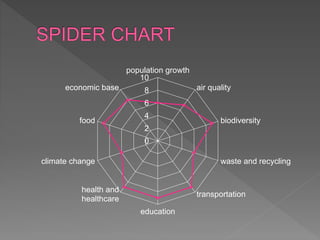
0
2
4
6
8
10
population growth
air quality
biodiversity
waste and recycling
transportation
education
health and
healthcare
climate change
food
economic base

My hometown

  • 2.
    Kuala Terengganu isthe largest city as well as the state and royal capital of Terengganu state, Malaysia. On 1 January 2008, Kuala Terengganu was awarded city status. The city has a population of 343,284 and is also the seat of a district of the same name. Kuala Terengganu is located about 500 kilometers northeast of Kuala Lumpur on a promontory surrounded on three sides by the South China Sea.
  • 6.
    Blessed with extensivebiodiversity, Lake Kenyir borders western fringe of Taman Negara, providing nature-based activities for the adventurous traveller. This setting provides unique natural landscapes, creating a serene and idyllic environment to calm and refresh the spirit.
  • 7.
    Waste management ispressing harder with the alarming signal warning the industry. The success of local recycling programmes is reliant upon households’ participation. Recycling of solid wastes is considered as the only method to recover the waste generated. In recognition of this, doorstepping approach is used as one the main driver tools towards increasing households participation. This study was based on selected residential areas (different level incomes) within Kuala Terengganu town (Malaysia). Doorstepping approach was found as an effective tool to increase the recycling rate not in the capital of Terengganu. The study was also found that lack of awareness, lack of facilities and no incentives were found to limit participation in recycling activities.
  • 8.
    The city isconnected to other towns via a good network of roads and also some ferries that ply the Terengganu River. The Sultan Mahmud Bridge, a bridge over the Terengganu River, provides a road link to both banks of the river. On the other side of the Terengganu River, there is a medium-sized airport called Sultan Mahmud Airport serving domestic routes although it was granted international status. Other transport facilities include the Taxicab and Kuala Terengganu Bus Terminal. Kuala Terengganu is singularly lacking in commuter services in the form of buses, trains or trams. There is a limited service tourist bus that plies back and forth to tourist areas such as the Nor Arfa batik outlet south of the city, and the jetty for ferries to the island resorts at Redang and Perhentian islands. The city's only taxi rank stands nearby to the city's only tourist bus terminal in the city centre. Cars may be hired at Ping Anchorage and at the airport. The city and suburbs are relatively easy to negotiate by car.
  • 10.
    There are severalinstitutes of higher learning in Terengganu. They are either categorised as Institut Pengajian Tinggi Awam (IPTA); public university or Institut Pengajian Tinggi Swasta (IPTS); private university. Among public universities which have campus in Terengganu is the Universiti Sultan Zainal Abidin and Universiti Malaysia Terengganu. Both universities have campus in Gong Badak, in north Kuala Terengganu. Terengganu also had 3 Universiti Teknologi MARA branches, in Kuala Terengganu, Dungun and Bukit Besi. Also, Terengganu host several private university and college, such as TATI University College in Kemaman, UCSI Terengganu campus in Marang, Institut Teknologi Petroleum PETRONAS (INSTEP) in Batu Rakit, Kuala Terengganu and Kolej Teknologi Bestari in Setiu, Politechnics Sultan Zainal Abidin, among others. Secondary school (high school) education is provided by Sekolah Kebangsaan , Sekolah Jenis Kebangsaan (National-type School) Chinese primary schools, and Sekolah Ugama (Religious schools, ]. All of them follow the syllabus and curriculum provided and regulated by the Malaysian Ministry of Education (Kementerian Pendidikan Malaysia). Every year the state government spends RM34 million to develop education in Terengganu. Part of these grants ensures that every eligible primary school student in Terengganu is able to get a Netbook worth RM1000 to help in their studies.
  • 12.
    Malaysia's international visitorsare advised to seek medical attention at one of the numerous private clinics in bigger cities like Kuala Terengganu. The quality of medical care provided in Malaysia's government run hospitals is typically low by western standards, though it's usually sufficient for minor problems. Pharmacies are readily available in most towns and villages
  • 14.
    Kuala Terengganu featuresa tropical rainforest climate that borders on a tropical monsoon climate. Kuala Terengganu does not quite have a true dry season month, a requirement for it to be classified as having a tropical monsoon climate. However the city’s driest month, February, averages 60 mm of precipitation annually. The city does experience a relative “dry season” from May through June, while the heaviest precipitation is seen at the end of the year which sometimes reaches more than 1,000 mm (39 in) of rainfall for each month in November and December. Normally massive flood hit all round Terengganu state occurred during monsoon season with estimated 3-5 series of wave of floods from November till March. Kuala Terengganu is generally hot and humid throughout the year though the city does experience slightly cooler weather during its rainiest part of the year, from November through January. The city on average sees roughly more than 3,000 mm (120 in) of the annual rainfall.
  • 15.
    Due to thegeographical location and history back ground, apart from cuisines which representing the three major races, Terengganu food has shown the influence of Thai culture and taste. Terengganu has abundance of rice based dishes such as nasi dagang, nasi kunyit, nasi kuning, nasi berlauk, nasi lemak and nasi kerabu. There is laksam, laksa Terengganu, otak-otak, sata, pulut lepa, ketupat sotong and kerepok lekor. Dining out is relatively inexpensive and there are always plenty of choices range from hotel food to hawker food.
  • 17.
    Main economic activitiesinclude retail and wholesale trade in food items, fabric & apparels, fisheries, agriculture, service industries, and tourism.
  • 18.
    0 2 4 6 8 10 population growth air quality biodiversity wasteand recycling transportation education health and healthcare climate change food economic base

Editor's Notes