
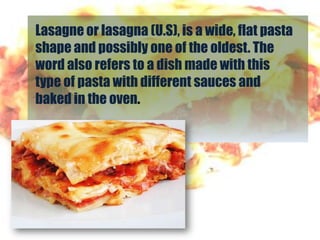
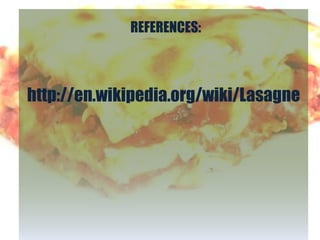
Lasagne or lasagna (U.S), is a wide, flat pasta
shape and possibly one of the oldest. The
word also refers to a dish made with this
type of pasta with different sauces and
baked in the oven.
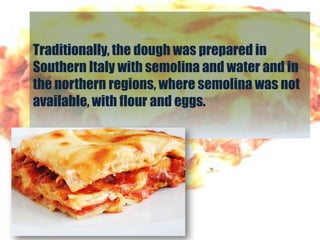
Traditionally, the dough was prepared in
Southern Italy with semolina and water and in
the northern regions, where semolina was not
available, with flour and eggs.
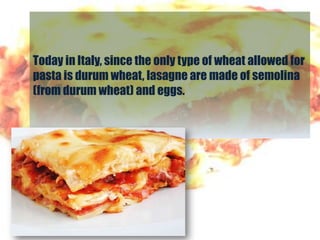
Today in Italy, since the only type of wheat allowed for
pasta is durum wheat, lasagne are made of semolina
(from durum wheat) and eggs.
ORIGIN:

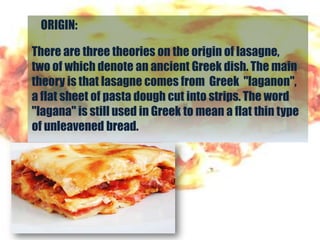
There are three theories on the origin of lasagne,
two of which denote an ancient Greek dish. The main
theory is that lasagne comes from Greek "laganon",
a flat sheet of pasta dough cut into strips. The word
"lagana" is still used in Greek to mean a flat thin type
of unleavened bread.
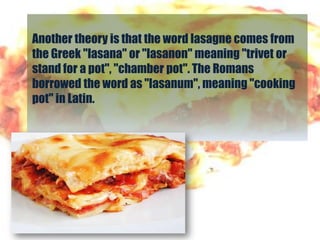
Another theory is that the word lasagne comes from
the Greek "lasana" or "lasanon" meaning "trivet or
stand for a pot", "chamber pot". The Romans
borrowed the word as "lasanum", meaning "cooking
pot" in Latin.
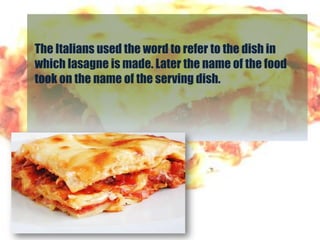
The Italians used the word to refer to the dish in
which lasagne is made. Later the name of the food
took on the name of the serving dish.
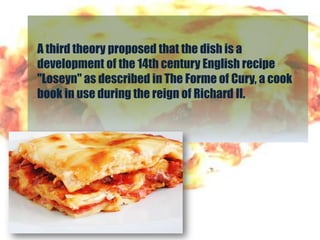
A third theory proposed that the dish is a
development of the 14th century English recipe
"Loseyn" as described in The Forme of Cury, a cook
book in use during the reign of Richard II.
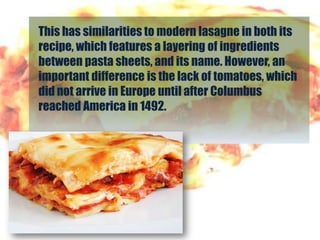
This has similarities to modern lasagne in both its
recipe, which features a layering of ingredients
between pasta sheets, and its name. However, an
important difference is the lack of tomatoes, which
did not arrive in Europe until after Columbus
reached America in 1492.
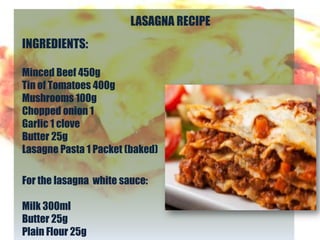
LASAGNA RECIPE
INGREDIENTS:

Minced Beef 450g
Tin of Tomatoes 400g
Mushrooms 100g
Chopped onion 1
Garlic 1 clove
Butter 25g
Lasagne Pasta 1 Packet (baked)

For the lasagna white sauce:

Milk 300ml
Butter 25g
Plain Flour 25g
METHOD OF PREPARE

1. To prepare the Meat Sauce, fry the Mince Beef
and Onion until brown.

2. Stir in the Garlic, Tomatoes and Mushrooms
(sliced).

3. Cook for about an hour until thick and rich.

4. If necessary add 2 tablespoons of Wheatflour
dissolved in a small amount of cold water to
thicken.

5. Grease an oven proof dish
6. To make the Bechamel sauce, melt the Butter, stir the
Flour in and add the Milk, stirring until thickened.

7. Grate the Cheese and add. Add seasoning to taste.

8. Layer the ingredients repeatedly, starting with the Meat
Sauce, then the Lasagne, ending with the Bechamel
Sauce.

9. Sprinkle some Parmesan Cheese on top and bake the
Lasagna in the oven at 400F / 200C / Mark 6 for about 45
minutes.

10. Serve the Lasagna with Parmesan Cheese.
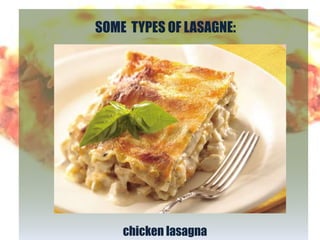
SOME TYPES OF LASAGNE:


    chicken lasagna
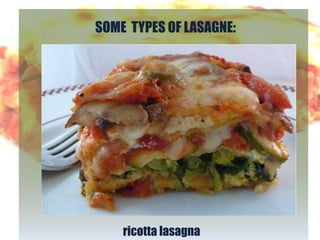
SOME TYPES OF LASAGNE:


    ricotta lasagna
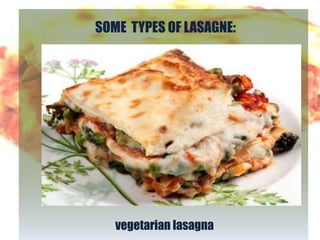
SOME TYPES OF LASAGNE:


   vegetarian lasagna
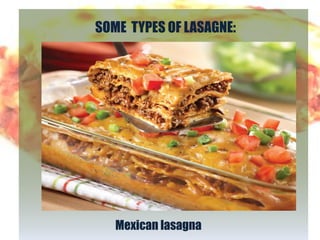
SOME TYPES OF LASAGNE:


   Mexican lasagna
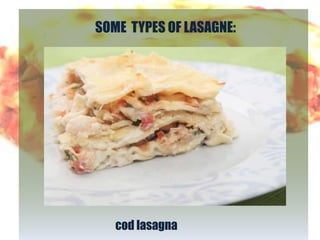
SOME TYPES OF LASAGNE:


   cod lasagna
REFERENCES:


http://en.wikipedia.org/wiki/Lasagne

My favorite dish

  • 2.
    Lasagne or lasagna(U.S), is a wide, flat pasta shape and possibly one of the oldest. The word also refers to a dish made with this type of pasta with different sauces and baked in the oven.
  • 3.
    Traditionally, the doughwas prepared in Southern Italy with semolina and water and in the northern regions, where semolina was not available, with flour and eggs.
  • 4.
    Today in Italy,since the only type of wheat allowed for pasta is durum wheat, lasagne are made of semolina (from durum wheat) and eggs.
  • 5.
    ORIGIN: There are threetheories on the origin of lasagne, two of which denote an ancient Greek dish. The main theory is that lasagne comes from Greek "laganon", a flat sheet of pasta dough cut into strips. The word "lagana" is still used in Greek to mean a flat thin type of unleavened bread.
  • 6.
    Another theory isthat the word lasagne comes from the Greek "lasana" or "lasanon" meaning "trivet or stand for a pot", "chamber pot". The Romans borrowed the word as "lasanum", meaning "cooking pot" in Latin.
  • 7.
    The Italians usedthe word to refer to the dish in which lasagne is made. Later the name of the food took on the name of the serving dish.
  • 8.
    A third theoryproposed that the dish is a development of the 14th century English recipe "Loseyn" as described in The Forme of Cury, a cook book in use during the reign of Richard II.
  • 9.
    This has similaritiesto modern lasagne in both its recipe, which features a layering of ingredients between pasta sheets, and its name. However, an important difference is the lack of tomatoes, which did not arrive in Europe until after Columbus reached America in 1492.
  • 10.
    LASAGNA RECIPE INGREDIENTS: Minced Beef450g Tin of Tomatoes 400g Mushrooms 100g Chopped onion 1 Garlic 1 clove Butter 25g Lasagne Pasta 1 Packet (baked) For the lasagna white sauce: Milk 300ml Butter 25g Plain Flour 25g
  • 11.
    METHOD OF PREPARE 1.To prepare the Meat Sauce, fry the Mince Beef and Onion until brown. 2. Stir in the Garlic, Tomatoes and Mushrooms (sliced). 3. Cook for about an hour until thick and rich. 4. If necessary add 2 tablespoons of Wheatflour dissolved in a small amount of cold water to thicken. 5. Grease an oven proof dish
  • 12.
    6. To makethe Bechamel sauce, melt the Butter, stir the Flour in and add the Milk, stirring until thickened. 7. Grate the Cheese and add. Add seasoning to taste. 8. Layer the ingredients repeatedly, starting with the Meat Sauce, then the Lasagne, ending with the Bechamel Sauce. 9. Sprinkle some Parmesan Cheese on top and bake the Lasagna in the oven at 400F / 200C / Mark 6 for about 45 minutes. 10. Serve the Lasagna with Parmesan Cheese.
  • 13.
    SOME TYPES OFLASAGNE: chicken lasagna
  • 14.
    SOME TYPES OFLASAGNE: ricotta lasagna
  • 15.
    SOME TYPES OFLASAGNE: vegetarian lasagna
  • 16.
    SOME TYPES OFLASAGNE: Mexican lasagna
  • 17.
    SOME TYPES OFLASAGNE: cod lasagna
  • 18.