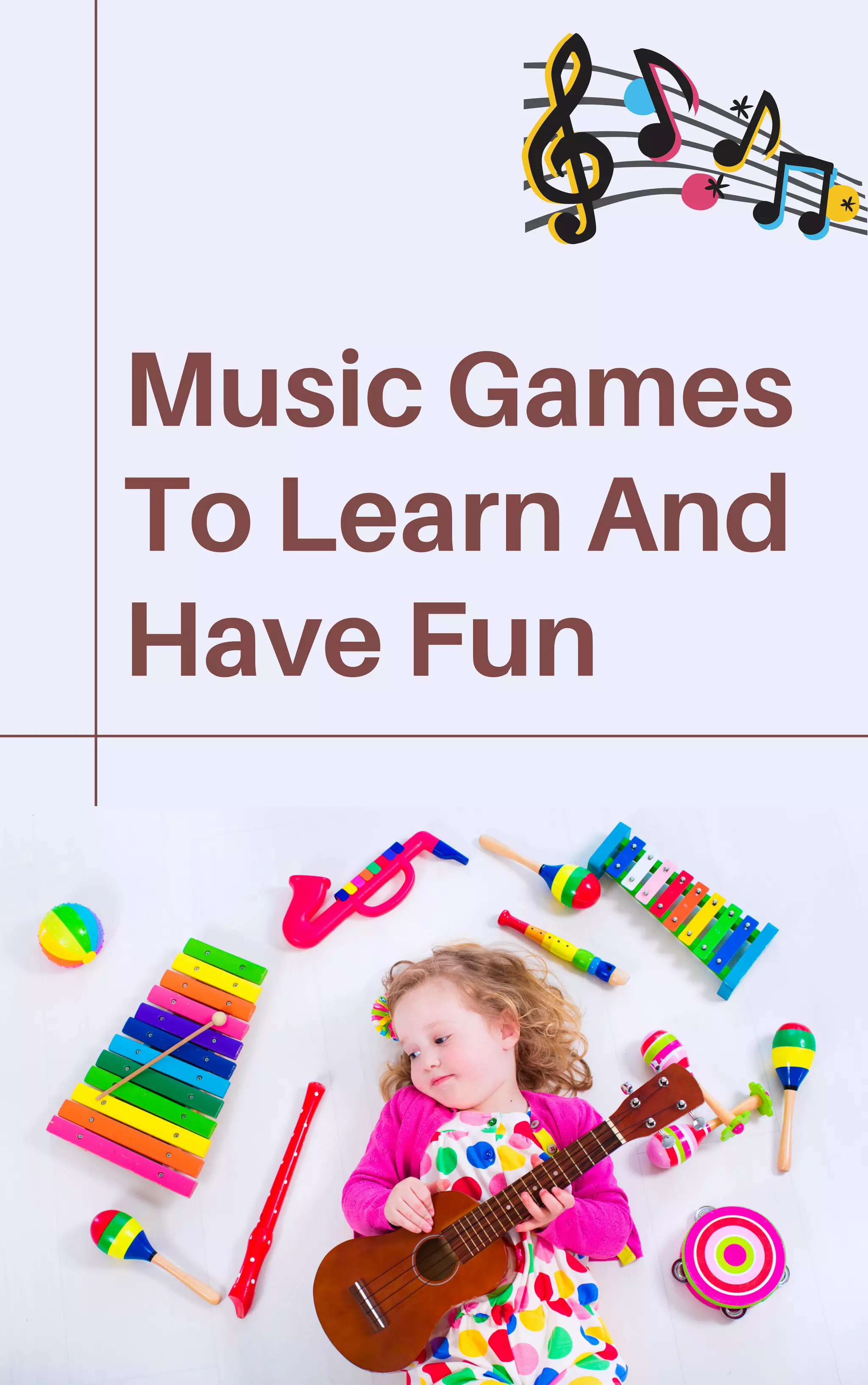
Music Games
To Learn And
Have Fun
Games are a great way to
make learning fun.
They can help you understand
the basic concepts of music
and build on them. Games
provide repetition of notes,
rhythms, and terms. They
strengthen fundamentals in a
dynamic and entertaining way.
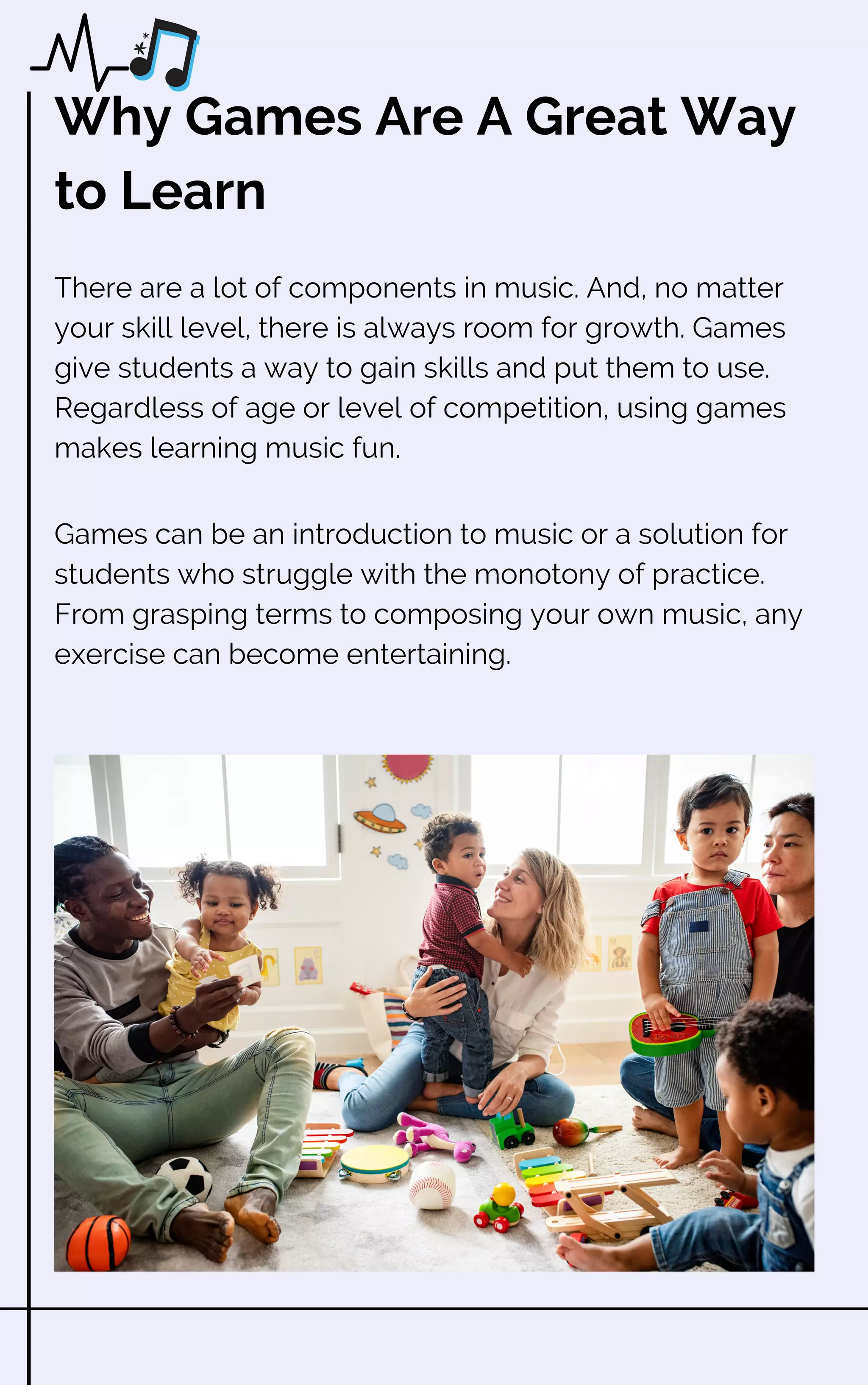
There are a lot of components in music. And, no matter
your skill level, there is always room for growth. Games
give students a way to gain skills and put them to use.
Regardless of age or level of competition, using games
makes learning music fun.
Why Games Are A Great Way
to Learn
Games can be an introduction to music or a solution for
students who struggle with the monotony of practice. 
From grasping terms to composing your own music, any
exercise can become entertaining.
The benefits of music for young children is astounding.
Music offers brainpower, social and emotional
development, motor skills, creativity, expression, and
discipline. Everything from the ABC's to what Old
McDonald had on his farm, we learn through music.
Music Games for Beginners
Music games for beginners start with listening, putting
sounds into patterns, and mimicking. The following
games introduce musical concepts such as rhythm,
volume, and how to categorize sounds.
Everyone remembers at least one nursery rhyme from
their childhood. The introduction of these songs teaches
us rhyme, rhythm, repetition, and early language. For
young toddlers simply singing the songs is useful and
fun. When you’re child gets a little older, have them act
out the rhyme to boost creativity. Some songs you may
choose can include Twinkle Twinkle Little Star, The
heels On The Bus, or The Itsy Bitsy Spider.
1. Start with Nursery Rhymes
2. Freeze Dance
A very fun way to teach rhythm, dancing, motor skills,
social skills, and cognition. Have everyone stand in a
circle and dance while a song plays. When the music
stops so should the dancing. Whoever doesn't freeze
when the music turns off is “out”.
3.Create Your Own Drums
This is a fun and creative way to introduce your child to
instruments. Use materials like a coffee can,
Tupperware, and soup or paint cans, to make drums. You
can leave them empty or place items like beans, beads,
or rice to create different sounds. Use your hand or a
spoon to strike the drum and listen to the sounds each
canister makes. This will help children learn about sound
dynamics and rhythms.
This game is played best amongst a big group. It entails
cutting paper into squares and writing the terms to be
reviewed. Place the squares into a bowl. Divide the
learners into two groups. One member from each team
draws a square from the "fishbowl" and explains the term
to teammates. Teammates guess. Round two involves
using one word to describe terms while teammates
guess. Then in round three, players can only act out
terms. Interesting, right?
Music Games for Young
Musicians
1. Fishbowl
Little Maestros is a great way to introduce your child to
sheet music. All you are going to need is a piece of paper
and a pencil. Start by creating a long list of your very own
symbols that are easy to draw like circles, waves, lines,
and squares. From there, you need to assign a different
noise to each symbol that can be made using your body,
not an instrument. For example, draw a circle and assign
it to tapping your foot. You should do this for clapping,
whistling, stomping, snapping, etc...
Each sound you create should have at least four
different symbols associated with it. From there you will
demonstrate how to write a simple rhythm using the
symbols you created and then play the rhythm yourself
so your child can understand the concept. After a few
examples, encourage your child to come up with some
music of their own.
2. Little Maestros
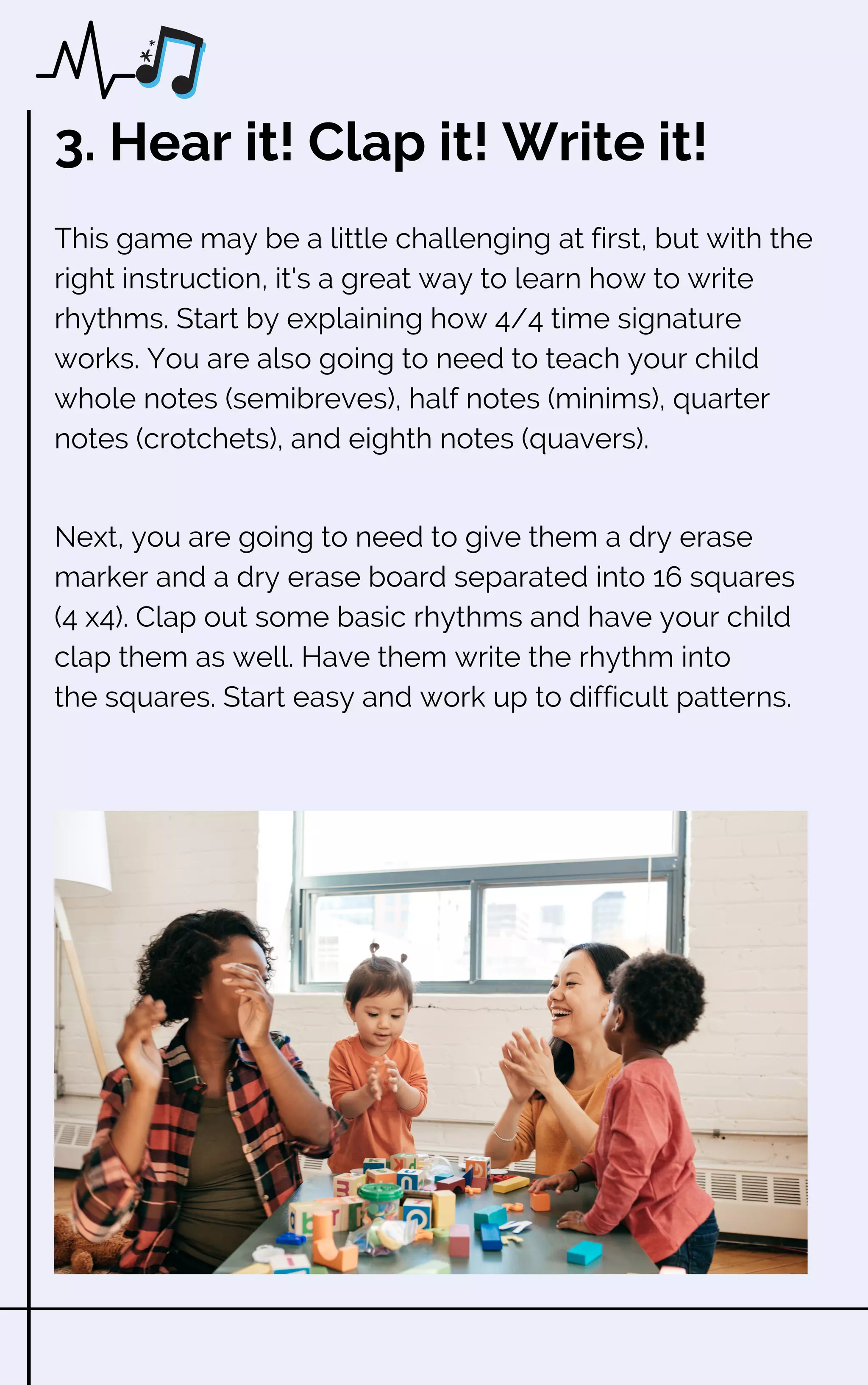
This game may be a little challenging at first, but with the
right instruction, it's a great way to learn how to write
rhythms. Start by explaining how 4/4 time signature
works. You are also going to need to teach your child
whole notes (semibreves), half notes (minims), quarter
notes (crotchets), and eighth notes (quavers).
3. Hear it! Clap it! Write it!
Next, you are going to need to give them a dry erase
marker and a dry erase board separated into 16 squares
(4 x4). Clap out some basic rhythms and have your child
clap them as well. Have them write the rhythm into
the squares. Start easy and work up to difficult patterns.
·SongPop: An online music trivia game that
Icon Pop Song: Learn more about your music
Lips: If you love karaoke you will love this
Encore: A card game that pits you against your
features a variety of music geners.
artsists while showing off your knowledge about your
own favorite music and musicians.
·        
game where you select songs to sing and get a score
based on musical prowess such as pitch and note length.
friends in a singing showdown.
Music games don’t just have to be about learning, they
can also be played by people who share a common
love for music. Here are some games for people music
lovers of any age:
Games for Music Lovers
Games are a fun way to
practice terms, learn more
about arists, or let loose and
have fun with your music
friends. They give you an
opportunity to think outside
the box and get creative.
www.pianocloseouts.com

Music games to learn and have fun

  • 1.
  • 2.
    Games are agreat way to make learning fun. They can help you understand the basic concepts of music and build on them. Games provide repetition of notes, rhythms, and terms. They strengthen fundamentals in a dynamic and entertaining way.
  • 3.
    There are alot of components in music. And, no matter your skill level, there is always room for growth. Games give students a way to gain skills and put them to use. Regardless of age or level of competition, using games makes learning music fun. Why Games Are A Great Way to Learn Games can be an introduction to music or a solution for students who struggle with the monotony of practice.  From grasping terms to composing your own music, any exercise can become entertaining.
  • 4.
    The benefits ofmusic for young children is astounding. Music offers brainpower, social and emotional development, motor skills, creativity, expression, and discipline. Everything from the ABC's to what Old McDonald had on his farm, we learn through music. Music Games for Beginners Music games for beginners start with listening, putting sounds into patterns, and mimicking. The following games introduce musical concepts such as rhythm, volume, and how to categorize sounds.
  • 5.
    Everyone remembers atleast one nursery rhyme from their childhood. The introduction of these songs teaches us rhyme, rhythm, repetition, and early language. For young toddlers simply singing the songs is useful and fun. When you’re child gets a little older, have them act out the rhyme to boost creativity. Some songs you may choose can include Twinkle Twinkle Little Star, The heels On The Bus, or The Itsy Bitsy Spider. 1. Start with Nursery Rhymes 2. Freeze Dance A very fun way to teach rhythm, dancing, motor skills, social skills, and cognition. Have everyone stand in a circle and dance while a song plays. When the music stops so should the dancing. Whoever doesn't freeze when the music turns off is “out”. 3.Create Your Own Drums This is a fun and creative way to introduce your child to instruments. Use materials like a coffee can, Tupperware, and soup or paint cans, to make drums. You can leave them empty or place items like beans, beads, or rice to create different sounds. Use your hand or a spoon to strike the drum and listen to the sounds each canister makes. This will help children learn about sound dynamics and rhythms.
  • 6.
    This game isplayed best amongst a big group. It entails cutting paper into squares and writing the terms to be reviewed. Place the squares into a bowl. Divide the learners into two groups. One member from each team draws a square from the "fishbowl" and explains the term to teammates. Teammates guess. Round two involves using one word to describe terms while teammates guess. Then in round three, players can only act out terms. Interesting, right? Music Games for Young Musicians 1. Fishbowl
  • 7.
    Little Maestros isa great way to introduce your child to sheet music. All you are going to need is a piece of paper and a pencil. Start by creating a long list of your very own symbols that are easy to draw like circles, waves, lines, and squares. From there, you need to assign a different noise to each symbol that can be made using your body, not an instrument. For example, draw a circle and assign it to tapping your foot. You should do this for clapping, whistling, stomping, snapping, etc... Each sound you create should have at least four different symbols associated with it. From there you will demonstrate how to write a simple rhythm using the symbols you created and then play the rhythm yourself so your child can understand the concept. After a few examples, encourage your child to come up with some music of their own. 2. Little Maestros
  • 8.
    This game maybe a little challenging at first, but with the right instruction, it's a great way to learn how to write rhythms. Start by explaining how 4/4 time signature works. You are also going to need to teach your child whole notes (semibreves), half notes (minims), quarter notes (crotchets), and eighth notes (quavers). 3. Hear it! Clap it! Write it! Next, you are going to need to give them a dry erase marker and a dry erase board separated into 16 squares (4 x4). Clap out some basic rhythms and have your child clap them as well. Have them write the rhythm into the squares. Start easy and work up to difficult patterns.
  • 9.
    ·SongPop: An onlinemusic trivia game that Icon Pop Song: Learn more about your music Lips: If you love karaoke you will love this Encore: A card game that pits you against your features a variety of music geners. artsists while showing off your knowledge about your own favorite music and musicians. ·         game where you select songs to sing and get a score based on musical prowess such as pitch and note length. friends in a singing showdown. Music games don’t just have to be about learning, they can also be played by people who share a common love for music. Here are some games for people music lovers of any age: Games for Music Lovers
  • 10.
    Games are afun way to practice terms, learn more about arists, or let loose and have fun with your music friends. They give you an opportunity to think outside the box and get creative. www.pianocloseouts.com