MUSCLES AND THEIR TYPES
Learning
Learning Objectives
• Explain the organization of muscle tissue.
• Describe briefly the function of skeletal,
cardiac muscle, and smooth muscle.
• Explain how muscles work with tendons
to move the body.
• Describe briefly how muscles contract
and relax.
INTRODUCTION – FUNCTIONS AND BASIC TYPES OF
MUSCLE CELLS
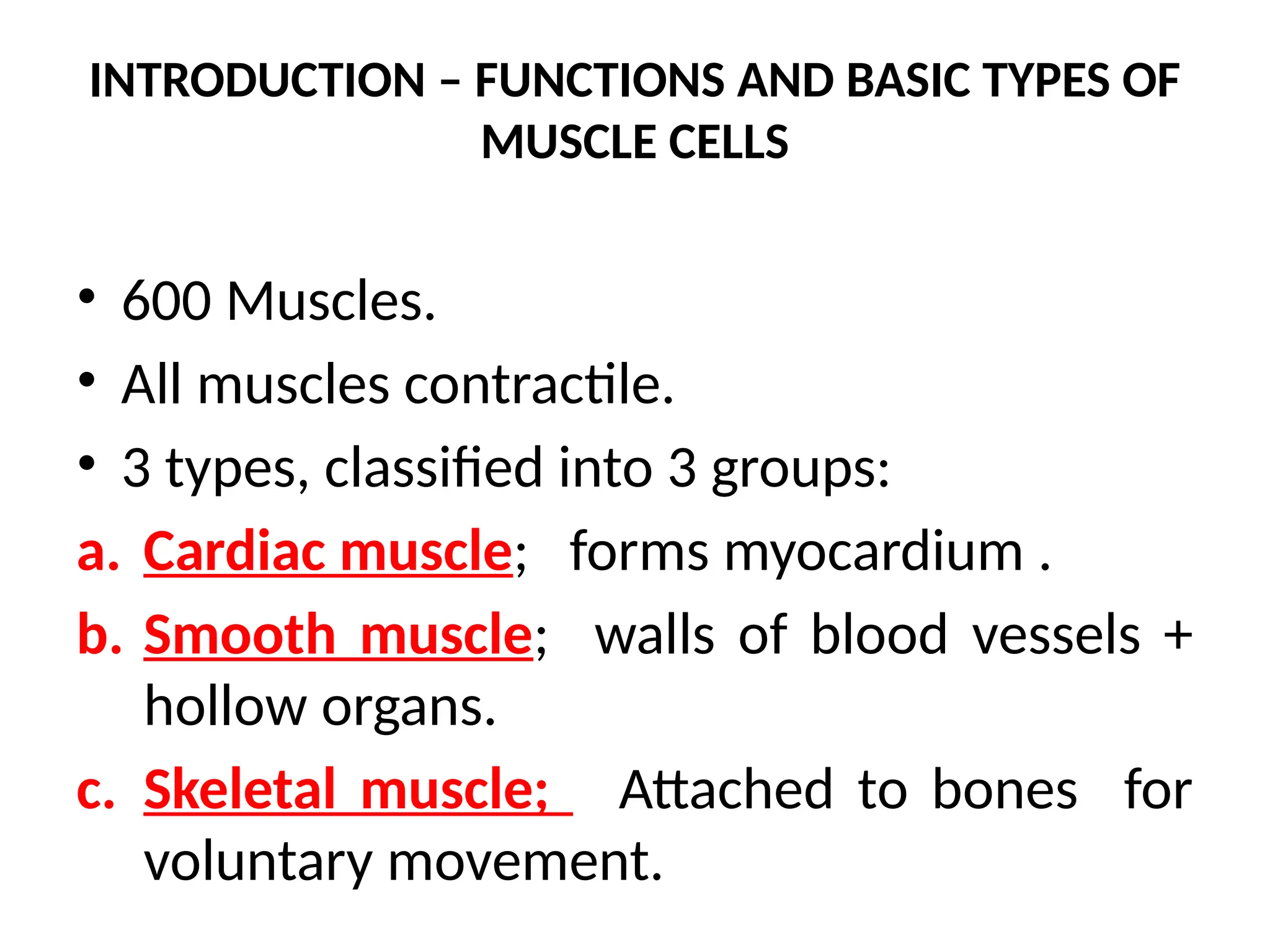
• 600 Muscles.
• All muscles contractile.
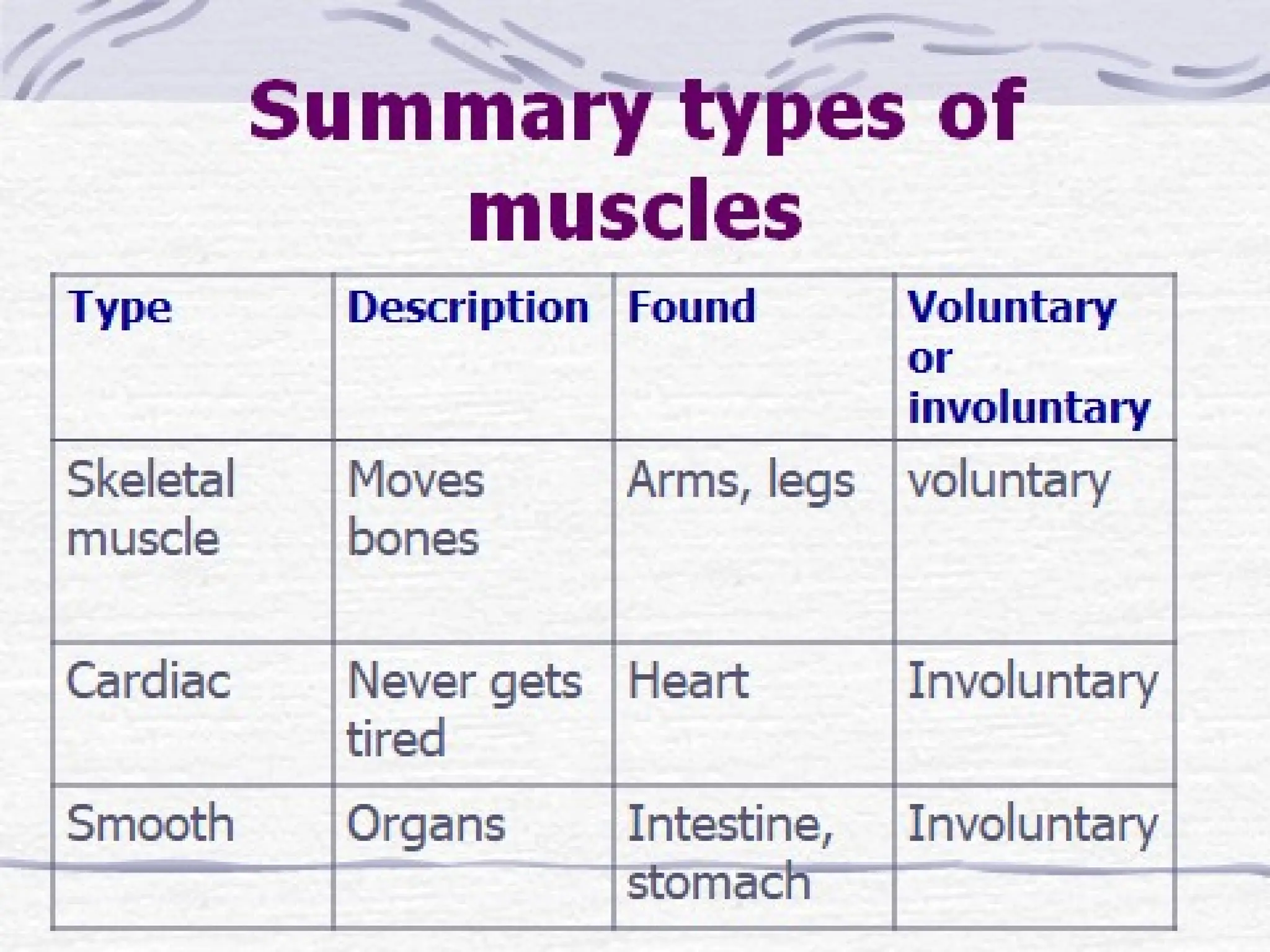
• 3 types, classified into 3 groups:
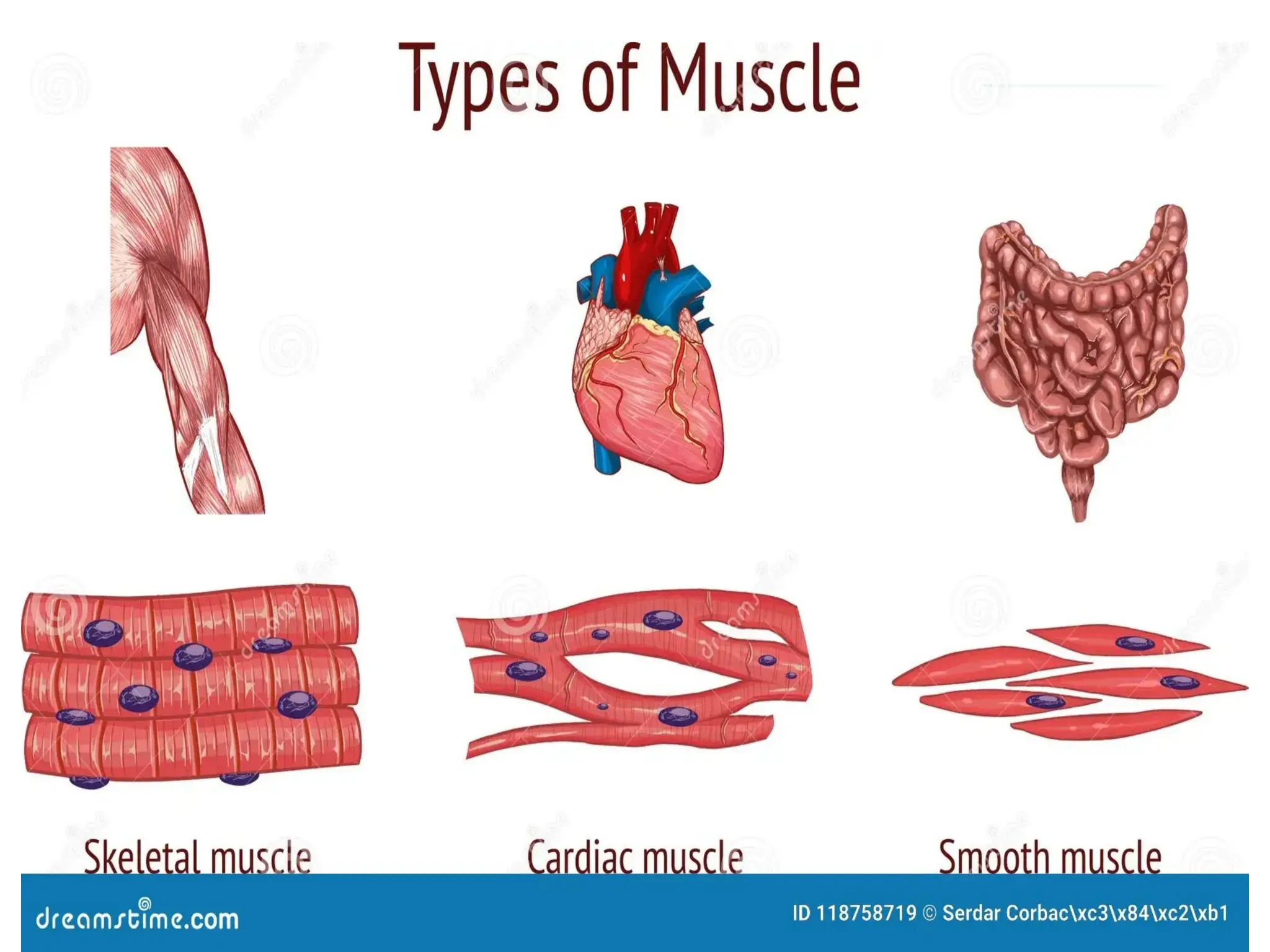
a. Cardiac muscle; forms myocardium .
b. Smooth muscle; walls of blood vessels +
hollow organs.
c. Skeletal muscle; Attached to bones for
voluntary movement.
Features Of skeletal Muscles
• under conscious or voluntary control.
• fibers striated (having transverse streaks
when seen under microscope).
• vary in size, shape, and arrangement of fibers.
• Range from tiny strands (stapedium) to large
masses (muscles of thigh).
• Each fiber is a single cylindrical muscle cell.
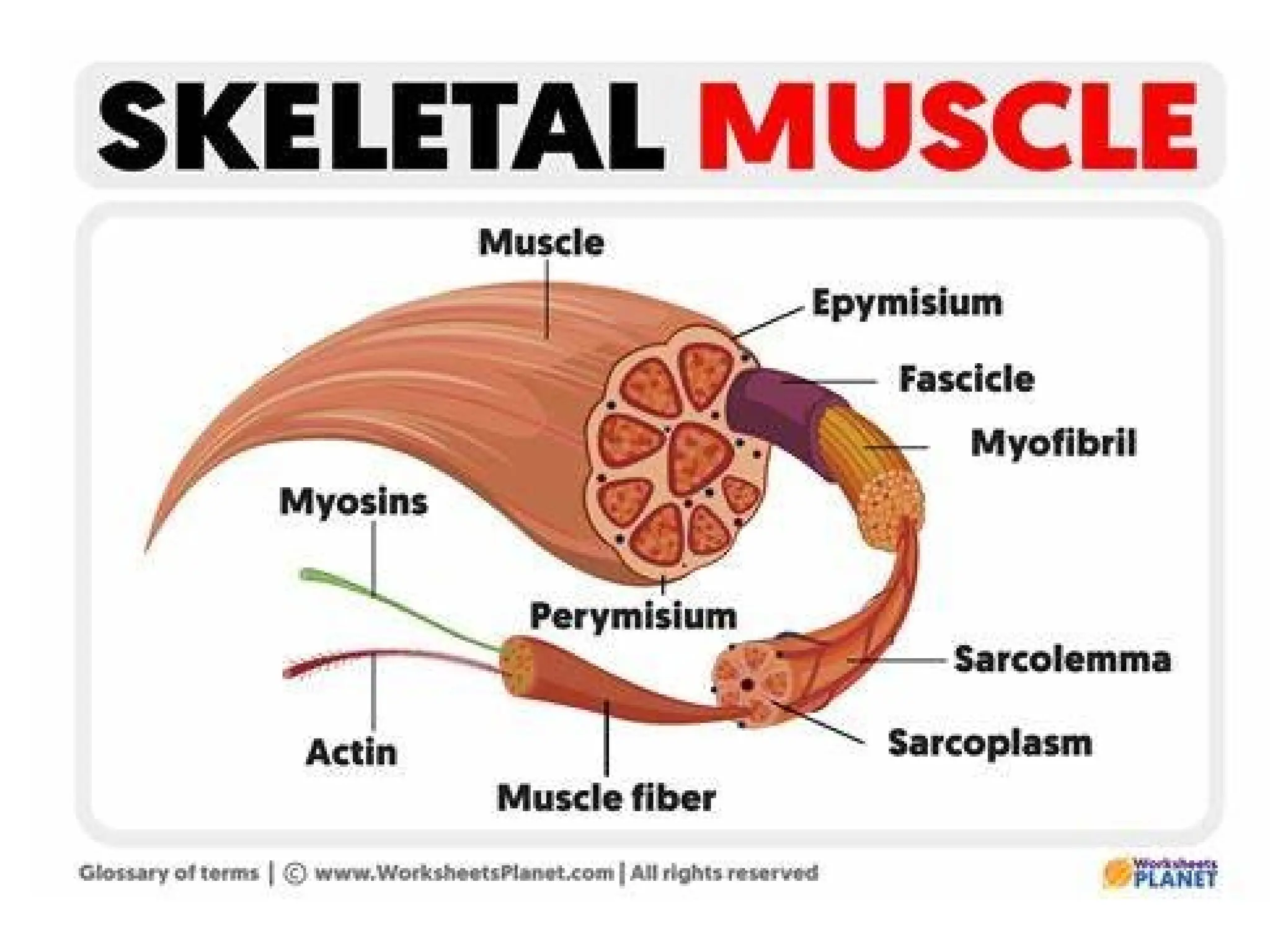
• Consists of abundant muscle fibers bundled
together and wrapped in a connective tissue
covering.
• Each muscle is surrounded by a connective
tissue sheath called the epimysium.
• Fascia, (connective tissue outside the
epimysium), surrounds and separates the
muscles.
• Skeletal muscles have an abundant supply of
blood vessels and nerves.
• skeletal muscle fiber receive an impulse from
a nerve cell to contract.
• An artery and vein along with its nerve
penetrates the epimysium of a skeletal
muscle.
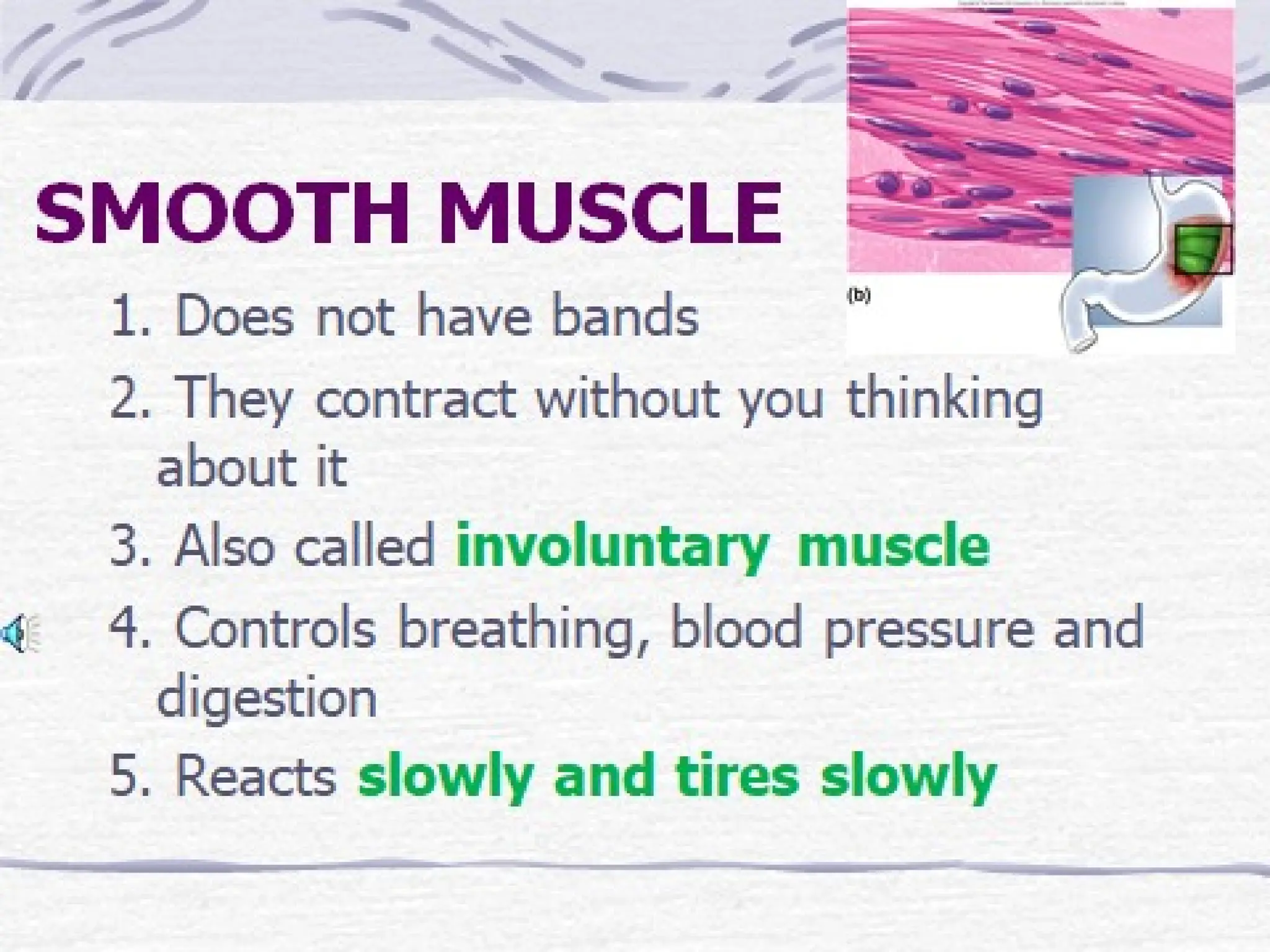
Features Of Smooth muscle
• walls of hollow internal organs such as
blood vessels, gastrointestinal tract,
bladder, and uterus.
• Under control of autonomic nervous
system.
• Involuntary control.
• Microscopically non-striated (smooth).
• contract slowly and rhythmically.
Features Of Cardiac muscle
• In the walls of heart.
• under control of autonomic nervous system.
• striated, like skeletal muscle.
• cardiac muscle cell is rectangular in shape.
• Contraction of cardiac muscle is involuntary,
strong, and rhythmical.
• Do not tire, produce own signals.
Functions Of Muscles
A. Skeletal Muscles:
• produces obvious movements .
• facial expressions, eye movements,
• respiration.
• posture, joint stability,
• fine adjustments to hold body in stationary positions.
• Tendons work for joint stability.
• Heat production (85% of total body heat) to maintain
body temperature by muscle metabolism.
• Tendon: flat sheet-like aponeurosis,
attachments from muscles to bones and
connective tissue of other muscles, so
spans a joint.
• Ligaments are fibrous tissues that
connect bone to bone.
Muscles and Their different Types in human body

Muscles and Their different Types in human body

  • 1.
  • 2.
    Learning Learning Objectives • Explainthe organization of muscle tissue. • Describe briefly the function of skeletal, cardiac muscle, and smooth muscle. • Explain how muscles work with tendons to move the body. • Describe briefly how muscles contract and relax.
  • 3.
    INTRODUCTION – FUNCTIONSAND BASIC TYPES OF MUSCLE CELLS • 600 Muscles. • All muscles contractile. • 3 types, classified into 3 groups: a. Cardiac muscle; forms myocardium . b. Smooth muscle; walls of blood vessels + hollow organs. c. Skeletal muscle; Attached to bones for voluntary movement.
  • 5.
    Features Of skeletalMuscles • under conscious or voluntary control. • fibers striated (having transverse streaks when seen under microscope). • vary in size, shape, and arrangement of fibers. • Range from tiny strands (stapedium) to large masses (muscles of thigh). • Each fiber is a single cylindrical muscle cell.
  • 8.
    • Consists ofabundant muscle fibers bundled together and wrapped in a connective tissue covering. • Each muscle is surrounded by a connective tissue sheath called the epimysium. • Fascia, (connective tissue outside the epimysium), surrounds and separates the muscles.
  • 9.
    • Skeletal muscleshave an abundant supply of blood vessels and nerves. • skeletal muscle fiber receive an impulse from a nerve cell to contract. • An artery and vein along with its nerve penetrates the epimysium of a skeletal muscle.
  • 10.
    Features Of Smoothmuscle • walls of hollow internal organs such as blood vessels, gastrointestinal tract, bladder, and uterus. • Under control of autonomic nervous system. • Involuntary control. • Microscopically non-striated (smooth). • contract slowly and rhythmically.
  • 14.
    Features Of Cardiacmuscle • In the walls of heart. • under control of autonomic nervous system. • striated, like skeletal muscle. • cardiac muscle cell is rectangular in shape. • Contraction of cardiac muscle is involuntary, strong, and rhythmical. • Do not tire, produce own signals.
  • 15.
    Functions Of Muscles A.Skeletal Muscles: • produces obvious movements . • facial expressions, eye movements, • respiration. • posture, joint stability, • fine adjustments to hold body in stationary positions. • Tendons work for joint stability. • Heat production (85% of total body heat) to maintain body temperature by muscle metabolism.
  • 17.
    • Tendon: flatsheet-like aponeurosis, attachments from muscles to bones and connective tissue of other muscles, so spans a joint. • Ligaments are fibrous tissues that connect bone to bone.