Draft
Resolution
Discussion
1. What is
Draft
Resolution?
4.
Amendm
ents
5.
Votin
g
2.
How
to
write
it?
6. MUST
Remem
ber
Things
3.Present
ing a
Draft
Resolutio
n
What is a Draft
Resolution?
• Draft resolution is the outcome of
debate, discussion and negotiation of
a certain committee regarding an
agenda. It is the most formal solution
list provided by the delegates of the
committee to the General Assembly
How to write a Draft Resolution!?
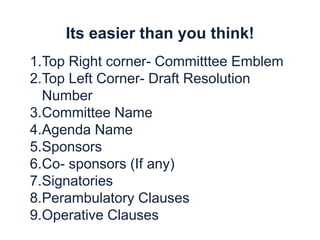
1.Top Right corner- Committtee Emblem
2.Top Left Corner- Draft Resolution
Number
3.Committee Name
4.Agenda Name
5.Sponsors
6.Co- sponsors (If any)
7.Signatories
8.Perambulatory Clauses
9.Operative Clauses
Its easier than you think!
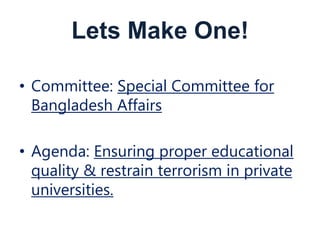
Lets Make One!
• Committee: Special Committee for
Bangladesh Affairs
• Agenda: Ensuring proper educational
quality & restrain terrorism in private
universities.
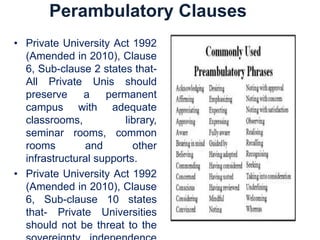
Perambulatory Clauses
• Private University Act 1992
(Amended in 2010), Clause
6, Sub-clause 2 states that-
All Private Unis should
preserve a permanent
campus with adequate
classrooms, library,
seminar rooms, common
rooms and other
infrastructural supports.
• Private University Act 1992
(Amended in 2010), Clause
6, Sub-clause 10 states
that- Private Universities
should not be threat to the
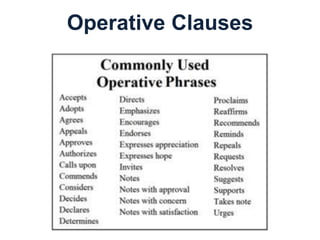
Operative Clauses
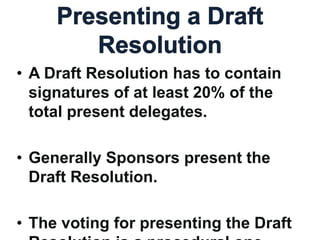
• A Draft Resolution has to contain
signatures of at least 20% of the
total present delegates.
• Generally Sponsors present the
Draft Resolution.
• The voting for presenting the Draft
Amend
ment
Un-
Friendly
Debate/
GSL/Q.A
Voting
Friendly
Voting
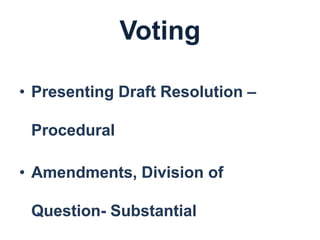
• Presenting Draft Resolution –
Procedural
• Amendments, Division of
Question- Substantial
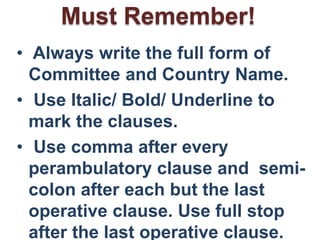
Must Remember!
• Always write the full form of
Committee and Country Name.
• Use Italic/ Bold/ Underline to
mark the clauses.
• Use comma after every
perambulatory clause and semi-
colon after each but the last
operative clause. Use full stop
after the last operative clause.
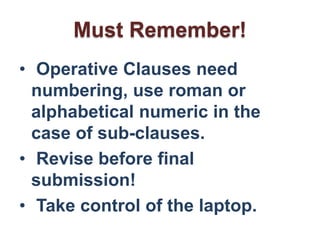
Must Remember!
• Operative Clauses need
numbering, use roman or
alphabetical numeric in the
case of sub-clauses.
• Revise before final
submission!
• Take control of the laptop.

MUN- Draft Resolution Basics

  • 1.
  • 2.
  • 3.
    What is aDraft Resolution? • Draft resolution is the outcome of debate, discussion and negotiation of a certain committee regarding an agenda. It is the most formal solution list provided by the delegates of the committee to the General Assembly
  • 4.
    How to writea Draft Resolution!?
  • 5.
    1.Top Right corner-Committtee Emblem 2.Top Left Corner- Draft Resolution Number 3.Committee Name 4.Agenda Name 5.Sponsors 6.Co- sponsors (If any) 7.Signatories 8.Perambulatory Clauses 9.Operative Clauses Its easier than you think!
  • 6.
    Lets Make One! •Committee: Special Committee for Bangladesh Affairs • Agenda: Ensuring proper educational quality & restrain terrorism in private universities.
  • 7.
    Perambulatory Clauses • PrivateUniversity Act 1992 (Amended in 2010), Clause 6, Sub-clause 2 states that- All Private Unis should preserve a permanent campus with adequate classrooms, library, seminar rooms, common rooms and other infrastructural supports. • Private University Act 1992 (Amended in 2010), Clause 6, Sub-clause 10 states that- Private Universities should not be threat to the
  • 8.
  • 9.
    • A DraftResolution has to contain signatures of at least 20% of the total present delegates. • Generally Sponsors present the Draft Resolution. • The voting for presenting the Draft
  • 10.
  • 11.
    Voting • Presenting DraftResolution – Procedural • Amendments, Division of Question- Substantial
  • 12.
    Must Remember! • Alwayswrite the full form of Committee and Country Name. • Use Italic/ Bold/ Underline to mark the clauses. • Use comma after every perambulatory clause and semi- colon after each but the last operative clause. Use full stop after the last operative clause.
  • 13.
    Must Remember! • OperativeClauses need numbering, use roman or alphabetical numeric in the case of sub-clauses. • Revise before final submission! • Take control of the laptop.