Multimodal Approaches:
@OLC_Today Online Workshop
Workshop Faculty: @LauraPasquini
Supporting Online & Blended Learners
Overview
Multimodal course design creates a
learning environment which is conducive to
various learning preferences by delivering
the same content in multiple formats. In this
workshop, you will explore strategies for
developing learning content in various
formats by using visual, audio, and video to
engage a diverse set of learners. You will
explore the research-based foundation of
why this approach to learning design is
effective while viewing examples from
quality multimodal content design.
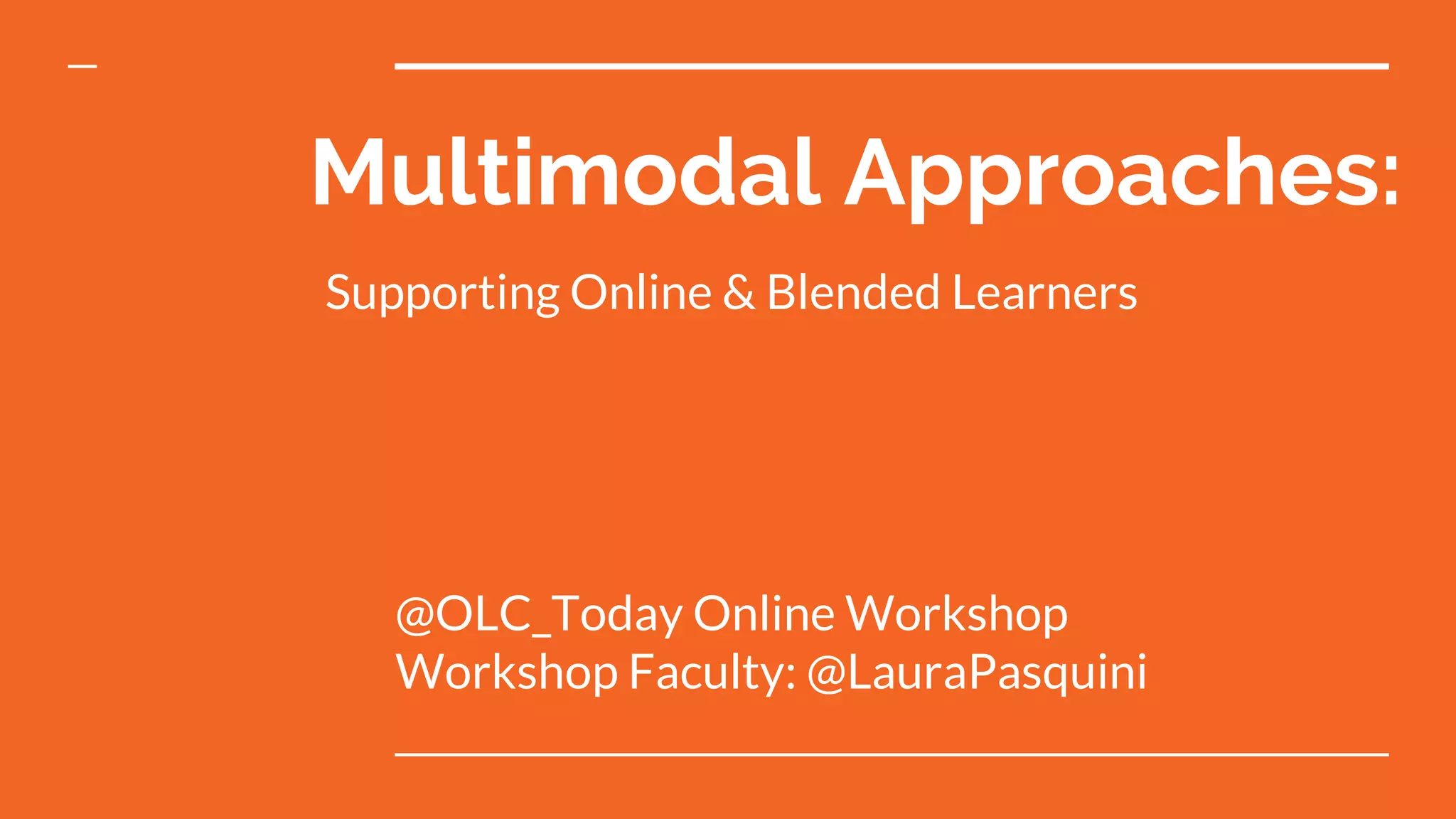
"E-inkey (concept)" by Aleksander Suhih, Maxim Mezentsev is licensed under CC BY-NC-ND 4.0
Learning Objectives
Discuss considerations for delivering
content in multiple formats to reach an
audience with diverse learning
preferences.
Design a learning activity using a
multimodal approach "Pole Dynamics" by Mario Paiano is licensed under CC BY-NC-ND 4.0
What is multimodal instruction?
Mode: a code to represent information; to
articulate means of representation &
communication either verbal or non-verbal
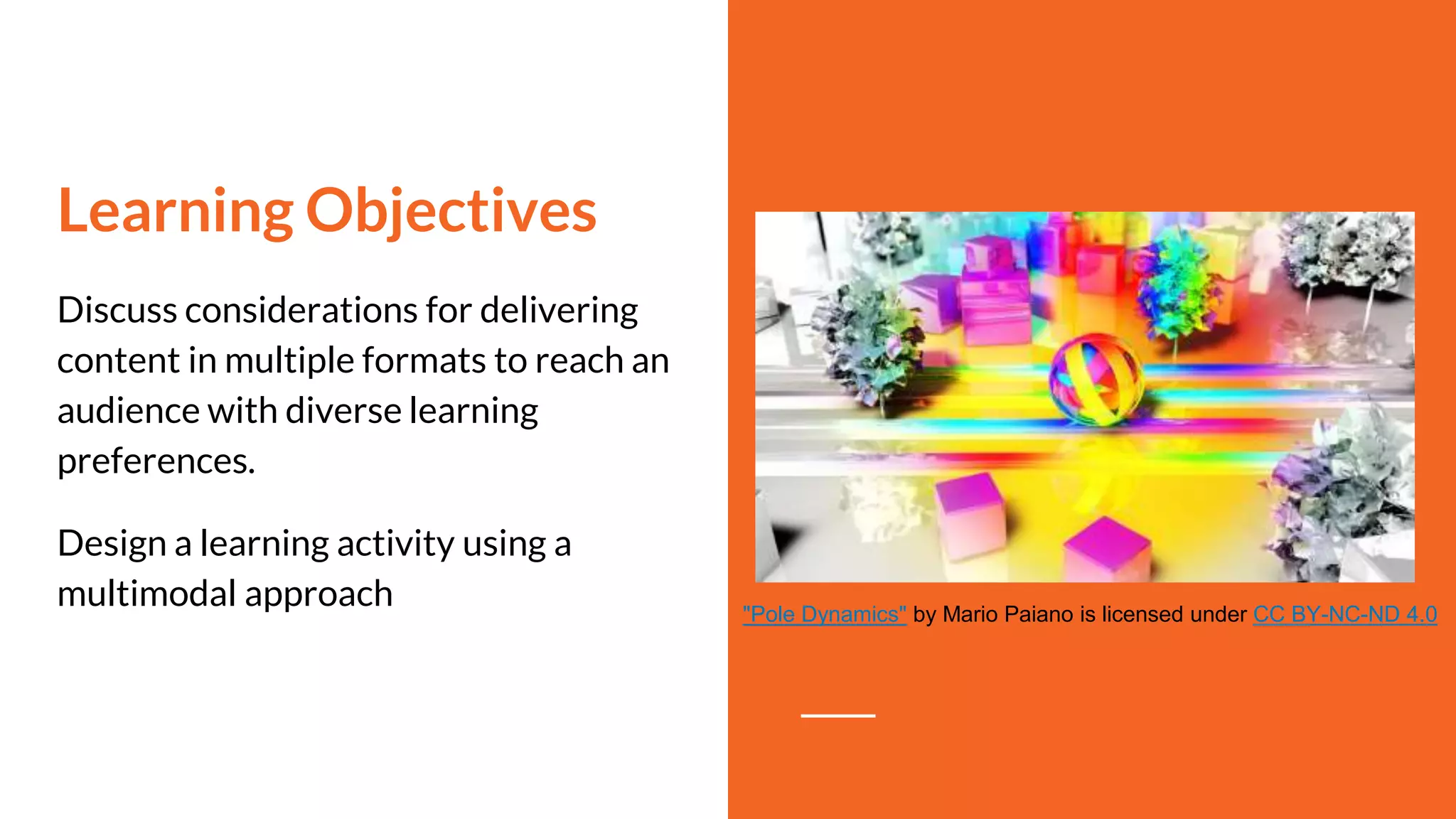
Modalities: are sense receptors used to receive
information, e.g. auditory (via the ears), visual (via
the eyes), etc.
"Owen's eyes" by andrechinn is licensed under CC BY 2.0
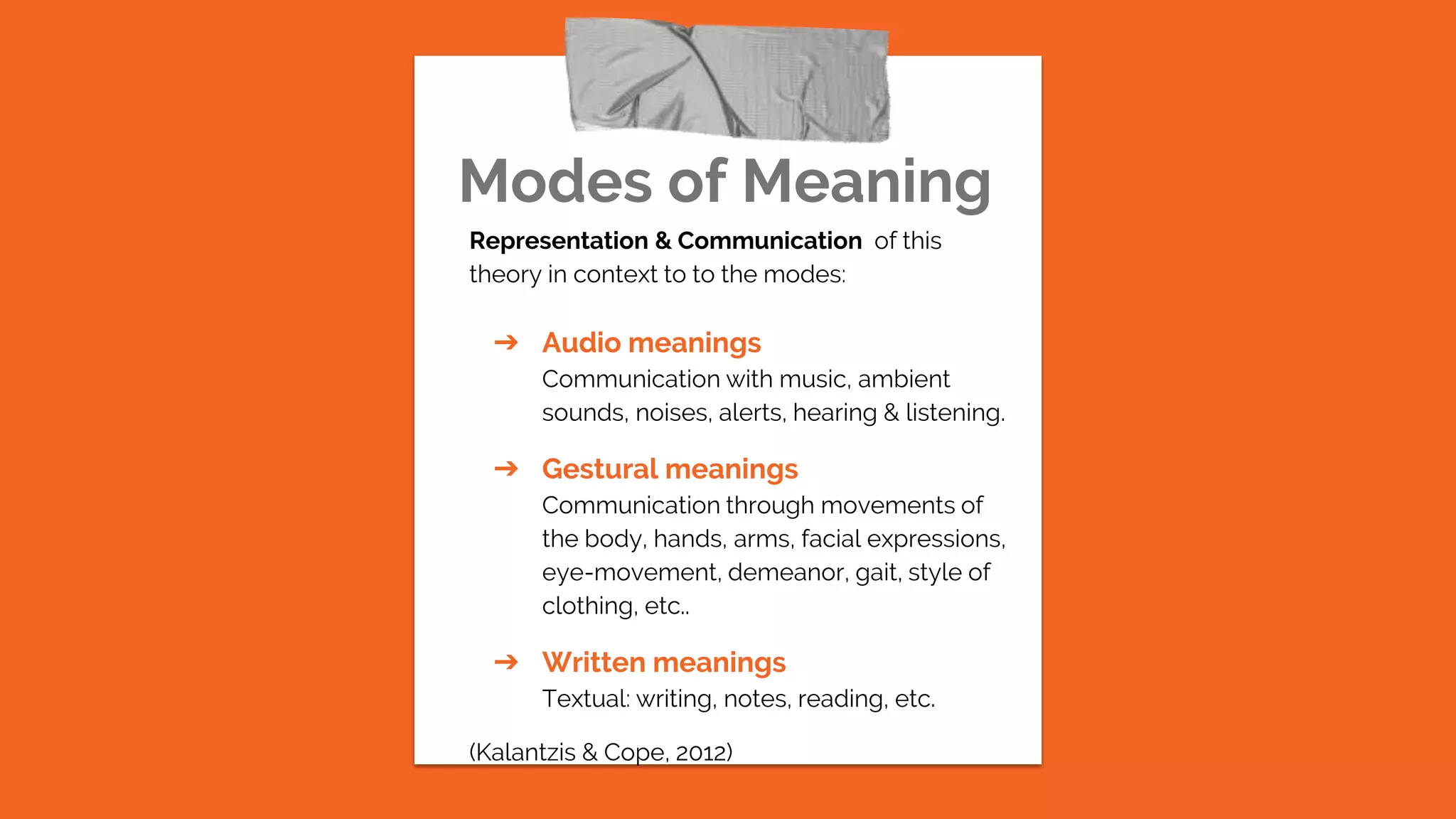
Modes of Meaning
Representation & Communication of this
theory in context to to the modes:
โž” Audio meanings
Communication with music, ambient
sounds, noises, alerts, hearing & listening.
โž” Gestural meanings
Communication through movements of
the body, hands, arms, facial expressions,
eye-movement, demeanor, gait, style of
clothing, etc..
โž” Written meanings
Textual: writing, notes, reading, etc.
(Kalantzis & Cope, 2012)
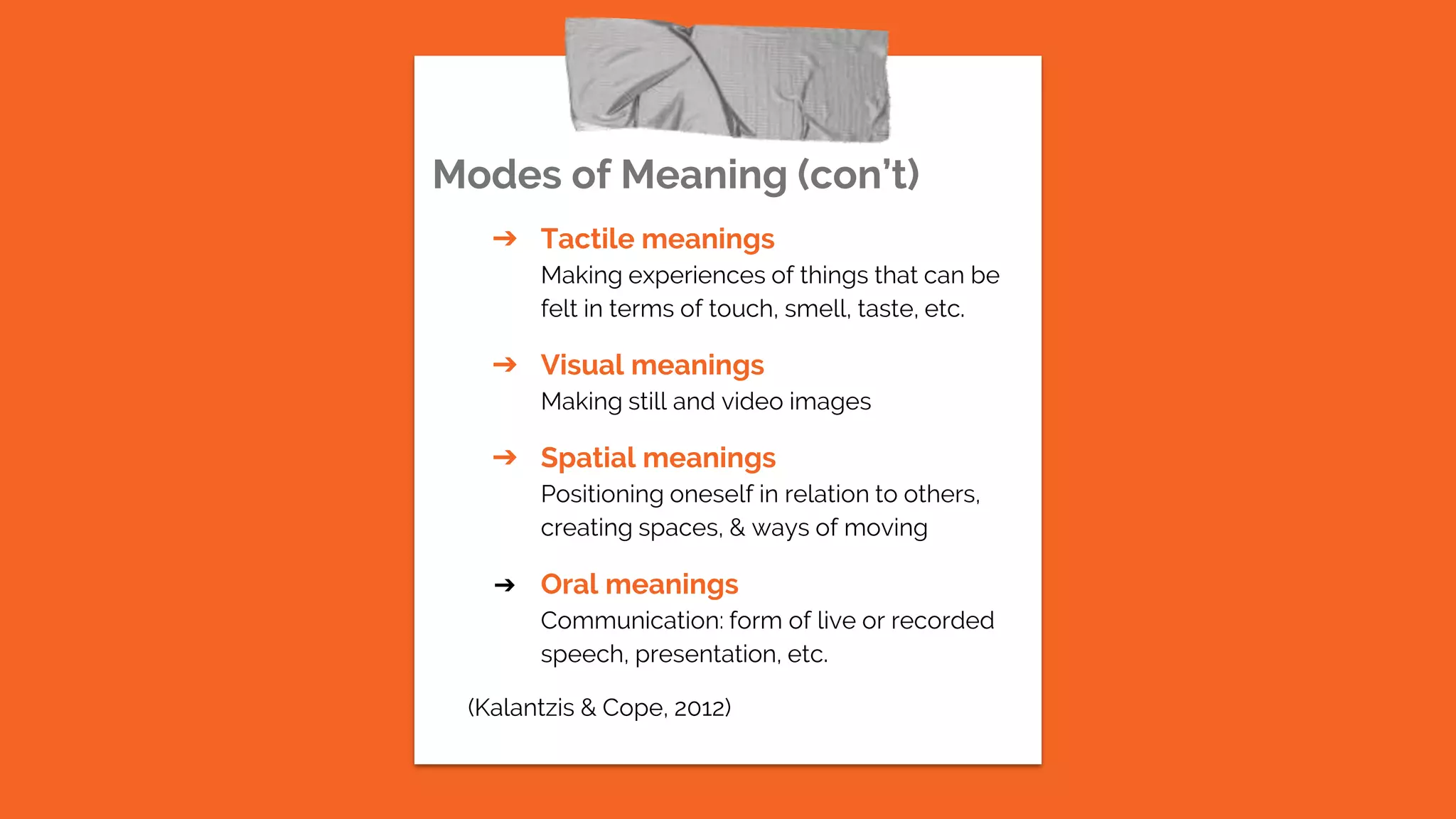
Modes of Meaning (conโ€™t)
โž” Tactile meanings
Making experiences of things that can be
felt in terms of touch, smell, taste, etc.
โž” Visual meanings
Making still and video images
โž” Spatial meanings
Positioning oneself in relation to others,
creating spaces, & ways of moving
โž” Oral meanings
Communication: form of live or recorded
speech, presentation, etc.
(Kalantzis & Cope, 2012)
How does technology
interact with these
multimodal meanings &
literacies?
Tip
Technology can be
more than a learning
tool...
Letโ€™s see how
pedagogical planning
can put these modes
into instructional
practice!.
Achievement is more
strongly correlated with
pedagogy than use of media.
It is not whether we use
technology, but HOW we
USE it. Technology
facilitates interactivity
to respond to learnersโ€™
actions & encourage them to
think critically about
what they are learning.
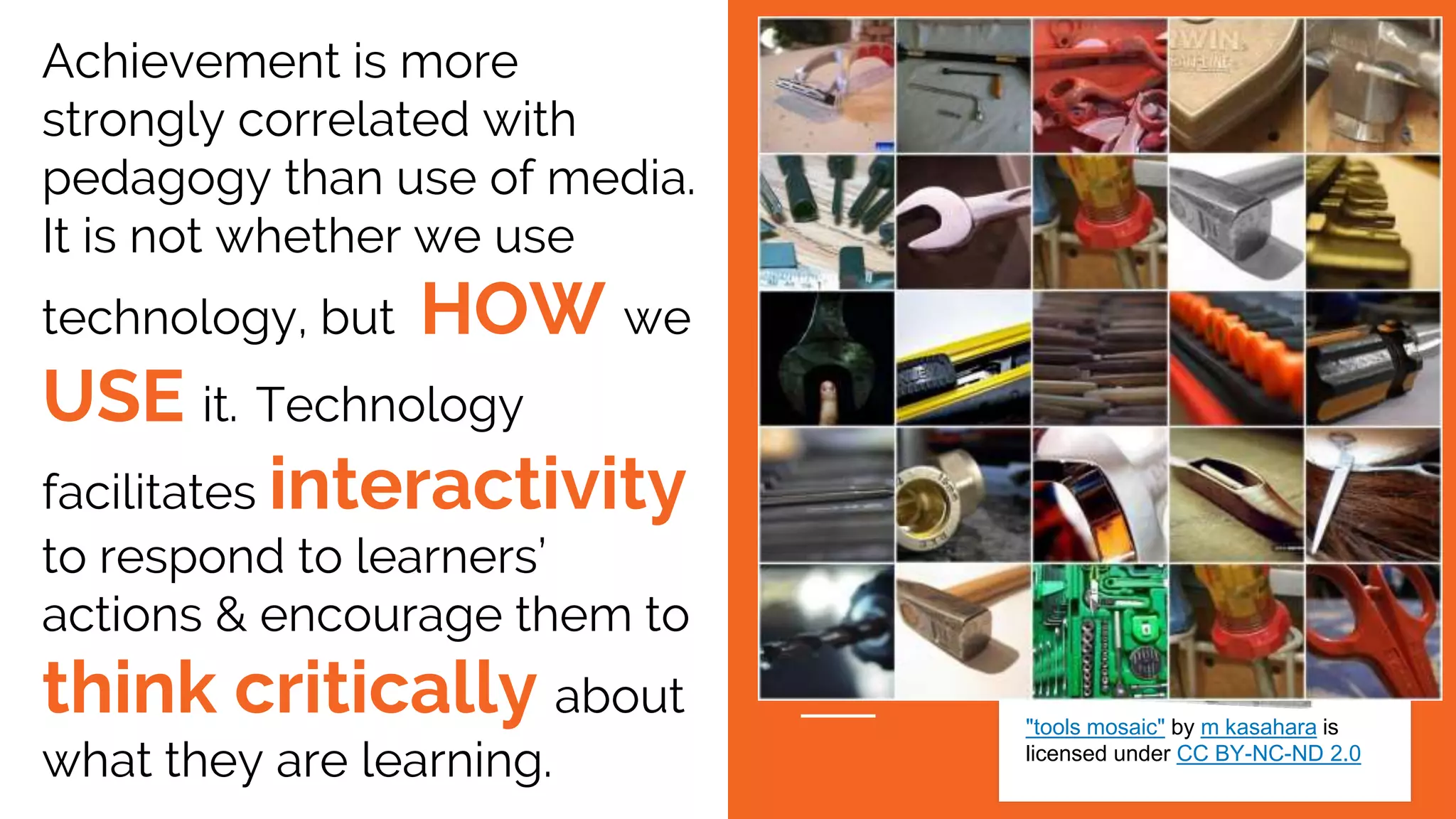
"tools mosaic" by m kasahara is
licensed under CC BY-NC-ND 2.0
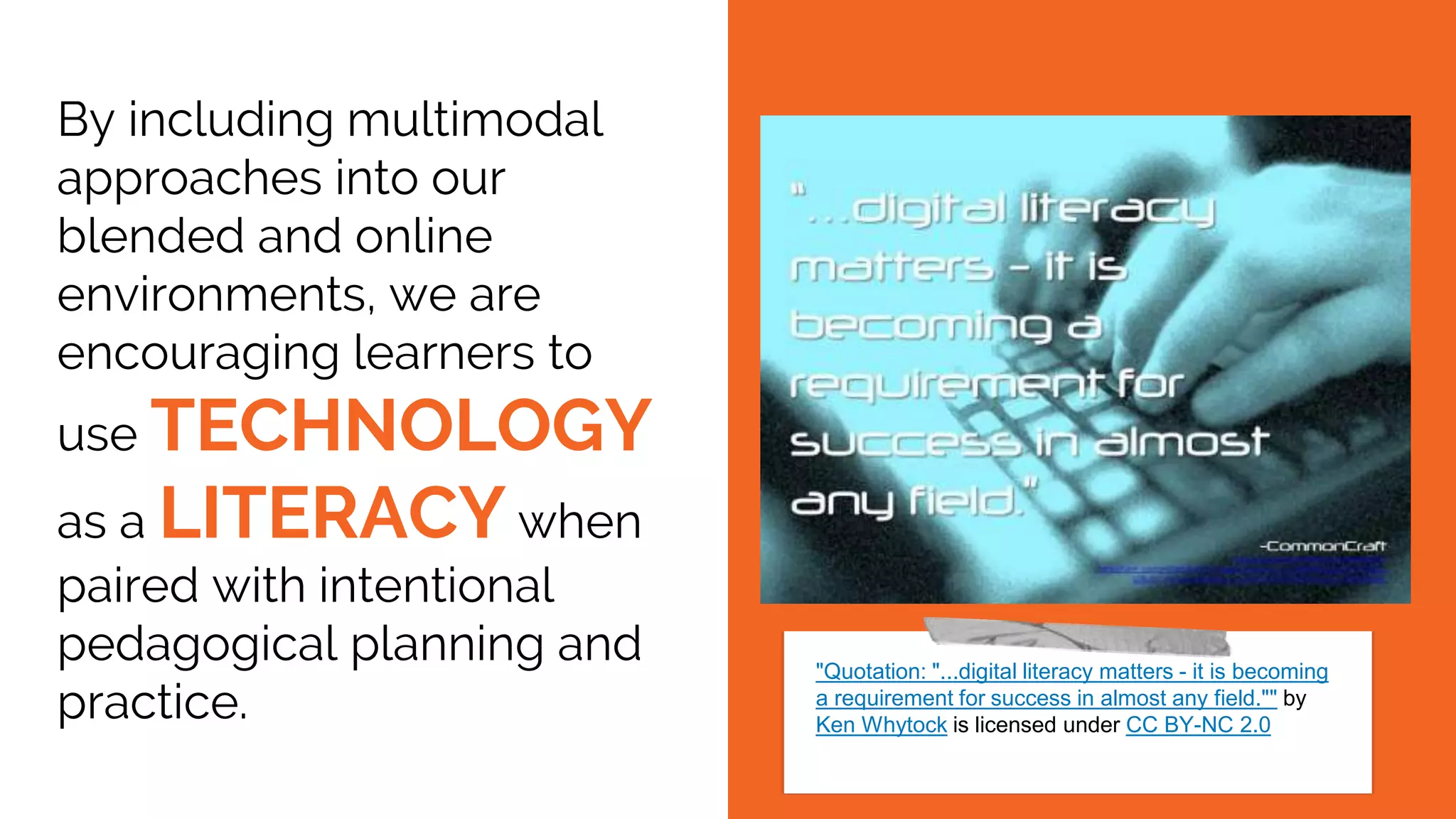
By including multimodal
approaches into our
blended and online
environments, we are
encouraging learners to
use TECHNOLOGY
as a LITERACY when
paired with intentional
pedagogical planning and
practice.
"Quotation: "...digital literacy matters - it is becoming
a requirement for success in almost any field."" by
Ken Whytock is licensed under CC BY-NC 2.0
So, why is a multimodal
approach to instruction
critical in our digital learning
environments?
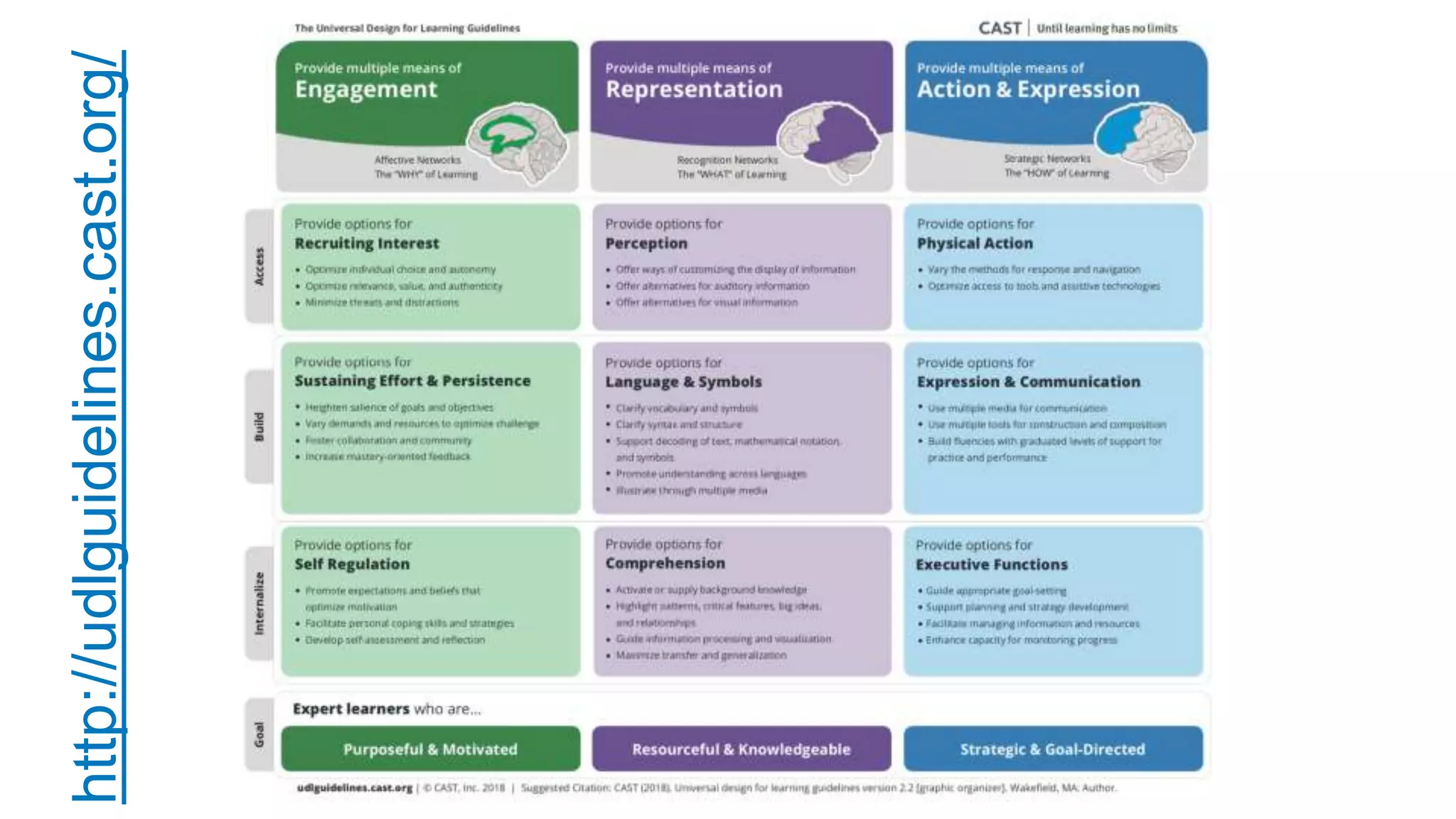
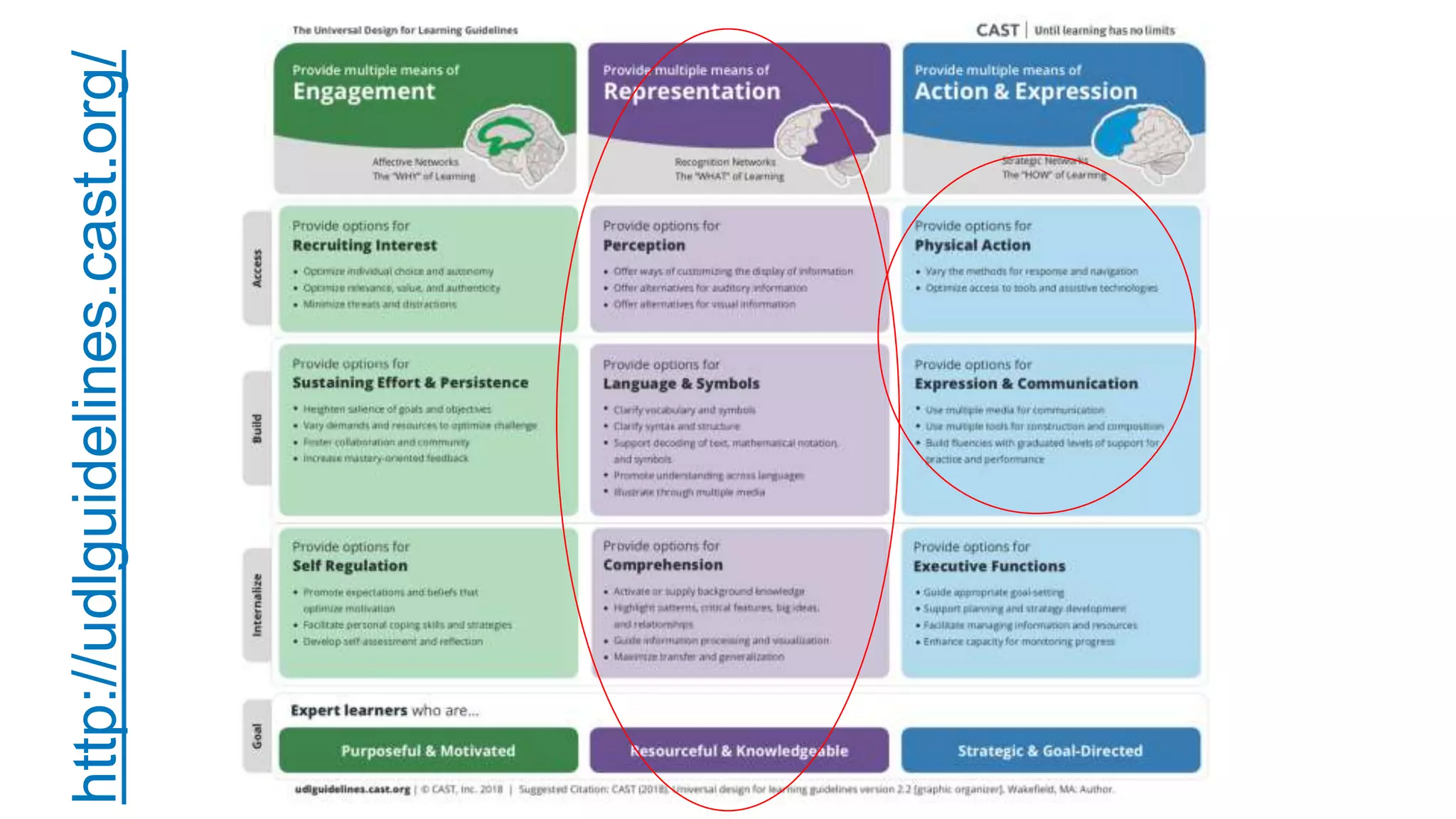
http://udlguidelines.cast.org/
It provides multiple means of
Representation
UDL Guidelines
Principle:
Learners differ in the
ways that they perceive
and comprehend
information that is
presented to them.
There is not one means
of representation that
will be optimal for all
learners.
http://udlguidelines.cas
t.org/representation
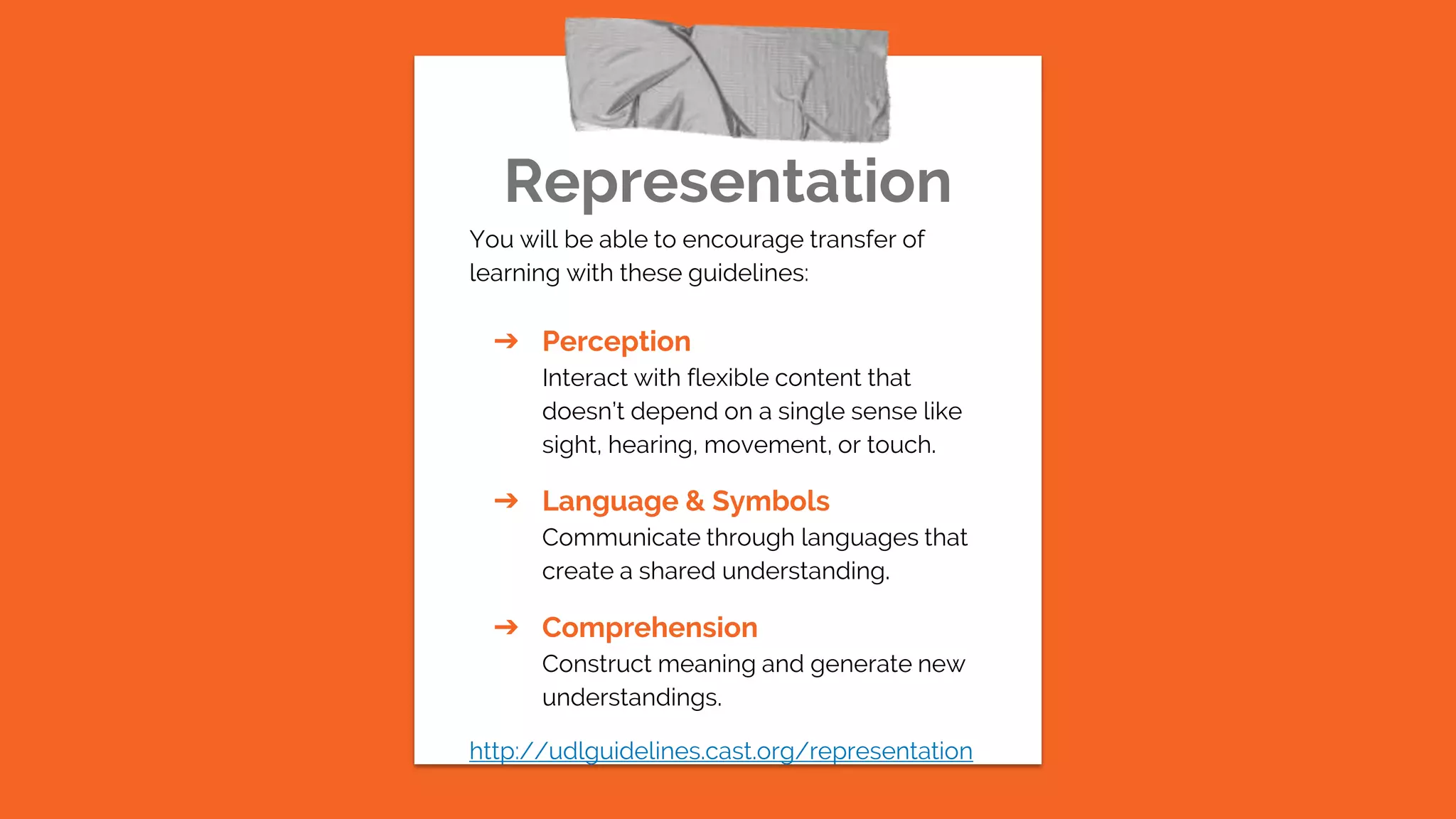
Representation
You will be able to encourage transfer of
learning with these guidelines:
โž” Perception
Interact with flexible content that
doesnโ€™t depend on a single sense like
sight, hearing, movement, or touch.
โž” Language & Symbols
Communicate through languages that
create a shared understanding.
โž” Comprehension
Construct meaning and generate new
understandings.
http://udlguidelines.cast.org/representation
It provides multiple means of
Action & Expression
UDL Guidelines
Principle:
Learners differ in the
ways they navigate a
learning environment
and express what they
know. There is not one
means of representation
that will be optimal for
all learners.
http://udlguidelines.cas
t.org/action-expression
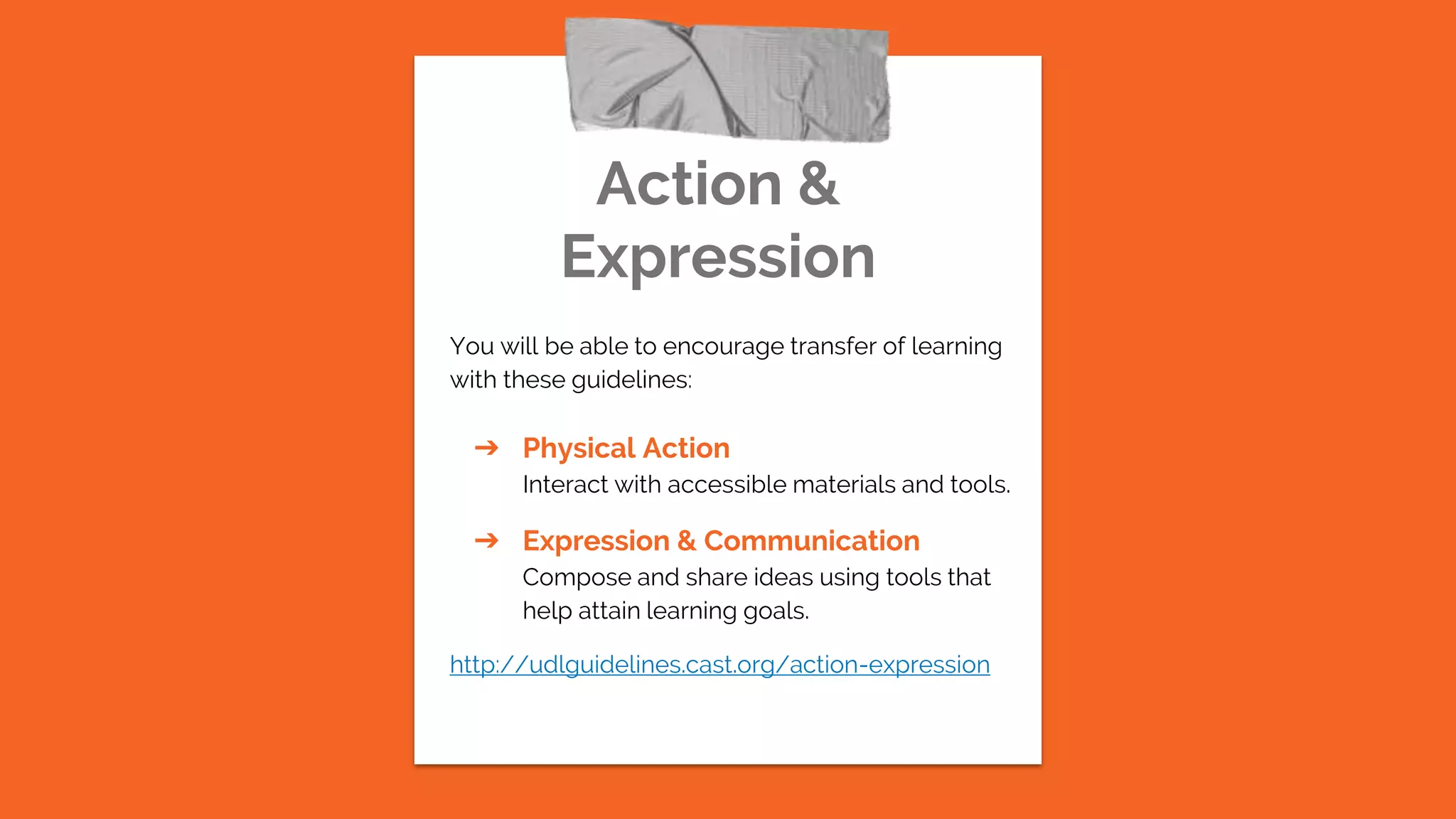
Action &
Expression
You will be able to encourage transfer of learning
with these guidelines:
โž” Physical Action
Interact with accessible materials and tools.
โž” Expression & Communication
Compose and share ideas using tools that
help attain learning goals.
http://udlguidelines.cast.org/action-expression
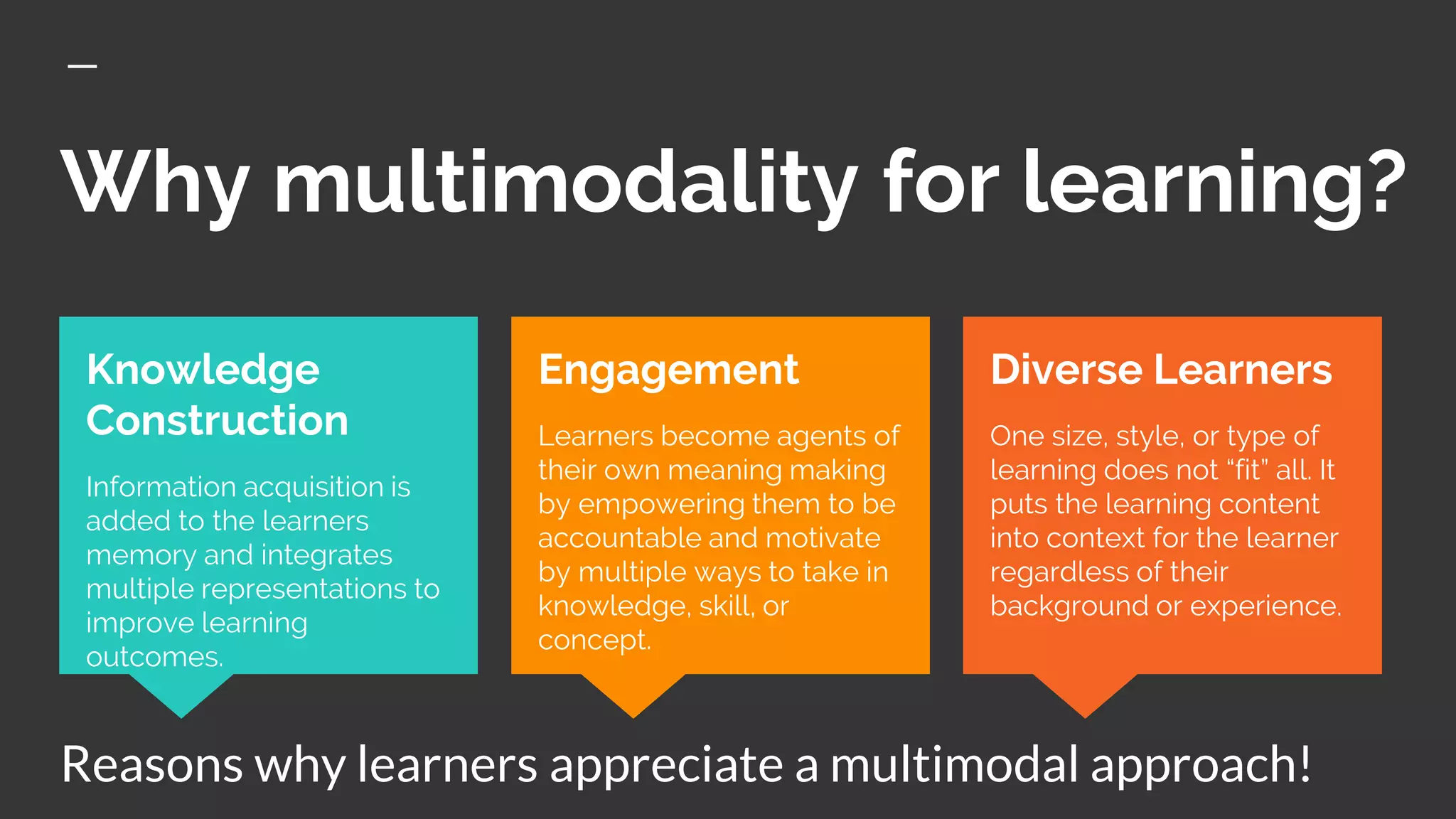
Why multimodality for learning?
Diverse Learners
One size, style, or type of
learning does not โ€œfitโ€ all. It
puts the learning content
into context for the learner
regardless of their
background or experience.
Knowledge
Construction
Information acquisition is
added to the learners
memory and integrates
multiple representations to
improve learning
outcomes.
Engagement
Learners become agents of
their own meaning making
by empowering them to be
accountable and motivate
by multiple ways to take in
knowledge, skill, or
concept.
Reasons why learners appreciate a multimodal approach!

Multimodal Approaches for Learning

  • 1.
    Multimodal Approaches: @OLC_Today OnlineWorkshop Workshop Faculty: @LauraPasquini Supporting Online & Blended Learners
  • 2.
    Overview Multimodal course designcreates a learning environment which is conducive to various learning preferences by delivering the same content in multiple formats. In this workshop, you will explore strategies for developing learning content in various formats by using visual, audio, and video to engage a diverse set of learners. You will explore the research-based foundation of why this approach to learning design is effective while viewing examples from quality multimodal content design. "E-inkey (concept)" by Aleksander Suhih, Maxim Mezentsev is licensed under CC BY-NC-ND 4.0
  • 3.
    Learning Objectives Discuss considerationsfor delivering content in multiple formats to reach an audience with diverse learning preferences. Design a learning activity using a multimodal approach "Pole Dynamics" by Mario Paiano is licensed under CC BY-NC-ND 4.0
  • 4.
    What is multimodalinstruction? Mode: a code to represent information; to articulate means of representation & communication either verbal or non-verbal Modalities: are sense receptors used to receive information, e.g. auditory (via the ears), visual (via the eyes), etc. "Owen's eyes" by andrechinn is licensed under CC BY 2.0
  • 5.
    Modes of Meaning Representation& Communication of this theory in context to to the modes: โž” Audio meanings Communication with music, ambient sounds, noises, alerts, hearing & listening. โž” Gestural meanings Communication through movements of the body, hands, arms, facial expressions, eye-movement, demeanor, gait, style of clothing, etc.. โž” Written meanings Textual: writing, notes, reading, etc. (Kalantzis & Cope, 2012)
  • 6.
    Modes of Meaning(conโ€™t) โž” Tactile meanings Making experiences of things that can be felt in terms of touch, smell, taste, etc. โž” Visual meanings Making still and video images โž” Spatial meanings Positioning oneself in relation to others, creating spaces, & ways of moving โž” Oral meanings Communication: form of live or recorded speech, presentation, etc. (Kalantzis & Cope, 2012)
  • 7.
    How does technology interactwith these multimodal meanings & literacies? Tip Technology can be more than a learning tool... Letโ€™s see how pedagogical planning can put these modes into instructional practice!.
  • 8.
    Achievement is more stronglycorrelated with pedagogy than use of media. It is not whether we use technology, but HOW we USE it. Technology facilitates interactivity to respond to learnersโ€™ actions & encourage them to think critically about what they are learning. "tools mosaic" by m kasahara is licensed under CC BY-NC-ND 2.0
  • 9.
    By including multimodal approachesinto our blended and online environments, we are encouraging learners to use TECHNOLOGY as a LITERACY when paired with intentional pedagogical planning and practice. "Quotation: "...digital literacy matters - it is becoming a requirement for success in almost any field."" by Ken Whytock is licensed under CC BY-NC 2.0
  • 11.
    So, why isa multimodal approach to instruction critical in our digital learning environments?
  • 12.
  • 13.
  • 14.
    It provides multiplemeans of Representation UDL Guidelines Principle: Learners differ in the ways that they perceive and comprehend information that is presented to them. There is not one means of representation that will be optimal for all learners. http://udlguidelines.cas t.org/representation
  • 15.
    Representation You will beable to encourage transfer of learning with these guidelines: โž” Perception Interact with flexible content that doesnโ€™t depend on a single sense like sight, hearing, movement, or touch. โž” Language & Symbols Communicate through languages that create a shared understanding. โž” Comprehension Construct meaning and generate new understandings. http://udlguidelines.cast.org/representation
  • 16.
    It provides multiplemeans of Action & Expression UDL Guidelines Principle: Learners differ in the ways they navigate a learning environment and express what they know. There is not one means of representation that will be optimal for all learners. http://udlguidelines.cas t.org/action-expression
  • 17.
    Action & Expression You willbe able to encourage transfer of learning with these guidelines: โž” Physical Action Interact with accessible materials and tools. โž” Expression & Communication Compose and share ideas using tools that help attain learning goals. http://udlguidelines.cast.org/action-expression
  • 18.
    Why multimodality forlearning? Diverse Learners One size, style, or type of learning does not โ€œfitโ€ all. It puts the learning content into context for the learner regardless of their background or experience. Knowledge Construction Information acquisition is added to the learners memory and integrates multiple representations to improve learning outcomes. Engagement Learners become agents of their own meaning making by empowering them to be accountable and motivate by multiple ways to take in knowledge, skill, or concept. Reasons why learners appreciate a multimodal approach!