MRCP tutorial
By
Dr.Sumreen Sarfaraz
Rheumatology SPR
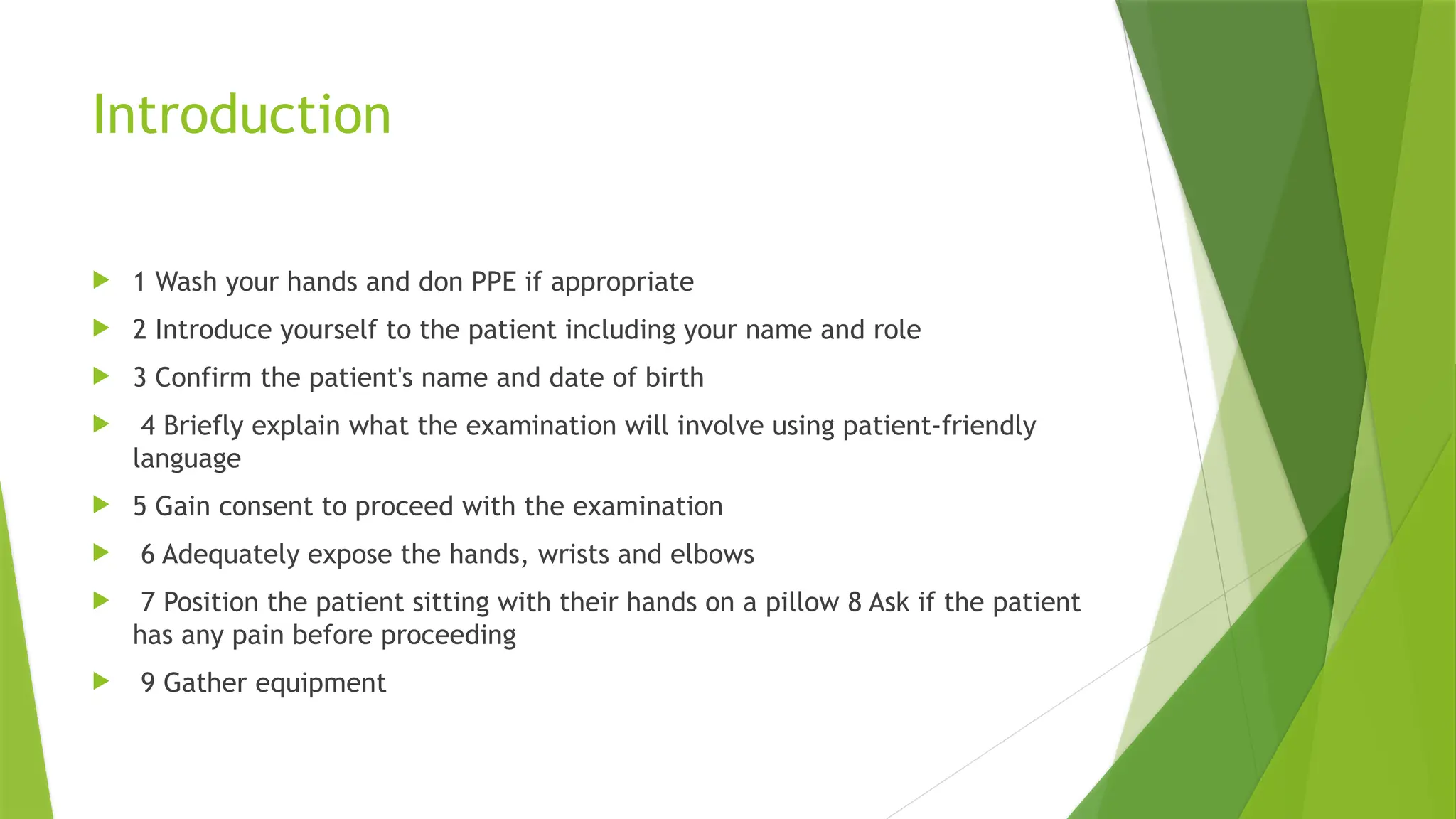
Introduction
 1 Wash your hands and don PPE if appropriate
 2 Introduce yourself to the patient including your name and role
 3 Confirm the patient's name and date of birth
 4 Briefly explain what the examination will involve using patient-friendly
language
 5 Gain consent to proceed with the examination
 6 Adequately expose the hands, wrists and elbows
 7 Position the patient sitting with their hands on a pillow 8 Ask if the patient
has any pain before proceeding
 9 Gather equipment
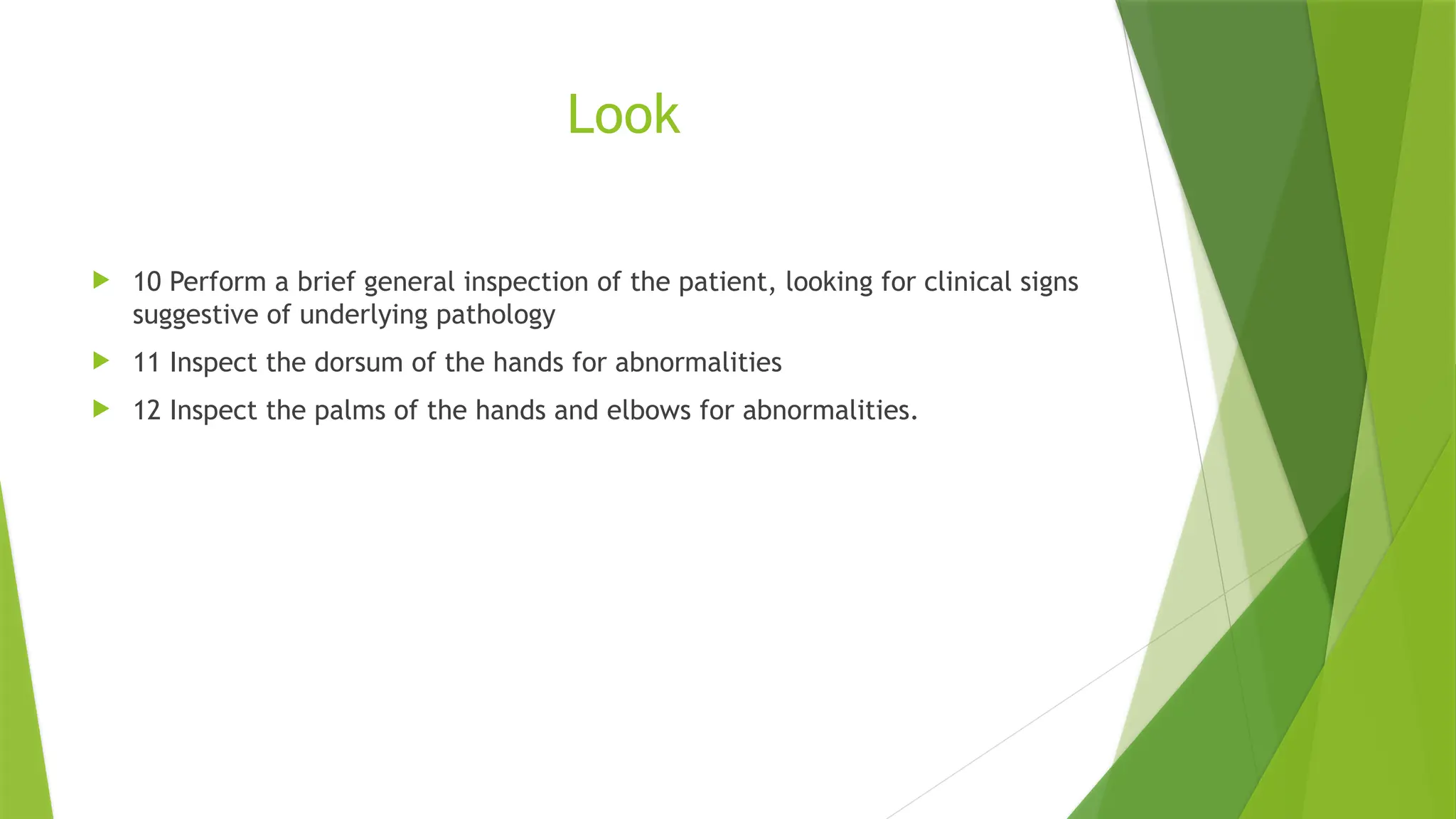
Look
 10 Perform a brief general inspection of the patient, looking for clinical signs
suggestive of underlying pathology
 11 Inspect the dorsum of the hands for abnormalities
 12 Inspect the palms of the hands and elbows for abnormalities.
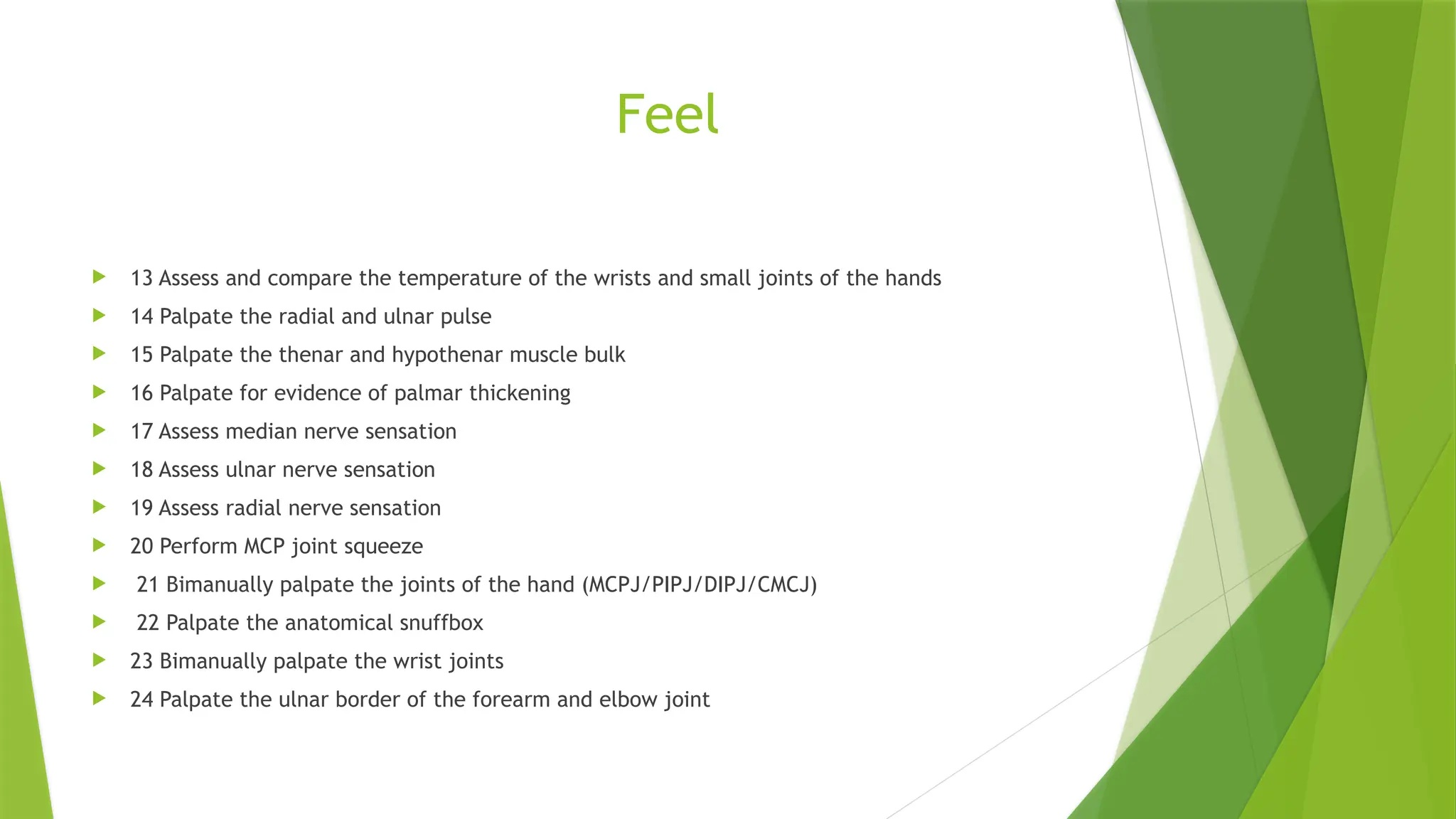
Feel
 13 Assess and compare the temperature of the wrists and small joints of the hands
 14 Palpate the radial and ulnar pulse
 15 Palpate the thenar and hypothenar muscle bulk
 16 Palpate for evidence of palmar thickening
 17 Assess median nerve sensation
 18 Assess ulnar nerve sensation
 19 Assess radial nerve sensation
 20 Perform MCP joint squeeze
 21 Bimanually palpate the joints of the hand (MCPJ/PIPJ/DIPJ/CMCJ)
 22 Palpate the anatomical snuffbox
 23 Bimanually palpate the wrist joints
 24 Palpate the ulnar border of the forearm and elbow joint
Move
 25 Assess active finger extension
 26 Assess active finger flexion
 27 Assess active wrist extension
 28 Assess active wrist flexion
 29 Assess wrist/finger extension against resistance (radial nerve)
 30 Assess index finger ABduction against resistance (ulnar nerve)
 31 Assess thumb ABduction against resistance (median nerve) Function
 32 Assess power grip
 33 Assess pincer grip
 34 Assess picking up a small object
Special tests
 35 Perform Tinel’s test
 36 Perform Phalen’s test To complete the examination…
 37 Explain to the patient that the examination is now finished
 38 Thank the patient for their time
 39 Dispose of PPE appropriately and wash your hands
 40 Summarise your findings
 41 Suggest further assessments and investigations (e.g. neurovascular
examination of both upper limbs, examination of the elbow joint and further
imaging)
Rheumatoid arthritis
 Symmetrical deforming arthropathy
 PIP, MCP involvement
 Sparing of DIP
 Spindling of fingers
 Ulnar deviation
 Deformities ?
 Palmer erythema
 Wasting of small muscles of hands
 ?trigger finger
Rheumatoid Hands
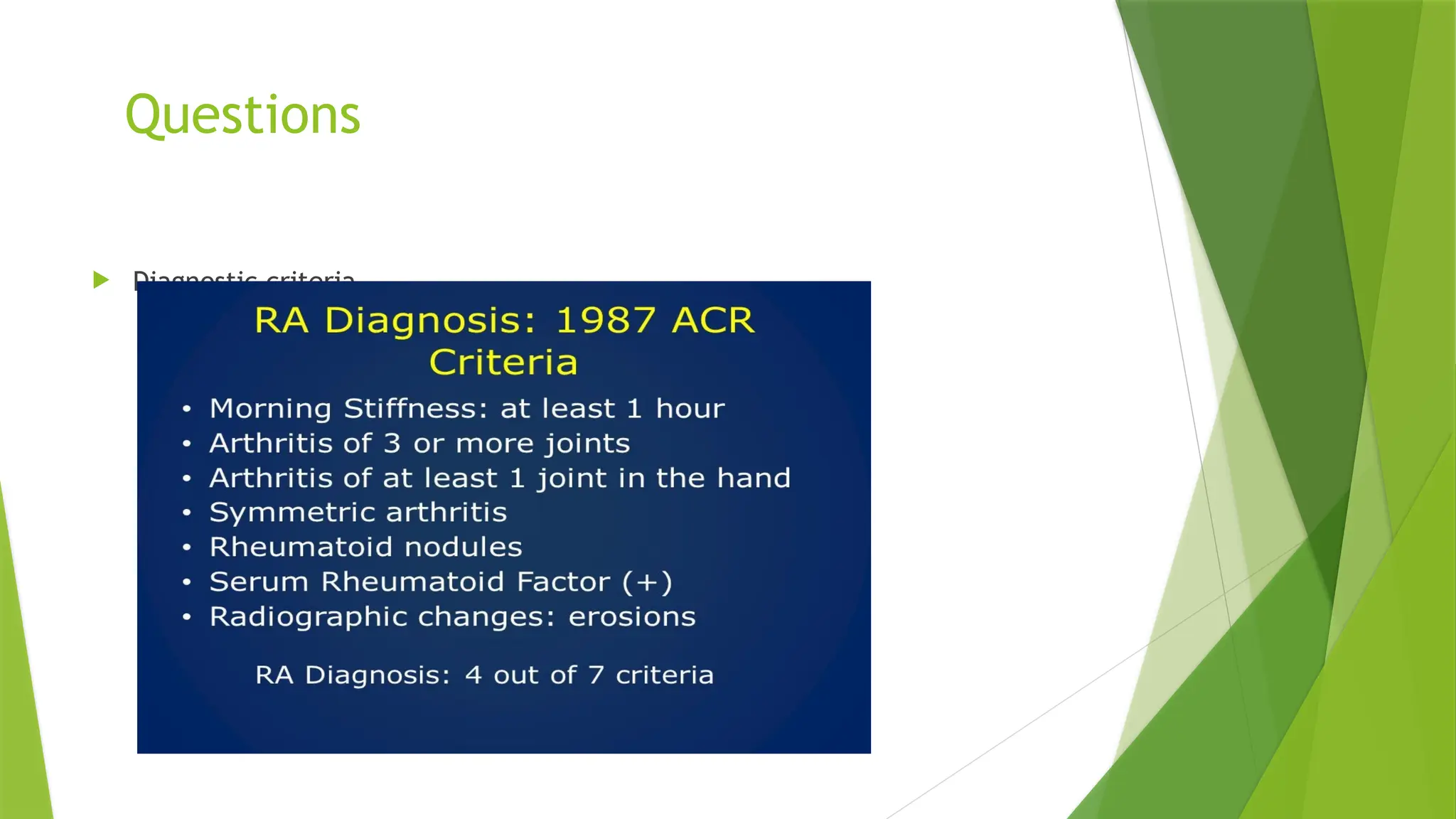
Questions
 Diagnostic criteria
management
 General measures
Patient education, physiotherapy, occupational therapy, vaccination, Bone protection
 Pharmacological Treatment
 NSAIDS
 CORTICOSTEROIDS
 DMARDS: sulphasalazine, methotrexate, leflunamide
 Biological Therapy :anti TNF, IL-1, IL-6 inhibitors, B cell depleting mono clonal
antibodies
Questions RA cont
 Serological marker
 Poor prognostic factors:
1- +test for RA , anti CCP
2- early radiographic evidence of erosive disease
3- impaired functional status
4- persistent disease activity
 Causes of Anaemia
 other conditions associated with +RF
 Sjogren’s syndrome , SLE, Chronic bacterial infection, malignancy, cryoglobulinaemia
 Other organs affected : eyes, lungs, kidney, immunity, cardiovascular, haematological
Psoriatic arthritis
 Asymmetrical arthropathy
 DIP involvement , dactylitis , ethesitis
 Nail pitting, onycholysis, transverse ridging
 Well defined erythematous plaque with slivery white scales over extensor
surfaces
Patterns of Joint Involvements in
Psoriatic arthropathy
Gouty arthritis
 Asymmetrical deformity and swelling
 Presence of tophi
 Olecranon Bursa
Questions
 d/d of single inflamed joint: septic arthritis, gout , mycobacterial, OM, osteoarthris
 Diagnosis :
 History :onset, fever, trauma, distribution, associated features, recent travel,
predisposing factors
 joint aspiration : Gout/pseudogout
 Blood culture
 ?role of serum uric acid
 Management:
 Rest, rehydration, NSAIDS (Colchicine), IA steroid injection
 Recurrent gout, topaceous gout , presence of risk factor require long term urate lowering
therapy : allopurinol , febuxostat
various skin manifestations
Scleroderma related hand changes
“
”
Thank you and best of luck for exam

MRCP General and Rheumatology tutorial.pptx

  • 1.
  • 2.
    Introduction  1 Washyour hands and don PPE if appropriate  2 Introduce yourself to the patient including your name and role  3 Confirm the patient's name and date of birth  4 Briefly explain what the examination will involve using patient-friendly language  5 Gain consent to proceed with the examination  6 Adequately expose the hands, wrists and elbows  7 Position the patient sitting with their hands on a pillow 8 Ask if the patient has any pain before proceeding  9 Gather equipment
  • 3.
    Look  10 Performa brief general inspection of the patient, looking for clinical signs suggestive of underlying pathology  11 Inspect the dorsum of the hands for abnormalities  12 Inspect the palms of the hands and elbows for abnormalities.
  • 4.
    Feel  13 Assessand compare the temperature of the wrists and small joints of the hands  14 Palpate the radial and ulnar pulse  15 Palpate the thenar and hypothenar muscle bulk  16 Palpate for evidence of palmar thickening  17 Assess median nerve sensation  18 Assess ulnar nerve sensation  19 Assess radial nerve sensation  20 Perform MCP joint squeeze  21 Bimanually palpate the joints of the hand (MCPJ/PIPJ/DIPJ/CMCJ)  22 Palpate the anatomical snuffbox  23 Bimanually palpate the wrist joints  24 Palpate the ulnar border of the forearm and elbow joint
  • 5.
    Move  25 Assessactive finger extension  26 Assess active finger flexion  27 Assess active wrist extension  28 Assess active wrist flexion  29 Assess wrist/finger extension against resistance (radial nerve)  30 Assess index finger ABduction against resistance (ulnar nerve)  31 Assess thumb ABduction against resistance (median nerve) Function  32 Assess power grip  33 Assess pincer grip  34 Assess picking up a small object
  • 6.
    Special tests  35Perform Tinel’s test  36 Perform Phalen’s test To complete the examination…  37 Explain to the patient that the examination is now finished  38 Thank the patient for their time  39 Dispose of PPE appropriately and wash your hands  40 Summarise your findings  41 Suggest further assessments and investigations (e.g. neurovascular examination of both upper limbs, examination of the elbow joint and further imaging)
  • 7.
    Rheumatoid arthritis  Symmetricaldeforming arthropathy  PIP, MCP involvement  Sparing of DIP  Spindling of fingers  Ulnar deviation  Deformities ?  Palmer erythema  Wasting of small muscles of hands  ?trigger finger
  • 8.
  • 9.
  • 11.
    management  General measures Patienteducation, physiotherapy, occupational therapy, vaccination, Bone protection  Pharmacological Treatment  NSAIDS  CORTICOSTEROIDS  DMARDS: sulphasalazine, methotrexate, leflunamide  Biological Therapy :anti TNF, IL-1, IL-6 inhibitors, B cell depleting mono clonal antibodies
  • 12.
    Questions RA cont Serological marker  Poor prognostic factors: 1- +test for RA , anti CCP 2- early radiographic evidence of erosive disease 3- impaired functional status 4- persistent disease activity  Causes of Anaemia  other conditions associated with +RF  Sjogren’s syndrome , SLE, Chronic bacterial infection, malignancy, cryoglobulinaemia  Other organs affected : eyes, lungs, kidney, immunity, cardiovascular, haematological
  • 13.
    Psoriatic arthritis  Asymmetricalarthropathy  DIP involvement , dactylitis , ethesitis  Nail pitting, onycholysis, transverse ridging  Well defined erythematous plaque with slivery white scales over extensor surfaces
  • 14.
    Patterns of JointInvolvements in Psoriatic arthropathy
  • 15.
    Gouty arthritis  Asymmetricaldeformity and swelling  Presence of tophi  Olecranon Bursa
  • 16.
    Questions  d/d ofsingle inflamed joint: septic arthritis, gout , mycobacterial, OM, osteoarthris  Diagnosis :  History :onset, fever, trauma, distribution, associated features, recent travel, predisposing factors  joint aspiration : Gout/pseudogout  Blood culture  ?role of serum uric acid  Management:  Rest, rehydration, NSAIDS (Colchicine), IA steroid injection  Recurrent gout, topaceous gout , presence of risk factor require long term urate lowering therapy : allopurinol , febuxostat
  • 21.
  • 22.
  • 23.
    “ ” Thank you andbest of luck for exam