MRC Procedures – An IWRM tool for
multinational cooperation and the
support to basin development planning
Water Land and Ecosystems Forum 2015, Phnom Penh, Cambodia
Water Conflict
Water conflict is a term describing a conflict
between countries, states, or groups over an
access to water resources
The United Nations recognizes that water
disputes result from opposing interests of water
users, public or private
•  China-India: The Brahmaputra River : the agricultural
industry in India’s Assam plains vs a series of
hydroelectric plants in China located in Tibetan plateau
•  Ethiopia-Egypt: Grand Ethiopian Renaissance Dam
and the Nile River : the Ethiopian government’s ‘Grand
Ethiopian Renaissance Dam’ vs water supplies in
Egypt as downstream
International Water Conflicts to Watch
The Mekong Region
Signing the 1995 Mekong Agreement
A common interest in jointly managing the
member Countries shared water resources and
developing economic potential in the river.
1995
Mekong
Agreement
Agreement	
  between	
  
the	
  Member	
  Countries	
  
on	
  the	
  objec4ves,	
  
ins4tu4ons	
  and	
  
governance	
  required	
  
for	
  coopera4on	
  
5
Procedures
Agreement	
  in	
  the	
  
Council	
  on	
  the	
  ‘Policy’	
  
required	
  to	
  enable	
  
coopera4on	
  
6
Technical
Guidelines
Agreement	
  in	
  the	
  Joint	
  
Commi@ee	
  on	
  how	
  to	
  
implement	
  the	
  
‘Policy’	
  
§  Procedures for Data, Information
Exchange and Sharing (PDIES)
§  Procedures for Water Use Monitoring
(PWUM)
§  Procedures for Notification, Prior
Consultation and Agreement (PNPCA)
§  Procedures for the Maintenance of Flows
on the Mainstream (PMFM)
§  Procedures for Water Quality (PWQ)
MRC Procedures
1.  Data	
  and	
  informa4on	
  Services	
  for	
  MRC	
  monitoring	
  systems.	
  
2.  Web	
  Map	
  Services	
  for	
  Geo-­‐Spa4al	
  data	
  of	
  LMB.	
  
3.  Data	
  Service	
  &	
  Download	
  provide	
  search	
  engine	
  based	
  on	
  
PDIES	
  data	
  groups	
  and	
  ISO	
  19115	
  categories	
  for	
  data	
  and	
  
informa4on	
  sharing.	
  
New	
  MRC	
  Data	
  portal	
  Interface	
  	
  
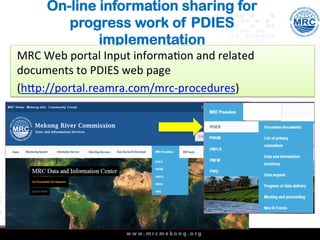
On-line information sharing for
progress work of PDIES
implementation
MRC	
  Web	
  portal	
  Input	
  informa4on	
  and	
  related	
  
documents	
  to	
  PDIES	
  web	
  page	
  
(h@p://portal.reamra.com/mrc-­‐procedures)	
  	
  
Cambodia: Stung Pursat
Catchment
Lao PDR: Xedone Catchment
Thailand: Lam Dom Noi
Catchment
Viet Nam: Srepork Catchment
§  48 primary monitoring
stations
§  18 water quality parameters
were monitored
§  Data for 2014 routine water
quality monitoring placed in
the MRC data portal for
sharing
§  Capacity strengthening
activities/ laboratories
The routine water quality
monitoring of the Mekong
River and its tributaries
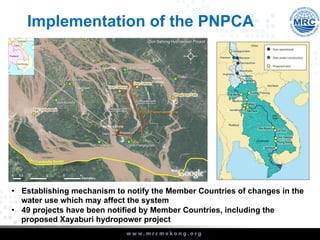
Implementation of the PNPCA
•  Establishing mechanism to notify the Member Countries of changes in the
water use which may affect the system
•  49 projects have been notified by Member Countries, including the
proposed Xayaburi hydropower project
Impact from PNPCA
•  Dialogue for member countries
•  Redesign of the Xayaburi Hydropower Project
addressing concern from MRC member countries
•  Public consultation on the Don Sahong Hydropower
Project
http://www.poweringprogress.org/new/images/PDF/
DEB_and_DEPP_Presentation/
DEB_XayaburiProject_DevDiv.pdf
Monitoring Flows
•  The PMFM implementation in a learning-by-doing
approach
•  Daily water flows during the wet and dry seasons at
each of the selected 11 hydrological stations along the
mainstream
•  Improvement of the webpage
http://pmfm.mrcmekong.org/
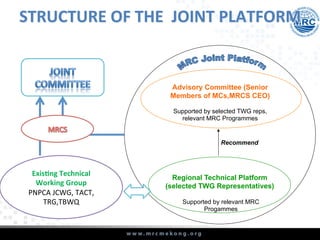
STRUCTURE	
  OF	
  THE	
  	
  JOINT	
  PLATFORM	
  
Advisory Committee (Senior
Members of MCs,MRCS CEO)
Supported by selected TWG reps,
relevant MRC Programmes
Regional Technical Platform
(selected TWG Representatives)
Supported by relevant MRC
Progammes
Recommend
ExisAng	
  Technical	
  
Working	
  Group	
  
PNPCA	
  JCWG,	
  TACT,	
  
TRG,TBWQ	
  
MRC Procedures interlinked to
support transboundary cooperation
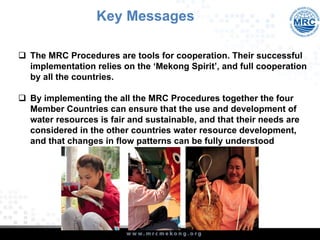
q  The MRC Procedures are tools for cooperation. Their successful
implementation relies on the ‘Mekong Spirit’, and full cooperation
by all the countries.
q  By implementing the all the MRC Procedures together the four
Member Countries can ensure that the use and development of
water resources is fair and sustainable, and that their needs are
considered in the other countries water resource development,
and that changes in flow patterns can be fully understood
Key Messages
www.mrcmekong.org	


The	
  linkages	
  between	
  MRC	
  
Procedures	
  and	
  basin	
  planning	


Dr.	
  Anoulak	
  Kikhoun	
  
Coordinator,	
  Basin	
  Development	
  Plan	
  (BDP)	
  Programme	
  	
  
Mekong	
  River	
  Commission	


www.mrcmekong.org	
  
www.mrcmekong.org	
  
Synergy	
  of	
  Procedures	
  with	
  basin	
  planning	
  
[  The	
  Procedures	
  are	
  there	
  to	
  support	
  Mekong	
  basin	
  development	
  and	
  
management	
  -­‐	
  thus	
  to	
  support	
  the	
  Basin	
  Development	
  Strategy	
  (BDS)	
  
[  When	
  this	
  is	
  rela4onship	
  is	
  not	
  clear	
  or	
  when	
  basin	
  planning	
  and	
  the	
  
development/implementa4on	
  of	
  the	
  Procedures	
  go	
  ‘out	
  of	
  sync’	
  (as	
  
happened	
  during	
  the	
  implementa4on	
  of	
  WUP	
  and	
  BDP1),	
  the	
  
Procedures	
  may	
  be	
  seen	
  by	
  some	
  countries	
  as	
  restraining	
  and/or	
  
ineffec4ve	
  mechanisms	
  that	
  dis-­‐benefit	
  na4onal	
  interests	
  (WUP	
  
Evalua4on	
  Report,	
  December	
  2007)	
  
www.mrcmekong.org	
  
Synergy	
  of	
  basin	
  planning	
  with	
  the	
  Procedures	
  
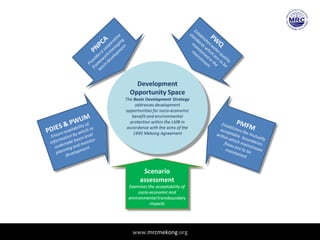
PMFM	
  and	
  PWQ	
  support	
  the	
  ‘boundary’	
  of	
  the	
  Development	
  Opportunity	
  
Space	
  (DOS)	
  in	
  the	
  Basin	
  Development	
  Strategy:	
  	
  
[  i.e.	
  a	
  common	
  understanding	
  of	
  what	
  transboundary	
  impacts	
  and	
  risks	
  may	
  
be	
  considered	
  acceptable	
  across	
  the	
  whole	
  basin	
  
[  PMFM	
  and	
  PWQ	
  are	
  used	
  also	
  to	
  monitor	
  whether	
  the	
  DOS	
  ‘boundary’	
  is	
  
maintained	
  and	
  projects	
  are	
  operated	
  according	
  to	
  any	
  condi4ons	
  required	
  
in	
  the	
  PNPCA	
  
PDIES	
  and	
  PWUM	
  provide	
  the	
  data	
  needed	
  to	
  undertake	
  basin	
  level	
  planning	
  
and	
  monitor	
  development	
  (including	
  condi4ons	
  agreed	
  in	
  the	
  PNPCA	
  process)	


PNPCA	
  ensures	
  that	
  no4fied	
  projects	
  are	
  within	
  the	
  DOS	
  and	
  designed,	
  
constructed	
  and	
  operated	
  to	
  avoid,	
  minimize	
  and	
  mi4gate	
  adverse	
  
transboundary	
  impacts	
  
However,	
  none	
  of	
  the	
  Procedures	
  address	
  transboundary	
  environmental	
  and	
  
social	
  impacts	
  –	
  these	
  are	
  addressed	
  through	
  BDP’s	
  scenario	
  assessments	
  and	
  
other	
  transboundary	
  impact	
  studies	
  requested	
  by	
  JC	
  under	
  PNPCA	
  
Thank you for your attention.
Open Discussion
q  Is the MRC Procedures are effective?
q  What can be done to improve the
effectiveness of Procedures
implementation?

MRC Procedures - IWRM tool for basin development planning

  • 1.
    MRC Procedures –An IWRM tool for multinational cooperation and the support to basin development planning Water Land and Ecosystems Forum 2015, Phnom Penh, Cambodia
  • 2.
    Water Conflict Water conflictis a term describing a conflict between countries, states, or groups over an access to water resources The United Nations recognizes that water disputes result from opposing interests of water users, public or private
  • 3.
    •  China-India: TheBrahmaputra River : the agricultural industry in India’s Assam plains vs a series of hydroelectric plants in China located in Tibetan plateau •  Ethiopia-Egypt: Grand Ethiopian Renaissance Dam and the Nile River : the Ethiopian government’s ‘Grand Ethiopian Renaissance Dam’ vs water supplies in Egypt as downstream International Water Conflicts to Watch
  • 4.
  • 5.
    Signing the 1995Mekong Agreement A common interest in jointly managing the member Countries shared water resources and developing economic potential in the river.
  • 6.
    1995 Mekong Agreement Agreement  between   the  Member  Countries   on  the  objec4ves,   ins4tu4ons  and   governance  required   for  coopera4on   5 Procedures Agreement  in  the   Council  on  the  ‘Policy’   required  to  enable   coopera4on   6 Technical Guidelines Agreement  in  the  Joint   Commi@ee  on  how  to   implement  the   ‘Policy’  
  • 7.
    §  Procedures forData, Information Exchange and Sharing (PDIES) §  Procedures for Water Use Monitoring (PWUM) §  Procedures for Notification, Prior Consultation and Agreement (PNPCA) §  Procedures for the Maintenance of Flows on the Mainstream (PMFM) §  Procedures for Water Quality (PWQ) MRC Procedures
  • 8.
    1.  Data  and  informa4on  Services  for  MRC  monitoring  systems.   2.  Web  Map  Services  for  Geo-­‐Spa4al  data  of  LMB.   3.  Data  Service  &  Download  provide  search  engine  based  on   PDIES  data  groups  and  ISO  19115  categories  for  data  and   informa4on  sharing.   New  MRC  Data  portal  Interface    
  • 9.
    On-line information sharingfor progress work of PDIES implementation MRC  Web  portal  Input  informa4on  and  related   documents  to  PDIES  web  page   (h@p://portal.reamra.com/mrc-­‐procedures)    
  • 10.
    Cambodia: Stung Pursat Catchment LaoPDR: Xedone Catchment Thailand: Lam Dom Noi Catchment Viet Nam: Srepork Catchment
  • 11.
    §  48 primarymonitoring stations §  18 water quality parameters were monitored §  Data for 2014 routine water quality monitoring placed in the MRC data portal for sharing §  Capacity strengthening activities/ laboratories The routine water quality monitoring of the Mekong River and its tributaries
  • 12.
    Implementation of thePNPCA •  Establishing mechanism to notify the Member Countries of changes in the water use which may affect the system •  49 projects have been notified by Member Countries, including the proposed Xayaburi hydropower project
  • 13.
    Impact from PNPCA • Dialogue for member countries •  Redesign of the Xayaburi Hydropower Project addressing concern from MRC member countries •  Public consultation on the Don Sahong Hydropower Project http://www.poweringprogress.org/new/images/PDF/ DEB_and_DEPP_Presentation/ DEB_XayaburiProject_DevDiv.pdf
  • 14.
    Monitoring Flows •  ThePMFM implementation in a learning-by-doing approach •  Daily water flows during the wet and dry seasons at each of the selected 11 hydrological stations along the mainstream •  Improvement of the webpage http://pmfm.mrcmekong.org/
  • 15.
    STRUCTURE  OF  THE    JOINT  PLATFORM   Advisory Committee (Senior Members of MCs,MRCS CEO) Supported by selected TWG reps, relevant MRC Programmes Regional Technical Platform (selected TWG Representatives) Supported by relevant MRC Progammes Recommend ExisAng  Technical   Working  Group   PNPCA  JCWG,  TACT,   TRG,TBWQ  
  • 16.
    MRC Procedures interlinkedto support transboundary cooperation
  • 17.
    q  The MRCProcedures are tools for cooperation. Their successful implementation relies on the ‘Mekong Spirit’, and full cooperation by all the countries. q  By implementing the all the MRC Procedures together the four Member Countries can ensure that the use and development of water resources is fair and sustainable, and that their needs are considered in the other countries water resource development, and that changes in flow patterns can be fully understood Key Messages
  • 18.
    www.mrcmekong.org         The  linkages  between  MRC   Procedures  and  basin  planning       Dr.  Anoulak  Kikhoun   Coordinator,  Basin  Development  Plan  (BDP)  Programme     Mekong  River  Commission      
  • 19.
  • 20.
    www.mrcmekong.org   Synergy  of  Procedures  with  basin  planning   [  The  Procedures  are  there  to  support  Mekong  basin  development  and   management  -­‐  thus  to  support  the  Basin  Development  Strategy  (BDS)   [  When  this  is  rela4onship  is  not  clear  or  when  basin  planning  and  the   development/implementa4on  of  the  Procedures  go  ‘out  of  sync’  (as   happened  during  the  implementa4on  of  WUP  and  BDP1),  the   Procedures  may  be  seen  by  some  countries  as  restraining  and/or   ineffec4ve  mechanisms  that  dis-­‐benefit  na4onal  interests  (WUP   Evalua4on  Report,  December  2007)  
  • 21.
    www.mrcmekong.org   Synergy  of  basin  planning  with  the  Procedures   PMFM  and  PWQ  support  the  ‘boundary’  of  the  Development  Opportunity   Space  (DOS)  in  the  Basin  Development  Strategy:     [  i.e.  a  common  understanding  of  what  transboundary  impacts  and  risks  may   be  considered  acceptable  across  the  whole  basin   [  PMFM  and  PWQ  are  used  also  to  monitor  whether  the  DOS  ‘boundary’  is   maintained  and  projects  are  operated  according  to  any  condi4ons  required   in  the  PNPCA   PDIES  and  PWUM  provide  the  data  needed  to  undertake  basin  level  planning   and  monitor  development  (including  condi4ons  agreed  in  the  PNPCA  process)       PNPCA  ensures  that  no4fied  projects  are  within  the  DOS  and  designed,   constructed  and  operated  to  avoid,  minimize  and  mi4gate  adverse   transboundary  impacts   However,  none  of  the  Procedures  address  transboundary  environmental  and   social  impacts  –  these  are  addressed  through  BDP’s  scenario  assessments  and   other  transboundary  impact  studies  requested  by  JC  under  PNPCA  
  • 22.
    Thank you foryour attention.
  • 23.
    Open Discussion q  Isthe MRC Procedures are effective? q  What can be done to improve the effectiveness of Procedures implementation?