Are you there yet?
Moving safety from
current to future
state
SIMON HART
Senior Consultant
Enhance Solutions
Are you there yet? Moving safety from current to future state
Page | 1
The evolving process of safety management
has undergone many refinements to
culminate in the contemporary shape of
systems as we now understand them. But we
have now also come to understand that no
matter how well designed, these systems
alone are not sufficient to make sure people
don’t get hurt. What has become clear is that
consideration must equally be given to the
way in which safety management is carried
out.
Organisations vary greatly in size and
complexity of their operations. This includes
the exposure to varying hazards and risks.
Irrespective of this, organisations must
manage safety issues appropriately and
indeed engender a ‘culture’ of safety that is
robust and durable.
An organisation’s journey to this culture is
often referred to as Safety Maturity. The
journey of Safety Culture Maturity engages
the philosophies of Professor Patrick Hudson
and others to ascribe an organisation’s
progress towards cultural maturity - from a
basic crisis/highly reactive position where
there is little concern for safety, through to a
culture where safety is almost invisible, as it is
integrated into the natural way things are
carried out within the business.
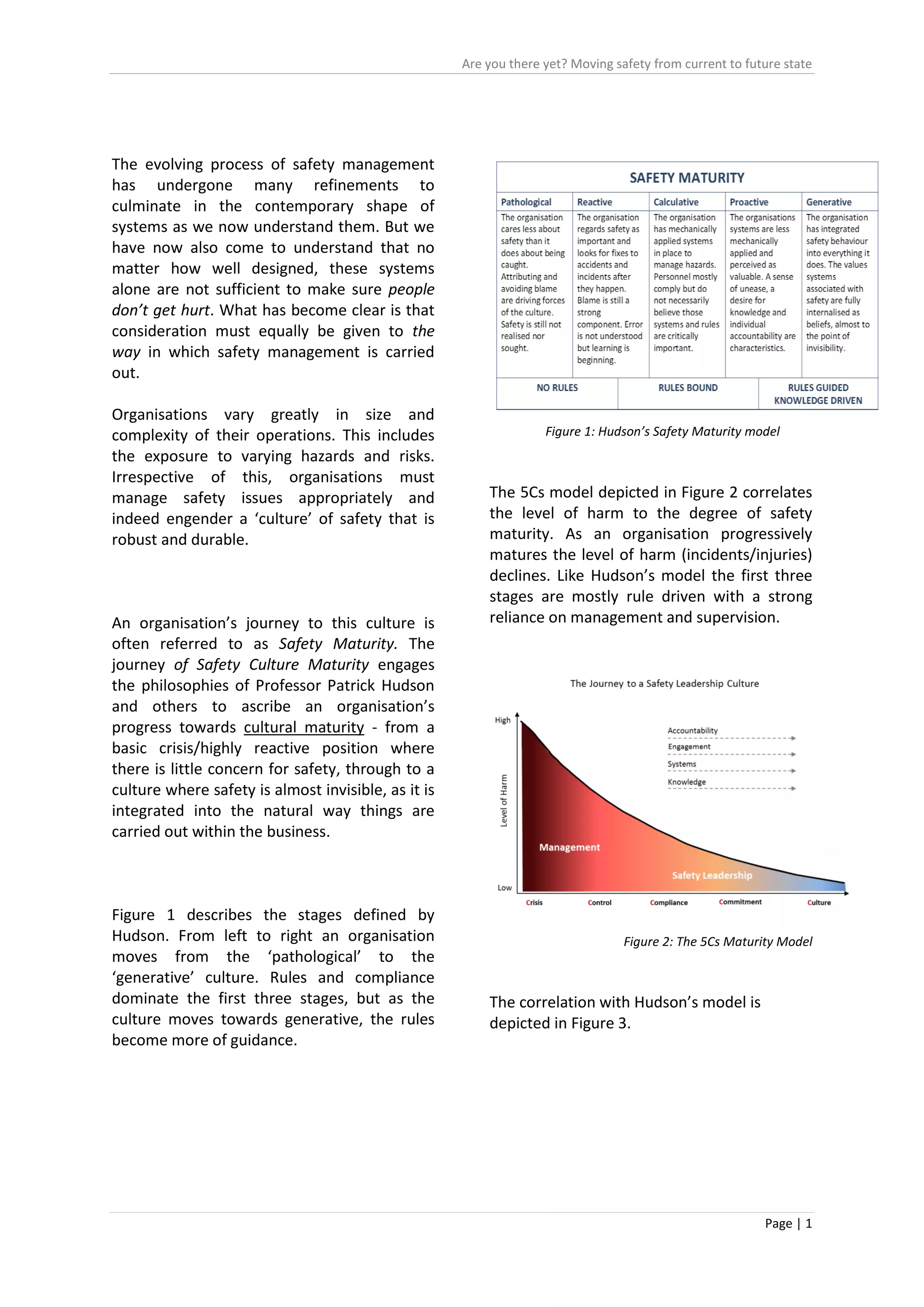
Figure 1 describes the stages defined by
Hudson. From left to right an organisation
moves from the ‘pathological’ to the
‘generative’ culture. Rules and compliance
dominate the first three stages, but as the
culture moves towards generative, the rules
become more of guidance.
Figure 1: Hudson’s Safety Maturity model
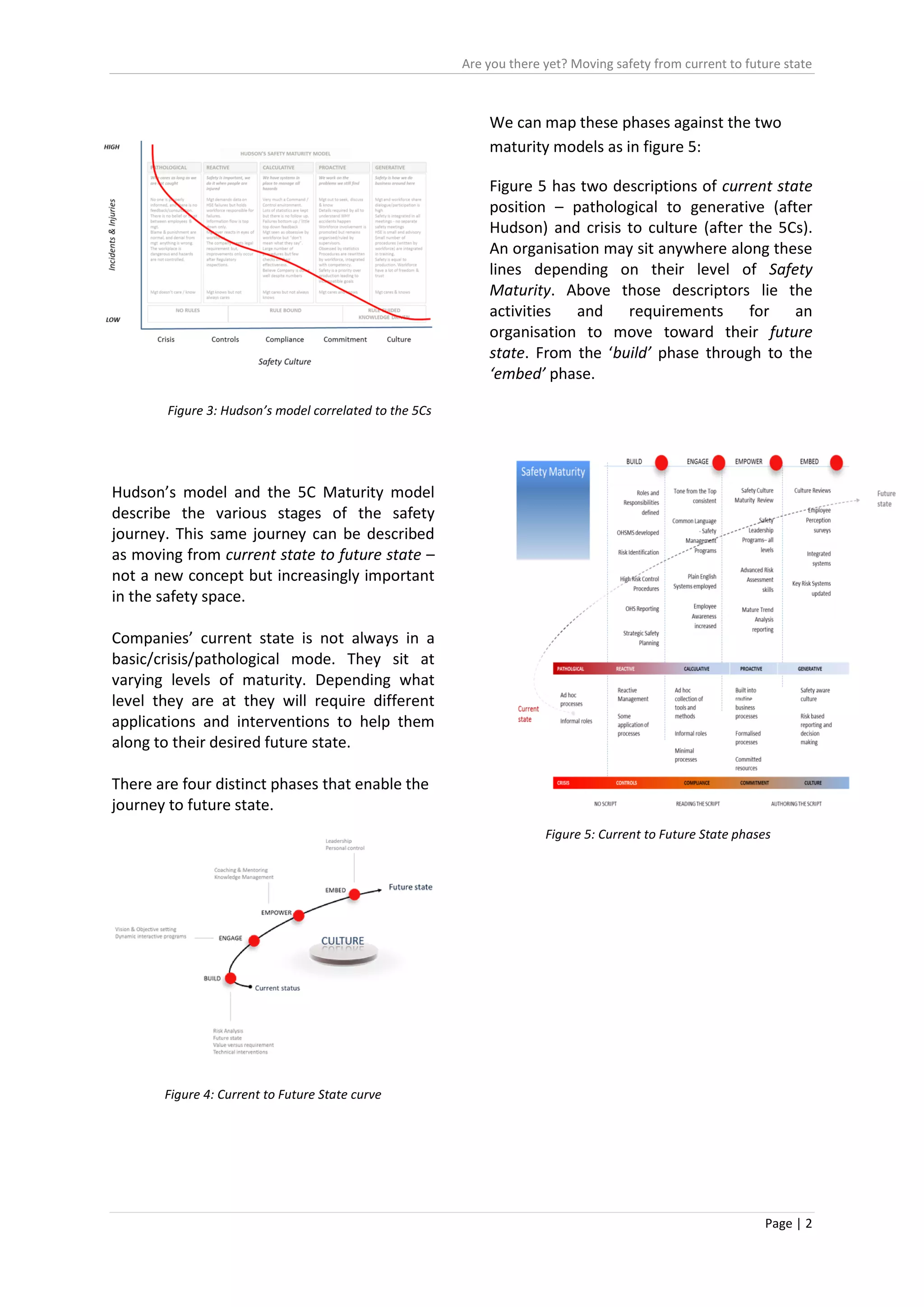
The 5Cs model depicted in Figure 2 correlates
the level of harm to the degree of safety
maturity. As an organisation progressively
matures the level of harm (incidents/injuries)
declines. Like Hudson’s model the first three
stages are mostly rule driven with a strong
reliance on management and supervision.
Figure 2: The 5Cs Maturity Model
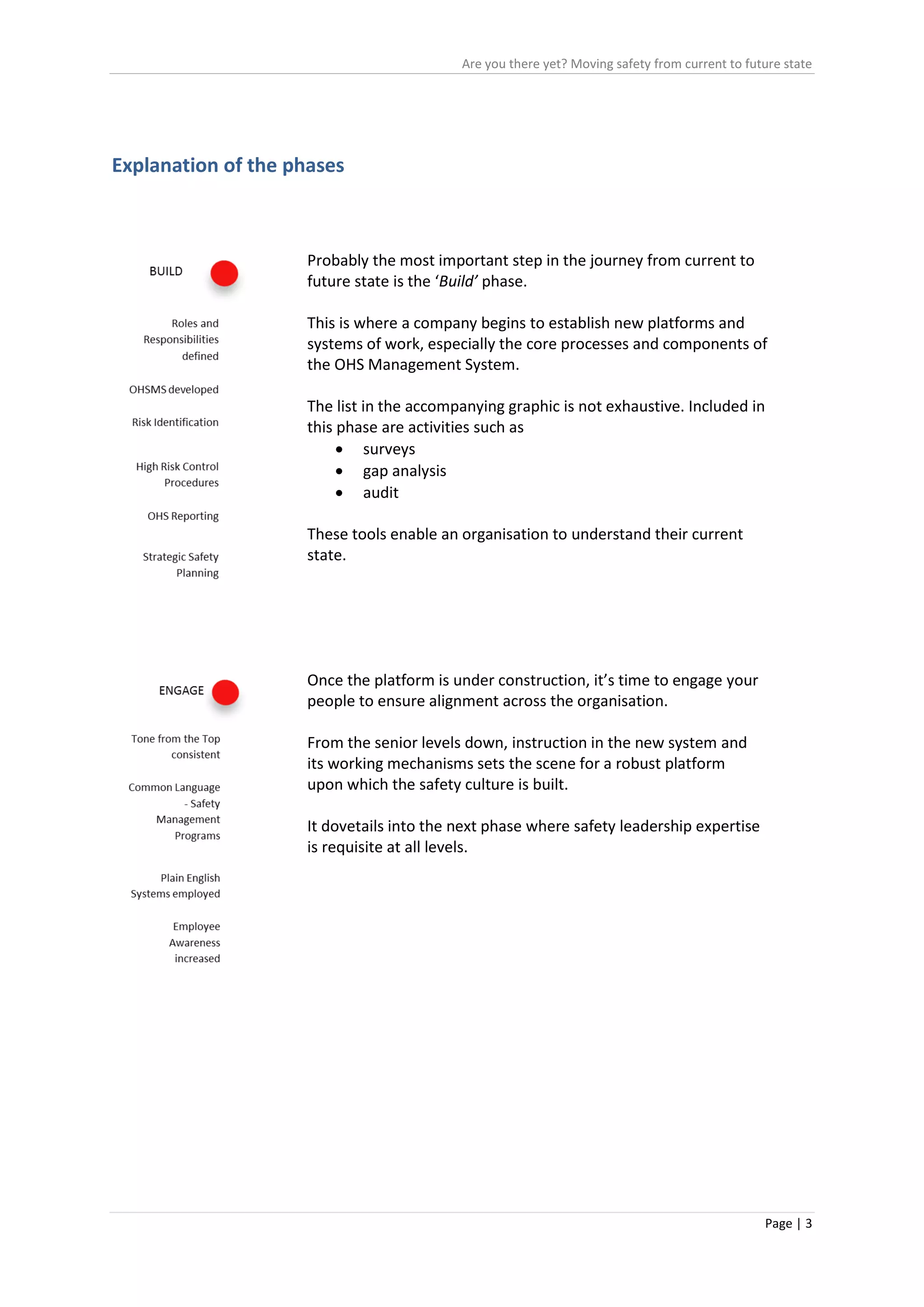
The correlation with Hudson’s model is
depicted in Figure 3.
Are you there yet? Moving safety from current to future state
Page | 2
Figure 3: Hudson’s model correlated to the 5Cs
Hudson’s model and the 5C Maturity model
describe the various stages of the safety
journey. This same journey can be described
as moving from current state to future state –
not a new concept but increasingly important
in the safety space.
Companies’ current state is not always in a
basic/crisis/pathological mode. They sit at
varying levels of maturity. Depending what
level they are at they will require different
applications and interventions to help them
along to their desired future state.
There are four distinct phases that enable the
journey to future state.
Figure 4: Current to Future State curve
We can map these phases against the two
maturity models as in figure 5:
Figure 5 has two descriptions of current state
position – pathological to generative (after
Hudson) and crisis to culture (after the 5Cs).
An organisation may sit anywhere along these
lines depending on their level of Safety
Maturity. Above those descriptors lie the
activities and requirements for an
organisation to move toward their future
state. From the ‘build’ phase through to the
‘embed’ phase.
Figure 5: Current to Future State phases
Are you there yet? Moving safety from current to future state
Page | 3
Explanation of the phases
Probably the most important step in the journey from current to
future state is the ‘Build’ phase.
This is where a company begins to establish new platforms and
systems of work, especially the core processes and components of
the OHS Management System.
The list in the accompanying graphic is not exhaustive. Included in
this phase are activities such as
 surveys
 gap analysis
 audit
These tools enable an organisation to understand their current
state.
Once the platform is under construction, it’s time to engage your
people to ensure alignment across the organisation.
From the senior levels down, instruction in the new system and
its working mechanisms sets the scene for a robust platform
upon which the safety culture is built.
It dovetails into the next phase where safety leadership expertise
is requisite at all levels.
Are you there yet? Moving safety from current to future state
Page | 4
The level of leadership at this phase requires a serious maturity in
order to enable people to achieve. The word empower is very
instructive here – it’s exactly what an organisation needs to do in
order to build a strong and robust safety culture. Leadership, at
all levels, enables this empowerment
Organisations increasingly adopt more sophisticated systems and
training to maintain the upward movement to future state.
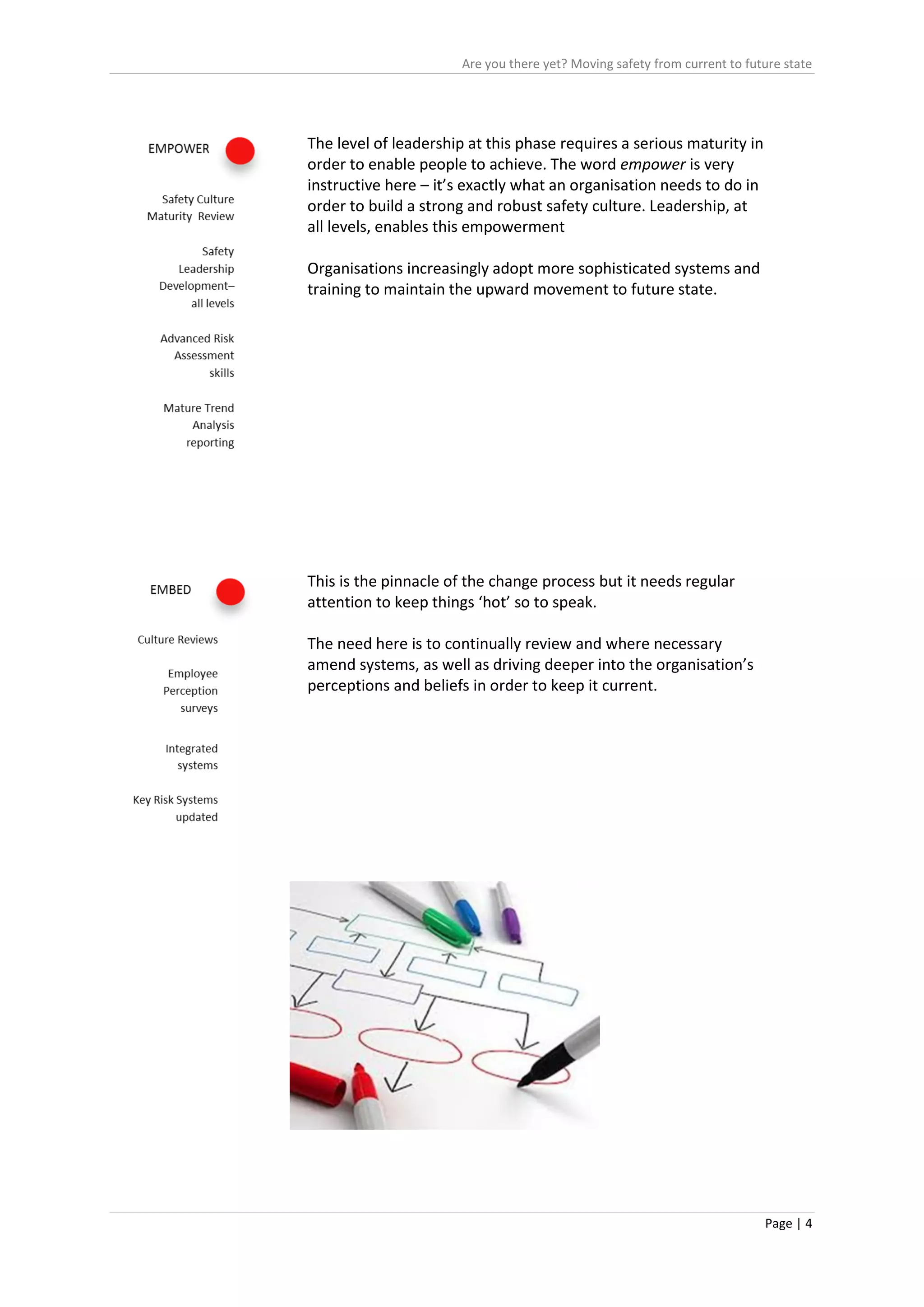
This is the pinnacle of the change process but it needs regular
attention to keep things ‘hot’ so to speak.
The need here is to continually review and where necessary
amend systems, as well as driving deeper into the organisation’s
perceptions and beliefs in order to keep it current.
Are you there yet? Moving safety from current to future state
Page | 5
Conclusion
No matter what the current state of safety is, organisations need to be constantly mindful of
reviewing and improving their approaches. This is integral to building but especially maintaining a
strong safety management process and culture.
By regularly assessing the level of maturity organisations can stay on top of issues and lapses,
utlising a variety of suitable approaches.

Moving from Current to Future State

  • 1.
    Are you thereyet? Moving safety from current to future state SIMON HART Senior Consultant Enhance Solutions
  • 2.
    Are you thereyet? Moving safety from current to future state Page | 1 The evolving process of safety management has undergone many refinements to culminate in the contemporary shape of systems as we now understand them. But we have now also come to understand that no matter how well designed, these systems alone are not sufficient to make sure people don’t get hurt. What has become clear is that consideration must equally be given to the way in which safety management is carried out. Organisations vary greatly in size and complexity of their operations. This includes the exposure to varying hazards and risks. Irrespective of this, organisations must manage safety issues appropriately and indeed engender a ‘culture’ of safety that is robust and durable. An organisation’s journey to this culture is often referred to as Safety Maturity. The journey of Safety Culture Maturity engages the philosophies of Professor Patrick Hudson and others to ascribe an organisation’s progress towards cultural maturity - from a basic crisis/highly reactive position where there is little concern for safety, through to a culture where safety is almost invisible, as it is integrated into the natural way things are carried out within the business. Figure 1 describes the stages defined by Hudson. From left to right an organisation moves from the ‘pathological’ to the ‘generative’ culture. Rules and compliance dominate the first three stages, but as the culture moves towards generative, the rules become more of guidance. Figure 1: Hudson’s Safety Maturity model The 5Cs model depicted in Figure 2 correlates the level of harm to the degree of safety maturity. As an organisation progressively matures the level of harm (incidents/injuries) declines. Like Hudson’s model the first three stages are mostly rule driven with a strong reliance on management and supervision. Figure 2: The 5Cs Maturity Model The correlation with Hudson’s model is depicted in Figure 3.
  • 3.
    Are you thereyet? Moving safety from current to future state Page | 2 Figure 3: Hudson’s model correlated to the 5Cs Hudson’s model and the 5C Maturity model describe the various stages of the safety journey. This same journey can be described as moving from current state to future state – not a new concept but increasingly important in the safety space. Companies’ current state is not always in a basic/crisis/pathological mode. They sit at varying levels of maturity. Depending what level they are at they will require different applications and interventions to help them along to their desired future state. There are four distinct phases that enable the journey to future state. Figure 4: Current to Future State curve We can map these phases against the two maturity models as in figure 5: Figure 5 has two descriptions of current state position – pathological to generative (after Hudson) and crisis to culture (after the 5Cs). An organisation may sit anywhere along these lines depending on their level of Safety Maturity. Above those descriptors lie the activities and requirements for an organisation to move toward their future state. From the ‘build’ phase through to the ‘embed’ phase. Figure 5: Current to Future State phases
  • 4.
    Are you thereyet? Moving safety from current to future state Page | 3 Explanation of the phases Probably the most important step in the journey from current to future state is the ‘Build’ phase. This is where a company begins to establish new platforms and systems of work, especially the core processes and components of the OHS Management System. The list in the accompanying graphic is not exhaustive. Included in this phase are activities such as  surveys  gap analysis  audit These tools enable an organisation to understand their current state. Once the platform is under construction, it’s time to engage your people to ensure alignment across the organisation. From the senior levels down, instruction in the new system and its working mechanisms sets the scene for a robust platform upon which the safety culture is built. It dovetails into the next phase where safety leadership expertise is requisite at all levels.
  • 5.
    Are you thereyet? Moving safety from current to future state Page | 4 The level of leadership at this phase requires a serious maturity in order to enable people to achieve. The word empower is very instructive here – it’s exactly what an organisation needs to do in order to build a strong and robust safety culture. Leadership, at all levels, enables this empowerment Organisations increasingly adopt more sophisticated systems and training to maintain the upward movement to future state. This is the pinnacle of the change process but it needs regular attention to keep things ‘hot’ so to speak. The need here is to continually review and where necessary amend systems, as well as driving deeper into the organisation’s perceptions and beliefs in order to keep it current.
  • 6.
    Are you thereyet? Moving safety from current to future state Page | 5 Conclusion No matter what the current state of safety is, organisations need to be constantly mindful of reviewing and improving their approaches. This is integral to building but especially maintaining a strong safety management process and culture. By regularly assessing the level of maturity organisations can stay on top of issues and lapses, utlising a variety of suitable approaches.