Monetizing the Olympic Movement’s Digital Assets Professor Andy Miah, Jennifer Jones, Ana Adi University of the West of Scotland International Sport Business Symposium, Vancouver 2010 [email_address] [email_address] [email_address]
 
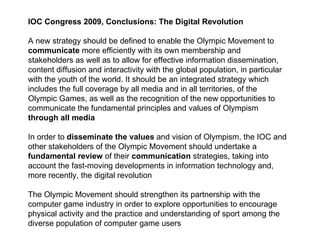
IOC Congress 2009, Conclusions: The Digital Revolution A new strategy should be defined to enable the Olympic Movement to communicate  more efficiently with its own membership and stakeholders as well as to allow for effective information dissemination, content diffusion and interactivity with the global population, in particular with the youth of the world. It should be an integrated strategy which includes the full coverage by all media and in all territories, of the Olympic Games, as well as the recognition of the new opportunities to communicate the fundamental principles and values of Olympism  through all media In order to  disseminate the values  and vision of Olympism, the IOC and other stakeholders of the Olympic Movement should undertake a fundamental review  of their  communication  strategies, taking into account the fast-moving developments in information technology and, more recently, the digital revolution  The Olympic Movement should strengthen its partnership with the computer game industry in order to explore opportunities to encourage physical activity and the practice and understanding of sport among the diverse population of computer game users
Could this signal a fundamental revision in the definition of who are the Olympic media? Could we see Google as a core media partner for the IOC? What about other large new media organizations? Do the conclusions of the Congress go far enough? Who are the Olympic media now?
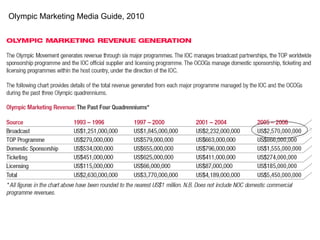
broadcast  rights Largest share of IOC revenue
Olympic Marketing Media Guide, 2010
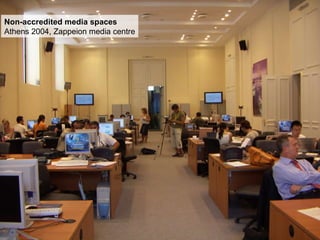
Non-accredited media spaces Athens 2004, Zappeion media centre
Torino Piemonte Media Centre, 2006
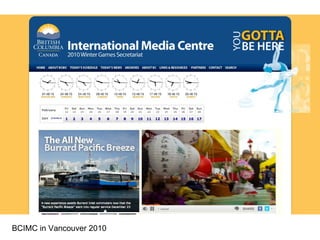
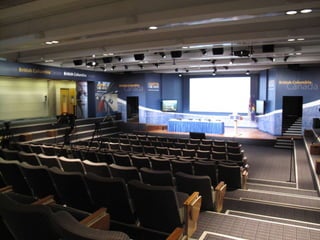
BCIMC in Vancouver 2010
 
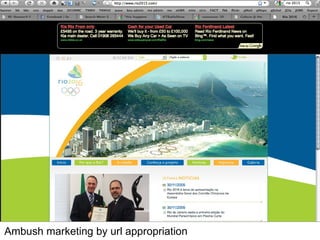
Ambush marketing by url appropriation
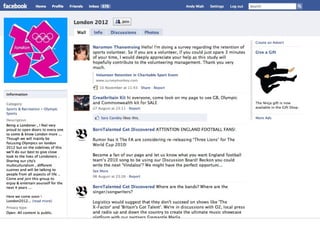
New spaces created by unofficial communities, utiizing Olympic brand
 
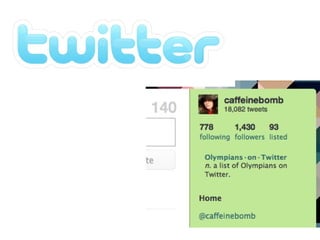
The IOC now has a presence in large new media organizations
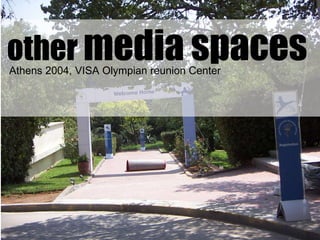
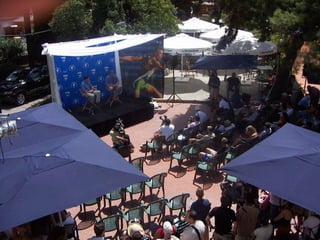
other  media spaces Athens 2004, VISA Olympian reunion Center
 
 
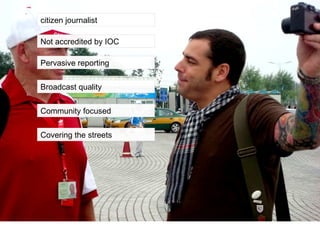
citizen journalist Not accredited by IOC Pervasive reporting Broadcast quality Community focused Covering the streets
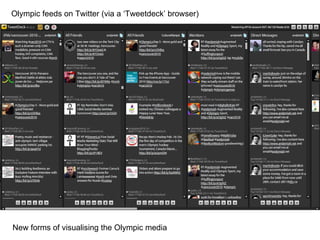
Olympic feeds on Twitter (via a ‘Tweetdeck’ browser) New forms of visualising the Olympic media
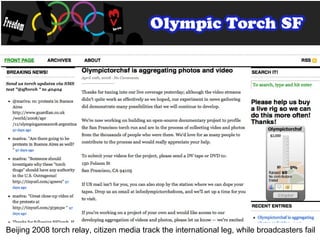
Beijing 2008 torch relay, citizen media track the international leg, while broadcasters fail
monetization  of new media Can the IOC have its cake and eat it?
 
 
monetization 2 sources of revenue for online media companies Sale of marketing data / advertising opportunities Freemium principle (90% free, 10% premium) eg Free account up to 3 albums Premium, limitless albums
 
should  monetization take place? answering this relies on a theory of new media culture
 
how  not to do it The consequences of corporate blogging practices
 
 
extending  non-sport Monetization may be most suitable to non-sport Olympic content


Monetizing the Olympic Movement's Digital Assets

  • 1.
    Monetizing the OlympicMovement’s Digital Assets Professor Andy Miah, Jennifer Jones, Ana Adi University of the West of Scotland International Sport Business Symposium, Vancouver 2010 [email_address] [email_address] [email_address]
  • 2.
  • 3.
    IOC Congress 2009,Conclusions: The Digital Revolution A new strategy should be defined to enable the Olympic Movement to communicate more efficiently with its own membership and stakeholders as well as to allow for effective information dissemination, content diffusion and interactivity with the global population, in particular with the youth of the world. It should be an integrated strategy which includes the full coverage by all media and in all territories, of the Olympic Games, as well as the recognition of the new opportunities to communicate the fundamental principles and values of Olympism through all media In order to disseminate the values and vision of Olympism, the IOC and other stakeholders of the Olympic Movement should undertake a fundamental review of their communication strategies, taking into account the fast-moving developments in information technology and, more recently, the digital revolution The Olympic Movement should strengthen its partnership with the computer game industry in order to explore opportunities to encourage physical activity and the practice and understanding of sport among the diverse population of computer game users
  • 4.
    Could this signala fundamental revision in the definition of who are the Olympic media? Could we see Google as a core media partner for the IOC? What about other large new media organizations? Do the conclusions of the Congress go far enough? Who are the Olympic media now?
  • 5.
    broadcast rightsLargest share of IOC revenue
  • 6.
  • 7.
    Non-accredited media spacesAthens 2004, Zappeion media centre
  • 8.
  • 9.
  • 10.
  • 11.
    Ambush marketing byurl appropriation
  • 12.
    New spaces createdby unofficial communities, utiizing Olympic brand
  • 13.
  • 14.
    The IOC nowhas a presence in large new media organizations
  • 15.
    other mediaspaces Athens 2004, VISA Olympian reunion Center
  • 16.
  • 17.
  • 18.
    citizen journalist Notaccredited by IOC Pervasive reporting Broadcast quality Community focused Covering the streets
  • 19.
    Olympic feeds onTwitter (via a ‘Tweetdeck’ browser) New forms of visualising the Olympic media
  • 20.
    Beijing 2008 torchrelay, citizen media track the international leg, while broadcasters fail
  • 21.
    monetization ofnew media Can the IOC have its cake and eat it?
  • 22.
  • 23.
  • 24.
    monetization 2 sourcesof revenue for online media companies Sale of marketing data / advertising opportunities Freemium principle (90% free, 10% premium) eg Free account up to 3 albums Premium, limitless albums
  • 25.
  • 26.
    should monetizationtake place? answering this relies on a theory of new media culture
  • 27.
  • 28.
    how notto do it The consequences of corporate blogging practices
  • 29.
  • 30.
  • 31.
    extending non-sportMonetization may be most suitable to non-sport Olympic content
  • 32.
  • 33.

Editor's Notes

  • #7 It’s apparent that the Olympic media are primarily those who pay for the Games
  • #12 Alon with the vulnerability of organizations to protect themselves
  • #13 And large social media sites are being utilized by the IOC as media delivery devices
  • #14 These environments also convey the break down of intellectual property protection
  • #20 However, the work of these organizations is crossing over into new areas of communication where institutions become their own media vehicle eg IOC twitter account sending Olympic news The way in which people encounter Olympic information is changing
  • #21 We have citizens following the torch and reporting what happens