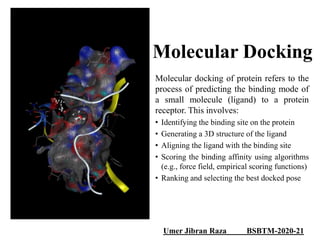
Molecular docking of protein refers to the
process of predicting the binding mode of
a small molecule (ligand) to a protein
receptor. This involves:
• Identifying the binding site on the protein
• Generating a 3D structure of the ligand
• Aligning the ligand with the binding site
• Scoring the binding affinity using algorithms
(e.g., force field, empirical scoring functions)
• Ranking and selecting the best docked pose
Molecular Docking
Umer Jibran Raza BSBTM-2020-21
Introduction to Molecular Docking
Molecular Docking:
Molecular docking: computational method predicting how molecules interact, aiding drug
discovery and understanding molecular interactions in biology.
Importance in Drug Discovery:
Molecular docking accelerates drug discovery by predicting how potential drugs bind to
target proteins, guiding design of effective therapeutics.
Overview of Protein-Ligand Interactions:
Protein-ligand interactions dictate drug efficacy. Understanding binding mechanisms aids
in designing potent drugs through molecular docking simulations.
Basics of MOE Software
Introduction to MOE (Molecular Operating Environment):
MOE: Software for molecular modeling and drug discovery. Offers tools for visualization,
analysis, and simulation of biomolecular structures.
Features and Capabilities:
MOE software provides a suite of tools for molecular modeling, including protein-ligand
docking, structure visualization, energy minimization, and analysis of biomolecular
interactions, enhancing drug discovery and research endeavors.
Why MOE for Molecular Docking?
MOE excels in molecular docking due to its robust algorithms, accurate scoring functions, user-
friendly interface, and comprehensive analysis capabilities.
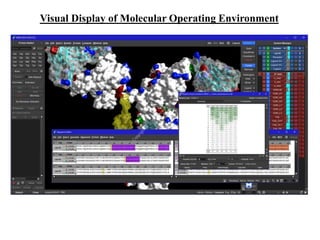
Visual Display of Molecular Operating Environment
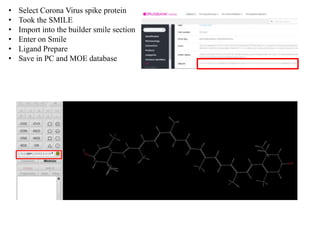
• Select Corona Virus spike protein
• Took the SMILE
• Import into the builder smile section
• Enter on Smile
• Ligand Prepare
• Save in PC and MOE database
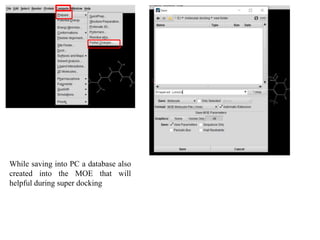
While saving into PC a database also
created into the MOE that will
helpful during super docking
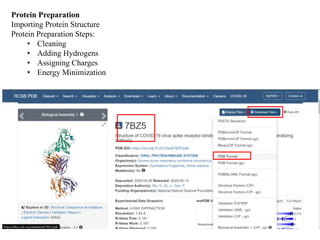
Protein Preparation
Importing Protein Structure
Protein Preparation Steps:
• Cleaning
• Adding Hydrogens
• Assigning Charges
• Energy Minimization
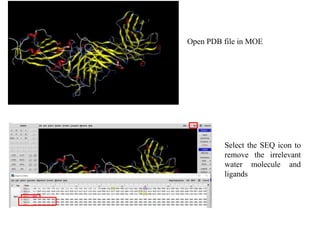
Open PDB file in MOE
Select the SEQ icon to
remove the irrelevant
water molecule and
ligands
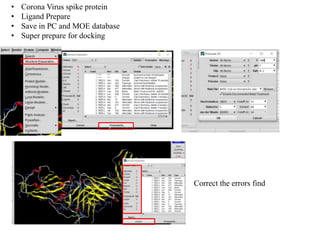
• Corona Virus spike protein
• Ligand Prepare
• Save in PC and MOE database
• Super prepare for docking
Correct the errors find
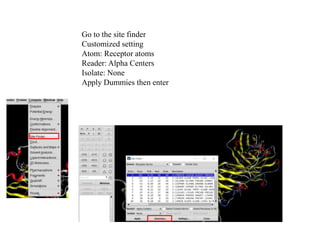
Go to the site finder
Customized setting
Atom: Receptor atoms
Reader: Alpha Centers
Isolate: None
Apply Dummies then enter
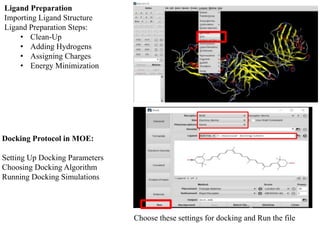
Ligand Preparation
Importing Ligand Structure
Ligand Preparation Steps:
• Clean-Up
• Adding Hydrogens
• Assigning Charges
• Energy Minimization
Choose these settings for docking and Run the file
Docking Protocol in MOE:
Setting Up Docking Parameters
Choosing Docking Algorithm
Running Docking Simulations
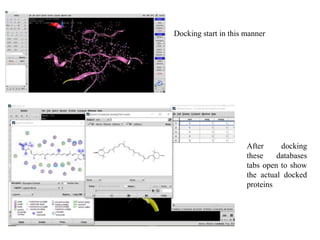
Docking start in this manner
After docking
these databases
tabs open to show
the actual docked
proteins
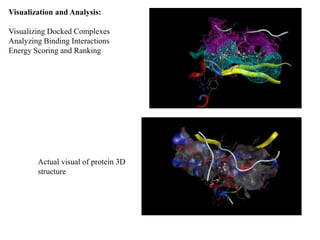
Visualization and Analysis:
Visualizing Docked Complexes
Analyzing Binding Interactions
Energy Scoring and Ranking
Actual visual of protein 3D
structure
Validation and Interpretation
Validation of Docking Results
Comparing Experimental Data with
Docking Predictions
Interpreting Binding Modes
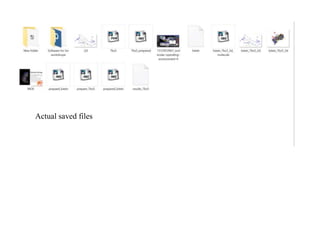
Actual saved files
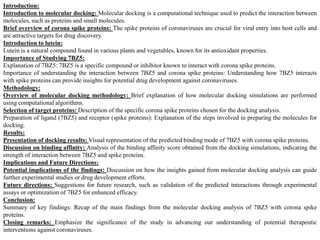
Introduction:
Introduction to molecular docking: Molecular docking is a computational technique used to predict the interaction between
molecules, such as proteins and small molecules.
Brief overview of corona spike proteins: The spike proteins of coronaviruses are crucial for viral entry into host cells and
are attractive targets for drug discovery.
Introduction to lutein:
Lutein is a natural compound found in various plants and vegetables, known for its antioxidant properties.
Importance of Studying 7BZ5:
Explanation of 7BZ5: 7BZ5 is a specific compound or inhibitor known to interact with corona spike proteins.
Importance of understanding the interaction between 7BZ5 and corona spike proteins: Understanding how 7BZ5 interacts
with spike proteins can provide insights for potential drug development against coronaviruses.
Methodology:
Overview of molecular docking methodology: Brief explanation of how molecular docking simulations are performed
using computational algorithms.
Selection of target proteins: Description of the specific corona spike proteins chosen for the docking analysis.
Preparation of ligand (7BZ5) and receptor (spike proteins): Explanation of the steps involved in preparing the molecules for
docking.
Results:
Presentation of docking results: Visual representation of the predicted binding mode of 7BZ5 with corona spike proteins.
Discussion on binding affinity: Analysis of the binding affinity score obtained from the docking simulations, indicating the
strength of interaction between 7BZ5 and spike proteins.
Implications and Future Directions:
Potential implications of the findings: Discussion on how the insights gained from molecular docking analysis can guide
further experimental studies or drug development efforts.
Future directions: Suggestions for future research, such as validation of the predicted interactions through experimental
assays or optimization of 7BZ5 for enhanced efficacy.
Conclusion:
Summary of key findings: Recap of the main findings from the molecular docking analysis of 7BZ5 with corona spike
proteins.
Closing remarks: Emphasize the significance of the study in advancing our understanding of potential therapeutic
interventions against coronaviruses.
Molecular operating environment1234.pptx

Molecular operating environment1234.pptx

  • 1.
    Molecular docking ofprotein refers to the process of predicting the binding mode of a small molecule (ligand) to a protein receptor. This involves: • Identifying the binding site on the protein • Generating a 3D structure of the ligand • Aligning the ligand with the binding site • Scoring the binding affinity using algorithms (e.g., force field, empirical scoring functions) • Ranking and selecting the best docked pose Molecular Docking Umer Jibran Raza BSBTM-2020-21
  • 2.
    Introduction to MolecularDocking Molecular Docking: Molecular docking: computational method predicting how molecules interact, aiding drug discovery and understanding molecular interactions in biology. Importance in Drug Discovery: Molecular docking accelerates drug discovery by predicting how potential drugs bind to target proteins, guiding design of effective therapeutics. Overview of Protein-Ligand Interactions: Protein-ligand interactions dictate drug efficacy. Understanding binding mechanisms aids in designing potent drugs through molecular docking simulations.
  • 3.
    Basics of MOESoftware Introduction to MOE (Molecular Operating Environment): MOE: Software for molecular modeling and drug discovery. Offers tools for visualization, analysis, and simulation of biomolecular structures. Features and Capabilities: MOE software provides a suite of tools for molecular modeling, including protein-ligand docking, structure visualization, energy minimization, and analysis of biomolecular interactions, enhancing drug discovery and research endeavors. Why MOE for Molecular Docking? MOE excels in molecular docking due to its robust algorithms, accurate scoring functions, user- friendly interface, and comprehensive analysis capabilities.
  • 4.
    Visual Display ofMolecular Operating Environment
  • 5.
    • Select CoronaVirus spike protein • Took the SMILE • Import into the builder smile section • Enter on Smile • Ligand Prepare • Save in PC and MOE database
  • 6.
    While saving intoPC a database also created into the MOE that will helpful during super docking
  • 7.
    Protein Preparation Importing ProteinStructure Protein Preparation Steps: • Cleaning • Adding Hydrogens • Assigning Charges • Energy Minimization
  • 8.
    Open PDB filein MOE Select the SEQ icon to remove the irrelevant water molecule and ligands
  • 9.
    • Corona Virusspike protein • Ligand Prepare • Save in PC and MOE database • Super prepare for docking Correct the errors find
  • 10.
    Go to thesite finder Customized setting Atom: Receptor atoms Reader: Alpha Centers Isolate: None Apply Dummies then enter
  • 11.
    Ligand Preparation Importing LigandStructure Ligand Preparation Steps: • Clean-Up • Adding Hydrogens • Assigning Charges • Energy Minimization Choose these settings for docking and Run the file Docking Protocol in MOE: Setting Up Docking Parameters Choosing Docking Algorithm Running Docking Simulations
  • 12.
    Docking start inthis manner After docking these databases tabs open to show the actual docked proteins
  • 13.
    Visualization and Analysis: VisualizingDocked Complexes Analyzing Binding Interactions Energy Scoring and Ranking Actual visual of protein 3D structure
  • 14.
    Validation and Interpretation Validationof Docking Results Comparing Experimental Data with Docking Predictions Interpreting Binding Modes
  • 15.
  • 16.
    Introduction: Introduction to moleculardocking: Molecular docking is a computational technique used to predict the interaction between molecules, such as proteins and small molecules. Brief overview of corona spike proteins: The spike proteins of coronaviruses are crucial for viral entry into host cells and are attractive targets for drug discovery. Introduction to lutein: Lutein is a natural compound found in various plants and vegetables, known for its antioxidant properties. Importance of Studying 7BZ5: Explanation of 7BZ5: 7BZ5 is a specific compound or inhibitor known to interact with corona spike proteins. Importance of understanding the interaction between 7BZ5 and corona spike proteins: Understanding how 7BZ5 interacts with spike proteins can provide insights for potential drug development against coronaviruses. Methodology: Overview of molecular docking methodology: Brief explanation of how molecular docking simulations are performed using computational algorithms. Selection of target proteins: Description of the specific corona spike proteins chosen for the docking analysis. Preparation of ligand (7BZ5) and receptor (spike proteins): Explanation of the steps involved in preparing the molecules for docking. Results: Presentation of docking results: Visual representation of the predicted binding mode of 7BZ5 with corona spike proteins. Discussion on binding affinity: Analysis of the binding affinity score obtained from the docking simulations, indicating the strength of interaction between 7BZ5 and spike proteins. Implications and Future Directions: Potential implications of the findings: Discussion on how the insights gained from molecular docking analysis can guide further experimental studies or drug development efforts. Future directions: Suggestions for future research, such as validation of the predicted interactions through experimental assays or optimization of 7BZ5 for enhanced efficacy. Conclusion: Summary of key findings: Recap of the main findings from the molecular docking analysis of 7BZ5 with corona spike proteins. Closing remarks: Emphasize the significance of the study in advancing our understanding of potential therapeutic interventions against coronaviruses.