Modern Atomic Physics: Constituents of matters & atomic structure, orbits and orbital, binding energy and mass defect, isotopes, isotones and isobars, electromagnetic and particle radiations
Modern Atomic Physics: Constituents of matters & atomic structure, orbits and orbital, binding energy and mass defect, isotopes, isotones and isobars, electromagnetic and particle radiations
Similar to Modern Atomic Physics: Constituents of matters & atomic structure, orbits and orbital, binding energy and mass defect, isotopes, isotones and isobars, electromagnetic and particle radiations
Modern Atomic Physics: Constituents of matters & atomic structure, orbits and orbital, binding energy and mass defect, isotopes, isotones and isobars, electromagnetic and particle radiations
Atomic structure:
• Allmatter is composed of elements and compounds. Elements are
• the simplest chemical entity, which cannot be broken further, e.g.
• hydrogen, carbon. Two or three elements form a compound, e.g.
water.
• The smallest particle of an element is the atom, which forms the
fundamental unit of matter.
• The atoms are very small and its diameters of the order of 10–10 m.
Every atom posses a central core called a nucleus, which is positively
charged. The diameter of the nucleuses of the order of 10-14 m.
3.
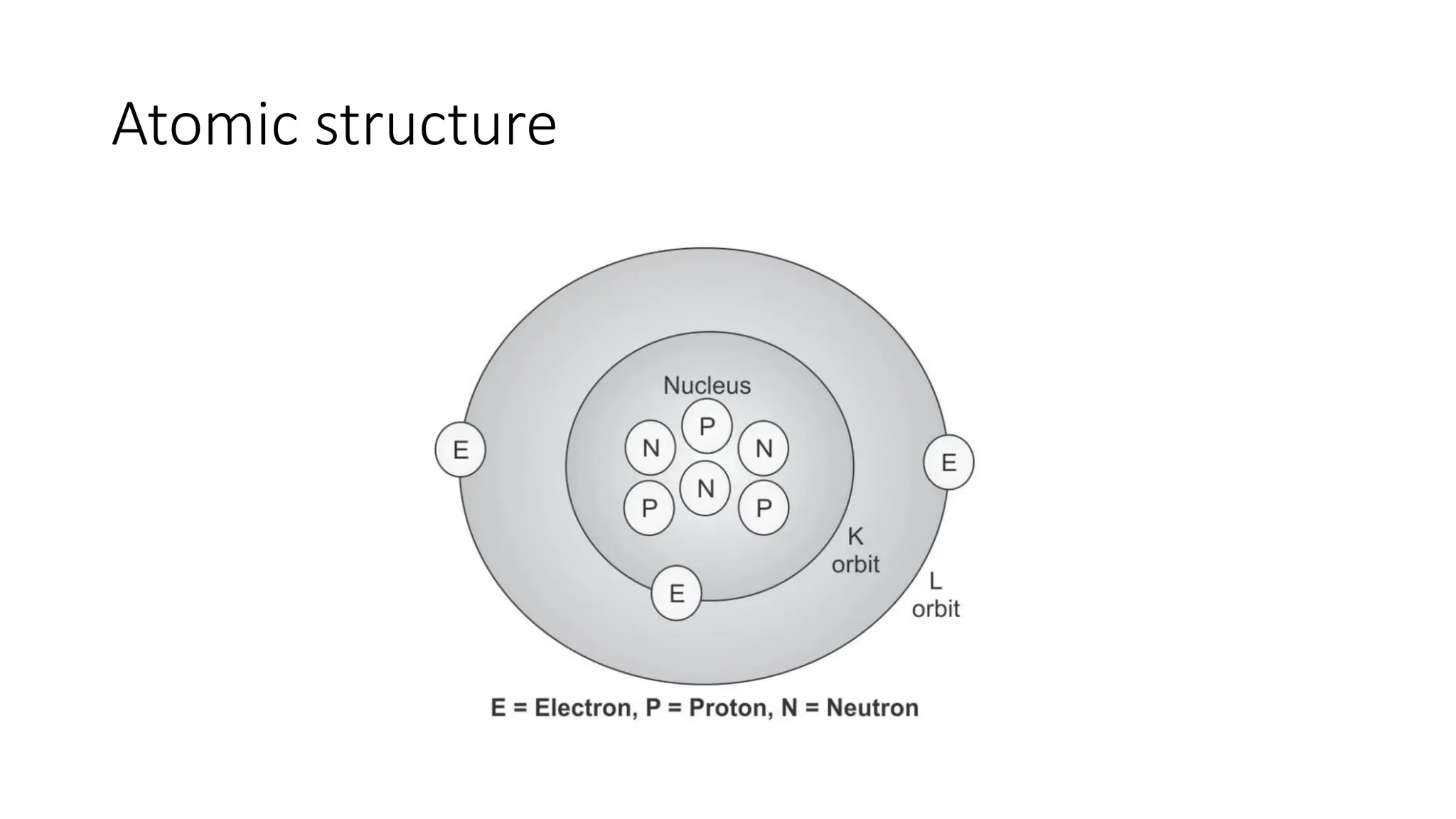
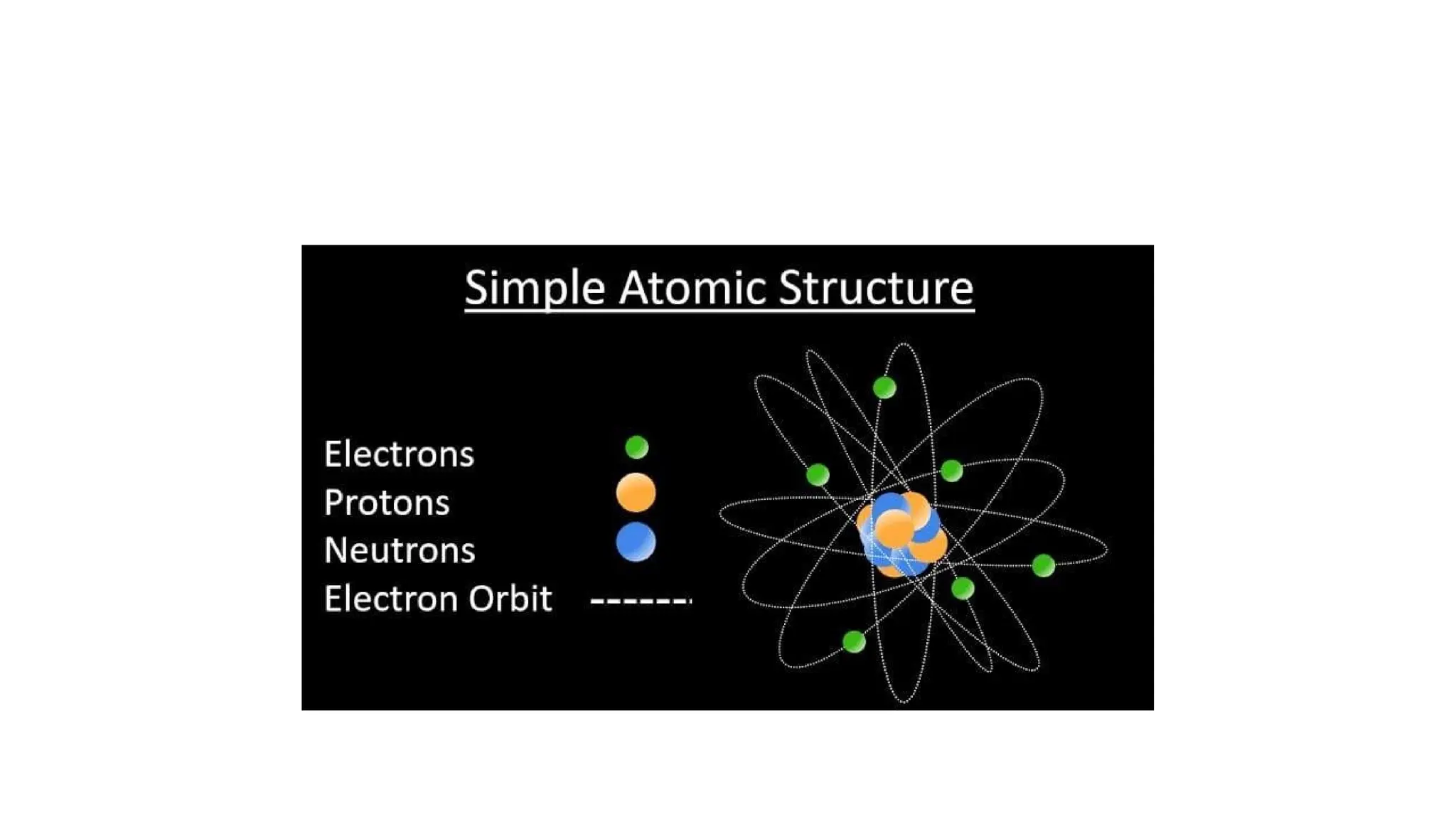
• The nucleusconsists of two particles called protons and neutrons and
collectively known as nucleons.
• The protons are positively charged and the neutron has no charge. The
space around
• The nucleus consists of another important particle, called electron.
• The electrons are negatively charged particle, and they circulate around
• The nucleus at varying distances, similar to planets rotation around the
sun.
• The number of electrons in an atom is equal to the number of protons
• There aretwo types of forces exist in the nucleus.
1. The electrostatic repulsive force, exist between particles of similar
charge.
2. The strong forces (attractive) resulting from the exchange of pions
among all nucleons hold the nucleus together. These two forces act
in opposite directions.
• The nucleus has energy level and the lowest energy state is called the
ground state.
6.
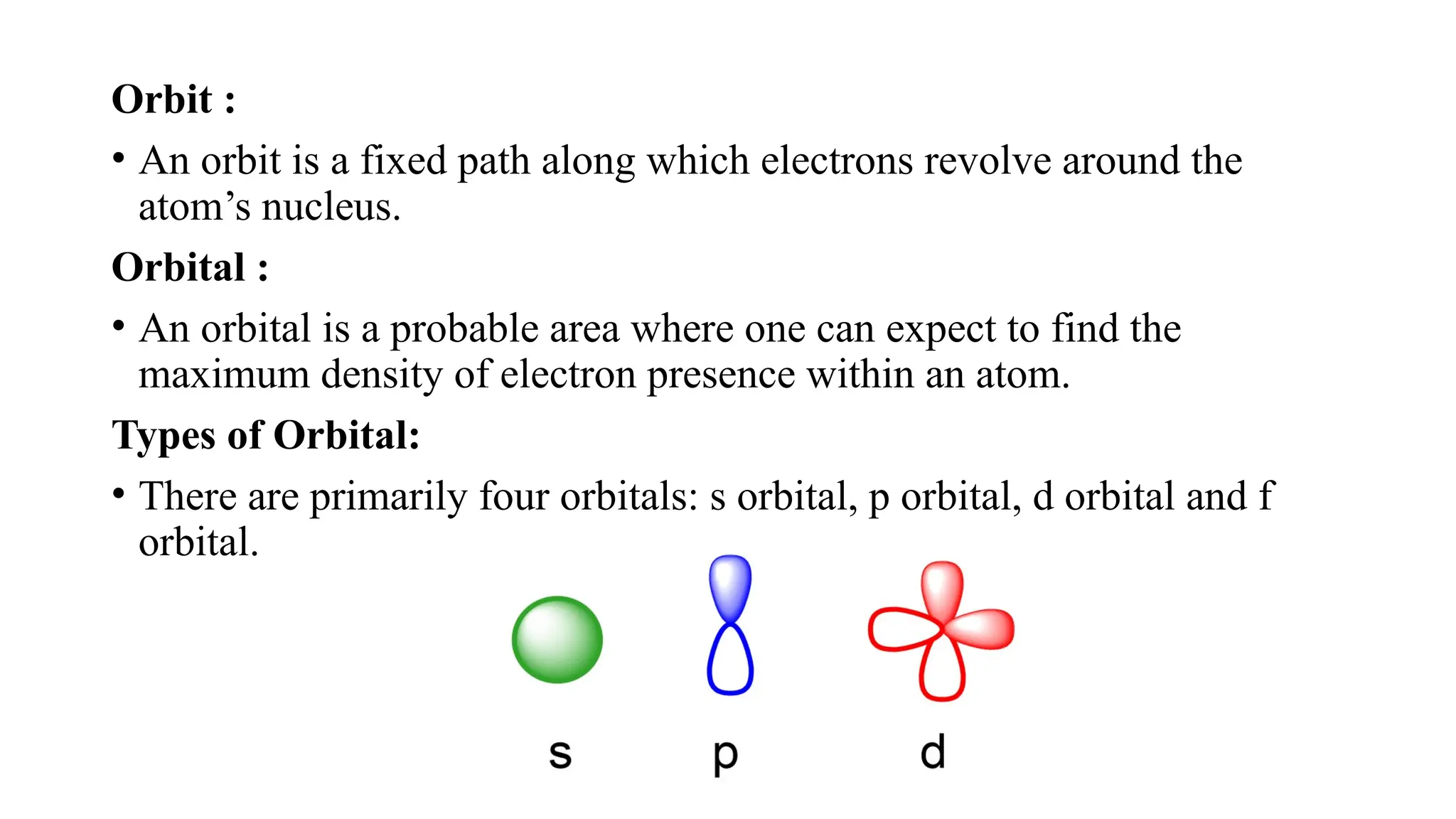
Orbit :
• Anorbit is a fixed path along which electrons revolve around the
atom’s nucleus.
Orbital :
• An orbital is a probable area where one can expect to find the
maximum density of electron presence within an atom.
Types of Orbital:
• There are primarily four orbitals: s orbital, p orbital, d orbital and f
orbital.
7.
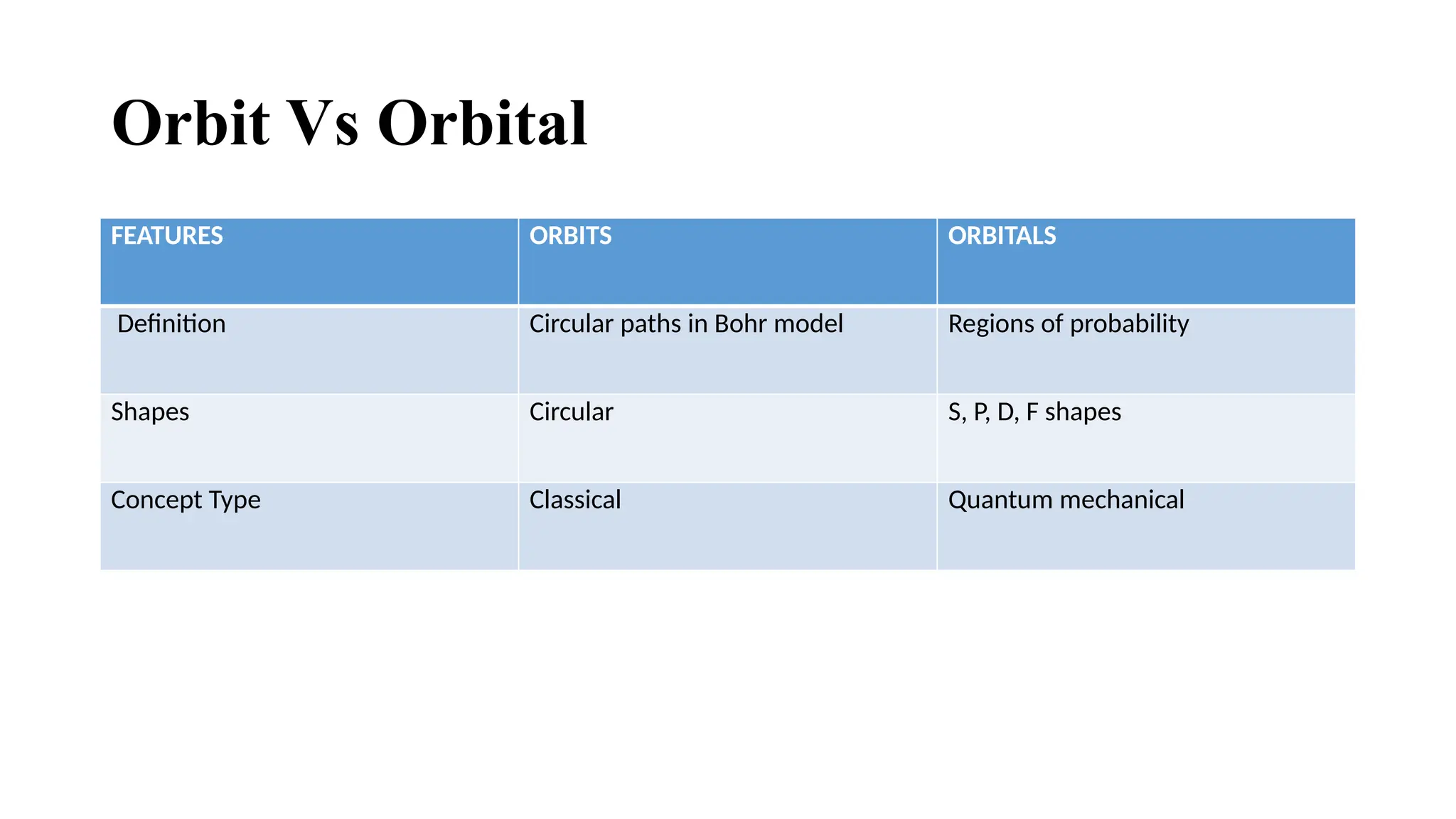
Orbit Vs Orbital
FEATURESORBITS ORBITALS
Definition Circular paths in Bohr model Regions of probability
Shapes Circular S, P, D, F shapes
Concept Type Classical Quantum mechanical
9.
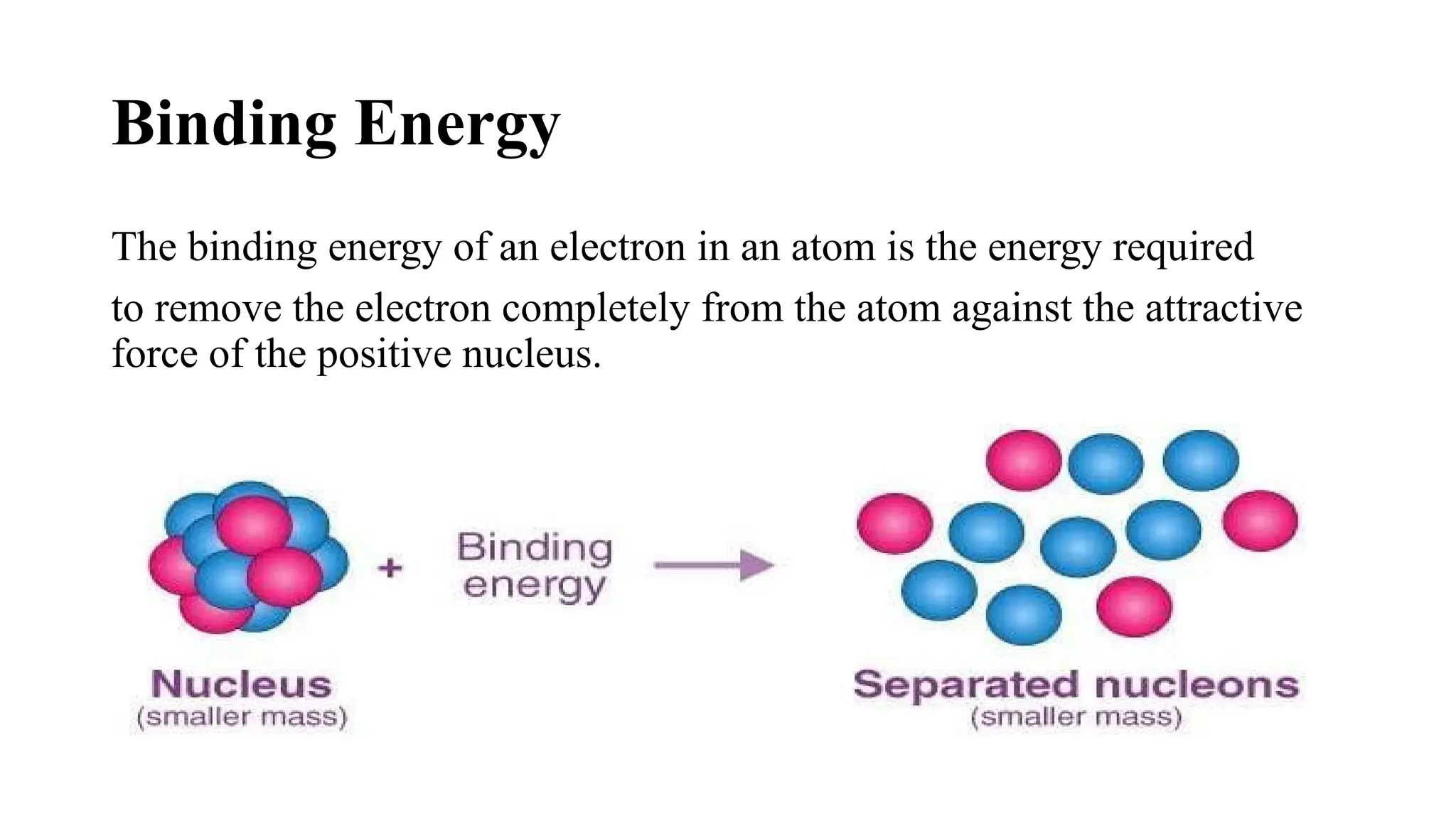
Binding Energy
The bindingenergy of an electron in an atom is the energy required
to remove the electron completely from the atom against the attractive
force of the positive nucleus.
10.
Isotope
• Atoms withthe same number of protons but different numbers of
neutrons are called isotopes. (same atomic number (and thus the same
chemical behavior) but different atomic masses.)
For example, carbon has three naturally occurring isotopes:
• Carbon-12 (¹²C): 6 protons and 6 neutrons (most common).
• Carbon-13 (¹³C): 6 protons and 7 neutrons.
• Carbon-14 (¹ C): 6 protons and 8 neutrons (radioactive, used in
⁴
radiocarbon dating).
11.
Isobars
• Isobars areatoms of different chemical elements that have the same
atomic mass (or mass number) but different atomic numbers.
For example:
• Carbon-14 (¹ C): 6 protons and 8 neutrons.
⁴
• Nitrogen-14 (¹ N): 7 protons and 7 neutrons.
⁴
12.
Isotones
• Isotones areatoms of different elements that have the same number of
neutrons but different numbers of protons (and thus different atomic
numbers).
For example:
• Carbon-13 (¹³C): 6 protons and 7 neutrons.
• Nitrogen-14 (¹ N): 7 protons and 7 neutrons.
⁴
13.
Electromagnetic radiation
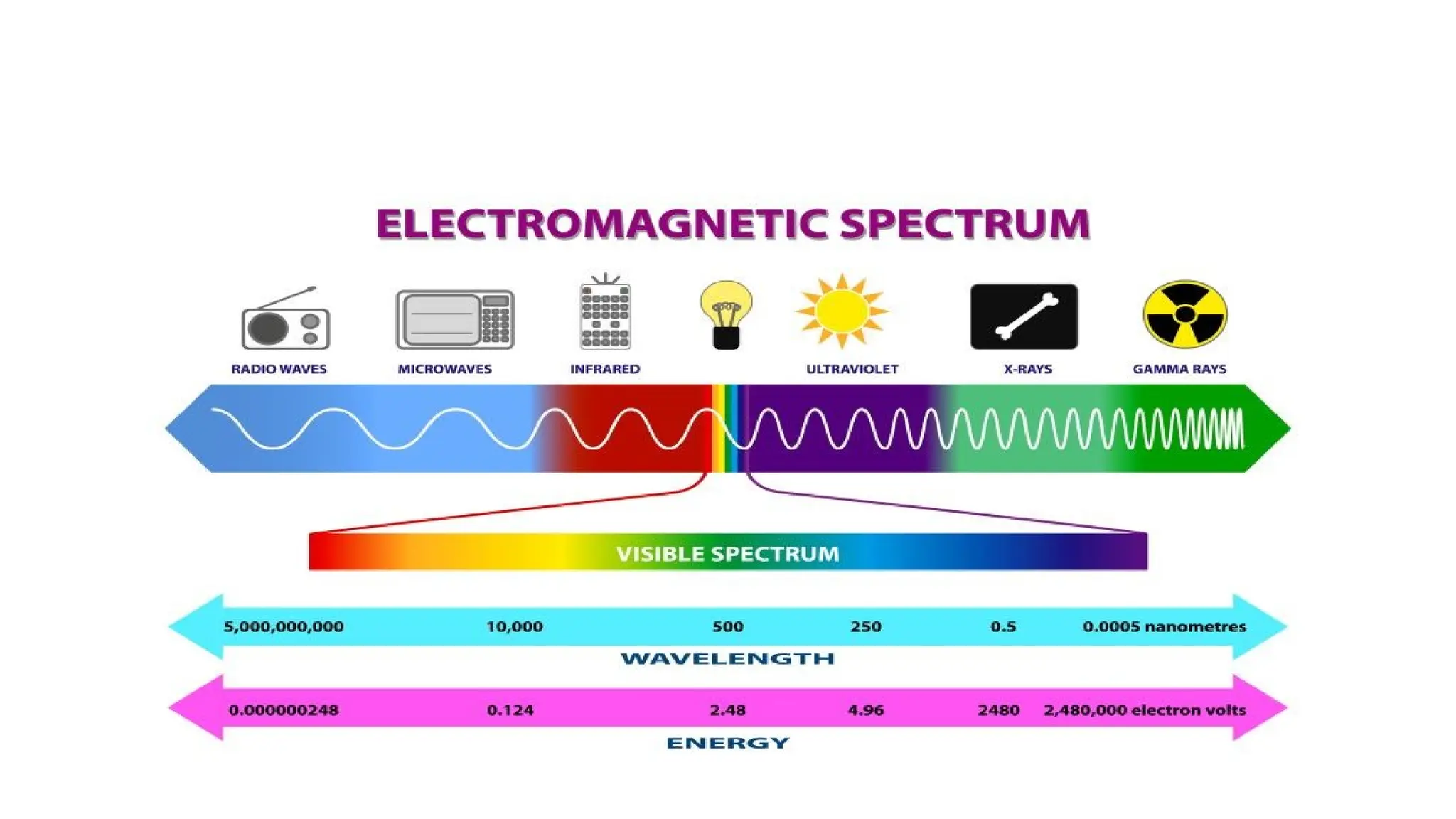
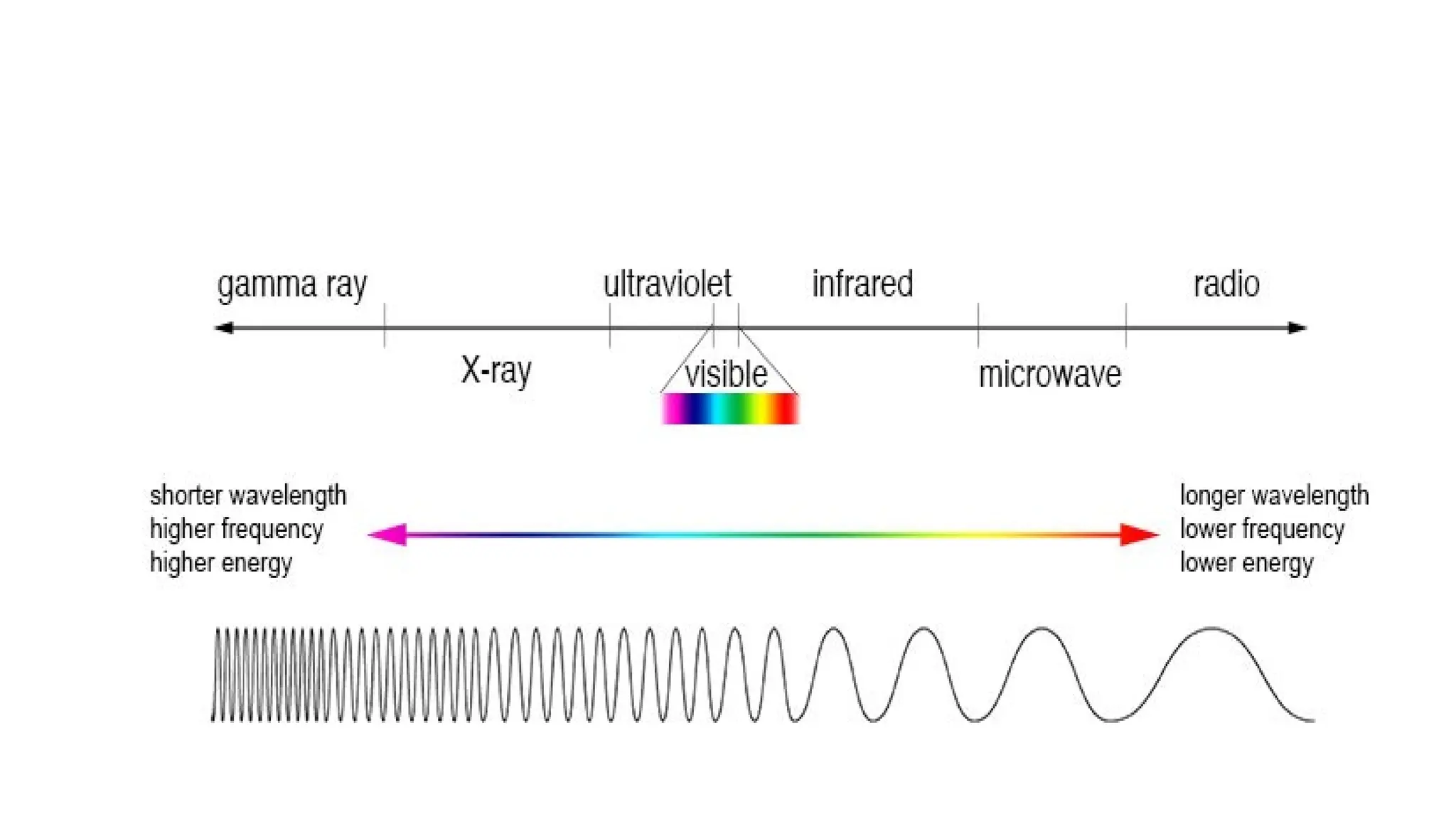
• Electromagneticradiation (EM radiation) refers to the energy that is
emitted and propagated through space in the form of electromagnetic
waves. These waves consist of oscillating electric and magnetic fields
that travel perpendicular to each other and to the direction of the
wave's propagation.
16.
Particle Radiation
• Particleradiation refers to the type of radiation that consists of tiny,
fast-moving particles. particle radiation involves the emission of actual
particles with mass and energy. These particles can come from atomic
nuclei, nuclear reactions, or cosmic events and are often emitted
during radioactive decay or in particle accelerators.(Particle radiation
is a type of radiation made up of tiny, fast-moving particles. These
particles can come from atoms breaking apart or from high-energy
reactions, like those in nuclear power plants or space.)
17.
Types
Alpha Particles (α-particles):
•Composition: Alpha particles consist of two protons and two neutrons,
essentially a helium-4 nucleus.
• Charge: They are positively charged (+2).
• Mass: Relatively heavy compared to other types of radiation.
• Penetration ability: Low. Alpha particles can be stopped by a sheet of
paper or the outer layer of human skin, but they can cause significant
damage if ingested or inhaled.
• Source: Typically emitted by heavy radioactive elements like uranium.
18.
Beta Particles (β-particles):
•Composition: Beta particles are high-energy, high-speed electrons (β )
⁻
or positrons (β ).
⁺
• Charge: Beta-minus particles are negatively charged (electrons), and
beta-plus particles are positively charged (positrons).
• Mass: Much lighter than alpha particles.
• Penetration ability: Moderate. They can penetrate skin but are typically
stopped by materials like plastic or a few millimeters of aluminum.
• Source: Emitted during beta decay, a process in which a neutron in an
atom's nucleus transforms into a proton (for β emission) or a proton
⁻
transforms into a neutron (for β emission).
⁺


![Structure of atom-class 9th [Autosaved].pptx](https://cdn.slidesharecdn.com/ss_thumbnails/structureofatom-class9thautosaved-251207071253-6553800d-thumbnail.jpg?width=640&height=640&fit=bounds)


