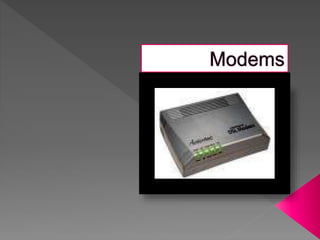
 Modem is a network device that enables a
computer to transfer data from telephone
lines to computers and computers to
telephone lines.
 The word modem is derived from modulator
and demodulator.
 Modem performs modulation and
demodulation.
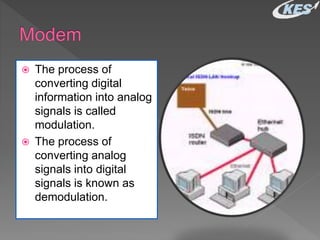
 The process of
converting digital
information into analog
signals is called
modulation.
 The process of
converting analog
signals into digital
signals is known as
demodulation.
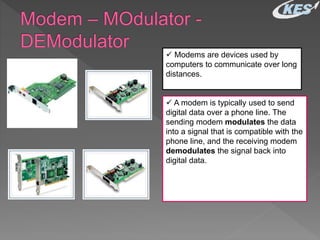
 Modems are devices used by
computers to communicate over long
distances.
 A modem is typically used to send
digital data over a phone line. The
sending modem modulates the data
into a signal that is compatible with the
phone line, and the receiving modem
demodulates the signal back into
digital data.
 Modems differ from each other depending upon
their characteristics.
 Different modems may support different types of
communication such as Data, Fax or voice.
 Different modems have different data
transmission speed and are designed to work with
different protocols.
 Transmission speed.
 Voice or Data communication.
 Auto answering.
 Fax capability.
Most common features of a modem are:
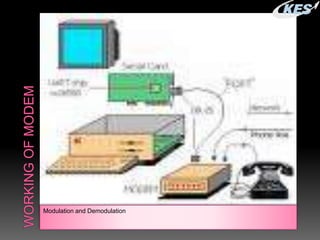
Modulation and Demodulation
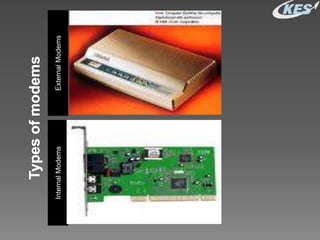
External
Modems
Internal
Modems
 An internal modem is a
Add – on – card that
we can plug into
expansion slot of the
computer.
 These modems use
the power supply from
the computer.
 Lightening effects.
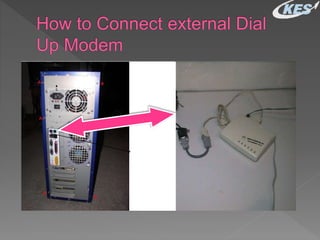
 An external modem
can be connect to the
computer through RS
– 232 cable to the
serial port.
 External modems have
their own power cords.
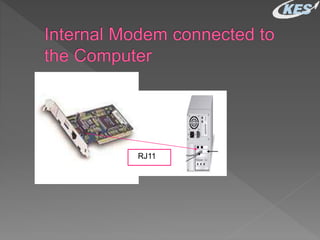
RJ11
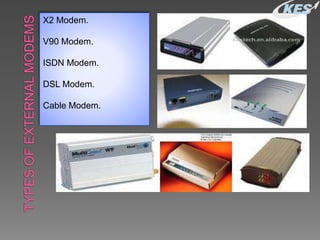
X2 Modem.
V90 Modem.
ISDN Modem.
DSL Modem.
Cable Modem.
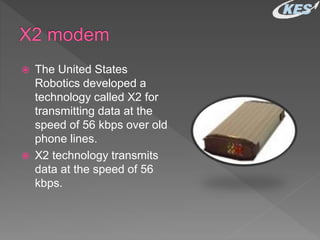
 The United States
Robotics developed a
technology called X2 for
transmitting data at the
speed of 56 kbps over old
phone lines.
 X2 technology transmits
data at the speed of 56
kbps.
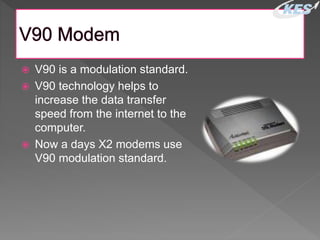
 V90 is a modulation standard.
 V90 technology helps to
increase the data transfer
speed from the internet to the
computer.
 Now a days X2 modems use
V90 modulation standard.
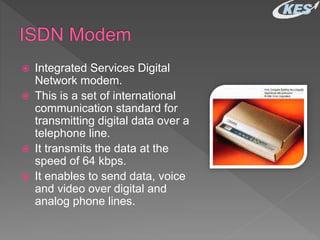
 Integrated Services Digital
Network modem.
 This is a set of international
communication standard for
transmitting digital data over a
telephone line.
 It transmits the data at the
speed of 64 kbps.
 It enables to send data, voice
and video over digital and
analog phone lines.
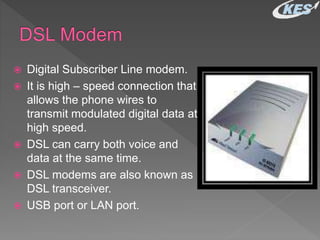
 Digital Subscriber Line modem.
 It is high – speed connection that
allows the phone wires to
transmit modulated digital data at
high speed.
 DSL can carry both voice and
data at the same time.
 DSL modems are also known as
DSL transceiver.
 USB port or LAN port.
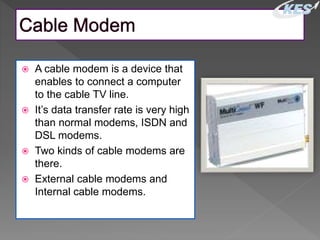
 A cable modem is a device that
enables to connect a computer
to the cable TV line.
 It’s data transfer rate is very high
than normal modems, ISDN and
DSL modems.
 Two kinds of cable modems are
there.
 External cable modems and
Internal cable modems.
 Power LED.
 Speed Indicator.
 Mode Indicator.
 Auto answer.
 Dial LED.
 Send LED.
 Receive LED.
 Error Indicator.
 Full duplex.
 In full duplex data can
be send and receive at
a time.
 No data loss.
 Half duplex.
 In half duplex either we
can send or receive
data at a particular
time.
 Data loss may occurs.
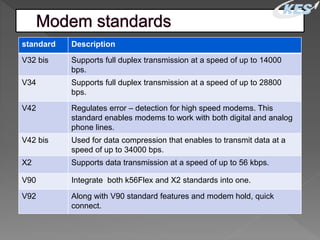
standard Description
V32 bis Supports full duplex transmission at a speed of up to 14000
bps.
V34 Supports full duplex transmission at a speed of up to 28800
bps.
V42 Regulates error – detection for high speed modems. This
standard enables modems to work with both digital and analog
phone lines.
V42 bis Used for data compression that enables to transmit data at a
speed of up to 34000 bps.
X2 Supports data transmission at a speed of up to 56 kbps.
V90 Integrate both k56Flex and X2 standards into one.
V92 Along with V90 standard features and modem hold, quick
connect.
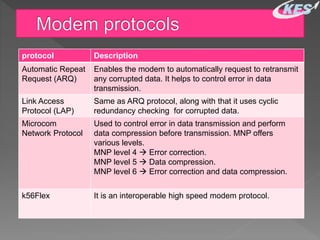
protocol Description
Automatic Repeat
Request (ARQ)
Enables the modem to automatically request to retransmit
any corrupted data. It helps to control error in data
transmission.
Link Access
Protocol (LAP)
Same as ARQ protocol, along with that it uses cyclic
redundancy checking for corrupted data.
Microcom
Network Protocol
Used to control error in data transmission and perform
data compression before transmission. MNP offers
various levels.
MNP level 4  Error correction.
MNP level 5  Data compression.
MNP level 6  Error correction and data compression.
k56Flex It is an interoperable high speed modem protocol.
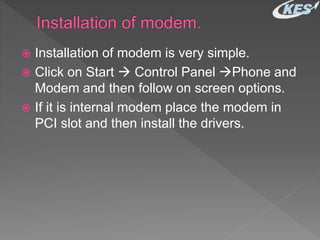
 Installation of modem is very simple.
 Click on Start  Control Panel Phone and
Modem and then follow on screen options.
 If it is internal modem place the modem in
PCI slot and then install the drivers.
modems-181228171523.pdf

modems-181228171523.pdf

  • 2.
     Modem isa network device that enables a computer to transfer data from telephone lines to computers and computers to telephone lines.  The word modem is derived from modulator and demodulator.  Modem performs modulation and demodulation.
  • 3.
     The processof converting digital information into analog signals is called modulation.  The process of converting analog signals into digital signals is known as demodulation.
  • 4.
     Modems aredevices used by computers to communicate over long distances.  A modem is typically used to send digital data over a phone line. The sending modem modulates the data into a signal that is compatible with the phone line, and the receiving modem demodulates the signal back into digital data.
  • 5.
     Modems differfrom each other depending upon their characteristics.  Different modems may support different types of communication such as Data, Fax or voice.  Different modems have different data transmission speed and are designed to work with different protocols.  Transmission speed.  Voice or Data communication.  Auto answering.  Fax capability. Most common features of a modem are:
  • 6.
  • 7.
  • 8.
     An internalmodem is a Add – on – card that we can plug into expansion slot of the computer.  These modems use the power supply from the computer.  Lightening effects.  An external modem can be connect to the computer through RS – 232 cable to the serial port.  External modems have their own power cords.
  • 9.
  • 11.
    X2 Modem. V90 Modem. ISDNModem. DSL Modem. Cable Modem.
  • 12.
     The UnitedStates Robotics developed a technology called X2 for transmitting data at the speed of 56 kbps over old phone lines.  X2 technology transmits data at the speed of 56 kbps.
  • 13.
     V90 isa modulation standard.  V90 technology helps to increase the data transfer speed from the internet to the computer.  Now a days X2 modems use V90 modulation standard.
  • 14.
     Integrated ServicesDigital Network modem.  This is a set of international communication standard for transmitting digital data over a telephone line.  It transmits the data at the speed of 64 kbps.  It enables to send data, voice and video over digital and analog phone lines.
  • 15.
     Digital SubscriberLine modem.  It is high – speed connection that allows the phone wires to transmit modulated digital data at high speed.  DSL can carry both voice and data at the same time.  DSL modems are also known as DSL transceiver.  USB port or LAN port.
  • 16.
     A cablemodem is a device that enables to connect a computer to the cable TV line.  It’s data transfer rate is very high than normal modems, ISDN and DSL modems.  Two kinds of cable modems are there.  External cable modems and Internal cable modems.
  • 17.
     Power LED. Speed Indicator.  Mode Indicator.  Auto answer.  Dial LED.  Send LED.  Receive LED.  Error Indicator.
  • 18.
     Full duplex. In full duplex data can be send and receive at a time.  No data loss.  Half duplex.  In half duplex either we can send or receive data at a particular time.  Data loss may occurs.
  • 19.
    standard Description V32 bisSupports full duplex transmission at a speed of up to 14000 bps. V34 Supports full duplex transmission at a speed of up to 28800 bps. V42 Regulates error – detection for high speed modems. This standard enables modems to work with both digital and analog phone lines. V42 bis Used for data compression that enables to transmit data at a speed of up to 34000 bps. X2 Supports data transmission at a speed of up to 56 kbps. V90 Integrate both k56Flex and X2 standards into one. V92 Along with V90 standard features and modem hold, quick connect.
  • 20.
    protocol Description Automatic Repeat Request(ARQ) Enables the modem to automatically request to retransmit any corrupted data. It helps to control error in data transmission. Link Access Protocol (LAP) Same as ARQ protocol, along with that it uses cyclic redundancy checking for corrupted data. Microcom Network Protocol Used to control error in data transmission and perform data compression before transmission. MNP offers various levels. MNP level 4  Error correction. MNP level 5  Data compression. MNP level 6  Error correction and data compression. k56Flex It is an interoperable high speed modem protocol.
  • 21.
     Installation ofmodem is very simple.  Click on Start  Control Panel Phone and Modem and then follow on screen options.  If it is internal modem place the modem in PCI slot and then install the drivers.