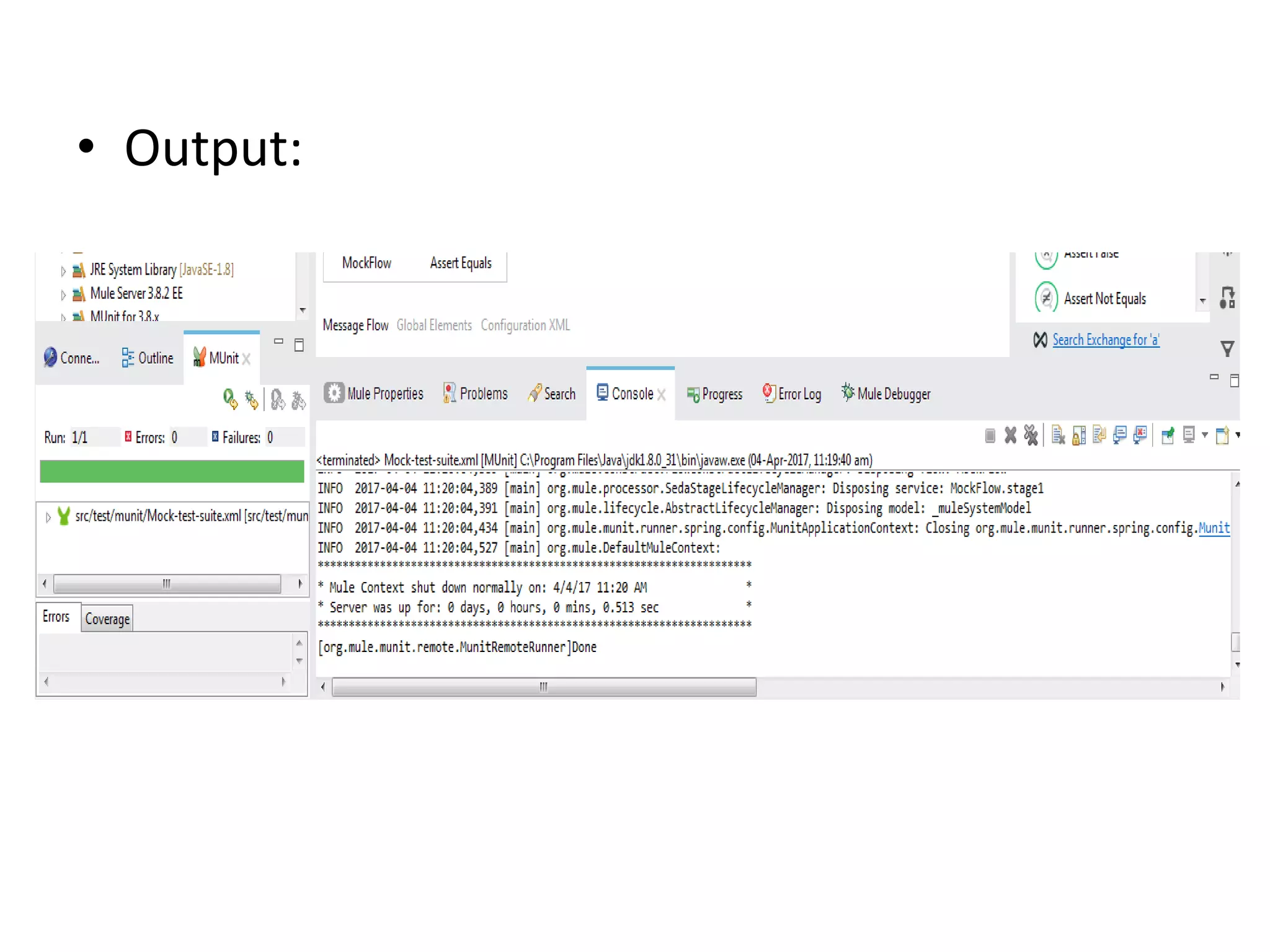
The Mock component in MUnit allows you to define mocked behavior for a message processor. You can modify how a specific message processor responds when called with particular attributes. The example shows using Mock to replace the "Set Payload" processor with one that returns "Good Morning!" instead of "Hi", which is then asserted on in a test.
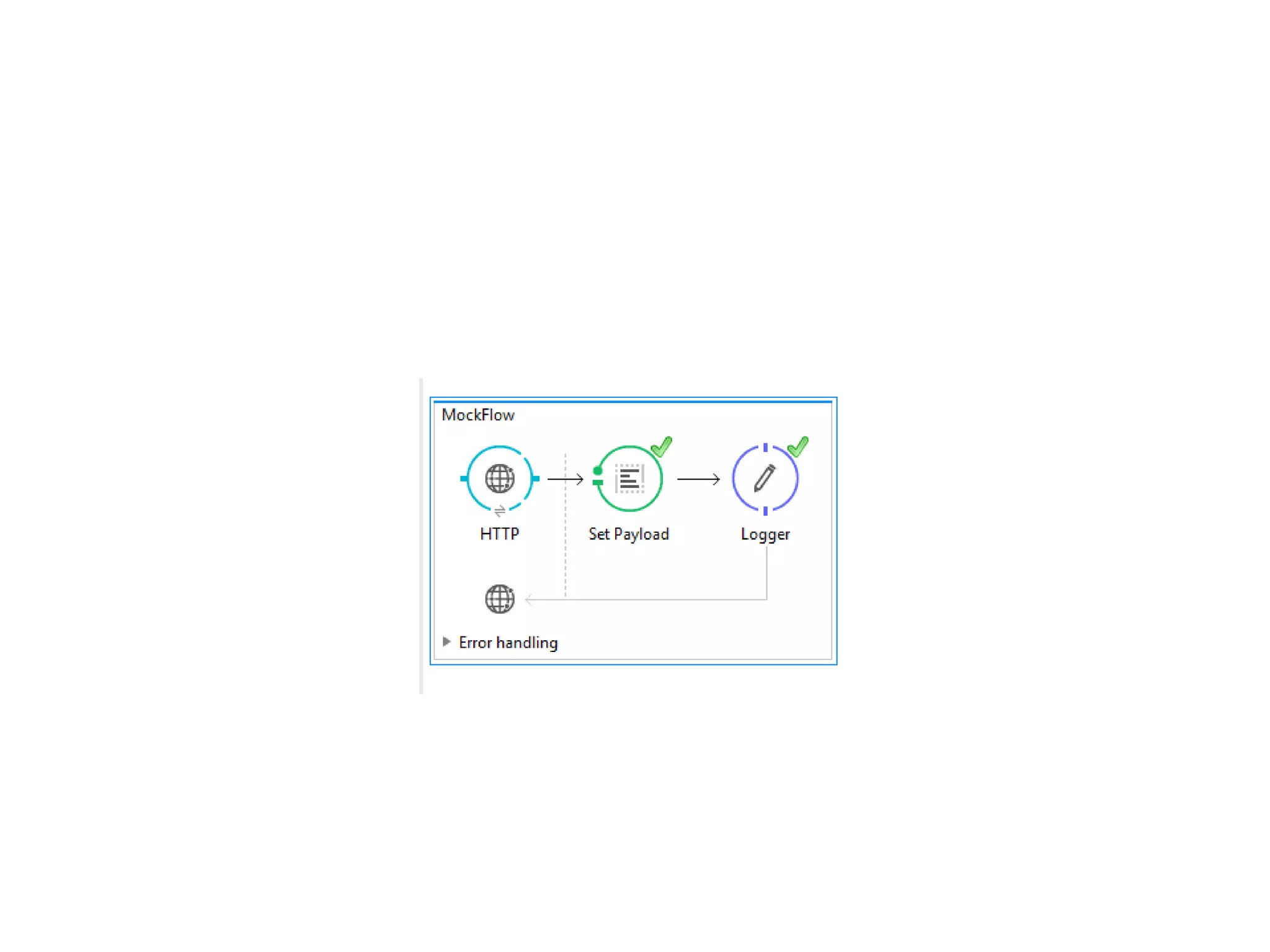
![• .mflow
• <?xml version="1.0" encoding="UTF-8"?>
• <mule xmlns:http="http://www.mulesoft.org/schema/mule/http"
xmlns="http://www.mulesoft.org/schema/mule/core"
xmlns:doc="http://www.mulesoft.org/schema/mule/documentation"
• xmlns:spring="http://www.springframework.org/schema/beans"
• xmlns:xsi="http://www.w3.org/2001/XMLSchema-instance"
• xsi:schemaLocation="http://www.springframework.org/schema/beans
http://www.springframework.org/schema/beans/spring-beans-current.xsd
• http://www.mulesoft.org/schema/mule/core
http://www.mulesoft.org/schema/mule/core/current/mule.xsd
• http://www.mulesoft.org/schema/mule/http
http://www.mulesoft.org/schema/mule/http/current/mule-http.xsd">
• <http:listener-config name="HTTP_Listener_Configuration" host="localhost" port="8089"
doc:name="HTTP Listener Configuration"/>
• <flow name="MockFlow">
• <http:listener config-ref="HTTP_Listener_Configuration" path="/" doc:name="HTTP"/>
• <set-payload value="Hi" doc:name="Set Payload"/>
• <logger message="------#[payload]----" level="INFO" doc:name="Logger"/>
• </flow>
• </mule>](https://image.slidesharecdn.com/mockcomponentinmunit-170408093953/75/Mock-component-in-munit-4-2048.jpg)
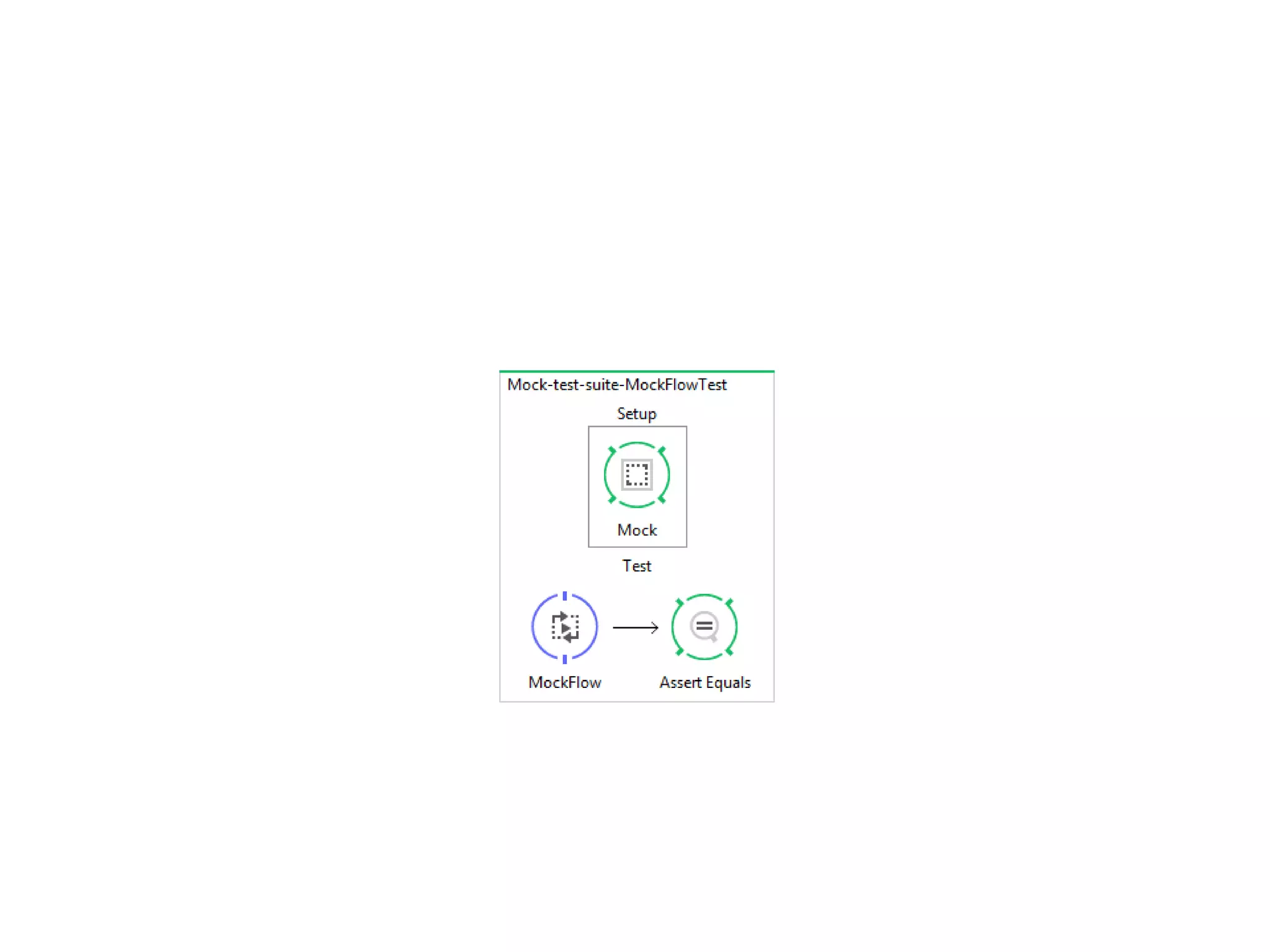
![• <?xml version="1.0" encoding="UTF-8"?>
• <mule xmlns:mock="http://www.mulesoft.org/schema/mule/mock" xmlns="http://www.mulesoft.org/schema/mule/core"
xmlns:doc="http://www.mulesoft.org/schema/mule/documentation" xmlns:munit="http://www.mulesoft.org/schema/mule/munit"
xmlns:spring="http://www.springframework.org/schema/beans" xmlns:core="http://www.mulesoft.org/schema/mule/core"
xmlns:xsi="http://www.w3.org/2001/XMLSchema-instance" xsi:schemaLocation="http://www.mulesoft.org/schema/mule/munit
http://www.mulesoft.org/schema/mule/munit/current/mule-munit.xsd
• http://www.springframework.org/schema/beans http://www.springframework.org/schema/beans/spring-beans-current.xsd
• http://www.mulesoft.org/schema/mule/core http://www.mulesoft.org/schema/mule/core/current/mule.xsd
• http://www.mulesoft.org/schema/mule/mock http://www.mulesoft.org/schema/mule/mock/current/mule-mock.xsd">
• <munit:config name="munit" doc:name="MUnit configuration"/>
• <spring:beans>
• <spring:import resource="classpath:Mock.xml"/>
• </spring:beans>
• <munit:test name="Mock-test-suite-MockFlowTest" description="Test">
• <mock:when messageProcessor=".*:.*" doc:name="Mock">
• <mock:with-attributes>
• <mock:with-attribute name="doc:name" whereValue="#['Set Payload']"/>
• </mock:with-attributes>
• <mock:then-return payload="Good Morning!"/>
• </mock:when>
• <flow-ref name="MockFlow" doc:name="MockFlow"/>
• <munit:assert-on-equals expectedValue="Good Morning!" actualValue="#[payload]" doc:name="Assert Equals"/>
• </munit:test>
• </mule>](https://image.slidesharecdn.com/mockcomponentinmunit-170408093953/75/Mock-component-in-munit-6-2048.jpg)