Jeremy Callinan Protocol 80 / Omnis Technologies / Syncrate
About Me Mobile Development Tablet Development Overview of today
About Me
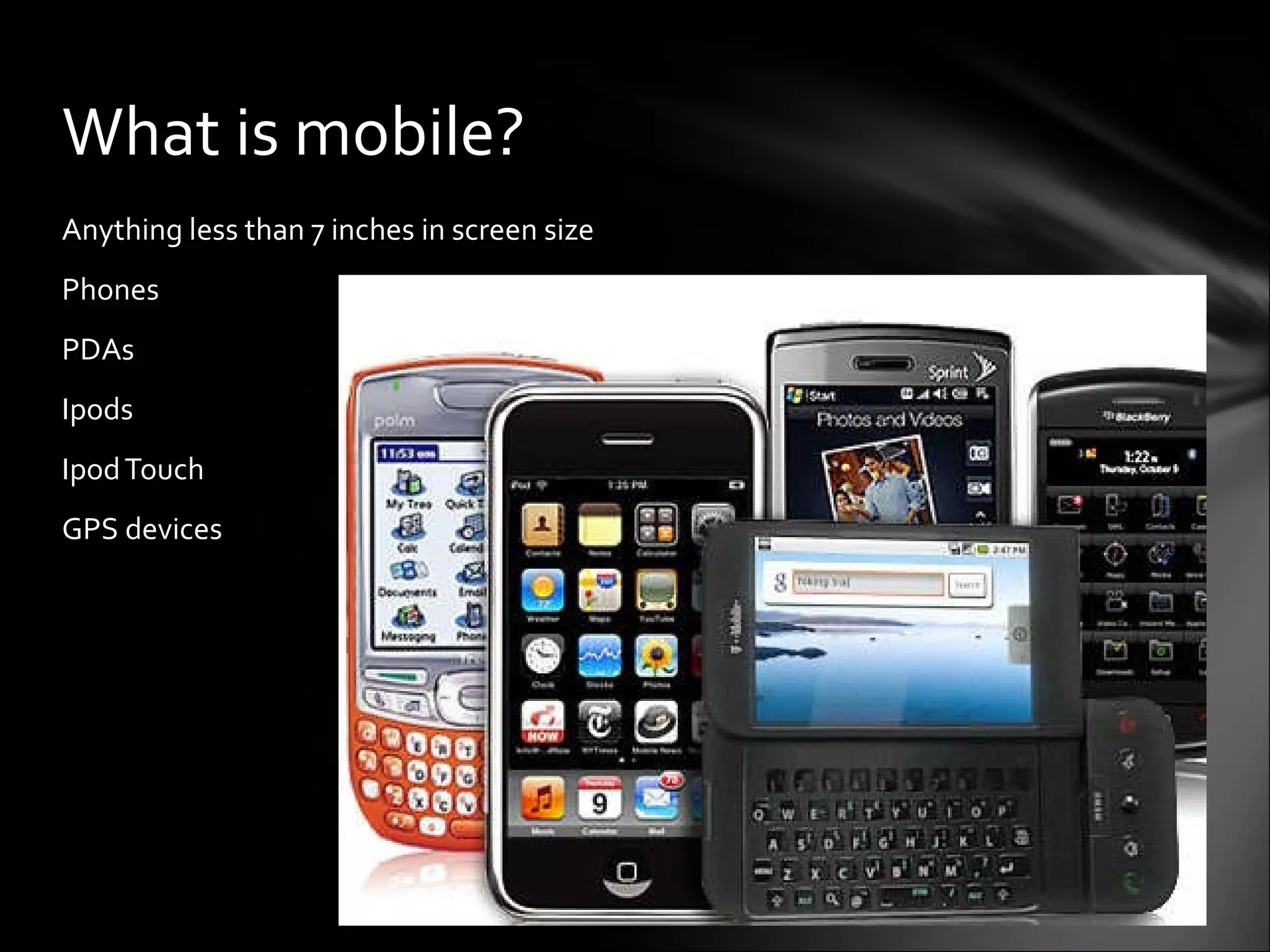
Anything less than 7 inches in screen size Phones PDAs Ipods Ipod Touch GPS devices What is mobile?
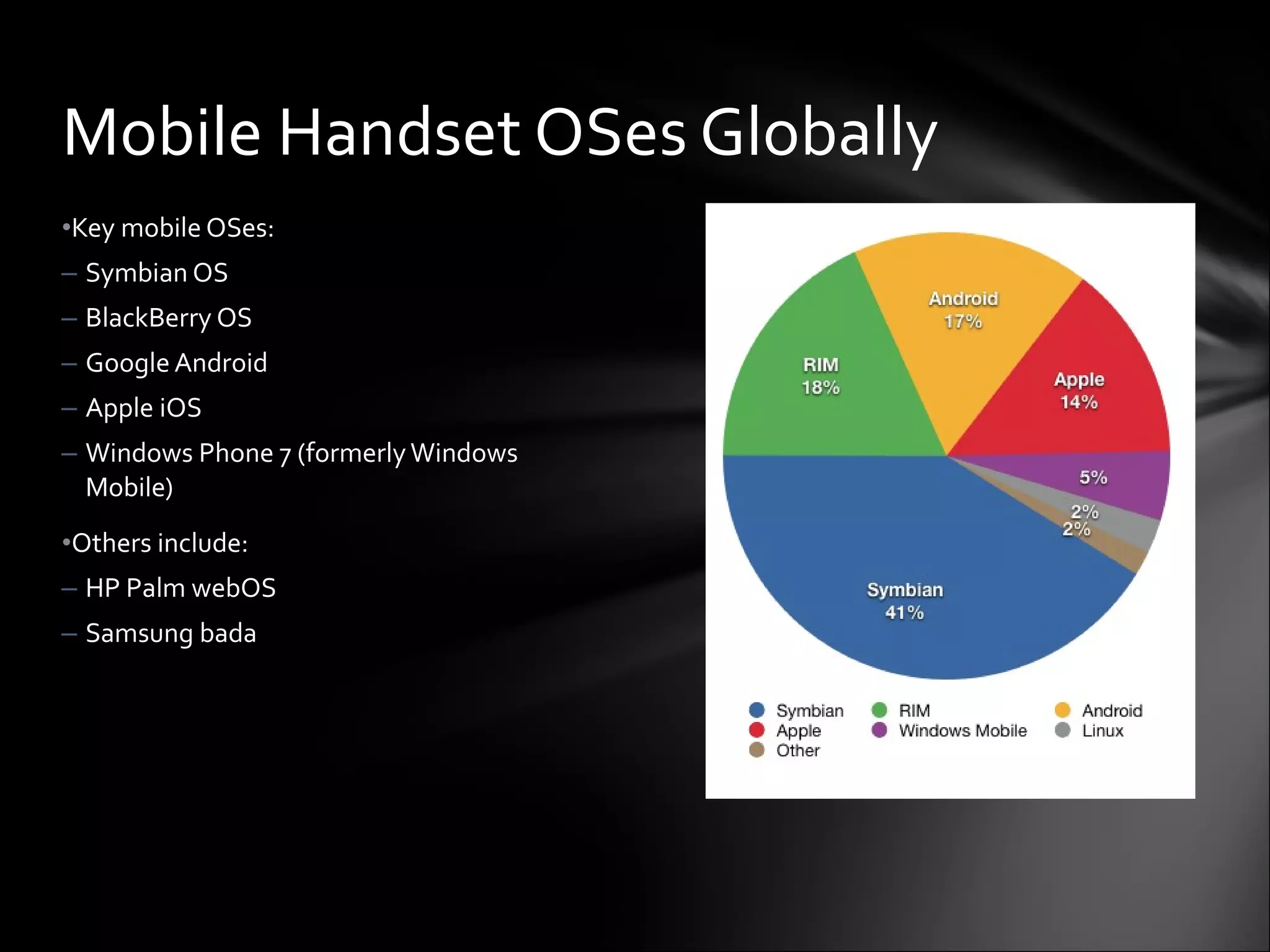
Key mobile OSes: Symbian OS BlackBerry OS Google Android Apple iOS Windows Phone 7 (formerly Windows Mobile) Others include: HP Palm webOS Samsung bada Mobile Handset OSes Globally
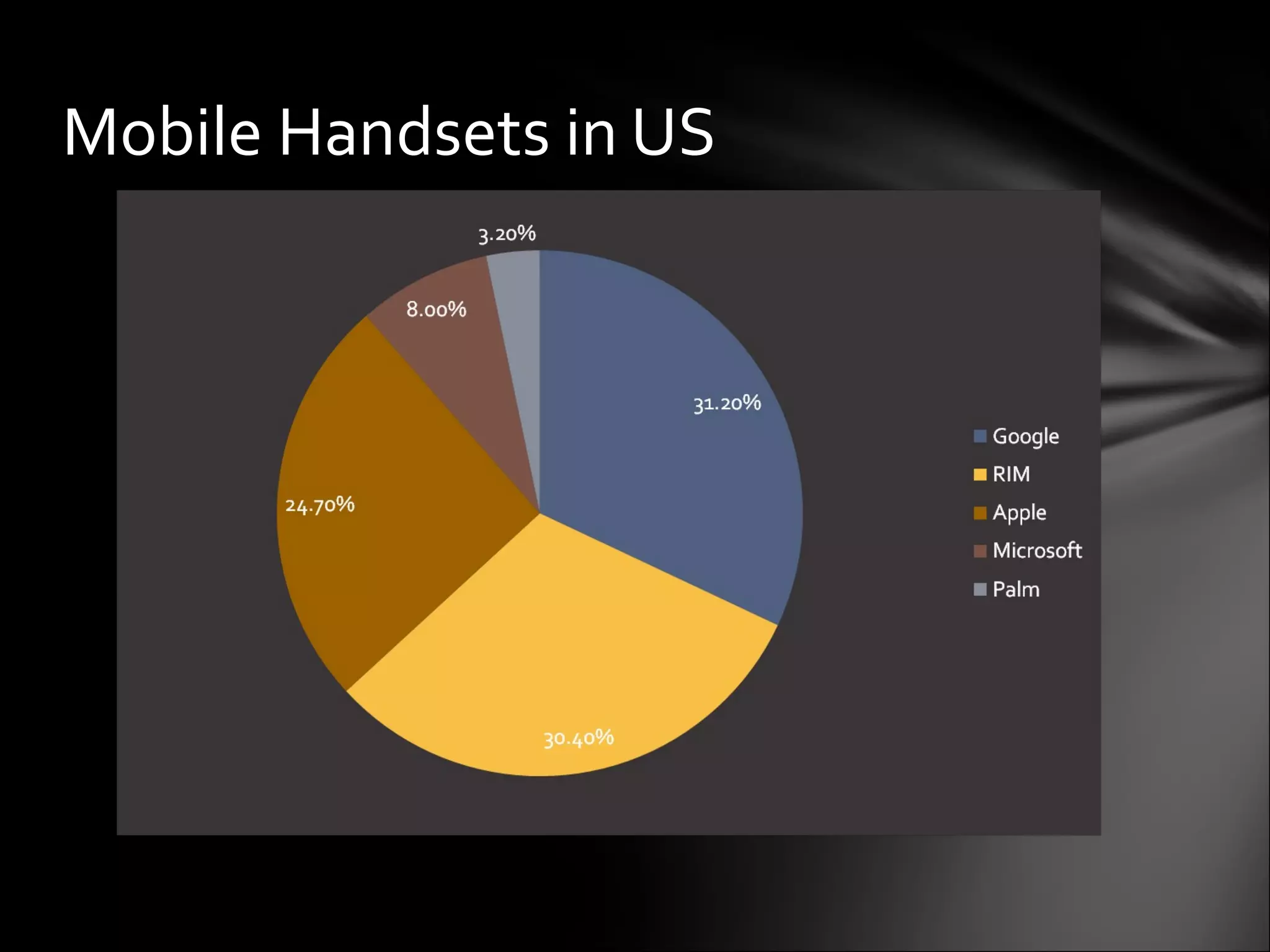
Mobile Handsets in US
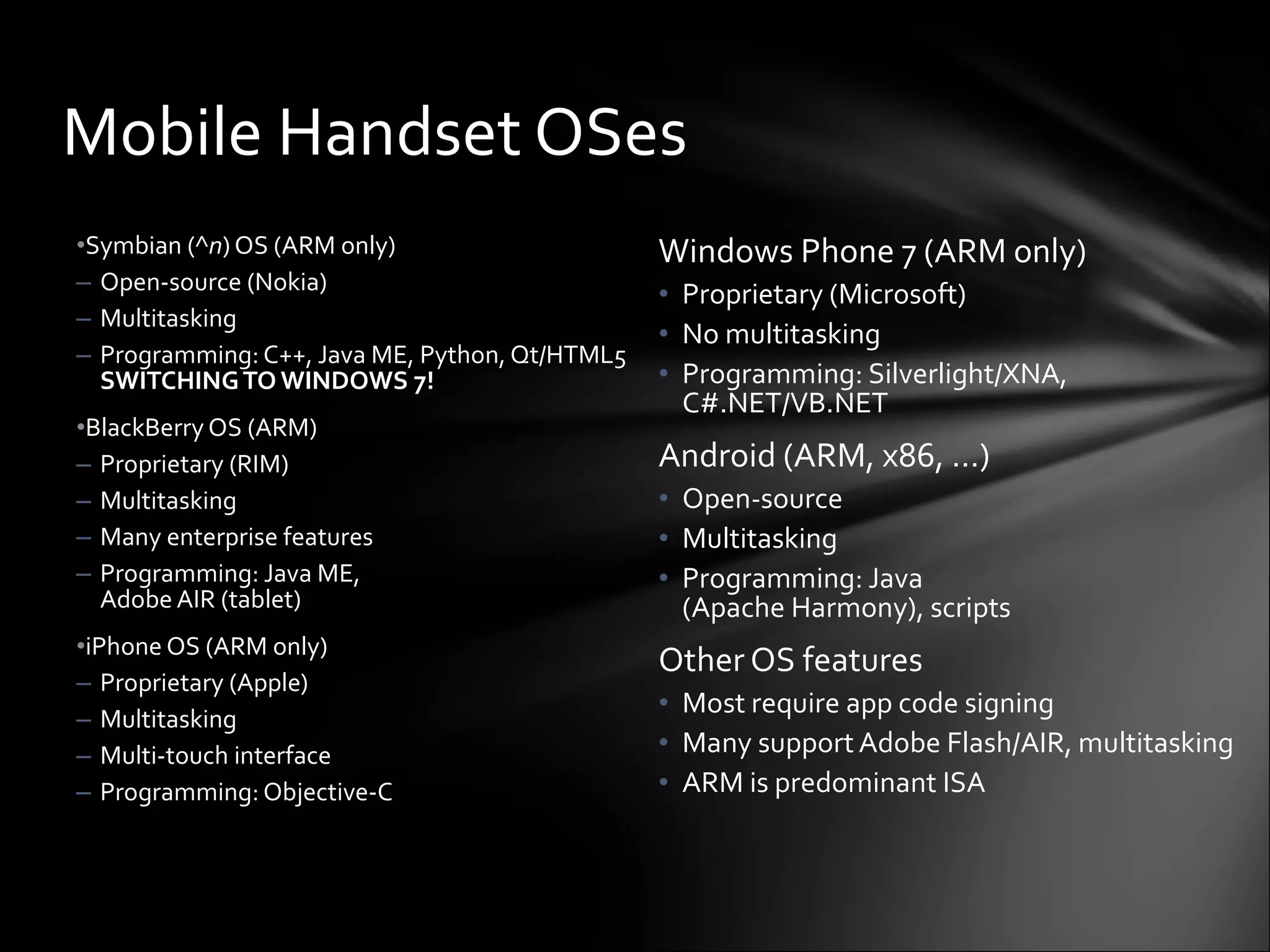
Windows Phone 7 (ARM only) Proprietary (Microsoft) No multitasking Programming: Silverlight/XNA, C#.NET/VB.NET Android (ARM, x86, …) Open-source Multitasking Programming: Java  (Apache Harmony), scripts Other OS features Most require app code signing Many support Adobe Flash/AIR, multitasking ARM is predominant ISA Symbian (^ n ) OS (ARM only) Open-source (Nokia) Multitasking Programming: C++, Java ME, Python, Qt/HTML5 SWITCHING TO WINDOWS 7! BlackBerry OS (ARM) Proprietary (RIM) Multitasking Many enterprise features Programming: Java ME,  Adobe AIR (tablet) iPhone OS (ARM only) Proprietary (Apple) Multitasking Multi-touch interface Programming: Objective-C Mobile Handset OSes
Originally developed for the iPhone, it has since been extended to support other Apple devices such as the iPod touch, iPad and Apple TV. Apple's App Store contains more than 300,000 iOS applications iOS 4.3 was released to the public on March 9, 2011, 2 days before the iPad 2. In addition to earlier features, the public release of iOS 4.3 includes many new features such as a Nitro JavaScript engine in Safari, making Safari run up to twice as fast. iOS IOS
Fastest growing mobile OS Over 300,000 Android activations a day Android overtook iOS as the dominant OS in US during 2H 2010 First phone launched HTC G1 in 2008 Currently an OS of choice for Motorola, HTC, Samsung, Sony Ericsson, among others Software updates every few months Android OS ANDROID
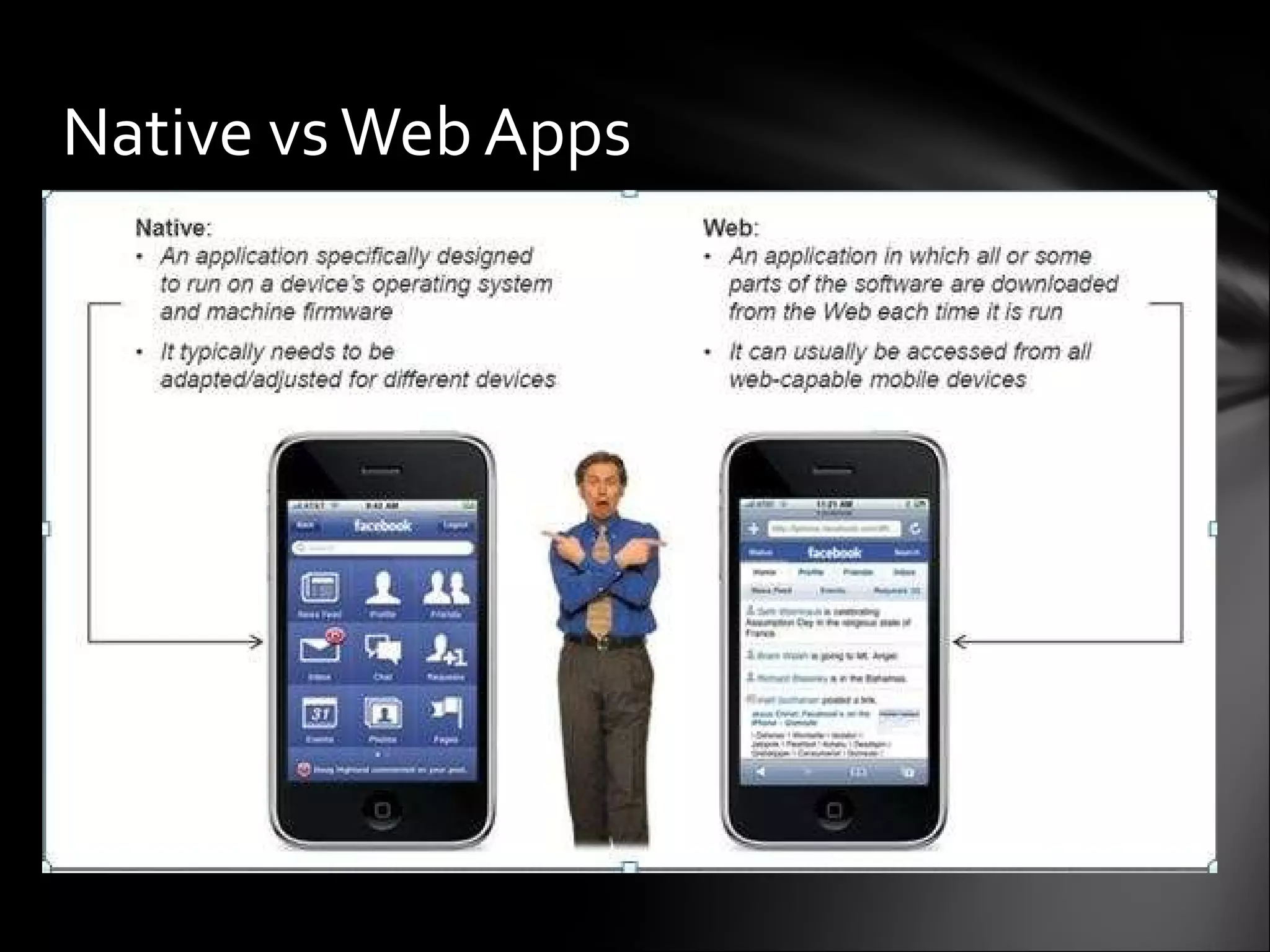
Native vs Web Apps
“ Native” Apps: Written in a programming language for a targeted operating system Apple iOS Devices: iOS SDK, using Objective-C Android Devices: Android SDK, using Java Have access to all features of the hardware Camera, GPS, Accelerometer, Microphone, etc. Are distributed via the respective app “marketplace” iTunes App Store, Android Marketplace iOS apps are subjected to rigorous testing/acceptance process; Android apps are submitted to the Marketplace with little oversight Development fees: Apple: SDK is free (registration required), $99 to submit apps to App Store Android: SDK is free, $25 to submit apps to Android Marketplace Native vs Web Apps
“ Web” Apps: Web-based applications written with traditional web programming languages HTML/CSS, Javascript, PHP/.NET/JSP Have limited access to device hardware (depends on platform) Can be used cross-platform (some restrictions apply) Most are intended to be used when the device is online; some have capabilities for offline use Most platforms have some semblance of a “web app store,” but the stores and their contents vary widely No centralized marketplace for all platforms Native Vs. Web Apps
$$$ (or the potential for $$$) iOS App Store provides a “filter” for apps, so users have at least one means of gauging their worth All app marketplaces provide ratings, comments, rankings Interacting with the hardware provides significant app potential Users have been “trained” to search the markets first Native Apps: Why so Popular? NATIVE
Can produce vivid, dynamic websites with high levels of interaction Can integrate web services (no need for local data sources) HTML5 affords video, audio input CSS3 includes animation, some 3D rendering No need for Flash (!!!!!!) Browser support varies widely Most data-driven features require the app to be used “online” Web Apps: Html 5 + CSS3 + Javascript DEVELOPMENT
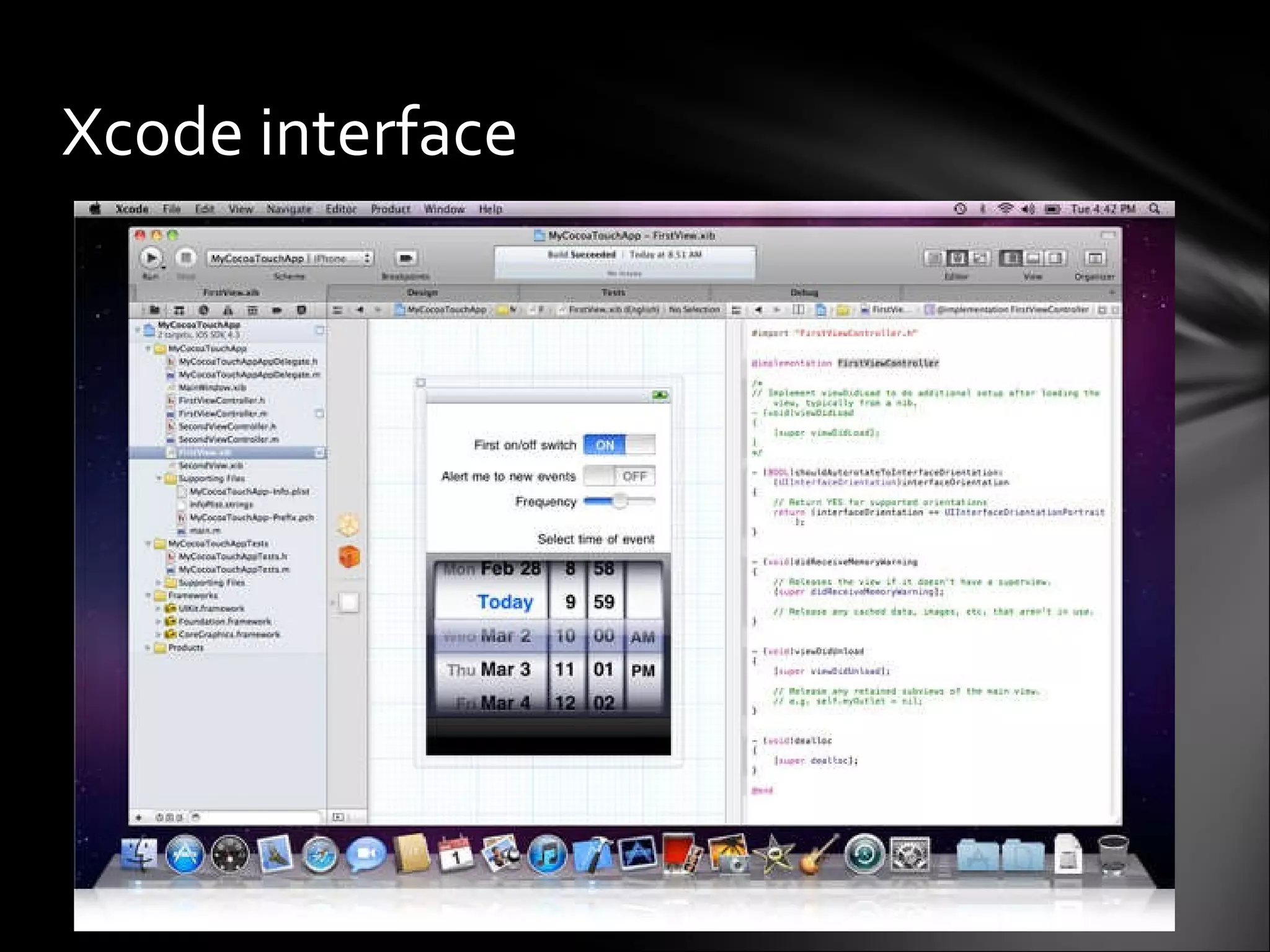
Free with Apple SDK registration Provides means to create Mac “widgets” and Safari/Mobile Safari web apps Gives developers a nice IDE for web app development Includes images and usage guidelines to create a native iOS-looking web app Produces web apps that look like iOS apps on any other mobile browser Xcode DEVELOPMENT
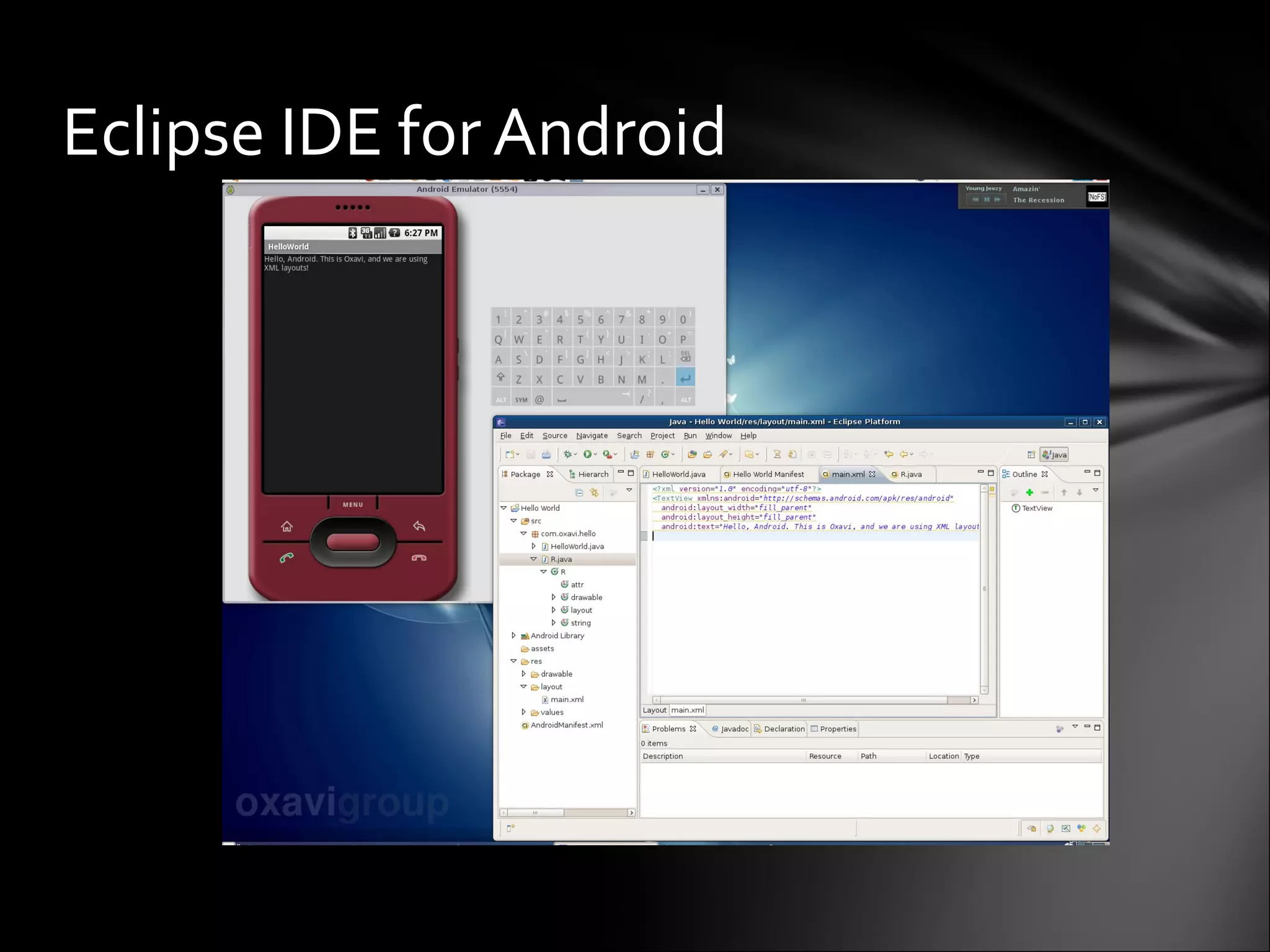
Eclipse IDE for Android
Xcode interface
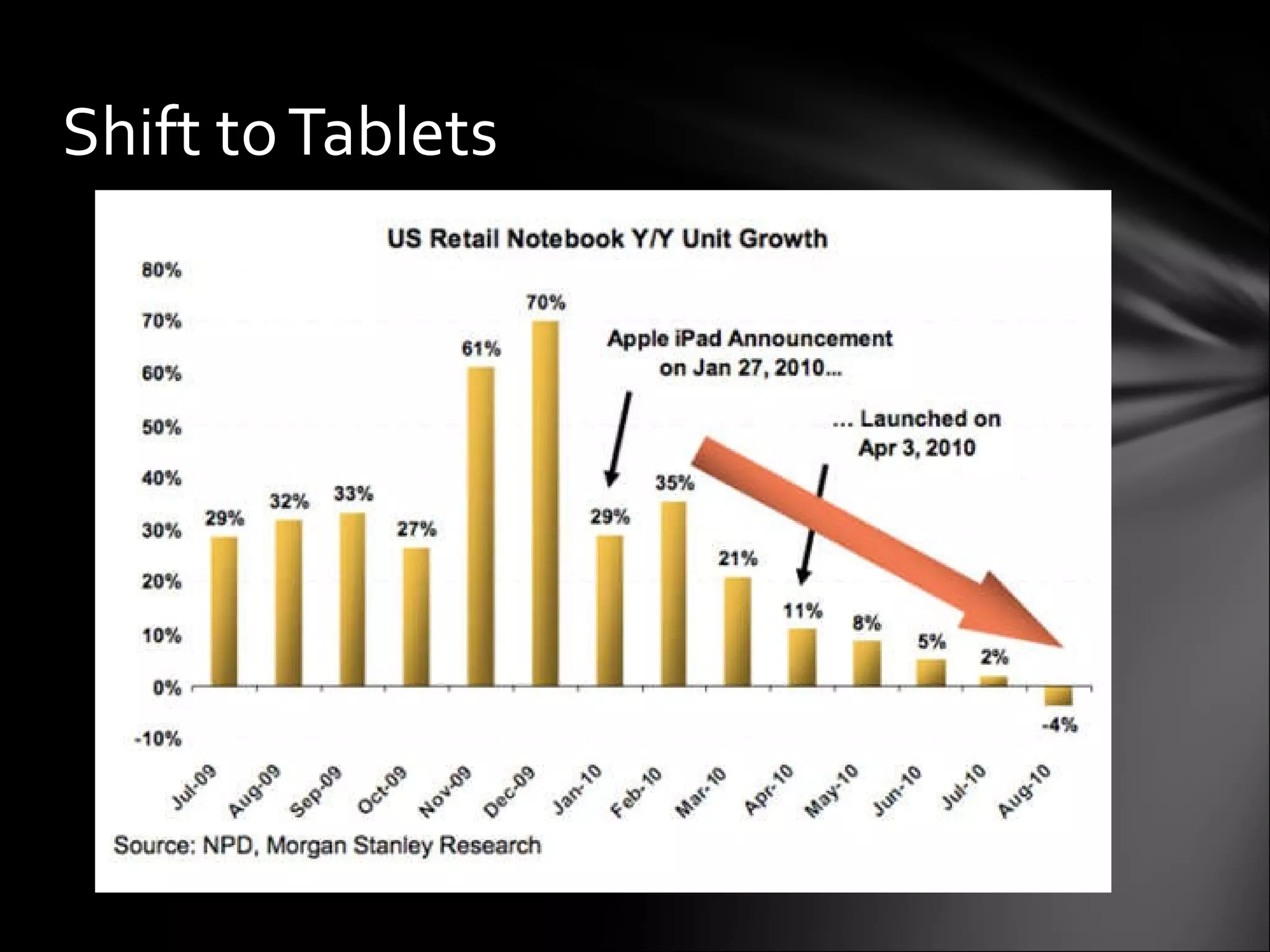
Shift to Tablets
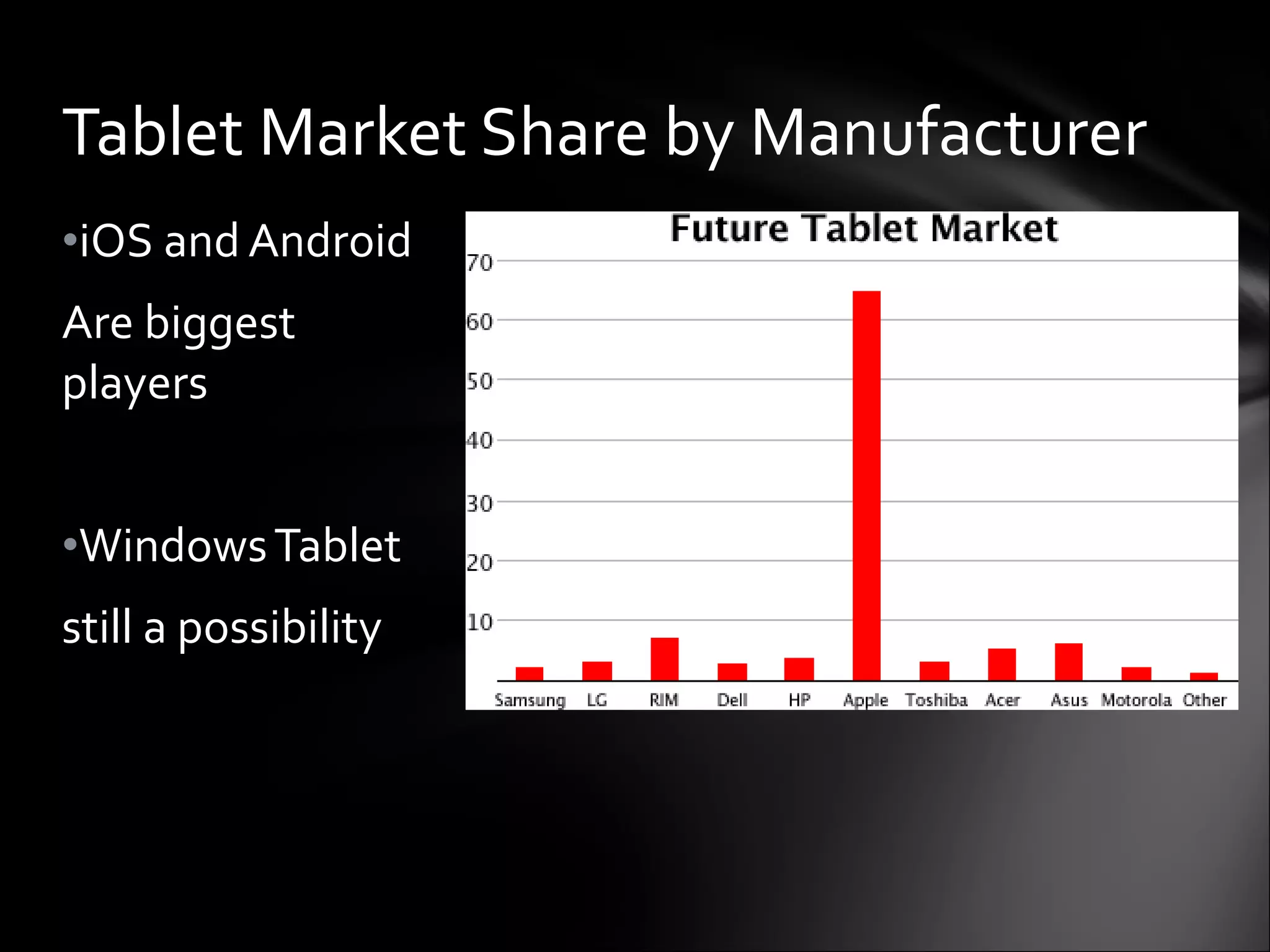
iOS and Android  Are biggest players Windows Tablet  still a possibility Tablet Market Share by Manufacturer
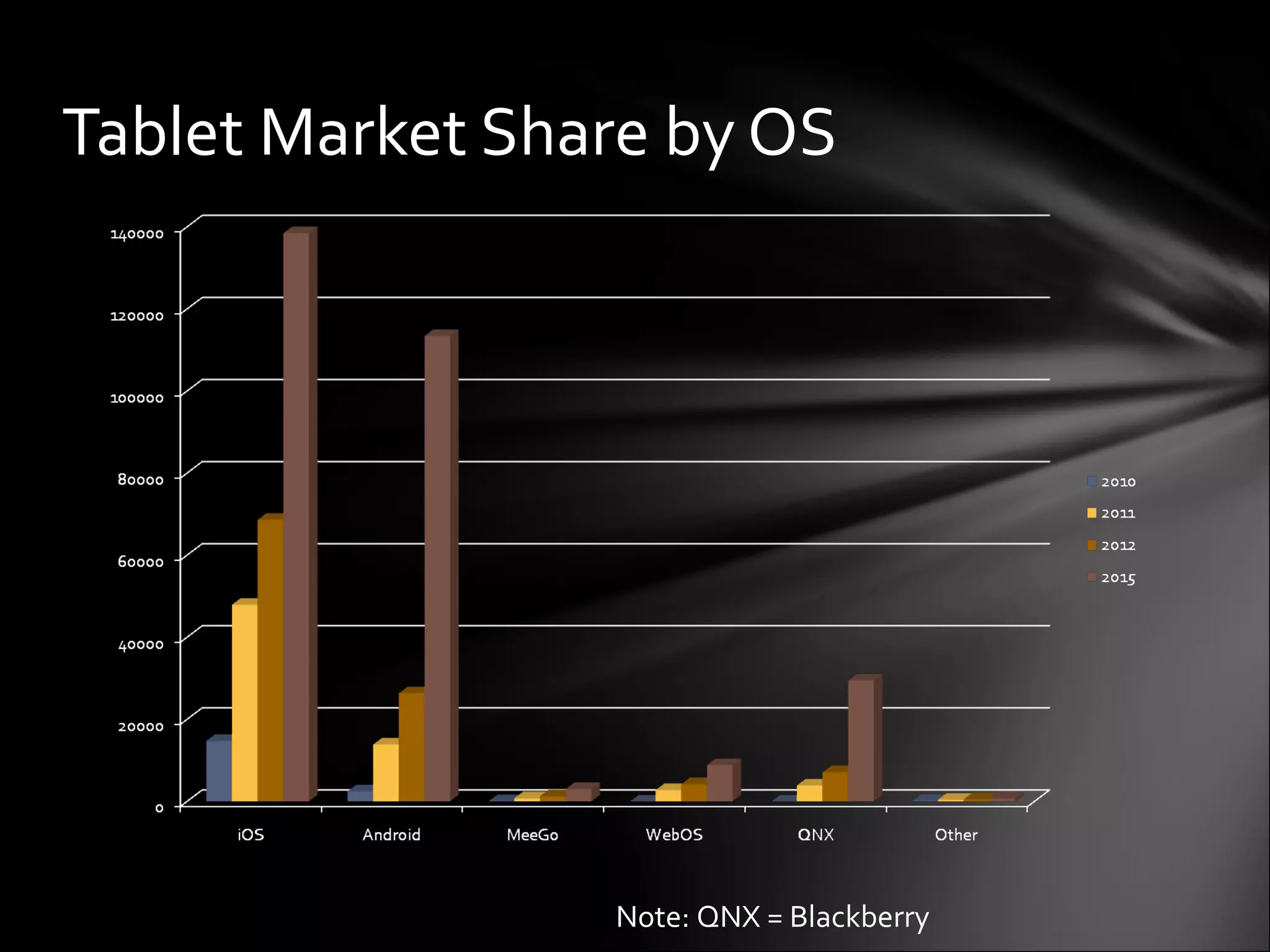
Tablet Market Share by OS Note: QNX = Blackberry
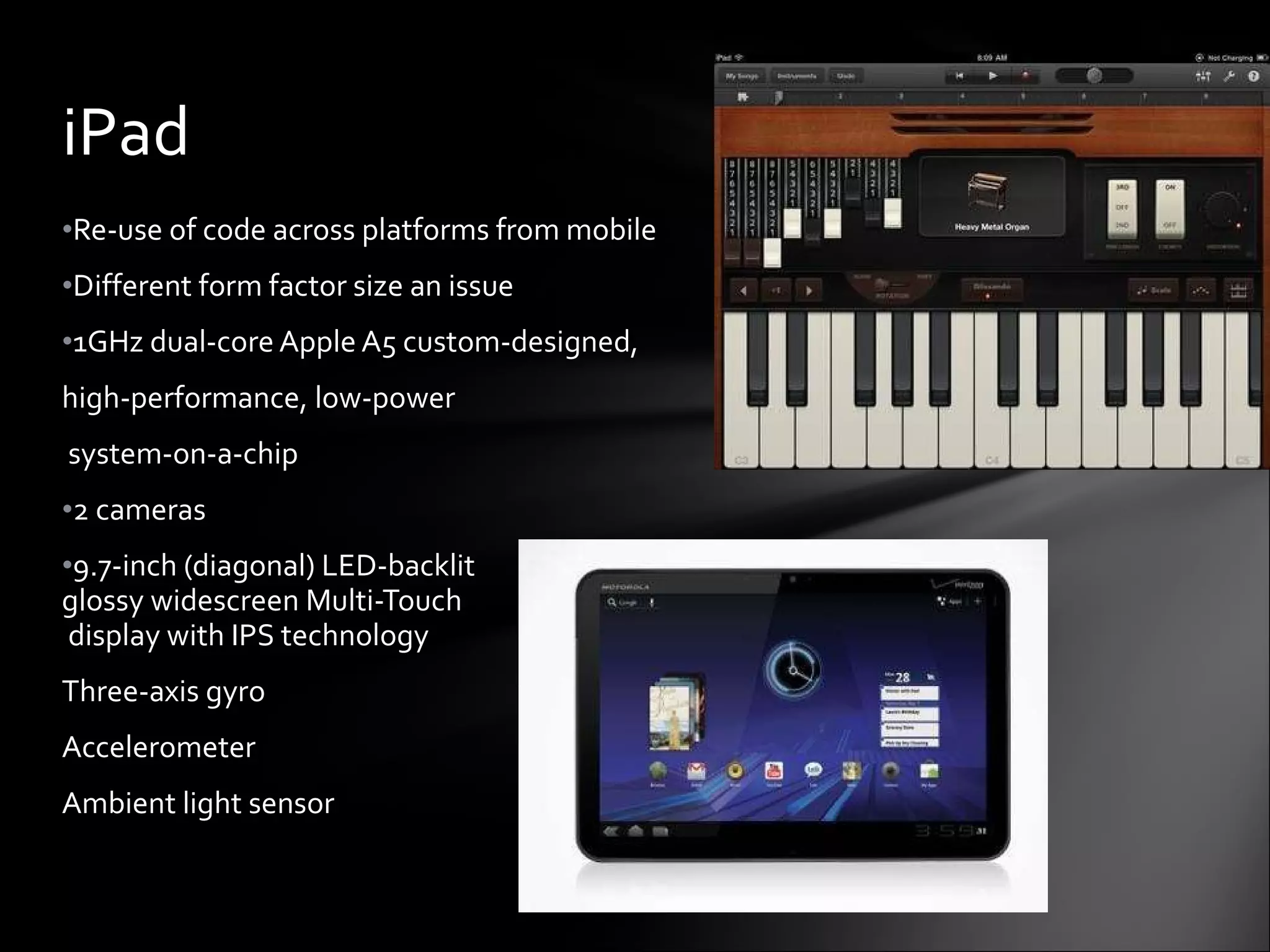
Re-use of code across platforms from mobile Different form factor size an issue 1GHz dual-core Apple A5 custom-designed,  high-performance, low-power system-on-a-chip 2 cameras 9.7-inch (diagonal) LED-backlit  glossy widescreen Multi-Touch  display with IPS technology Three-axis gyro Accelerometer Ambient light sensor iPad
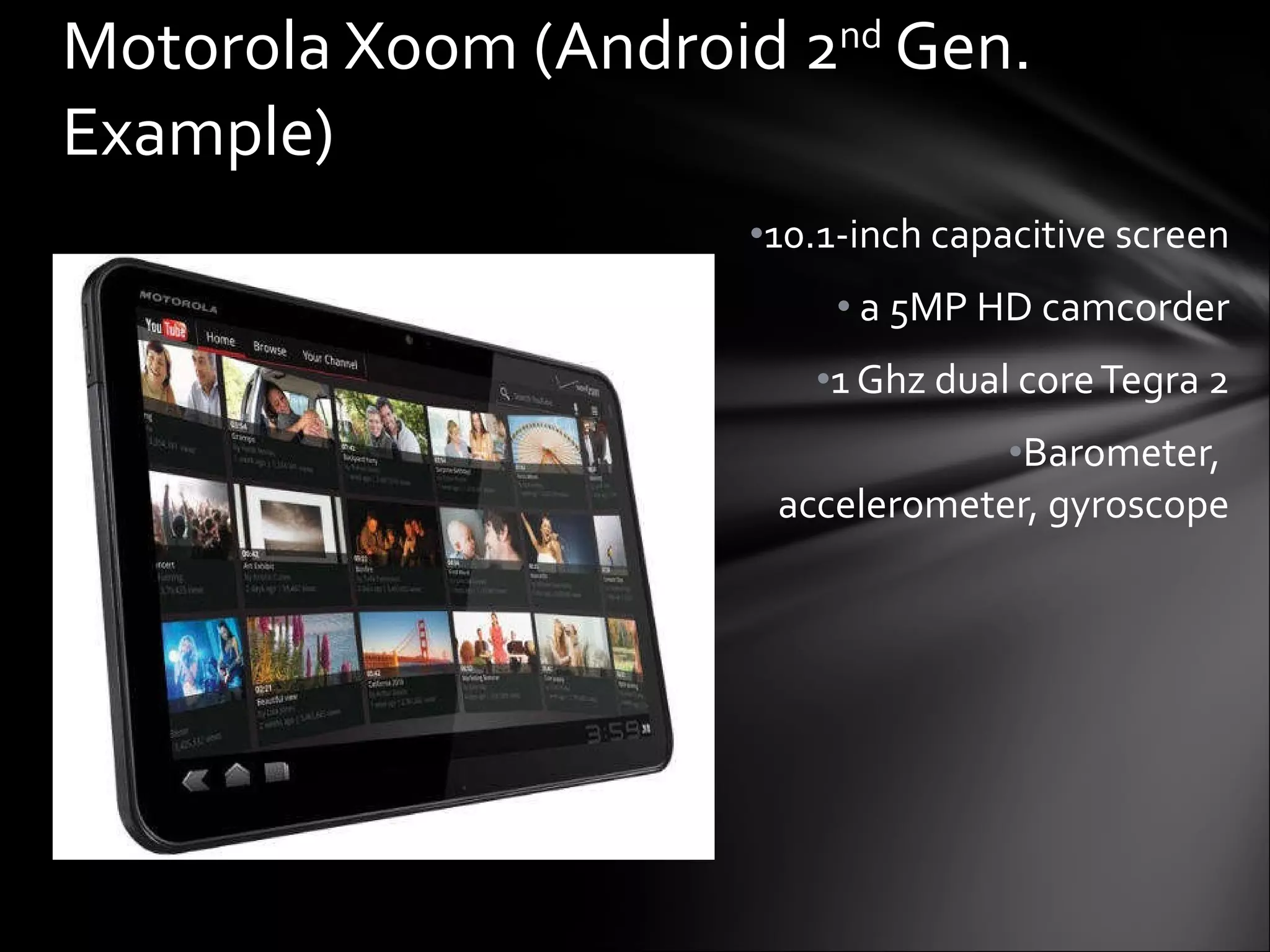
10.1-inch capacitive screen a 5MP HD camcorder 1 Ghz dual core Tegra 2 Barometer,  accelerometer, gyroscope Motorola Xoom (Android 2 nd  Gen. Example)
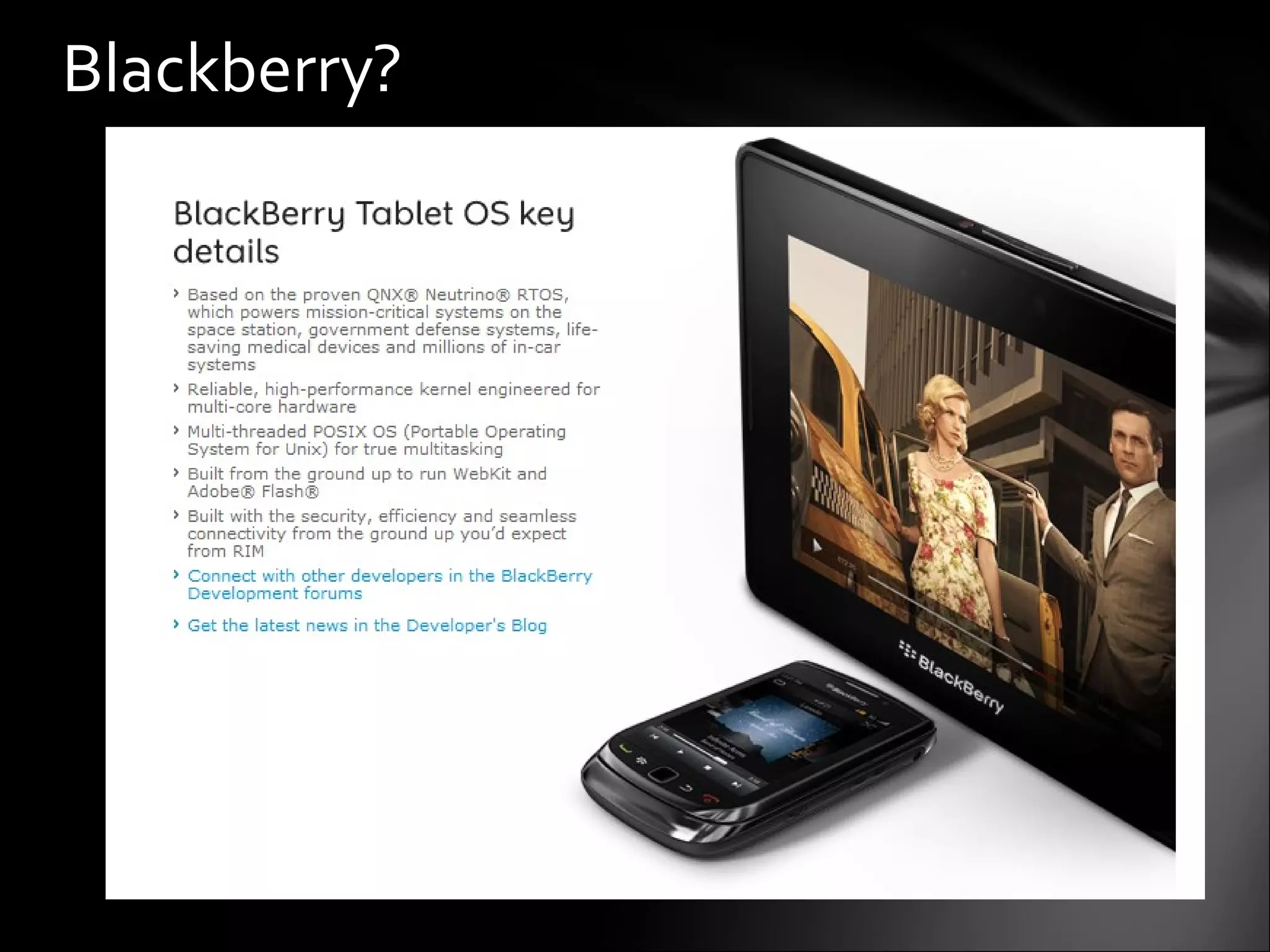
Blackberry?
“ Apparently  Apple  has agreed to a price three to four times higher than normal in exchange for reserving a large portion of the highest quality screens the manufacturer.” Apple’s Lead in the Tablet Market   Apple’s network of retail stores , with knowledgeable employees and  the periodic hysteria-inducing product, you can interact with the  iPad inside the  friendly confines of an Apple Store cannot be matched by competitors  at the Staples, Walmarts and Best Buys of the world.   •  Apple has put together a  decent moat on pricing , so much so  that Asus declared  no intention of jumping into the tablet market.  •  Also, integration of software. The presence of dozens of killer apps,  downloadable immediately – or in many cases, already in the possession of the  owners of iPhone or Touch devices
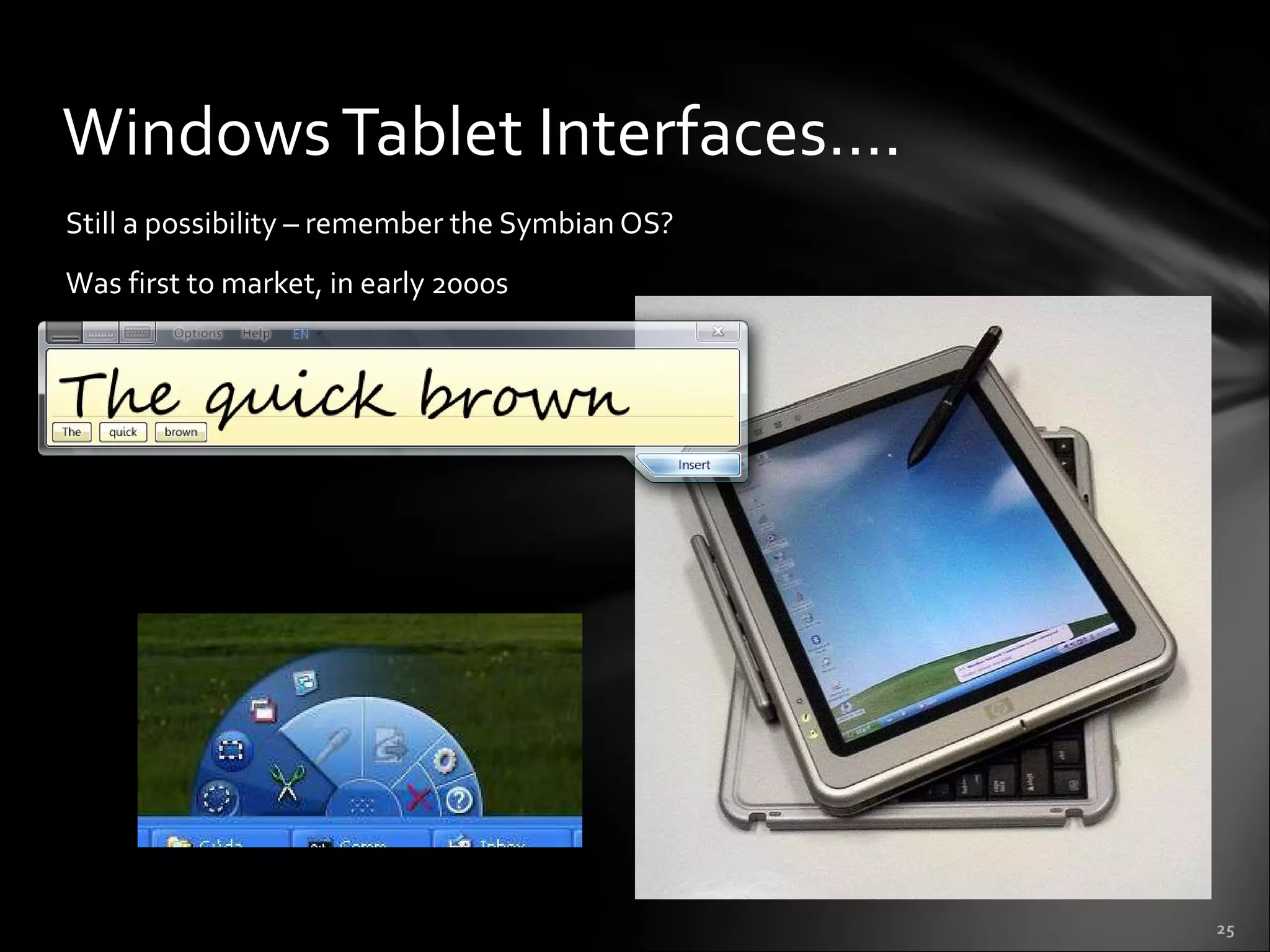
Windows Tablet Interfaces…. Still a possibility – remember the Symbian OS? Was first to market, in early 2000s
Still can use Eclipse and Xcode (or Visual Studio for Windows) However, 7 or 10 inch form factor? Still debatable Applications for data entry (POS, Medical) Next gaming platform? Replacement for netbooks/laptops? Developing for Tablet
Mobile apps/platforms are still changing, even as they mature Tablets are still in a state of flux Possible code-reuse, however form factors aren’t the same Shift from laptops to tablets? In conclusion

Mobile and Tablet App Development and Market Share

  • 1.
    Jeremy Callinan Protocol80 / Omnis Technologies / Syncrate
  • 2.
    About Me MobileDevelopment Tablet Development Overview of today
  • 3.
  • 4.
    Anything less than7 inches in screen size Phones PDAs Ipods Ipod Touch GPS devices What is mobile?
  • 5.
    Key mobile OSes:Symbian OS BlackBerry OS Google Android Apple iOS Windows Phone 7 (formerly Windows Mobile) Others include: HP Palm webOS Samsung bada Mobile Handset OSes Globally
  • 6.
  • 7.
    Windows Phone 7(ARM only) Proprietary (Microsoft) No multitasking Programming: Silverlight/XNA, C#.NET/VB.NET Android (ARM, x86, …) Open-source Multitasking Programming: Java (Apache Harmony), scripts Other OS features Most require app code signing Many support Adobe Flash/AIR, multitasking ARM is predominant ISA Symbian (^ n ) OS (ARM only) Open-source (Nokia) Multitasking Programming: C++, Java ME, Python, Qt/HTML5 SWITCHING TO WINDOWS 7! BlackBerry OS (ARM) Proprietary (RIM) Multitasking Many enterprise features Programming: Java ME, Adobe AIR (tablet) iPhone OS (ARM only) Proprietary (Apple) Multitasking Multi-touch interface Programming: Objective-C Mobile Handset OSes
  • 8.
    Originally developed forthe iPhone, it has since been extended to support other Apple devices such as the iPod touch, iPad and Apple TV. Apple's App Store contains more than 300,000 iOS applications iOS 4.3 was released to the public on March 9, 2011, 2 days before the iPad 2. In addition to earlier features, the public release of iOS 4.3 includes many new features such as a Nitro JavaScript engine in Safari, making Safari run up to twice as fast. iOS IOS
  • 9.
    Fastest growing mobileOS Over 300,000 Android activations a day Android overtook iOS as the dominant OS in US during 2H 2010 First phone launched HTC G1 in 2008 Currently an OS of choice for Motorola, HTC, Samsung, Sony Ericsson, among others Software updates every few months Android OS ANDROID
  • 10.
  • 11.
    “ Native” Apps:Written in a programming language for a targeted operating system Apple iOS Devices: iOS SDK, using Objective-C Android Devices: Android SDK, using Java Have access to all features of the hardware Camera, GPS, Accelerometer, Microphone, etc. Are distributed via the respective app “marketplace” iTunes App Store, Android Marketplace iOS apps are subjected to rigorous testing/acceptance process; Android apps are submitted to the Marketplace with little oversight Development fees: Apple: SDK is free (registration required), $99 to submit apps to App Store Android: SDK is free, $25 to submit apps to Android Marketplace Native vs Web Apps
  • 12.
    “ Web” Apps:Web-based applications written with traditional web programming languages HTML/CSS, Javascript, PHP/.NET/JSP Have limited access to device hardware (depends on platform) Can be used cross-platform (some restrictions apply) Most are intended to be used when the device is online; some have capabilities for offline use Most platforms have some semblance of a “web app store,” but the stores and their contents vary widely No centralized marketplace for all platforms Native Vs. Web Apps
  • 13.
    $$$ (or thepotential for $$$) iOS App Store provides a “filter” for apps, so users have at least one means of gauging their worth All app marketplaces provide ratings, comments, rankings Interacting with the hardware provides significant app potential Users have been “trained” to search the markets first Native Apps: Why so Popular? NATIVE
  • 14.
    Can produce vivid,dynamic websites with high levels of interaction Can integrate web services (no need for local data sources) HTML5 affords video, audio input CSS3 includes animation, some 3D rendering No need for Flash (!!!!!!) Browser support varies widely Most data-driven features require the app to be used “online” Web Apps: Html 5 + CSS3 + Javascript DEVELOPMENT
  • 15.
    Free with AppleSDK registration Provides means to create Mac “widgets” and Safari/Mobile Safari web apps Gives developers a nice IDE for web app development Includes images and usage guidelines to create a native iOS-looking web app Produces web apps that look like iOS apps on any other mobile browser Xcode DEVELOPMENT
  • 16.
  • 17.
  • 18.
  • 19.
    iOS and Android Are biggest players Windows Tablet still a possibility Tablet Market Share by Manufacturer
  • 20.
    Tablet Market Shareby OS Note: QNX = Blackberry
  • 21.
    Re-use of codeacross platforms from mobile Different form factor size an issue 1GHz dual-core Apple A5 custom-designed, high-performance, low-power system-on-a-chip 2 cameras 9.7-inch (diagonal) LED-backlit glossy widescreen Multi-Touch display with IPS technology Three-axis gyro Accelerometer Ambient light sensor iPad
  • 22.
    10.1-inch capacitive screena 5MP HD camcorder 1 Ghz dual core Tegra 2 Barometer, accelerometer, gyroscope Motorola Xoom (Android 2 nd Gen. Example)
  • 23.
  • 24.
    “ Apparently  Apple has agreed to a price three to four times higher than normal in exchange for reserving a large portion of the highest quality screens the manufacturer.” Apple’s Lead in the Tablet Market   Apple’s network of retail stores , with knowledgeable employees and the periodic hysteria-inducing product, you can interact with the iPad inside the friendly confines of an Apple Store cannot be matched by competitors at the Staples, Walmarts and Best Buys of the world.   • Apple has put together a decent moat on pricing , so much so that Asus declared no intention of jumping into the tablet market. • Also, integration of software. The presence of dozens of killer apps, downloadable immediately – or in many cases, already in the possession of the owners of iPhone or Touch devices
  • 25.
    Windows Tablet Interfaces….Still a possibility – remember the Symbian OS? Was first to market, in early 2000s
  • 26.
    Still can useEclipse and Xcode (or Visual Studio for Windows) However, 7 or 10 inch form factor? Still debatable Applications for data entry (POS, Medical) Next gaming platform? Replacement for netbooks/laptops? Developing for Tablet
  • 27.
    Mobile apps/platforms arestill changing, even as they mature Tablets are still in a state of flux Possible code-reuse, however form factors aren’t the same Shift from laptops to tablets? In conclusion

Editor's Notes

  • #26 04/12/11 02:13 ©2005 Microsoft Corporation. All rights reserved. This presentation is for informational purposes only. Microsoft makes no warranties, express or implied, in this summary.