Your Next Mission
Definition
Media literacy:

The ability to

•   Access

•   Analyze

•   Evaluate

•   Create

•   Participate

With media messages

In all their forms
Media Types
•   Books

•   Periodicals

•   Video productions

•   Audio productions

•   Photographs

Each of these has several
subcategories and
permutations, and can be used
for a wide variety of purposes
Access
•   We are bombarded by
    information every day

•   We use a variety of media for
    entertainment

•   We also seek it out on our own

•   What are the messages we are
    getting?
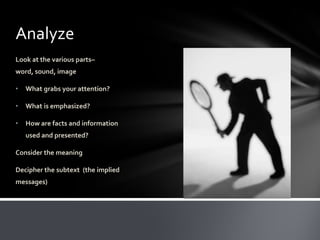
Analyze
Look at the various parts–
word, sound, image

•   What grabs your attention?

•   What is emphasized?

•   How are facts and information
    used and presented?

Consider the meaning

Decipher the subtext (the implied
messages)
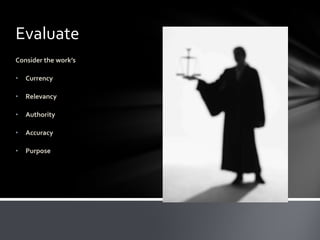
Evaluate
Consider the work’s

•   Currency

•   Relevancy

•   Authority

•   Accuracy

•   Purpose
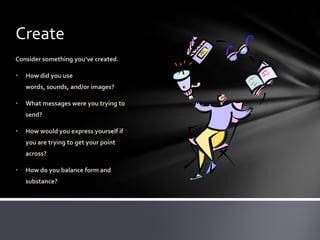
Create
Consider something you’ve created.

•   How did you use
    words, sounds, and/or images?

•   What messages were you trying to
    send?

•   How would you express yourself if
    you are trying to get your point
    across?

•   How do you balance form and
    substance?
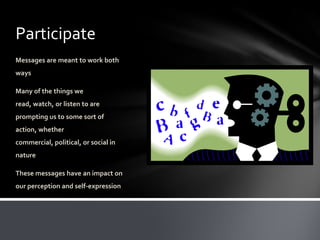
Participate
Messages are meant to work both
ways

Many of the things we
read, watch, or listen to are
prompting us to some sort of
action, whether
commercial, political, or social in
nature

These messages have an impact on
our perception and self-expression
For the next few weeks…
We will focus on

•   Accessing,

•   Analyzing, and

•   Evaluating

Messages we receive through
various media
Your Mission
Choose a topic. Here are some examples:
• How are blended families with school age children portrayed?
• How does the media portray feminine beauty?
• What is considered a role model in our society?


Remember, you are not LOOKING FOR TRUTH.
You are analyzing and evaluating
• how the many messages we come across daily shape people’s perception
  of many big ideas, and
• how those messages are put together.
This will help you develop a critical eye and a great brain!

ML Intro

  • 1.
  • 2.
    Definition Media literacy: The abilityto • Access • Analyze • Evaluate • Create • Participate With media messages In all their forms
  • 3.
    Media Types • Books • Periodicals • Video productions • Audio productions • Photographs Each of these has several subcategories and permutations, and can be used for a wide variety of purposes
  • 4.
    Access • We are bombarded by information every day • We use a variety of media for entertainment • We also seek it out on our own • What are the messages we are getting?
  • 5.
    Analyze Look at thevarious parts– word, sound, image • What grabs your attention? • What is emphasized? • How are facts and information used and presented? Consider the meaning Decipher the subtext (the implied messages)
  • 6.
    Evaluate Consider the work’s • Currency • Relevancy • Authority • Accuracy • Purpose
  • 7.
    Create Consider something you’vecreated. • How did you use words, sounds, and/or images? • What messages were you trying to send? • How would you express yourself if you are trying to get your point across? • How do you balance form and substance?
  • 8.
    Participate Messages are meantto work both ways Many of the things we read, watch, or listen to are prompting us to some sort of action, whether commercial, political, or social in nature These messages have an impact on our perception and self-expression
  • 9.
    For the nextfew weeks… We will focus on • Accessing, • Analyzing, and • Evaluating Messages we receive through various media
  • 10.
    Your Mission Choose atopic. Here are some examples: • How are blended families with school age children portrayed? • How does the media portray feminine beauty? • What is considered a role model in our society? Remember, you are not LOOKING FOR TRUTH. You are analyzing and evaluating • how the many messages we come across daily shape people’s perception of many big ideas, and • how those messages are put together. This will help you develop a critical eye and a great brain!