Indian Institute Of Learning & Advanced Development

Present by :
Mithilesh sigh
Jayant Sharma
Bhavasha Rana
Dipul Mandole

Present no:MJBD Pvt. Ltd.
(Service Industry)
MJBD Pvt. Ltd.
(Service Industry )

Provide the service as a given the rent car , equipment , or
other wise any hotels or Events company have any purchase
think then also company provide service
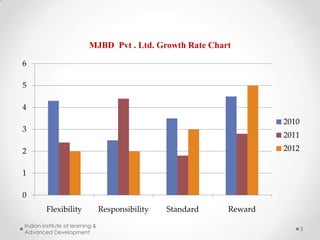
MJBD Pvt . Ltd. Growth Rate Chart
6
5
4

2010

3

2011
2012

2
1

0
Flexibility
Indian institute of learning &
Advanced Development

Responsibility

Standard

Reward
3
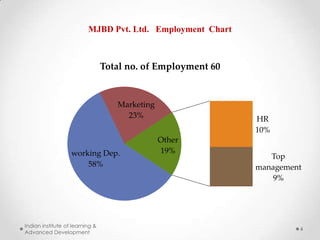
MJBD Pvt. Ltd. Employment Chart

Total no. of Employment 60

Marketing
23%

working Dep.
58%

Indian institute of learning &
Advanced Development

HR
10%
Other
19%

Top
management
9%

4
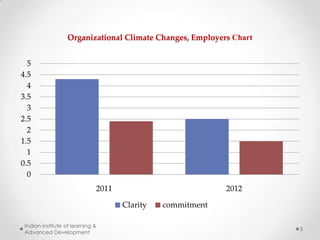
Organizational Climate Changes, Employers Chart
5
4.5
4
3.5
3
2.5
2
1.5
1
0.5
0

2011

2012
Clarity

Indian institute of learning &
Advanced Development

commitment
5
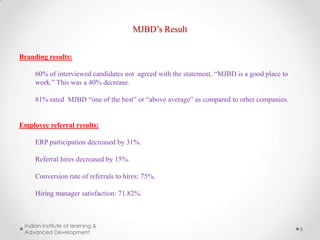
MJBD’s Result
Branding results:
60% of interviewed candidates not agreed with the statement, “MJBD is a good place to
work.” This was a 40% decrease.
81% rated MJBD “one of the best” or “above average” as compared to other companies.

Employee referral results:
ERP participation decreased by 31%.
Referral hires decreased by 15%.
Conversion rate of referrals to hires: 75%.
Hiring manager satisfaction: 71.82%.

Indian institute of learning &
Advanced Development

6
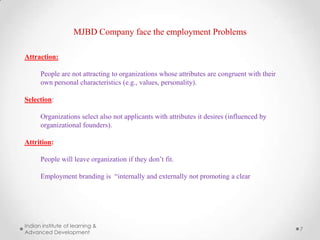
MJBD Company face the employment Problems
Attraction:
People are not attracting to organizations whose attributes are congruent with their
own personal characteristics (e.g., values, personality).
Selection:
Organizations select also not applicants with attributes it desires (influenced by
organizational founders).
Attrition:
People will leave organization if they don’t fit.
Employment branding is “internally and externally not promoting a clear

Indian institute of learning &
Advanced Development

7
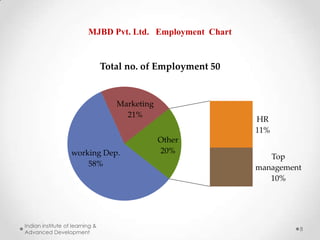
MJBD Pvt. Ltd. Employment Chart

Total no. of Employment 50

Marketing
21%

working Dep.
58%

Indian institute of learning &
Advanced Development

HR
11%
Other
20%

Top
management
10%

8
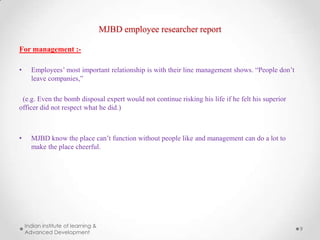
MJBD employee researcher report
For management :•

Employees’ most important relationship is with their line management shows. “People don’t
leave companies,”

(e.g. Even the bomb disposal expert would not continue risking his life if he felt his superior
officer did not respect what he did.)

•

MJBD know the place can’t function without people like and management can do a lot to
make the place cheerful.

Indian institute of learning &
Advanced Development

9
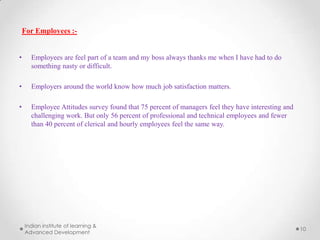
For Employees :•

Employees are feel part of a team and my boss always thanks me when I have had to do
something nasty or difficult.

•

Employers around the world know how much job satisfaction matters.

•

Employee Attitudes survey found that 75 percent of managers feel they have interesting and
challenging work. But only 56 percent of professional and technical employees and fewer
than 40 percent of clerical and hourly employees feel the same way.

Indian institute of learning &
Advanced Development

10
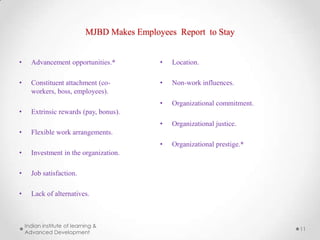
MJBD Makes Employees Report to Stay
•

Advancement opportunities.*

•

Location.

•

Constituent attachment (coworkers, boss, employees).

•

Non-work influences.

•

Organizational commitment.

•

Organizational justice.

•

Organizational prestige.*

•
•

Extrinsic rewards (pay, bonus).
Flexible work arrangements.

•

Investment in the organization.

•

Job satisfaction.

•

Lack of alternatives.

Indian institute of learning &
Advanced Development

11
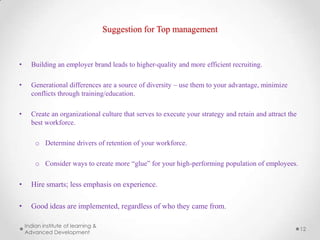
Suggestion for Top management

•

Building an employer brand leads to higher-quality and more efficient recruiting.

•

Generational differences are a source of diversity – use them to your advantage, minimize
conflicts through training/education.

•

Create an organizational culture that serves to execute your strategy and retain and attract the
best workforce.
o Determine drivers of retention of your workforce.
o Consider ways to create more “glue” for your high-performing population of employees.

•

Hire smarts; less emphasis on experience.

•

Good ideas are implemented, regardless of who they came from.
Indian institute of learning &
Advanced Development

12
• Each day is a gift, smile and be thankful that you are a

part of the bigger picture.

Indian institute of learning &
Advanced Development

13

Mjbd pvt. ltd.

  • 1.
    Indian Institute OfLearning & Advanced Development Present by : Mithilesh sigh Jayant Sharma Bhavasha Rana Dipul Mandole Present no:MJBD Pvt. Ltd. (Service Industry)
  • 2.
    MJBD Pvt. Ltd. (ServiceIndustry ) Provide the service as a given the rent car , equipment , or other wise any hotels or Events company have any purchase think then also company provide service
  • 3.
    MJBD Pvt .Ltd. Growth Rate Chart 6 5 4 2010 3 2011 2012 2 1 0 Flexibility Indian institute of learning & Advanced Development Responsibility Standard Reward 3
  • 4.
    MJBD Pvt. Ltd.Employment Chart Total no. of Employment 60 Marketing 23% working Dep. 58% Indian institute of learning & Advanced Development HR 10% Other 19% Top management 9% 4
  • 5.
    Organizational Climate Changes,Employers Chart 5 4.5 4 3.5 3 2.5 2 1.5 1 0.5 0 2011 2012 Clarity Indian institute of learning & Advanced Development commitment 5
  • 6.
    MJBD’s Result Branding results: 60%of interviewed candidates not agreed with the statement, “MJBD is a good place to work.” This was a 40% decrease. 81% rated MJBD “one of the best” or “above average” as compared to other companies. Employee referral results: ERP participation decreased by 31%. Referral hires decreased by 15%. Conversion rate of referrals to hires: 75%. Hiring manager satisfaction: 71.82%. Indian institute of learning & Advanced Development 6
  • 7.
    MJBD Company facethe employment Problems Attraction: People are not attracting to organizations whose attributes are congruent with their own personal characteristics (e.g., values, personality). Selection: Organizations select also not applicants with attributes it desires (influenced by organizational founders). Attrition: People will leave organization if they don’t fit. Employment branding is “internally and externally not promoting a clear Indian institute of learning & Advanced Development 7
  • 8.
    MJBD Pvt. Ltd.Employment Chart Total no. of Employment 50 Marketing 21% working Dep. 58% Indian institute of learning & Advanced Development HR 11% Other 20% Top management 10% 8
  • 9.
    MJBD employee researcherreport For management :• Employees’ most important relationship is with their line management shows. “People don’t leave companies,” (e.g. Even the bomb disposal expert would not continue risking his life if he felt his superior officer did not respect what he did.) • MJBD know the place can’t function without people like and management can do a lot to make the place cheerful. Indian institute of learning & Advanced Development 9
  • 10.
    For Employees :• Employeesare feel part of a team and my boss always thanks me when I have had to do something nasty or difficult. • Employers around the world know how much job satisfaction matters. • Employee Attitudes survey found that 75 percent of managers feel they have interesting and challenging work. But only 56 percent of professional and technical employees and fewer than 40 percent of clerical and hourly employees feel the same way. Indian institute of learning & Advanced Development 10
  • 11.
    MJBD Makes EmployeesReport to Stay • Advancement opportunities.* • Location. • Constituent attachment (coworkers, boss, employees). • Non-work influences. • Organizational commitment. • Organizational justice. • Organizational prestige.* • • Extrinsic rewards (pay, bonus). Flexible work arrangements. • Investment in the organization. • Job satisfaction. • Lack of alternatives. Indian institute of learning & Advanced Development 11
  • 12.
    Suggestion for Topmanagement • Building an employer brand leads to higher-quality and more efficient recruiting. • Generational differences are a source of diversity – use them to your advantage, minimize conflicts through training/education. • Create an organizational culture that serves to execute your strategy and retain and attract the best workforce. o Determine drivers of retention of your workforce. o Consider ways to create more “glue” for your high-performing population of employees. • Hire smarts; less emphasis on experience. • Good ideas are implemented, regardless of who they came from. Indian institute of learning & Advanced Development 12
  • 13.
    • Each dayis a gift, smile and be thankful that you are a part of the bigger picture. Indian institute of learning & Advanced Development 13

Editor's Notes

  • #5 1.Working department 59% employee are work .There are work as a Cab Driver / other think also.2. Marketing department 23% employee team are work3. Other dep.18% employee work ( HR & Top Management)
  • #12 A recent study by Hausknecht et al. explored the reasons people stay in their jobs and examined whether there were differences in the reasons given by high versus low performers and by hourly workers versus higher-level employees.The retention factors considered were:Advancement opportunities: The potential for movement to higher levels within the organization.Constituent attachment: The degree of attachment to individuals associated with the organization, such as supervisor, co-workers or customers.Extrinsic rewards: The amount of pay, benefits, or equivalents distributed in return for service.Flexible work arrangements: The nature of the work schedule or hours.Investment in the company: The perceptions about the length of service to the organization.Job satisfaction: The degree to which individuals like their jobs.Lack of alternatives: Beliefs about the unavailability of jobs outside of the organization.Location: The proximity of the workplace relative to one’s home.Non-work influences: The existence of responsibilities and commitments outside of the organization.Organizational commitment: The degree to which individuals identify with and are involved in the organization.Organizational justice: Perceptions about the fairness of reward allocations, policies and procedures, and personal treatment.Organizational prestige: The extent to which the organization is perceived to be reputable and well-regarded.While previous research identified many of these as key retention factors, this study looked at differences in the employee population with regard to drivers of retention. The authors found that advancement opportunities, perceived investments, job satisfaction and organizational prestige were stated as reasons to stay significantly more often by high-performing employees (versus low-performing employees).Moreover, they found differences in the reasons to stay cited by employees at various levels of the organization. For example, hourly workers tended to cite extrinsic rewards as a reason to stay significantly more often than higher-level employees, perhaps due to the more transactional nature of the employment relationship. Higher-level employees cited organizational prestige and advancement opportunities significantly more than did employees at lower organizational levels.