Exploring the Iron & Heart Connection:
Bridging Gaps between ID and HF for Improving Patients’ HRQoL
ID: Iron Deficiency | HF: Heart Failure | HRQoL: Health Related Quality of Life
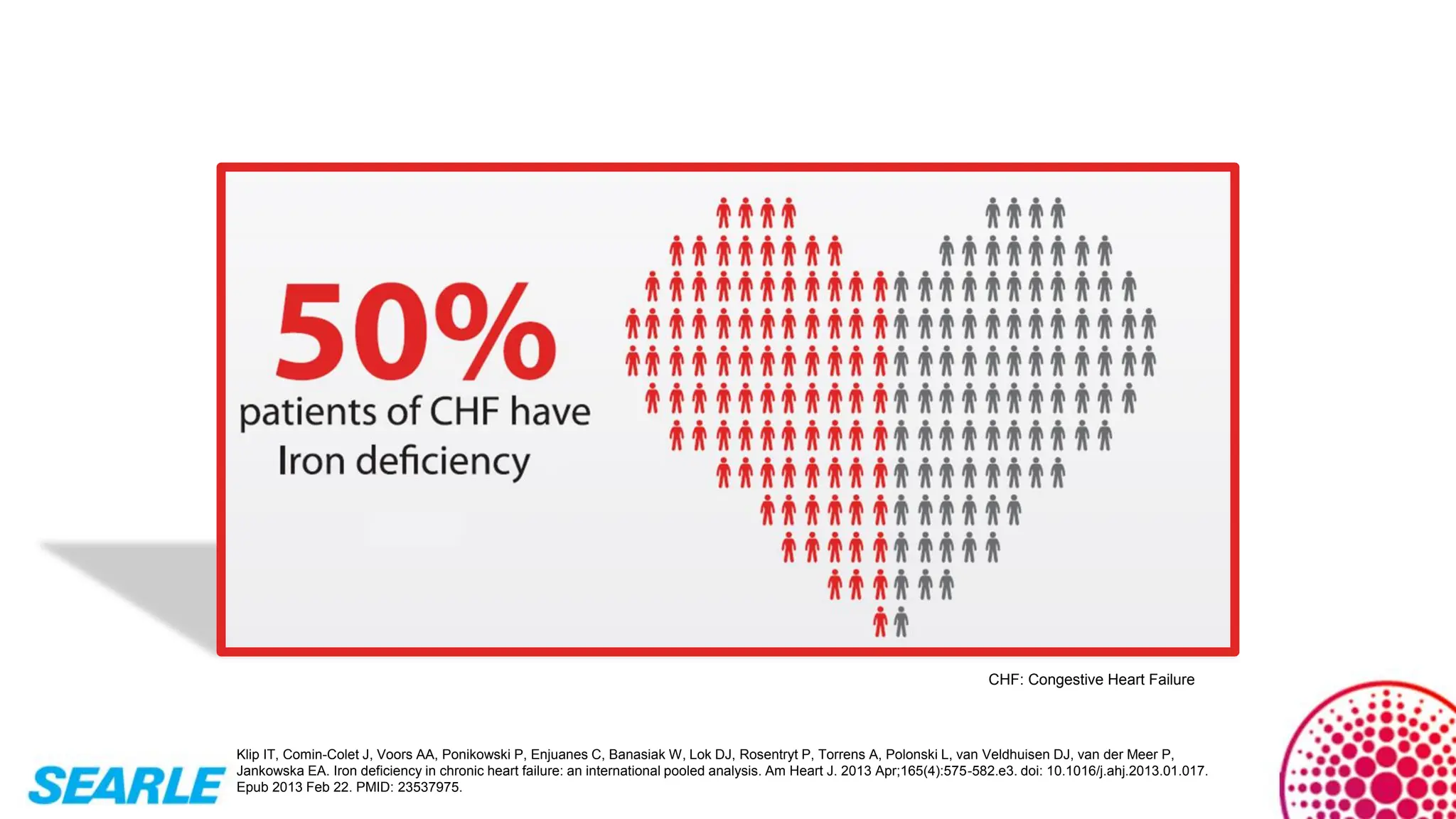
Klip IT, Comin-Colet J, Voors AA, Ponikowski P, Enjuanes C, Banasiak W, Lok DJ, Rosentryt P, Torrens A, Polonski L, van Veldhuisen DJ, van der Meer P,
Jankowska EA. Iron deficiency in chronic heart failure: an international pooled analysis. Am Heart J. 2013 Apr;165(4):575-582.e3. doi: 10.1016/j.ahj.2013.01.017.
Epub 2013 Feb 22. PMID: 23537975.
CHF: Congestive Heart Failure
Lam CSP, Doehner W, Comin-Colet J; IRON CORE Group. Iron deficiency in chronic heart failure: case-based practical guidance. ESC Heart Fail. 2018 Oct;5(5):764-771.
doi: 10.1002/ehf2.12333. Epub 2018 Aug 2. PMID: 30073785; PMCID: PMC6165963
Despite a solid evidence-base and guideline
recommendation, iron deficiency in CHF,
currently remains….
underdiagnosed and undertreated!
CHF: Congestive Heart Failure
➢Reduced Oxygen transportation to/and utilization in skeletal muscles
– reduced exercise capacity (i.e., difficulty in performing day-to-day activities)
➢Activation of the Sympathetic Nervous System
➢Left Ventricular Hypertrophy and dilated cardiomyopathy
– diminished ejection fraction
Swiss Med Wkly. 2017;147:w14453
ID in HF: Why does this matter?
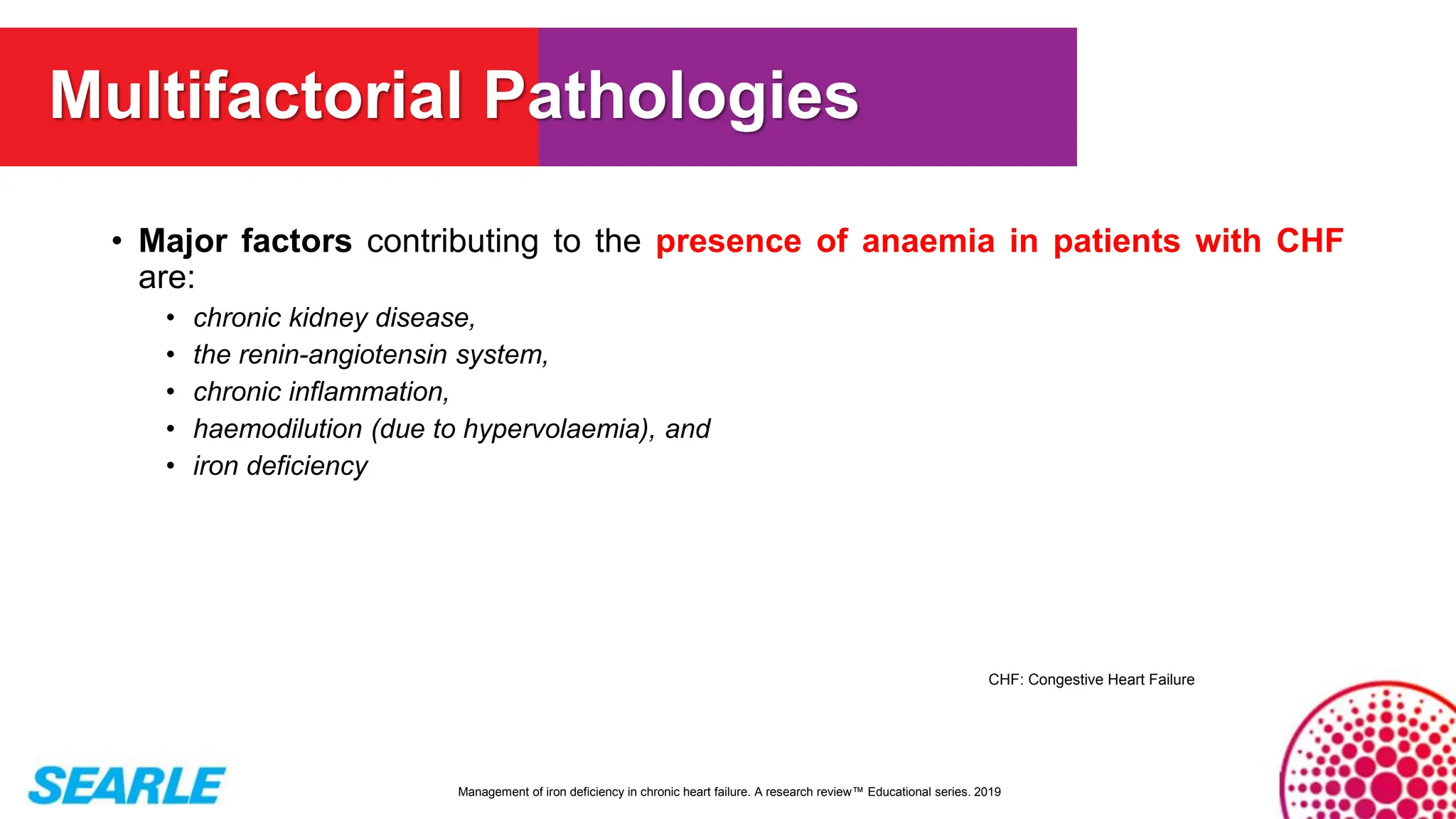
• Major factors contributing to the presence of anaemia in patients with CHF
are:
• chronic kidney disease,
• the renin-angiotensin system,
• chronic inflammation,
• haemodilution (due to hypervolaemia), and
• iron deficiency
Management of iron deficiency in chronic heart failure. A research review™ Educational series. 2019
Multifactorial Pathologies
CHF: Congestive Heart Failure
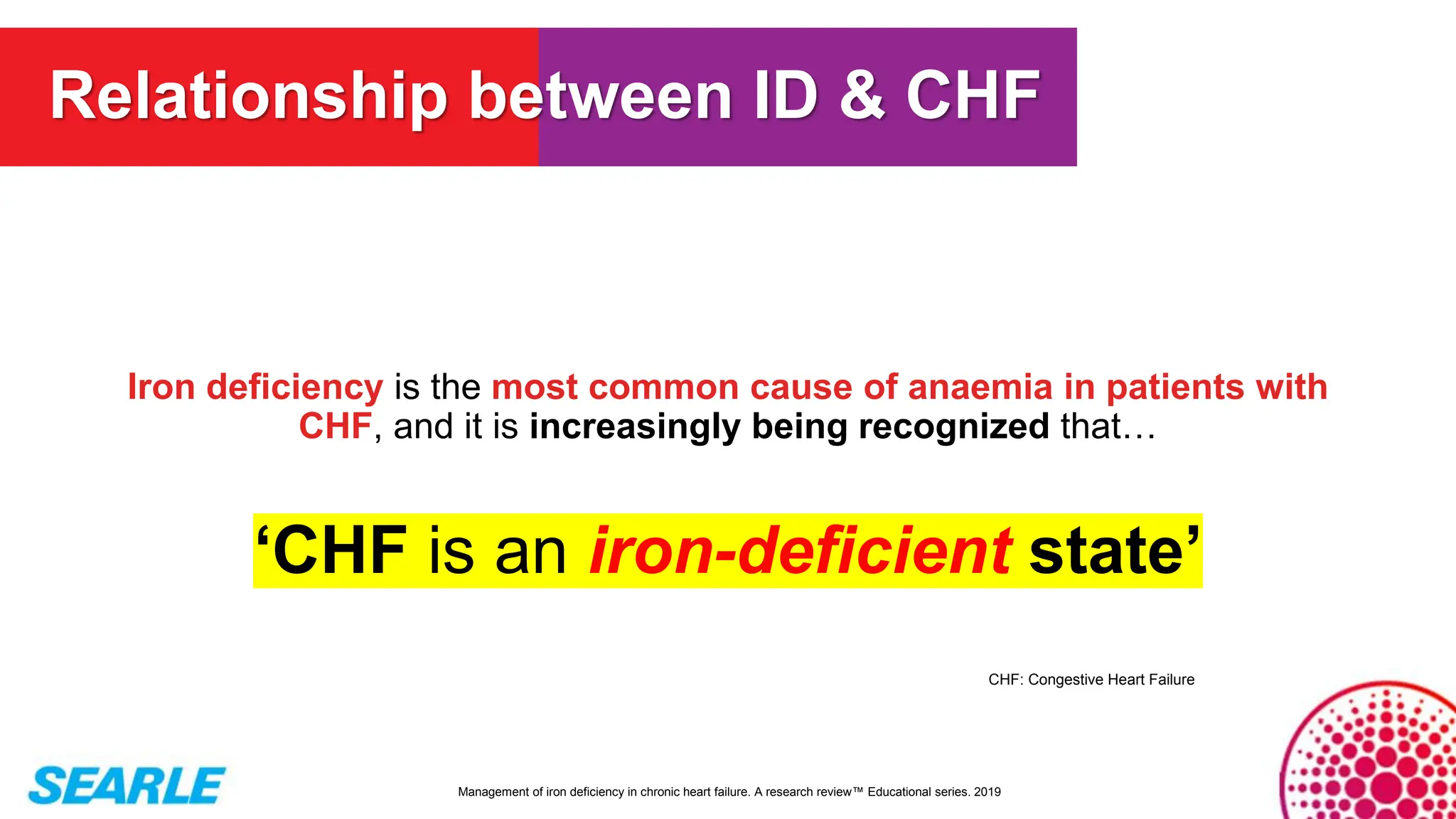
Iron deficiency is the most common cause of anaemia in patients with
CHF, and it is increasingly being recognized that…
‘CHF is an iron-deficient state’
Management of iron deficiency in chronic heart failure. A research review™ Educational series. 2019
Relationship between ID & CHF
CHF: Congestive Heart Failure
Iron Supplementation in Heart Failure:
Oral or Intravenous (I.V.)?
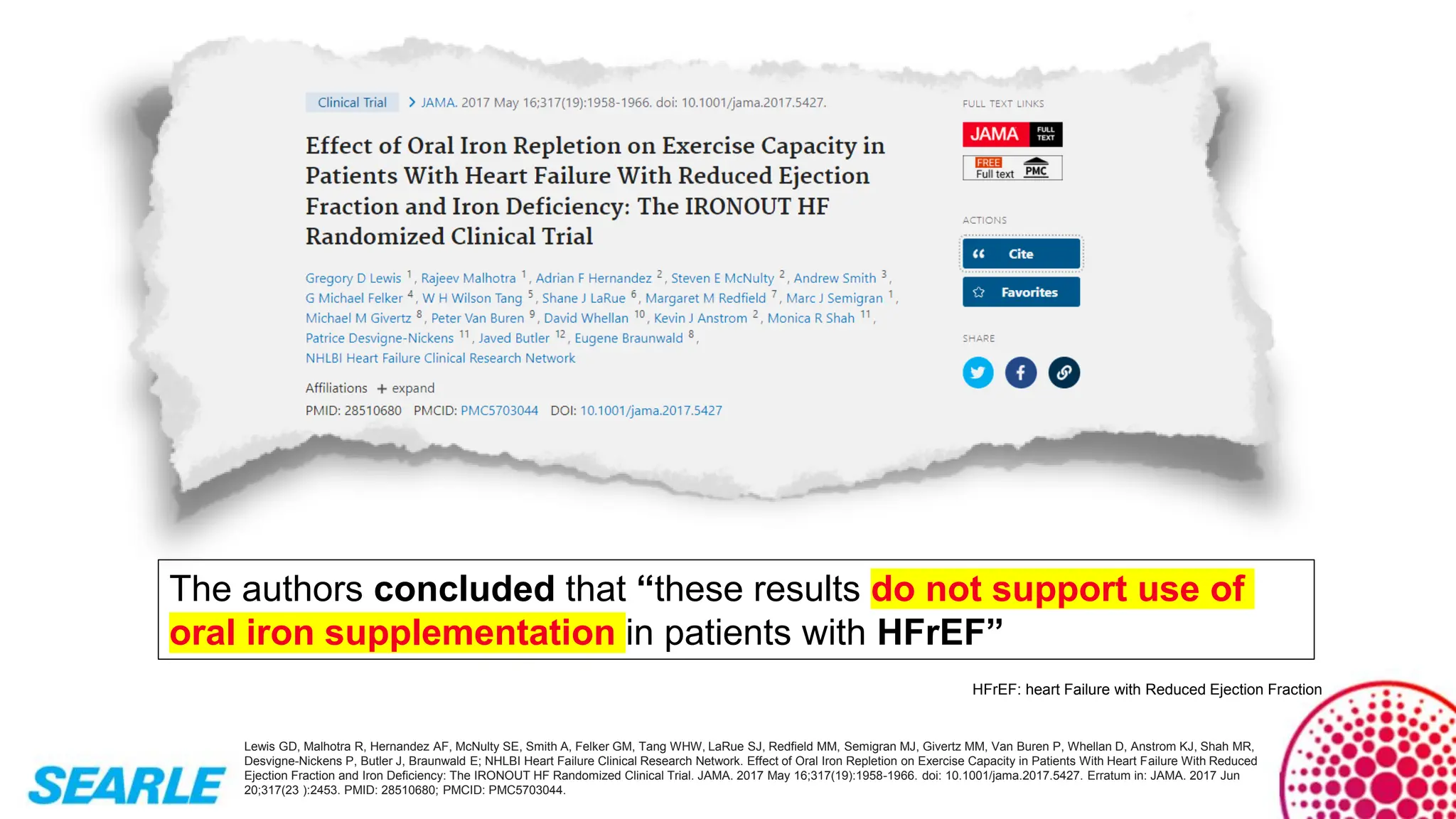
Lewis GD, Malhotra R, Hernandez AF, McNulty SE, Smith A, Felker GM, Tang WHW, LaRue SJ, Redfield MM, Semigran MJ, Givertz MM, Van Buren P, Whellan D, Anstrom KJ, Shah MR,
Desvigne-Nickens P, Butler J, Braunwald E; NHLBI Heart Failure Clinical Research Network. Effect of Oral Iron Repletion on Exercise Capacity in Patients With Heart Failure With Reduced
Ejection Fraction and Iron Deficiency: The IRONOUT HF Randomized Clinical Trial. JAMA. 2017 May 16;317(19):1958-1966. doi: 10.1001/jama.2017.5427. Erratum in: JAMA. 2017 Jun
20;317(23 ):2453. PMID: 28510680; PMCID: PMC5703044.
The authors concluded that “these results do not support use of
oral iron supplementation in patients with HFrEF”
HFrEF: heart Failure with Reduced Ejection Fraction
• Moreover, oral iron supplementation was limited by collateral effects:
approximately 40% of patients receiving oral iron preparations
experienced adverse effects, such as
• nausea,
• flatulence,
• abdominal pain,
• diarrhea,
• constipation, and
• black stools
Rizzo C, Carbonara R, Ruggieri R, Passantino A and Scrutinio D (2021). Iron Deficiency: A New Target for Patients With Heart
Failure. Front. Cardiovasc. Med. 8:709872. doi: 10.3389/fcvm.2021.709872
Oral Iron in HF: Challenges
• Intravenous (i.v.) iron preparations bypass the absorption difficulties
associated with oral iron, even in the presence of elevated hepcidin levels
• A series of i.v. iron complexes have been developed which enclose an
iron-containing core within a carbohydrate shell, stabilizing the
structure and controlling the release of iron
McDonagh T, Macdougall IC. Iron therapy for the treatment of iron deficiency in chronic heart failure: intravenous or oral? Eur J
Heart Fail. 2015 Mar;17(3):248-62. doi: 10.1002/ejhf.236. Epub 2015 Jan 30. PMID: 25639592; PMCID: PMC4671256.
Intravenous Iron Preparations
• Seven RCTs comparing IV iron with placebo in patients with HF were
completed i.e., FERRIC-HF, FAIR-HF, CONFIRM-HF, EFFECT-HF,
PRACTICEASIA-HF and AFFIRM-AHF
• A total of 2,164 patients were enrolled, with 1,166 (53.9%) randomly
allocated IV iron and 998 (46.1%) allocated to placebo
• Ferric carboxymaltose was used in five trials
Ismahel H, Ismahel N. Iron replacement therapy in heart failure: a literature review. Egypt Heart J. 2021
Sep 26;73(1):85. doi: 10.1186/s43044-021-00211-3. PMID: 34568981; PMCID: PMC8473508.
Wealth of Experience: I.V. Iron Trials in HF
RCT: Randomized Controlled Trials | HF: Heart Failure
Ferric Carboxymaltose
The ‘Optimum Treatment’ for ID in HF:
Lessons from Recent Trials
• Several randomized trials have shown that i.v. ferric carboxymaltose, improves
physical functioning and quality of life in patients with HF with reduced
ejection fraction (HFrEF) and iron deficiency, both with and without anaemia
• This is important because one of the major treatment goals in HFrEF is to
improve quality of life
Javed butler et al. Health status improvement with ferriccarboxymaltose in heart failure with reducedejection fraction and iron
deficiency. European Journal of Heart Failure (2022)24,821–832. doi:10.1002/ejhf.2478
HFrEF: heart Failure with Reduced Ejection Fraction
Ferinject® granted
upgraded recommendations
in 2023 ESC heart failure guidelines
Published: Aug 28, 2023
Available at: https://www.biospace.com/article/releases/ferinject-granted-upgraded-recommendations-in-2023-esc-heart-failure-guidelines/
• The 2023 European Society of Cardiology (ESC) guidelines
for acute and chronic heart failure (HF) include upgraded
recommendations for intravenous (IV) iron
supplementation, including Ferinject® (ferric carboxymaltose),
for the management of iron deficiency in patients with HF
• Phase IV HEART-FID study results and ferric
carboxymaltose meta-analysis also presented at 2023 ESC
Congress
Ferinject® granted upgraded recommendations in
2023 ESC heart failure guidelines
Available at: https://www.biospace.com/article/releases/ferinject-granted-upgraded-recommendations-in-2023-esc-heart-failure-guidelines/
• The guidelines include higher level of recommendations and
address a broader patient group for the management of iron
deficiency in HF patients with compromised heart function
(HFrEF and HFmrEF)
Ferinject® granted upgraded recommendations in
2023 ESC heart failure guidelines
Available at: https://www.biospace.com/article/releases/ferinject-granted-upgraded-recommendations-in-2023-esc-heart-failure-guidelines/
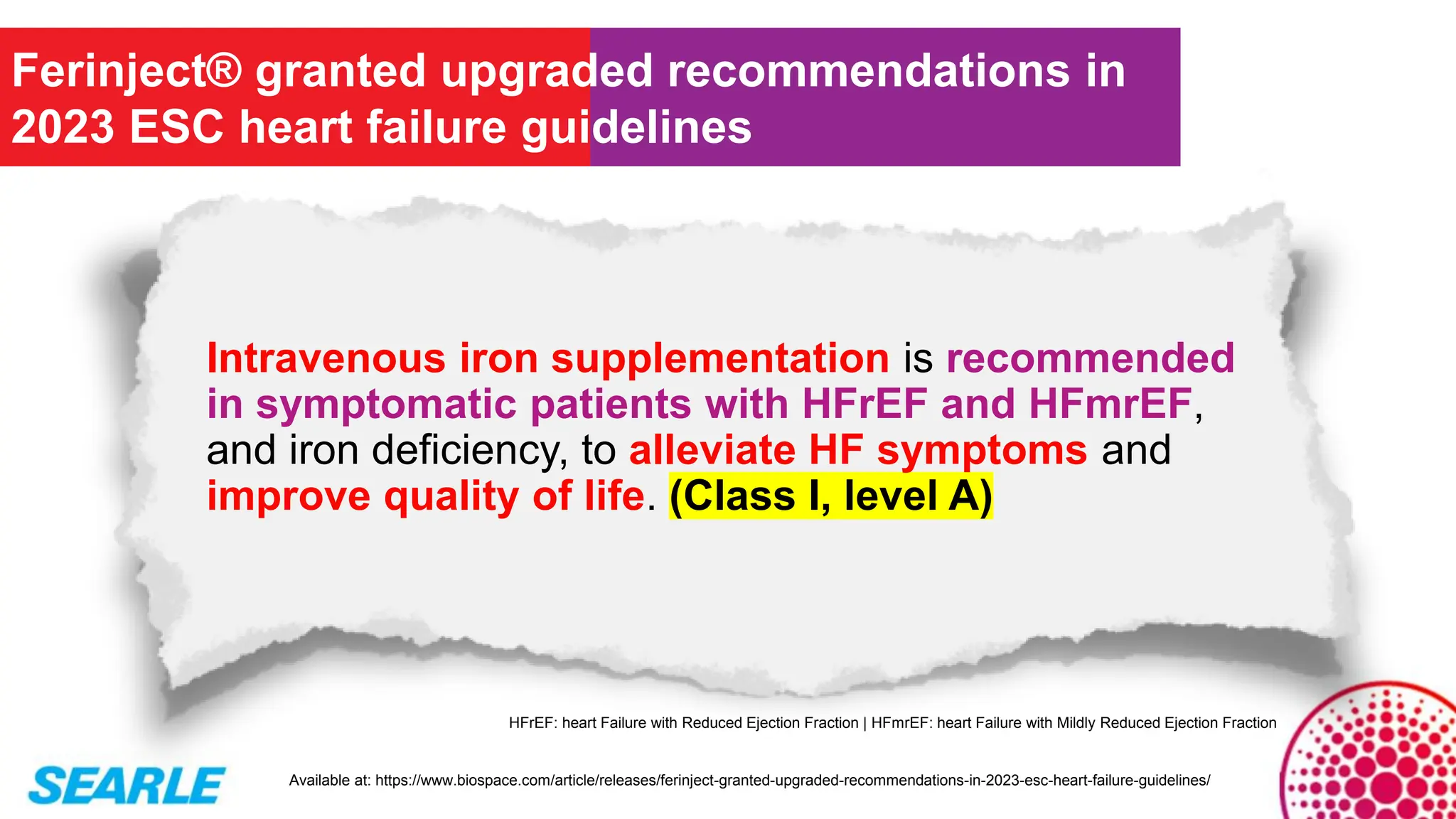
Intravenous iron supplementation is recommended
in symptomatic patients with HFrEF and HFmrEF,
and iron deficiency, to alleviate HF symptoms and
improve quality of life. (Class I, level A)
Ferinject® granted upgraded recommendations in
2023 ESC heart failure guidelines
Available at: https://www.biospace.com/article/releases/ferinject-granted-upgraded-recommendations-in-2023-esc-heart-failure-guidelines/
HFrEF: heart Failure with Reduced Ejection Fraction | HFmrEF: heart Failure with Mildly Reduced Ejection Fraction
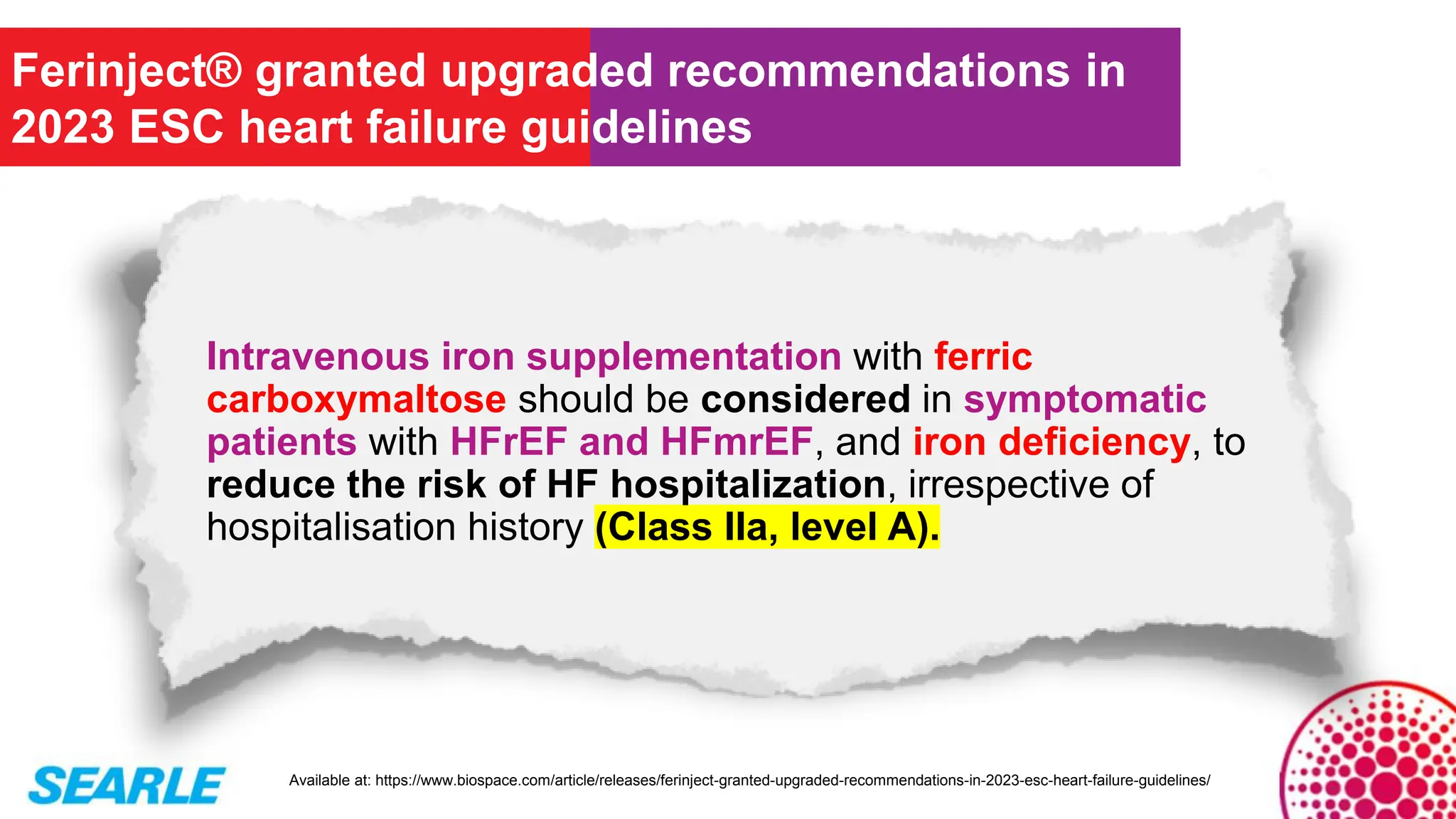
Intravenous iron supplementation with ferric
carboxymaltose should be considered in symptomatic
patients with HFrEF and HFmrEF, and iron deficiency, to
reduce the risk of HF hospitalization, irrespective of
hospitalisation history (Class IIa, level A).
Ferinject® granted upgraded recommendations in
2023 ESC heart failure guidelines
Available at: https://www.biospace.com/article/releases/ferinject-granted-upgraded-recommendations-in-2023-esc-heart-failure-guidelines/
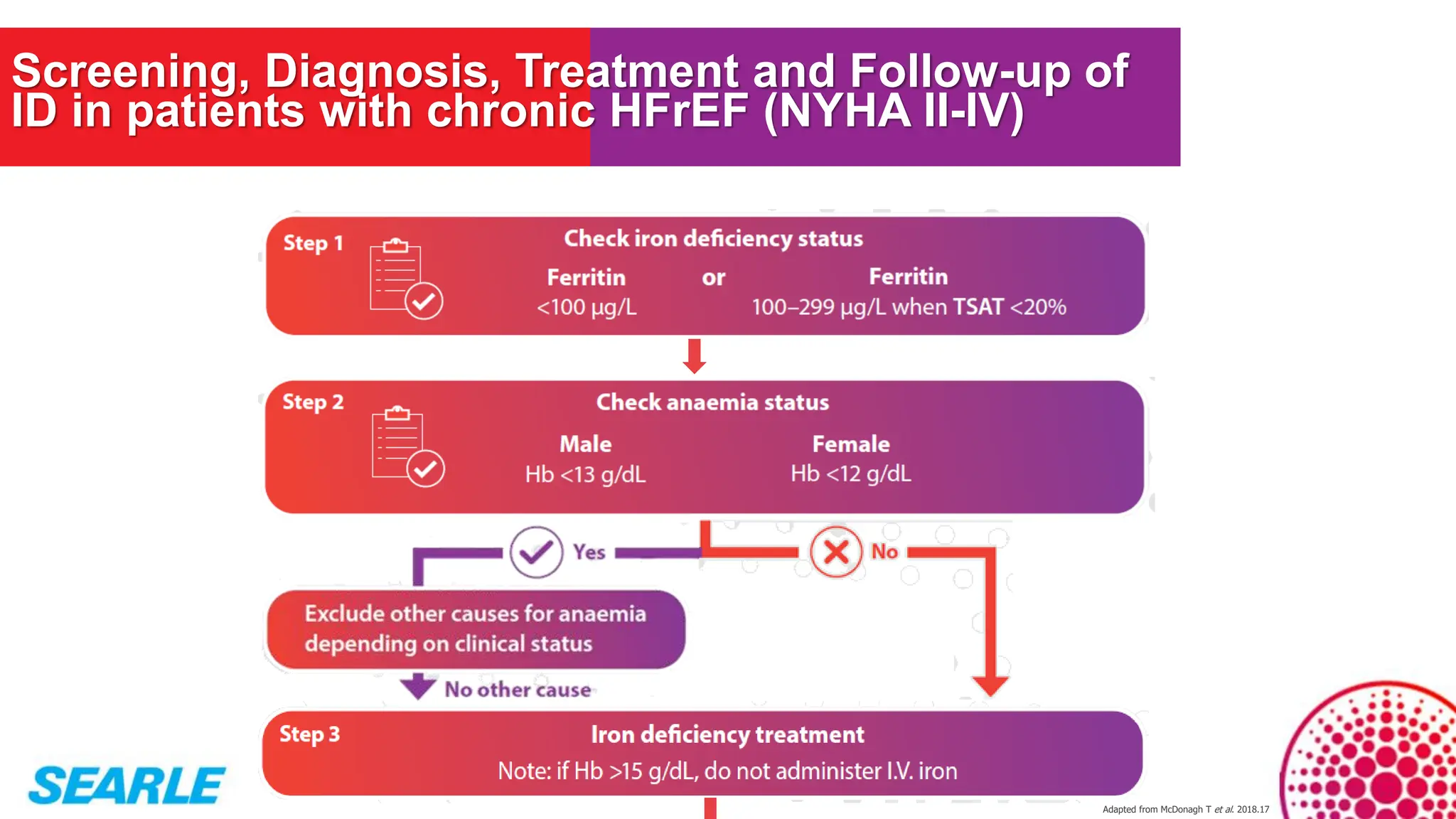
Adapted from McDonagh T et al. 2018.17
Screening, Diagnosis, Treatment and Follow-up of
ID in patients with chronic HFrEF (NYHA II-IV)
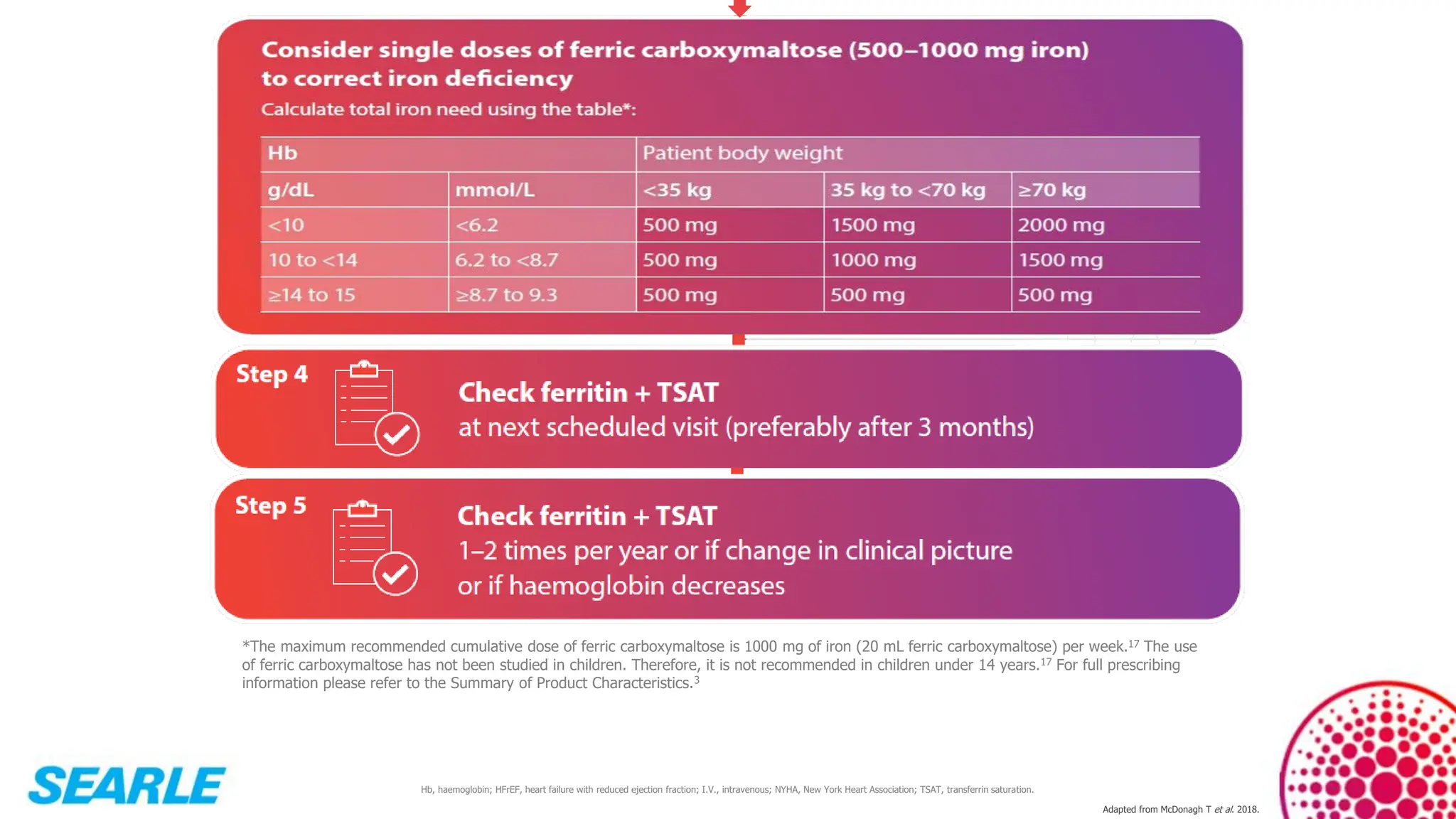
Hb, haemoglobin; HFrEF, heart failure with reduced ejection fraction; I.V., intravenous; NYHA, New York Heart Association; TSAT, transferrin saturation.
*The maximum recommended cumulative dose of ferric carboxymaltose is 1000 mg of iron (20 mL ferric carboxymaltose) per week.17 The use
of ferric carboxymaltose has not been studied in children. Therefore, it is not recommended in children under 14 years.17 For full prescribing
information please refer to the Summary of Product Characteristics.3
Adapted from McDonagh T et al. 2018.
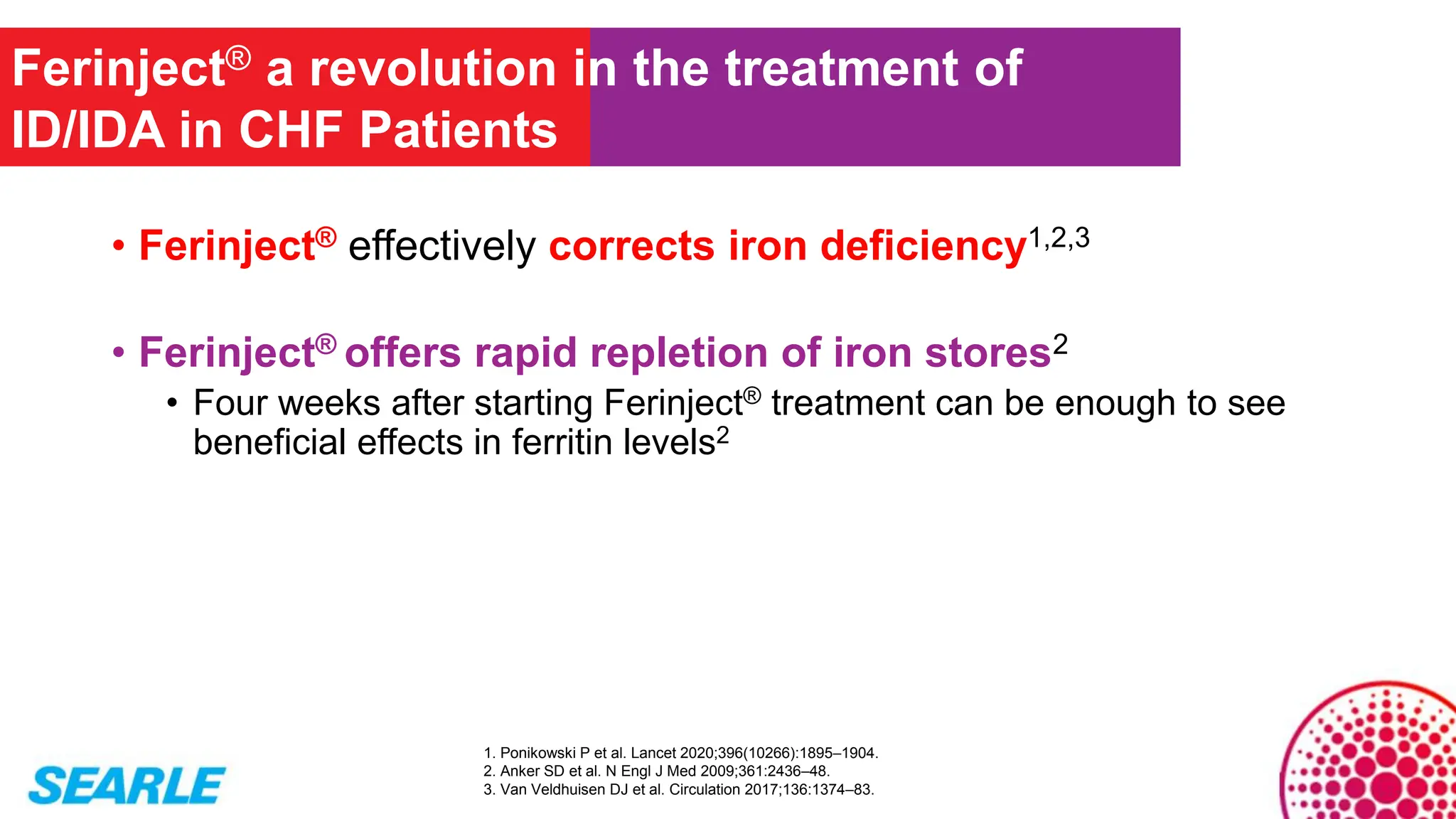
• Ferinject® effectively corrects iron deficiency1,2,3
• Ferinject® offers rapid repletion of iron stores2
• Four weeks after starting Ferinject® treatment can be enough to see
beneficial effects in ferritin levels2
1. Ponikowski P et al. Lancet 2020;396(10266):1895–1904.
2. Anker SD et al. N Engl J Med 2009;361:2436–48.
3. Van Veldhuisen DJ et al. Circulation 2017;136:1374–83.
Ferinject® a revolution in the treatment of
ID/IDA in CHF Patients
Thank you
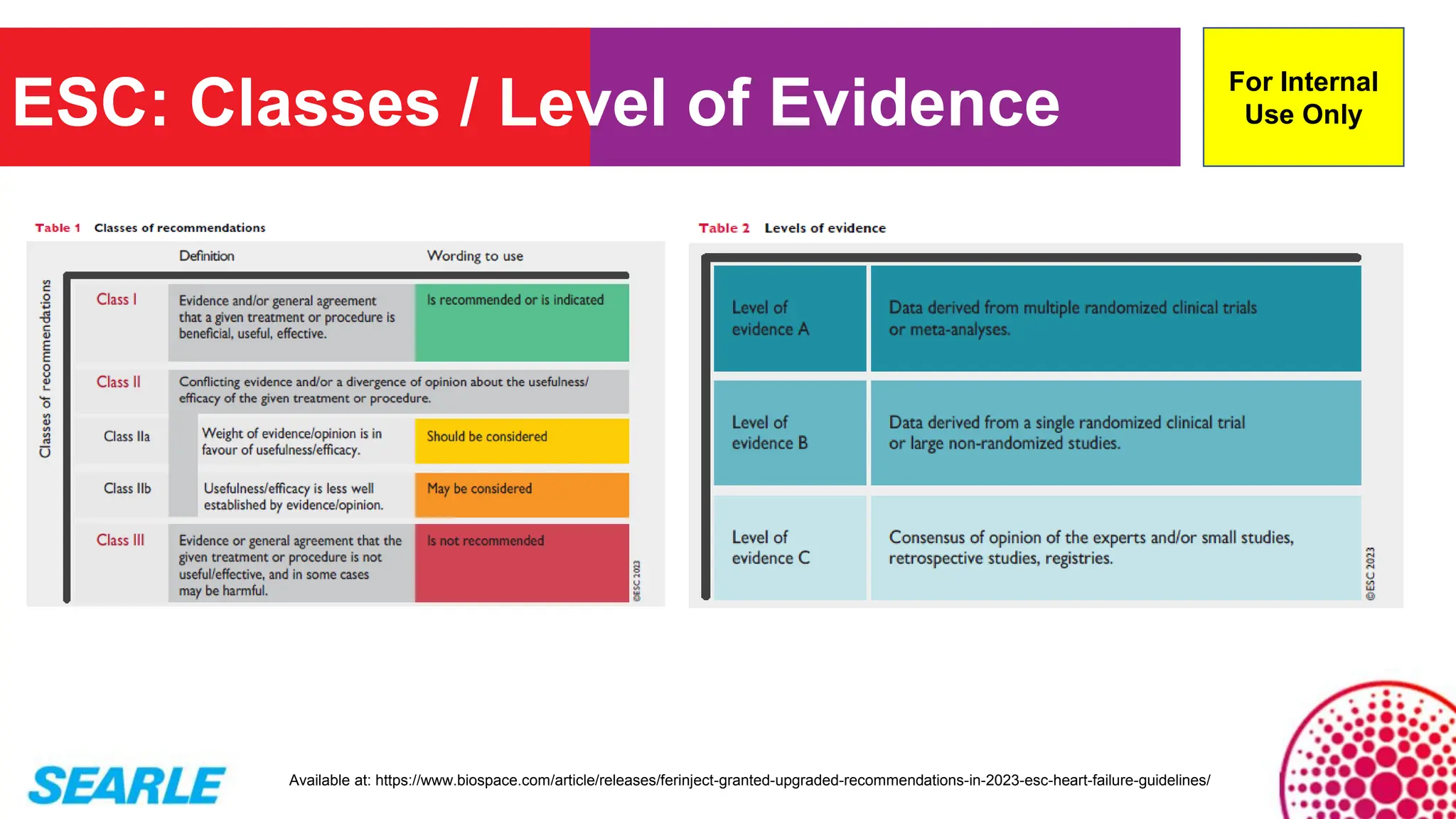
ESC: Classes / Level of Evidence
Available at: https://www.biospace.com/article/releases/ferinject-granted-upgraded-recommendations-in-2023-esc-heart-failure-guidelines/
For Internal
Use Only
For Internal
Use Only
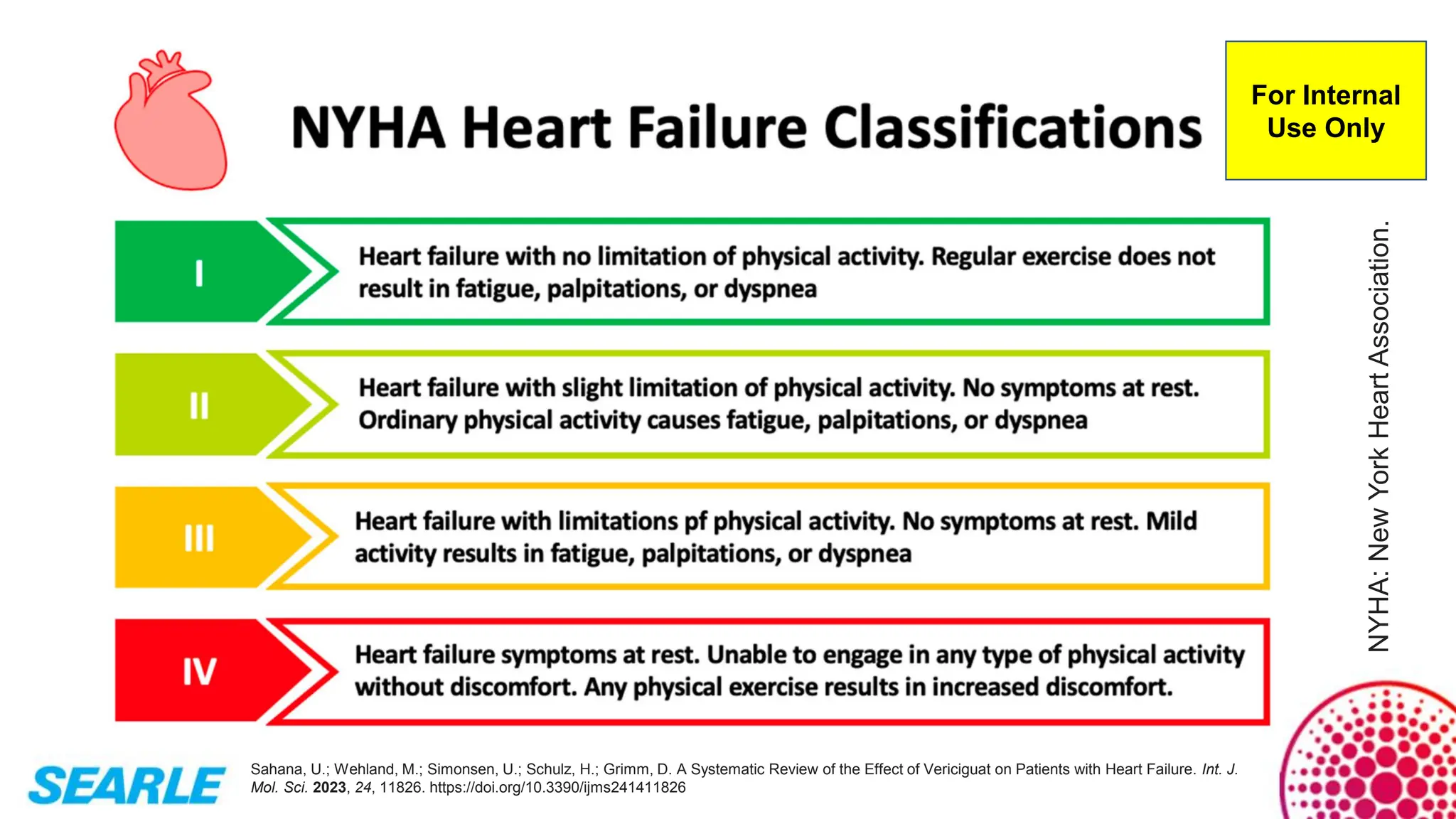
Sahana, U.; Wehland, M.; Simonsen, U.; Schulz, H.; Grimm, D. A Systematic Review of the Effect of Vericiguat on Patients with Heart Failure. Int. J.
Mol. Sci. 2023, 24, 11826. https://doi.org/10.3390/ijms241411826
NYHA:
New
York
Heart
Association.

MiniTool Partition Wizard 12.8 Cracked Full Serial Number

  • 1.
    Exploring the Iron& Heart Connection: Bridging Gaps between ID and HF for Improving Patients’ HRQoL ID: Iron Deficiency | HF: Heart Failure | HRQoL: Health Related Quality of Life
  • 2.
    Klip IT, Comin-ColetJ, Voors AA, Ponikowski P, Enjuanes C, Banasiak W, Lok DJ, Rosentryt P, Torrens A, Polonski L, van Veldhuisen DJ, van der Meer P, Jankowska EA. Iron deficiency in chronic heart failure: an international pooled analysis. Am Heart J. 2013 Apr;165(4):575-582.e3. doi: 10.1016/j.ahj.2013.01.017. Epub 2013 Feb 22. PMID: 23537975. CHF: Congestive Heart Failure
  • 3.
    Lam CSP, DoehnerW, Comin-Colet J; IRON CORE Group. Iron deficiency in chronic heart failure: case-based practical guidance. ESC Heart Fail. 2018 Oct;5(5):764-771. doi: 10.1002/ehf2.12333. Epub 2018 Aug 2. PMID: 30073785; PMCID: PMC6165963 Despite a solid evidence-base and guideline recommendation, iron deficiency in CHF, currently remains…. underdiagnosed and undertreated! CHF: Congestive Heart Failure
  • 4.
    ➢Reduced Oxygen transportationto/and utilization in skeletal muscles – reduced exercise capacity (i.e., difficulty in performing day-to-day activities) ➢Activation of the Sympathetic Nervous System ➢Left Ventricular Hypertrophy and dilated cardiomyopathy – diminished ejection fraction Swiss Med Wkly. 2017;147:w14453 ID in HF: Why does this matter?
  • 5.
    • Major factorscontributing to the presence of anaemia in patients with CHF are: • chronic kidney disease, • the renin-angiotensin system, • chronic inflammation, • haemodilution (due to hypervolaemia), and • iron deficiency Management of iron deficiency in chronic heart failure. A research review™ Educational series. 2019 Multifactorial Pathologies CHF: Congestive Heart Failure
  • 6.
    Iron deficiency isthe most common cause of anaemia in patients with CHF, and it is increasingly being recognized that… ‘CHF is an iron-deficient state’ Management of iron deficiency in chronic heart failure. A research review™ Educational series. 2019 Relationship between ID & CHF CHF: Congestive Heart Failure
  • 7.
    Iron Supplementation inHeart Failure: Oral or Intravenous (I.V.)?
  • 8.
    Lewis GD, MalhotraR, Hernandez AF, McNulty SE, Smith A, Felker GM, Tang WHW, LaRue SJ, Redfield MM, Semigran MJ, Givertz MM, Van Buren P, Whellan D, Anstrom KJ, Shah MR, Desvigne-Nickens P, Butler J, Braunwald E; NHLBI Heart Failure Clinical Research Network. Effect of Oral Iron Repletion on Exercise Capacity in Patients With Heart Failure With Reduced Ejection Fraction and Iron Deficiency: The IRONOUT HF Randomized Clinical Trial. JAMA. 2017 May 16;317(19):1958-1966. doi: 10.1001/jama.2017.5427. Erratum in: JAMA. 2017 Jun 20;317(23 ):2453. PMID: 28510680; PMCID: PMC5703044. The authors concluded that “these results do not support use of oral iron supplementation in patients with HFrEF” HFrEF: heart Failure with Reduced Ejection Fraction
  • 9.
    • Moreover, oraliron supplementation was limited by collateral effects: approximately 40% of patients receiving oral iron preparations experienced adverse effects, such as • nausea, • flatulence, • abdominal pain, • diarrhea, • constipation, and • black stools Rizzo C, Carbonara R, Ruggieri R, Passantino A and Scrutinio D (2021). Iron Deficiency: A New Target for Patients With Heart Failure. Front. Cardiovasc. Med. 8:709872. doi: 10.3389/fcvm.2021.709872 Oral Iron in HF: Challenges
  • 10.
    • Intravenous (i.v.)iron preparations bypass the absorption difficulties associated with oral iron, even in the presence of elevated hepcidin levels • A series of i.v. iron complexes have been developed which enclose an iron-containing core within a carbohydrate shell, stabilizing the structure and controlling the release of iron McDonagh T, Macdougall IC. Iron therapy for the treatment of iron deficiency in chronic heart failure: intravenous or oral? Eur J Heart Fail. 2015 Mar;17(3):248-62. doi: 10.1002/ejhf.236. Epub 2015 Jan 30. PMID: 25639592; PMCID: PMC4671256. Intravenous Iron Preparations
  • 11.
    • Seven RCTscomparing IV iron with placebo in patients with HF were completed i.e., FERRIC-HF, FAIR-HF, CONFIRM-HF, EFFECT-HF, PRACTICEASIA-HF and AFFIRM-AHF • A total of 2,164 patients were enrolled, with 1,166 (53.9%) randomly allocated IV iron and 998 (46.1%) allocated to placebo • Ferric carboxymaltose was used in five trials Ismahel H, Ismahel N. Iron replacement therapy in heart failure: a literature review. Egypt Heart J. 2021 Sep 26;73(1):85. doi: 10.1186/s43044-021-00211-3. PMID: 34568981; PMCID: PMC8473508. Wealth of Experience: I.V. Iron Trials in HF RCT: Randomized Controlled Trials | HF: Heart Failure
  • 12.
    Ferric Carboxymaltose The ‘OptimumTreatment’ for ID in HF: Lessons from Recent Trials
  • 13.
    • Several randomizedtrials have shown that i.v. ferric carboxymaltose, improves physical functioning and quality of life in patients with HF with reduced ejection fraction (HFrEF) and iron deficiency, both with and without anaemia • This is important because one of the major treatment goals in HFrEF is to improve quality of life Javed butler et al. Health status improvement with ferriccarboxymaltose in heart failure with reducedejection fraction and iron deficiency. European Journal of Heart Failure (2022)24,821–832. doi:10.1002/ejhf.2478 HFrEF: heart Failure with Reduced Ejection Fraction
  • 14.
    Ferinject® granted upgraded recommendations in2023 ESC heart failure guidelines Published: Aug 28, 2023 Available at: https://www.biospace.com/article/releases/ferinject-granted-upgraded-recommendations-in-2023-esc-heart-failure-guidelines/
  • 15.
    • The 2023European Society of Cardiology (ESC) guidelines for acute and chronic heart failure (HF) include upgraded recommendations for intravenous (IV) iron supplementation, including Ferinject® (ferric carboxymaltose), for the management of iron deficiency in patients with HF • Phase IV HEART-FID study results and ferric carboxymaltose meta-analysis also presented at 2023 ESC Congress Ferinject® granted upgraded recommendations in 2023 ESC heart failure guidelines Available at: https://www.biospace.com/article/releases/ferinject-granted-upgraded-recommendations-in-2023-esc-heart-failure-guidelines/
  • 16.
    • The guidelinesinclude higher level of recommendations and address a broader patient group for the management of iron deficiency in HF patients with compromised heart function (HFrEF and HFmrEF) Ferinject® granted upgraded recommendations in 2023 ESC heart failure guidelines Available at: https://www.biospace.com/article/releases/ferinject-granted-upgraded-recommendations-in-2023-esc-heart-failure-guidelines/
  • 17.
    Intravenous iron supplementationis recommended in symptomatic patients with HFrEF and HFmrEF, and iron deficiency, to alleviate HF symptoms and improve quality of life. (Class I, level A) Ferinject® granted upgraded recommendations in 2023 ESC heart failure guidelines Available at: https://www.biospace.com/article/releases/ferinject-granted-upgraded-recommendations-in-2023-esc-heart-failure-guidelines/ HFrEF: heart Failure with Reduced Ejection Fraction | HFmrEF: heart Failure with Mildly Reduced Ejection Fraction
  • 18.
    Intravenous iron supplementationwith ferric carboxymaltose should be considered in symptomatic patients with HFrEF and HFmrEF, and iron deficiency, to reduce the risk of HF hospitalization, irrespective of hospitalisation history (Class IIa, level A). Ferinject® granted upgraded recommendations in 2023 ESC heart failure guidelines Available at: https://www.biospace.com/article/releases/ferinject-granted-upgraded-recommendations-in-2023-esc-heart-failure-guidelines/
  • 19.
    Adapted from McDonaghT et al. 2018.17 Screening, Diagnosis, Treatment and Follow-up of ID in patients with chronic HFrEF (NYHA II-IV)
  • 20.
    Hb, haemoglobin; HFrEF,heart failure with reduced ejection fraction; I.V., intravenous; NYHA, New York Heart Association; TSAT, transferrin saturation. *The maximum recommended cumulative dose of ferric carboxymaltose is 1000 mg of iron (20 mL ferric carboxymaltose) per week.17 The use of ferric carboxymaltose has not been studied in children. Therefore, it is not recommended in children under 14 years.17 For full prescribing information please refer to the Summary of Product Characteristics.3 Adapted from McDonagh T et al. 2018.
  • 21.
    • Ferinject® effectivelycorrects iron deficiency1,2,3 • Ferinject® offers rapid repletion of iron stores2 • Four weeks after starting Ferinject® treatment can be enough to see beneficial effects in ferritin levels2 1. Ponikowski P et al. Lancet 2020;396(10266):1895–1904. 2. Anker SD et al. N Engl J Med 2009;361:2436–48. 3. Van Veldhuisen DJ et al. Circulation 2017;136:1374–83. Ferinject® a revolution in the treatment of ID/IDA in CHF Patients
  • 22.
  • 23.
    ESC: Classes /Level of Evidence Available at: https://www.biospace.com/article/releases/ferinject-granted-upgraded-recommendations-in-2023-esc-heart-failure-guidelines/ For Internal Use Only
  • 24.
    For Internal Use Only Sahana,U.; Wehland, M.; Simonsen, U.; Schulz, H.; Grimm, D. A Systematic Review of the Effect of Vericiguat on Patients with Heart Failure. Int. J. Mol. Sci. 2023, 24, 11826. https://doi.org/10.3390/ijms241411826 NYHA: New York Heart Association.