Mild Cognitive Impairment
Clinical Characterization and Outcome
Ronald C. Petersen, PhD, MD; Glenn E. Smith, PhD; Stephen C. Waring, DVM, PhD;
Robert J. Ivnik, PhD; Eric G. Tangalos, MD; Emre Kokmen, MD
Background: Subjects with a mild cognitive impair-
ment (MCI) have a memory impairment beyond that ex-
pected for age and education yet are not demented. These
subjects are becoming the focus of many prediction stud-
ies and early intervention trials.
Objective: To characterize clinically subjects with MCI
cross-sectionally and longitudinally.
Design: A prospective, longitudinal inception cohort.
Setting: General community clinic.
Participants: A sample of 76 consecutively evaluated
subjects with MCI were compared with 234 healthy con-
trol subjects and 106 patients with mild Alzheimer dis-
ease (AD), all from a community setting as part of the
Mayo Clinic Alzheimer’s Disease Center/Alzheimer’s Dis-
ease Patient Registry, Rochester, Minn.
Main Outcome Measures: The 3 groups of individu-
als were compared on demographic factors and mea-
suresofcognitivefunctionincludingtheMini-MentalState
Examination, Wechsler Adult Intelligence Scale–
Revised, Wechsler Memory Scale–Revised, Dementia Rat-
ing Scale, Free and Cued Selective Reminding Test, and
Auditory Verbal Learning Test. Clinical classifications
of dementia and AD were determined according to the
Diagnostic and Statistical Manual of Mental Disorders,
Revised Third Edition and the National Institute of Neu-
rological and Communicative Disorders and Stroke–
Alzheimer’s Disease and Related Disorders Association
criteria, respectively.
Results: The primary distinction between control sub-
jects and subjects with MCI was in the area of memory,
while other cognitive functions were comparable. How-
ever, when the subjects with MCI were compared with
the patients with very mild AD, memory performance was
similar, but patients with AD were more impaired in other
cognitivedomainsaswell.Longitudinalperformancedem-
onstrated that the subjects with MCI declined at a rate
greater than that of the controls but less rapidly than the
patients with mild AD.
Conclusions: Patients who meet the criteria for MCI can
be differentiated from healthy control subjects and those
with very mild AD. They appear to constitute a clinical
entity that can be characterized for treatment interven-
tions.
Arch Neurol. 1999;56:303-308
A
GREAT deal of interest
has been generated con-
cerning the topic of a
boundary or transitional
state between normal
aging and dementia, or more specifi-
cally, Alzheimer disease (AD).1
This
condition has received several descrip-
tors including mild cognitive impair-
ment (MCI), incipient dementia, and
isolated memory impairment.2-4
Reviews
of several studies have indicated that
these individuals are at an increased
risk for developing AD ranging from 1%
to 25% per year.5
The variability in
these rates likely reflects differing diag-
nostic criteria, measurement instru-
ments, and small sample sizes.5
Patients with an MCI are also becom-
ing of interest for treatment trials. The Alz-
heimer’s Disease Cooperative Study, which
is a National Institute on Aging consor-
tium of Alzheimer’s Disease research
groups, is embarking on a multicenter trial
of agents intended to alter the progres-
sion of patients with MCI to AD.6
Several
pharmaceutical companies are initiating
large trials on this same group of indi-
viduals.
Questions can be raised as to the
diagnostic criteria for MCI. Some inves-
tigators believe that virtually all these
patients with mild disease have AD neu-
ropathologically, and, therefore, this
may not be a useful distinction.7
Oth-
ers6,8,9
note that while many of these pa-
ORIGINAL CONTRIBUTION
From the Departments of
Neurology (Drs Petersen and
Kokmen), Health Sciences
Research (Drs Petersen and
Waring), and Psychiatry and
Psychology (Drs Smith and
Ivnik), and the Division of
Community Internal Medicine
(Dr Tangalos), Mayo Clinic,
Rochester, Minn.
ARCH NEUROL/VOL 56, MAR 1999
303
©1999 American Medical Association. All rights reserved.
on October 16, 2011www.archneurol.comDownloaded from
tients progress to AD, not all do, and consequently, the
distinction is important.
We have been enrolling patients at the mild end of
the cognitive spectrum for more than 10 years as part of
a community study on aging and dementia.8,10
Our re-
cruitment scheme involves screening patients who are
being seen by their primary care physicians for periodic
general medical evaluations which affords us the oppor-
tunity to detect patients before they present to a demen-
tia or memory disorders clinic. This study reports the clini-
cal criteria used to diagnose these patients as well as their
neuropsychological characterization, differentiation from
controls and patients with mild AD, and the longitudi-
nal course of the subjects with MCI. As such, these data
provide a background for the clinician to use in evalu-
ating these individuals in practice.
RESULTS
We have enrolled 76 subjects with the diagnosis of MCI
over the last 11 years. The demographic features of these
subjects as well as groups of control subjects and pa-
tients with very mild AD enrolled over the same interval
grouped by CDR ratings are shown in the Table for com-
parison purposes. The Table also shows the perfor-
mance of the 4 groups with respect to a sampling of cog-
nitive measures. As would be consistent with the selection
criteria, the subjects with MCI performed slightly more
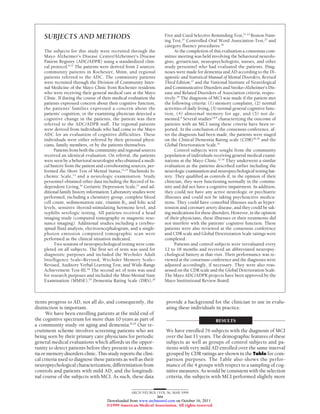
SUBJECTS AND METHODS
The subjects for this study were recruited through the
Mayo Alzheimer’s Disease Center/Alzheimer’s Disease
Patient Registry (ADC/ADPR) using a standardized clini-
cal protocol.8-12
The patients were derived from 2 sources:
community patients in Rochester, Minn, and regional
patients referred to the ADC. The community patients
were recruited through the Division of Community Inter-
nal Medicine of the Mayo Clinic from Rochester residents
who were receiving their general medical care at the Mayo
Clinic. If during the course of their medical evaluation the
patients expressed concern about their cognitive function,
the patients’ families expressed a concern about the
patients’ cognition, or the examining physician detected a
cognitive change in the patients, the patient was then
referred to the ADC/ADPR staff. The regional patients
were derived from individuals who had come to the Mayo
ADC for an evaluation of cognitive difficulties. These
individuals were either referred by their personal physi-
cians, family members, or by the patients themselves.
Patients from both the community and regional sources
received an identical evaluation. On referral, the patients
were seen by a behavioral neurologist who obtained a medi-
cal history from the patient and corroborating sources, per-
formed the Short Test of Mental Status,13,14
Hachinski Is-
chemic Scale,15
and a neurologic examination. Study
personnel obtained other data including the Record of In-
dependent Living,16
Geriatric Depression Scale,17
and ad-
ditional family history information. Laboratory studies were
performed, including a chemistry group, complete blood
cell count, sedimentation rate, vitamin B12 and folic acid
levels, sensitive thyroid-stimulating hormone level, and
syphilis serologic testing. All patients received a head
imaging study (computed tomography or magnetic reso-
nance imaging). Additional studies including a cerebro-
spinal fluid analysis, electroencephalogram, and a single-
photon emission computed tomographic scan were
performed as the clinical situation indicated.
Two sessions of neuropsychological testing were com-
pleted on all subjects. The first set of tests was used for
diagnostic purposes and included the Wechsler Adult
Intelligence Scale–Revised, Wechsler Memory Scale–
Revised, Auditory Verbal Learning Test, and Wide-Range
Achievement Test-III.18
The second set of tests was used
for research purposes and included the Mini-Mental State
Examination (MMSE),19
Dementia Rating Scale (DRS),20
Free and Cued Selective Reminding Test,21-23
Boston Nam-
ing Test,24
Controlled Oral Word Association Test,25
and
category fluency procedures.26
At the completion of this evaluation a consensus com-
mittee meeting was held involving the behavioral neurolo-
gists, geriatrician, neuropsychologists, nurses, and other
study personnel who had evaluated the patients. Diag-
noses were made for dementia and AD according to the Di-
agnostic and Statistical Manual of Mental Disorders, Revised
Third Edition,27
and the National Institute of Neurological
and Communicative Disorders and Stroke–Alzheimer’s Dis-
ease and Related Disorders of Association criteria, respec-
tively.28
The diagnosis of MCI was made if the patient met
the following criteria: (1) memory complaint, (2) normal
activities of daily living, (3) normal general cognitive func-
tion, (4) abnormal memory for age, and (5) not de-
mented.8
Several studies3,8,9
characterizing the outcome of
patients with an MCI using these criteria have been re-
ported. At the conclusion of the consensus conference, af-
ter the diagnosis had been made, the patients were staged
on the Clinical Dementia Rating scale (CDR)29,30
and the
Global Deterioration Scale.31
Control subjects were sought from the community
population of individuals receiving general medical exami-
nations at the Mayo Clinic.32-34
They underwent a similar
evaluation as the patients described earlier including the
neurologic examination and neuropsychological testing bat-
tery. They qualified as controls if, in the opinion of their
clinician, they were functioning normally in the commu-
nity and did not have a cognitive impairment. In addition,
they could not have any active neurologic or psychiatric
illnesses and could not be taking psychoactive medica-
tions. They could have comorbid illnesses such as hyper-
tension and coronary artery disease, and they could be tak-
ing medications for these disorders. However, in the opinion
of their physicians, these illnesses or their treatments did
not interfere with the patients’ cognitive function. These
patients were also reviewed at the consensus conference
and CDR scale and Global Deterioration Scale ratings were
completed.
Patients and control subjects were reevaluated every
12 to 18 months and received an abbreviated neuropsy-
chological battery at that visit. Their performance was re-
viewed at the consensus conference and the diagnoses were
adjusted accordingly, if necessary. They were also reas-
sessed on the CDR scale and the Global Deterioration Scale.
The Mayo ADC/ADPR projects have been approved by the
Mayo Institutional Review Board.
ARCH NEUROL/VOL 56, MAR 1999
304
©1999 American Medical Association. All rights reserved.
on October 16, 2011www.archneurol.comDownloaded from
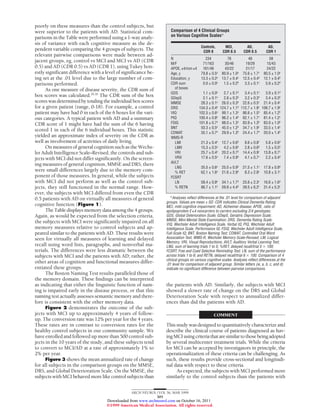
poorly on these measures than the control subjects, but
were superior to the patients with AD. Statistical com-
parisons in the Table were performed using a 1-way analy-
sis of variance with each cognitive measure as the de-
pendent variable comparing the 4 groups of subjects. The
relevant pairwise comparisons were made between ad-
jacent groups, eg, control vs MCI and MCI vs AD (CDR
0.5) and AD (CDR 0.5) vs AD (CDR 1), using Tukey hon-
estly significant difference with a level of significance be-
ing set at the .01 level due to the large number of com-
parisons performed.
As one measure of disease severity, the CDR sum of
box scores was calculated.29,30
The CDR sum of the box
scoreswasdeterminedbytotalingtheindividualboxscores
for a given patient (range, 0-18). For example, a control
patient may have had 0 in each of the 6 boxes for the vari-
ous categories. A typical patient with AD and a summary
CDR score of 1 might have had the sum of the 6 having
scored 1 in each of the 6 individual boxes. This statistic
yielded an approximate index of severity on the CDR as
well as involvement of activities of daily living.
On measures of general cognition such as the Wechs-
ler Adult Intelligence Scale–Revised, the controls and sub-
jects with MCI did not differ significantly. On the screen-
ing measures of general cognition, MMSE and DRS, there
were small differences largely due to the memory com-
ponent of those measures. In general, while the subjects
with MCI did not perform as well as the control sub-
jects, they still functioned in the normal range. How-
ever, the subjects with MCI differed from even the CDR
0.5 patients with AD on virtually all measures of general
cognitive function (Figure 1).
The Table displays memory data among the 4 groups.
Again, as would be expected from the selection criteria,
the subjects with MCI were significantly impaired on all
memory measures relative to control subjects and ap-
peared similar to the patients with AD. These results were
seen for virtually all measures of learning and delayed
recall using word lists, paragraphs, and nonverbal ma-
terials. The differences were less dramatic between the
subjects with MCI and the patients with AD; rather, the
other areas of cognition and functional measures differ-
entiated these groups.
The Boston Naming Test results paralleled those of
the memory domain. These findings can be interpreted
as indicating that either the linguistic function of nam-
ing is impaired early in the disease process, or that this
naming test actually assesses semantic memory and there-
fore is consistent with the other memory data.
Figure 2 demonstrates the outcome of the sub-
jects with MCI up to approximately 4 years of follow-
up. The conversion rate was 12% per year for the 4 years.
These rates are in contrast to conversion rates for the
healthy control subjects in our community sample. We
have enrolled and followed up more than 500 control sub-
jects in the 10 years of the study, and these subjects tend
to convert to MCI/AD at a rate of approximately 1% to
2% per year.
Figure 3 shows the mean annualized rate of change
for all subjects in the comparison groups on the MMSE,
DRS, and Global Deterioration Scale. On the MMSE, the
subjects with MCI behaved more like control subjects than
the patients with AD. Similarly, the subjects with MCI
showed a slower rate of change on the DRS and Global
Deterioration Scale with respect to annualized differ-
ences than did the patients with AD.
COMMENT
This study was designed to quantitatively characterize and
describe the clinical course of patients diagnosed as hav-
ingMCIusingcriteriathataresimilartothosebeingadopted
by several multicenter treatment trials. While the criteria
for MCI can be accepted by investigators in principle, the
operationalization of these criteria can be challenging. As
such, these results provide cross-sectional and longitudi-
nal data with respect to these criteria.
As expected, the subjects with MCI performed more
similarly to the control subjects than the patients with
Comparison of 4 Clinical Groups
on Various Cognitive Scales*
Controls,
CDR 0
MCI,
CDR 0.5
AD,
CDR 0.5
AD,
CDR 1
N 234 76 48 58
M/F 71/163 30/46 19/29 15/43
APOE, ⑀4/non ⑀4 161/46 43/22 21/17 24/22
Age, y 79.8 ± 0.5a
80.9 ± 1.0a
75.6 ± 1.7c
80.5 ± 1.0a
Education, y 13.3 ± 0.2a
13.7 ± 0.4a
12.5 ± 0.4b
12.1 ± 0.4b
CDR sum
of boxes
0.0 ± 0.0a
1.5 ± 0.2b
3.3 ± 0.1c
5.9 ± 0.2d
GDS 1.1 ± 0.0a
2.7 ± 0.1b
3.4 ± 0.1c
3.9 ± 0.1d
GDepS 2.1 ± 0.1a
2.8 ± 0.3b
3.2 ± 0.3b
3.4 ± 0.3b
MMSE 28.3 ± 0.1a
26.0 ± 0.3b
22.6 ± 0.5c
21.4 ± 0.4c
DRS 134.3 ± 0.4a
124.7 ± 1.1b
112.7 ± 1.9c
106.7 ± 1.9c
VIQ 102.5 ± 0.6a
99.1 ± 1.3a
86.6 ± 1.5b
85.4 ± 1.2b
PIQ 100.4 ± 0.8a
96.2 ± 1.4b
82.1 ± 1.7c
81.4 ± 1.2c
FSIQ 101.8 ± 0.7a
98.0 ± 1.3a
83.9 ± 1.3b
83.0 ± 1.0b
BNT 50.3 ± 0.5a
45.0 ± 1.2b
34.7 ± 1.9c
33.5 ± 1.4c
COWAT 35.1 ± 0.7a
29.9 ± 1.3b
24.4 ± 1.7b
20.0 ± 1.4b
WMS-R
LMI 21.3 ± 0.4a
12.7 ± 0.6b
8.6 ± 0.8c
5.8 ± 0.6d
LMII 15.3 ± 0.5a
4.2 ± 0.6b
2.8 ± 0.6b
1.5 ± 0.5b
VRI 25.7 ± 0.4a
20.2 ± 0.7b
14.4 ± 0.9c
13.8 ± 0.7c
VRII 17.6 ± 0.5a
7.4 ± 0.9b
4.1 ± 0.7c
2.2 ± 0.4d
AVLT
LNG 35.5 ± 0.6a
25.0 ± 0.9b
21.5 ± 1.1c
17.8 ± 0.8d
% RET 62.1 ± 1.6a
21.6 ± 2.9b
8.3 ± 2.8c
10.8 ± 3.1c
FCSRT
LN 58.4 ± 0.8a
34.1 ± 1.7b
25.6 ± 2.3c
16.6 ± 1.6d
% RETN 86.7 ± 1.1a
59.8 ± 4.4b
39.5 ± 6.2c
31.4 ± 5.3c
*Analyses reflect differences at the .01 level for comparison of adjacent
groups. Values are mean ± SD. CDR indicates Clinical Dementia Rating;
MCI, mild cognitive impairment; AD, Alzheimer disease; APOE, ratio of
apolipoprotein E ⑀4 noncarriers to carriers excluding 2/4 genotypes;
GDS, Global Deterioration Scale; GDepS, Geriatric Depression Scale;
MMSE, Mini-Mental State Examination; DRS, Dementia Rating Scale;
VIQ, Wechsler Adult Intelligence Scale, Verbal IQ; PIQ, Wechsler Adult
Intelligence Scale, Performance IQ; FSIQ, Wechsler Adult Intelligence Scale,
Full-Scale IQ; BNT, Boston Naming Test; COWAT, Controlled Oral Word
Association Test; WMS-R, Wechsler Memory Scale-Revised; LM, Logical
Memory; VRI, Visual Reproductions; AVLT, Auditory Verbal Learning Test;
LNG, sum of learning trials 1 to 5; %RET, delayed recall/trial 5 ϫ 100;
FCSRT, Free and Cued Selective Reminding Test; LN, sum of the performance
across trials 1 to 6; and RETN, delayed recall/trial 6 ϫ 100. Comparison of 4
clinical groups on various cognitive scales. Analyses reflect differences at the
.01 level for comparison of adjacent group. Similar letters (ie, a, b, c, and d)
indicate no significant difference between pairwise comparisons.
ARCH NEUROL/VOL 56, MAR 1999
305
©1999 American Medical Association. All rights reserved.
on October 16, 2011www.archneurol.comDownloaded from
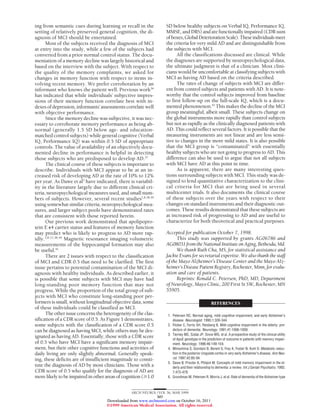
AD on measures of general cognition and other non-
memory indexes. While there may have been mild
impairments in some of the domains of cognition, eg,
full-scale IQ, the actual raw score difference was suffi-
ciently small, eg, a full-scale IQ of 101.8 vs 98.0 for
controls and subjects with MCI, respectively, to not be
clinically meaningful. That is, it is doubtful that most
clinicians would say that a subject with a full-scale IQ
of 98 was demented on the basis of this measure. The
subjects with MCI performed more poorly than the
control subjects on the Controlled Oral Word Associa-
tion Test, but once again, the performance of the sub-
jects with MCI was in the normal range for age based
on our community studies.35
This is not to say, how-
ever, that these subjects may not have incipient clinical
AD; rather, most clinicians would be reluctant to make
the diagnosis of AD at this stage. In addition, it is not
likely that these subjects have a significant functional
deficit since their mean CDR sum of box scores was 1.5
with most of the decline being accounted for by
memory deficits. However, the patients with very mild
AD (CDR 0.5) had a mean CDR sum of the box score of
3.3 that reflected these subjects’ impairment in func-
tional domains.
From a memory perspective, the subjects with MCI
appeared more like the patients with AD than the con-
trol subjects. Again, this is not surprising considering the
selection criteria, but these data lend quantitation to these
criteria. In fact, if the clinician sees a patient with im-
paired delayed recall performance or difficulty benefit-
30
10
20
0
MMSE
16
4
2
10
8
6
14
12
0
Controls
0CDR
MCI
0.5
AD
0.5
AD
1
Logical Memory II
110
85
90
95
100
105
75
80
Full-Scale IQ
18
16
4
2
10
8
6
14
12
0
Controls
0CDR
MCI
0.5
AD
0.5
AD
1
Visual Reproductions II
Figure 1. Relative performance among 4 groups: controls, subjects with mild cognitive impairment (MCI) (Clinical Dementia Rating [CDR] 0.5), and patients with
Alzheimer disease (AD) (CDR 0.5; CDR 1), on measures of global cognitive functioning, Mini-Mental State Examination (MMSE), and full-scale IQ compared with
performance on measures of delayed recall for verbal materials (Logical Memory II) and nonverbal materials (Visual Reproductions II).
60
40
20
100
80
0
Initial Examination
MCI,%
12
mo
24 36 48
MCI Alzheimer Disease
Figure 2. Annual rates of conversion from mild cognitive impairment (MCI)
to dementia over 48 months.
0
–2
–3
–1
–4
2
–10
–4
–6
–8
0
–2
–12
Dementia Rating Scale
1.0
0.4
0.2
0.8
0.6
0.0
Controls
0CDR
MCI
0.5
AD
0.5
AD
1
Global Deterioration Scale
MMSE
Figure 3. Annual rates of change on 3 measures of global function for
controls, subjects with mild cognitive impairment (MCI) (Clinical Dementia
Rating [CDR] 0.5), and patients with Alzheimer disease (AD) (CDR 0.5;
CDR 1). MMSE indicates Mini-Mental State Examination.
ARCH NEUROL/VOL 56, MAR 1999
306
©1999 American Medical Association. All rights reserved.
on October 16, 2011www.archneurol.comDownloaded from
ing from semantic cues during learning or recall in the
setting of relatively preserved general cognition, the di-
agnosis of MCI should be entertained.
Most of the subjects received the diagnosis of MCI
at entry into the study, while a few of the subjects had
converted from a prior normal control status. The docu-
mentation of a memory decline was largely historical and
based on the interview with the subject. With respect to
the quality of the memory complaints, we asked for
changes in memory function with respect to items in-
volving recent memory. We prefer corroboration by an
informant who knows the patient well. Previous work36
has indicated that while individuals’ subjective impres-
sions of their memory function correlate best with in-
dexes of depression, informants’ assessments correlate well
with objective performance.
Since the memory decline was subjective, it was nec-
essary to corroborate memory performance as being ab-
normal (generally 1.5 SD below age- and education-
matched control subjects) while general cognitive (Verbal
IQ, Performance IQ) was within 0.5 SD of appropriate
controls. The value of availability of an objectively docu-
mented decline in performance is helpful in detecting
those subjects who are predisposed to develop AD.37
The clinical course of these subjects is important to
describe. Individuals with MCI appear to be at an in-
creased risk of developing AD at the rate of 10% to 12%
per year. As Dawe et al5
have indicated, there is variabil-
ity in the literature largely due to different clinical cri-
teria, neuropsychological measures used, and small num-
bers of subjects. However, several recent studies1,8,38,39
using somewhat similar criteria, neuropsychological mea-
sures, and larger subject pools have demonstrated rates
that are consistent with those reported herein.
Our previous work demonstrated that apolipopro-
tein E ⑀4 carrier status and features of memory function
may predict who is likely to progress to AD more rap-
idly.3,8,12,38,40
Magnetic resonance imaging volumetric
measurements of the hippocampal formation may also
be useful.41
There are 2 issues with respect to the classification
of MCI and CDR 0.5 that need to be clarified. The first
issue pertains to potential contamination of the MCI di-
agnosis with healthy individuals. As described earlier, it
is possible that some subjects with MCI may have had
long-standing poor memory function that may not
progress. While the proportion of the total group of sub-
jects with MCI who constitute long-standing poor per-
formers is small, without longitudinal objective data, some
of these individuals could be classified as MCI.
Theotherissueconcernstheheterogeneityoftheclas-
sification of a CDR score of 0.5. As Figure 1 demonstrates,
some subjects with the classification of a CDR score 0.5
can be diagnosed as having MCI, while others may be des-
ignated as having AD. Essentially, those with a CDR score
of 0.5 who have MCI have a significant memory impair-
ment, but their other cognitive functions and activities of
daily living are only slightly abnormal. Generally speak-
ing, these deficits are of insufficient magnitude to consti-
tute the diagnosis of AD by most clinicians. Those with a
CDR score of 0.5 who qualify for the diagnosis of AD are
morelikelytobeimpairedinotherareasofcognition(Ն1.0
SD below healthy subjects on Verbal IQ, Performance IQ,
MMSE, and DRS) and are functionally impaired (CDR sum
ofboxes,GlobalDeteriorationScale).Theseindividualsmeet
the criteria for very mild AD and are distinguishable from
the subjects with MCI.
All the classifications discussed are clinical. While
the diagnoses are supported by neuropsychological data,
the ultimate judgment is that of a clinician. Most clini-
cians would be uncomfortable at classifying subjects with
MCI as having AD based on the criteria described.
The rates of change of subjects with MCI are differ-
ent from control subjects and patients with AD. It is note-
worthy that the control subjects improved from baseline
to first follow-up on the full-scale IQ, which is a docu-
mented phenomenon.42
This makes the decline of the MCI
group meaningful, albeit small. These subjects change on
the global instruments more rapidly than control subjects
but not as rapidly as the clinically diagnosed patients with
AD. This could reflect several factors. It is possible that the
measuring instruments are not linear and are less sensi-
tive to changes in the more mild states. It is also possible
that the MCI group is “contaminated” with essentially
healthy subjects who are not going to progress to AD. This
difference can also be used to argue that not all subjects
with MCI have AD at this point in time.
As is apparent, there are many interesting ques-
tions surrounding subjects with MCI. This study was de-
signed to lend quantitative characterization to the clini-
cal criteria for MCI that are being used in several
multicenter trials. It also documents the clinical course
of these subjects over the years with respect to their
changes on standard instruments and their diagnostic out-
comes. These results demonstrated that these subjects are
at increased risk of progressing to AD and are useful to
characterize for both theoretical and practical purposes.
Accepted for publication October 7, 1998.
This study was supported by grants AG06786 and
AG08031fromtheNationalInstituteonAging,Bethesda,Md.
We thank Ruth Cha, MS, for statistical assistance and
Jackie Evans for secretarial expertise. We also thank the staff
of the Mayo Alzheimer’s Disease Center and the Mayo Alz-
heimer’s Disease Patient Registry, Rochester, Minn, for evalu-
ation and care of patients.
Reprints: Ronald C. Petersen, PhD, MD, Department
of Neurology, Mayo Clinic, 200 First St SW, Rochester, MN
55905.
REFERENCES
1. Petersen RC. Normal aging, mild cognitive impairment, and early Alzheimer’s
disease. Neurologist. 1995;1:326-344.
2. Flicker C, Ferris SH, Reisberg B. Mild cognitive impairment in the elderly: pre-
dictors of dementia. Neurology. 1991;41:1006-1009.
3. Tierney MC, Szalai JP, Snow WG, et al. A prospective study of the clinical utility
of ApoE genotype in the prediction of outcome in patients with memory impair-
ment. Neurology. 1996;46:149-154.
4. Minoshima S, Giordani B, Berent S, Frey K, Foster N, Kuhl D. Metabolic reduc-
tion in the posterior cingulate cortex in very early Alzheimer’s disease. Ann Neu-
rol. 1997;42:85-94.
5. Dawe B, Procter A, Philpot M. Concepts of mild memory impairment in the el-
derly and their relationship to dementia: a review. Int J Geriatr Psychiatry. 1992;
7:473-479.
6. Grundman M, Petersen R, Morris J, et al. Rate of dementia of the Alzheimer type
ARCH NEUROL/VOL 56, MAR 1999
307
©1999 American Medical Association. All rights reserved.
on October 16, 2011www.archneurol.comDownloaded from
(DAT) in subjects with mild cognitive impairment [abstract]. Neurology. 1996;
46:A403.
7. Morris JC, McKeel DW, Storandt M, et al. Very mild Alzheimer’s disease: infor-
mant based clinical, psychometric, and pathologic distinction from normal ag-
ing. Neurology. 1991;41:469-478.
8. Petersen RC, Smith GE, Ivnik RJ, et al. Apolipoprotein E status as a predictor of
the development of Alzheimer’s disease in memory-impaired individuals. JAMA.
1995;273:1274-1278.
9. Petersen RC, Waring SC, Smith GE, Tangalos EG, Thibodeau SN. Predictive value
of APOE genotyping in incipient Alzheimer’s disease. Ann N Y Acad Sci. 1996;
802:58-69.
10. Petersen RC, Kokmen E, Tangalos E, Ivnik RJ, Kurland LT. Mayo Clinic Alzhei-
mer’s Disease Patient Registry. Aging. 1990;2:408-415.
11. Petersen RC, Smith G, Kokmen E, Ivnik RJ, Tangalos EG. Memory function in
normal aging. Neurology. 1992;42:396-401.
12. Petersen RC, Smith GE, Ivnik RJ, Kokmen E, Tangalos EG. Memory function in
very early Alzheimer’s disease. Neurology. 1994;44:867-872.
13. Kokmen E, Naessens JM, Offord KP. A Short Test of Mental Status: description
and preliminary results. Mayo Clin Proc. 1987;62:281-288.
14. Kokmen E, Smith GE, Petersen RC, Tangalos E, Ivnik RJ. The short test of men-
tal status: correlations with standardized psychometric testing.Arch Neurol. 1991;
48:725-728.
15. Rosen W, Terry R. Pathological verification of ischemic score differentiation of
dementias. Ann Neurol. 1980;7:486-488.
16. Weintraub S. The record of independent living: an informant-completed mea-
sure of activities of daily living and behavior in elderly patients with cognitive
impairment. Am J Alzheimer Care Rel Disord. 1986;7:35-39.
17. Sheikh JI, Yesavage JA. Geriatric Depression Scale (GDS): recent evidence and
development of a shorter version. In: Brink TL, ed. Clinical Gerontology: A Guide to
AssessmentandIntervention. Binghamton, NY: Haworth Press Inc; 1986:165-173.
18. Lezak MD. Neuropsychological Assessment, Third Edition. New York, NY: Ox-
ford University Press Inc; 1995.
19. Folstein MF, Folstein SE, McHugh PR. “Mini-Mental State”: a practical method
for grading the cognitive state of patients for the clinician. J Psychiatr Res. 1975;
12:189-198.
20. Mattis S. Dementia Rating Scale: Professional Manual. Odessa, Fla: Psychologi-
cal Assessment Resources Inc; 1988.
21. Grober E, Buschke H. Genuine memory deficits in dementia. Dev Neuropsychol.
1987;3:13-36.
22. Buschke H. Cued recall in amnesia. J Clin Neurophysiol. 1984;6:433-440.
23. Buschke H. Control of cognitive processing. In: Squire LR, Butters N, eds. Neu-
ropsychology of Memory. New York, NY: Guilford Press; 1984:37-40.
24. Kaplan EF, Goodglass H, Weintraub S. The Boston Naming Test. Boston, Mass:
E Kaplan & H Goodglass; 1978.
25. Benton AL, Hamsher K, Varney NR, Spreen O. Contributions to Neuropsycho-
logical Assessment. New York, NY: Oxford University Press Inc; 1983.
26. Monsch AU, Bondi MW, Butters N, et al. A comparison of category and letter
fluency in Alzheimer’s disease and Huntington’s disease. Neuropsychology. 1994;
8:25-30.
27. American Psychiatric Association. Diagnostic and Statistical Manual of Mental
Disorders, Revised Third Edition. Washington, DC: American Psychiatric Asso-
ciation; 1987.
28. McKhann G, Drachman D, Folstein M, Katzman R, Price D, Stadlan EM. Clinical
Diagnosis of Alzheimer’s Disease: report of the NINCDS-ADRDA Work Group un-
der the auspices of Department of Health and Human Services Task Force on
Alzheimer’s Disease. Neurology. 1984;34:939-944.
29. Morris JC. The Clinical Dementia Rating (CDR): current version and scoring rules.
Neurology. 1993;43:2412-2414.
30. Berg L. Clinical Dementia Rating (CDR). Psychopharm Bull. 1988;24:637-639.
31. Reisberg B, Ferris S, deLeon MJ, Crook T. The Global Deterioration Scale for as-
sessment of primary degenerative dementia. Am J Psychiatry. 1982;130:
1136-1139.
32. Ivnik RJ, Malec JF, Smith GE, et al. Mayo’s Older Americans Normative Studies:
WAIS-R norms for ages 56 to 97. Clin Neuropsychol. 1992;6(suppl):1-30.
33. Ivnik RJ, Malec JF, Smith GE, et al. Mayo’s Older Americans Normative Studies:
WMS-R norms for ages 56 to 94. Clin Neuropsychol. 1992;6(suppl):49-82.
34. Ivnik RJ, Smith GE, Tangalos EG, Petersen RC, Kokmen E, Kurland LT. Wechs-
ler Memory Scale (WMS): I.Q. dependent norms for persons ages 65-97 years:
Psychological Assessment: J Consult Clin Psychol. 1991;3:156-161.
35. Ivnik RJ, Malec JF, Smith GE, Tangalos EG, Petersen RC. Neuropsychological
tests’ norms above age 55: COWAT, BNT, MAE Token, WRAT-R Reading,
AMNART, STROOP, TMT and JLO. Clin Neuropsychol. 1996;10:262-278.
36. McGlone J, Gupta S, Humphrey D, Oppenheimer S, Mirsen T, Evans DR. Screen-
ing for early dementia using memory complaints from patients and relatives. Arch
Neurol. 1990;47:1189-1193.
37. Morris JC, Storandt M, McKeel DW, et al. Cerebral amyloid deposition and dif-
fuse plaques in “normal” aging. Neurology. 1996;46:707-719.
38. Tierney MC, Szalai JP, Snow WG, et al. Prediction of probable Alzheimer’s dis-
ease in memory-impaired patients: a prospective longitudinal study. Neurology.
1996;46:661-665.
39. Bowen J, Teri L, Kukull W, McCormick W, McCurry S, Larson E. Progression to
dementia in patients with isolated memory loss. Lancet. 1997;349:763-765.
40. Petersen RC, Smith GE, Kokmen E, Ivnik RJ, Tangalos EG. Memory function in
normal aging. Neurology. 1992;42:396-401.
41. Jack CR, Petersen RC, Xu Y-C, et al. Medial temporal atrophy on MRI in normal
aging and very mild Alzheimer’s disease. Neurology. 1997;49:786-794.
42. Lemsky C, Chulune G, Ferman TJ, Ivnik RJ. Detecting clinically relevant memory
changes in elderly patients. J Int Neuropsychol Soc. 1998;4:53.
ARCH NEUROL/VOL 56, MAR 1999
308
©1999 American Medical Association. All rights reserved.
on October 16, 2011www.archneurol.comDownloaded from
Anticardiolipin Antibodies
In their article on the prevalence of anticardiolipin
antibodies in patients with idiopathic intracranial
hypertension, Leker and Steiner 1
state that “the in-
cidence of anticardiolipin antibodies in idiopathic intra-
cranial hypertension has not been systematically stud-
ied... .” Obviously they were unaware of work carried out
at this institution.2
Sussman and colleagues 3
looked for
abnormalities of coagulation in 38 patients with the syn-
drome of idiopathic intracranial hypertension and found
evidence of antiphospholipid antibodies (anticardio-
lipin antibody and/or lupus anticoagulant) in 12 cases
(32%), in 1 of 18 healthy obese controls, and 3 of 24 con-
trols with other neurologic disease. The patients were simi-
lar, but not identical in the 2 studies. Only 18 of the pa-
tients studied by Sussman and colleagues had had imaging
of the intracranial venous system (angiography) and 3
had evidence of dural sinus thrombosis and would have
been excluded from the series reported by Leker and
Steiner. Nevertheless, the results obtained by Leker and
Steiner are remarkably similar to the earlier study, with
6 of their 14 patients having positive anticardiolipin an-
tibody, and although the rates of positivity in suitable con-
trols from the same population are not provided, this sec-
ond study is further evidence that this is a real association
and warrants further investigation. We need to deter-
mine how persistent antiphospholipid antibodies are in
these patients, their relationship to prognosis, their re-
lationship with other possible risk factors (the non-
obese patients may be more likely to have antiphospho-
lipid antibodies3
) and whether they affect the response
to treatments, both those conventionally used for idio-
pathic intrcranial hypertension and those used for other
antiphospholipid antibody syndromes.
Stephen J. L. Howell, DM, FRCP
Royal Hallamshire Hospital
The Central Sheffield University Hospitals
North Trent Institute of Neuroscience
Glossop Rd
Sheffield S10 2JF, England
1. Leker L, Steiner I. Anticardiolipin antibodies are frequently present in patients
with idiopathic intracranial hypertension. Arch Neurol. 1998;55:817-820.
2. Sussman JD, Davies-Jones GAB, Greaves M, Leach M. Coagulation abnor-
malities in benign intracranial hypertension. J Neurol Neurosurg Psychiatry.
1993;56:724.
3. Sussman J, Leach M, Greaves M, Malia R, Davies-Jones GAB. Potentially pro-
thrombotic abnormalities of coagulation in benign intracranial hyperten-
sion. J Neurol Neurosurg Psychiatry. 1997;62:229-233.
In reply
We thank Howell for his comments regarding our article.
Indeed, the series published by Sussman et al1
adds impor-
tant information to our knowledge concerning possible
associations between anticardiolipin antibodies and intra-
cranial hypertension. We appologize for our failure to cite
their work that was published after our manuscript was
completed but prior to its submission to the ARCHIVES.
According to Howell, Sussman et al included patients with
dural sinus thrombosis in their series whereas such patients
were not included in our series. Moreover, dural sinus
thrombosis may present in a benign fashion mimicking
benign intracranial hypertension (pseudotumor cerebri).2
Neuroimaging studies, which are mandatory for the diag-
nosis of dural sinus thrombosis, are not reported for their
patients and therefore, the true incidence of benign intra-
cranial hypertension in the series of Sussman et al is
unknown. Nevertheless, these 2 studies provide support to
the association of anticardiolipin antibodies with intracra-
nial hypertension.
We concur with Howell that further studies investi-
gating this association should be conducted before manage-
ment issues can be answered.
Ronen R. Leker, MD
Israel Steiner, MD
Department of Neurology
Hadassah Medical Center
Ein Kerem, PO Box 12000
Jerusalem 91120, Israel
1. Sussman J, Leach M, Greaves M, Malia R, Davies-Jones GAB. Potentially pro-
thrombotic abnormalities of coagulation in benign intracranial hyperten-
sion. J Neurol Neurosurg Psychiatry. 1997;62:229-233.
2. AmeriA,BousserMG.Cerebralvenousthrombosis.NeurolClin.1992;10:87-111.
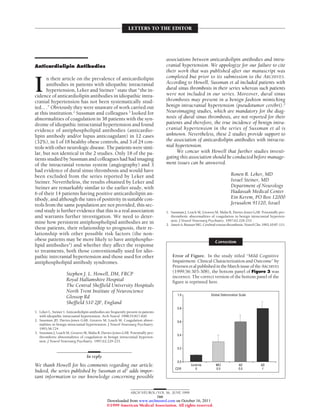
Correction
Error of Figure. In the study titled “Mild Cognitive
Impairment: Clinical Characterization and Outcome” by
Petersen et al published in the March issue of the ARCHIVES
(1999;56:303-308), the bottom panel of Figure 3 was
incorrect. The correct version of the bottom panel of the
figure is reprinted here.
1.0
0.8
0.6
0.4
0.2
Controls
0
MCI
0.5
AD
0.5
AD
1
0.0
Global Deterioration Scale
CDR
LETTERS TO THE EDITOR
ARCH NEUROL/VOL 56, JUNE 1999
760
©1999 American Medical Association. All rights reserved.
on October 16, 2011www.archneurol.comDownloaded from

Mild cognitive impairment

  • 1.
    Mild Cognitive Impairment ClinicalCharacterization and Outcome Ronald C. Petersen, PhD, MD; Glenn E. Smith, PhD; Stephen C. Waring, DVM, PhD; Robert J. Ivnik, PhD; Eric G. Tangalos, MD; Emre Kokmen, MD Background: Subjects with a mild cognitive impair- ment (MCI) have a memory impairment beyond that ex- pected for age and education yet are not demented. These subjects are becoming the focus of many prediction stud- ies and early intervention trials. Objective: To characterize clinically subjects with MCI cross-sectionally and longitudinally. Design: A prospective, longitudinal inception cohort. Setting: General community clinic. Participants: A sample of 76 consecutively evaluated subjects with MCI were compared with 234 healthy con- trol subjects and 106 patients with mild Alzheimer dis- ease (AD), all from a community setting as part of the Mayo Clinic Alzheimer’s Disease Center/Alzheimer’s Dis- ease Patient Registry, Rochester, Minn. Main Outcome Measures: The 3 groups of individu- als were compared on demographic factors and mea- suresofcognitivefunctionincludingtheMini-MentalState Examination, Wechsler Adult Intelligence Scale– Revised, Wechsler Memory Scale–Revised, Dementia Rat- ing Scale, Free and Cued Selective Reminding Test, and Auditory Verbal Learning Test. Clinical classifications of dementia and AD were determined according to the Diagnostic and Statistical Manual of Mental Disorders, Revised Third Edition and the National Institute of Neu- rological and Communicative Disorders and Stroke– Alzheimer’s Disease and Related Disorders Association criteria, respectively. Results: The primary distinction between control sub- jects and subjects with MCI was in the area of memory, while other cognitive functions were comparable. How- ever, when the subjects with MCI were compared with the patients with very mild AD, memory performance was similar, but patients with AD were more impaired in other cognitivedomainsaswell.Longitudinalperformancedem- onstrated that the subjects with MCI declined at a rate greater than that of the controls but less rapidly than the patients with mild AD. Conclusions: Patients who meet the criteria for MCI can be differentiated from healthy control subjects and those with very mild AD. They appear to constitute a clinical entity that can be characterized for treatment interven- tions. Arch Neurol. 1999;56:303-308 A GREAT deal of interest has been generated con- cerning the topic of a boundary or transitional state between normal aging and dementia, or more specifi- cally, Alzheimer disease (AD).1 This condition has received several descrip- tors including mild cognitive impair- ment (MCI), incipient dementia, and isolated memory impairment.2-4 Reviews of several studies have indicated that these individuals are at an increased risk for developing AD ranging from 1% to 25% per year.5 The variability in these rates likely reflects differing diag- nostic criteria, measurement instru- ments, and small sample sizes.5 Patients with an MCI are also becom- ing of interest for treatment trials. The Alz- heimer’s Disease Cooperative Study, which is a National Institute on Aging consor- tium of Alzheimer’s Disease research groups, is embarking on a multicenter trial of agents intended to alter the progres- sion of patients with MCI to AD.6 Several pharmaceutical companies are initiating large trials on this same group of indi- viduals. Questions can be raised as to the diagnostic criteria for MCI. Some inves- tigators believe that virtually all these patients with mild disease have AD neu- ropathologically, and, therefore, this may not be a useful distinction.7 Oth- ers6,8,9 note that while many of these pa- ORIGINAL CONTRIBUTION From the Departments of Neurology (Drs Petersen and Kokmen), Health Sciences Research (Drs Petersen and Waring), and Psychiatry and Psychology (Drs Smith and Ivnik), and the Division of Community Internal Medicine (Dr Tangalos), Mayo Clinic, Rochester, Minn. ARCH NEUROL/VOL 56, MAR 1999 303 ©1999 American Medical Association. All rights reserved. on October 16, 2011www.archneurol.comDownloaded from
  • 2.
    tients progress toAD, not all do, and consequently, the distinction is important. We have been enrolling patients at the mild end of the cognitive spectrum for more than 10 years as part of a community study on aging and dementia.8,10 Our re- cruitment scheme involves screening patients who are being seen by their primary care physicians for periodic general medical evaluations which affords us the oppor- tunity to detect patients before they present to a demen- tia or memory disorders clinic. This study reports the clini- cal criteria used to diagnose these patients as well as their neuropsychological characterization, differentiation from controls and patients with mild AD, and the longitudi- nal course of the subjects with MCI. As such, these data provide a background for the clinician to use in evalu- ating these individuals in practice. RESULTS We have enrolled 76 subjects with the diagnosis of MCI over the last 11 years. The demographic features of these subjects as well as groups of control subjects and pa- tients with very mild AD enrolled over the same interval grouped by CDR ratings are shown in the Table for com- parison purposes. The Table also shows the perfor- mance of the 4 groups with respect to a sampling of cog- nitive measures. As would be consistent with the selection criteria, the subjects with MCI performed slightly more SUBJECTS AND METHODS The subjects for this study were recruited through the Mayo Alzheimer’s Disease Center/Alzheimer’s Disease Patient Registry (ADC/ADPR) using a standardized clini- cal protocol.8-12 The patients were derived from 2 sources: community patients in Rochester, Minn, and regional patients referred to the ADC. The community patients were recruited through the Division of Community Inter- nal Medicine of the Mayo Clinic from Rochester residents who were receiving their general medical care at the Mayo Clinic. If during the course of their medical evaluation the patients expressed concern about their cognitive function, the patients’ families expressed a concern about the patients’ cognition, or the examining physician detected a cognitive change in the patients, the patient was then referred to the ADC/ADPR staff. The regional patients were derived from individuals who had come to the Mayo ADC for an evaluation of cognitive difficulties. These individuals were either referred by their personal physi- cians, family members, or by the patients themselves. Patients from both the community and regional sources received an identical evaluation. On referral, the patients were seen by a behavioral neurologist who obtained a medi- cal history from the patient and corroborating sources, per- formed the Short Test of Mental Status,13,14 Hachinski Is- chemic Scale,15 and a neurologic examination. Study personnel obtained other data including the Record of In- dependent Living,16 Geriatric Depression Scale,17 and ad- ditional family history information. Laboratory studies were performed, including a chemistry group, complete blood cell count, sedimentation rate, vitamin B12 and folic acid levels, sensitive thyroid-stimulating hormone level, and syphilis serologic testing. All patients received a head imaging study (computed tomography or magnetic reso- nance imaging). Additional studies including a cerebro- spinal fluid analysis, electroencephalogram, and a single- photon emission computed tomographic scan were performed as the clinical situation indicated. Two sessions of neuropsychological testing were com- pleted on all subjects. The first set of tests was used for diagnostic purposes and included the Wechsler Adult Intelligence Scale–Revised, Wechsler Memory Scale– Revised, Auditory Verbal Learning Test, and Wide-Range Achievement Test-III.18 The second set of tests was used for research purposes and included the Mini-Mental State Examination (MMSE),19 Dementia Rating Scale (DRS),20 Free and Cued Selective Reminding Test,21-23 Boston Nam- ing Test,24 Controlled Oral Word Association Test,25 and category fluency procedures.26 At the completion of this evaluation a consensus com- mittee meeting was held involving the behavioral neurolo- gists, geriatrician, neuropsychologists, nurses, and other study personnel who had evaluated the patients. Diag- noses were made for dementia and AD according to the Di- agnostic and Statistical Manual of Mental Disorders, Revised Third Edition,27 and the National Institute of Neurological and Communicative Disorders and Stroke–Alzheimer’s Dis- ease and Related Disorders of Association criteria, respec- tively.28 The diagnosis of MCI was made if the patient met the following criteria: (1) memory complaint, (2) normal activities of daily living, (3) normal general cognitive func- tion, (4) abnormal memory for age, and (5) not de- mented.8 Several studies3,8,9 characterizing the outcome of patients with an MCI using these criteria have been re- ported. At the conclusion of the consensus conference, af- ter the diagnosis had been made, the patients were staged on the Clinical Dementia Rating scale (CDR)29,30 and the Global Deterioration Scale.31 Control subjects were sought from the community population of individuals receiving general medical exami- nations at the Mayo Clinic.32-34 They underwent a similar evaluation as the patients described earlier including the neurologic examination and neuropsychological testing bat- tery. They qualified as controls if, in the opinion of their clinician, they were functioning normally in the commu- nity and did not have a cognitive impairment. In addition, they could not have any active neurologic or psychiatric illnesses and could not be taking psychoactive medica- tions. They could have comorbid illnesses such as hyper- tension and coronary artery disease, and they could be tak- ing medications for these disorders. However, in the opinion of their physicians, these illnesses or their treatments did not interfere with the patients’ cognitive function. These patients were also reviewed at the consensus conference and CDR scale and Global Deterioration Scale ratings were completed. Patients and control subjects were reevaluated every 12 to 18 months and received an abbreviated neuropsy- chological battery at that visit. Their performance was re- viewed at the consensus conference and the diagnoses were adjusted accordingly, if necessary. They were also reas- sessed on the CDR scale and the Global Deterioration Scale. The Mayo ADC/ADPR projects have been approved by the Mayo Institutional Review Board. ARCH NEUROL/VOL 56, MAR 1999 304 ©1999 American Medical Association. All rights reserved. on October 16, 2011www.archneurol.comDownloaded from
  • 3.
    poorly on thesemeasures than the control subjects, but were superior to the patients with AD. Statistical com- parisons in the Table were performed using a 1-way analy- sis of variance with each cognitive measure as the de- pendent variable comparing the 4 groups of subjects. The relevant pairwise comparisons were made between ad- jacent groups, eg, control vs MCI and MCI vs AD (CDR 0.5) and AD (CDR 0.5) vs AD (CDR 1), using Tukey hon- estly significant difference with a level of significance be- ing set at the .01 level due to the large number of com- parisons performed. As one measure of disease severity, the CDR sum of box scores was calculated.29,30 The CDR sum of the box scoreswasdeterminedbytotalingtheindividualboxscores for a given patient (range, 0-18). For example, a control patient may have had 0 in each of the 6 boxes for the vari- ous categories. A typical patient with AD and a summary CDR score of 1 might have had the sum of the 6 having scored 1 in each of the 6 individual boxes. This statistic yielded an approximate index of severity on the CDR as well as involvement of activities of daily living. On measures of general cognition such as the Wechs- ler Adult Intelligence Scale–Revised, the controls and sub- jects with MCI did not differ significantly. On the screen- ing measures of general cognition, MMSE and DRS, there were small differences largely due to the memory com- ponent of those measures. In general, while the subjects with MCI did not perform as well as the control sub- jects, they still functioned in the normal range. How- ever, the subjects with MCI differed from even the CDR 0.5 patients with AD on virtually all measures of general cognitive function (Figure 1). The Table displays memory data among the 4 groups. Again, as would be expected from the selection criteria, the subjects with MCI were significantly impaired on all memory measures relative to control subjects and ap- peared similar to the patients with AD. These results were seen for virtually all measures of learning and delayed recall using word lists, paragraphs, and nonverbal ma- terials. The differences were less dramatic between the subjects with MCI and the patients with AD; rather, the other areas of cognition and functional measures differ- entiated these groups. The Boston Naming Test results paralleled those of the memory domain. These findings can be interpreted as indicating that either the linguistic function of nam- ing is impaired early in the disease process, or that this naming test actually assesses semantic memory and there- fore is consistent with the other memory data. Figure 2 demonstrates the outcome of the sub- jects with MCI up to approximately 4 years of follow- up. The conversion rate was 12% per year for the 4 years. These rates are in contrast to conversion rates for the healthy control subjects in our community sample. We have enrolled and followed up more than 500 control sub- jects in the 10 years of the study, and these subjects tend to convert to MCI/AD at a rate of approximately 1% to 2% per year. Figure 3 shows the mean annualized rate of change for all subjects in the comparison groups on the MMSE, DRS, and Global Deterioration Scale. On the MMSE, the subjects with MCI behaved more like control subjects than the patients with AD. Similarly, the subjects with MCI showed a slower rate of change on the DRS and Global Deterioration Scale with respect to annualized differ- ences than did the patients with AD. COMMENT This study was designed to quantitatively characterize and describe the clinical course of patients diagnosed as hav- ingMCIusingcriteriathataresimilartothosebeingadopted by several multicenter treatment trials. While the criteria for MCI can be accepted by investigators in principle, the operationalization of these criteria can be challenging. As such, these results provide cross-sectional and longitudi- nal data with respect to these criteria. As expected, the subjects with MCI performed more similarly to the control subjects than the patients with Comparison of 4 Clinical Groups on Various Cognitive Scales* Controls, CDR 0 MCI, CDR 0.5 AD, CDR 0.5 AD, CDR 1 N 234 76 48 58 M/F 71/163 30/46 19/29 15/43 APOE, ⑀4/non ⑀4 161/46 43/22 21/17 24/22 Age, y 79.8 ± 0.5a 80.9 ± 1.0a 75.6 ± 1.7c 80.5 ± 1.0a Education, y 13.3 ± 0.2a 13.7 ± 0.4a 12.5 ± 0.4b 12.1 ± 0.4b CDR sum of boxes 0.0 ± 0.0a 1.5 ± 0.2b 3.3 ± 0.1c 5.9 ± 0.2d GDS 1.1 ± 0.0a 2.7 ± 0.1b 3.4 ± 0.1c 3.9 ± 0.1d GDepS 2.1 ± 0.1a 2.8 ± 0.3b 3.2 ± 0.3b 3.4 ± 0.3b MMSE 28.3 ± 0.1a 26.0 ± 0.3b 22.6 ± 0.5c 21.4 ± 0.4c DRS 134.3 ± 0.4a 124.7 ± 1.1b 112.7 ± 1.9c 106.7 ± 1.9c VIQ 102.5 ± 0.6a 99.1 ± 1.3a 86.6 ± 1.5b 85.4 ± 1.2b PIQ 100.4 ± 0.8a 96.2 ± 1.4b 82.1 ± 1.7c 81.4 ± 1.2c FSIQ 101.8 ± 0.7a 98.0 ± 1.3a 83.9 ± 1.3b 83.0 ± 1.0b BNT 50.3 ± 0.5a 45.0 ± 1.2b 34.7 ± 1.9c 33.5 ± 1.4c COWAT 35.1 ± 0.7a 29.9 ± 1.3b 24.4 ± 1.7b 20.0 ± 1.4b WMS-R LMI 21.3 ± 0.4a 12.7 ± 0.6b 8.6 ± 0.8c 5.8 ± 0.6d LMII 15.3 ± 0.5a 4.2 ± 0.6b 2.8 ± 0.6b 1.5 ± 0.5b VRI 25.7 ± 0.4a 20.2 ± 0.7b 14.4 ± 0.9c 13.8 ± 0.7c VRII 17.6 ± 0.5a 7.4 ± 0.9b 4.1 ± 0.7c 2.2 ± 0.4d AVLT LNG 35.5 ± 0.6a 25.0 ± 0.9b 21.5 ± 1.1c 17.8 ± 0.8d % RET 62.1 ± 1.6a 21.6 ± 2.9b 8.3 ± 2.8c 10.8 ± 3.1c FCSRT LN 58.4 ± 0.8a 34.1 ± 1.7b 25.6 ± 2.3c 16.6 ± 1.6d % RETN 86.7 ± 1.1a 59.8 ± 4.4b 39.5 ± 6.2c 31.4 ± 5.3c *Analyses reflect differences at the .01 level for comparison of adjacent groups. Values are mean ± SD. CDR indicates Clinical Dementia Rating; MCI, mild cognitive impairment; AD, Alzheimer disease; APOE, ratio of apolipoprotein E ⑀4 noncarriers to carriers excluding 2/4 genotypes; GDS, Global Deterioration Scale; GDepS, Geriatric Depression Scale; MMSE, Mini-Mental State Examination; DRS, Dementia Rating Scale; VIQ, Wechsler Adult Intelligence Scale, Verbal IQ; PIQ, Wechsler Adult Intelligence Scale, Performance IQ; FSIQ, Wechsler Adult Intelligence Scale, Full-Scale IQ; BNT, Boston Naming Test; COWAT, Controlled Oral Word Association Test; WMS-R, Wechsler Memory Scale-Revised; LM, Logical Memory; VRI, Visual Reproductions; AVLT, Auditory Verbal Learning Test; LNG, sum of learning trials 1 to 5; %RET, delayed recall/trial 5 ϫ 100; FCSRT, Free and Cued Selective Reminding Test; LN, sum of the performance across trials 1 to 6; and RETN, delayed recall/trial 6 ϫ 100. Comparison of 4 clinical groups on various cognitive scales. Analyses reflect differences at the .01 level for comparison of adjacent group. Similar letters (ie, a, b, c, and d) indicate no significant difference between pairwise comparisons. ARCH NEUROL/VOL 56, MAR 1999 305 ©1999 American Medical Association. All rights reserved. on October 16, 2011www.archneurol.comDownloaded from
  • 4.
    AD on measuresof general cognition and other non- memory indexes. While there may have been mild impairments in some of the domains of cognition, eg, full-scale IQ, the actual raw score difference was suffi- ciently small, eg, a full-scale IQ of 101.8 vs 98.0 for controls and subjects with MCI, respectively, to not be clinically meaningful. That is, it is doubtful that most clinicians would say that a subject with a full-scale IQ of 98 was demented on the basis of this measure. The subjects with MCI performed more poorly than the control subjects on the Controlled Oral Word Associa- tion Test, but once again, the performance of the sub- jects with MCI was in the normal range for age based on our community studies.35 This is not to say, how- ever, that these subjects may not have incipient clinical AD; rather, most clinicians would be reluctant to make the diagnosis of AD at this stage. In addition, it is not likely that these subjects have a significant functional deficit since their mean CDR sum of box scores was 1.5 with most of the decline being accounted for by memory deficits. However, the patients with very mild AD (CDR 0.5) had a mean CDR sum of the box score of 3.3 that reflected these subjects’ impairment in func- tional domains. From a memory perspective, the subjects with MCI appeared more like the patients with AD than the con- trol subjects. Again, this is not surprising considering the selection criteria, but these data lend quantitation to these criteria. In fact, if the clinician sees a patient with im- paired delayed recall performance or difficulty benefit- 30 10 20 0 MMSE 16 4 2 10 8 6 14 12 0 Controls 0CDR MCI 0.5 AD 0.5 AD 1 Logical Memory II 110 85 90 95 100 105 75 80 Full-Scale IQ 18 16 4 2 10 8 6 14 12 0 Controls 0CDR MCI 0.5 AD 0.5 AD 1 Visual Reproductions II Figure 1. Relative performance among 4 groups: controls, subjects with mild cognitive impairment (MCI) (Clinical Dementia Rating [CDR] 0.5), and patients with Alzheimer disease (AD) (CDR 0.5; CDR 1), on measures of global cognitive functioning, Mini-Mental State Examination (MMSE), and full-scale IQ compared with performance on measures of delayed recall for verbal materials (Logical Memory II) and nonverbal materials (Visual Reproductions II). 60 40 20 100 80 0 Initial Examination MCI,% 12 mo 24 36 48 MCI Alzheimer Disease Figure 2. Annual rates of conversion from mild cognitive impairment (MCI) to dementia over 48 months. 0 –2 –3 –1 –4 2 –10 –4 –6 –8 0 –2 –12 Dementia Rating Scale 1.0 0.4 0.2 0.8 0.6 0.0 Controls 0CDR MCI 0.5 AD 0.5 AD 1 Global Deterioration Scale MMSE Figure 3. Annual rates of change on 3 measures of global function for controls, subjects with mild cognitive impairment (MCI) (Clinical Dementia Rating [CDR] 0.5), and patients with Alzheimer disease (AD) (CDR 0.5; CDR 1). MMSE indicates Mini-Mental State Examination. ARCH NEUROL/VOL 56, MAR 1999 306 ©1999 American Medical Association. All rights reserved. on October 16, 2011www.archneurol.comDownloaded from
  • 5.
    ing from semanticcues during learning or recall in the setting of relatively preserved general cognition, the di- agnosis of MCI should be entertained. Most of the subjects received the diagnosis of MCI at entry into the study, while a few of the subjects had converted from a prior normal control status. The docu- mentation of a memory decline was largely historical and based on the interview with the subject. With respect to the quality of the memory complaints, we asked for changes in memory function with respect to items in- volving recent memory. We prefer corroboration by an informant who knows the patient well. Previous work36 has indicated that while individuals’ subjective impres- sions of their memory function correlate best with in- dexes of depression, informants’ assessments correlate well with objective performance. Since the memory decline was subjective, it was nec- essary to corroborate memory performance as being ab- normal (generally 1.5 SD below age- and education- matched control subjects) while general cognitive (Verbal IQ, Performance IQ) was within 0.5 SD of appropriate controls. The value of availability of an objectively docu- mented decline in performance is helpful in detecting those subjects who are predisposed to develop AD.37 The clinical course of these subjects is important to describe. Individuals with MCI appear to be at an in- creased risk of developing AD at the rate of 10% to 12% per year. As Dawe et al5 have indicated, there is variabil- ity in the literature largely due to different clinical cri- teria, neuropsychological measures used, and small num- bers of subjects. However, several recent studies1,8,38,39 using somewhat similar criteria, neuropsychological mea- sures, and larger subject pools have demonstrated rates that are consistent with those reported herein. Our previous work demonstrated that apolipopro- tein E ⑀4 carrier status and features of memory function may predict who is likely to progress to AD more rap- idly.3,8,12,38,40 Magnetic resonance imaging volumetric measurements of the hippocampal formation may also be useful.41 There are 2 issues with respect to the classification of MCI and CDR 0.5 that need to be clarified. The first issue pertains to potential contamination of the MCI di- agnosis with healthy individuals. As described earlier, it is possible that some subjects with MCI may have had long-standing poor memory function that may not progress. While the proportion of the total group of sub- jects with MCI who constitute long-standing poor per- formers is small, without longitudinal objective data, some of these individuals could be classified as MCI. Theotherissueconcernstheheterogeneityoftheclas- sification of a CDR score of 0.5. As Figure 1 demonstrates, some subjects with the classification of a CDR score 0.5 can be diagnosed as having MCI, while others may be des- ignated as having AD. Essentially, those with a CDR score of 0.5 who have MCI have a significant memory impair- ment, but their other cognitive functions and activities of daily living are only slightly abnormal. Generally speak- ing, these deficits are of insufficient magnitude to consti- tute the diagnosis of AD by most clinicians. Those with a CDR score of 0.5 who qualify for the diagnosis of AD are morelikelytobeimpairedinotherareasofcognition(Ն1.0 SD below healthy subjects on Verbal IQ, Performance IQ, MMSE, and DRS) and are functionally impaired (CDR sum ofboxes,GlobalDeteriorationScale).Theseindividualsmeet the criteria for very mild AD and are distinguishable from the subjects with MCI. All the classifications discussed are clinical. While the diagnoses are supported by neuropsychological data, the ultimate judgment is that of a clinician. Most clini- cians would be uncomfortable at classifying subjects with MCI as having AD based on the criteria described. The rates of change of subjects with MCI are differ- ent from control subjects and patients with AD. It is note- worthy that the control subjects improved from baseline to first follow-up on the full-scale IQ, which is a docu- mented phenomenon.42 This makes the decline of the MCI group meaningful, albeit small. These subjects change on the global instruments more rapidly than control subjects but not as rapidly as the clinically diagnosed patients with AD. This could reflect several factors. It is possible that the measuring instruments are not linear and are less sensi- tive to changes in the more mild states. It is also possible that the MCI group is “contaminated” with essentially healthy subjects who are not going to progress to AD. This difference can also be used to argue that not all subjects with MCI have AD at this point in time. As is apparent, there are many interesting ques- tions surrounding subjects with MCI. This study was de- signed to lend quantitative characterization to the clini- cal criteria for MCI that are being used in several multicenter trials. It also documents the clinical course of these subjects over the years with respect to their changes on standard instruments and their diagnostic out- comes. These results demonstrated that these subjects are at increased risk of progressing to AD and are useful to characterize for both theoretical and practical purposes. Accepted for publication October 7, 1998. This study was supported by grants AG06786 and AG08031fromtheNationalInstituteonAging,Bethesda,Md. We thank Ruth Cha, MS, for statistical assistance and Jackie Evans for secretarial expertise. We also thank the staff of the Mayo Alzheimer’s Disease Center and the Mayo Alz- heimer’s Disease Patient Registry, Rochester, Minn, for evalu- ation and care of patients. Reprints: Ronald C. Petersen, PhD, MD, Department of Neurology, Mayo Clinic, 200 First St SW, Rochester, MN 55905. REFERENCES 1. Petersen RC. Normal aging, mild cognitive impairment, and early Alzheimer’s disease. Neurologist. 1995;1:326-344. 2. Flicker C, Ferris SH, Reisberg B. Mild cognitive impairment in the elderly: pre- dictors of dementia. Neurology. 1991;41:1006-1009. 3. Tierney MC, Szalai JP, Snow WG, et al. A prospective study of the clinical utility of ApoE genotype in the prediction of outcome in patients with memory impair- ment. Neurology. 1996;46:149-154. 4. Minoshima S, Giordani B, Berent S, Frey K, Foster N, Kuhl D. Metabolic reduc- tion in the posterior cingulate cortex in very early Alzheimer’s disease. Ann Neu- rol. 1997;42:85-94. 5. Dawe B, Procter A, Philpot M. Concepts of mild memory impairment in the el- derly and their relationship to dementia: a review. Int J Geriatr Psychiatry. 1992; 7:473-479. 6. Grundman M, Petersen R, Morris J, et al. Rate of dementia of the Alzheimer type ARCH NEUROL/VOL 56, MAR 1999 307 ©1999 American Medical Association. All rights reserved. on October 16, 2011www.archneurol.comDownloaded from
  • 6.
    (DAT) in subjectswith mild cognitive impairment [abstract]. Neurology. 1996; 46:A403. 7. Morris JC, McKeel DW, Storandt M, et al. Very mild Alzheimer’s disease: infor- mant based clinical, psychometric, and pathologic distinction from normal ag- ing. Neurology. 1991;41:469-478. 8. Petersen RC, Smith GE, Ivnik RJ, et al. Apolipoprotein E status as a predictor of the development of Alzheimer’s disease in memory-impaired individuals. JAMA. 1995;273:1274-1278. 9. Petersen RC, Waring SC, Smith GE, Tangalos EG, Thibodeau SN. Predictive value of APOE genotyping in incipient Alzheimer’s disease. Ann N Y Acad Sci. 1996; 802:58-69. 10. Petersen RC, Kokmen E, Tangalos E, Ivnik RJ, Kurland LT. Mayo Clinic Alzhei- mer’s Disease Patient Registry. Aging. 1990;2:408-415. 11. Petersen RC, Smith G, Kokmen E, Ivnik RJ, Tangalos EG. Memory function in normal aging. Neurology. 1992;42:396-401. 12. Petersen RC, Smith GE, Ivnik RJ, Kokmen E, Tangalos EG. Memory function in very early Alzheimer’s disease. Neurology. 1994;44:867-872. 13. Kokmen E, Naessens JM, Offord KP. A Short Test of Mental Status: description and preliminary results. Mayo Clin Proc. 1987;62:281-288. 14. Kokmen E, Smith GE, Petersen RC, Tangalos E, Ivnik RJ. The short test of men- tal status: correlations with standardized psychometric testing.Arch Neurol. 1991; 48:725-728. 15. Rosen W, Terry R. Pathological verification of ischemic score differentiation of dementias. Ann Neurol. 1980;7:486-488. 16. Weintraub S. The record of independent living: an informant-completed mea- sure of activities of daily living and behavior in elderly patients with cognitive impairment. Am J Alzheimer Care Rel Disord. 1986;7:35-39. 17. Sheikh JI, Yesavage JA. Geriatric Depression Scale (GDS): recent evidence and development of a shorter version. In: Brink TL, ed. Clinical Gerontology: A Guide to AssessmentandIntervention. Binghamton, NY: Haworth Press Inc; 1986:165-173. 18. Lezak MD. Neuropsychological Assessment, Third Edition. New York, NY: Ox- ford University Press Inc; 1995. 19. Folstein MF, Folstein SE, McHugh PR. “Mini-Mental State”: a practical method for grading the cognitive state of patients for the clinician. J Psychiatr Res. 1975; 12:189-198. 20. Mattis S. Dementia Rating Scale: Professional Manual. Odessa, Fla: Psychologi- cal Assessment Resources Inc; 1988. 21. Grober E, Buschke H. Genuine memory deficits in dementia. Dev Neuropsychol. 1987;3:13-36. 22. Buschke H. Cued recall in amnesia. J Clin Neurophysiol. 1984;6:433-440. 23. Buschke H. Control of cognitive processing. In: Squire LR, Butters N, eds. Neu- ropsychology of Memory. New York, NY: Guilford Press; 1984:37-40. 24. Kaplan EF, Goodglass H, Weintraub S. The Boston Naming Test. Boston, Mass: E Kaplan & H Goodglass; 1978. 25. Benton AL, Hamsher K, Varney NR, Spreen O. Contributions to Neuropsycho- logical Assessment. New York, NY: Oxford University Press Inc; 1983. 26. Monsch AU, Bondi MW, Butters N, et al. A comparison of category and letter fluency in Alzheimer’s disease and Huntington’s disease. Neuropsychology. 1994; 8:25-30. 27. American Psychiatric Association. Diagnostic and Statistical Manual of Mental Disorders, Revised Third Edition. Washington, DC: American Psychiatric Asso- ciation; 1987. 28. McKhann G, Drachman D, Folstein M, Katzman R, Price D, Stadlan EM. Clinical Diagnosis of Alzheimer’s Disease: report of the NINCDS-ADRDA Work Group un- der the auspices of Department of Health and Human Services Task Force on Alzheimer’s Disease. Neurology. 1984;34:939-944. 29. Morris JC. The Clinical Dementia Rating (CDR): current version and scoring rules. Neurology. 1993;43:2412-2414. 30. Berg L. Clinical Dementia Rating (CDR). Psychopharm Bull. 1988;24:637-639. 31. Reisberg B, Ferris S, deLeon MJ, Crook T. The Global Deterioration Scale for as- sessment of primary degenerative dementia. Am J Psychiatry. 1982;130: 1136-1139. 32. Ivnik RJ, Malec JF, Smith GE, et al. Mayo’s Older Americans Normative Studies: WAIS-R norms for ages 56 to 97. Clin Neuropsychol. 1992;6(suppl):1-30. 33. Ivnik RJ, Malec JF, Smith GE, et al. Mayo’s Older Americans Normative Studies: WMS-R norms for ages 56 to 94. Clin Neuropsychol. 1992;6(suppl):49-82. 34. Ivnik RJ, Smith GE, Tangalos EG, Petersen RC, Kokmen E, Kurland LT. Wechs- ler Memory Scale (WMS): I.Q. dependent norms for persons ages 65-97 years: Psychological Assessment: J Consult Clin Psychol. 1991;3:156-161. 35. Ivnik RJ, Malec JF, Smith GE, Tangalos EG, Petersen RC. Neuropsychological tests’ norms above age 55: COWAT, BNT, MAE Token, WRAT-R Reading, AMNART, STROOP, TMT and JLO. Clin Neuropsychol. 1996;10:262-278. 36. McGlone J, Gupta S, Humphrey D, Oppenheimer S, Mirsen T, Evans DR. Screen- ing for early dementia using memory complaints from patients and relatives. Arch Neurol. 1990;47:1189-1193. 37. Morris JC, Storandt M, McKeel DW, et al. Cerebral amyloid deposition and dif- fuse plaques in “normal” aging. Neurology. 1996;46:707-719. 38. Tierney MC, Szalai JP, Snow WG, et al. Prediction of probable Alzheimer’s dis- ease in memory-impaired patients: a prospective longitudinal study. Neurology. 1996;46:661-665. 39. Bowen J, Teri L, Kukull W, McCormick W, McCurry S, Larson E. Progression to dementia in patients with isolated memory loss. Lancet. 1997;349:763-765. 40. Petersen RC, Smith GE, Kokmen E, Ivnik RJ, Tangalos EG. Memory function in normal aging. Neurology. 1992;42:396-401. 41. Jack CR, Petersen RC, Xu Y-C, et al. Medial temporal atrophy on MRI in normal aging and very mild Alzheimer’s disease. Neurology. 1997;49:786-794. 42. Lemsky C, Chulune G, Ferman TJ, Ivnik RJ. Detecting clinically relevant memory changes in elderly patients. J Int Neuropsychol Soc. 1998;4:53. ARCH NEUROL/VOL 56, MAR 1999 308 ©1999 American Medical Association. All rights reserved. on October 16, 2011www.archneurol.comDownloaded from
  • 7.
    Anticardiolipin Antibodies In theirarticle on the prevalence of anticardiolipin antibodies in patients with idiopathic intracranial hypertension, Leker and Steiner 1 state that “the in- cidence of anticardiolipin antibodies in idiopathic intra- cranial hypertension has not been systematically stud- ied... .” Obviously they were unaware of work carried out at this institution.2 Sussman and colleagues 3 looked for abnormalities of coagulation in 38 patients with the syn- drome of idiopathic intracranial hypertension and found evidence of antiphospholipid antibodies (anticardio- lipin antibody and/or lupus anticoagulant) in 12 cases (32%), in 1 of 18 healthy obese controls, and 3 of 24 con- trols with other neurologic disease. The patients were simi- lar, but not identical in the 2 studies. Only 18 of the pa- tients studied by Sussman and colleagues had had imaging of the intracranial venous system (angiography) and 3 had evidence of dural sinus thrombosis and would have been excluded from the series reported by Leker and Steiner. Nevertheless, the results obtained by Leker and Steiner are remarkably similar to the earlier study, with 6 of their 14 patients having positive anticardiolipin an- tibody, and although the rates of positivity in suitable con- trols from the same population are not provided, this sec- ond study is further evidence that this is a real association and warrants further investigation. We need to deter- mine how persistent antiphospholipid antibodies are in these patients, their relationship to prognosis, their re- lationship with other possible risk factors (the non- obese patients may be more likely to have antiphospho- lipid antibodies3 ) and whether they affect the response to treatments, both those conventionally used for idio- pathic intrcranial hypertension and those used for other antiphospholipid antibody syndromes. Stephen J. L. Howell, DM, FRCP Royal Hallamshire Hospital The Central Sheffield University Hospitals North Trent Institute of Neuroscience Glossop Rd Sheffield S10 2JF, England 1. Leker L, Steiner I. Anticardiolipin antibodies are frequently present in patients with idiopathic intracranial hypertension. Arch Neurol. 1998;55:817-820. 2. Sussman JD, Davies-Jones GAB, Greaves M, Leach M. Coagulation abnor- malities in benign intracranial hypertension. J Neurol Neurosurg Psychiatry. 1993;56:724. 3. Sussman J, Leach M, Greaves M, Malia R, Davies-Jones GAB. Potentially pro- thrombotic abnormalities of coagulation in benign intracranial hyperten- sion. J Neurol Neurosurg Psychiatry. 1997;62:229-233. In reply We thank Howell for his comments regarding our article. Indeed, the series published by Sussman et al1 adds impor- tant information to our knowledge concerning possible associations between anticardiolipin antibodies and intra- cranial hypertension. We appologize for our failure to cite their work that was published after our manuscript was completed but prior to its submission to the ARCHIVES. According to Howell, Sussman et al included patients with dural sinus thrombosis in their series whereas such patients were not included in our series. Moreover, dural sinus thrombosis may present in a benign fashion mimicking benign intracranial hypertension (pseudotumor cerebri).2 Neuroimaging studies, which are mandatory for the diag- nosis of dural sinus thrombosis, are not reported for their patients and therefore, the true incidence of benign intra- cranial hypertension in the series of Sussman et al is unknown. Nevertheless, these 2 studies provide support to the association of anticardiolipin antibodies with intracra- nial hypertension. We concur with Howell that further studies investi- gating this association should be conducted before manage- ment issues can be answered. Ronen R. Leker, MD Israel Steiner, MD Department of Neurology Hadassah Medical Center Ein Kerem, PO Box 12000 Jerusalem 91120, Israel 1. Sussman J, Leach M, Greaves M, Malia R, Davies-Jones GAB. Potentially pro- thrombotic abnormalities of coagulation in benign intracranial hyperten- sion. J Neurol Neurosurg Psychiatry. 1997;62:229-233. 2. AmeriA,BousserMG.Cerebralvenousthrombosis.NeurolClin.1992;10:87-111. Correction Error of Figure. In the study titled “Mild Cognitive Impairment: Clinical Characterization and Outcome” by Petersen et al published in the March issue of the ARCHIVES (1999;56:303-308), the bottom panel of Figure 3 was incorrect. The correct version of the bottom panel of the figure is reprinted here. 1.0 0.8 0.6 0.4 0.2 Controls 0 MCI 0.5 AD 0.5 AD 1 0.0 Global Deterioration Scale CDR LETTERS TO THE EDITOR ARCH NEUROL/VOL 56, JUNE 1999 760 ©1999 American Medical Association. All rights reserved. on October 16, 2011www.archneurol.comDownloaded from