

AN AUTOETHNOGRAPHIC STUDY
OF OUTSOURCING LIFECYCLE
BETWEEN A SMALL SIZE CLIENT AND
MEDIUM SIZE VENDOR IN CHINA
BY: LINLIN ZHANG, FATIMAH AL HALAL, VISHAL ADITHIYA
Course: MIS40690: Managing Global Sourcing
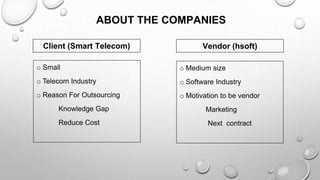
o Small
o Telecom Industry
o Reason For Outsourcing
Knowledge Gap
Reduce Cost
o Medium size
o Software Industry
o Motivation to be vendor
Marketing
Next contract
ABOUT THE COMPANIES
Client (Smart Telecom) Vendor (hsoft)
ABOUT THE PROJECT: SMART BUILDING
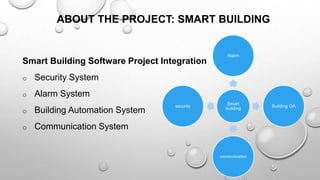
Smart Building Software Project Integration
o Security System
o Alarm System
o Building Automation System
o Communication System
Smart
building
Alarm
Building OA
communication
security
AUTOETHNOGRAPHY METHODOLOGY: A SELF REFLECTIVE METHOD
Used autoethnography research methodology . A genre of writing and research that displays multiple layers of
consciousness, connecting the personal experience working in the client firm.
DATA SOURCE
o Personal Memory
o From notes or memories of a powerful event the details of which are imprinted on the author mind
SELF-OBSERVATIONAL DATA
o Chronicle events close to the actual happening through observing the self in situation.
SELF-REFLECTIVE DATA
o Maintain a detailed critically reflexive journal of thoughts and experience.
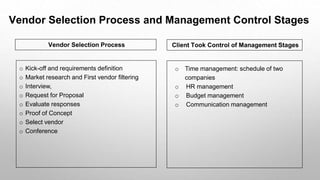
o Kick-off and requirements definition
o Market research and First vendor filtering
o Interview,
o Request for Proposal
o Evaluate responses
o Proof of Concept
o Select vendor
o Conference
o Time management: schedule of two
companies
o HR management
o Budget management
o Communication management
Vendor Selection Process and Management Control Stages
Vendor Selection Process Client Took Control of Management Stages
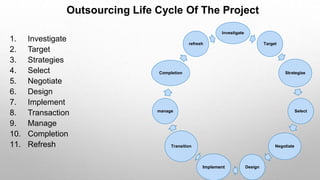
Outsourcing Life Cycle Of The Project
1. Investigate
2. Target
3. Strategies
4. Select
5. Negotiate
6. Design
7. Implement
8. Transaction
9. Manage
10. Completion
11. Refresh
Investigate
Target
Strategize
Select
Negotiate
DesignImplement
Transition
manage
Completion
refresh
ANALYSIS
oDiversity
oClient’ Role
oSmall client VS Medium Size Vendor
oCEO Emphasis
oTop Level Concern
oMotivation for Cooperation
oKnowledge Gap
oLimitations on Self reflective Methodology
THANKS

Presentation slides- MGS

  • 1.
    AN AUTOETHNOGRAPHIC STUDY OFOUTSOURCING LIFECYCLE BETWEEN A SMALL SIZE CLIENT AND MEDIUM SIZE VENDOR IN CHINA BY: LINLIN ZHANG, FATIMAH AL HALAL, VISHAL ADITHIYA Course: MIS40690: Managing Global Sourcing
  • 2.
    o Small o TelecomIndustry o Reason For Outsourcing Knowledge Gap Reduce Cost o Medium size o Software Industry o Motivation to be vendor Marketing Next contract ABOUT THE COMPANIES Client (Smart Telecom) Vendor (hsoft)
  • 3.
    ABOUT THE PROJECT:SMART BUILDING Smart Building Software Project Integration o Security System o Alarm System o Building Automation System o Communication System Smart building Alarm Building OA communication security
  • 4.
    AUTOETHNOGRAPHY METHODOLOGY: ASELF REFLECTIVE METHOD Used autoethnography research methodology . A genre of writing and research that displays multiple layers of consciousness, connecting the personal experience working in the client firm. DATA SOURCE o Personal Memory o From notes or memories of a powerful event the details of which are imprinted on the author mind SELF-OBSERVATIONAL DATA o Chronicle events close to the actual happening through observing the self in situation. SELF-REFLECTIVE DATA o Maintain a detailed critically reflexive journal of thoughts and experience.
  • 5.
    o Kick-off andrequirements definition o Market research and First vendor filtering o Interview, o Request for Proposal o Evaluate responses o Proof of Concept o Select vendor o Conference o Time management: schedule of two companies o HR management o Budget management o Communication management Vendor Selection Process and Management Control Stages Vendor Selection Process Client Took Control of Management Stages
  • 6.
    Outsourcing Life CycleOf The Project 1. Investigate 2. Target 3. Strategies 4. Select 5. Negotiate 6. Design 7. Implement 8. Transaction 9. Manage 10. Completion 11. Refresh Investigate Target Strategize Select Negotiate DesignImplement Transition manage Completion refresh
  • 7.
    ANALYSIS oDiversity oClient’ Role oSmall clientVS Medium Size Vendor oCEO Emphasis oTop Level Concern oMotivation for Cooperation oKnowledge Gap oLimitations on Self reflective Methodology
  • 8.