Metaphysics of the Forms
By Tom Phillips
A metaphysics is a philosophical theory concerned with explaining the fundamental nature of being and of the world Through asking two questions 1). What is there? 2). What is it like? Metaphysics
Plato (428-348BC) Created his own metaphysics based on the premise that there are independent, original concepts called forms, i.e. beauty, which particular things i.e. a beautiful butterfly ‘participate in’ and get their qualities from. This is a controversial metaphysics, Plato’s star pupil Aristotle rejected it, for example. Plato’s Metaphysics
Plato claims that there are several essential properties of the forms Self-predication Perfection Independence (from particulars) Permanence Simplicity Essential Properties of the Forms
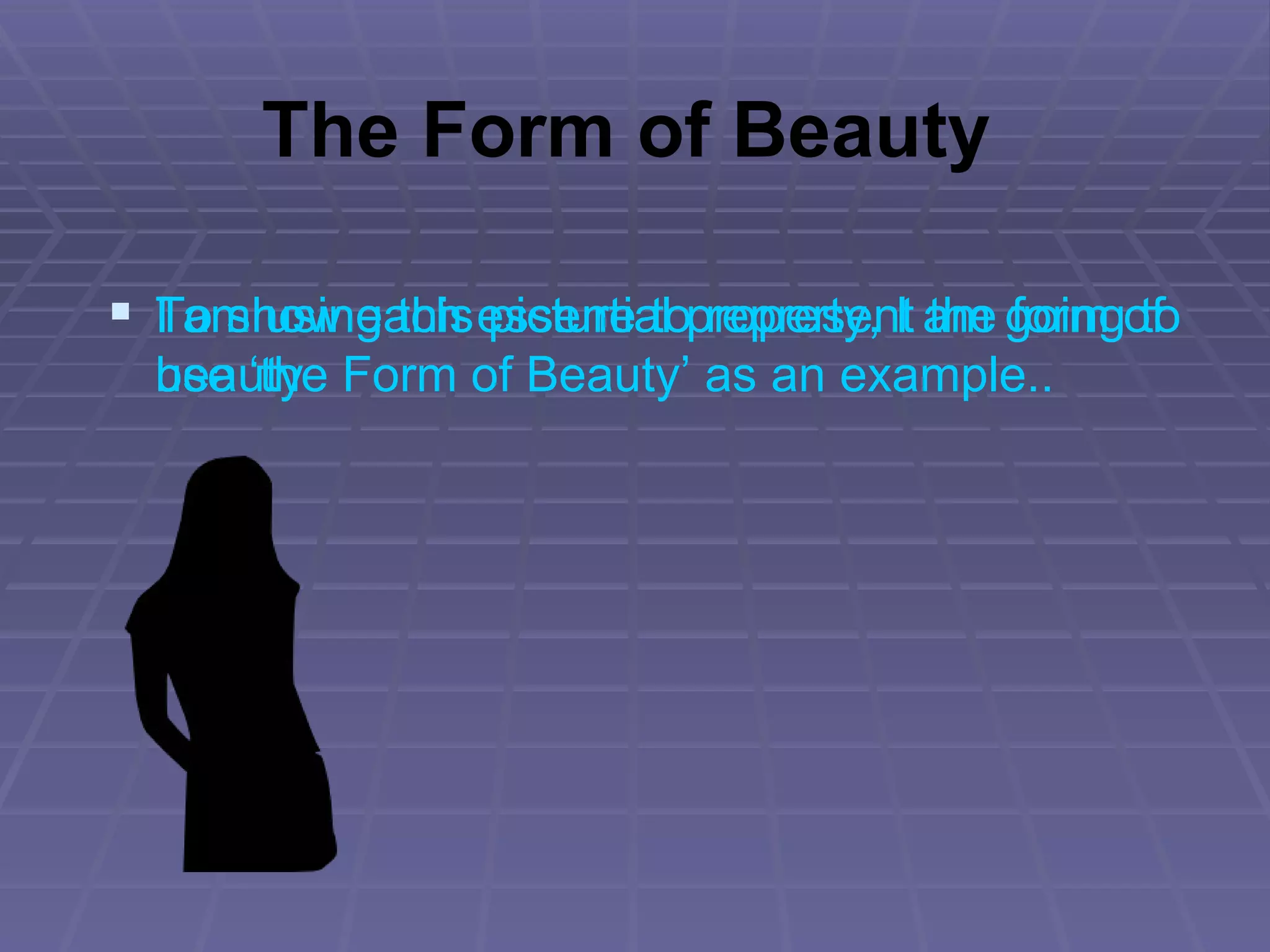
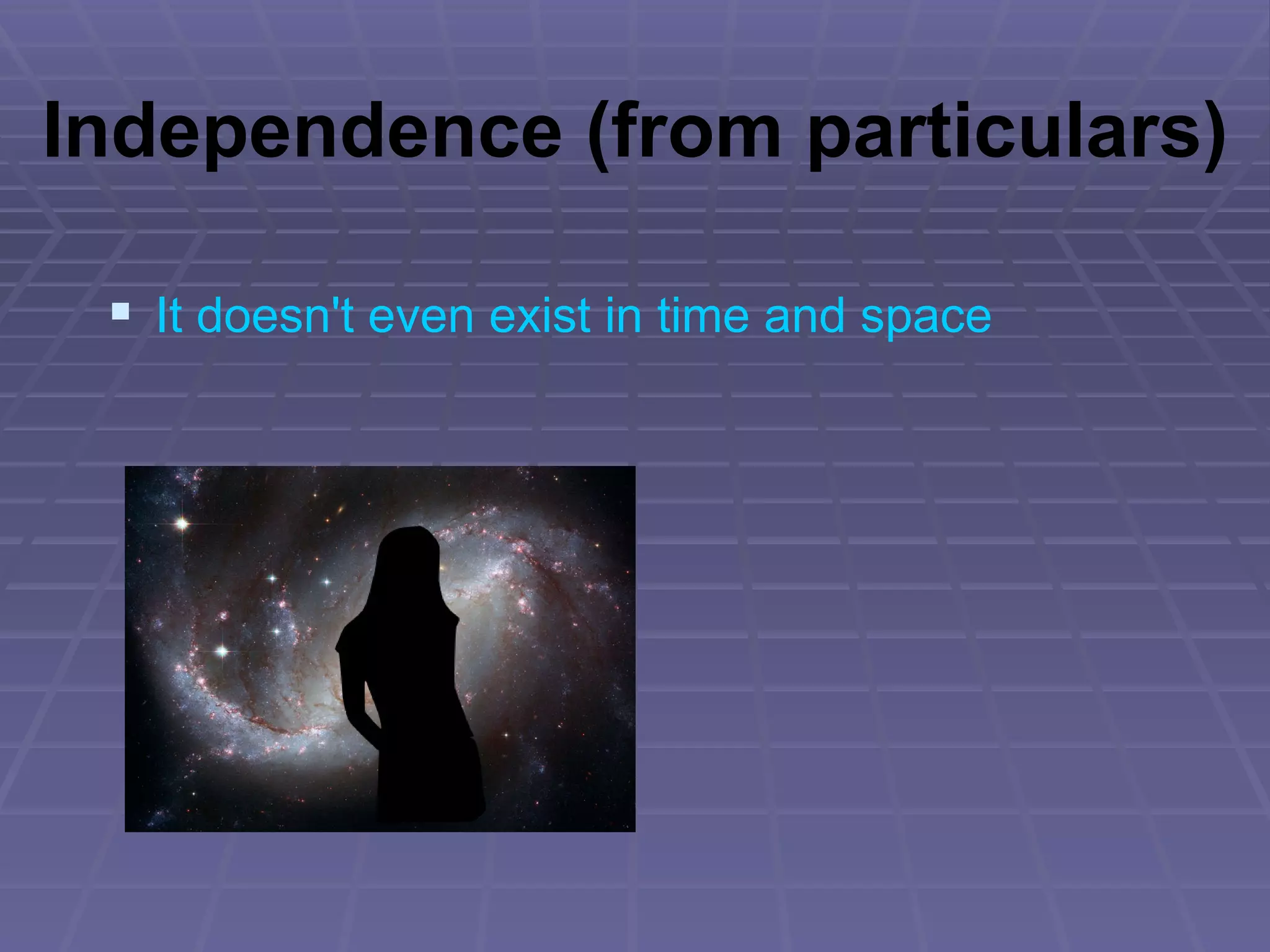
The Form of Beauty To show each essential property, I am going to use ‘the Form of Beauty’ as an example.. I am using this picture to represent the form of beauty
Self-predication The Form of Beauty is itself beautiful
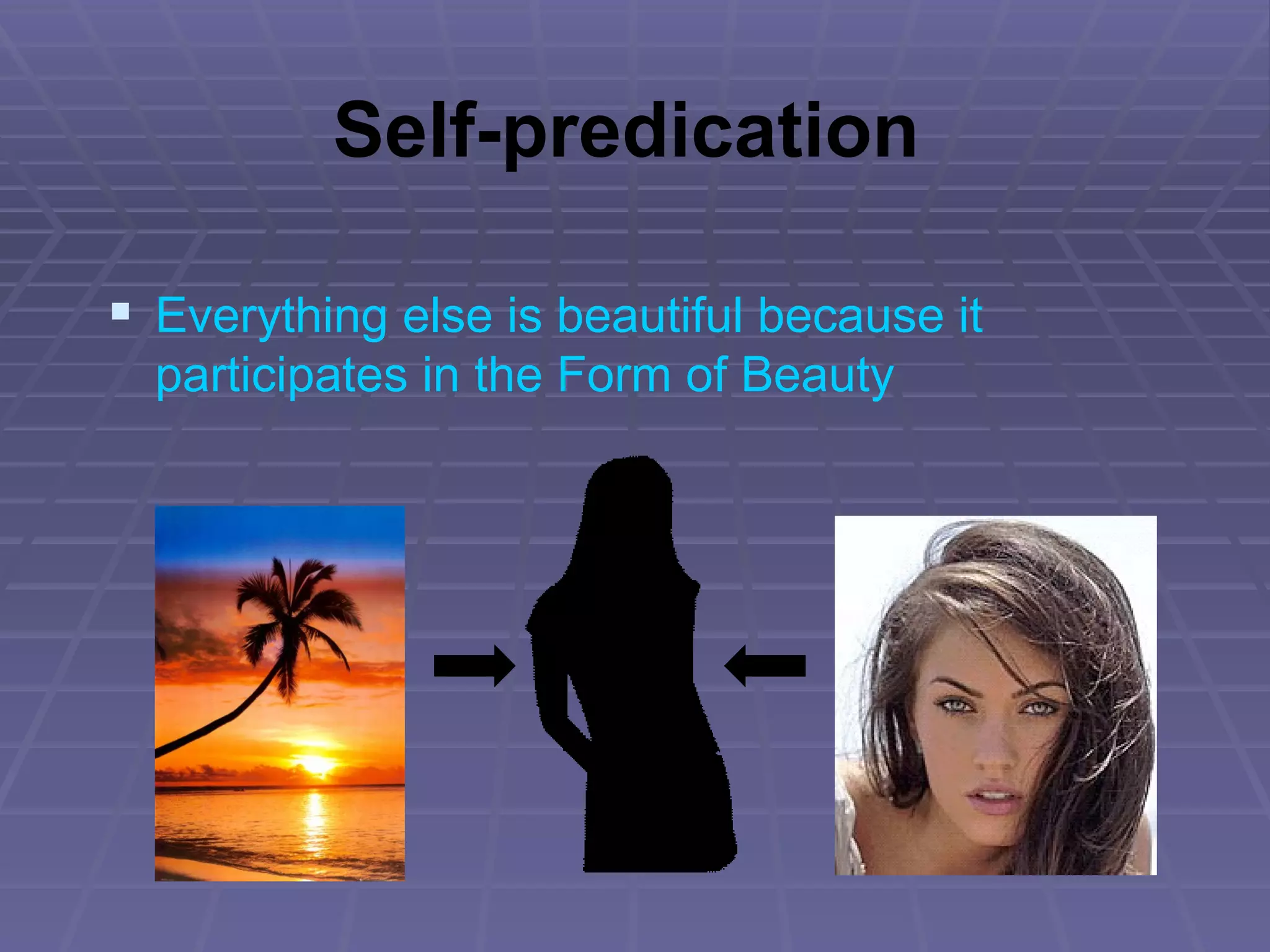
Self-predication Everything else is beautiful because it participates in the Form of Beauty
Self-predication Whereas, the form of beauty simply is beautiful, it is what it is in virtue of itself
Self-predication A thing is made beautiful when it participates with the form of beauty because the form is itself beautiful, beauty is transmitted to particulars
Perfection The form of beauty is a  perfect  example of itself, nothing can be more beautiful
Perfection Particular things can get close but can never reach the level of beauty that the form of beauty  has
Independence (from particulars) A form is its own essence. Therefore, it is separate from particulars
Independence (from particulars) It doesn't even exist in time and space
Independence (from particulars) Also, because a Form is its own essence it is not essential for its particulars to participate with it for it to exist.
Independence (from particulars) I.e. if nothing was beautiful in the whole world, the Form of Beauty would still exist because it doesn’t require particular things for existence
Permanence Forms do not change at all!
Permanence If the Form of Beauty changed then it couldn’t have been perfect before, which is a contradiction
Simplicity The Forms are one
Simplicity Each Form only has one property/component. I.e. Beauty has beauty. Therefore there is simplicity
Superior Particular things are complex, changeable and imperfect
Superior Forms are the opposite
Superior Contrasting the two, the existence of the Forms is superior, they are in a way that particulars are not
World of Forms Plato asserts that there is a world of forms and one of particulars (our one) Plato says that properties particulars have are faded copies of the forms in their world
World of Forms Particulars can loose their properties (something can become less beautiful) And they rely on Forms and the world of forms for their existence
Form of the Good Every Form is meant to be Good However the ‘best of the best’ or ‘form of forms’ is the Form of Good

Metaphysics of the Forms

  • 1.
  • 2.
  • 3.
    A metaphysics isa philosophical theory concerned with explaining the fundamental nature of being and of the world Through asking two questions 1). What is there? 2). What is it like? Metaphysics
  • 4.
    Plato (428-348BC) Createdhis own metaphysics based on the premise that there are independent, original concepts called forms, i.e. beauty, which particular things i.e. a beautiful butterfly ‘participate in’ and get their qualities from. This is a controversial metaphysics, Plato’s star pupil Aristotle rejected it, for example. Plato’s Metaphysics
  • 5.
    Plato claims thatthere are several essential properties of the forms Self-predication Perfection Independence (from particulars) Permanence Simplicity Essential Properties of the Forms
  • 6.
    The Form ofBeauty To show each essential property, I am going to use ‘the Form of Beauty’ as an example.. I am using this picture to represent the form of beauty
  • 7.
    Self-predication The Formof Beauty is itself beautiful
  • 8.
    Self-predication Everything elseis beautiful because it participates in the Form of Beauty
  • 9.
    Self-predication Whereas, theform of beauty simply is beautiful, it is what it is in virtue of itself
  • 10.
    Self-predication A thingis made beautiful when it participates with the form of beauty because the form is itself beautiful, beauty is transmitted to particulars
  • 11.
    Perfection The formof beauty is a perfect example of itself, nothing can be more beautiful
  • 12.
    Perfection Particular thingscan get close but can never reach the level of beauty that the form of beauty has
  • 13.
    Independence (from particulars)A form is its own essence. Therefore, it is separate from particulars
  • 14.
    Independence (from particulars)It doesn't even exist in time and space
  • 15.
    Independence (from particulars)Also, because a Form is its own essence it is not essential for its particulars to participate with it for it to exist.
  • 16.
    Independence (from particulars)I.e. if nothing was beautiful in the whole world, the Form of Beauty would still exist because it doesn’t require particular things for existence
  • 17.
    Permanence Forms donot change at all!
  • 18.
    Permanence If theForm of Beauty changed then it couldn’t have been perfect before, which is a contradiction
  • 19.
  • 20.
    Simplicity Each Formonly has one property/component. I.e. Beauty has beauty. Therefore there is simplicity
  • 21.
    Superior Particular thingsare complex, changeable and imperfect
  • 22.
    Superior Forms arethe opposite
  • 23.
    Superior Contrasting thetwo, the existence of the Forms is superior, they are in a way that particulars are not
  • 24.
    World of FormsPlato asserts that there is a world of forms and one of particulars (our one) Plato says that properties particulars have are faded copies of the forms in their world
  • 25.
    World of FormsParticulars can loose their properties (something can become less beautiful) And they rely on Forms and the world of forms for their existence
  • 26.
    Form of theGood Every Form is meant to be Good However the ‘best of the best’ or ‘form of forms’ is the Form of Good