Mark Nießen
(mark.niessen@mepos.org)
Copyright © 2020
All rights reserved
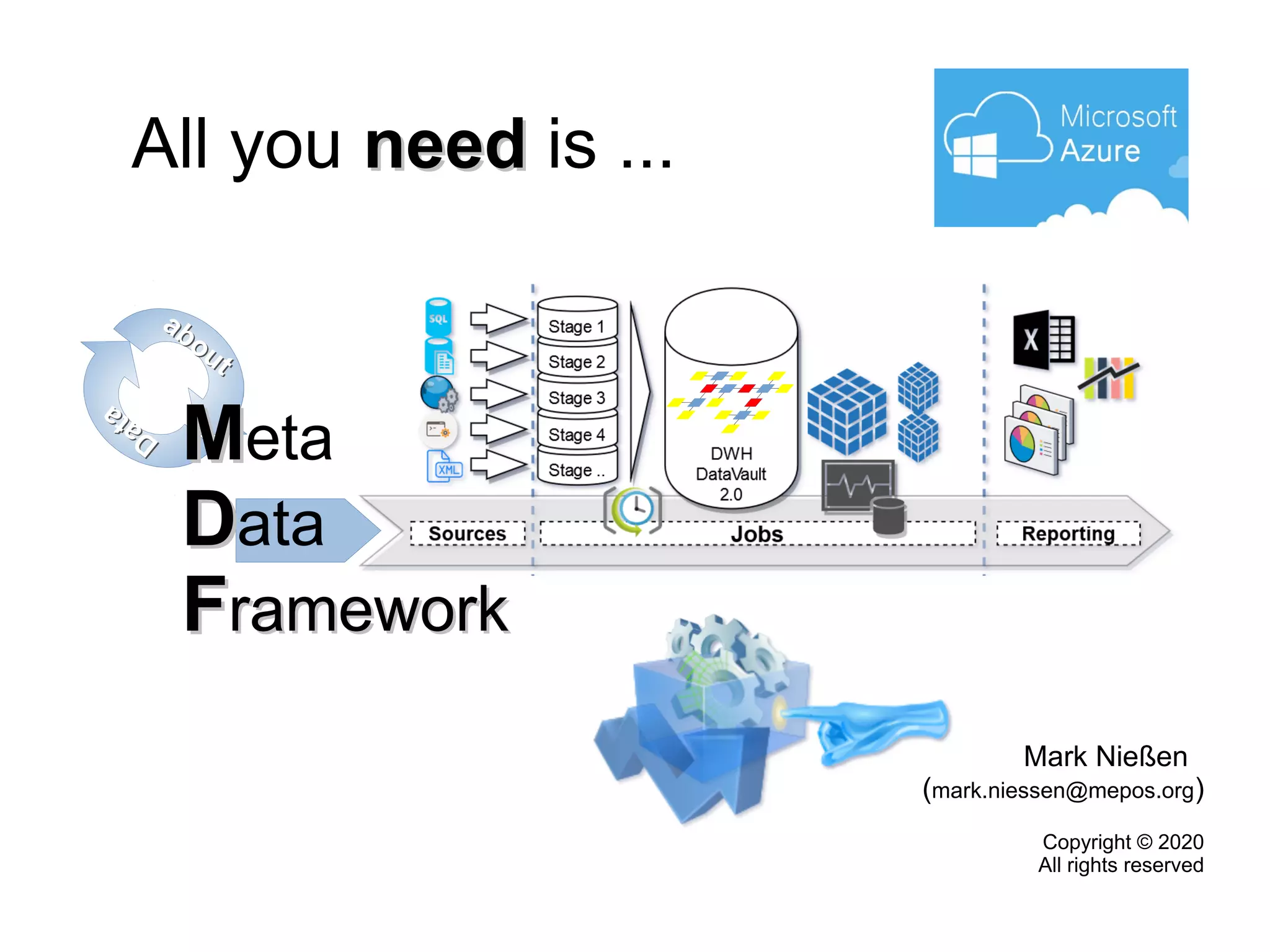
All you needneed is ...
MMeta
DData
FFrameworkramework
Do you know that?
●
Dissatisfied with Data-warehouse
●
Missing Data Quality (Partially no reliable
figures)
●
Huge Manuel Effort for Report preparation
●
Long Running Processes
●
From Requirement to Report, take ages..
●
Different Tools and Approaches in place
●
……...
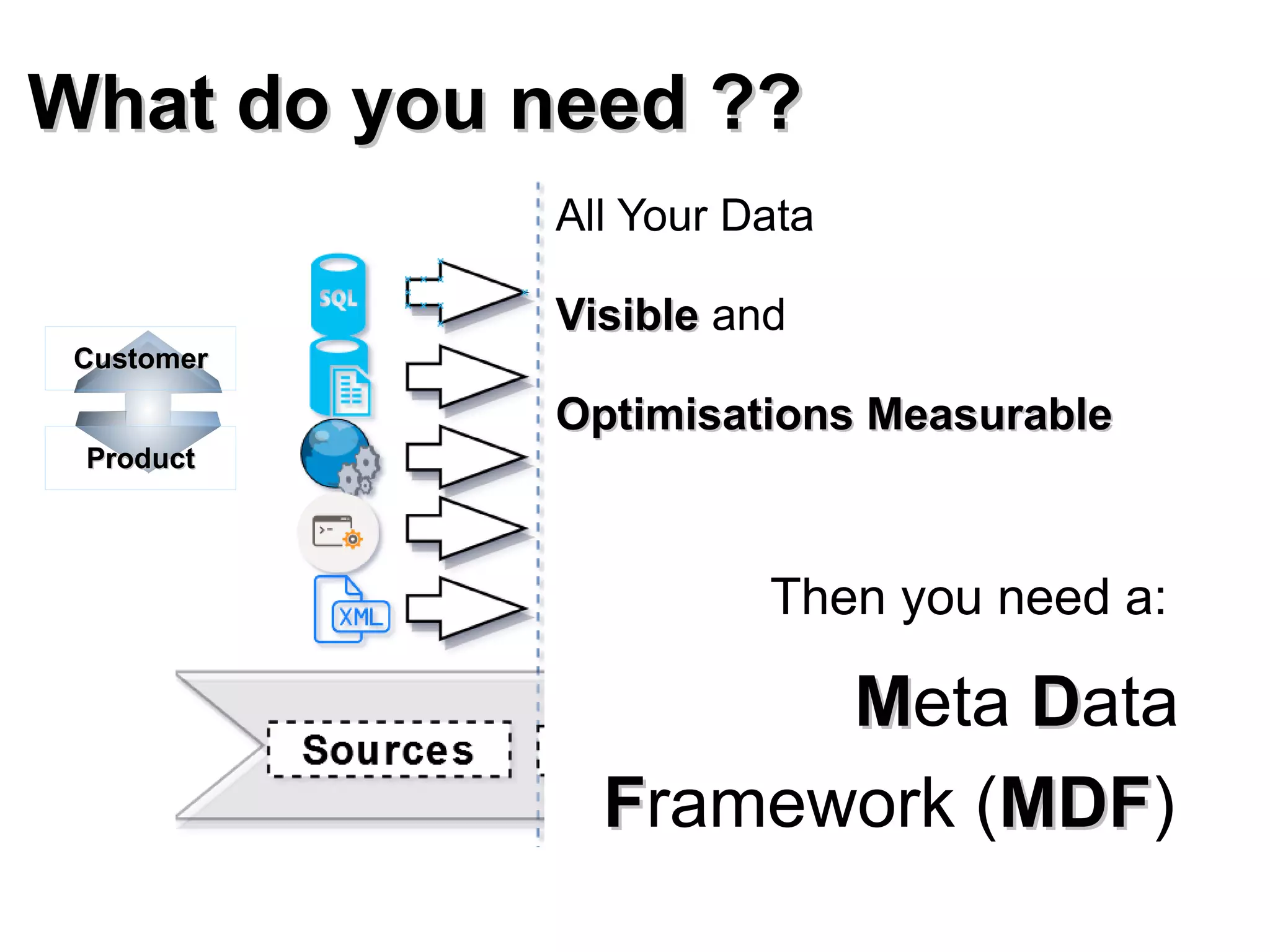
What do you need ??What do you need ??
All Your Data
VisibleVisible and
Optimisations MeasurableOptimisations Measurable
MMeta DData
FFramework (MDFMDF)
CustomerCustomer
ProductProduct
Then you need a:
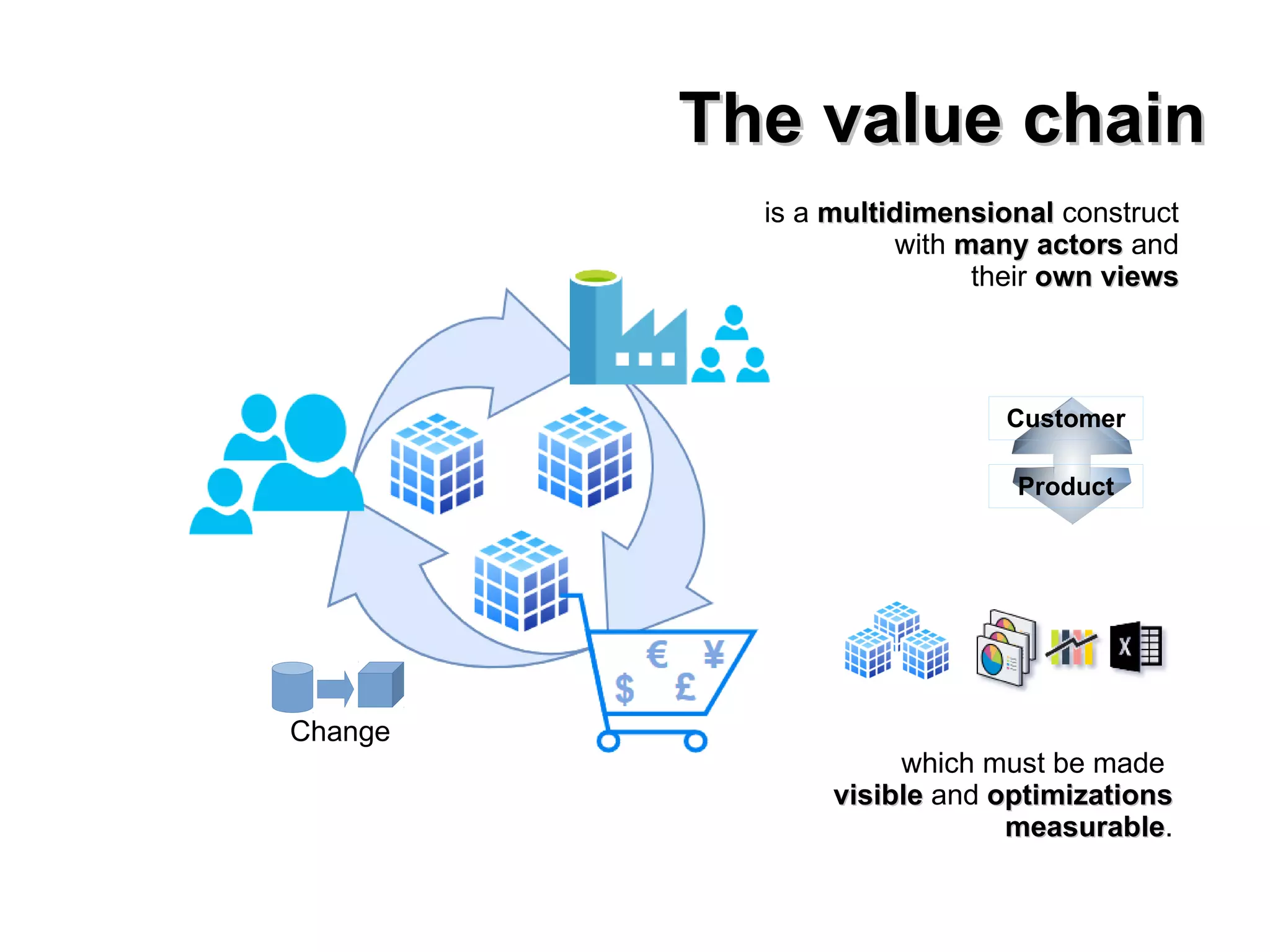
The value chainThe value chain
Customer
Product
Change
is a multidimensionalmultidimensional construct
with many actorsmany actors and
their own viewsown views
which must be made
visiblevisible and optimizationsoptimizations
measurablemeasurable.
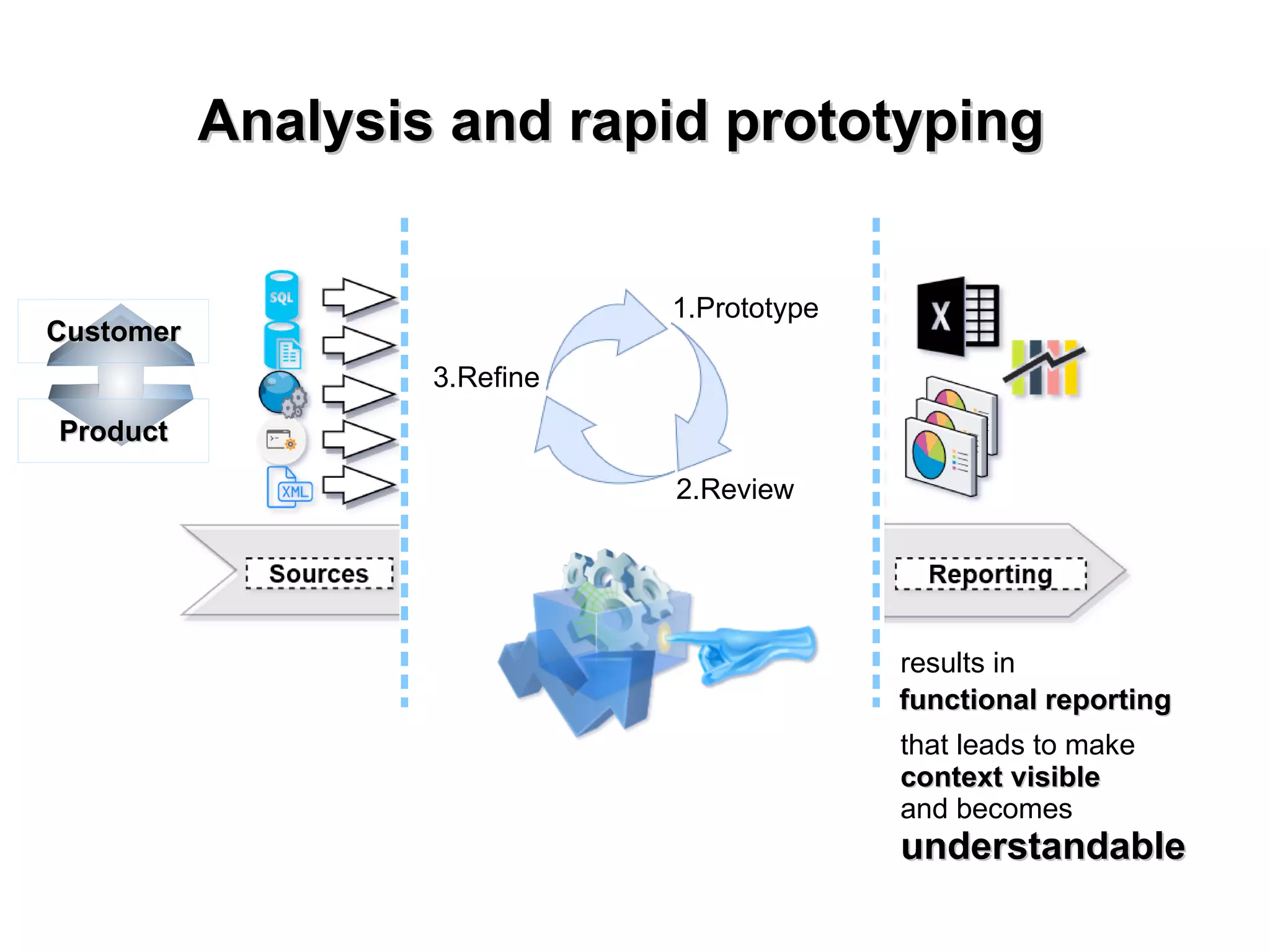
Analysis and rapid prototypingAnalysis and rapid prototyping
1.Prototype
2.Review
3.Refine
CustomerCustomer
ProductProduct
functional reportingfunctional reporting
results in
that leads to make
context visiblecontext visible
and becomes
understandableunderstandable
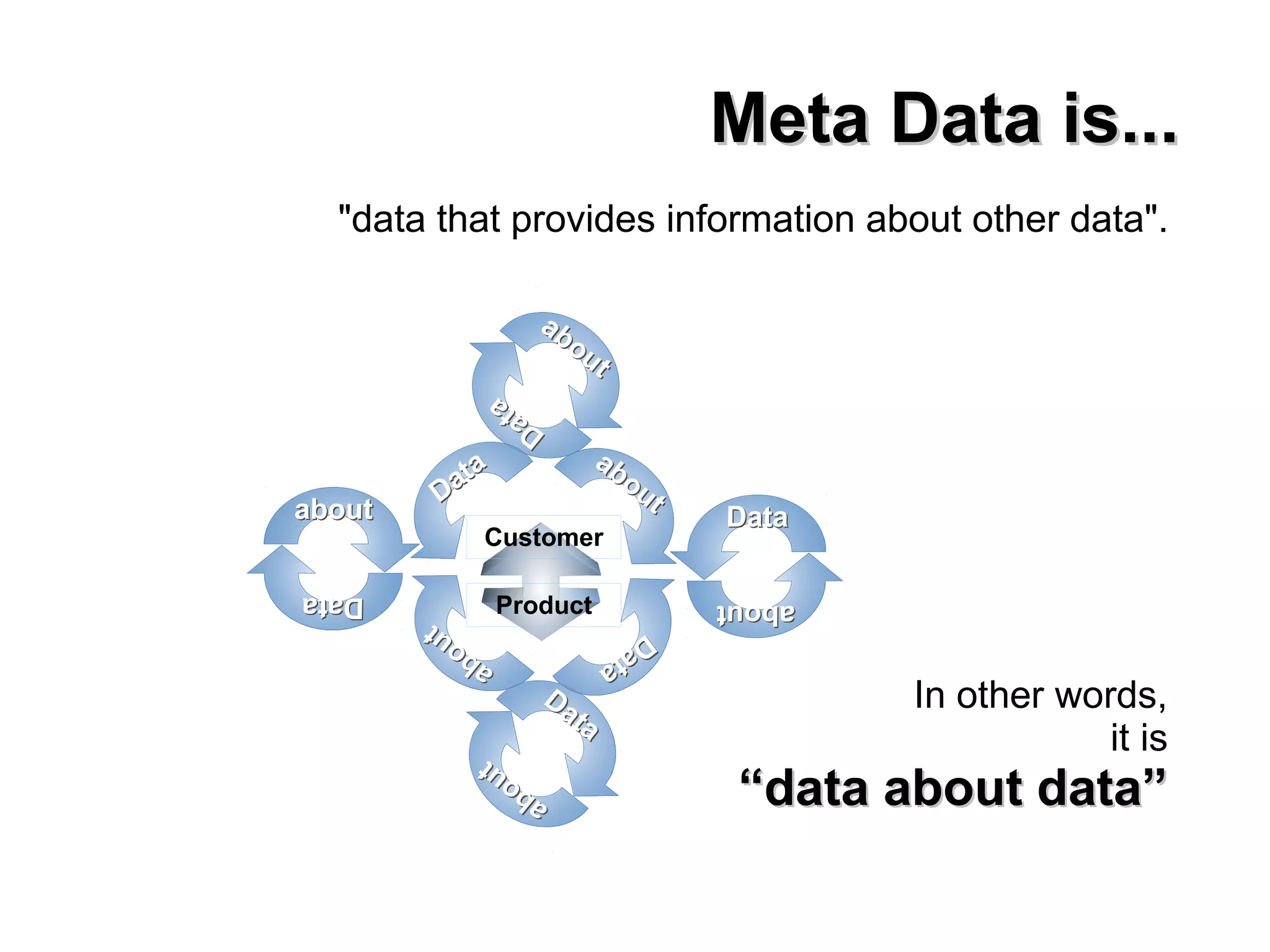
Meta Data is...Meta Data is...
"data that provides information about other data".
In other words,
it is
““data about data”data about data”
Customer
Product
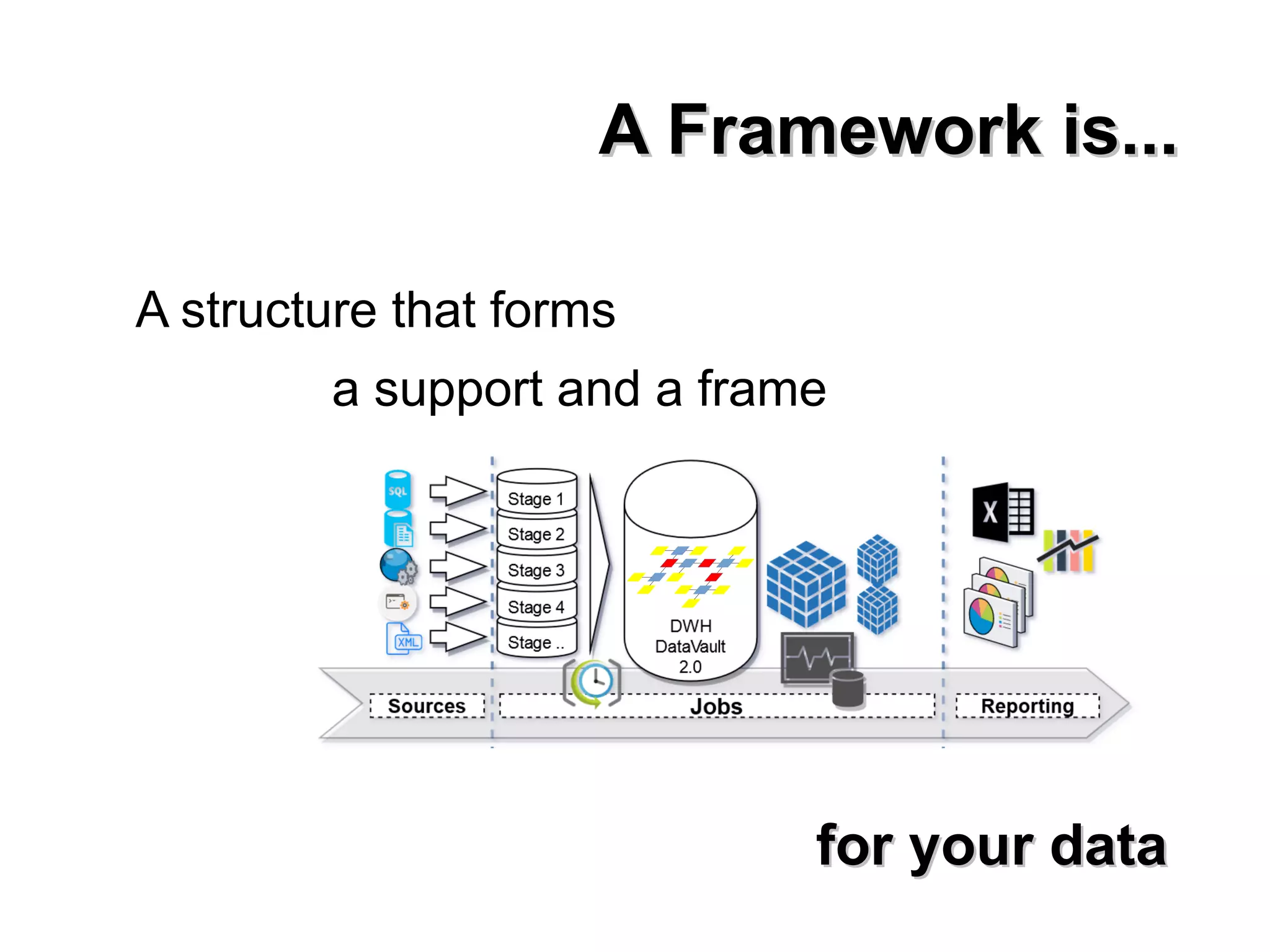
A Framework is...A Framework is...
A structure that forms
a support and a frame
for your datafor your data
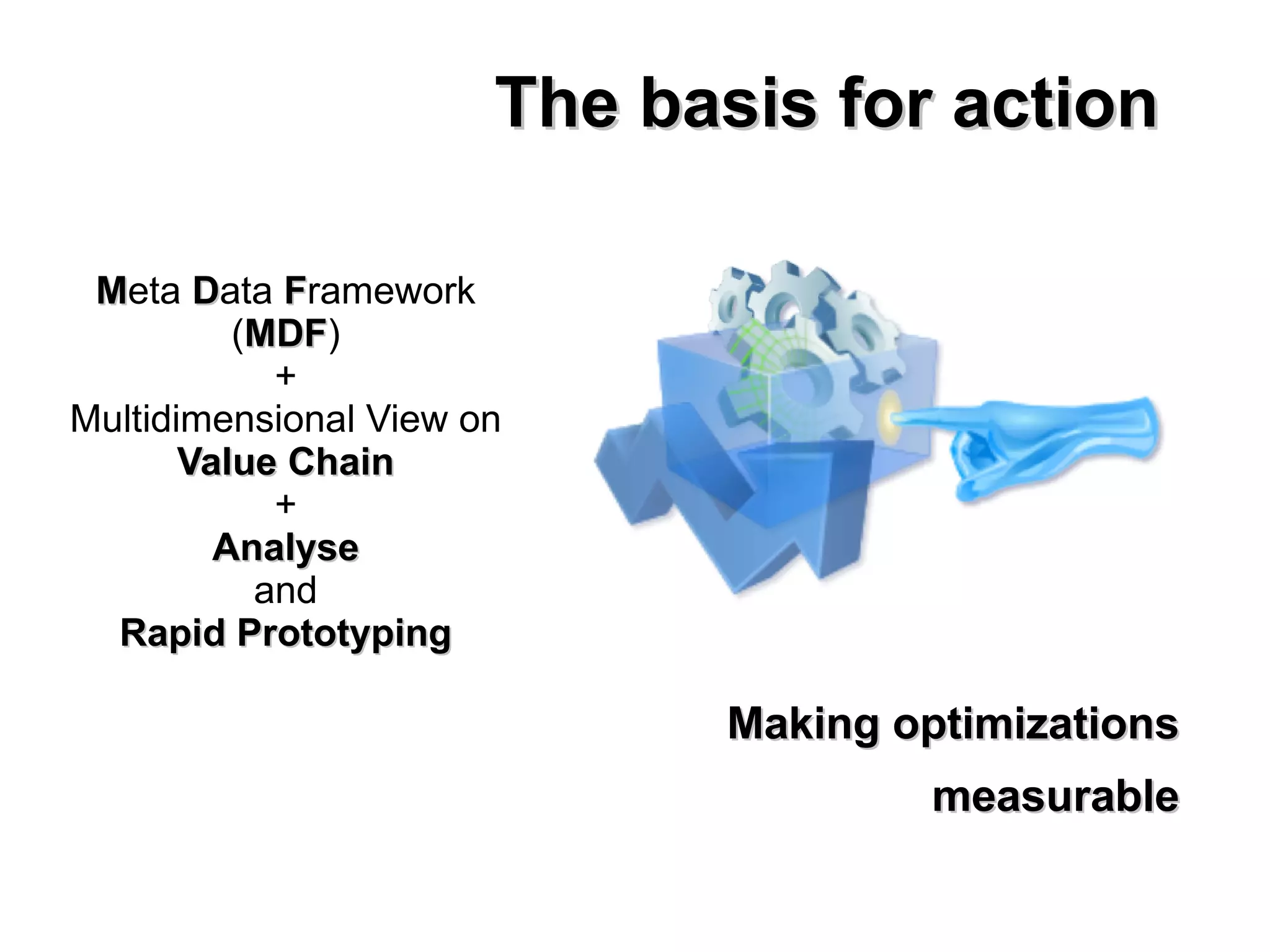
The basis for actionThe basis for action
Making optimizationsMaking optimizations
measurablemeasurable
MMeta DData FFramework
(MDFMDF)
+
Multidimensional View on
Value ChainValue Chain
+
AnalyseAnalyse
and
Rapid PrototypingRapid Prototyping
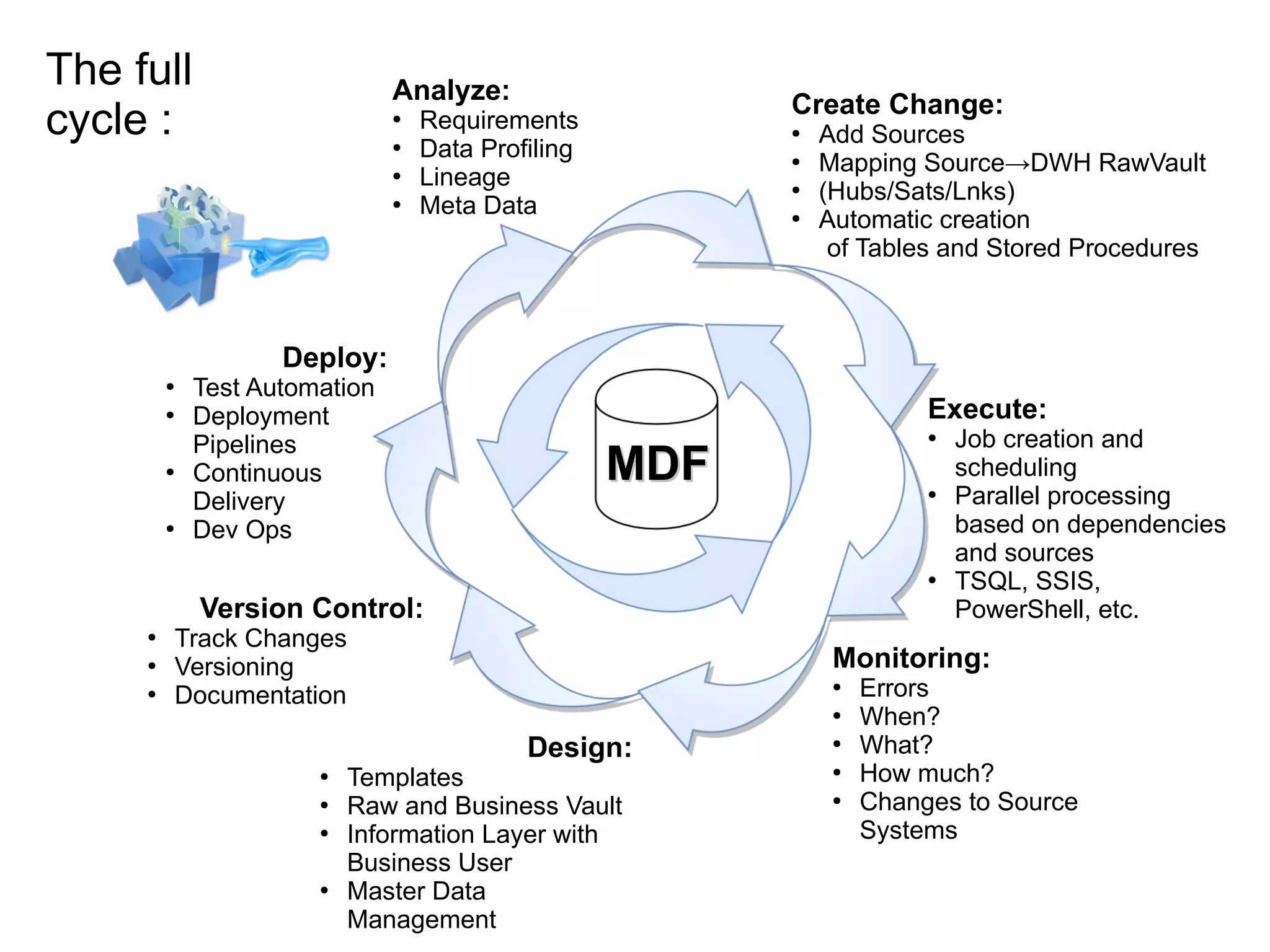
Analyze:
●
Requirements
●
Data Profiling
●
Lineage
●
Meta Data
Create Change:
●
Add Sources
●
Mapping Source→DWH RawVault
●
(Hubs/Sats/Lnks)
●
Automatic creation
of Tables and Stored Procedures
Execute:
●
Job creation and
scheduling
●
Parallel processing
based on dependencies
and sources
●
TSQL, SSIS,
PowerShell, etc.
Monitoring:
●
Errors
●
When?
●
What?
●
How much?
●
Changes to Source
Systems
Design:
●
Templates
●
Raw and Business Vault
●
Information Layer with
Business User
●
Master Data
Management
Version Control:
●
Track Changes
●
Versioning
●
Documentation
Deploy:
●
Test Automation
●
Deployment
Pipelines
●
Continuous
Delivery
●
Dev Ops
MDFMDF
The full
cycle :
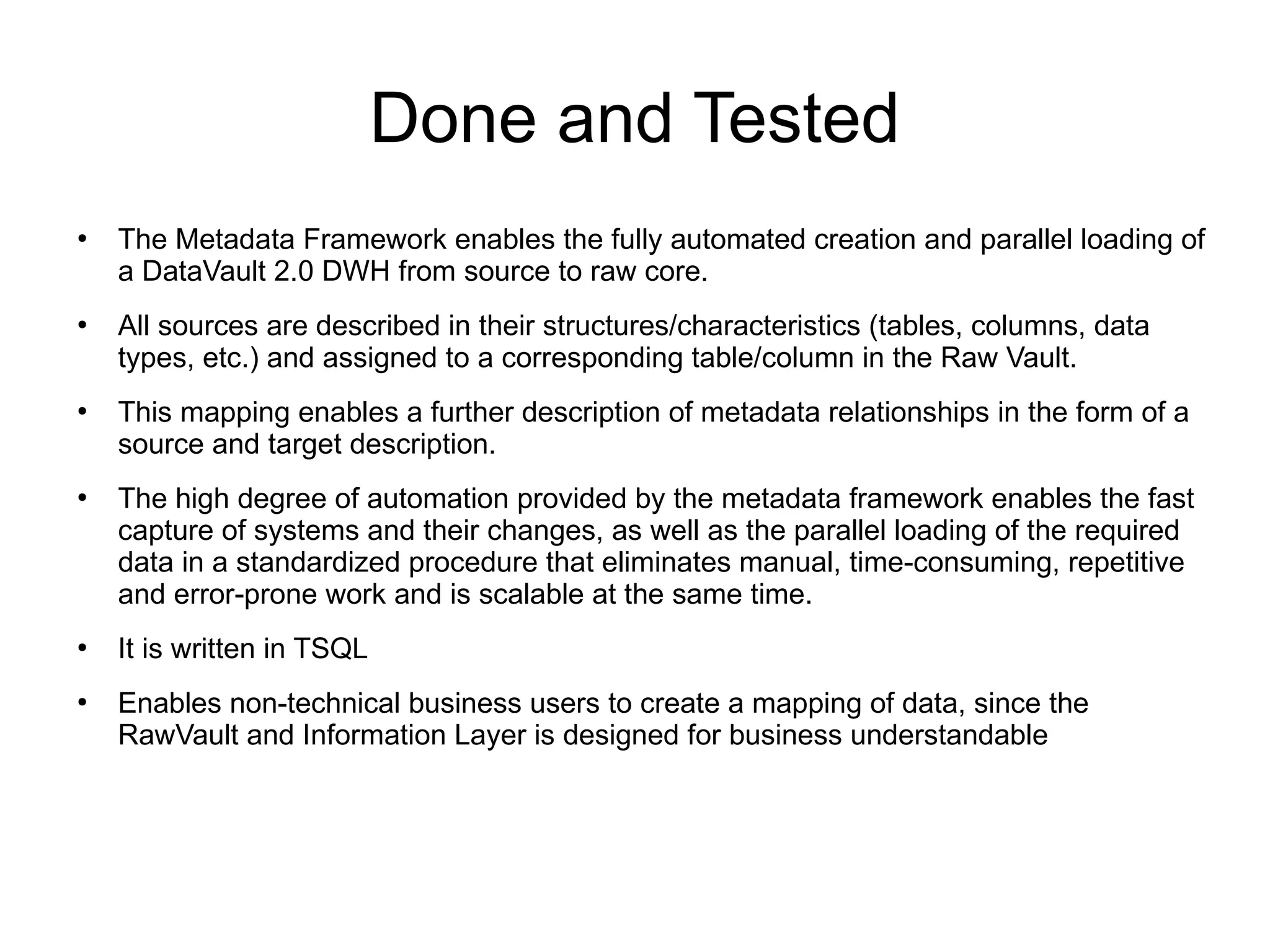
Done and Tested
●
The Metadata Framework enables the fully automated creation and parallel loading of
a DataVault 2.0 DWH from source to raw core.
●
All sources are described in their structures/characteristics (tables, columns, data
types, etc.) and assigned to a corresponding table/column in the Raw Vault.
●
This mapping enables a further description of metadata relationships in the form of a
source and target description.
●
The high degree of automation provided by the metadata framework enables the fast
capture of systems and their changes, as well as the parallel loading of the required
data in a standardized procedure that eliminates manual, time-consuming, repetitive
and error-prone work and is scalable at the same time.
●
It is written in TSQL
●
Enables non-technical business users to create a mapping of data, since the
RawVault and Information Layer is designed for business understandable
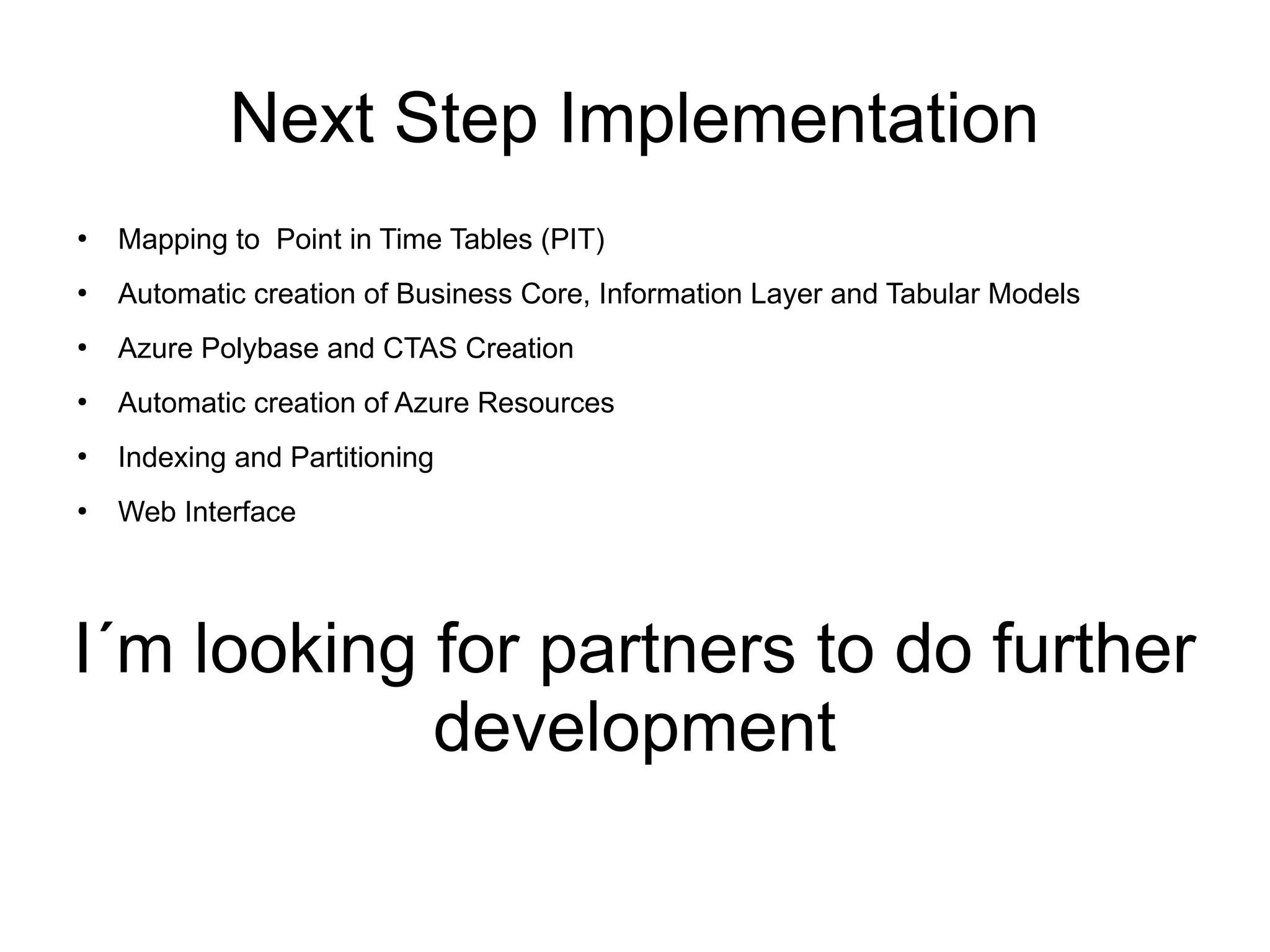
Next Step Implementation
●
Mapping to Point in Time Tables (PIT)
●
Automatic creation of Business Core, Information Layer and Tabular Models
●
Azure Polybase and CTAS Creation
●
Automatic creation of Azure Resources
●
Indexing and Partitioning
●
Web Interface
I´m looking for partners to do further
development

Meta Data Framework

  • 1.
    Mark Nießen (mark.niessen@mepos.org) Copyright ©2020 All rights reserved All you needneed is ... MMeta DData FFrameworkramework
  • 2.
    Do you knowthat? ● Dissatisfied with Data-warehouse ● Missing Data Quality (Partially no reliable figures) ● Huge Manuel Effort for Report preparation ● Long Running Processes ● From Requirement to Report, take ages.. ● Different Tools and Approaches in place ● ……...
  • 3.
    What do youneed ??What do you need ?? All Your Data VisibleVisible and Optimisations MeasurableOptimisations Measurable MMeta DData FFramework (MDFMDF) CustomerCustomer ProductProduct Then you need a:
  • 4.
    The value chainThevalue chain Customer Product Change is a multidimensionalmultidimensional construct with many actorsmany actors and their own viewsown views which must be made visiblevisible and optimizationsoptimizations measurablemeasurable.
  • 5.
    Analysis and rapidprototypingAnalysis and rapid prototyping 1.Prototype 2.Review 3.Refine CustomerCustomer ProductProduct functional reportingfunctional reporting results in that leads to make context visiblecontext visible and becomes understandableunderstandable
  • 6.
    Meta Data is...MetaData is... "data that provides information about other data". In other words, it is ““data about data”data about data” Customer Product
  • 7.
    A Framework is...AFramework is... A structure that forms a support and a frame for your datafor your data
  • 8.
    The basis foractionThe basis for action Making optimizationsMaking optimizations measurablemeasurable MMeta DData FFramework (MDFMDF) + Multidimensional View on Value ChainValue Chain + AnalyseAnalyse and Rapid PrototypingRapid Prototyping
  • 9.
    Analyze: ● Requirements ● Data Profiling ● Lineage ● Meta Data CreateChange: ● Add Sources ● Mapping Source→DWH RawVault ● (Hubs/Sats/Lnks) ● Automatic creation of Tables and Stored Procedures Execute: ● Job creation and scheduling ● Parallel processing based on dependencies and sources ● TSQL, SSIS, PowerShell, etc. Monitoring: ● Errors ● When? ● What? ● How much? ● Changes to Source Systems Design: ● Templates ● Raw and Business Vault ● Information Layer with Business User ● Master Data Management Version Control: ● Track Changes ● Versioning ● Documentation Deploy: ● Test Automation ● Deployment Pipelines ● Continuous Delivery ● Dev Ops MDFMDF The full cycle :
  • 10.
    Done and Tested ● TheMetadata Framework enables the fully automated creation and parallel loading of a DataVault 2.0 DWH from source to raw core. ● All sources are described in their structures/characteristics (tables, columns, data types, etc.) and assigned to a corresponding table/column in the Raw Vault. ● This mapping enables a further description of metadata relationships in the form of a source and target description. ● The high degree of automation provided by the metadata framework enables the fast capture of systems and their changes, as well as the parallel loading of the required data in a standardized procedure that eliminates manual, time-consuming, repetitive and error-prone work and is scalable at the same time. ● It is written in TSQL ● Enables non-technical business users to create a mapping of data, since the RawVault and Information Layer is designed for business understandable
  • 11.
    Next Step Implementation ● Mappingto Point in Time Tables (PIT) ● Automatic creation of Business Core, Information Layer and Tabular Models ● Azure Polybase and CTAS Creation ● Automatic creation of Azure Resources ● Indexing and Partitioning ● Web Interface I´m looking for partners to do further development