The Memories of Eumaeus 
James Warren 
Corpus Christi College and the Faculty of Classics
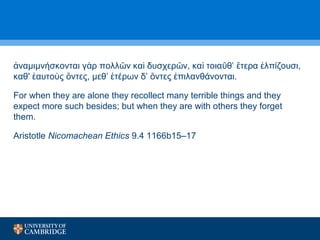
ναμιμνήσκονται γ ρ πολλ ἀ ὰ ῶν καὶ δυσχερῶν, καὶ τοιαῦθ’ ἕτερα ἐλπίζουσι, 
καθ' ἑαυτοὺς ὄντες, μεθ’ ἑτέρων δ’ ὄντες ἐπιλανθάνονται. 
For when they are alone they recollect many terrible things and they 
expect more such besides; but when they are with others they forget 
them. 
Aristotle Nicomachean Ethics 9.4 1166b15–17
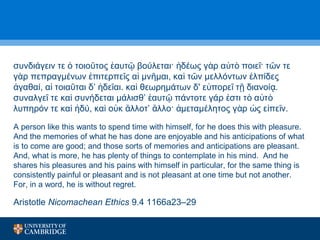
συνδιάγειν τε τοιο τος αυτ βούλεται· δέως ὁ ῦ ἑ ῷ ἡ γὰρ αὐτὸ ποιεῖ· τῶν τε 
γὰρ πεπραγμένων ἐπιτερπεῖς αἱ μνῆμαι, καὶ τῶν μελλόντων ἐλπίδες 
ἀγαθαί, αἱ τοιαῦται δ’ ἡδεῖαι. καὶ θεωρημάτων δ' εὐπορεῖ τῇ διανοίᾳ. 
συναλγεῖ τε καὶ συνήδεται μάλισθ’ ἑαυτῷ πάντοτε γάρ ἐστι τὸ αὐτὸ 
λυπηρόν τε καὶ ἡδύ, καὶ οὐκ ἄλλοτ’ ἄλλο· ἀμεταμέλητος γὰρ ὡς εἰπεῖν. 
A person like this wants to spend time with himself, for he does this with pleasure. 
And the memories of what he has done are enjoyable and his anticipations of what 
is to come are good; and those sorts of memories and anticipations are pleasant. 
And, what is more, he has plenty of things to contemplate in his mind. And he 
shares his pleasures and his pains with himself in particular, for the same thing is 
consistently painful or pleasant and is not pleasant at one time but not another. 
For, in a word, he is without regret. 
Aristotle Nicomachean Ethics 9.4 1166a23–29
τ μ ν ο ν μνημονευτ δ α στ ὰ ὲ ὖ ὰ ἡ έ ἐ ὶν οὐ μόνον ὅσα ἐν τῷ παρόντι, ὅτε 
παρῆν, ἡδέα ἦν, ἀλλ’ ἔνια καὶ οὐχ ἡδέα, ἂν ᾖ ὕστερον καλὸν καὶ ἀγαθὸν τὸ 
μετὰ τοῦτο. 
But things that are pleasant when remembered are not only those that 
were pleasant when they were present. But sometimes also things that 
were not pleasant [sc. when present are pleasant when remembered], 
provided that what comes after this was fine and good. 
Aristotle Rhetoric 1.11 1370a35–b3
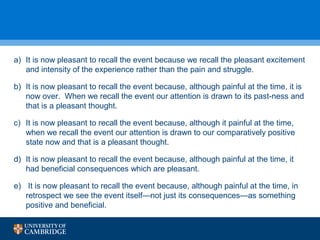
a) It is now pleasant to recall the event because we recall the pleasant excitement 
and intensity of the experience rather than the pain and struggle. 
b) It is now pleasant to recall the event because, although painful at the time, it is 
now over. When we recall the event our attention is drawn to its past-ness and 
that is a pleasant thought. 
c) It is now pleasant to recall the event because, although it painful at the time, 
when we recall the event our attention is drawn to our comparatively positive 
state now and that is a pleasant thought. 
d) It is now pleasant to recall the event because, although painful at the time, it 
had beneficial consequences which are pleasant. 
e) It is now pleasant to recall the event because, although painful at the time, in 
retrospect we see the event itself—not just its consequences—as something 
positive and beneficial.
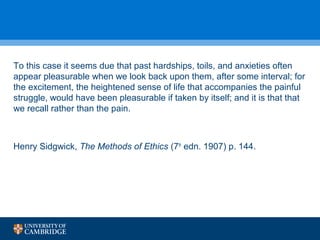
To this case it seems due that past hardships, toils, and anxieties often 
appear pleasurable when we look back upon them, after some interval; for 
the excitement, the heightened sense of life that accompanies the painful 
struggle, would have been pleasurable if taken by itself; and it is that that 
we recall rather than the pain. 
Henry Sidgwick, The Methods of Ethics (7th edn. 1907) p. 144.
deinde quod acerbum fuit ferre, tulisse iucundum est: naturale est mali sui 
fine gaudere. 
Eventually, what was bitter to undergo is pleasant to have undergone: it is 
natural to take pleasure at the ending of one’s harm. 
Seneca, Moral Letters 78.14
λλ’ δ τοι ἀ ἡ ύ σωθέντα μεμνῆσθαι πόνων. 
Pleasant it is when rescued to remember the toils (ponoi). 
Euripides’ Andromeda (fr. 133 Nauck2)
κ δεσιν ή ἀλλήλων τερπώμεθα λευγαλέοισι, 
μνωομένω· μετὰ γάρ τε καὶ ἄλγεσι τέρπεται ἀνήρ, 
ὅς τις δὴ μάλα πολλὰ πάθῃ καὶ πόλλ’ ἐπαληθῇ 
Let us two cheer one another with recollections of our wretched sorrows. 
For a man who has undergone many sufferings and has wandered far is 
cheered even by his pains. 
Homer Odyssey 15.399–401
forsan et haec olim meminisse iuvabit. 
Perhaps there will be a time when it will be pleasant to recall even this. 
Virgil Aeneid 1.203
Memories of eumaeus

Memories of eumaeus

  • 1.
    The Memories ofEumaeus James Warren Corpus Christi College and the Faculty of Classics
  • 2.
    ναμιμνήσκονται γ ρπολλ ἀ ὰ ῶν καὶ δυσχερῶν, καὶ τοιαῦθ’ ἕτερα ἐλπίζουσι, καθ' ἑαυτοὺς ὄντες, μεθ’ ἑτέρων δ’ ὄντες ἐπιλανθάνονται. For when they are alone they recollect many terrible things and they expect more such besides; but when they are with others they forget them. Aristotle Nicomachean Ethics 9.4 1166b15–17
  • 3.
    συνδιάγειν τε τοιοτος αυτ βούλεται· δέως ὁ ῦ ἑ ῷ ἡ γὰρ αὐτὸ ποιεῖ· τῶν τε γὰρ πεπραγμένων ἐπιτερπεῖς αἱ μνῆμαι, καὶ τῶν μελλόντων ἐλπίδες ἀγαθαί, αἱ τοιαῦται δ’ ἡδεῖαι. καὶ θεωρημάτων δ' εὐπορεῖ τῇ διανοίᾳ. συναλγεῖ τε καὶ συνήδεται μάλισθ’ ἑαυτῷ πάντοτε γάρ ἐστι τὸ αὐτὸ λυπηρόν τε καὶ ἡδύ, καὶ οὐκ ἄλλοτ’ ἄλλο· ἀμεταμέλητος γὰρ ὡς εἰπεῖν. A person like this wants to spend time with himself, for he does this with pleasure. And the memories of what he has done are enjoyable and his anticipations of what is to come are good; and those sorts of memories and anticipations are pleasant. And, what is more, he has plenty of things to contemplate in his mind. And he shares his pleasures and his pains with himself in particular, for the same thing is consistently painful or pleasant and is not pleasant at one time but not another. For, in a word, he is without regret. Aristotle Nicomachean Ethics 9.4 1166a23–29
  • 4.
    τ μ νο ν μνημονευτ δ α στ ὰ ὲ ὖ ὰ ἡ έ ἐ ὶν οὐ μόνον ὅσα ἐν τῷ παρόντι, ὅτε παρῆν, ἡδέα ἦν, ἀλλ’ ἔνια καὶ οὐχ ἡδέα, ἂν ᾖ ὕστερον καλὸν καὶ ἀγαθὸν τὸ μετὰ τοῦτο. But things that are pleasant when remembered are not only those that were pleasant when they were present. But sometimes also things that were not pleasant [sc. when present are pleasant when remembered], provided that what comes after this was fine and good. Aristotle Rhetoric 1.11 1370a35–b3
  • 5.
    a) It isnow pleasant to recall the event because we recall the pleasant excitement and intensity of the experience rather than the pain and struggle. b) It is now pleasant to recall the event because, although painful at the time, it is now over. When we recall the event our attention is drawn to its past-ness and that is a pleasant thought. c) It is now pleasant to recall the event because, although it painful at the time, when we recall the event our attention is drawn to our comparatively positive state now and that is a pleasant thought. d) It is now pleasant to recall the event because, although painful at the time, it had beneficial consequences which are pleasant. e) It is now pleasant to recall the event because, although painful at the time, in retrospect we see the event itself—not just its consequences—as something positive and beneficial.
  • 6.
    To this caseit seems due that past hardships, toils, and anxieties often appear pleasurable when we look back upon them, after some interval; for the excitement, the heightened sense of life that accompanies the painful struggle, would have been pleasurable if taken by itself; and it is that that we recall rather than the pain. Henry Sidgwick, The Methods of Ethics (7th edn. 1907) p. 144.
  • 7.
    deinde quod acerbumfuit ferre, tulisse iucundum est: naturale est mali sui fine gaudere. Eventually, what was bitter to undergo is pleasant to have undergone: it is natural to take pleasure at the ending of one’s harm. Seneca, Moral Letters 78.14
  • 8.
    λλ’ δ τοιἀ ἡ ύ σωθέντα μεμνῆσθαι πόνων. Pleasant it is when rescued to remember the toils (ponoi). Euripides’ Andromeda (fr. 133 Nauck2)
  • 9.
    κ δεσιν ήἀλλήλων τερπώμεθα λευγαλέοισι, μνωομένω· μετὰ γάρ τε καὶ ἄλγεσι τέρπεται ἀνήρ, ὅς τις δὴ μάλα πολλὰ πάθῃ καὶ πόλλ’ ἐπαληθῇ Let us two cheer one another with recollections of our wretched sorrows. For a man who has undergone many sufferings and has wandered far is cheered even by his pains. Homer Odyssey 15.399–401
  • 10.
    forsan et haecolim meminisse iuvabit. Perhaps there will be a time when it will be pleasant to recall even this. Virgil Aeneid 1.203