Melasma
DR.BHAWANA CHAUDHARY
JR2
DEPARTMENT OF DERMATOLOGY
MELASMA
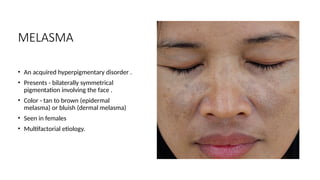
• An acquired hyperpigmentary disorder .
• Presents - bilaterally symmetrical
pigmentation involving the face .
• Color - tan to brown (epidermal
melasma) or bluish (dermal melasma)
• Seen in females
• Multifactorial etiology.
EPIDEMIOLOGY
Persons of any race can be affected.
Melasma is more common in darker skin types
Women - nine times more than men.
Common in reproductive years.
Melasma is present in 15% to 50% of pregnant patients.
The prevalence varies between 1.5% and 33% depending on the population.
Persons with light-brown skin types + high sun exposure - prone to the development of melasma.
50% report - positive family history of the condition.
Identical twins have been reported to develop melasma
Melanocyte
• Melanocytes are dendritic cells.
• Involved in pigment synthesis.
• Melanoblasts(melanocyte precursors) originate in the neural crest.
• Migrate to their final destinations in the basal layer of the epidermis, hair follicle, uveal tract and cochlea
during embryonic life
• During embryonic life, they enter the epidermis between 7 and 8 weeks of gestation and are distributed among basal
cells.
• By the 10th week, these cells contain melanosomes showing early melanization
• Factors essential in the development of the melanoblast/melanocyte lineage during embryonic life:-
• Wnt/β-catenin, MAPK and Notch pathways
• (EDNRB2)
• Stem cell factor (SCF) or c-kit ligand (inhibits apoptosis and promotes melanoblast proliferation)
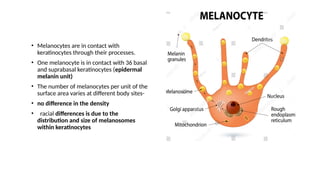
FUNCTION-
• Melanocytes are in contact with
keratinocytes through their processes.
• One melanocyte is in contact with 36 basal
and suprabasal keratinocytes (epidermal
melanin unit)
• The number of melanocytes per unit of the
surface area varies at different body sites-
• no difference in the density
• racial differences is due to the
distribution and size of melanosomes
within keratinocytes
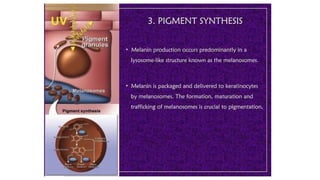
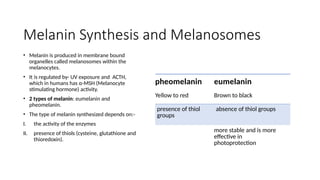
Melanin Synthesis and Melanosomes
• Melanin is produced in membrane bound
organelles called melanosomes within the
melanocytes.
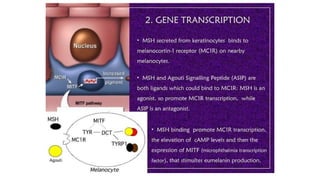
• It is regulated by- UV exposure and ACTH,
which in humans has α-MSH (Melanocyte
stimulating hormone) activity.
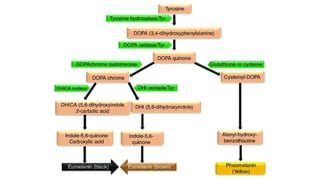
• 2 types of melanin: eumelanin and
pheomelanin.
• The type of melanin synthesized depends on:-
I. the activity of the enzymes
II. presence of thiols (cysteine, glutathione and
thioredoxin).
pheomelanin eumelanin
Yellow to red Brown to black
presence of thiol
groups
absence of thiol groups
more stable and is more
effective in
photoprotection
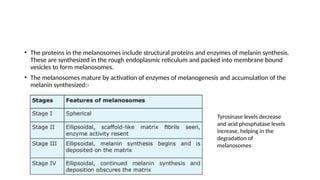
• The proteins in the melanosomes include structural proteins and enzymes of melanin synthesis.
These are synthesized in the rough endoplasmic reticulum and packed into membrane bound
vesicles to form melanosomes.
• The melanosomes mature by activation of enzymes of melanogenesis and accumulation of the
melanin synthesized:-
Tyrosinase levels decrease
and acid phosphatase levels
increase, helping in the
degradation of
melanosomes
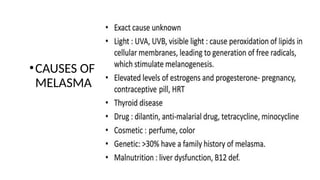
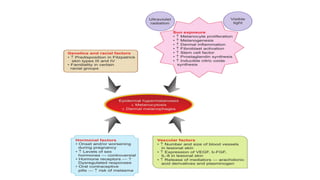
•CAUSES OF
MELASMA
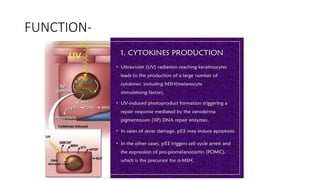
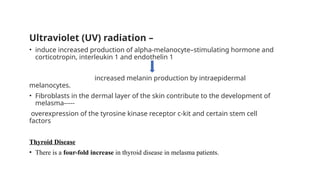
Ultraviolet (UV) radiation –
• induce increased production of alpha-melanocyte–stimulating hormone and
corticotropin, interleukin 1 and endothelin 1
increased melanin production by intraepidermal
melanocytes.
• Fibroblasts in the dermal layer of the skin contribute to the development of
melasma-----
overexpression of the tyrosine kinase receptor c-kit and certain stem cell
factors
Thyroid Disease
• There is a four-fold increase in thyroid disease in melasma patients.
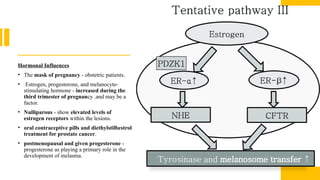
Hormonal Influences
• The mask of pregnancy - obstetric patients.
• Estrogen, progesterone, and melanocyte-
stimulating hormone - increased during the
third trimester of pregnancy .and may be a
factor.
• Nulliparous - show elevated levels of
estrogen receptors within the lesions.
• oral contraceptive pills and diethylstilbestrol
treatment for prostate cancer.
• postmenopausal and given progesterone -
progesterone as playing a primary role in the
development of melasma.
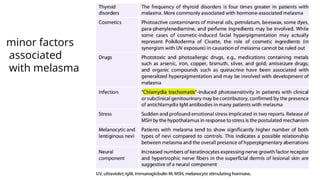
minor factors
associated
with melasma
Classification
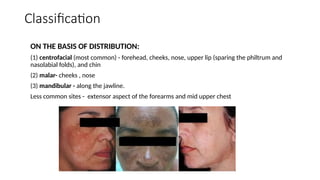
ON THE BASIS OF DISTRIBUTION:
(1) centrofacial (most common) - forehead, cheeks, nose, upper lip (sparing the philtrum and
nasolabial folds), and chin
(2) malar- cheeks , nose
(3) mandibular - along the jawline.
Less common sites - extensor aspect of the forearms and mid upper chest
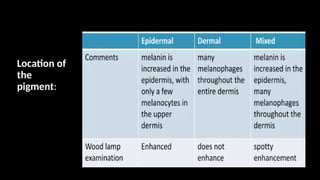
Location of
the
pigment:
HISTOPATHOLOGY
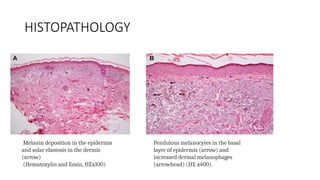
Melanin deposition in the epidermis
and solar elastosis in the dermis
(arrow)
(Hematoxylin and Eosin, HEx100)
Pendulous melanocytes in the basal
layer of epidermis (arrow) and
increased dermal melanophages
(arrowhead) (HE x400).
Diagnosis
History and Physical
Melasma occurs in sun-exposed areas
Presenting as symmetrically distributed hyperpigmented macules which can be confluent or
punctate.
 It is worse in areas that receive excessive sun exposure
SITES- cheeks, the upper lip, the chin, and the forehead.
Evaluation
• THYROID FUNCTON TEST( specifically pregnancy- or oral contraceptive pill-associated melasma.)
• Wood lamp examination - helps to localize the pigment to the dermis or epidermis
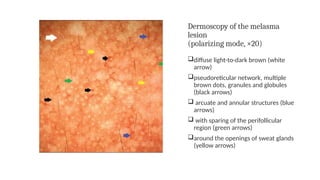
Dermoscopy of the melasma
lesion
(polarizing mode, ×20)
diffuse light-to-dark brown (white
arrow)
pseudoreticular network, multiple
brown dots, granules and globules
(black arrows)
 arcuate and annular structures (blue
arrows)
 with sparing of the perifollicular
region (green arrows)
around the openings of sweat glands
(yellow arrows)
Differential
diagnosis
1) Drug-induced hyperpigmentation or
discoloration
• History of medication use (e.g. doxycycline,
amiodarone-Slate-gray to violaceous discoloration of
sun-exposed skin)
• Hyperpigmentation less patterned and less irregular
in outline; may involve tip of nose
• Discrete oval or round shape of fixed drug eruption
rarely confused with melasma
• Oral contraceptives(increased pigmentation of
nipples and nevi) and phenytoin may exacerbate
melasma
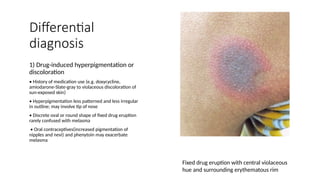
Fixed drug eruption with central violaceous
hue and surrounding erythematous rim
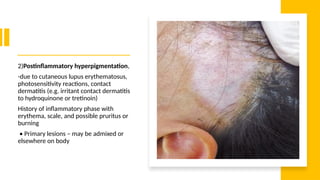
2)Postinflammatory hyperpigmentation,
-due to cutaneous lupus erythematosus,
photosensitivity reactions, contact
dermatitis (e.g. irritant contact dermatitis
to hydroquinone or tretinoin)
History of inflammatory phase with
erythema, scale, and possible pruritus or
burning
• Primary lesions – may be admixed or
elsewhere on body
• 3) Riehl′s Melanosis
(Pigmented Contact
Dermatitis)
• pigmented contact dermatitis to
allergens present in cosmetics,
fragrances, and Kumkum
• presents as patches of diffuse gray-
brown pigmentation on forehead,
scalp, face, and neck
• rythema, scaling, or pruritus is
occasionally present
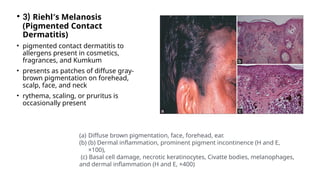
(a) Diffuse brown pigmentation, face, forehead, ear.
(b) (b) Dermal inflammation, prominent pigment incontinence (H and E,
×100),
(c) Basal cell damage, necrotic keratinocytes, Civatte bodies, melanophages,
and dermal inflammation (H and E, ×400)
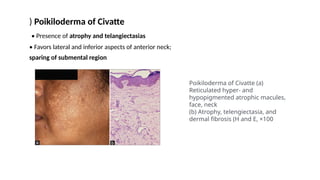
) Poikiloderma of Civatte
• Presence of atrophy and telangiectasias
• Favors lateral and inferior aspects of anterior neck;
sparing of submental region
Poikiloderma of Civatte (a)
Reticulated hyper- and
hypopigmented atrophic macules,
face, neck
(b) Atrophy, telengiectasia, and
dermal fibrosis (H and E, ×100
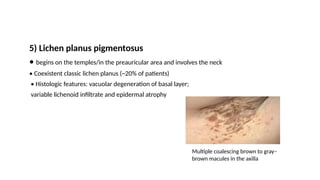
5) Lichen planus pigmentosus
• begins on the temples/in the preauricular area and involves the neck
• Coexistent classic lichen planus (~20% of patients)
• Histologic features: vacuolar degeneration of basal layer;
variable lichenoid infiltrate and epidermal atrophy
Multiple coalescing brown to gray–
brown macules in the axilla
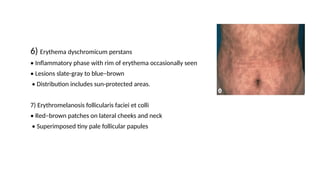
6) Erythema dyschromicum perstans
• Inflammatory phase with rim of erythema occasionally seen
• Lesions slate-gray to blue–brown
• Distribution includes sun-protected areas.
7) Erythromelanosis follicularis faciei et colli
• Red–brown patches on lateral cheeks and neck
• Superimposed tiny pale follicular papules
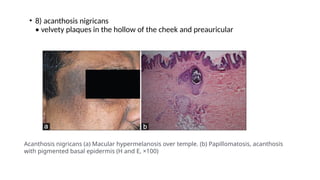
• 8) acanthosis nigricans
• velvety plaques in the hollow of the cheek and preauricular
Acanthosis nigricans (a) Macular hypermelanosis over temple. (b) Papillomatosis, acanthosis
with pigmented basal epidermis (H and E, ×100)
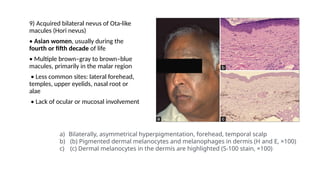
9) Acquired bilateral nevus of Ota-like
macules (Hori nevus)
• Asian women, usually during the
fourth or fifth decade of life
• Multiple brown–gray to brown–blue
macules, primarily in the malar region
• Less common sites: lateral forehead,
temples, upper eyelids, nasal root or
alae
• Lack of ocular or mucosal involvement
a) Bilaterally, asymmetrical hyperpigmentation, forehead, temporal scalp
b) (b) Pigmented dermal melanocytes and melanophages in dermis (H and E, ×100)
c) (c) Dermal melanocytes in the dermis are highlighted (S-100 stain, ×100)
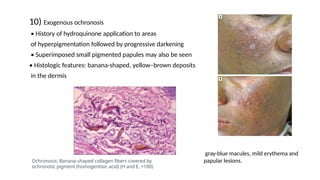
10) Exogenous ochronosis
• History of hydroquinone application to areas
of hyperpigmentation followed by progressive darkening
• Superimposed small pigmented papules may also be seen
• Histologic features: banana-shaped, yellow–brown deposits
in the dermis
gray-blue macules, mild erythema and
papular lesions.
Ochronosis: Banana-shaped collagen fibers covered by
ochronotic pigment (homogentisic acid) (H and E, ×100)
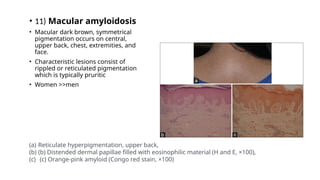
• 11) Macular amyloidosis
• Macular dark brown, symmetrical
pigmentation occurs on central,
upper back, chest, extremities, and
face.
• Characteristic lesions consist of
rippled or reticulated pigmentation
which is typically pruritic
• Women >>men
(a) Reticulate hyperpigmentation, upper back,
(b) (b) Distended dermal papillae filled with eosinophilic material (H and E, ×100),
(c) (c) Orange-pink amyloid (Congo red stain, ×100)
TREATMENT
Recommendations for all patients
• Avoidance of sun exposure and tanning beds
• Daily use of broad-spectrum sunscreen (ideally SPF ≥30 with physical blocker such as zinc oxide or
titanium dioxide)
• Sun-protective hats and clothing
• Camouflage makeup
• Discontinue oral contraceptives
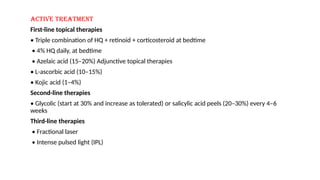
Active treatment
First-line topical therapies
• Triple combination of HQ + retinoid + corticosteroid at bedtime
• 4% HQ daily, at bedtime
• Azelaic acid (15–20%) Adjunctive topical therapies
• L-ascorbic acid (10–15%)
• Kojic acid (1–4%)
Second-line therapies
• Glycolic (start at 30% and increase as tolerated) or salicylic acid peels (20–30%) every 4–6
weeks
Third-line therapies
• Fractional laser
• Intense pulsed light (IPL)
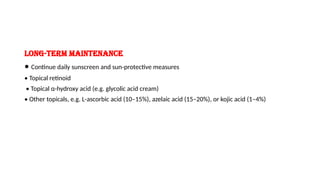
Long-term maintenance
• Continue daily sunscreen and sun-protective measures
• Topical retinoid
• Topical α-hydroxy acid (e.g. glycolic acid cream)
• Other topicals, e.g. L-ascorbic acid (10–15%), azelaic acid (15–20%), or kojic acid (1–4%)
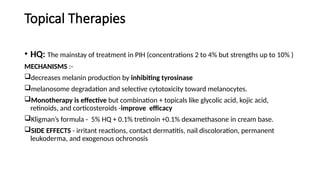
Topical Therapies
• HQ: The mainstay of treatment in PIH (concentrations 2 to 4% but strengths up to 10% )
MECHANISMS :-
decreases melanin production by inhibiting tyrosinase
melanosome degradation and selective cytotoxicity toward melanocytes.
Monotherapy is effective but combination + topicals like glycolic acid, kojic acid,
retinoids, and corticosteroids -improve efficacy
Kligman’s formula - 5% HQ + 0.1% tretinoin +0.1% dexamethasone in cream base.
SIDE EFFECTS - irritant reactions, contact dermatitis, nail discoloration, permanent
leukoderma, and exogenous ochronosis
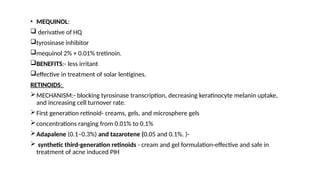
• MEQUINOL:
 derivative of HQ
tyrosinase inhibitor
mequinol 2% + 0.01% tretinoin.
BENEFITS:- less irritant
effective in treatment of solar lentigines.
RETINOIDS:
MECHANISM:- blocking tyrosinase transcription, decreasing keratinocyte melanin uptake,
and increasing cell turnover rate.
First generation retinoid- creams, gels, and microsphere gels
concentrations ranging from 0.01% to 0.1%
Adapalene (0.1–0.3%) and tazarotene (0.05 and 0.1%. )-
 synthetic third-generation retinoids - cream and gel formulation-effective and safe in
treatment of acne induced PIH
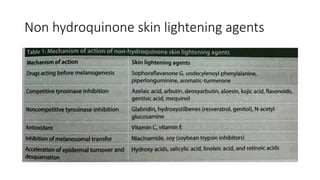
Non hydroquinone skin lightening agents
Azelaic acid:
Naturally occurring dicrboxylic acid.
Obtained from pityrosporum cultures.
An advantage of azelaic acid over HQ is lightening of only hyperpigmented skin .
Reversible tyrosinase inhibitor + selective cytotoxic and antiproliferative effects toward
abnormal melanocytes
15% gel and 20% cream formulation = 4% HQ(efficacy)
INDICATIONS:- rosacea , acne vulgaris , melasma, PIH.
S/E- transient erythema ,stnging ,pruritus ,scaling and allergic sensitization.
Kojic acid:
A fungal metabolite derieved from aspergillus ,acetobacter ,and penicillium.
 mechanism:- inhibits tyrosinase by chelating copper at the active site of the enzyme.
Used in 1–4% concentration
KA + glycolic acid / HQ for an increased efficacy.
INDICATIONS:- melasm ,PIH.
Arbutin:
 naturally occurin D-glucopyranoside derivative of HQ
extracted from dried leaves of blueberry, cranberry, pear, or bearberry plants.
MECHANISM- It inhibits melanosome maturation in addition to blocking tyrosinase enzyme.
synthetic derivatives :- Alpha arbutin and deoxyarbutin
exhibit greater tyrosinase inhibiting ability .
effectively used in treatment of solar lentigines.
Niacinamide:
o a highly stable, physiologically active form of vitamin B3 .
o Inhibits melanosome transfer to keratinocytes ------ reducing pigmentation.
o It also decreases the proinflammatory markers that are important in the development of PIH.
o concentrations of 2–5% - improve melasma and UV-induced hyperpigmentation.
Licorice root extract:
• Roots of glycyrrhiza glabra.
o its active ingredients- glabridin ------ inhibits tyrosinase
liquiritin --- brings about melanin dispersion and removal.
o Has anti-inflammatory activity (inhibiting superoxide anion and cyclo oxygenase activity.) antiviral,
antimicrobial, and anticarcinogenic properties.
o 20% cream X BD for 4 weeks.
o It has been found safe and effective in melasma
Ascorbic acid:
o A natural antioxidant found in fruits, vitamin C .
o Skin lightening, antiinflammatory, and photoprotective properties.
o MECHANISM:- It deactivates tyrosinase via a copper ion interaction and reduces
dopaquinone, a substrate needed in melanin synthesis. It
o Effective in UV-induced hyperpigmentation, solar lentigines, and melasma
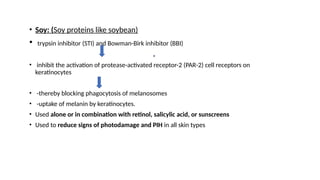
• Soy: (Soy proteins like soybean)
• trypsin inhibitor (STI) and Bowman-Birk inhibitor (BBI)
• inhibit the activation of protease-activated receptor-2 (PAR-2) cell receptors on
keratinocytes
• -thereby blocking phagocytosis of melanosomes
• -uptake of melanin by keratinocytes.
• Used alone or in combination with retinol, salicylic acid, or sunscreens
• Used to reduce signs of photodamage and PIH in all skin types
New products
N-acetyl glucosamine (NAG):
 An amino sugar
MECHANISM:- inhibits tyrosinase by blocking its glycosylation.
effectively lighten solar-induced hyperpigmentation (either alone or in combination with
niacinamide.)
• Aloesin
 LMW glycoprotein (aloe vera)
 Hydophilic nature
 Competitively inhibits tyrosinase,tyrosine
hydroxylase and 3,4-
dihydrophenylalanineoxidase.
 Used in combination with arbutin or
deoxyarbutin for synergistic effects.
Proanthocyanidin
 Extracted from grape seed
 Antioxidant property
 Orally administered
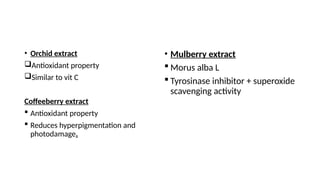
• Orchid extract
Antioxidant property
Similar to vit C
Coffeeberry extract
 Antioxidant property
 Reduces hyperpigmentation and
photodamage.
• Mulberry extract
 Morus alba L
 Tyrosinase inhibitor + superoxide
scavenging activity
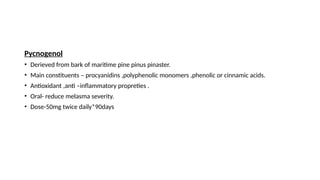
Pycnogenol
• Derieved from bark of maritime pine pinus pinaster.
• Main constituents – procyanidins ,polyphenolic monomers ,phenolic or cinnamic acids.
• Antioxidant ,anti –inflammatory propreties .
• Oral- reduce melasma severity.
• Dose-50mg twice daily*90days
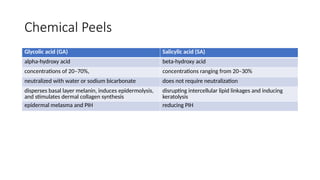
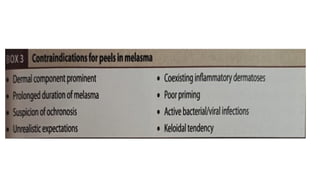
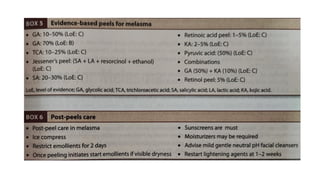
Chemical Peels
Glycolic acid (GA) Salicylic acid (SA)
alpha-hydroxy acid beta-hydroxy acid
concentrations of 20–70%, concentrations ranging from 20–30%
neutralized with water or sodium bicarbonate does not require neutralization
disperses basal layer melanin, induces epidermolysis,
and stimulates dermal collagen synthesis
disrupting intercellular lipid linkages and inducing
keratolysis
epidermal melasma and PIH reducing PIH
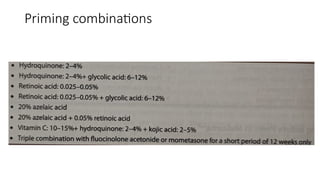
Priming combinations
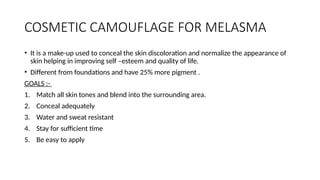
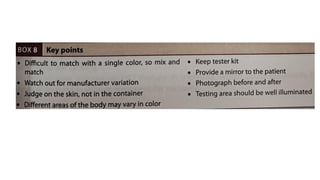
COSMETIC CAMOUFLAGE FOR MELASMA
• It is a make-up used to conceal the skin discoloration and normalize the appearance of
skin helping in improving self –esteem and quality of life.
• Different from foundations and have 25% more pigment .
GOALS :-
1. Match all skin tones and blend into the surrounding area.
2. Conceal adequately
3. Water and sweat resistant
4. Stay for sufficient time
5. Be easy to apply
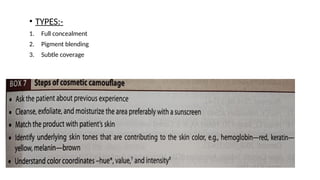
• TYPES:-
1. Full concealment
2. Pigment blending
3. Subtle coverage
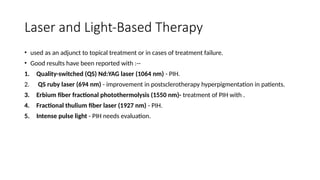
Laser and Light-Based Therapy
• used as an adjunct to topical treatment or in cases of treatment failure.
• Good results have been reported with :--
1. Quality-switched (QS) Nd:YAG laser (1064 nm) - PIH.
2. QS ruby laser (694 nm) - improvement in postsclerotherapy hyperpigmentation in patients.
3. Erbium fiber fractional photothermolysis (1550 nm)- treatment of PIH with .
4. Fractional thulium fiber laser (1927 nm) - PIH.
5. Intense pulse light - PIH needs evaluation.
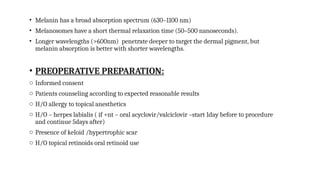
• Melanin has a broad absorption spectrum (630–1100 nm)
• Melanosomes have a short thermal relaxation time (50–500 nanoseconds).
• Longer wavelengths (>600nm) penetrate deeper to target the dermal pigment, but
melanin absorption is better with shorter wavelengths.
• PREOPERATIVE PREPARATION:
o Informed consent
o Patients counseling according to expected reasonable results
o H/O allergy to topical anesthetics
o H/O – herpes labialis ( if +nt – oral acyclovir/valciclovir –start 1day before to procedure
and continue 5days after)
o Presence of keloid /hypertrophic scar
o H/O topical retinoids oral retinoid use
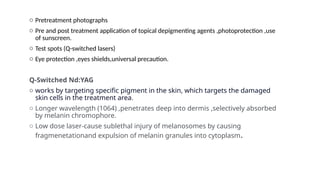
o Pretreatment photographs
o Pre and post treatment application of topical depigmenting agents ,photoprotection ,use
of sunscreen.
o Test spots (Q-switched lasers)
o Eye protection ,eyes shields,universal precaution.
Q-Switched Nd:YAG
o works by targeting specific pigment in the skin, which targets the damaged
skin cells in the treatment area.
o Longer wavelength (1064) ,penetrates deep into dermis ,selectively absorbed
by melanin chromophore.
o Low dose laser-cause sublethal injury of melanosomes by causing
fragmenetationand expulsion of melanin granules into cytoplasm.
• Dermal vascular- cause subcellular damage to upper dermal vascular plexus.
• PARAMETERS USED:-
 Fluence - <5J/cm²
 Spot size-6mm
 Frequency- 10Hz
 Session- 5 -10at 1 week intervals
SIDE EFFECTS-hypopigmentation
Depgmentation- due to phototoxicity and cellular destruction of melanocytes caused by use
of high fluence.
• Q-switched ruby laser (QSRL)
• wavelength of 694 nm
• pulse duration of around 40 nsec - effective modality for the removal of
tattoos and cutaneous pigmented lesions.
• Based on the principle of selective photothermolysis, selective damage to
cutaneous pigment or pigmented cells ,allowing the scar-free elimination of
endogenous or exogenous pigment in the skin.
• Indications- tattoos (amateur, professional, accidental, or cosmetic)
• lentigines
• used for lightening or even removing other pigmented lesions (nevus spilus
or café au lait macules.)
• pigmented lesions of mucous membranes
• s/e - postinflammatory hyperpigmentation, myoplasma, and Becker' nevus .
Erbium- Yttrium Aluminium Garnet (Er:YAG) Laser (2940)
• a solid-state laser containing an Er-YAG crystal which emits a wavelength of 2940
nanometers. It is mainly used in bone surgery.
• Causes skin ablatio with minimal thermal damage .
• Minimal risk of postinflammatory hyperpigmentation.
• Fluence – 5.1 – 7.6J/cm²
Pulsed dye laser
• Laser which uses an organic dye mixed in a solvent as the lasing medium
• Pulse duration of laser energy is shorter than the target structure’s thermal relaxation time
(which is the time taken for the target to cool by 50% of its peak temperature after
irradiation.)
• Target the melanin and cut. Vasculature.
• Fluence – 7-10J/cm²
• Pulse duration- 1.5ms
• Intense Pulsed Light Therapy
absorption of light energy by melanin in keratinocytes and melanocytes
leading to epidermal coagulation due to photothermolysis followed by
microcrust formation.
Wavelength-500- 1200nm
Pulse 5-10ms
Pulse delay 10-20ms
Low fluence 6-14J/cm²
Sessions 3-5
Interval 4-8weeks
THANK YOU

melasma.presentation dermatology resident

  • 1.
  • 2.
    MELASMA • An acquiredhyperpigmentary disorder . • Presents - bilaterally symmetrical pigmentation involving the face . • Color - tan to brown (epidermal melasma) or bluish (dermal melasma) • Seen in females • Multifactorial etiology.
  • 3.
    EPIDEMIOLOGY Persons of anyrace can be affected. Melasma is more common in darker skin types Women - nine times more than men. Common in reproductive years. Melasma is present in 15% to 50% of pregnant patients. The prevalence varies between 1.5% and 33% depending on the population. Persons with light-brown skin types + high sun exposure - prone to the development of melasma. 50% report - positive family history of the condition. Identical twins have been reported to develop melasma
  • 4.
    Melanocyte • Melanocytes aredendritic cells. • Involved in pigment synthesis. • Melanoblasts(melanocyte precursors) originate in the neural crest. • Migrate to their final destinations in the basal layer of the epidermis, hair follicle, uveal tract and cochlea during embryonic life • During embryonic life, they enter the epidermis between 7 and 8 weeks of gestation and are distributed among basal cells. • By the 10th week, these cells contain melanosomes showing early melanization • Factors essential in the development of the melanoblast/melanocyte lineage during embryonic life:- • Wnt/β-catenin, MAPK and Notch pathways • (EDNRB2) • Stem cell factor (SCF) or c-kit ligand (inhibits apoptosis and promotes melanoblast proliferation)
  • 5.
  • 8.
    • Melanocytes arein contact with keratinocytes through their processes. • One melanocyte is in contact with 36 basal and suprabasal keratinocytes (epidermal melanin unit) • The number of melanocytes per unit of the surface area varies at different body sites- • no difference in the density • racial differences is due to the distribution and size of melanosomes within keratinocytes
  • 9.
    Melanin Synthesis andMelanosomes • Melanin is produced in membrane bound organelles called melanosomes within the melanocytes. • It is regulated by- UV exposure and ACTH, which in humans has α-MSH (Melanocyte stimulating hormone) activity. • 2 types of melanin: eumelanin and pheomelanin. • The type of melanin synthesized depends on:- I. the activity of the enzymes II. presence of thiols (cysteine, glutathione and thioredoxin). pheomelanin eumelanin Yellow to red Brown to black presence of thiol groups absence of thiol groups more stable and is more effective in photoprotection
  • 11.
    • The proteinsin the melanosomes include structural proteins and enzymes of melanin synthesis. These are synthesized in the rough endoplasmic reticulum and packed into membrane bound vesicles to form melanosomes. • The melanosomes mature by activation of enzymes of melanogenesis and accumulation of the melanin synthesized:- Tyrosinase levels decrease and acid phosphatase levels increase, helping in the degradation of melanosomes
  • 12.
  • 14.
    Ultraviolet (UV) radiation– • induce increased production of alpha-melanocyte–stimulating hormone and corticotropin, interleukin 1 and endothelin 1 increased melanin production by intraepidermal melanocytes. • Fibroblasts in the dermal layer of the skin contribute to the development of melasma----- overexpression of the tyrosine kinase receptor c-kit and certain stem cell factors Thyroid Disease • There is a four-fold increase in thyroid disease in melasma patients.
  • 15.
    Hormonal Influences • Themask of pregnancy - obstetric patients. • Estrogen, progesterone, and melanocyte- stimulating hormone - increased during the third trimester of pregnancy .and may be a factor. • Nulliparous - show elevated levels of estrogen receptors within the lesions. • oral contraceptive pills and diethylstilbestrol treatment for prostate cancer. • postmenopausal and given progesterone - progesterone as playing a primary role in the development of melasma.
  • 16.
  • 17.
    Classification ON THE BASISOF DISTRIBUTION: (1) centrofacial (most common) - forehead, cheeks, nose, upper lip (sparing the philtrum and nasolabial folds), and chin (2) malar- cheeks , nose (3) mandibular - along the jawline. Less common sites - extensor aspect of the forearms and mid upper chest
  • 18.
  • 19.
    HISTOPATHOLOGY Melanin deposition inthe epidermis and solar elastosis in the dermis (arrow) (Hematoxylin and Eosin, HEx100) Pendulous melanocytes in the basal layer of epidermis (arrow) and increased dermal melanophages (arrowhead) (HE x400).
  • 20.
    Diagnosis History and Physical Melasmaoccurs in sun-exposed areas Presenting as symmetrically distributed hyperpigmented macules which can be confluent or punctate.  It is worse in areas that receive excessive sun exposure SITES- cheeks, the upper lip, the chin, and the forehead. Evaluation • THYROID FUNCTON TEST( specifically pregnancy- or oral contraceptive pill-associated melasma.) • Wood lamp examination - helps to localize the pigment to the dermis or epidermis
  • 21.
    Dermoscopy of themelasma lesion (polarizing mode, ×20) diffuse light-to-dark brown (white arrow) pseudoreticular network, multiple brown dots, granules and globules (black arrows)  arcuate and annular structures (blue arrows)  with sparing of the perifollicular region (green arrows) around the openings of sweat glands (yellow arrows)
  • 22.
    Differential diagnosis 1) Drug-induced hyperpigmentationor discoloration • History of medication use (e.g. doxycycline, amiodarone-Slate-gray to violaceous discoloration of sun-exposed skin) • Hyperpigmentation less patterned and less irregular in outline; may involve tip of nose • Discrete oval or round shape of fixed drug eruption rarely confused with melasma • Oral contraceptives(increased pigmentation of nipples and nevi) and phenytoin may exacerbate melasma Fixed drug eruption with central violaceous hue and surrounding erythematous rim
  • 23.
    2)Postinflammatory hyperpigmentation, -due tocutaneous lupus erythematosus, photosensitivity reactions, contact dermatitis (e.g. irritant contact dermatitis to hydroquinone or tretinoin) History of inflammatory phase with erythema, scale, and possible pruritus or burning • Primary lesions – may be admixed or elsewhere on body
  • 24.
    • 3) Riehl′sMelanosis (Pigmented Contact Dermatitis) • pigmented contact dermatitis to allergens present in cosmetics, fragrances, and Kumkum • presents as patches of diffuse gray- brown pigmentation on forehead, scalp, face, and neck • rythema, scaling, or pruritus is occasionally present (a) Diffuse brown pigmentation, face, forehead, ear. (b) (b) Dermal inflammation, prominent pigment incontinence (H and E, ×100), (c) Basal cell damage, necrotic keratinocytes, Civatte bodies, melanophages, and dermal inflammation (H and E, ×400)
  • 25.
    ) Poikiloderma ofCivatte • Presence of atrophy and telangiectasias • Favors lateral and inferior aspects of anterior neck; sparing of submental region Poikiloderma of Civatte (a) Reticulated hyper- and hypopigmented atrophic macules, face, neck (b) Atrophy, telengiectasia, and dermal fibrosis (H and E, ×100
  • 26.
    5) Lichen planuspigmentosus • begins on the temples/in the preauricular area and involves the neck • Coexistent classic lichen planus (~20% of patients) • Histologic features: vacuolar degeneration of basal layer; variable lichenoid infiltrate and epidermal atrophy Multiple coalescing brown to gray– brown macules in the axilla
  • 27.
    6) Erythema dyschromicumperstans • Inflammatory phase with rim of erythema occasionally seen • Lesions slate-gray to blue–brown • Distribution includes sun-protected areas. 7) Erythromelanosis follicularis faciei et colli • Red–brown patches on lateral cheeks and neck • Superimposed tiny pale follicular papules
  • 28.
    • 8) acanthosisnigricans • velvety plaques in the hollow of the cheek and preauricular Acanthosis nigricans (a) Macular hypermelanosis over temple. (b) Papillomatosis, acanthosis with pigmented basal epidermis (H and E, ×100)
  • 29.
    9) Acquired bilateralnevus of Ota-like macules (Hori nevus) • Asian women, usually during the fourth or fifth decade of life • Multiple brown–gray to brown–blue macules, primarily in the malar region • Less common sites: lateral forehead, temples, upper eyelids, nasal root or alae • Lack of ocular or mucosal involvement a) Bilaterally, asymmetrical hyperpigmentation, forehead, temporal scalp b) (b) Pigmented dermal melanocytes and melanophages in dermis (H and E, ×100) c) (c) Dermal melanocytes in the dermis are highlighted (S-100 stain, ×100)
  • 30.
    10) Exogenous ochronosis •History of hydroquinone application to areas of hyperpigmentation followed by progressive darkening • Superimposed small pigmented papules may also be seen • Histologic features: banana-shaped, yellow–brown deposits in the dermis gray-blue macules, mild erythema and papular lesions. Ochronosis: Banana-shaped collagen fibers covered by ochronotic pigment (homogentisic acid) (H and E, ×100)
  • 31.
    • 11) Macularamyloidosis • Macular dark brown, symmetrical pigmentation occurs on central, upper back, chest, extremities, and face. • Characteristic lesions consist of rippled or reticulated pigmentation which is typically pruritic • Women >>men (a) Reticulate hyperpigmentation, upper back, (b) (b) Distended dermal papillae filled with eosinophilic material (H and E, ×100), (c) (c) Orange-pink amyloid (Congo red stain, ×100)
  • 32.
    TREATMENT Recommendations for allpatients • Avoidance of sun exposure and tanning beds • Daily use of broad-spectrum sunscreen (ideally SPF ≥30 with physical blocker such as zinc oxide or titanium dioxide) • Sun-protective hats and clothing • Camouflage makeup • Discontinue oral contraceptives
  • 33.
    Active treatment First-line topicaltherapies • Triple combination of HQ + retinoid + corticosteroid at bedtime • 4% HQ daily, at bedtime • Azelaic acid (15–20%) Adjunctive topical therapies • L-ascorbic acid (10–15%) • Kojic acid (1–4%) Second-line therapies • Glycolic (start at 30% and increase as tolerated) or salicylic acid peels (20–30%) every 4–6 weeks Third-line therapies • Fractional laser • Intense pulsed light (IPL)
  • 34.
    Long-term maintenance • Continuedaily sunscreen and sun-protective measures • Topical retinoid • Topical α-hydroxy acid (e.g. glycolic acid cream) • Other topicals, e.g. L-ascorbic acid (10–15%), azelaic acid (15–20%), or kojic acid (1–4%)
  • 35.
    Topical Therapies • HQ:The mainstay of treatment in PIH (concentrations 2 to 4% but strengths up to 10% ) MECHANISMS :- decreases melanin production by inhibiting tyrosinase melanosome degradation and selective cytotoxicity toward melanocytes. Monotherapy is effective but combination + topicals like glycolic acid, kojic acid, retinoids, and corticosteroids -improve efficacy Kligman’s formula - 5% HQ + 0.1% tretinoin +0.1% dexamethasone in cream base. SIDE EFFECTS - irritant reactions, contact dermatitis, nail discoloration, permanent leukoderma, and exogenous ochronosis
  • 36.
    • MEQUINOL:  derivativeof HQ tyrosinase inhibitor mequinol 2% + 0.01% tretinoin. BENEFITS:- less irritant effective in treatment of solar lentigines. RETINOIDS: MECHANISM:- blocking tyrosinase transcription, decreasing keratinocyte melanin uptake, and increasing cell turnover rate. First generation retinoid- creams, gels, and microsphere gels concentrations ranging from 0.01% to 0.1% Adapalene (0.1–0.3%) and tazarotene (0.05 and 0.1%. )-  synthetic third-generation retinoids - cream and gel formulation-effective and safe in treatment of acne induced PIH
  • 37.
    Non hydroquinone skinlightening agents
  • 38.
    Azelaic acid: Naturally occurringdicrboxylic acid. Obtained from pityrosporum cultures. An advantage of azelaic acid over HQ is lightening of only hyperpigmented skin . Reversible tyrosinase inhibitor + selective cytotoxic and antiproliferative effects toward abnormal melanocytes 15% gel and 20% cream formulation = 4% HQ(efficacy) INDICATIONS:- rosacea , acne vulgaris , melasma, PIH. S/E- transient erythema ,stnging ,pruritus ,scaling and allergic sensitization.
  • 39.
    Kojic acid: A fungalmetabolite derieved from aspergillus ,acetobacter ,and penicillium.  mechanism:- inhibits tyrosinase by chelating copper at the active site of the enzyme. Used in 1–4% concentration KA + glycolic acid / HQ for an increased efficacy. INDICATIONS:- melasm ,PIH.
  • 40.
    Arbutin:  naturally occurinD-glucopyranoside derivative of HQ extracted from dried leaves of blueberry, cranberry, pear, or bearberry plants. MECHANISM- It inhibits melanosome maturation in addition to blocking tyrosinase enzyme. synthetic derivatives :- Alpha arbutin and deoxyarbutin exhibit greater tyrosinase inhibiting ability . effectively used in treatment of solar lentigines.
  • 41.
    Niacinamide: o a highlystable, physiologically active form of vitamin B3 . o Inhibits melanosome transfer to keratinocytes ------ reducing pigmentation. o It also decreases the proinflammatory markers that are important in the development of PIH. o concentrations of 2–5% - improve melasma and UV-induced hyperpigmentation.
  • 42.
    Licorice root extract: •Roots of glycyrrhiza glabra. o its active ingredients- glabridin ------ inhibits tyrosinase liquiritin --- brings about melanin dispersion and removal. o Has anti-inflammatory activity (inhibiting superoxide anion and cyclo oxygenase activity.) antiviral, antimicrobial, and anticarcinogenic properties. o 20% cream X BD for 4 weeks. o It has been found safe and effective in melasma
  • 43.
    Ascorbic acid: o Anatural antioxidant found in fruits, vitamin C . o Skin lightening, antiinflammatory, and photoprotective properties. o MECHANISM:- It deactivates tyrosinase via a copper ion interaction and reduces dopaquinone, a substrate needed in melanin synthesis. It o Effective in UV-induced hyperpigmentation, solar lentigines, and melasma
  • 44.
    • Soy: (Soyproteins like soybean) • trypsin inhibitor (STI) and Bowman-Birk inhibitor (BBI) • inhibit the activation of protease-activated receptor-2 (PAR-2) cell receptors on keratinocytes • -thereby blocking phagocytosis of melanosomes • -uptake of melanin by keratinocytes. • Used alone or in combination with retinol, salicylic acid, or sunscreens • Used to reduce signs of photodamage and PIH in all skin types
  • 45.
    New products N-acetyl glucosamine(NAG):  An amino sugar MECHANISM:- inhibits tyrosinase by blocking its glycosylation. effectively lighten solar-induced hyperpigmentation (either alone or in combination with niacinamide.)
  • 46.
    • Aloesin  LMWglycoprotein (aloe vera)  Hydophilic nature  Competitively inhibits tyrosinase,tyrosine hydroxylase and 3,4- dihydrophenylalanineoxidase.  Used in combination with arbutin or deoxyarbutin for synergistic effects. Proanthocyanidin  Extracted from grape seed  Antioxidant property  Orally administered
  • 47.
    • Orchid extract Antioxidantproperty Similar to vit C Coffeeberry extract  Antioxidant property  Reduces hyperpigmentation and photodamage. • Mulberry extract  Morus alba L  Tyrosinase inhibitor + superoxide scavenging activity
  • 48.
    Pycnogenol • Derieved frombark of maritime pine pinus pinaster. • Main constituents – procyanidins ,polyphenolic monomers ,phenolic or cinnamic acids. • Antioxidant ,anti –inflammatory propreties . • Oral- reduce melasma severity. • Dose-50mg twice daily*90days
  • 49.
    Chemical Peels Glycolic acid(GA) Salicylic acid (SA) alpha-hydroxy acid beta-hydroxy acid concentrations of 20–70%, concentrations ranging from 20–30% neutralized with water or sodium bicarbonate does not require neutralization disperses basal layer melanin, induces epidermolysis, and stimulates dermal collagen synthesis disrupting intercellular lipid linkages and inducing keratolysis epidermal melasma and PIH reducing PIH
  • 50.
  • 53.
    COSMETIC CAMOUFLAGE FORMELASMA • It is a make-up used to conceal the skin discoloration and normalize the appearance of skin helping in improving self –esteem and quality of life. • Different from foundations and have 25% more pigment . GOALS :- 1. Match all skin tones and blend into the surrounding area. 2. Conceal adequately 3. Water and sweat resistant 4. Stay for sufficient time 5. Be easy to apply
  • 54.
    • TYPES:- 1. Fullconcealment 2. Pigment blending 3. Subtle coverage
  • 56.
    Laser and Light-BasedTherapy • used as an adjunct to topical treatment or in cases of treatment failure. • Good results have been reported with :-- 1. Quality-switched (QS) Nd:YAG laser (1064 nm) - PIH. 2. QS ruby laser (694 nm) - improvement in postsclerotherapy hyperpigmentation in patients. 3. Erbium fiber fractional photothermolysis (1550 nm)- treatment of PIH with . 4. Fractional thulium fiber laser (1927 nm) - PIH. 5. Intense pulse light - PIH needs evaluation.
  • 57.
    • Melanin hasa broad absorption spectrum (630–1100 nm) • Melanosomes have a short thermal relaxation time (50–500 nanoseconds). • Longer wavelengths (>600nm) penetrate deeper to target the dermal pigment, but melanin absorption is better with shorter wavelengths. • PREOPERATIVE PREPARATION: o Informed consent o Patients counseling according to expected reasonable results o H/O allergy to topical anesthetics o H/O – herpes labialis ( if +nt – oral acyclovir/valciclovir –start 1day before to procedure and continue 5days after) o Presence of keloid /hypertrophic scar o H/O topical retinoids oral retinoid use
  • 58.
    o Pretreatment photographs oPre and post treatment application of topical depigmenting agents ,photoprotection ,use of sunscreen. o Test spots (Q-switched lasers) o Eye protection ,eyes shields,universal precaution. Q-Switched Nd:YAG o works by targeting specific pigment in the skin, which targets the damaged skin cells in the treatment area. o Longer wavelength (1064) ,penetrates deep into dermis ,selectively absorbed by melanin chromophore. o Low dose laser-cause sublethal injury of melanosomes by causing fragmenetationand expulsion of melanin granules into cytoplasm.
  • 59.
    • Dermal vascular-cause subcellular damage to upper dermal vascular plexus. • PARAMETERS USED:-  Fluence - <5J/cm²  Spot size-6mm  Frequency- 10Hz  Session- 5 -10at 1 week intervals SIDE EFFECTS-hypopigmentation Depgmentation- due to phototoxicity and cellular destruction of melanocytes caused by use of high fluence.
  • 60.
    • Q-switched rubylaser (QSRL) • wavelength of 694 nm • pulse duration of around 40 nsec - effective modality for the removal of tattoos and cutaneous pigmented lesions. • Based on the principle of selective photothermolysis, selective damage to cutaneous pigment or pigmented cells ,allowing the scar-free elimination of endogenous or exogenous pigment in the skin. • Indications- tattoos (amateur, professional, accidental, or cosmetic) • lentigines • used for lightening or even removing other pigmented lesions (nevus spilus or café au lait macules.) • pigmented lesions of mucous membranes • s/e - postinflammatory hyperpigmentation, myoplasma, and Becker' nevus .
  • 61.
    Erbium- Yttrium AluminiumGarnet (Er:YAG) Laser (2940) • a solid-state laser containing an Er-YAG crystal which emits a wavelength of 2940 nanometers. It is mainly used in bone surgery. • Causes skin ablatio with minimal thermal damage . • Minimal risk of postinflammatory hyperpigmentation. • Fluence – 5.1 – 7.6J/cm²
  • 62.
    Pulsed dye laser •Laser which uses an organic dye mixed in a solvent as the lasing medium • Pulse duration of laser energy is shorter than the target structure’s thermal relaxation time (which is the time taken for the target to cool by 50% of its peak temperature after irradiation.) • Target the melanin and cut. Vasculature. • Fluence – 7-10J/cm² • Pulse duration- 1.5ms
  • 63.
    • Intense PulsedLight Therapy absorption of light energy by melanin in keratinocytes and melanocytes leading to epidermal coagulation due to photothermolysis followed by microcrust formation. Wavelength-500- 1200nm Pulse 5-10ms Pulse delay 10-20ms Low fluence 6-14J/cm² Sessions 3-5 Interval 4-8weeks
  • 64.

Editor's Notes

  • #4 he MAPK/ERK pathway (also known as the Ras-Raf-MEK-ERK pathway) is a chain of proteins in the cell that communicates a signal from a receptor on the surface of the cell to the DNA in the nucleus of the cell.
  • #5 ). MSH is well known for its ability to stimulate melanogenesis
  • #6 The MC1R gene provides instructions for making a protein called the melanocortin 1 receptor. This receptor plays an important role in normal pigmentation. The receptor is primarily located on the surface of melanocytes, which are specialized cells that produce a pigment called melanin
  • #9 Adrenocorticotropic hormone
  • #12 induce increased production of alpha-melanocyte–stimulating hormone and corticotropin, interleukin 1 and endothelin 1 increased melanin production by intraepidermal melanocytes
  • #13 overexpression of the tyrosine kinase receptor c-kit and certain stem cell factors
  • #15 upregulation of PDZ domain protein kidney 1 (PDZK1)-through regulation of expression of estrogen receptors (ERs) ER-α and ER-β. The PDZK1-induced tyrosinase expression and melanosome transfer was regulated by ion transporters such as sodium-hydrogen exchanger (NHE), cystic fibrosis transmembrane conductance regulator (CFTR)
  • #48 3july2019 30days –80% Effective rate -80% Fatigue,constipation ,bodypain improvement
  • #49 Other superficial peels like trichloroacetic acid or Jessner’s solution have been found to be effective in melasma