Medication adherence
Ms. Archana S. Gadakh
Asst. Professor
PES MODERN COLLEGE OF PHARMACY FOR LADIES MOSHI PUNE.
Definition
• Medication adherence or patient adherence or compliance means correct following
of medical advice by the patient.
• WHO has defined it as “ A faithful adherence by the patient to the prescribers
instructions.
• it can also apply to other situations such as medical device use, self care, self-
directed exercises, or therapy sessions.
• Medication adherence usually refers to whether patients take their medications as
prescribed (e.g., twice daily), as well as whether they continue to take a prescribed
medication.
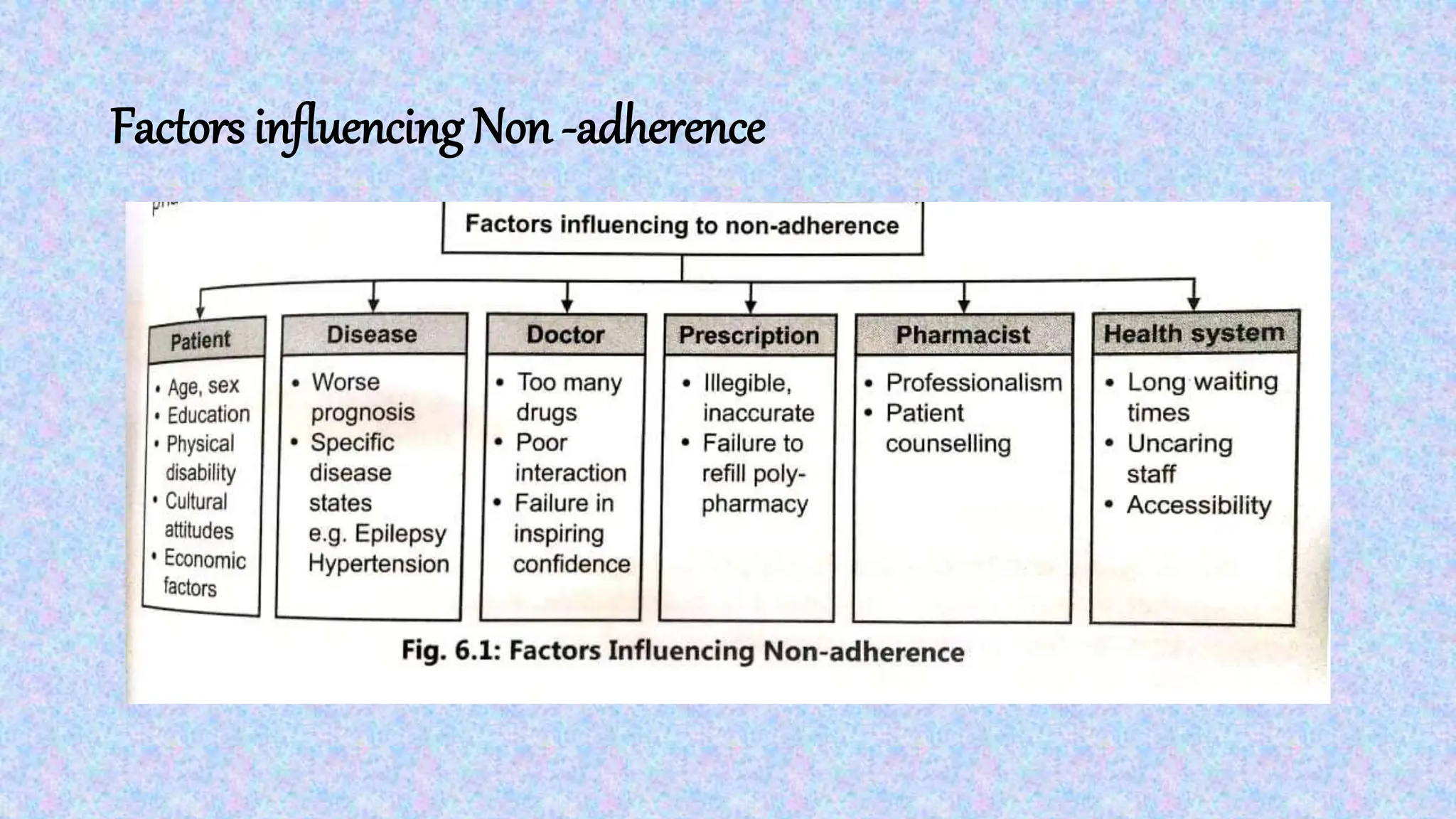
Factors influencing Non -adherence
1) Patient relatedfactors:
a) Patients Age, Sex, Education
b) Education
c) Physical disability
d) Cultural Attitudes
e) Economic Factors
2) Disease related Factors:
a) Worse prognosis
b) Specific disease states
3) Doctor relatedfactors:
a) Too many drug prescribed
b) Poor interaction with patient
c) Failure in inspiring confidence
4) Prescription relatedfactors:
a) Illegal and inaccurate Prescription
b) Failure to refill prescription
c) Polypharmacy
5) Pharmacist related factors:
a) Professionalism
b) Patient counselling
6) Healthsystemrelated factors:
a) Long waiting times
b) Uncaring staff
c) Accessibility
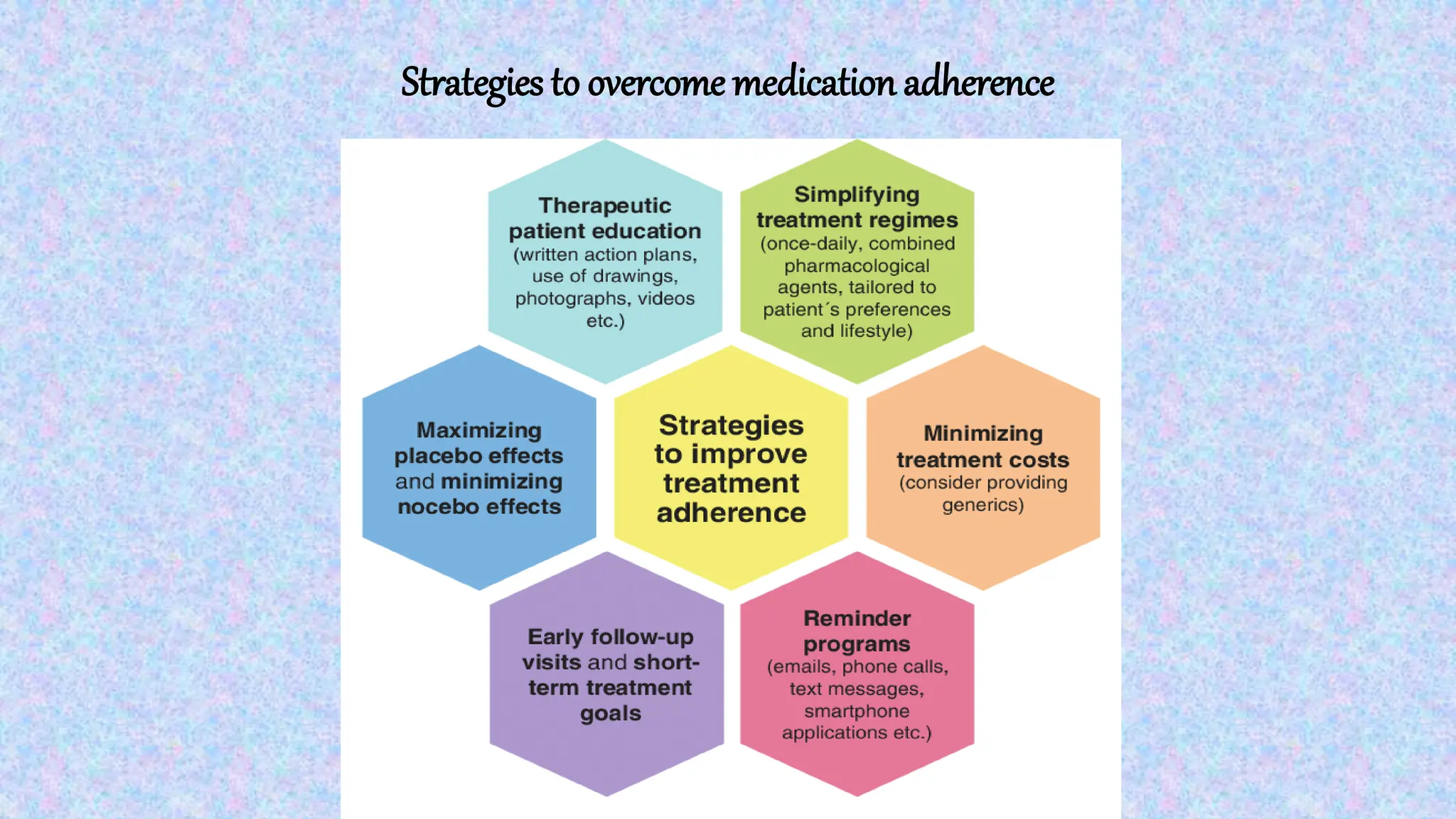
Strategies to overcome medication adherence
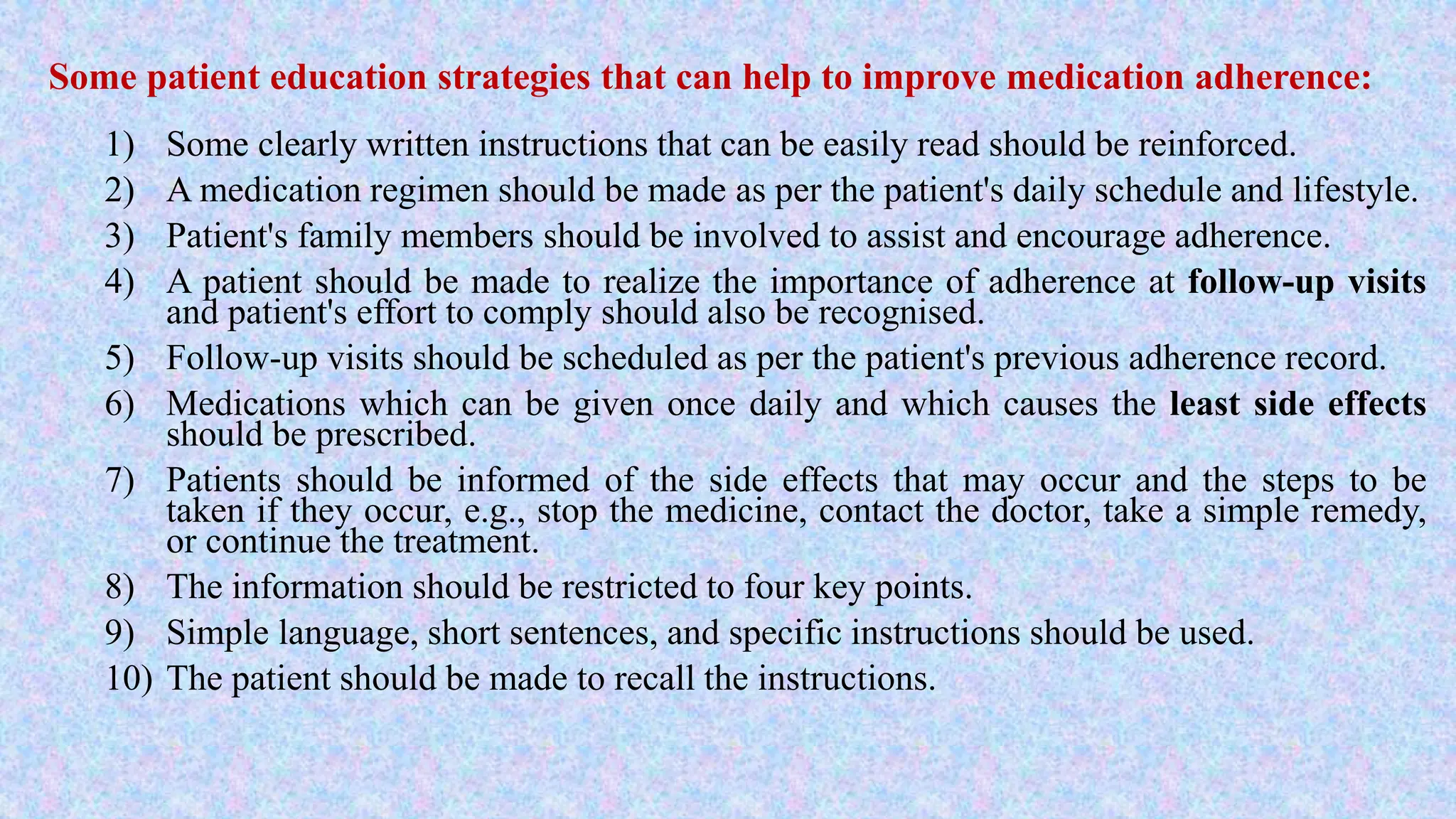
Some patient education strategies that can help to improve medication adherence:
1) Some clearly written instructions that can be easily read should be reinforced.
2) A medication regimen should be made as per the patient's daily schedule and lifestyle.
3) Patient's family members should be involved to assist and encourage adherence.
4) A patient should be made to realize the importance of adherence at follow-up visits
and patient's effort to comply should also be recognised.
5) Follow-up visits should be scheduled as per the patient's previous adherence record.
6) Medications which can be given once daily and which causes the least side effects
should be prescribed.
7) Patients should be informed of the side effects that may occur and the steps to be
taken if they occur, e.g., stop the medicine, contact the doctor, take a simple remedy,
or continue the treatment.
8) The information should be restricted to four key points.
9) Simple language, short sentences, and specific instructions should be used.
10) The patient should be made to recall the instructions.
MEDICATION ADHERENCE               .pptx

MEDICATION ADHERENCE .pptx

  • 1.
    Medication adherence Ms. ArchanaS. Gadakh Asst. Professor PES MODERN COLLEGE OF PHARMACY FOR LADIES MOSHI PUNE.
  • 2.
    Definition • Medication adherenceor patient adherence or compliance means correct following of medical advice by the patient. • WHO has defined it as “ A faithful adherence by the patient to the prescribers instructions. • it can also apply to other situations such as medical device use, self care, self- directed exercises, or therapy sessions. • Medication adherence usually refers to whether patients take their medications as prescribed (e.g., twice daily), as well as whether they continue to take a prescribed medication.
  • 3.
  • 4.
    1) Patient relatedfactors: a)Patients Age, Sex, Education b) Education c) Physical disability d) Cultural Attitudes e) Economic Factors 2) Disease related Factors: a) Worse prognosis b) Specific disease states 3) Doctor relatedfactors: a) Too many drug prescribed b) Poor interaction with patient c) Failure in inspiring confidence
  • 5.
    4) Prescription relatedfactors: a)Illegal and inaccurate Prescription b) Failure to refill prescription c) Polypharmacy 5) Pharmacist related factors: a) Professionalism b) Patient counselling 6) Healthsystemrelated factors: a) Long waiting times b) Uncaring staff c) Accessibility
  • 6.
    Strategies to overcomemedication adherence
  • 7.
    Some patient educationstrategies that can help to improve medication adherence: 1) Some clearly written instructions that can be easily read should be reinforced. 2) A medication regimen should be made as per the patient's daily schedule and lifestyle. 3) Patient's family members should be involved to assist and encourage adherence. 4) A patient should be made to realize the importance of adherence at follow-up visits and patient's effort to comply should also be recognised. 5) Follow-up visits should be scheduled as per the patient's previous adherence record. 6) Medications which can be given once daily and which causes the least side effects should be prescribed. 7) Patients should be informed of the side effects that may occur and the steps to be taken if they occur, e.g., stop the medicine, contact the doctor, take a simple remedy, or continue the treatment. 8) The information should be restricted to four key points. 9) Simple language, short sentences, and specific instructions should be used. 10) The patient should be made to recall the instructions.