This presentation aimsto explore the critical
components of media and information literacy,
essential skills for navigating the digital landscape.
We will define media literacy, discuss its importance
in contemporary society, and highlight real-life
examples to illustrate its application.
Introduction
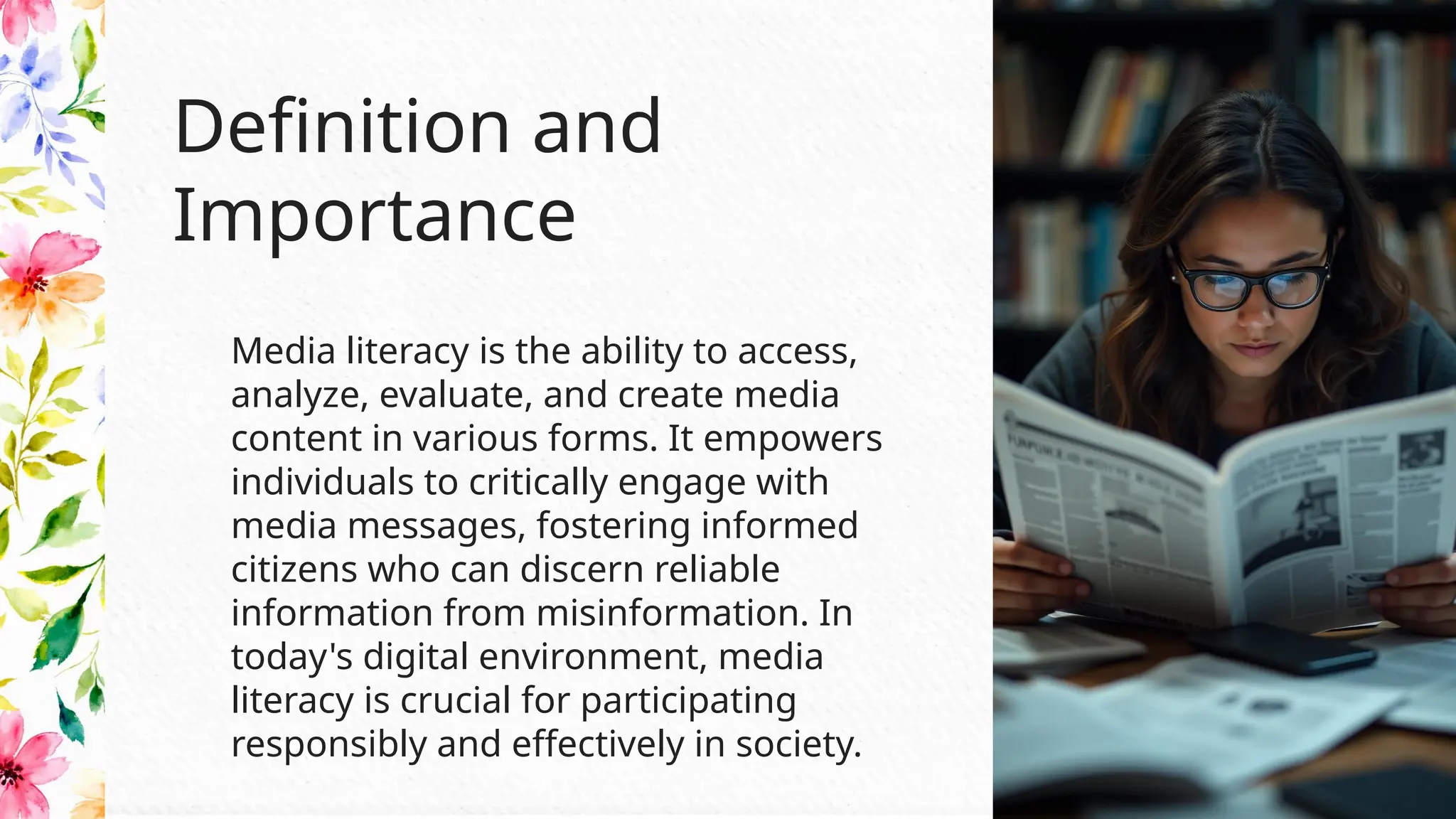
Media literacy isthe ability to access,
analyze, evaluate, and create media
content in various forms. It empowers
individuals to critically engage with
media messages, fostering informed
citizens who can discern reliable
information from misinformation. In
today's digital environment, media
literacy is crucial for participating
responsibly and effectively in society.
Definition and
Importance
5.
Real-Life Examples
Examples ofmedia literacy include recognizing
biased reporting, identifying fake news on social
media, and understanding the intent behind
advertisements. For instance, being able to evaluate
the credibility of a news source or discern the
difference between opinion pieces and factual
reporting are skills rooted in media literacy. Such
competencies are vital for informed decision-making
in everyday life.
6.
Identifying Fake News
Identifyingfake news is essential for media literacy
and involves critical analysis of news sources and
content. Key strategies include checking the source's
credibility, verifying facts against reputable outlets,
and being wary of sensationalist headlines.
Developing a skeptical mindset and utilizing fact-
checking websites can significantly enhance one's
ability to discern true information from false claims.
Recognizing Information Needs
Recognizinginformation needs is the foundation of
information literacy. It involves understanding what
information is required for a specific purpose, whether
for academic, personal, or professional contexts. This
skill enables individuals to formulate effective
research questions and determine the best avenues
for acquiring necessary information, ultimately
leading to more informed decision-making.
9.
Evaluating sources iscritical in
information literacy, ensuring that the
information retrieved is credible and
relevant. Key factors to consider include
the author's qualifications, the
publication's reputation, the date of
publication, and the depth of
supporting evidence. Developing a
systematic approach to source
evaluation helps in distinguishing
between reliable information and
Evaluating Sources
10.
Effective Use ofInformation
Effective use of information encompasses the ability
to synthesize, apply, and communicate information
appropriately. This involves understanding how to
integrate information from various sources into a
coherent message, using it ethically, and citing
sources correctly. It's a vital skill that enhances
academic writing, research projects, and everyday
communication, fostering responsible information
usage.
11.
In conclusion, masteringmedia and
information literacy equips individuals
with essential skills for navigating the
digital world. Recognizing the
importance of media literacy and
information literacy, and applying these
skills effectively, can lead to responsible
digital citizenship. By being able to
identify fake news, assess information
needs, evaluate sources, and use
information effectively, individuals
Conclusions
12.
CREDITS: This presentationtemplate was created by Slidesgo,
and includes icons, infographics & images by Freepik
Thank you!
Do you have any questions?
+00 000 000 000