Measurement
of Matter: SI
(Metric) Units
Dr AUNG
Chemistry is a quantitative science, which means that in many cases we can
measure a property of a substance and compare it with a standard having a
known value of the property. Nonnumerical information is qualitative, such as
the color blue.
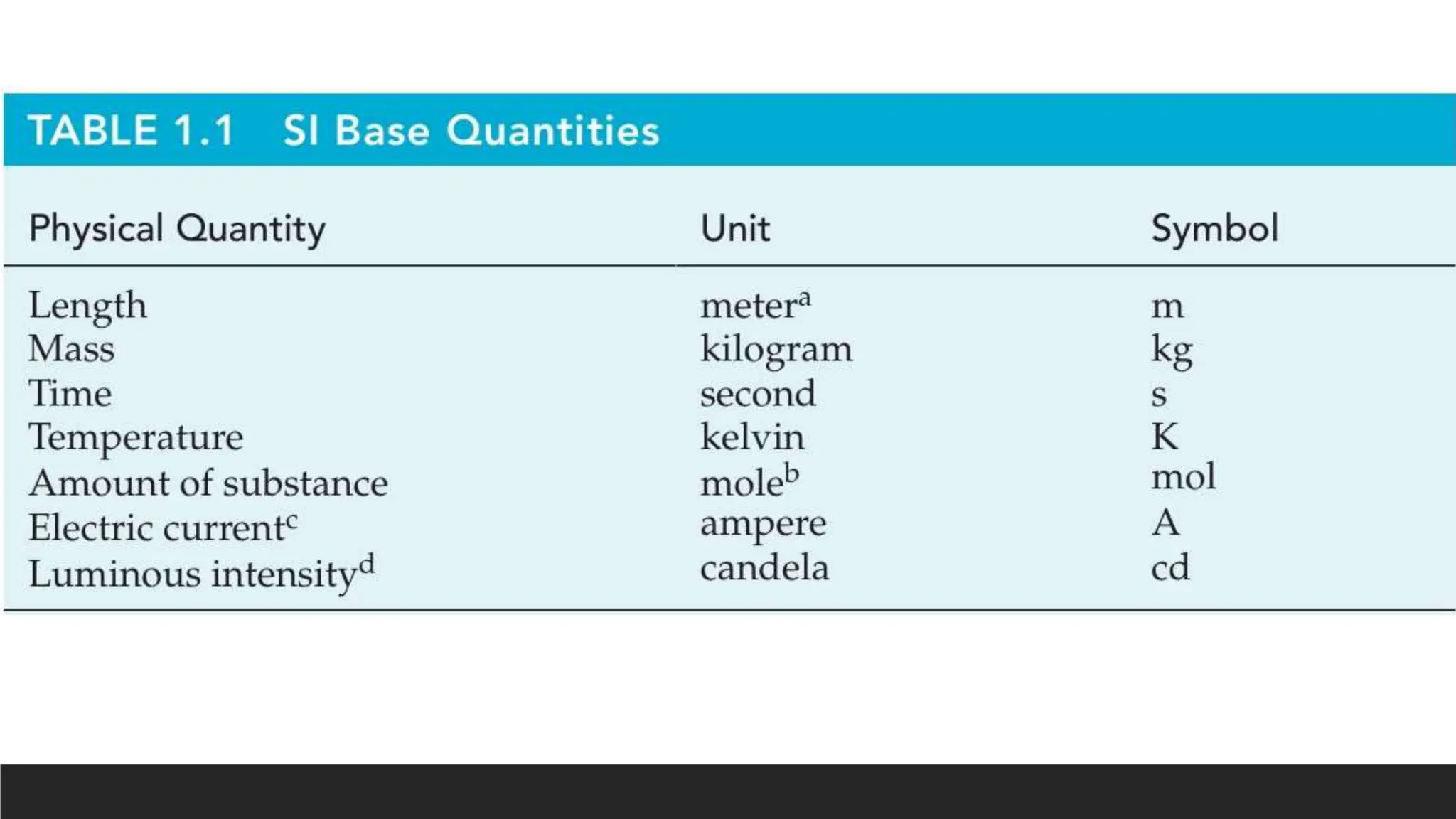
The scientific system of measurement is called the System Internationalis Units
(International System of Units) and is abbreviated SI.
Volume
The most commonly used metric
units for volume are the liter (L)
and the milliliter (mL).
A liter is a cube 1 dm (10 cm) long on
each side.
A milliliter is a cube 1 cm long on
each side.
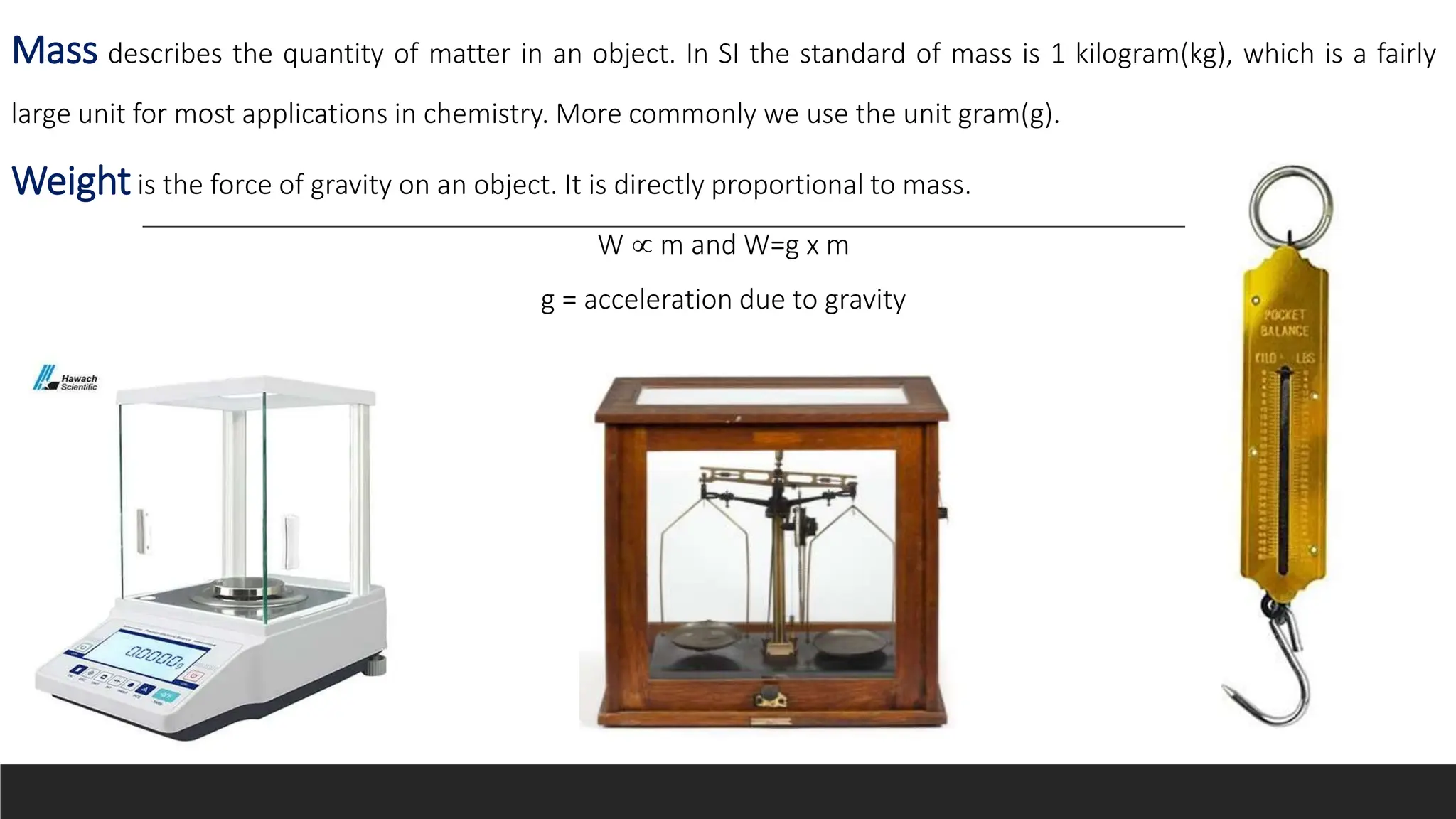
Mass describes the quantity of matter in an object. In SI the standard of mass is 1 kilogram(kg), which is a fairly
large unit for most applications in chemistry. More commonly we use the unit gram(g).
Weightis the force of gravity on an object. It is directly proportional to mass.
W m and W=g x m
g = acceleration due to gravity
Temperature
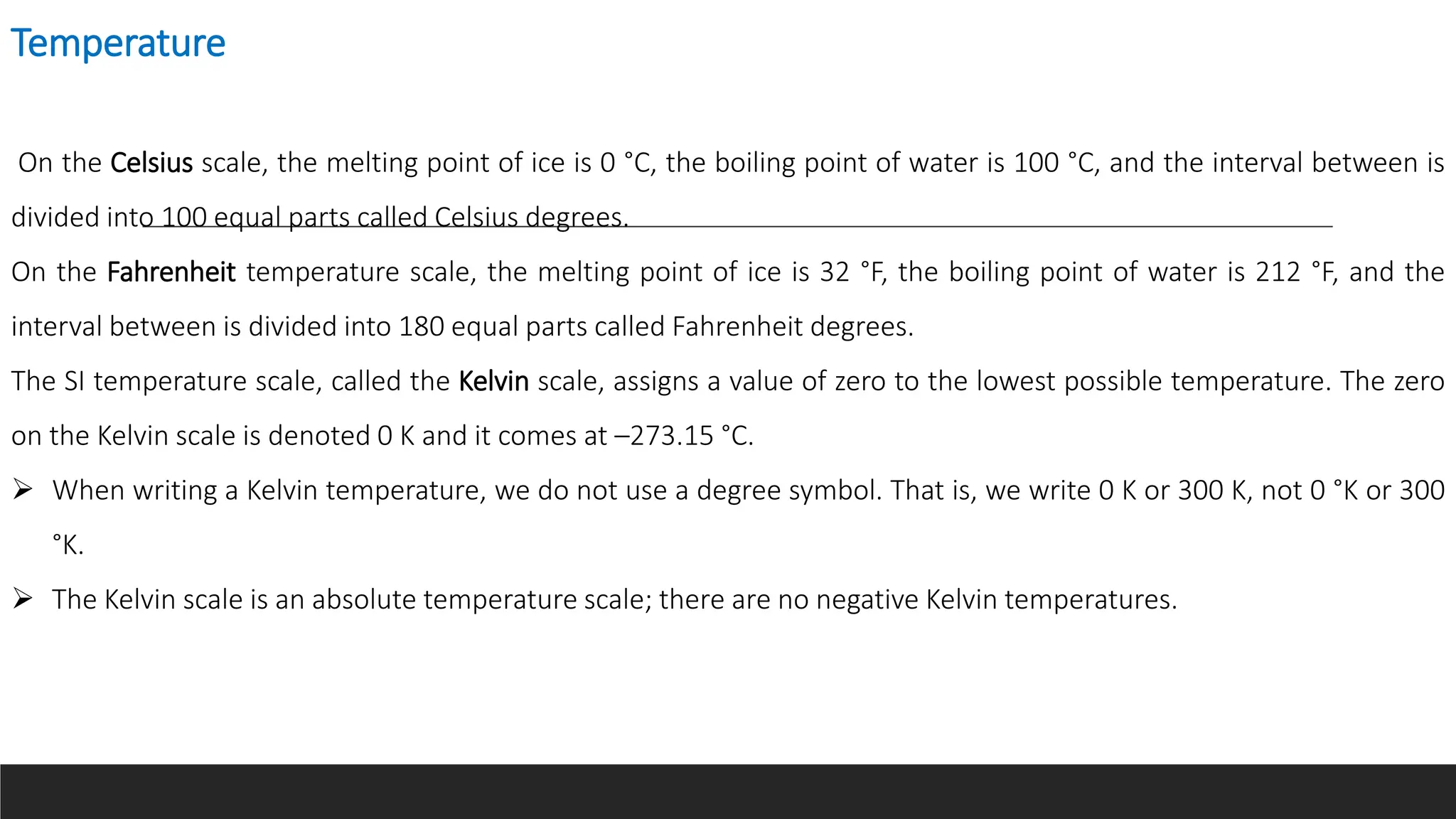
On the Celsius scale, the melting point of ice is 0 °C, the boiling point of water is 100 °C, and the interval between is
divided into 100 equal parts called Celsius degrees.
On the Fahrenheit temperature scale, the melting point of ice is 32 °F, the boiling point of water is 212 °F, and the
interval between is divided into 180 equal parts called Fahrenheit degrees.
The SI temperature scale, called the Kelvin scale, assigns a value of zero to the lowest possible temperature. The zero
on the Kelvin scale is denoted 0 K and it comes at –273.15 °C.
 When writing a Kelvin temperature, we do not use a degree symbol. That is, we write 0 K or 300 K, not 0 °K or 300
°K.
 The Kelvin scale is an absolute temperature scale; there are no negative Kelvin temperatures.
The Fahrenheit scale is not
used in scientific
measurements.
F = 9/5(C) + 32
C = 5/9(F) − 32
K = C + 273.15

Measurement of Matter.pptx

  • 1.
  • 2.
    Chemistry is aquantitative science, which means that in many cases we can measure a property of a substance and compare it with a standard having a known value of the property. Nonnumerical information is qualitative, such as the color blue. The scientific system of measurement is called the System Internationalis Units (International System of Units) and is abbreviated SI.
  • 4.
    Volume The most commonlyused metric units for volume are the liter (L) and the milliliter (mL). A liter is a cube 1 dm (10 cm) long on each side. A milliliter is a cube 1 cm long on each side.
  • 7.
    Mass describes thequantity of matter in an object. In SI the standard of mass is 1 kilogram(kg), which is a fairly large unit for most applications in chemistry. More commonly we use the unit gram(g). Weightis the force of gravity on an object. It is directly proportional to mass. W m and W=g x m g = acceleration due to gravity
  • 8.
    Temperature On the Celsiusscale, the melting point of ice is 0 °C, the boiling point of water is 100 °C, and the interval between is divided into 100 equal parts called Celsius degrees. On the Fahrenheit temperature scale, the melting point of ice is 32 °F, the boiling point of water is 212 °F, and the interval between is divided into 180 equal parts called Fahrenheit degrees. The SI temperature scale, called the Kelvin scale, assigns a value of zero to the lowest possible temperature. The zero on the Kelvin scale is denoted 0 K and it comes at –273.15 °C.  When writing a Kelvin temperature, we do not use a degree symbol. That is, we write 0 K or 300 K, not 0 °K or 300 °K.  The Kelvin scale is an absolute temperature scale; there are no negative Kelvin temperatures.
  • 9.
    The Fahrenheit scaleis not used in scientific measurements. F = 9/5(C) + 32 C = 5/9(F) − 32 K = C + 273.15