Mastering Workplace Conflict: From Tension to Resolution.pptx
1.
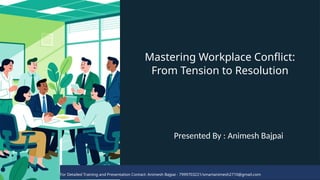
Mastering Workplace Conflict:
FromTension to Resolution
For Detailed Training and Presentation Contact: Animesh Bajpai - 7999703221/smartanimesh2710@gmail.com
Presented By : Animesh Bajpai
2.
Understanding Workplace
Conflict
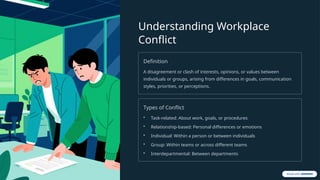
Definition
A disagreementor clash of interests, opinions, or values between
individuals or groups, arising from differences in goals, communication
styles, priorities, or perceptions.
Types of Conflict
• Task-related: About work, goals, or procedures
• Relationship-based: Personal differences or emotions
• Individual: Within a person or between individuals
• Group: Within teams or across different teams
• Interdepartmental: Between departments
3.
Common Causes ofWorkplace Conflict
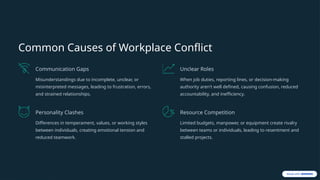
Communication Gaps
Misunderstandings due to incomplete, unclear, or
misinterpreted messages, leading to frustration, errors,
and strained relationships.
Unclear Roles
When job duties, reporting lines, or decision-making
authority aren't well defined, causing confusion, reduced
accountability, and inefficiency.
Personality Clashes
Differences in temperament, values, or working styles
between individuals, creating emotional tension and
reduced teamwork.
Resource Competition
Limited budgets, manpower, or equipment create rivalry
between teams or individuals, leading to resentment and
stalled projects.
4.
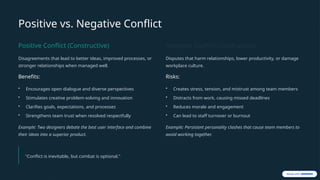
Positive vs. NegativeConflict
Positive Conflict (Constructive)
Disagreements that lead to better ideas, improved processes, or
stronger relationships when managed well.
Benefits:
• Encourages open dialogue and diverse perspectives
• Stimulates creative problem-solving and innovation
• Clarifies goals, expectations, and processes
• Strengthens team trust when resolved respectfully
Example: Two designers debate the best user interface and combine
their ideas into a superior product.
Negative Conflict (Destructive)
Disputes that harm relationships, lower productivity, or damage
workplace culture.
Risks:
• Creates stress, tension, and mistrust among team members
• Distracts from work, causing missed deadlines
• Reduces morale and engagement
• Can lead to staff turnover or burnout
Example: Persistent personality clashes that cause team members to
avoid working together.
"Conflict is inevitable, but combat is optional."
5.
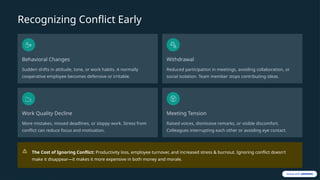
Recognizing Conflict Early
BehavioralChanges
Sudden shifts in attitude, tone, or work habits. A normally
cooperative employee becomes defensive or irritable.
Withdrawal
Reduced participation in meetings, avoiding collaboration, or
social isolation. Team member stops contributing ideas.
Work Quality Decline
More mistakes, missed deadlines, or sloppy work. Stress from
conflict can reduce focus and motivation.
Meeting Tension
Raised voices, dismissive remarks, or visible discomfort.
Colleagues interrupting each other or avoiding eye contact.
The Cost of Ignoring Conflict: Productivity loss, employee turnover, and increased stress & burnout. Ignoring conflict doesn't
make it disappear—it makes it more expensive in both money and morale.
6.
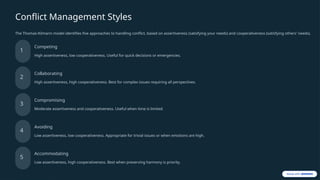
Conflict Management Styles
TheThomas-Kilmann model identifies five approaches to handling conflict, based on assertiveness (satisfying your needs) and cooperativeness (satisfying others' needs).
1
Competing
High assertiveness, low cooperativeness. Useful for quick decisions or emergencies.
2
Collaborating
High assertiveness, high cooperativeness. Best for complex issues requiring all perspectives.
3
Compromising
Moderate assertiveness and cooperativeness. Useful when time is limited.
4
Avoiding
Low assertiveness, low cooperativeness. Appropriate for trivial issues or when emotions are high.
5
Accommodating
Low assertiveness, high cooperativeness. Best when preserving harmony is priority.
7.
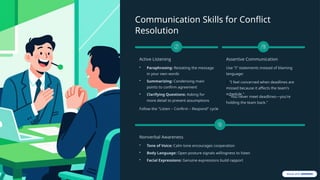
Communication Skills forConflict
Resolution
Active Listening
• Paraphrasing: Restating the message
in your own words
• Summarizing: Condensing main
points to confirm agreement
• Clarifying Questions: Asking for
more detail to prevent assumptions
Follow the "Listen – Confirm – Respond" cycle
Assertive Communication
Use "I" statements instead of blaming
language:
✅ "I feel concerned when deadlines are
missed because it affects the team's
schedule."
❌ "You never meet deadlines—you're
holding the team back."
Nonverbal Awareness
• Tone of Voice: Calm tone encourages cooperation
• Body Language: Open posture signals willingness to listen
• Facial Expressions: Genuine expressions build rapport
8.
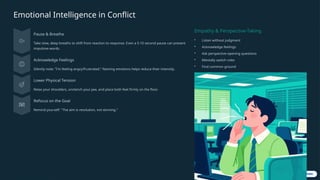
Emotional Intelligence inConflict
Pause & Breathe
Take slow, deep breaths to shift from reaction to response. Even a 5-10 second pause can prevent
impulsive words.
Acknowledge Feelings
Silently note: "I'm feeling angry/frustrated." Naming emotions helps reduce their intensity.
Lower Physical Tension
Relax your shoulders, unclench your jaw, and place both feet firmly on the floor.
Refocus on the Goal
Remind yourself: "The aim is resolution, not winning."
Empathy & Perspective-Taking
• Listen without judgment
• Acknowledge feelings
• Ask perspective-opening questions
• Mentally switch roles
• Find common ground
9.
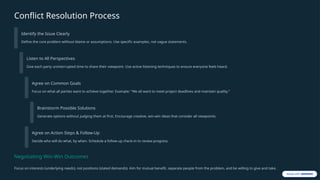
Conflict Resolution Process
Identifythe Issue Clearly
Define the core problem without blame or assumptions. Use specific examples, not vague statements.
Listen to All Perspectives
Give each party uninterrupted time to share their viewpoint. Use active listening techniques to ensure everyone feels heard.
Agree on Common Goals
Focus on what all parties want to achieve together. Example: "We all want to meet project deadlines and maintain quality."
Brainstorm Possible Solutions
Generate options without judging them at first. Encourage creative, win-win ideas that consider all viewpoints.
Agree on Action Steps & Follow-Up
Decide who will do what, by when. Schedule a follow-up check-in to review progress.
Negotiating Win-Win Outcomes
Focus on interests (underlying needs), not positions (stated demands). Aim for mutual benefit, separate people from the problem, and be willing to give and take.
10.
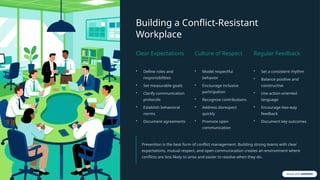
Building a Conflict-Resistant
Workplace
ClearExpectations
• Define roles and
responsibilities
• Set measurable goals
• Clarify communication
protocols
• Establish behavioral
norms
• Document agreements
Culture of Respect
• Model respectful
behavior
• Encourage inclusive
participation
• Recognize contributions
• Address disrespect
quickly
• Promote open
communication
Regular Feedback
• Set a consistent rhythm
• Balance positive and
constructive
• Use action-oriented
language
• Encourage two-way
feedback
• Document key outcomes
Prevention is the best form of conflict management. Building strong teams with clear
expectations, mutual respect, and open communication creates an environment where
conflicts are less likely to arise and easier to resolve when they do.
11.
Thank You
For DetailedTraining and Presentation Contact: Animesh Bajpai :7999703221/smartanimesh2710@gmail.com