UNDERSTANDING THE USMLE EXAM
A Comprehensive Guide for Aspiring Medical Professionals
usmleprep.fndoverseaseducation.com
Step 1: Assesses basic medical sciences.
Step 2: Focuses on clinical knowledge and skills, divided
into CK (Clinical Knowledge) and CS (Clinical Skills).
Step 3: Evaluates the application of medical knowledge
in an unsupervised practice.
The USMLE Exam Structure
usmleprep.fndoverseaseducation.com
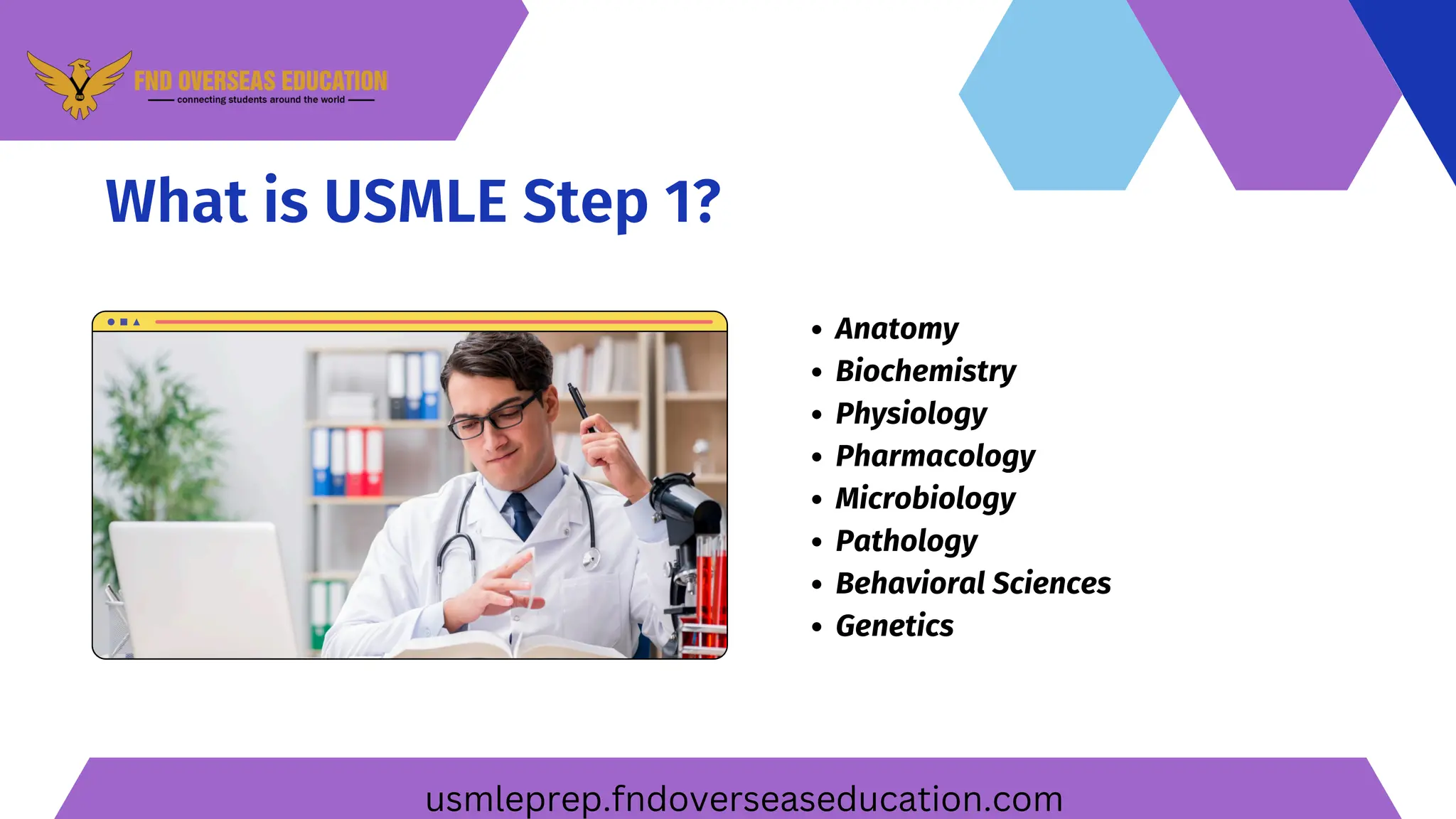
Anatomy
Biochemistry
Physiology
Pharmacology
Microbiology
Pathology
Behavioral Sciences
Genetics
What is USMLE Step 1?
usmleprep.fndoverseaseducation.com
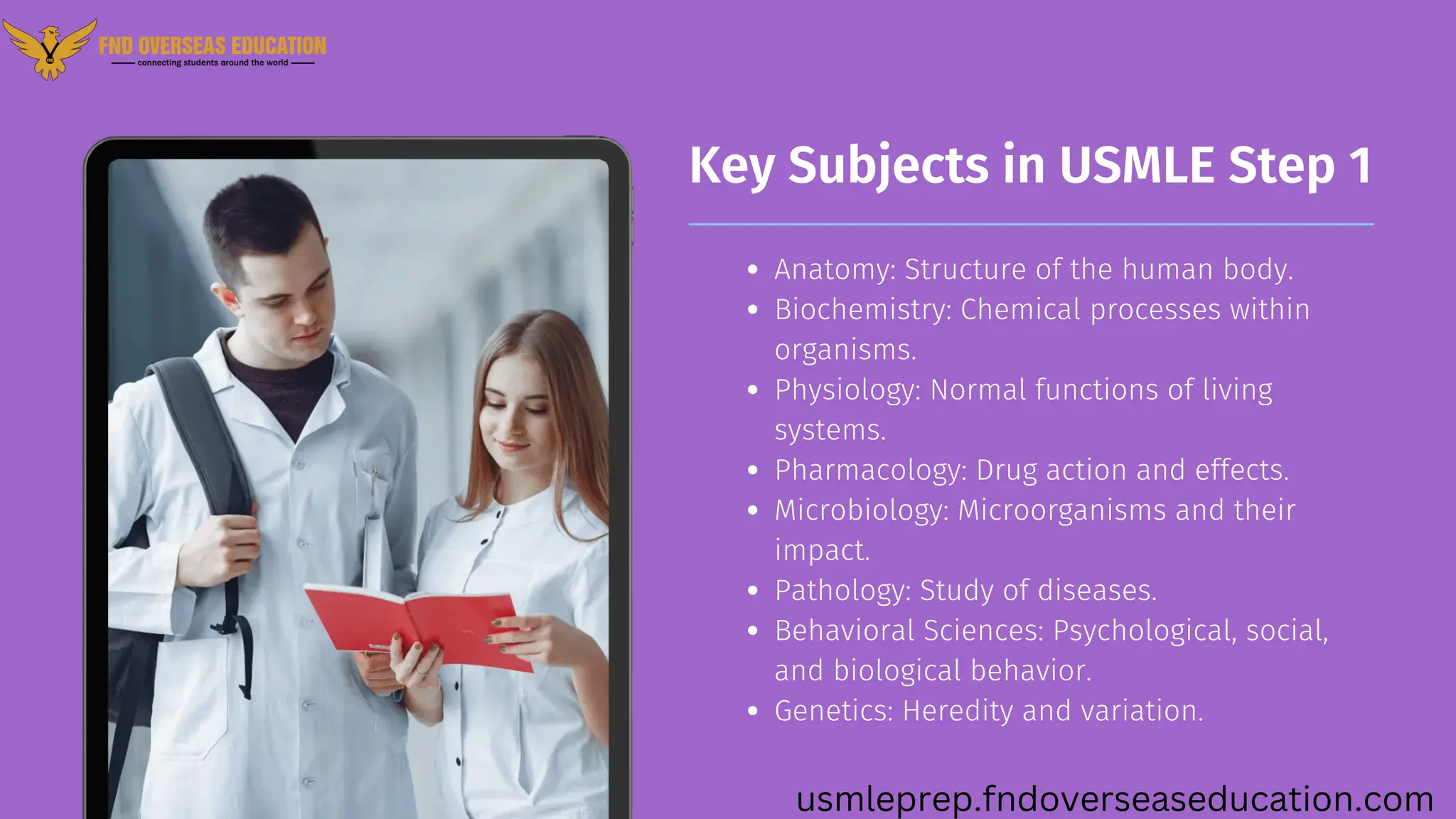
Key Subjects in USMLE Step 1
Anatomy: Structure of the human body.
Biochemistry: Chemical processes within
organisms.
Physiology: Normal functions of living
systems.
Pharmacology: Drug action and effects.
Microbiology: Microorganisms and their
impact.
Pathology: Study of diseases.
Behavioral Sciences: Psychological, social,
and biological behavior.
Genetics: Heredity and variation.
usmleprep.fndoverseaseducation.com
When to Start Preparing
Early Start: Begin during the first or second year of
medical school.
Gradual Learning: Build a solid understanding of
basic sciences.
Increased Focus: Intensify preparation as the exam
date nears.
usmleprep.fndoverseaseducation.com
Consistent study sessions.
Regular practice with USMLE-
style questions.
Avoid last-minute cramming.
Key Strategies:
How Long Does It
Take to Prepare?
Average Preparation Time: 6 to 12 months.
usmleprep.fndoverseaseducation.com
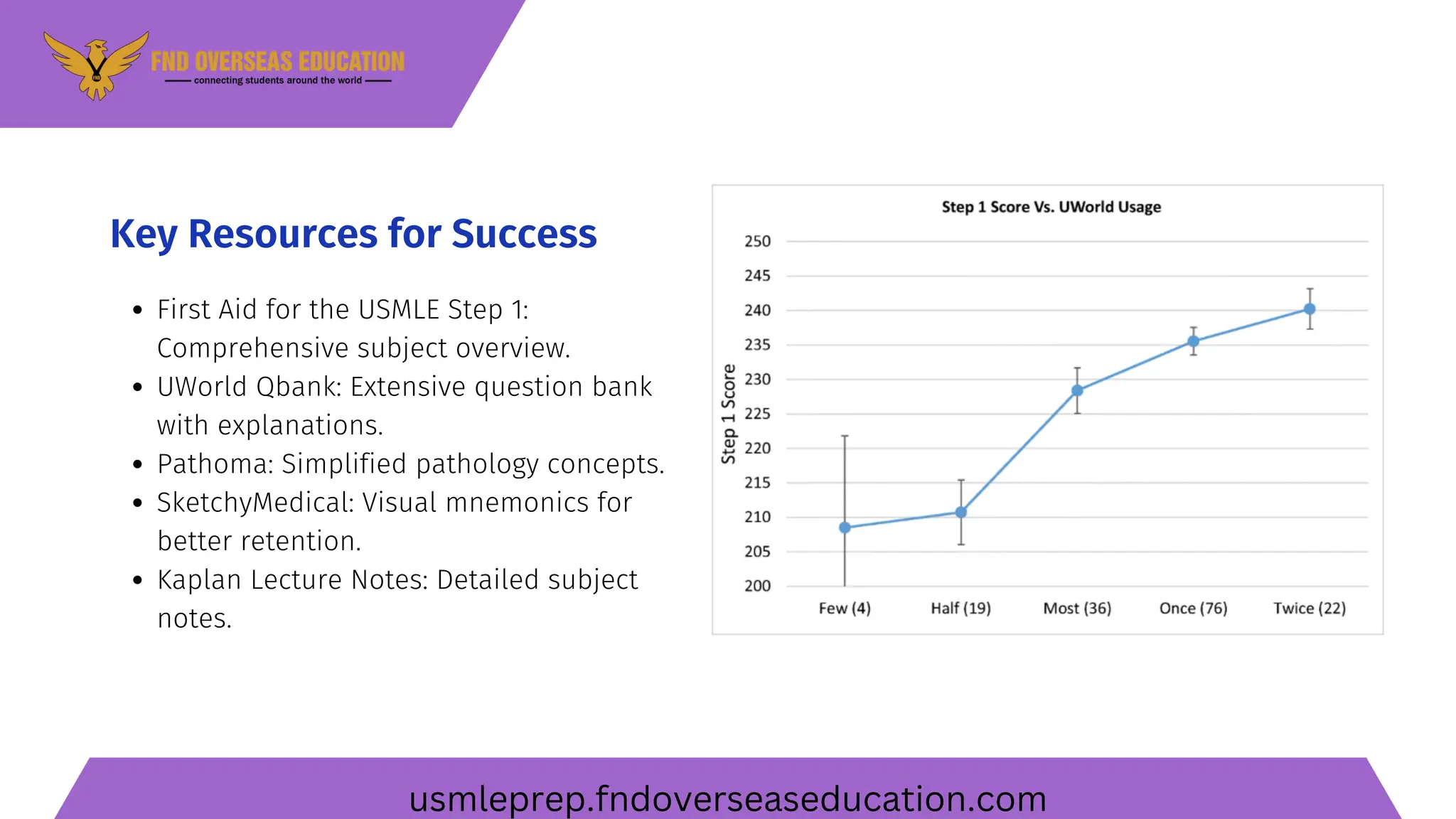
Key Resources for Success
First Aid for the USMLE Step 1:
Comprehensive subject overview.
UWorld Qbank: Extensive question bank
with explanations.
Pathoma: Simplified pathology concepts.
SketchyMedical: Visual mnemonics for
better retention.
Kaplan Lecture Notes: Detailed subject
notes.
usmleprep.fndoverseaseducation.com
Quality Over Quantity
Optimal Number of Resources: 3-4 core resources.
Avoid Overload: Focus on mastering selected
materials.
Effective Study: Balanced and focused approach.
usmleprep.fndoverseaseducation.com
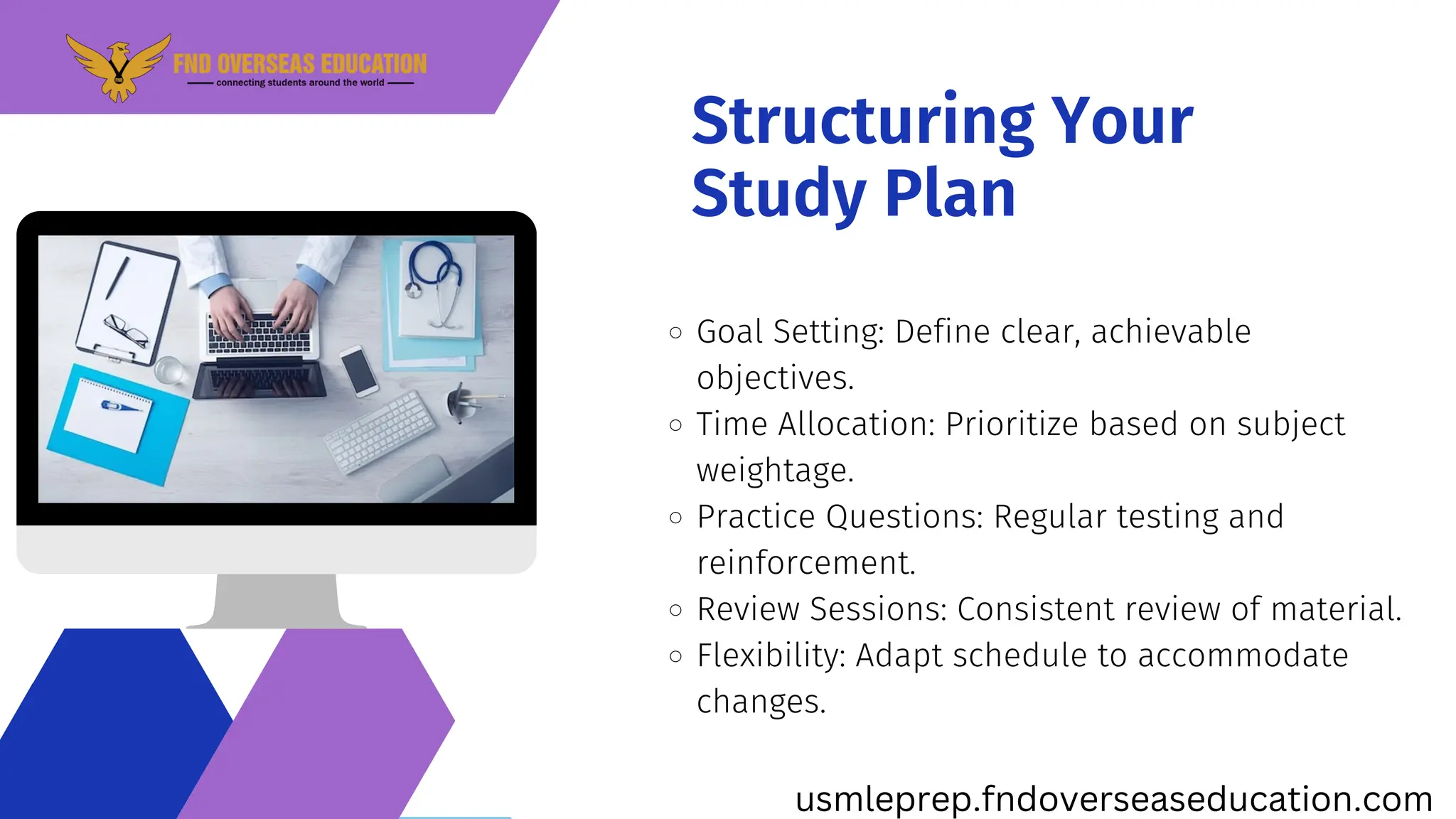
Structuring Your
Study Plan
Goal Setting: Define clear, achievable
objectives.
Time Allocation: Prioritize based on subject
weightage.
Practice Questions: Regular testing and
reinforcement.
Review Sessions: Consistent review of material.
Flexibility: Adapt schedule to accommodate
changes.
usmleprep.fndoverseaseducation.com
Summary: Understanding the
structure, subjects, and preparation
strategies is crucial for success.
Start early, choose the right
resources, and follow a
structured study plan.
Preparing for
the USMLE
usmleprep.fndoverseaseducation.com
8121654443
usmle@fndoverseaseducation.
com
Contact Us
usmleprep.fndoverseaseducation.com
Thank You
usmleprep.fndoverseaseducation.com

Mastering USMLE Step 1: Structure, Subjects, Preparation Tips, and Study Schedule Guide

  • 1.
    UNDERSTANDING THE USMLEEXAM A Comprehensive Guide for Aspiring Medical Professionals usmleprep.fndoverseaseducation.com
  • 2.
    Step 1: Assessesbasic medical sciences. Step 2: Focuses on clinical knowledge and skills, divided into CK (Clinical Knowledge) and CS (Clinical Skills). Step 3: Evaluates the application of medical knowledge in an unsupervised practice. The USMLE Exam Structure usmleprep.fndoverseaseducation.com
  • 3.
  • 4.
    Key Subjects inUSMLE Step 1 Anatomy: Structure of the human body. Biochemistry: Chemical processes within organisms. Physiology: Normal functions of living systems. Pharmacology: Drug action and effects. Microbiology: Microorganisms and their impact. Pathology: Study of diseases. Behavioral Sciences: Psychological, social, and biological behavior. Genetics: Heredity and variation. usmleprep.fndoverseaseducation.com
  • 5.
    When to StartPreparing Early Start: Begin during the first or second year of medical school. Gradual Learning: Build a solid understanding of basic sciences. Increased Focus: Intensify preparation as the exam date nears. usmleprep.fndoverseaseducation.com
  • 6.
    Consistent study sessions. Regularpractice with USMLE- style questions. Avoid last-minute cramming. Key Strategies: How Long Does It Take to Prepare? Average Preparation Time: 6 to 12 months. usmleprep.fndoverseaseducation.com
  • 7.
    Key Resources forSuccess First Aid for the USMLE Step 1: Comprehensive subject overview. UWorld Qbank: Extensive question bank with explanations. Pathoma: Simplified pathology concepts. SketchyMedical: Visual mnemonics for better retention. Kaplan Lecture Notes: Detailed subject notes. usmleprep.fndoverseaseducation.com
  • 8.
    Quality Over Quantity OptimalNumber of Resources: 3-4 core resources. Avoid Overload: Focus on mastering selected materials. Effective Study: Balanced and focused approach. usmleprep.fndoverseaseducation.com
  • 9.
    Structuring Your Study Plan GoalSetting: Define clear, achievable objectives. Time Allocation: Prioritize based on subject weightage. Practice Questions: Regular testing and reinforcement. Review Sessions: Consistent review of material. Flexibility: Adapt schedule to accommodate changes. usmleprep.fndoverseaseducation.com
  • 10.
    Summary: Understanding the structure,subjects, and preparation strategies is crucial for success. Start early, choose the right resources, and follow a structured study plan. Preparing for the USMLE usmleprep.fndoverseaseducation.com
  • 11.
  • 12.