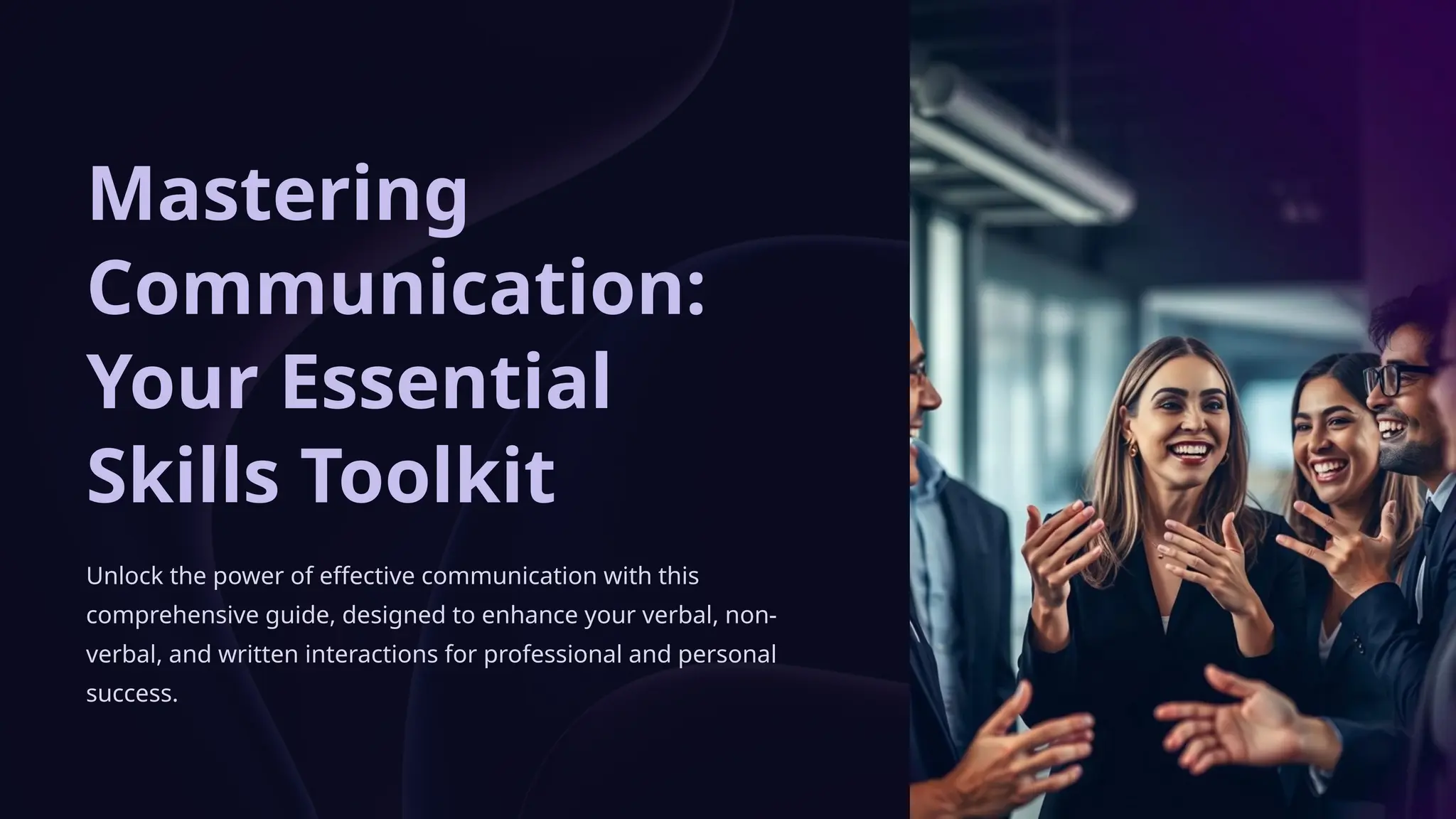
Mastering
Communication:
Your Essential
Skills Toolkit
Unlock the power of effective communication with this
comprehensive guide, designed to enhance your verbal, non-
verbal, and written interactions for professional and personal
success.
The Power of Effective Communication: Why It
Matters
Enhanced
Collaboration
Fosters teamwork and synergy within diverse
groups, leading to innovative solutions.
Career Advancement
Elevates professional presence, opening doors to
leadership roles and new opportunities.
Stronger
Relationships
Builds trust and understanding, improving both
personal and professional connections.
Conflict Resolution
Enables constructive dialogue to de-escalate
tensions and find common ground.
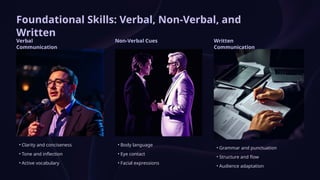
Foundational Skills: Verbal, Non-Verbal, and
Written
Verbal
Communication
• Clarity and conciseness
• Tone and inflection
• Active vocabulary
Non-Verbal Cues
• Body language
• Eye contact
• Facial expressions
Written
Communication
• Grammar and punctuation
• Structure and flow
• Audience adaptation
Beyond Talking: The Art of Active Listening
Pay Full Attention
Focus entirely on the speaker, avoiding distractions
and internal monologue.
Ask Clarifying
Questions
Seek to understand by asking open-ended questions
and paraphrasing.
Empathise and
Validate
Acknowledge feelings and perspectives, showing
genuine understanding.
Provide Constructive
Feedback
Offer thoughtful responses that build upon the
conversation.
Active listening is a cornerstone of effective communication, enabling deeper understanding and stronger
connections.
Navigating Challenges: Overcoming Communication
Barriers
Semantic
Differences
Misunderstandings due to varying interpretations of words or jargon.
Emotional Filters
Prejudices or strong emotions distorting the message received.
Environmental
Noise
Physical distractions or poor acoustics impeding clear delivery.
Cultural Gaps
Differing norms and contexts leading to misinterpretations.
Practical Application: Strategies for Skill
Development
Practice Self-
Awareness
Understand your communication habits, strengths, and areas for improvement through reflection.
Seek Constructive Feedback
Actively solicit input from peers and mentors to gain new perspectives.
Engage in Role-Playing
Simulate difficult conversations to build confidence and refine techniques.
Study Exemplars
Observe and learn from skilled communicators in various settings.
Embrace Continuous
Learning
Stay updated on best practices and emerging communication trends.
Consistent effort and deliberate practice are key to honing your communication skills over time.
Your Communication Journey: Key Principles & Next
Steps
Clarity & Purpose
Always know what you want to convey and why.
Empathy & Respect
Understand and value diverse perspectives.
Adaptability
Tailor your approach to different audiences and situations.

Mastering-Communication-Your-Essential-Skills-Toolkit.pptx.pptx

  • 1.
    Mastering Communication: Your Essential Skills Toolkit Unlockthe power of effective communication with this comprehensive guide, designed to enhance your verbal, non- verbal, and written interactions for professional and personal success.
  • 2.
    The Power ofEffective Communication: Why It Matters Enhanced Collaboration Fosters teamwork and synergy within diverse groups, leading to innovative solutions. Career Advancement Elevates professional presence, opening doors to leadership roles and new opportunities. Stronger Relationships Builds trust and understanding, improving both personal and professional connections. Conflict Resolution Enables constructive dialogue to de-escalate tensions and find common ground.
  • 3.
    Foundational Skills: Verbal,Non-Verbal, and Written Verbal Communication • Clarity and conciseness • Tone and inflection • Active vocabulary Non-Verbal Cues • Body language • Eye contact • Facial expressions Written Communication • Grammar and punctuation • Structure and flow • Audience adaptation
  • 4.
    Beyond Talking: TheArt of Active Listening Pay Full Attention Focus entirely on the speaker, avoiding distractions and internal monologue. Ask Clarifying Questions Seek to understand by asking open-ended questions and paraphrasing. Empathise and Validate Acknowledge feelings and perspectives, showing genuine understanding. Provide Constructive Feedback Offer thoughtful responses that build upon the conversation. Active listening is a cornerstone of effective communication, enabling deeper understanding and stronger connections.
  • 5.
    Navigating Challenges: OvercomingCommunication Barriers Semantic Differences Misunderstandings due to varying interpretations of words or jargon. Emotional Filters Prejudices or strong emotions distorting the message received. Environmental Noise Physical distractions or poor acoustics impeding clear delivery. Cultural Gaps Differing norms and contexts leading to misinterpretations.
  • 6.
    Practical Application: Strategiesfor Skill Development Practice Self- Awareness Understand your communication habits, strengths, and areas for improvement through reflection. Seek Constructive Feedback Actively solicit input from peers and mentors to gain new perspectives. Engage in Role-Playing Simulate difficult conversations to build confidence and refine techniques. Study Exemplars Observe and learn from skilled communicators in various settings. Embrace Continuous Learning Stay updated on best practices and emerging communication trends. Consistent effort and deliberate practice are key to honing your communication skills over time.
  • 7.
    Your Communication Journey:Key Principles & Next Steps Clarity & Purpose Always know what you want to convey and why. Empathy & Respect Understand and value diverse perspectives. Adaptability Tailor your approach to different audiences and situations.

Editor's Notes