Master Guide to Building a Winning
Network Engineer Portfolio
Introduction
Network engineering has witnessed a remarkable surge in demand in
recent years, propelling a critical need for skilled professionals who can
ensure seamless connectivity and network performance. The field offers
an enticing range of job prospects, competitive salaries, and unparalleled
growth potential. In fact, network engineers are among the highest-paid
professionals in the IT sector, with salaries ranging from Rs. 14,00,000
lakhs to Rs 30,00,000 lakhs per year, depending on experience,
expertise, and location. To secure a job in this field, having an attractive
portfolio is essential.
In this blog, we will explore how to build an impressive portfolio that
showcases your skills and experiences as a network engineer. Let’s dive
in and unlock the secrets to a winning network engineering portfolio!
Significance Of Building an Attractive Portfolio
In the competitive field of network engineering, having an attractive
portfolio is paramount to showcase your skills, expertise, and
accomplishments. A portfolio is a visual representation of your work –
allowing potential employers to assess your capabilities and envision how
you can contribute to their network infrastructure. Here’s why building an
attractive portfolio is crucial for your career as a network engineer:
• Showcasing Your Skills
A portfolio provides a platform to highlight your network engineer
skills, certifications, and hands-on experience in network design,
implementation, troubleshooting, and security. It allows you to
demonstrate your proficiency in various networking technologies,
protocols, and tools, giving employers a tangible overview of your
capabilities.
• Demonstrating Experience
A well-curated portfolio helps you showcase your past projects,
accomplishments, and real-world problem-solving abilities. It allows
you to present tangible evidence of successful network deployments,
optimisations, or troubleshooting scenarios, which can significantly
enhance your credibility and marketability.
• Standing Out from the Competition
In a competitive job market, an attractive portfolio sets you apart from
other candidates vying for network engineering positions. It enables
you to differentiate yourself by showcasing unique projects, innovative
solutions, or specialised expertise that align with the specific needs of
potential employers.
• Building Trust and Confidence
A comprehensive portfolio builds trust and confidence in your abilities
as a network engineer. Employers can evaluate your past work, assess
the complexity of projects you have handled, and gain insights into
your problem-solving approach. This helps them gauge your potential
contributions to their organisation and increases their confidence in
your skills.
• Networking and Professional Growth
A portfolio not only helps you secure job opportunities but also serves
as a valuable networking tool. It enables you to connect with industry
professionals, attend networking events, and showcase your work to
potential clients or collaborators. Additionally, as you continue to
update and refine your portfolio, it becomes a record of your
professional growth and development over time.
Tips For Preparing a Winning Portfolio
So, how to build network engineer portfolio?
Creating a winning portfolio as a prospective network engineer requires
careful preparation and attention to detail. Here are some preparatory
steps to help you build an impressive portfolio:
• Develop Core Network Engineering Skills
Prioritise acquiring essential network engineering skills such as
network design, implementation, configuration, troubleshooting, and
security. Stay updated with industry-standard networking
technologies, protocols, and tools. Consider pursuing relevant
certifications like CCNA, CCNP, or JNCIA to demonstrate your
expertise.
• Gain Hands-on Experience
Actively seek opportunities to gain practical experience in network
engineer jobs. Engage in internships, volunteer projects, or freelance
work that allows you to apply your skills and work on real-world
networking scenarios. Document your experiences, challenges faced,
and successful outcomes for inclusion in your portfolio.
• Identify Key Projects
Identify a few key projects that demonstrate your abilities and align
with the type of work you aim to pursue. These projects could involve
network design, implementation, optimization, troubleshooting, or
security enhancements. Ensure the projects showcase your problem-
solving skills, innovative approaches, and positive outcomes.
• Document Project Details
Document the details of your projects thoroughly. Include network
engineer project objectives, technical specifications, and challenges
encountered. Also, mention methodologies used and your specific
contributions. Capture any noteworthy results, such as improved
network performance, cost savings, or successful implementation of
security measures.
• Highlight Collaborative Work
Network engineering often involves collaboration with cross-functional
teams. If you have worked in a team environment, emphasise your
ability to collaborate, communicate, and contribute effectively to
achieve project goals. Highlight specific instances where you
collaborated with system administrators, developers, or other network
engineers.
• Showcase Technical Documentation
Include any technical documentation you have created during your
projects. This could include network diagrams, configuration files,
troubleshooting guides, or project reports. These documents provide
tangible evidence of your technical expertise and attention to detail.
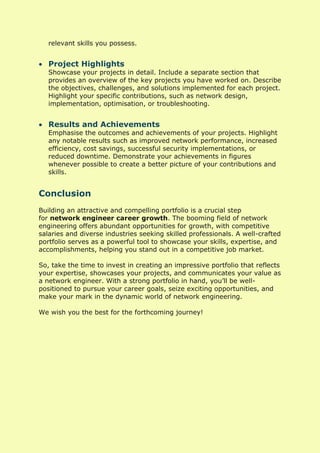
Key Ingredients of a Network Engineer Portfolio
When building a portfolio as a network engineer, it is important to include
specific elements that highlight your skills, expertise, and
accomplishments. Here are the key ingredients to include in a portfolio:
• Professional Summary
Start your portfolio with a concise professional summary that
introduces yourself as a network engineer. Highlight your key skills,
areas of expertise, and years of experience. This section provides an
overview of your profile and sets the tone for the rest of the portfolio.
• Certifications and Education
Include a section that showcases your relevant certifications and
educational background. List any network engineering certifications
you have obtained, such as Cisco Certified Network Associate (CCNA)
or Juniper Networks Certified Internet Associate (JNCIA). Mention your
degrees or diplomas in network engineering or related fields. You can
join our industry-leading ccna certification course to crack the CCNA
exam.
• Technical Skills
Provide a comprehensive list of your technical skills related to network
engineering. Include proficiency in network protocols (TCP/IP, DNS,
DHCP), network hardware (routers, switches), network security,
network monitoring tools, programming languages, and any other
relevant skills you possess.
• Project Highlights
Showcase your projects in detail. Include a separate section that
provides an overview of the key projects you have worked on. Describe
the objectives, challenges, and solutions implemented for each project.
Highlight your specific contributions, such as network design,
implementation, optimisation, or troubleshooting.
• Results and Achievements
Emphasise the outcomes and achievements of your projects. Highlight
any notable results such as improved network performance, increased
efficiency, cost savings, successful security implementations, or
reduced downtime. Demonstrate your achievements in figures
whenever possible to create a better picture of your contributions and
skills.
Conclusion
Building an attractive and compelling portfolio is a crucial step
for network engineer career growth. The booming field of network
engineering offers abundant opportunities for growth, with competitive
salaries and diverse industries seeking skilled professionals. A well-crafted
portfolio serves as a powerful tool to showcase your skills, expertise, and
accomplishments, helping you stand out in a competitive job market.
So, take the time to invest in creating an impressive portfolio that reflects
your expertise, showcases your projects, and communicates your value as
a network engineer. With a strong portfolio in hand, you’ll be well-
positioned to pursue your career goals, seize exciting opportunities, and
make your mark in the dynamic world of network engineering.
We wish you the best for the forthcoming journey!

Master Guide To Building A Winning Network Engineer Portfolio.pdf

  • 1.
    Master Guide toBuilding a Winning Network Engineer Portfolio Introduction Network engineering has witnessed a remarkable surge in demand in recent years, propelling a critical need for skilled professionals who can ensure seamless connectivity and network performance. The field offers an enticing range of job prospects, competitive salaries, and unparalleled growth potential. In fact, network engineers are among the highest-paid professionals in the IT sector, with salaries ranging from Rs. 14,00,000 lakhs to Rs 30,00,000 lakhs per year, depending on experience, expertise, and location. To secure a job in this field, having an attractive portfolio is essential. In this blog, we will explore how to build an impressive portfolio that showcases your skills and experiences as a network engineer. Let’s dive in and unlock the secrets to a winning network engineering portfolio!
  • 2.
    Significance Of Buildingan Attractive Portfolio In the competitive field of network engineering, having an attractive portfolio is paramount to showcase your skills, expertise, and accomplishments. A portfolio is a visual representation of your work – allowing potential employers to assess your capabilities and envision how you can contribute to their network infrastructure. Here’s why building an attractive portfolio is crucial for your career as a network engineer: • Showcasing Your Skills A portfolio provides a platform to highlight your network engineer skills, certifications, and hands-on experience in network design, implementation, troubleshooting, and security. It allows you to demonstrate your proficiency in various networking technologies, protocols, and tools, giving employers a tangible overview of your capabilities. • Demonstrating Experience A well-curated portfolio helps you showcase your past projects, accomplishments, and real-world problem-solving abilities. It allows you to present tangible evidence of successful network deployments, optimisations, or troubleshooting scenarios, which can significantly enhance your credibility and marketability.
  • 3.
    • Standing Outfrom the Competition In a competitive job market, an attractive portfolio sets you apart from other candidates vying for network engineering positions. It enables you to differentiate yourself by showcasing unique projects, innovative solutions, or specialised expertise that align with the specific needs of potential employers. • Building Trust and Confidence A comprehensive portfolio builds trust and confidence in your abilities as a network engineer. Employers can evaluate your past work, assess the complexity of projects you have handled, and gain insights into your problem-solving approach. This helps them gauge your potential contributions to their organisation and increases their confidence in your skills. • Networking and Professional Growth A portfolio not only helps you secure job opportunities but also serves as a valuable networking tool. It enables you to connect with industry professionals, attend networking events, and showcase your work to potential clients or collaborators. Additionally, as you continue to update and refine your portfolio, it becomes a record of your professional growth and development over time. Tips For Preparing a Winning Portfolio So, how to build network engineer portfolio? Creating a winning portfolio as a prospective network engineer requires careful preparation and attention to detail. Here are some preparatory steps to help you build an impressive portfolio: • Develop Core Network Engineering Skills Prioritise acquiring essential network engineering skills such as network design, implementation, configuration, troubleshooting, and security. Stay updated with industry-standard networking technologies, protocols, and tools. Consider pursuing relevant certifications like CCNA, CCNP, or JNCIA to demonstrate your expertise. • Gain Hands-on Experience Actively seek opportunities to gain practical experience in network engineer jobs. Engage in internships, volunteer projects, or freelance work that allows you to apply your skills and work on real-world
  • 4.
    networking scenarios. Documentyour experiences, challenges faced, and successful outcomes for inclusion in your portfolio. • Identify Key Projects Identify a few key projects that demonstrate your abilities and align with the type of work you aim to pursue. These projects could involve network design, implementation, optimization, troubleshooting, or security enhancements. Ensure the projects showcase your problem- solving skills, innovative approaches, and positive outcomes. • Document Project Details Document the details of your projects thoroughly. Include network engineer project objectives, technical specifications, and challenges encountered. Also, mention methodologies used and your specific contributions. Capture any noteworthy results, such as improved network performance, cost savings, or successful implementation of security measures. • Highlight Collaborative Work Network engineering often involves collaboration with cross-functional teams. If you have worked in a team environment, emphasise your ability to collaborate, communicate, and contribute effectively to achieve project goals. Highlight specific instances where you collaborated with system administrators, developers, or other network engineers. • Showcase Technical Documentation Include any technical documentation you have created during your projects. This could include network diagrams, configuration files, troubleshooting guides, or project reports. These documents provide tangible evidence of your technical expertise and attention to detail.
  • 5.
    Key Ingredients ofa Network Engineer Portfolio When building a portfolio as a network engineer, it is important to include specific elements that highlight your skills, expertise, and accomplishments. Here are the key ingredients to include in a portfolio: • Professional Summary Start your portfolio with a concise professional summary that introduces yourself as a network engineer. Highlight your key skills, areas of expertise, and years of experience. This section provides an overview of your profile and sets the tone for the rest of the portfolio. • Certifications and Education Include a section that showcases your relevant certifications and educational background. List any network engineering certifications you have obtained, such as Cisco Certified Network Associate (CCNA) or Juniper Networks Certified Internet Associate (JNCIA). Mention your degrees or diplomas in network engineering or related fields. You can join our industry-leading ccna certification course to crack the CCNA exam. • Technical Skills Provide a comprehensive list of your technical skills related to network engineering. Include proficiency in network protocols (TCP/IP, DNS, DHCP), network hardware (routers, switches), network security, network monitoring tools, programming languages, and any other
  • 6.
    relevant skills youpossess. • Project Highlights Showcase your projects in detail. Include a separate section that provides an overview of the key projects you have worked on. Describe the objectives, challenges, and solutions implemented for each project. Highlight your specific contributions, such as network design, implementation, optimisation, or troubleshooting. • Results and Achievements Emphasise the outcomes and achievements of your projects. Highlight any notable results such as improved network performance, increased efficiency, cost savings, successful security implementations, or reduced downtime. Demonstrate your achievements in figures whenever possible to create a better picture of your contributions and skills. Conclusion Building an attractive and compelling portfolio is a crucial step for network engineer career growth. The booming field of network engineering offers abundant opportunities for growth, with competitive salaries and diverse industries seeking skilled professionals. A well-crafted portfolio serves as a powerful tool to showcase your skills, expertise, and accomplishments, helping you stand out in a competitive job market. So, take the time to invest in creating an impressive portfolio that reflects your expertise, showcases your projects, and communicates your value as a network engineer. With a strong portfolio in hand, you’ll be well- positioned to pursue your career goals, seize exciting opportunities, and make your mark in the dynamic world of network engineering. We wish you the best for the forthcoming journey!