Marketing to Apes Gavin Johnston August, 20th, 2009 Copyright © 2008 Two West, Inc.
 
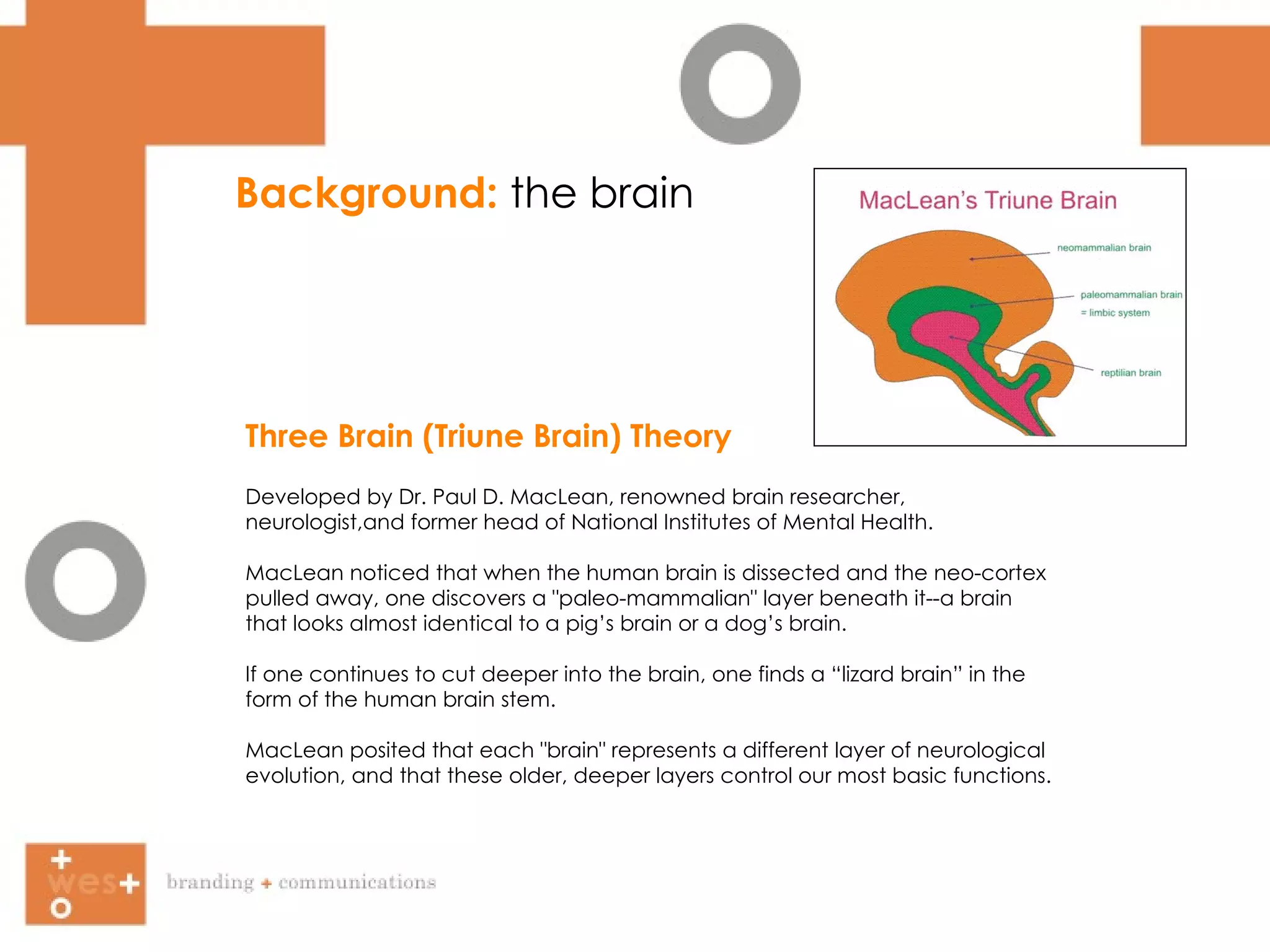
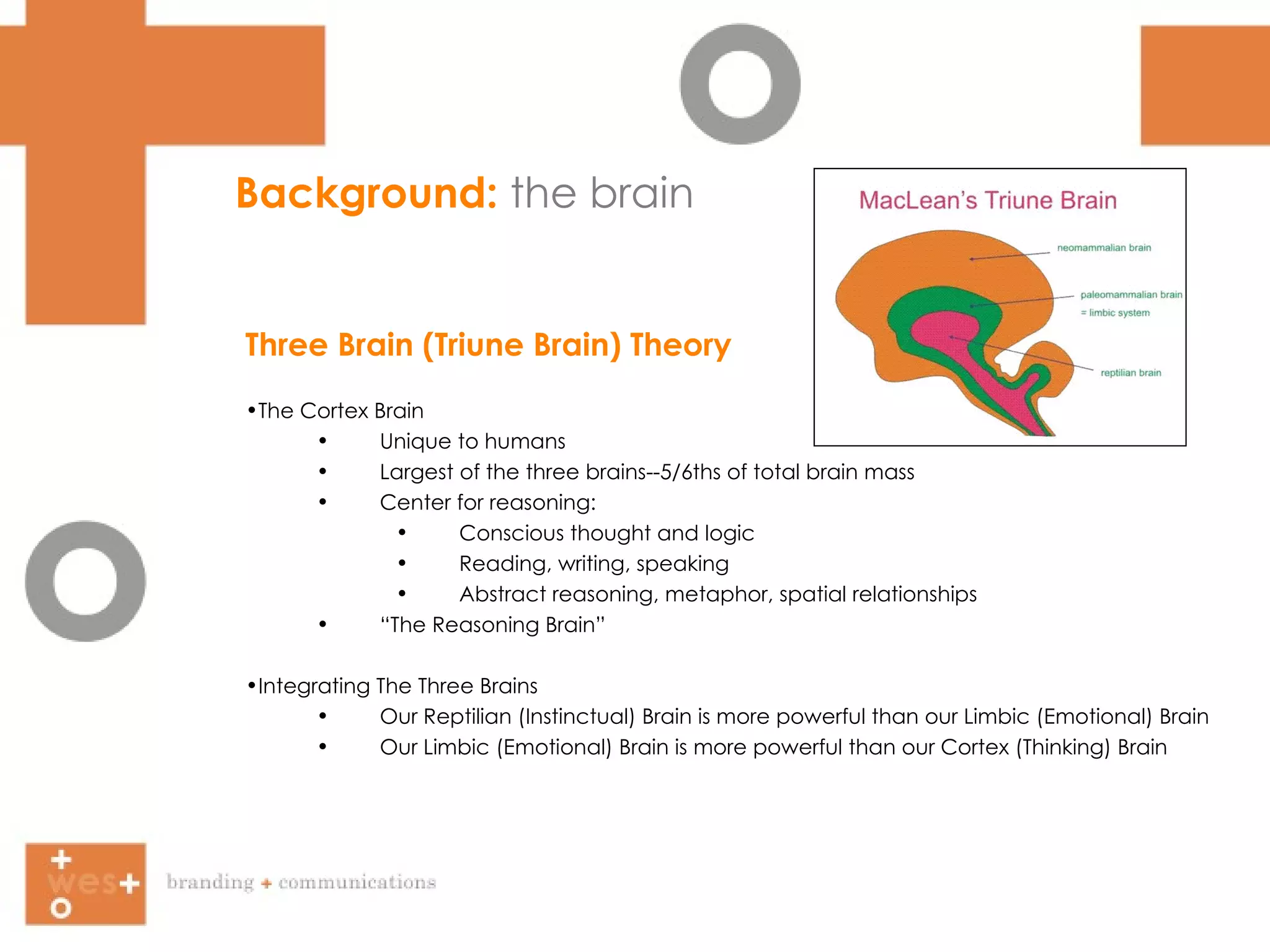
Three Brain (Triune Brain) Theory Developed by Dr. Paul D. MacLean , renowned brain researcher, neurologist,and former head of National Institutes of Mental Health.  MacLean noticed that when the human brain is dissected and the neo-cortex pulled away, one discovers a "paleo-mammalian" layer beneath it--a brain that looks almost identical to a pig ’ s  brain or a dog ’ s  brain.  If one continues to cut deeper into the brain, one finds a  “ l izard brain”   in the form of the human brain stem. MacLean posited that each "brain" represents a different layer of neurological evolution, and that these older, deeper layers control our most basic functions.  Background:  the brain
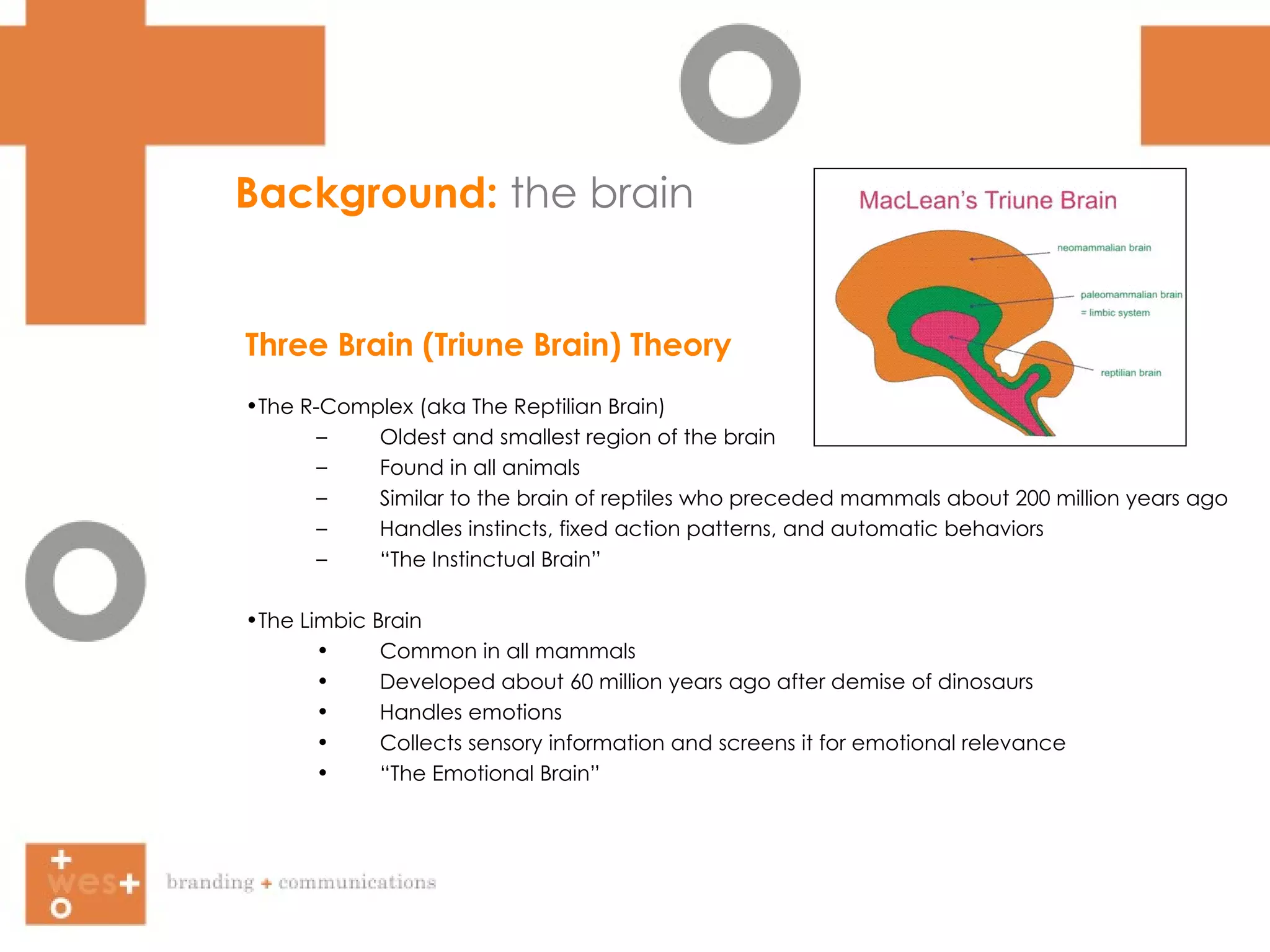
Background:  the brain Three Brain (Triune Brain) Theory The R-Complex (aka The Reptilian Brain) Oldest and smallest region of the brain Found in all animals Similar to the brain of reptiles who preceded mammals about 200 million years ago Handles instincts, fixed action patterns, and automatic behaviors “ The Instinctual Brain” The Limbic Brain Common in all mammals Developed about 60 million years ago after demise of dinosaurs Handles emotions Collects sensory information and screens it for emotional relevance “ The Emotional Brain”
Background:  the brain Three Brain (Triune Brain) Theory The Cortex Brain Unique to humans Largest of the three brains--5/6ths of total brain mass Center for reasoning: Conscious thought and logic Reading, writing, speaking Abstract reasoning, metaphor, spatial relationships “ The Reasoning Brain” Integrating The Three Brains Our Reptilian (Instinctual) Brain is more powerful than our Limbic (Emotional) Brain Our Limbic (Emotional) Brain is more powerful than our Cortex (Thinking) Brain
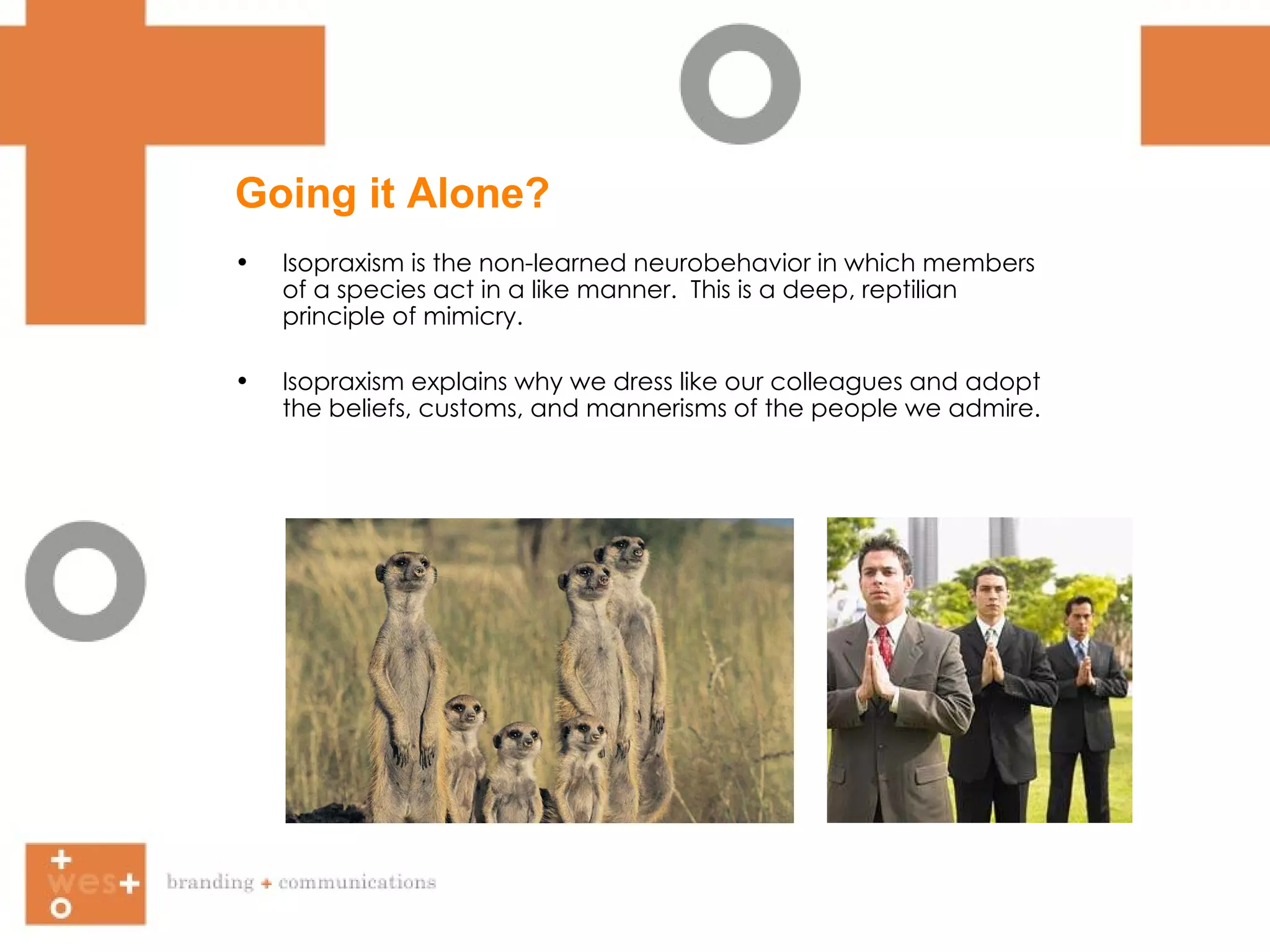
Isopraxism is the non-learned neurobehavior in which members of a species act in a like manner.  This is a deep, reptilian principle of mimicry.  Isopraxism explains why we dress like our colleagues and adopt the beliefs, customs, and mannerisms of the people we admire.   Going it Alone?
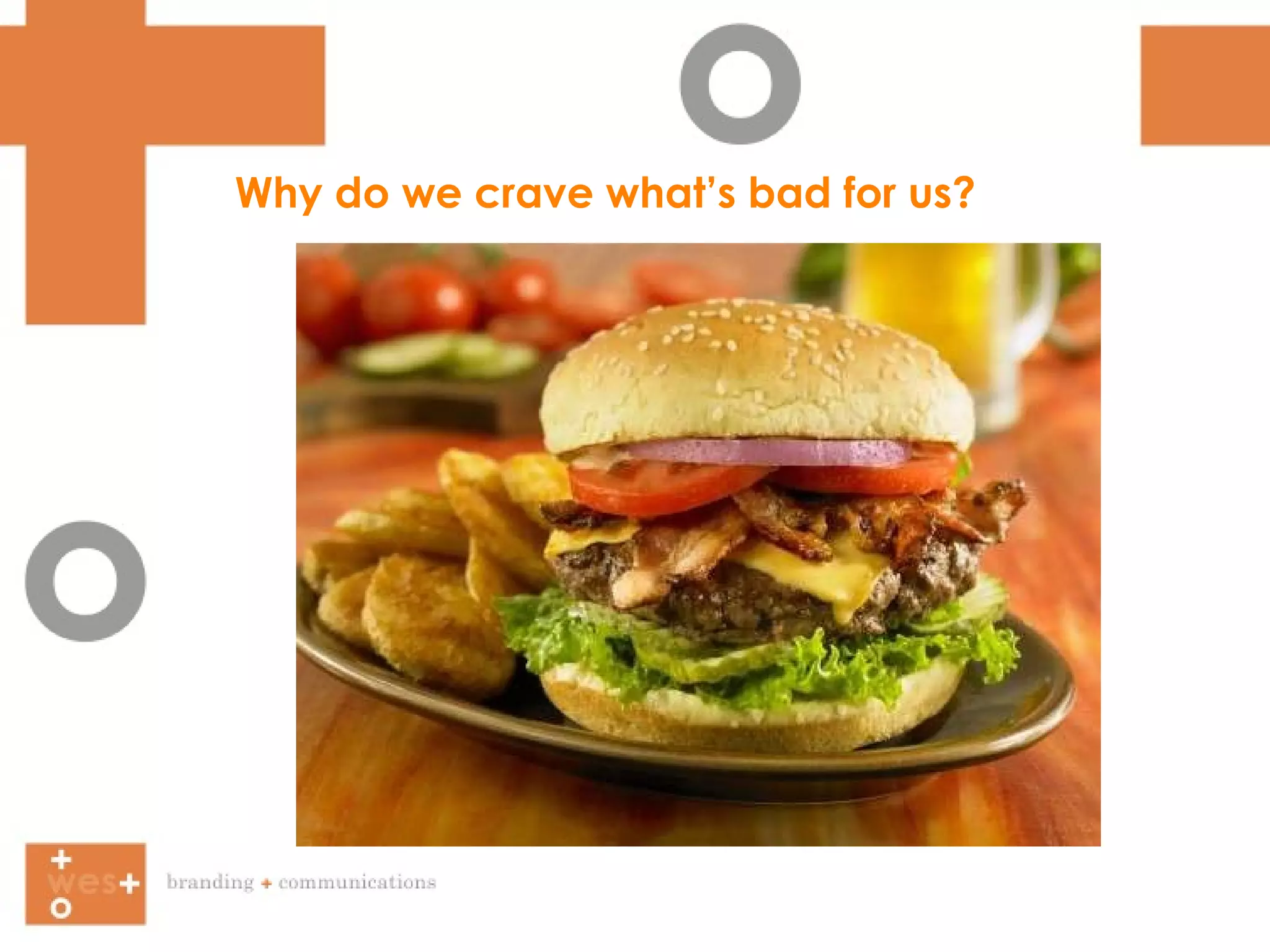
Why do we crave what’s bad for us?
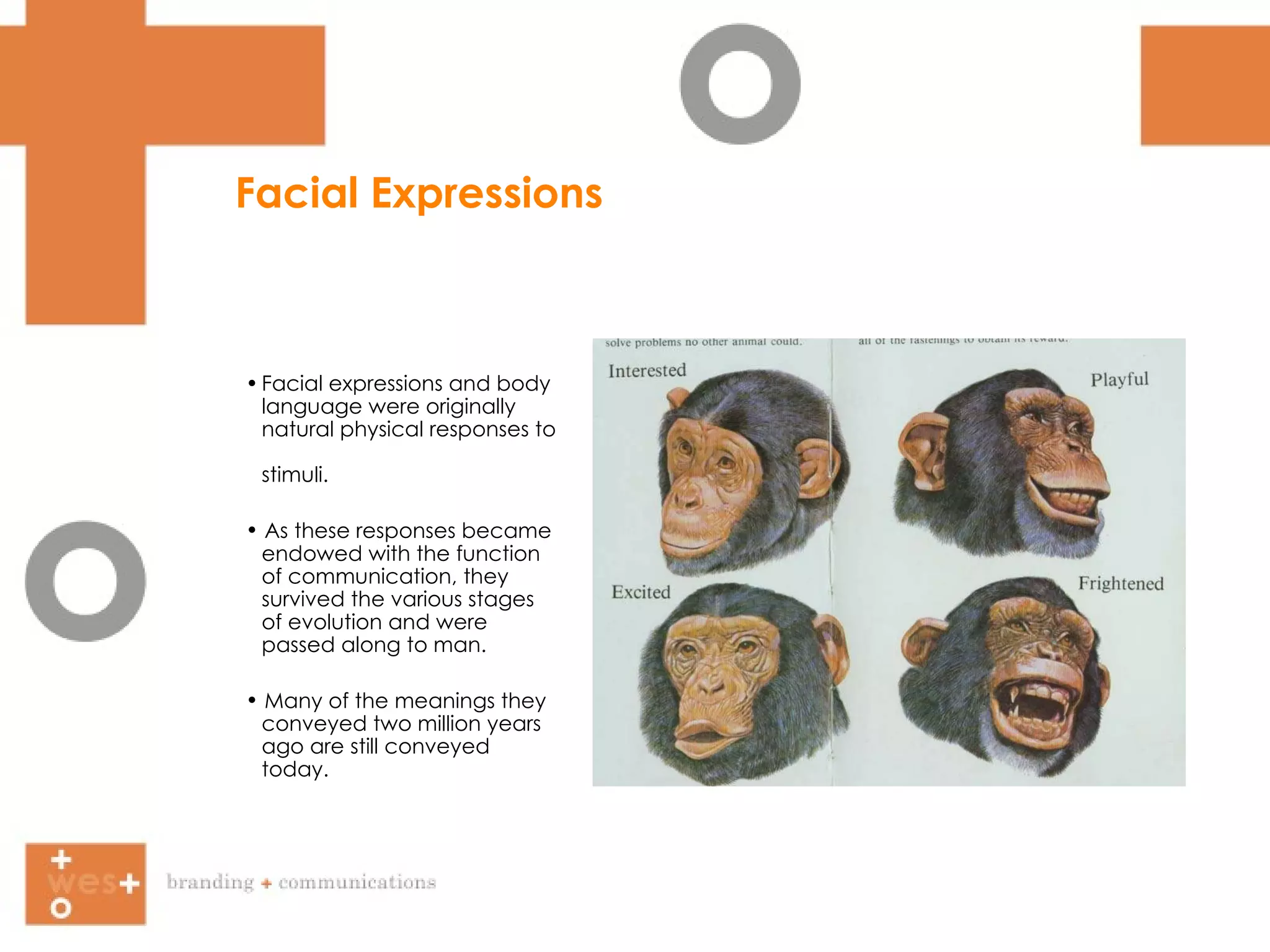
Facial Expressions • Facial expressions and body  language were originally  natural physical responses to  stimuli. As these responses became  endowed with the function  of communication, they  survived the various stages  of evolution and were  passed along to man. Many of the meanings they  conveyed two million years  ago are still conveyed  today.
Facial Expressions The face tells us everything we need to know about deception,  honesty, and how we should feel about the person we see Lips and eyes are part of the visceral nervous system When we feel something, we literally can’t help showing it When we fake it, it signals that we are untrustworthy and dangerous
Body language Body-language signals may be,  learned, innate, mixed.  Eye-winks, for instance, are clearly learned. Eye-blink,  crossed arms, and leaning forward on the other hand,  are clearly innate. Something as simple as a hand gesture can speak  volumes
Eye contact Staring observed in primates is done to either reflect  intimacy or establish dominance -- we have hard-wired  responses But culture plays a part: In Japan, listeners are taught to  focus on a speaker's neck in order to avoid eye contact,  while in the U.S., listeners are encouraged to gaze into a  speaker's eyes.
Facial Symmetry Symmetry may act as a marker of phenotypic and  genetic quality. Perceived "beautiful people” tend to be seen as more  honest, smart, and trustworthy.
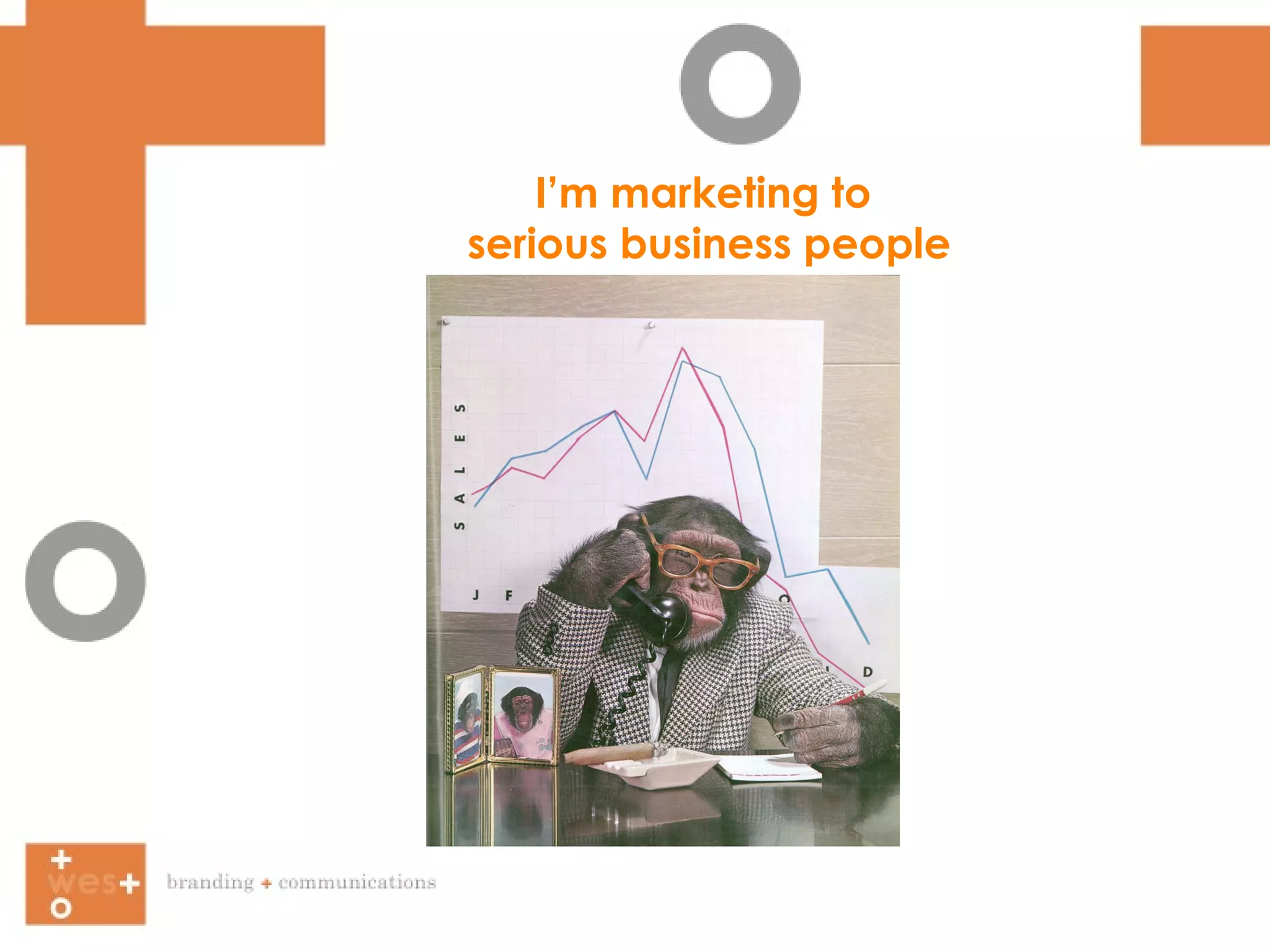
I’m marketing to  serious business people
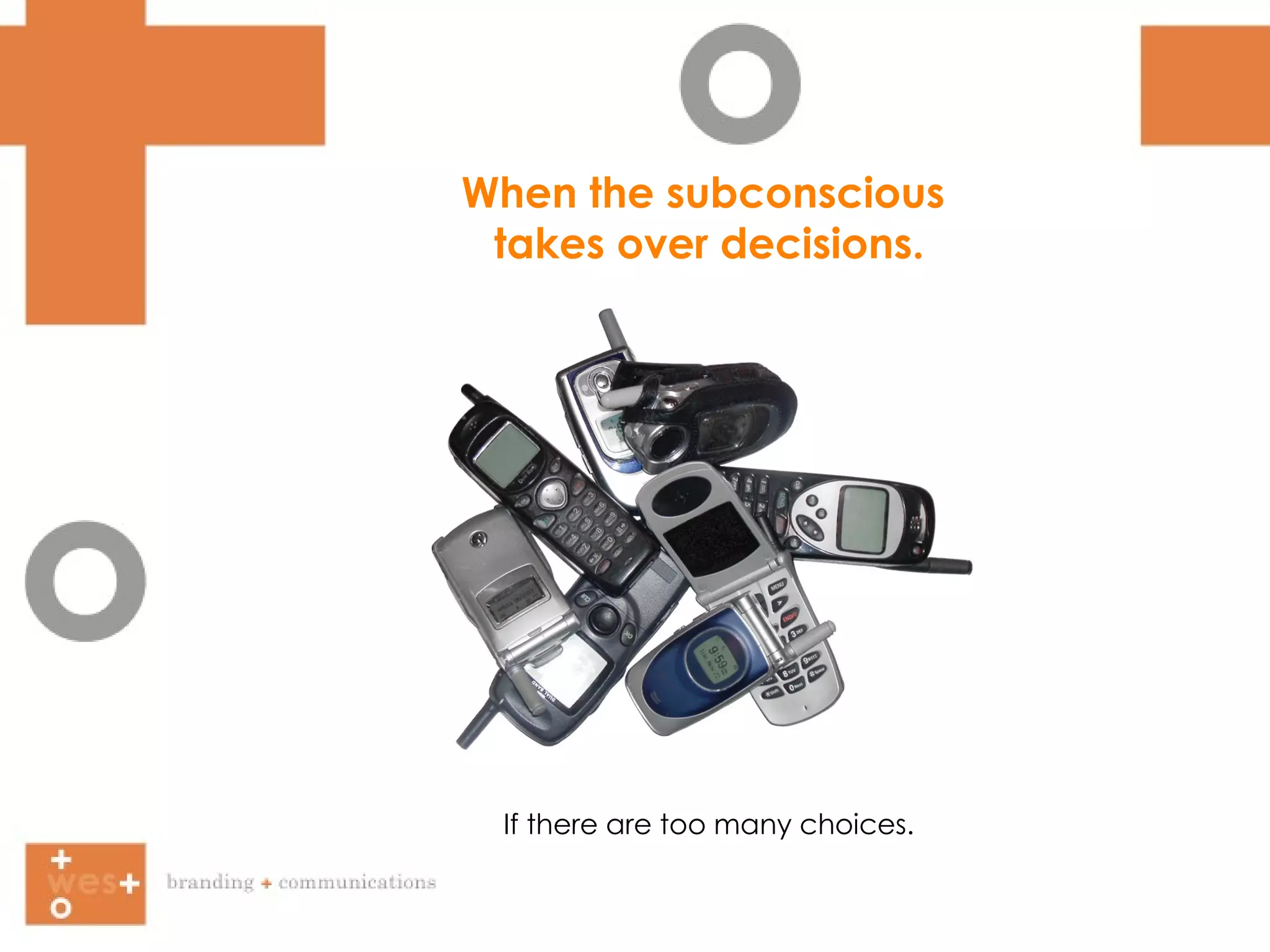
When the subconscious  takes over decisions. If there are too many choices.
When the subconscious  takes over decisions. If products have few difference.
When the subconscious  takes over decisions. If decision makers are under stress.
When the subconscious  takes over decisions. If competitors match innovations quickly.
Ideal Approach Attack the conscious and subconscious
Body language Palms up suggests a vulnerable or non-aggressive pose
Body language Palms down convey a more domineering and assertive-like in tone
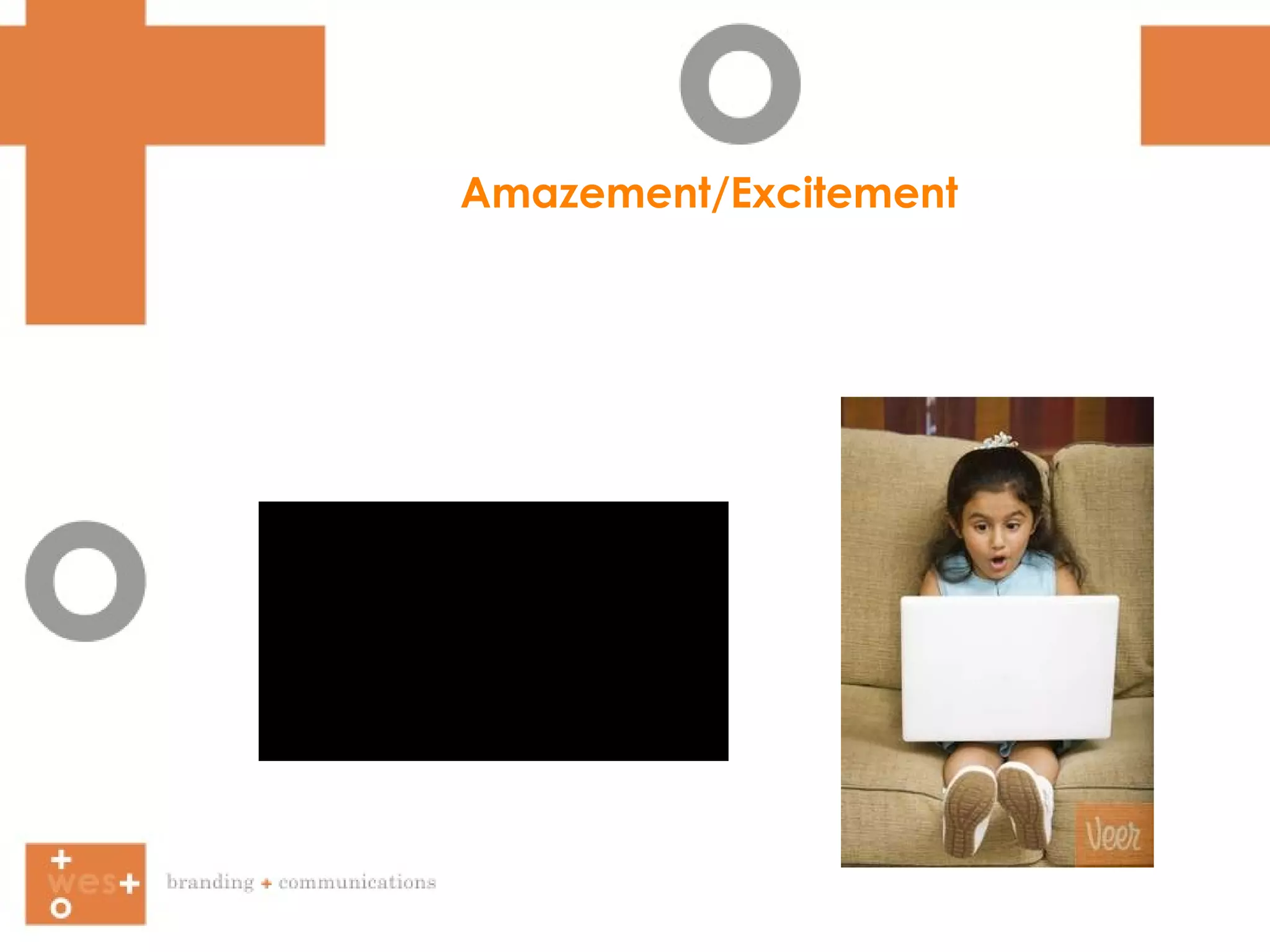
Amazement/Excitement
Confusion
Perplexed
Annoyed/Domination
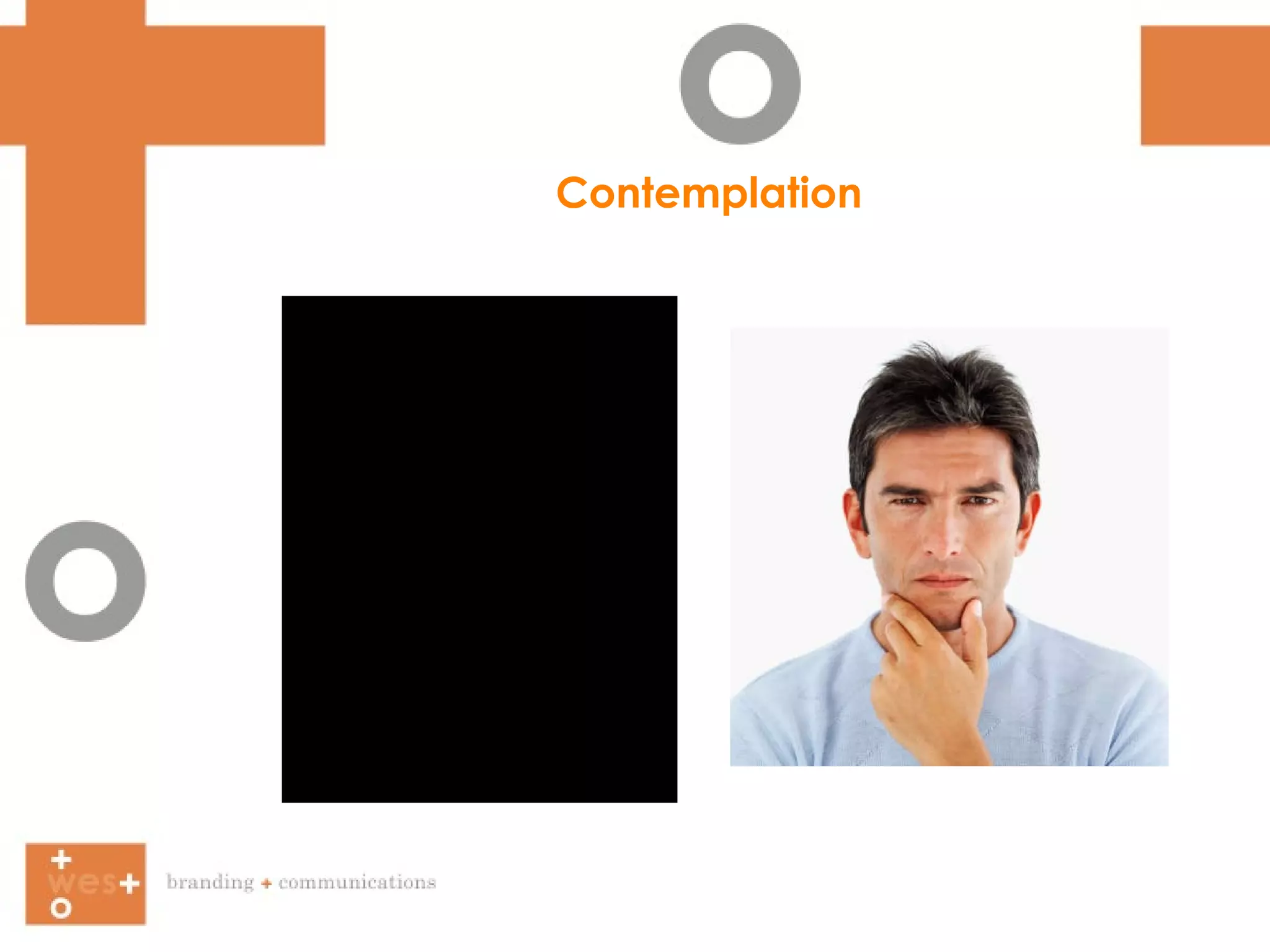
Contemplation
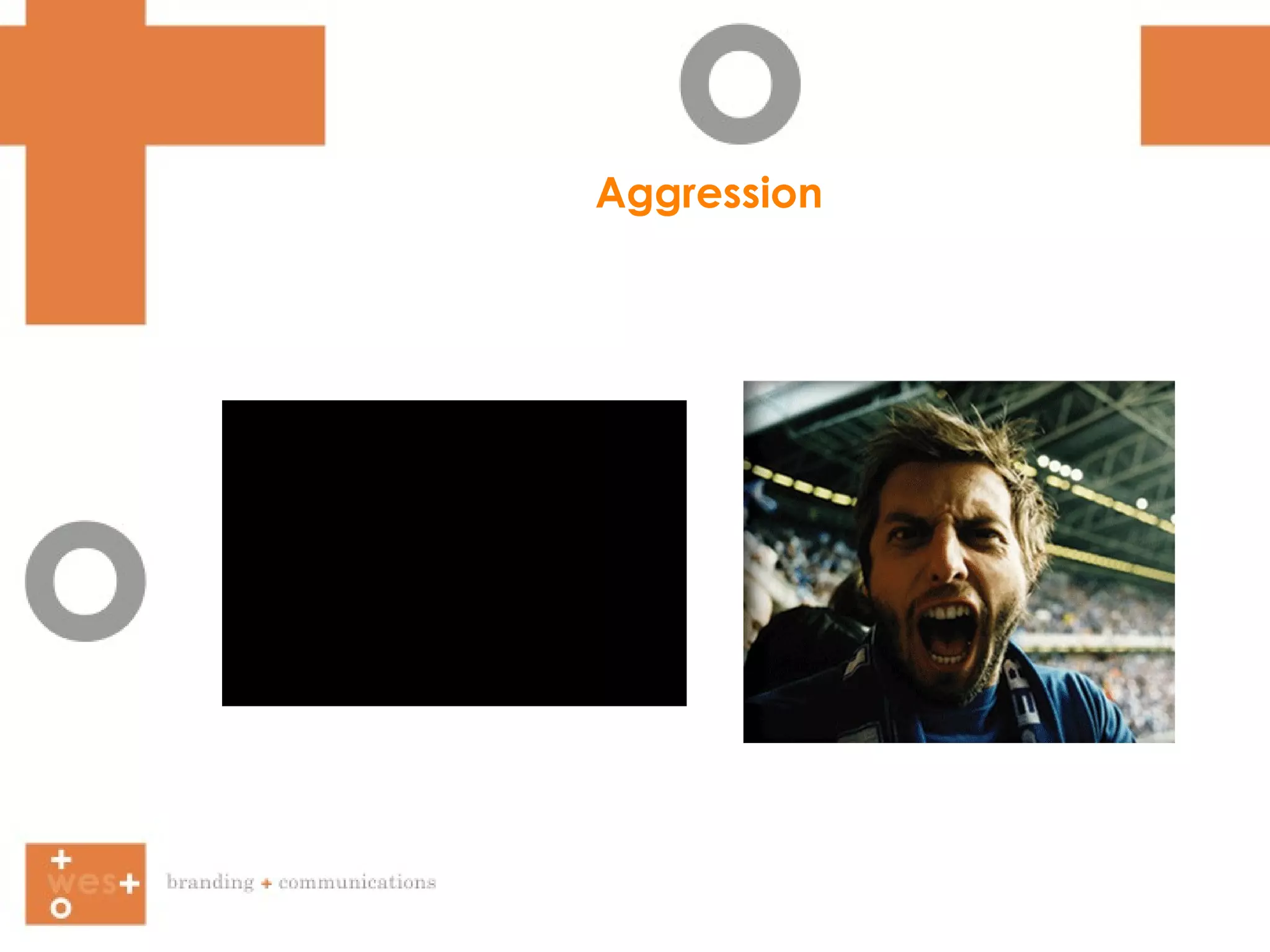
Aggression
People have an uncanny ability to recognize a “true” smile  from the fake.  Regarding the fake smile, the falseness of the expression is  detected in the orbicular muscles of the lower eyelids not  being sufficiently contracted.  Though we may show a polite grin or camera smile at will, the  heartfelt smile is hard to produce on demand.  Facial Expressions
True Smile
Fake Smile
 
University of Cambridge Visual Cue Study
Test Your Skills
A B Trustworthy?
C D Reliable?
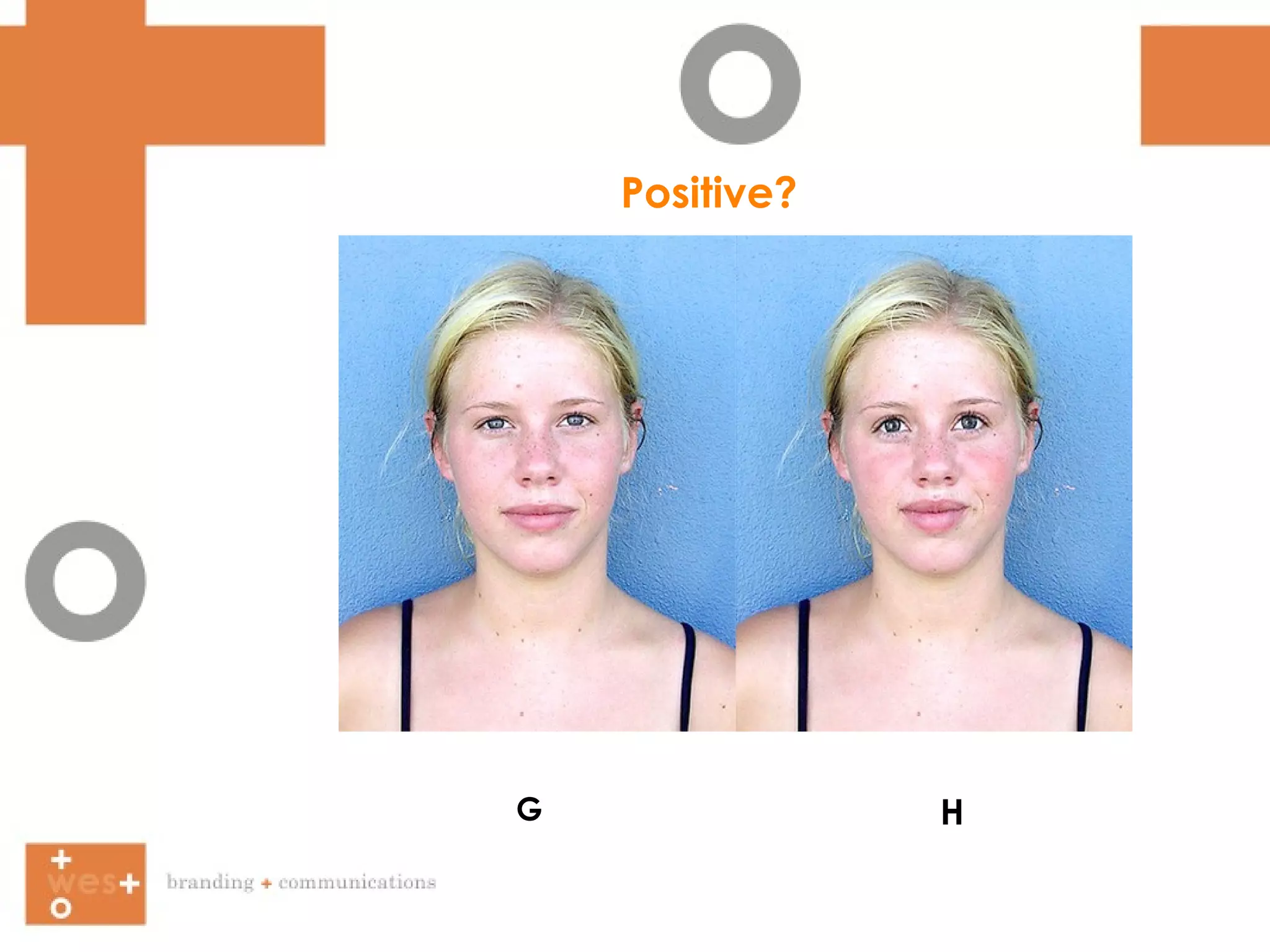
G H Positive?
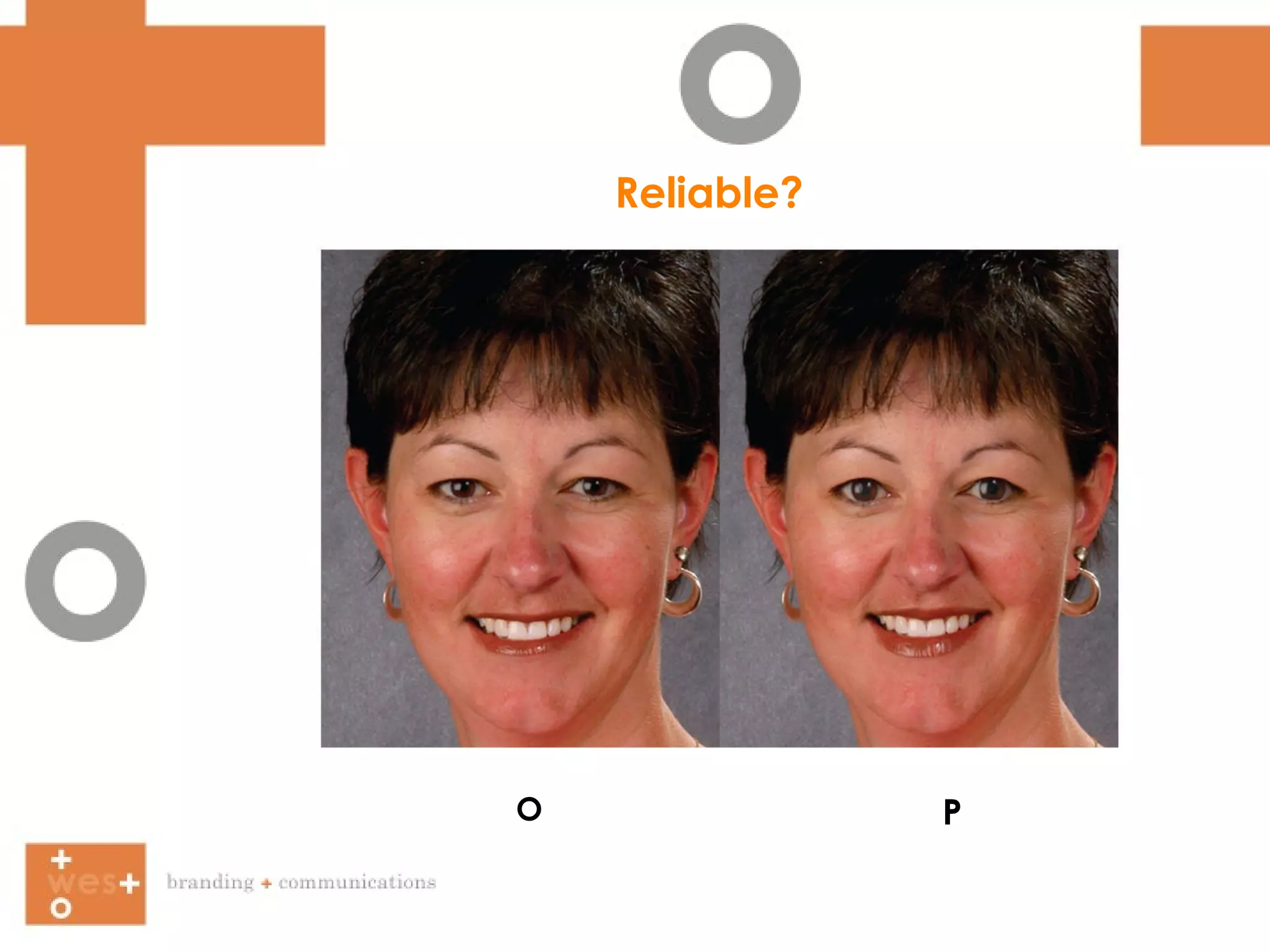
O P Reliable?
What’s the Real Test?
 
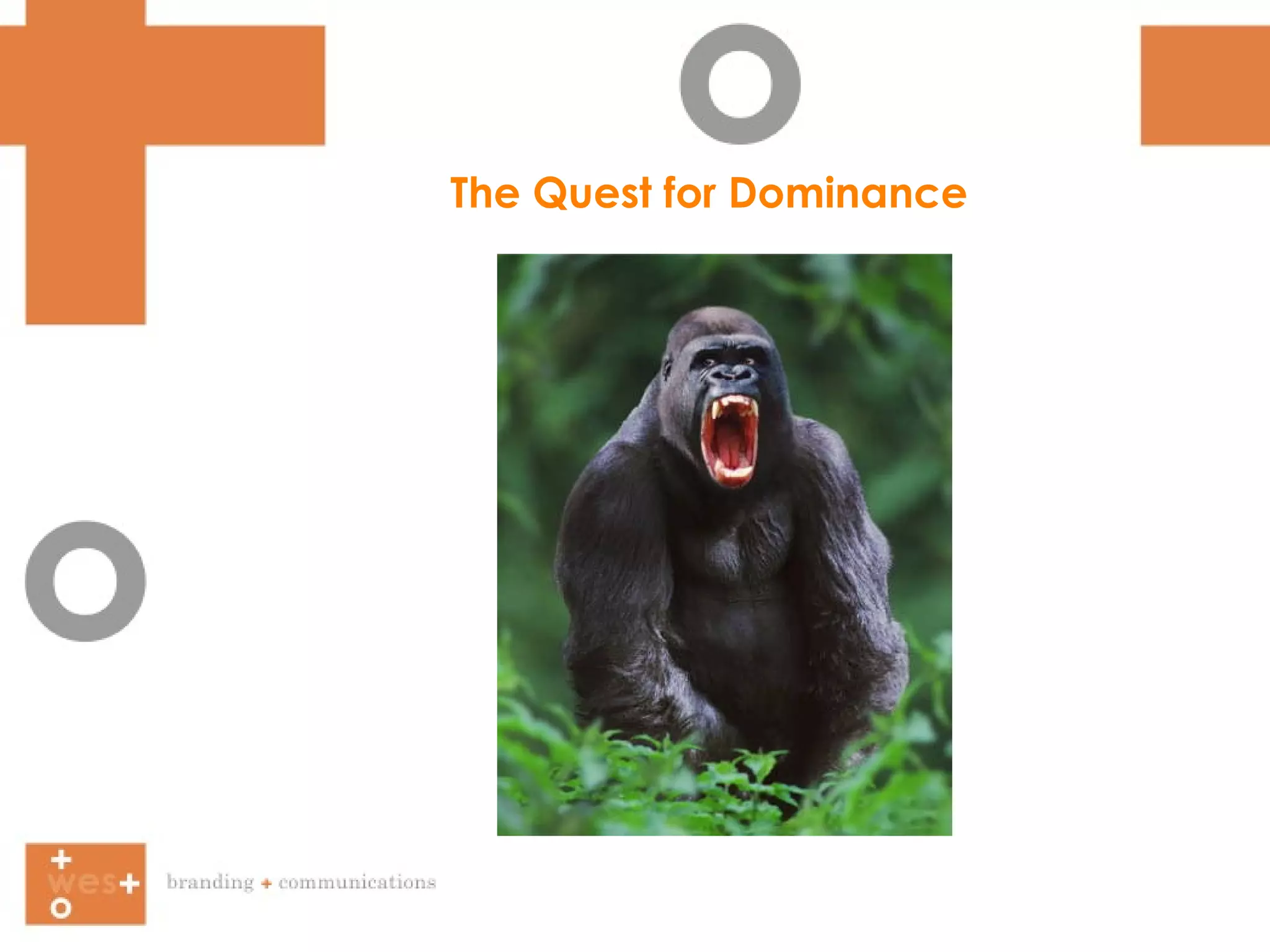
The Quest for Dominance
Group A: Turn and face the back of the room.
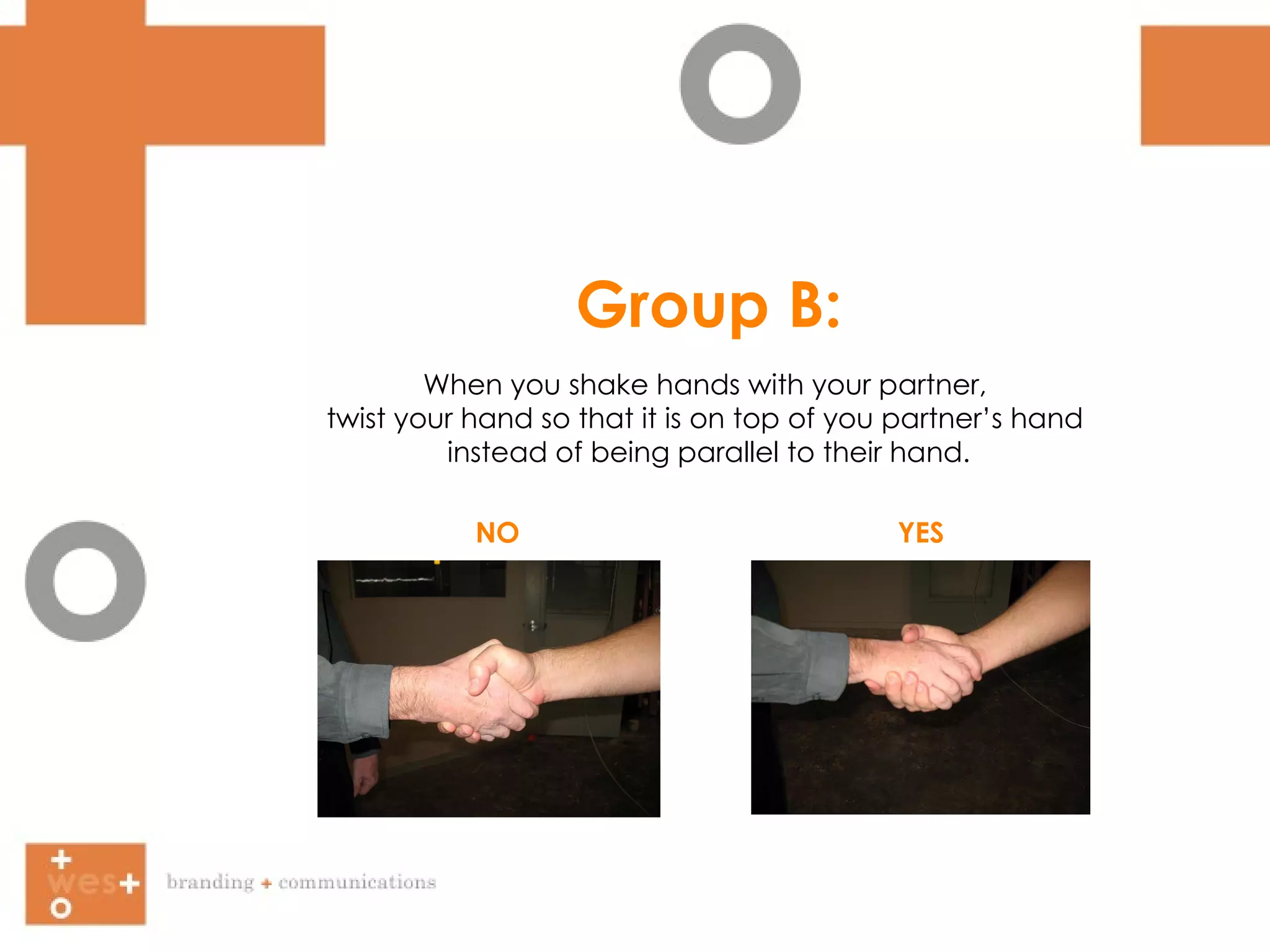
Group B: When you shake hands with your partner,  twist your hand so that it is on top of you partner’s hand  instead of being parallel to their hand. NO YES
What if you only market  to the rational brain?
 
Questions?

Marketing to apes_v6

  • 1.
    Marketing to ApesGavin Johnston August, 20th, 2009 Copyright © 2008 Two West, Inc.
  • 2.
  • 3.
    Three Brain (TriuneBrain) Theory Developed by Dr. Paul D. MacLean , renowned brain researcher, neurologist,and former head of National Institutes of Mental Health. MacLean noticed that when the human brain is dissected and the neo-cortex pulled away, one discovers a "paleo-mammalian" layer beneath it--a brain that looks almost identical to a pig ’ s brain or a dog ’ s brain. If one continues to cut deeper into the brain, one finds a “ l izard brain” in the form of the human brain stem. MacLean posited that each "brain" represents a different layer of neurological evolution, and that these older, deeper layers control our most basic functions. Background: the brain
  • 4.
    Background: thebrain Three Brain (Triune Brain) Theory The R-Complex (aka The Reptilian Brain) Oldest and smallest region of the brain Found in all animals Similar to the brain of reptiles who preceded mammals about 200 million years ago Handles instincts, fixed action patterns, and automatic behaviors “ The Instinctual Brain” The Limbic Brain Common in all mammals Developed about 60 million years ago after demise of dinosaurs Handles emotions Collects sensory information and screens it for emotional relevance “ The Emotional Brain”
  • 5.
    Background: thebrain Three Brain (Triune Brain) Theory The Cortex Brain Unique to humans Largest of the three brains--5/6ths of total brain mass Center for reasoning: Conscious thought and logic Reading, writing, speaking Abstract reasoning, metaphor, spatial relationships “ The Reasoning Brain” Integrating The Three Brains Our Reptilian (Instinctual) Brain is more powerful than our Limbic (Emotional) Brain Our Limbic (Emotional) Brain is more powerful than our Cortex (Thinking) Brain
  • 6.
    Isopraxism is thenon-learned neurobehavior in which members of a species act in a like manner. This is a deep, reptilian principle of mimicry. Isopraxism explains why we dress like our colleagues and adopt the beliefs, customs, and mannerisms of the people we admire. Going it Alone?
  • 7.
    Why do wecrave what’s bad for us?
  • 8.
    Facial Expressions •Facial expressions and body language were originally natural physical responses to stimuli. As these responses became endowed with the function of communication, they survived the various stages of evolution and were passed along to man. Many of the meanings they conveyed two million years ago are still conveyed today.
  • 9.
    Facial Expressions Theface tells us everything we need to know about deception, honesty, and how we should feel about the person we see Lips and eyes are part of the visceral nervous system When we feel something, we literally can’t help showing it When we fake it, it signals that we are untrustworthy and dangerous
  • 10.
    Body language Body-languagesignals may be, learned, innate, mixed. Eye-winks, for instance, are clearly learned. Eye-blink, crossed arms, and leaning forward on the other hand, are clearly innate. Something as simple as a hand gesture can speak volumes
  • 11.
    Eye contact Staringobserved in primates is done to either reflect intimacy or establish dominance -- we have hard-wired responses But culture plays a part: In Japan, listeners are taught to focus on a speaker's neck in order to avoid eye contact, while in the U.S., listeners are encouraged to gaze into a speaker's eyes.
  • 12.
    Facial Symmetry Symmetrymay act as a marker of phenotypic and genetic quality. Perceived "beautiful people” tend to be seen as more honest, smart, and trustworthy.
  • 13.
    I’m marketing to serious business people
  • 14.
    When the subconscious takes over decisions. If there are too many choices.
  • 15.
    When the subconscious takes over decisions. If products have few difference.
  • 16.
    When the subconscious takes over decisions. If decision makers are under stress.
  • 17.
    When the subconscious takes over decisions. If competitors match innovations quickly.
  • 18.
    Ideal Approach Attackthe conscious and subconscious
  • 19.
    Body language Palmsup suggests a vulnerable or non-aggressive pose
  • 20.
    Body language Palmsdown convey a more domineering and assertive-like in tone
  • 21.
  • 22.
  • 23.
  • 24.
  • 25.
  • 26.
  • 27.
    People have anuncanny ability to recognize a “true” smile from the fake. Regarding the fake smile, the falseness of the expression is detected in the orbicular muscles of the lower eyelids not being sufficiently contracted. Though we may show a polite grin or camera smile at will, the heartfelt smile is hard to produce on demand. Facial Expressions
  • 28.
  • 29.
  • 30.
  • 31.
    University of CambridgeVisual Cue Study
  • 32.
  • 33.
  • 34.
  • 35.
  • 36.
  • 37.
  • 38.
  • 39.
    The Quest forDominance
  • 40.
    Group A: Turnand face the back of the room.
  • 41.
    Group B: Whenyou shake hands with your partner, twist your hand so that it is on top of you partner’s hand instead of being parallel to their hand. NO YES
  • 42.
    What if youonly market to the rational brain?
  • 43.
  • 44.