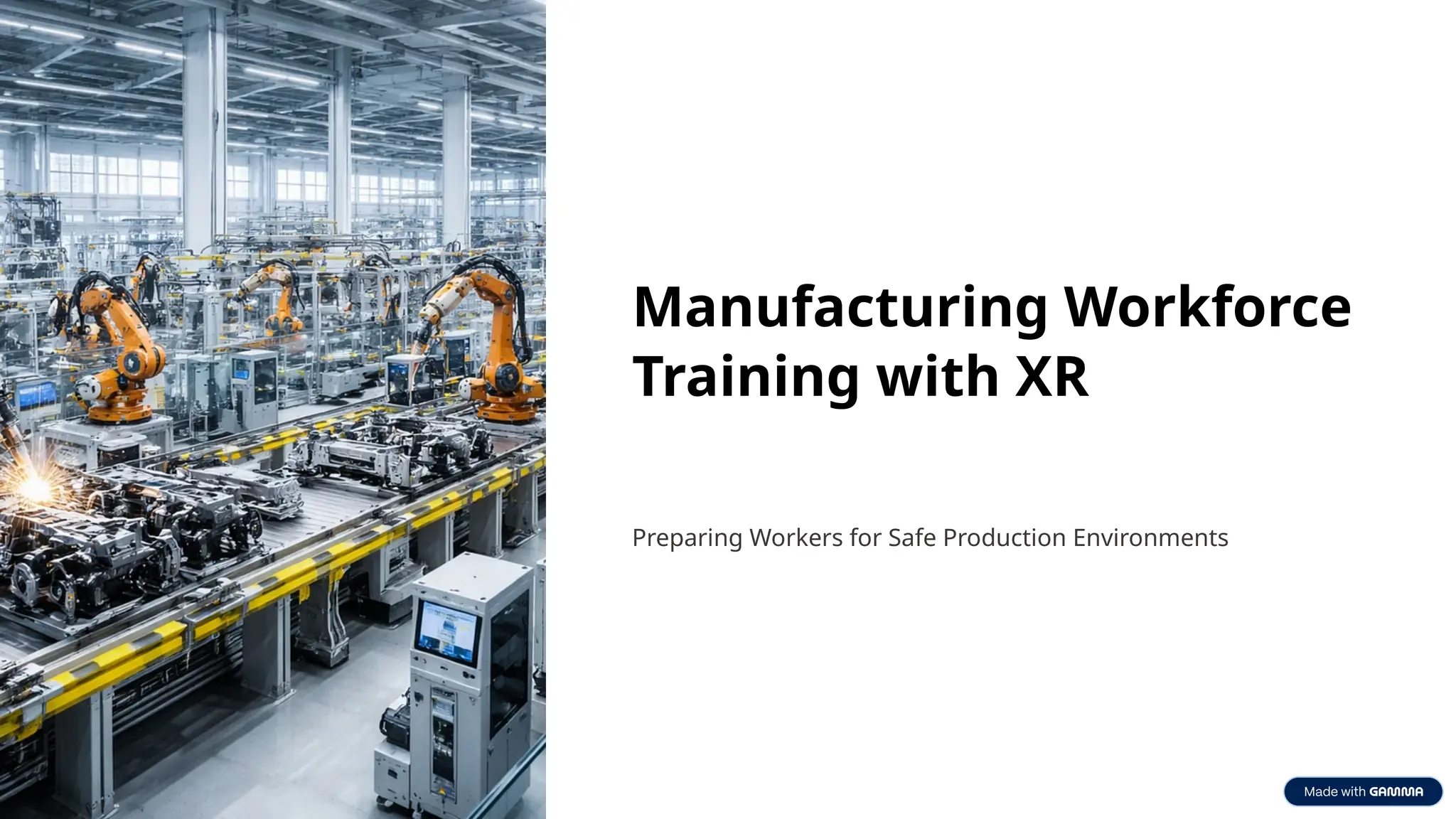
Manufacturing Workforce
Training with XR
Preparing Workers for Safe Production Environments
INDUSTRY CONTEXT
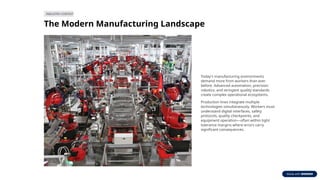
The Modern Manufacturing Landscape
Today's manufacturing environments
demand more from workers than ever
before. Advanced automation, precision
robotics, and stringent quality standards
create complex operational ecosystems.
Production lines integrate multiple
technologies simultaneously. Workers must
understand digital interfaces, safety
protocols, quality checkpoints, and
equipment operation—often within tight
tolerance margins where errors carry
significant consequences.
TRADITIONAL APPROACHES
Conventional Training Methods
Instruction Manuals
Detailed documentation and
standard operating procedures
that workers study before floor
assignments.
Classroom Training
Structured sessions covering
theory, safety regulations, and
equipment specifications in
controlled settings.
On-the-Job Shadowing
New hires observe experienced
workers during actual
production shifts to learn
through observation.
While these methods provide foundational knowledge, they present limitations: manuals can't replicate decision-
making under pressure, classroom theory doesn't capture production floor complexity, and shadowing depends
on mentor availability and may expose trainees to live production risks before they're fully prepared.
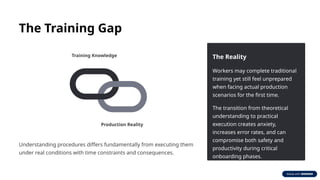
The Training Gap
Training Knowledge
Production Reality
Understanding procedures differs fundamentally from executing them
under real conditions with time constraints and consequences.
The Reality
Workers may complete traditional
training yet still feel unprepared
when facing actual production
scenarios for the first time.
The transition from theoretical
understanding to practical
execution creates anxiety,
increases error rates, and can
compromise both safety and
productivity during critical
onboarding phases.
IMMERSIVE LEARNING
Experience-Based Preparation
Extended reality (XR) technologies enable workers to practice procedures in simulated environments before
exposure to live production. This approach bridges the gap between classroom instruction and real-world
application.
01
Realistic Scenario Practice
Trainees interact with virtual
equipment and workflows that
mirror actual production conditions.
02
Consequence-Free Learning
Mistakes become learning
opportunities without production
impact or safety risks.
03
Repetition and Mastery
Workers can repeat procedures until
proficient, building muscle memory
and confidence.
Building Workforce Readiness and Safety
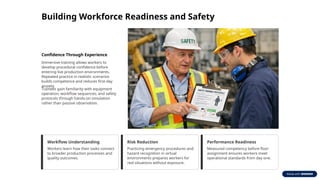
Confidence Through Experience
Immersive training allows workers to
develop procedural confidence before
entering live production environments.
Repeated practice in realistic scenarios
builds competence and reduces first-day
anxiety.
Trainees gain familiarity with equipment
operation, workflow sequences, and safety
protocols through hands-on simulation
rather than passive observation.
Workflow Understanding
Workers learn how their tasks connect
to broader production processes and
quality outcomes.
Risk Reduction
Practicing emergency procedures and
hazard recognition in virtual
environments prepares workers for
real situations without exposure.
Performance Readiness
Measured competency before floor
assignment ensures workers meet
operational standards from day one.
OPERATIONAL EXCELLENCE
Standardization Across Manufacturing Sites
Organizations operating multiple facilities face
challenges maintaining consistent training quality.
Instructor expertise varies, equipment availability
differs by location, and training outcomes become
inconsistent.
Immersive training platforms deliver identical
experiences across all sites. Every trainee receives the
same instruction quality, practices the same
procedures, and meets the same competency
standards regardless of geographic location.
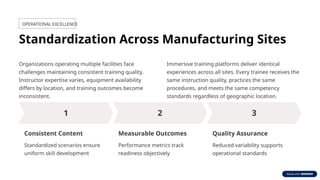
Consistent Content
Standardized scenarios ensure
uniform skill development
Measurable Outcomes
Performance metrics track
readiness objectively
Quality Assurance
Reduced variability supports
operational standards
Industry Application Example
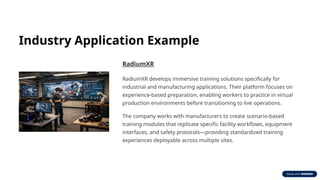
RadiumXR
RadiumXR develops immersive training solutions specifically for
industrial and manufacturing applications. Their platform focuses on
experience-based preparation, enabling workers to practice in virtual
production environments before transitioning to live operations.
The company works with manufacturers to create scenario-based
training modules that replicate specific facility workflows, equipment
interfaces, and safety protocols—providing standardized training
experiences deployable across multiple sites.
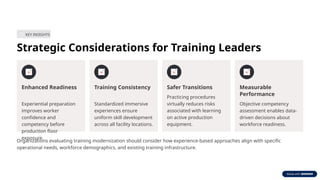
KEY INSIGHTS
Strategic Considerations for Training Leaders
Enhanced Readiness
Experiential preparation
improves worker
confidence and
competency before
production floor
exposure.
Training Consistency
Standardized immersive
experiences ensure
uniform skill development
across all facility locations.
Safer Transitions
Practicing procedures
virtually reduces risks
associated with learning
on active production
equipment.
Measurable
Performance
Objective competency
assessment enables data-
driven decisions about
workforce readiness.
Organizations evaluating training modernization should consider how experience-based approaches align with specific
operational needs, workforce demographics, and existing training infrastructure.
Next Steps
Learn more about evolving manufacturing workforce training approaches and how immersive technologies support
operational readiness.
Explore Further
Visit the full page for detailed
insights on experience-based
training methodologies and
manufacturing workforce
development.
:
radiumxr.com/manufacturing-ind
ustrial-xr-training
Start a Conversation
Contact RadiumXR to discuss
your facility's specific training
challenges and explore potential
solutions.
:radiumxr.com/contact-us
Request Information
Email us directly for additional
resources, case examples, or
technical specifications about
immersive training platforms.
: contact@radiumxr.com
Preparing workers for complex manufacturing environments through experience-based training approaches.

Manufacturing Workforce Training with XR

  • 1.
    Manufacturing Workforce Training withXR Preparing Workers for Safe Production Environments
  • 2.
    INDUSTRY CONTEXT The ModernManufacturing Landscape Today's manufacturing environments demand more from workers than ever before. Advanced automation, precision robotics, and stringent quality standards create complex operational ecosystems. Production lines integrate multiple technologies simultaneously. Workers must understand digital interfaces, safety protocols, quality checkpoints, and equipment operation—often within tight tolerance margins where errors carry significant consequences.
  • 3.
    TRADITIONAL APPROACHES Conventional TrainingMethods Instruction Manuals Detailed documentation and standard operating procedures that workers study before floor assignments. Classroom Training Structured sessions covering theory, safety regulations, and equipment specifications in controlled settings. On-the-Job Shadowing New hires observe experienced workers during actual production shifts to learn through observation. While these methods provide foundational knowledge, they present limitations: manuals can't replicate decision- making under pressure, classroom theory doesn't capture production floor complexity, and shadowing depends on mentor availability and may expose trainees to live production risks before they're fully prepared.
  • 4.
    The Training Gap TrainingKnowledge Production Reality Understanding procedures differs fundamentally from executing them under real conditions with time constraints and consequences. The Reality Workers may complete traditional training yet still feel unprepared when facing actual production scenarios for the first time. The transition from theoretical understanding to practical execution creates anxiety, increases error rates, and can compromise both safety and productivity during critical onboarding phases.
  • 5.
    IMMERSIVE LEARNING Experience-Based Preparation Extendedreality (XR) technologies enable workers to practice procedures in simulated environments before exposure to live production. This approach bridges the gap between classroom instruction and real-world application. 01 Realistic Scenario Practice Trainees interact with virtual equipment and workflows that mirror actual production conditions. 02 Consequence-Free Learning Mistakes become learning opportunities without production impact or safety risks. 03 Repetition and Mastery Workers can repeat procedures until proficient, building muscle memory and confidence.
  • 6.
    Building Workforce Readinessand Safety Confidence Through Experience Immersive training allows workers to develop procedural confidence before entering live production environments. Repeated practice in realistic scenarios builds competence and reduces first-day anxiety. Trainees gain familiarity with equipment operation, workflow sequences, and safety protocols through hands-on simulation rather than passive observation. Workflow Understanding Workers learn how their tasks connect to broader production processes and quality outcomes. Risk Reduction Practicing emergency procedures and hazard recognition in virtual environments prepares workers for real situations without exposure. Performance Readiness Measured competency before floor assignment ensures workers meet operational standards from day one.
  • 7.
    OPERATIONAL EXCELLENCE Standardization AcrossManufacturing Sites Organizations operating multiple facilities face challenges maintaining consistent training quality. Instructor expertise varies, equipment availability differs by location, and training outcomes become inconsistent. Immersive training platforms deliver identical experiences across all sites. Every trainee receives the same instruction quality, practices the same procedures, and meets the same competency standards regardless of geographic location. Consistent Content Standardized scenarios ensure uniform skill development Measurable Outcomes Performance metrics track readiness objectively Quality Assurance Reduced variability supports operational standards
  • 8.
    Industry Application Example RadiumXR RadiumXRdevelops immersive training solutions specifically for industrial and manufacturing applications. Their platform focuses on experience-based preparation, enabling workers to practice in virtual production environments before transitioning to live operations. The company works with manufacturers to create scenario-based training modules that replicate specific facility workflows, equipment interfaces, and safety protocols—providing standardized training experiences deployable across multiple sites.
  • 9.
    KEY INSIGHTS Strategic Considerationsfor Training Leaders Enhanced Readiness Experiential preparation improves worker confidence and competency before production floor exposure. Training Consistency Standardized immersive experiences ensure uniform skill development across all facility locations. Safer Transitions Practicing procedures virtually reduces risks associated with learning on active production equipment. Measurable Performance Objective competency assessment enables data- driven decisions about workforce readiness. Organizations evaluating training modernization should consider how experience-based approaches align with specific operational needs, workforce demographics, and existing training infrastructure.
  • 10.
    Next Steps Learn moreabout evolving manufacturing workforce training approaches and how immersive technologies support operational readiness. Explore Further Visit the full page for detailed insights on experience-based training methodologies and manufacturing workforce development. : radiumxr.com/manufacturing-ind ustrial-xr-training Start a Conversation Contact RadiumXR to discuss your facility's specific training challenges and explore potential solutions. :radiumxr.com/contact-us Request Information Email us directly for additional resources, case examples, or technical specifications about immersive training platforms. : contact@radiumxr.com Preparing workers for complex manufacturing environments through experience-based training approaches.