Managing Information Security Second Edition John R. Vacca
Managing Information Security Second Edition John R. Vacca
Managing Information Security Second Edition John R. Vacca
Managing Information Security Second Edition John R. Vacca
Managing Information Security Second Edition John R. Vacca
1.
Managing Information SecuritySecond Edition John R.
Vacca download pdf
https://ebookultra.com/download/managing-information-security-second-
edition-john-r-vacca/
Visit ebookultra.com today to download the complete set of
ebook or textbook!
2.
We have selectedsome products that you may be interested in
Click the link to download now or visit ebookultra.com
for more options!.
Holograms Holography Design Techniques Commercial
Applications John R. Vacca
https://ebookultra.com/download/holograms-holography-design-
techniques-commercial-applications-john-r-vacca/
Managing an Information Security and Privacy Awareness and
Training Program Second Edition Rebecca Herold
https://ebookultra.com/download/managing-an-information-security-and-
privacy-awareness-and-training-program-second-edition-rebecca-herold/
Wireless Data Demystified 1st Edition John Vacca
https://ebookultra.com/download/wireless-data-demystified-1st-edition-
john-vacca/
Cyber security and IT infrastructure protection 1st ed
Edition Vacca
https://ebookultra.com/download/cyber-security-and-it-infrastructure-
protection-1st-ed-edition-vacca/
3.
Information Security RiskAnalysis 1st Edition Thomas R.
Peltier
https://ebookultra.com/download/information-security-risk-
analysis-1st-edition-thomas-r-peltier/
Information Security Risk Analysis 2nd Edition Thomas R.
Peltier
https://ebookultra.com/download/information-security-risk-
analysis-2nd-edition-thomas-r-peltier/
Information Security Risk Analysis 3rd Edition Thomas R.
Peltier
https://ebookultra.com/download/information-security-risk-
analysis-3rd-edition-thomas-r-peltier/
Honeypots A New Paradigm to Information Security 1st
Edition R. C. Joshi
https://ebookultra.com/download/honeypots-a-new-paradigm-to-
information-security-1st-edition-r-c-joshi/
Techniques and Applications for Advanced Information
Privacy and Security Emerging Organizational Ethical and
Human Issues Advances in Information Security and Privacy
1st Edition Hamid R. Nemati
https://ebookultra.com/download/techniques-and-applications-for-
advanced-information-privacy-and-security-emerging-organizational-
ethical-and-human-issues-advances-in-information-security-and-
privacy-1st-edition-hamid-r-nemati/
5.
Managing Information SecuritySecond Edition John R.
Vacca Digital Instant Download
Author(s): John R. Vacca
ISBN(s): 9780124166882, 0124166881
Edition: 2
File Details: PDF, 13.55 MB
Year: 2013
Language: english
Publisher: Steven Elliot
SeniorDevelopmental Editor: Nathaniel McFadden
Editorial Project Manager: Lindsay Lawrence
Project Manager: Mohanambal Natarajan
Designer: Matthew Limbert
Syngress is an imprint of Elsevier
225 Wyman Street, Waltham, MA 02451, USA
Second edition 2014
Copyright r 2014, 2009 Elsevier Inc. All rights reserved
No part of this publication may be reproduced, stored in a retrieval system or
transmitted in any form or by any means electronic, mechanical, photocopying, recording
or otherwise without the prior written permission of the publisher Permissions may be
sought directly from Elsevier’s Science & Technology Rights Department in Oxford, UK:
phone (144) (0) 1865 843830; fax (144) (0) 1865 853333; email: permissions@elsevier.com.
Alternatively you can submit your request online by visiting the Elsevier web site at
http://elsevier.com/locate/permissions, and selecting Obtaining permission to use
Elsevier material
Notice
No responsibility is assumed by the publisher for any injury and/or damage to persons
or property as a matter of products liability, negligence or otherwise, or from any use or
operation of any methods, products, instructions or ideas contained in the material herein.
Because of rapid advances in the medical sciences, in particular, independent verification
of diagnoses and drug dosages should be made
Library of Congress Cataloging-in-Publication Data
A catalog record for this book is available from the Library of Congress
British Library Cataloguing in Publication Data
A catalogue record for this book is available from the British Library
For information on all Syngress publications,
visit our website at store.elsevier.com/Syngress
ISBN: 978-0-12-416688-2
Printed and bound in USA
14 15 16 17 18 10 9 8 7 6 5 4 3 2 1
Contents
Acknowledgments xi
About theEditor xiii
Contributors xv
Introduction xvii
1. Information Security Essentials for
IT Managers 1
ALBERT CABALLERO
1. Information Security Essentials for
IT Managers, Overview 1
2. Protecting Mission-Critical Systems 10
3. Information Security from the Ground
Up 17
4. Security Monitoring and
Effectiveness 37
5. Summary 42
Chapter Review Questions/Exercises 43
Exercise 45
2. Security Management Systems 47
JAMES T. HARMENING
1. Security Management System
Standards 47
2. Training Requirements 48
3. Principles of Information Security 48
4. Roles and Responsibilities of
Personnel 49
5. Security Policies 49
6. Security Controls 50
7. Network Access 51
8. Risk Assessment 51
9. Incident Response 52
10. Summary 53
Chapter Review Questions/Exercises 54
Exercise 55
3. Information Technology Security
Management 57
RAHUL BHASKAR AND BHUSHAN KAPOOR
1. Information Security Management
Standards 57
2. Other Organizations Involved in
Standards 60
3. Information Technology Security
Aspects 60
4. Summary 71
Chapter Review Questions/Exercises 72
Exercise 73
4. Online Identity and User Management
Services 75
TEWFIQ EL MALIKI AND JEAN-MARC SEIGNEUR
1. Introduction 75
2. Evolution of Identity Management
Requirements 76
3. The Requirements Fulfilled by Identity
Management Technologies 82
4. Identity Management 1.0 83
5. Social Login and User
Management 105
6. Identity 2.0 for Mobile Users 106
7. Summary 115
Chapter Review Questions/Exercises 115
Exercise 117
References 117
vii
14.
5. Intrusion Preventionand Detection
Systems 119
CHRISTOPHER DAY
1. What is an ‘Intrusion’ Anyway? 119
2. Physical Theft 119
3. Abuse of Privileges (The Insider
Threat) 120
4. Unauthorized Access by Outsider 121
5. Malware Infection 121
6. The Role of the ‘0-Day’ 123
7. The Rogue’s Gallery: Attackers and
Motives 124
8. A Brief Introduction to TCP/IP 125
9. The TCP/IP Data Architecture and
Data Encapsulation 126
10. Survey of Intrusion Detection and
Prevention Technologies 131
11. Anti-Malware Software 132
12. Network-Based Intrusion Detection
Systems 133
13. Network-Based Intrusion Prevention
Systems 134
14. Host-Based Intrusion Prevention
Systems 135
15. Security Information Management
Systems 135
16. Network Session Analysis 137
17. Digital Forensics 138
18. System Integrity Validation 138
19. Summary 139
Chapter Review Questions/Exercises 139
Exercise 140
References 141
6. Firewalls 143
DR. ERRIN W. FULP
1. Introduction 143
2. Network Firewalls 143
3. Firewall Security Policies 145
4. A Simple Mathematical Model for
Policies, Rules, and Packets 147
5. First-Match Firewall Policy
Anomalies 148
6. Policy Optimization 149
7. Firewall Types 151
8. Host and Network Firewalls 153
9. Software and Hardware Firewall
Implementations 154
10. Choosing the Correct Firewall 155
11. Firewall Placement and Network
Topology 155
12. Firewall Installation and
Configuration 159
13. Supporting Outgoing Services Through
Firewall Configuration 160
14. Secure External Services
Provisioning 162
15. Network Firewalls for Voice and Video
Applications 162
16. Firewalls and Important Administrative
Service Protocols 163
17. Internal IP Services Protection 166
18. Firewall Remote Access
Configuration 168
19. Load Balancing and Firewall
Arrays 169
20. Highly Available Firewalls 171
21. Firewall Management 172
22. Summary 173
Chapter Review Questions/Exercises 174
Exercise 175
7. Penetration Testing 177
SANJAY BAVISI
1. Introduction 177
2. What is Penetration Testing? 177
3. How Does Penetration Testing Differ
from an Actual “Hack?” 179
4. Types of Penetration Testing 180
5. Phases of Penetration Testing 183
6. Defining What’s Expected 186
7. The Need for a Methodology 186
8. Penetration Testing
Methodologies 187
9. Methodology in Action 188
10. Penetration Testing Risks 192
11. Liability Issues 193
viii CONTENTS
15.
12. Legal Consequences193
13. “Get Out of Jail Free” Card 193
14. Penetration Testing Consultants 194
15. Required Skill Sets 195
16. Accomplishments 195
17. Hiring a Penetration Tester 196
18. Why Should a Company Hire
You? 197
19. Summary 198
Chapter Review Questions/Exercises 199
Exercise 200
8. What is Vulnerability
Assessment? 201
ALMANTAS KAKAREKA
1. Introduction 201
2. Reporting 202
3. The “It Won’t Happen to Us”
Factor 202
4. Why Vulnerability Assessment? 202
5. Penetration Testing Versus
Vulnerability Assessment 203
6. Vulnerability Assessment Goal 205
7. Mapping the Network 205
8. Selecting the Right Scanners 207
9. Central Scans Versus Local Scans 208
10. Defense in Depth Strategy 209
11. Vulnerability Assessment Tools 210
12. SARA 211
13. SAINT 211
14. MBSA 212
15. Scanner Performance 212
16. Scan Verification 212
17. Scanning Cornerstones 212
18. Network Scanning
Countermeasures 213
19. Vulnerability Disclosure Date 214
20. Proactive Security Versus Reactive
Security 216
21. Vulnerability Causes 217
22. Diy Vulnerability Assessment 218
23. Summary 219
Chapter Review Questions/Exercises 219
Exercise 220
9. Cyber Forensics 223
SCOTT R. ELLIS
1. What is Cyber Forensics? 223
2. Analysis of Data 225
3. Cyber Forensics in the Court
System 229
4. Understanding Internet History 230
5. Temporary Restraining Orders and
Labor Disputes 232
6. First Principles 251
7. Hacking a Windows XP Password 252
8. Network Analysis 256
9. Cyber Forensics Applied 257
10. Tracking, Inventory, Location of Files,
Paperwork, Backups, and so on 257
11. Testifying as an Expert 262
12. Beginning to End in Court 267
13. Summary 271
Chapter Review Questions/Exercises 272
Exercise 273
10. Cyber Forensics and Incident
Response 275
CEM GURKOK
1. Introduction to Cyber Forensics 275
2. Handling Preliminary
Investigations 277
3. Controlling an Investigation 280
4. Conducting Disk-Based Analysis 282
5. Investigating Information-Hiding
Techniques 287
6. Scrutinizing Email 292
7. Validating Email Header
Information 295
8. Tracing Internet Access 295
9. Searching Memory in Real Time 300
10. Summary 308
Chapter Review Questions/Exercises 309
ix
CONTENTS
16.
Exercise 310
References 311
11.Network Forensics 313
YONG GUAN
1. Scientific Overview 313
2. The Principles of Network
Forensics 314
3. Attack Traceback and Attribution 318
4. Critical Needs Analysis 326
5. Research Directions 327
6. Summary 329
Chapter Review Questions/Exercises 332
Exercise 333
Index 335
x CONTENTS
17.
Acknowledgements
There are manypeople whose efforts on
this book have contributed to its successful
completion. I owe each a debt of gratitude
and want to take this opportunity to offer
my sincere thanks.
A very special thanks to my publisher,
Steve Elliot, without whose continued
interest and support this book would not
have been possible. Senior development
editor Nate McFadden provided staunch
support and encouragement when it was
most needed. Thanks to my production
project manager, Mohanambal Natarajan,
whose fine work and attention to detail has
been invaluable. Thanks also to my market-
ing manager, Todd Conly, whose efforts on
this book have been greatly appreciated.
Finally, thanks to all the other people at
Morgan Kaufmann Publishers/Elsevier
Science & Technology Books, whose many
talents and skills are essential to a finished
book.
Thanks to my wife, Bee Vacca, for her love,
her help, and her understanding of my long
work hours. Finally, I wish to thank all the
following authors who contributed chapters
that were necessary for the completion of this
book: Sanjay Bavisi, Rahul Bhaskar, Albert
Caballero, Christopher Day, Scott R. Ellis,
Errin W. Fulp, Yong Guan, Cem Gurkok,
James T. Harmening, Almantas Kakareka,
Bhushan Kapoor, Jean-Marc Seigneur.
xi
About the Editor
JohnVacca is an information technology
consultant, professional writer, editor,
reviewer and internationally-known, best-
selling author based in Pomeroy, Ohio.
Since 1982, John has authored 73 books
(some of his most recent books include):
• Computer and Information Security
Handbook, 2E (Publisher: Morgan
Kaufmann (an imprint of Elsevier Inc.)
(May 31, 2013))
• Identity Theft (Cybersafety) (Publisher:
Chelsea House Pub (April 1, 2012 )
• System Forensics, Investigation, And
Response (Publisher: Jones & Bartlett
Learning (September 24, 2010)
• Managing Information Security
(Publisher: Syngress (an imprint of
Elsevier Inc.) (March 29, 2010))
• Network and Systems Security
(Publisher: Syngress (an imprint of
Elsevier Inc.) (March 29, 2010))
• Computer and Information Security
Handbook, 1E (Publisher: Morgan
Kaufmann (an imprint of Elsevier Inc.)
(June 2, 2009))
• Biometric Technologies and
Verification Systems (Publisher: Elsevier
Science & Technology Books (March 16,
2007))
• Practical Internet Security (Hardcover):
(Publisher: Springer (October 18, 2006))
• Optical Networking Best Practices
Handbook (Hardcover): (Publisher:
Wiley-Interscience (November 28, 2006))
• Guide to Wireless Network Security
(Publisher: Springer (August 19, 2006)
• Computer Forensics: Computer Crime
Scene Investigation (With CD-ROM),
2nd Edition (Publisher: Charles River
Media (May 26, 2005)
and, more than 600 articles in the areas
of advanced storage, computer security and
aerospace technology (copies of articles and
books are available upon request). John
was also a configuration management spe-
cialist, computer specialist, and the com-
puter security official (CSO) for NASA’s
space station program (Freedom) and the
International Space Station Program, from
1988 until his retirement from NASA in
1995. In addition, John is also an indepen-
dent online book reviewer. Finally, John
was one of the security consultants for the
MGM movie titled: “AntiTrust,” which was
released on January 12, 2001. A detailed
copy of my author bio can be viewed at
URL: http:/
/www.johnvacca.com. John can
be reached at: john2164@windstream.net.
xiii
Contributors
Sanjay Bavisi (Chapter7), President, EC-
Council, Selangor, Malaysia
Rahul Bhaskar (Chapter 3), Professor,
Department of Information Systems and
Decision Sciences, California State
University, Fullerton, CA 92834
Albert Caballero, CISSP,
GSEC (Chapter 1), Chief Technology
Officer_CTO, Digital Era Group, LLC,
Surfside, Fl. 33154
Christopher Day, CISSP, NSA:
IEM (Chapter 5), Senior Vice President,
Secure Information Systems, Terremark
Worldwide, Inc., 2 South Biscayne Blvd.,
Suite 2900, Miami, FL 33131
Scott R. Ellis, EnCE, RCA (Chapter 9),
Manager, Infrastructure Engineering
Team,kCura, Chicago, IL 60604
Errin W. Fulp (Chapter 6), Professor,
Department of Computer Science, Wake
Forest University, Winston-Salem, North
Carolina 27109
Yong Guan (Chapter 11), Litton Assistant
Professor, Department of Electrical and
Computer Engineering, Iowa State
University, Ames, Iowa 50011
Cem Gurkok (Chapter 10), Threat
Intelligence Development Manager,
Terremark, Worldwide, Inc., Miami,
Florida 33131
James T. Harmening (Chapter 2),
President, Computer Bits, Inc., Chicago,
Illinois 60602
Almantas Kakareka, CISSP, GSNA,
GSEC, CEH (Chapter 8), CTO, Demyo,
Inc., Sunny Isles Beach, Florida 33160
Bhushan Kapoor (Chapter 3), Chair,
Department of Information Systems and
Decision Sciences, California State
University, Fullerton, CA 92834
Jean-Marc Seigneur (Chapter 4),
Advanced Systems Group, University of
Geneva, Switzerland
xv
Introduction
This Managing InformationSecurity
derivative book provides a broad overview
of information security program elements
to assist practitioners and IT professionals
in enhancing their skills and knowledge on
how to establish and implement an infor-
mation security program. The material in
this book can be referenced for general
information on a particular topic or can be
used in the decision-making process for
managing an information security program.
The purpose of this book is to inform infor-
mation security management practitioners
and IT professionals about various aspects
of information security that they will be
expected to implement and oversee in their
respective organizations. In addition, the
book provides guidance for facilitating a
more consistent approach to information
security programs.
Furthermore, this comprehensive book
serves as a professional reference to pro-
vide the most complete and concise view of
how to manage computer security and pri-
vacy available. It offers in-depth coverage
of computer security theory, technology,
and practice as it relates to established
technologies; as well as, recent advance-
ments. It explores practical solutions to a
wide range of security issues. Individual
chapters are authored by leading experts in
the field and address the immediate and
long term challenges in the contributors’
respective areas of expertise.
The book provides information that
practitioners and IT professionals can use
in building their information security
program strategy. In addition, new security
vendors are building Ethernet switches that
offer full security on every single port at
very affordable prices, driving prices down
and making competition fiercer for all inte-
grated security products.
The book is therefore useful to any man-
ager who requires a broad overview of
information security practices. In addition,
in this book, you will also learn how to:
1. Configure tools and utilities to
minimize exposure and detect
intrusions
2. Create, document and test continuity
arrangements for your organization
3. Perform a risk assessment and Business
Impact Assessment (BIA) to identify
vulnerabilities
4. Select and deploy an alternate site for
continuity of mission-critical activities
5. Identify appropriate strategies to
recover the infrastructure and processes
6. Organize and manage recovery teams
7. Test and maintain an effective recovery
plan in a rapidly changing technology
environment
8. Detect and respond to vulnerabilities
that put your organization at risk using
scanners
9. Employ real-world exploits and
evaluate their effect on your systems
10. Configure vulnerability scanners
11. Analyze the results of vulnerability
scans
12. Assess vulnerability alerts and
advisories
xvii
24.
13. Establish astrategy for vulnerability
management
14. Build a firewall to protect your network
15. Install and configure proxy-based and
stateful-filtering firewalls
16. Provide access to HTTP and FTP
services on the Internet
17. Implement publicly accessible servers
without compromising security
18. Protect internal IP addresses with NAT
and deploy a secure DNS architecture
19. Manage information security risks
within your organization
20. Identify security threats to your data
and IT infrastructure
21. Recognize appropriate technology to
deploy against these threats
22. Adapt your organization’s information
security policy to operational
requirements and assess compliance
23. Effectively communicate information
security issues
24. Oversee your organization’s ongoing
information security
You will also learn to identify vulner-
abilities and implement appropriate coun-
termeasures to prevent and mitigate threats
to your mission-critical processes. You will
learn techniques for creating a business
continuity plan (BCP) and the methodology
for building an infrastructure that supports
its effective implementation.
Knowledge of vulnerability assessment
and hacking techniques allows you to
detect vulnerabilities before your networks
are attacked. In this book, you will learn to
configure and use vulnerability scanners to
detect weaknesses and prevent network
exploitation. You will also acquire the
knowledge to assess the risk to your enter-
prise from an array of vulnerabilities and
to minimize your exposure to costly
threats.
The firewall has emerged as a primary
tool to prevent unauthorized access to valu-
able data. In this book, you will gain expe-
rience installing and configuring a firewall.
You will also learn how to allow access to
key services while maintaining your orga-
nization’s security.
Securing information is vital to the suc-
cess of every organization and is the link to
maximizing the benefits of information
technology. This book will empower man-
agers with an understanding of the threats
and risks to information resources. You
will also gain the knowledge of what needs
to be done to protect information infra-
structures, develop an action plan and
monitor threats. You will learn to identify
best practices and deploy a security pro-
gram throughout your organization.
Finally, throughout this book, you will
gain practical skills through a series of
interactive small-group workshops and
evolving case studies. You will also learn
how to design and develop a disaster
recovery plan, which includes the
following:
1. Assessing threats
2. Avoiding disasters
3. Identifying the impact on critical
business functions
4. Recognizing alternatives for continuing
business functions
5. Planning your continuity project
6. Organizing team structures for use in an
emergency
7. Creating a recovery plan from the
response to a disaster
In addition, this book is valuable for
those involved in selecting, implementing
or auditing secure solutions for access into
the enterprise. And, it is also valuable for
anyone responsible for ensuring the conti-
nuity of an organization’s critical systems
xviii INTRODUCTION
25.
or processes. Forexample, the reader
should have general familiarity with- and
have knowledge equivalent to the
following:
• Project Management: Skills for Success
• Deploying Internet and Intranet
Firewalls
• Implementing Web Security
• Management Skills
• Influence Skills
• Project Risk Management
• Detecting and Analyzing Intrusions
• Vulnerability Assessment
• Disaster Recovery Planning
ORGANIZATION OF THIS BOOK
The book is composed of 11 contributed
chapters by leading experts in their fields.
Contributor Albert Caballero (Chapter 1,
“Information Security Essentials for IT
Managers: Protecting Mission-Critical
Systems”) begins by discussing how secu-
rity goes beyond technical controls and
encompasses people, technology, policy
and operations in a way that few other
business objectives do. Information security
involves the protection of organizational
assets from the disruption of business
operations, modification of sensitive data,
or disclosure of proprietary information.
The protection of this data is usually
described as maintaining the confidential-
ity, integrity, and availability (CIA) of the
organization’s assets, operations, and
information.
As identified throughout this chapter,
security goes beyond technical controls and
encompasses people, technology, policy,
and operations in a way that few other
business objectives do. The evolution of a
risk-based paradigm, as opposed to a
technical solution paradigm for security,
has made it clear that a secure organization
does not result from securing technical
infrastructure alone.
Next, contributor James T. Harmening
(Chapter 2, “Security Management
Systems”) examines documentation
requirements and maintaining an effective
security system; as well as, assessments.
Today, when most companies and govern-
ment agencies rely on computer networks
to store and manage their organizations’
data, it is essential that measures are put in
place to secure those networks and keep
them functioning optimally. Network
administrators need to define their security
management systems to cover all parts of
their computer and network resources.
A security management system starts as
a set of policies that dictate the way in
which computer resources can be used. The
policies are then implemented by the orga-
nization’s technical departments and
enforced. This can be easy for smaller orga-
nizations, but can require a team for larger
international organizations that have thou-
sands of business processes. Either way,
measures need to be put in place to pre-
vent, respond to, and fix security issues
that arise in your organization.
Then, contributors Rahul Bhasker and
Bhushan Kapoor (Chapter 3, “Information
Technology Security Management”) discuss
the processes that are supported with
enabling organizational structure and tech-
nology to protect an organization’s infor-
mation technology operations and
information technology assets against inter-
nal and external threats intentionally or
otherwise. Information technology security
management can be defined as processes
that supported enabling organizational
structure and technology to protect an
organization’s IT operations and assets
xix
INTRODUCTION
CHAPTER I.
Introductory
One Planof Salvation.—As there is but one Savior, so is there but one
plan of salvation. There never was, and there never can be, another "I
marvel," wrote Paul to the back-sliding Galatians, "that ye are so soon
removed from him that called you into the grace of Christ, unto another
gospel; which is not another; but there be some that trouble you, and would
pervert the gospel of Christ. But though we, or an angel from heaven,
preach any other gospel unto you than that which we have preached unto
you, let him be accursed."—(Galatians 1:6-8.)
For All Men.—The Gospel of Christ is not of any one place, nor of any one
period. Neither is it for the salvation of any class, to the exclusion of other
classes. It is for all men, and was made plain and simple, that it might
appeal to all. At the same time, it is the mightiest, the sublimest, and the
most profound system of philosophy that the world has ever known. It is
not a child of earth, nor a product of human wisdom. It came out of eternity,
from the very bosom of God, and has been upon the earth at different times
and places. It is the Everlasting Gospel, the same yesterday, today, and
forever, and all true principles of religion, science, or philosophy, now
popular in the world, are but parts of it—broken off fragments of this grand
Rock of Ages. Or, to change the figure, they are as pools of water, caught in
the clefts and hollows of time, when the great flood of Truth, in one or more
of its visitations, swept by on its way back to the eternal ocean.
All Truth Divine.—Every religion in existence that has benefited its
believers, must have possessed at some period a portion of divine truth; and
that truth is what perpetuated it, not the errors associated therewith. These
are as cobwebs and dust, the accumulated rubbish of false tradition, in
which the precious jewel is wholly or in part concealed. Yes, every religion,
Christian or Pagan, that has proved a real blessing to its votaries, is as a
cistern holding within it waters once wholesome and pure,—waters that fell
28.
originally from heaven,in one of those grand spiritual showers, called
dispensations of the gospel, when the flood gates of eternity were lifted,
that the world might be refreshed.
The Arab and the Caliph.—But spiritual waters, like the waters of earth,
will lose their sweetness and purity, if separated too far and too long from
their fountain-head. They will become stagnant and unwholesome, like the
water carried for many days by the poor Arab in his leathern bottle, from
the sparkling spring in the desert to the distant palace of the Caliph, who
magnanimously rewarded the giver, not for the rank draught presented for
his acceptance, but for the goodness of his motive, the sincerity of his soul.
God's Word Apportioned.—How every tribe and nation receives its
portion of the divine word, is thus told in the Nephite record:
"O that I were an angel, and could have the wish of mine heart, that I might
go forth and speak with the trump of God, with a voice to shake the earth,
and cry repentance unto every people:
"Yea, I would declare unto every soul, as with the voice of thunder,
repentance, and the plan of redemption, that they should repent and come
unto our God, that there might not be more sorrow upon all the face of the
earth.
"But behold, I am a man, and do sin in my wish; for I ought to be content
with the things which the Lord hath allotted unto me.
"I ought not to harrow up in my desires the firm decree of a just God, for I
know that he granteth unto men according to their desire, whether it be unto
death or unto life; yea, I know that he allotteth unto men, according to their
wills; whether they be unto salvation or unto destruction.
"Yea, and I know that good and evil have come before all men; or he that
knoweth not good from evil is blameless; but he that knoweth good and
evil, to him it is given according to his desires; whether he desireth good or
evil, life or death, joy or remorse of conscience.
29.
"Now seeing thatI know these things, why should I desire more than to
perform the work to which I have been called?
"Why should I desire that I was an angel, that I could speak unto all the
ends of the earth?
"For behold, the Lord doth grant unto all nations, of their own nation and
tongue, to teach his word; yea, in wisdom, all that he seeth fit that they
should have; therefore we see that the Lord doth counsel in wisdom,
according to that which is just and true."—(Alma 29:1-8.)
An Oft-Restored Religion.—The Gospel of Christ did not make its first
appearance upon this planet at the time of the Savior's crucifixion. While it
seemed a new thing to that generation—for they were "astonished at the
doctrine" of the Nazarene, who taught them the return of good for evil as a
better rule of conduct than the Mosaic law of retaliation—in reality it was
older than all the ages, older than the earth itself. It might have said, with its
divine Author: "Before Abraham was I am"—with reference to the mortal
life of Abraham. Originating in the heavens, before this world was created,
the gospel, prior to its preaching in the meridian of time, had been revealed
to man in a series of dispensations, beginning with Adam and extending
down to that day. The ancient apostles of our Lord preached a restored
gospel, just as much as do the apostles, seventies, and elders of the Church
of Jesus Christ of Latter-day Saints.
"Dispensation" Defined.—It is time to ask, and to more fully answer the
question, What is meant by the term "dispensation"? To dispense is to deal
out or distribute, as when the sacrament of the Lord's Supper is dispensed to
a congregation. "Dispensation of Providence" is a phrase used to describe
some dealing of God with man, either for joy or sorrow to the object of the
visitation. In theology the term "Dispensation" signifies the method or
scheme by which God has at different times developed his purposes and
revealed himself to man. It also denotes a period marked by some particular
development of the divine purpose and revelation, such as the Mosaic
dispensation, lasting from Moses to Christ: or the Christian dispensation,
ending in a universal apostasy which rendered necessary the latter-day
restoration of the gospel and the Priesthood.
30.
Seven Periods.—It isheld by many that there are seven gospel
dispensations, seven distinct periods, during which the plan of salvation,
restored from heaven to earth, has been administered to the children of men;
the intervals of spiritual darkness between those periods of light resulting
from the world's unworthiness. Revelation, so far as I am aware, is silent as
to the number of the dispensations; but I am among those who incline to the
belief that seven is correct; a belief probably founded, in part, upon the
scriptural or symbolical character of that number, and upon the Prophet
Joseph's teaching relative to the seven periods, answering to the seven seals
of the mystical book seen by John the Revelator in his vision on Patmos.—
(Rev. 5 and 6.)
The Apocalyptic Book.—Section Seventy-Seven of the Doctrine and
Covenants is a key to John's revelation, consisting of a series of questions
and answers; those germane to this subject being as follows:
"What are we to understand by the book which John saw, which was sealed
on the back with seven seals?"
"We are to understand that it contains the revealed will, mysteries, and
works of God; the hidden things of his economy concerning this earth
during the seven thousand years of its continuance, or its temporal
existence."
"What are we to understand by the seven seals with which it was sealed?"
"We are to understand that the first seal contains the things of the first
thousand years, and the second also of the second thousand years, and so on
until the seventh."
* * * * * * * * * * *
"What are we to understand by the sounding of the trumpets, mentioned in
the 8th chapter of Revelations?"
"We are to understand that as God made the world in six days, and on the
seventh day he finished his work, and sanctified it, and also formed man out
of the dust of the earth; even so, in the beginning of the seventh thousand
31.
years will theLord God sanctify the earth, and complete the salvation of
man, and judge all things, and shall redeem all things, except that which he
hath not put into his power, when he shall have sealed all things; and the
sounding of the trumpets of the seven angels, are the preparing and
finishing of his work, in the beginning of the seventh thousand years;—the
preparing of the way before the time of his coming."
Whether or not these seven periods are looked upon as gospel dispensation,
it is interesting to consider them as covering the same ground, paralleling,
or extending through, the same mighty stretch of duration, and dealing with
events, epochs, personages and principles connected with those
dispensations.
The World's Real History.—Concerning "the book which John saw," the
Prophet says in effect that it represents the real history of the world—what
the eye of God has seen, what the recording angel has written. The seven
thousand years, corresponding to the seven seals, are as seven great days,
during which Mother Earth will fulfil her mortal mission or probation,
laboring six days, and resting upon the seventh, her period of sanctification.
We are not to understand, however, that these seven thousand years include
the time during which the earth was in process of creation and of
preparation for man. The phrase "temporal existence" shows that the
reckoning began, not before, but after, time had been decreed.
Earth Obedient to Law.—That this planet is indeed upon probation, and
capable of obeying law, is plainly taught in modern revelation:
"And again, verily I say unto you, the earth abideth the law of a celestial
kingdom, for it filleth the measure of its creation, and transgresseth not the
law.
"Wherefore it shall be sanctified; yea, notwithstanding it shall die, it shall
be quickened again, and shall abide the power by which it is quickened, and
the righteous shall inherit it."—(D. and C. 88:25-26.)
The Sea of Glass.—The key to the Apocalypse, already quoted, begins
with this question concerning earth's glorious future: "What is the sea of
32.
glass spoken ofby John, 4th chapter, and 6th verse, of the Revelation?" And
the answer is: "It is the earth, in its sanctified, immortal, and eternal state."
One Day as a Thousand Years.—That the seven thousand years are indeed
as seven great days, is virtually set forth in the Book of Abraham, where the
patriarch, who was deeply learned in astronomy, and taught that science to
the Egyptians, tells of a mighty governing planet nearest to the throne of
God—a planet named Kolob, revolving once in a thousand years. (Abr. 3.)
It is evident that such a day figured in the warning given to Adam: "In the
day that thou eatest thereof thou shalt surely die" (Gen. 2:17) for Adam,
having eaten of the forbidden fruit, lived on to the age of 930 years. In the
Book of Abraham (5:13), it is explained that the day in question was "after
the time of Kolob; for as yet the Gods had not appointed unto Adam his
reckoning."
The Saturday Evening of Time.—According to received chronology, four
thousand years, or four of the seven great days given to this planet as the
period of its temporal continuance, had passed before Christ came, while
nearly two thousand years have gone by since. So that the sixth day is now
drawing to a close, and we stand at the present moment in the Saturday
evening of human history. Morning will break upon the Millennium, the
thousand years of peace, the Sabbath of the world.
Dispensations Inter-Related.—Whatever their number, or the names by
which they may be properly known, it is certain that the gospel
dispensations are inter-related. They are as the links of a mighty chain,
representing God's dealings with man, and extending from the dawn of
creation down to and beyond the present time.
Symbolical and Prophetic.—Those dispensations are likewise symbolical
and prophetic in character, pointing forward and finding their culmination,
their prospective and complete fulfilment, in the great and final
dispensation that is destined to bring about "the restitution of all things."
This is "Mormonism's" mission upon earth—"Mormonism," a nick-name
for the Everlasting Gospel, brought back once more for the purpose of
completing the Lord's work as pertaining to this planet, binding in one the
dispensations, and merging them into the last and greatest of all—the
Dispensation of the Fulness of Times.
34.
CHAPTER II.
The AdamicPeriod
Adam Holds the Keys.—The Prophet Joseph Smith treats thus the theme
of the Gospel dispensations:
"Commencing with Adam, who was the first man, * * * the first and father
of all, not only by progeny, but the first to hold the spiritual blessings, to
whom was made known the plan of ordinances for the salvation of his
posterity unto the end, and to whom Christ was first revealed, and through
whom Christ has been revealed from heaven, and will continue to be
revealed from henceforth;—Adam holds the keys of the dispensation of the
fulness of times; i.e., the dispensation of all the times have been and will be
revealed through him from the beginning to Christ, and from Christ to the
end of all the dispensations that are to be revealed."—("History of the
Church," Vol. IV, pp. 207, 208.)
"All Things in Christ."—Having cited Paul (Ephesians 1:9,10), as
showing how God "purposed in himself, that in the dispensation of the
fulness of times he might gather together in one all things in Christ, both
which are in heaven and which are on earth," the Prophet goes on to say:
"Now the purpose of himself, in the winding up scene of the last
dispensation, is that all things pertaining to that dispensation should be
conducted precisely in accordance with the preceding dispensations.
"And again, God purposed in himself that there should not be an eternal
fulness until every dispensation should be fulfiled and gathered together in
one, and that all things whatsoever that should be gathered together in one
in those dispensations unto the same fulness and eternal glory, should be in
Christ Jesus; therefore he set the ordinances to be the same forever and
ever, and set Adam to watch over them, to reveal them from heaven to man,
or to send angels to reveal them.
35.
* * ** * * * * * * *
"This, then, is the nature of the Priesthood: every man holding the
presidency of his dispensation, and one man holding the presidency of them
all, even Adam; and Adam receiving his presidency and authority from the
Lord, but cannot receive a fulness until Christ shall present the kingdom to
the Father, which shall be at the end of the last dispensation."—(Ibid, pp.
208-209.)
Distinctive Features.—Each dispensation stands for some particular
development of God's work. Each period possess certain distinguishing
characteristics, to point out which, rather than to give an exhaustive
narration of events and happenings, is the aim of the present article. In the
Adamic dispensation, or the period during which Adam lived upon the
earth, in addition to the Creation and the Fall, already treated in previous
chapters, we find the following distinctive features:
(1) The institution of the law of sacrifice, foreshadowing the Atonement that
was to be made by the Lamb of God.
(2) The introduction and first promulgation of the Gospel, as a means of
redeeming mankind from the effects of the Fall.
(3) The original exercise of the evangelical power and authority by Father
Adam, the patriarch of the human family.
Sacrifice Instituted.—Respecting the law of sacrifice, it is written:
"And Adam and Eve, his wife, called upon the name of the Lord, and they
heard the voice of the Lord from the way toward the Garden of Eden,
speaking unto them, and they saw him not; for they were shut out from his
presence.
"And he gave unto them commandments, that they should worship the Lord
their God, and should offer the firstlings of their flocks, for an offering unto
the Lord. And Adam was obedient unto the commandments of the Lord.
36.
"And after manydays an angel of the Lord appeared unto Adam, saying:
Why dost thou offer sacrifices unto the Lord? And Adam said unto him: I
know not, save the Lord commanded me.
"And then the angel spake, saying: This thing is a similitude of the sacrifice
of the Only Begotten of the Father, which is full of grace and truth.
"Wherefore, thou shalt do all that thou doest in the name of the Son, and
thou shalt repent and call upon God in the name of the Son for
evermore."—(Moses 5:4-8.)
Revelation Necessary.—Adam knew all about the law of sacrifice—knew
all about it in the spirit; for he was one of those who had sat in the eternal
councils, where the plan of salvation was framed, and the choice made of a
Redeemer and Savior. He helped to form that plan, and to choose the One
who would put it into effect. Adam knew all about the Lamb of God, slain
in theory from the foundation of the world, and yet to be slain literally upon
the earth, an event symbolized by the sacrifice that he was in the very act of
offering, perhaps, when the angel accosted him. But he had forgotten it all,
so great is the change that comes over the spirit in passing from pre-mortal
into mortal conditions. Hence the necessity of such a visitation, to enlighten
him. Hence, also, the necessity of revelation by the Holy Ghost, the
Comforter, bringing things past to remembrance, showing things to come.
The Gospel's Introduction.—The introduction of the Gospel is thus
narrated:
"And the Lord God called upon men by the Holy Ghost everywhere and
commanded them that they should repent."—(Moses 5:14.)
* * * * * * * * * * *
"And he called upon our father Adam by his own voice, saying: I am God; I
made the world, and men before they were in the flesh.
"And he also said unto him: If thou wilt turn unto me, and hearken unto my
voice, and believe, and repent of all thy transgressions, and be baptized,
even in water, in the name of mine Only Begotten Son, who is full of grace
37.
and truth, whichis Jesus Christ, the only name which shall be given under
heaven whereby salvation shall come unto the children of men, ye shall
receive the gift of the Holy Ghost; asking all things in His name, and
whatsoever ye shall ask, it shall be given you.
* * * * * * * * * * *
"And now, behold, I say unto you: This is the plan of salvation unto all
men, through the blood of mine Only Begotten, who shall come in the
meridian of time.
* * * * * * * * * * *
"And it came to pass, when the Lord had spoken with Adam, our father, that
Adam cried unto the Lord, and he was caught away by the Spirit of the
Lord, and was carried down into the water, and was laid under the water,
and was brought forth out of the water.
"And thus he was baptized, and the Spirit of God descended upon him, and
thus he was born of the Spirit, and became quickened in the inner man.
"And he heard a voice out of heaven, saying: Thou art baptized with fire,
and with the Holy Ghost."—(Moses 6:51, 52, 62, 64-66.)
* * * * * * * * * * *
"And thus the Gospel began to be preached, from the beginning, being
declared by holy angels sent forth from the presence of God, and by his
own voice, and by the gift of the Holy Ghost.
"And thus all things were confirmed unto Adam, by an holy ordinance, and
the Gospel preached, and a decree sent forth, that it should be in the world,
until the end thereof; and thus it was. Amen."—(Moses 5:58, 59.)
Adam as Patriarch.—Concerning Adam's patriarchal ministry, we are thus
enlightened by Joseph the Seer:
"I saw Adam in the valley of Adam-ondi-Ahman. He called together his
children and blessed them with a patriarchal blessing. The Lord appeared in
38.
their midst, andhe (Adam) blessed them all and foretold what should befall
them to the latest generation."—("History of the Church," Vol. III, p. 388.)
Patriarchal Order and Descent.—Respecting the patriarchal order, the
Lord says:
"The order of this priesthood was confirmed to be handed down from father
to son, and rightly belongs to the literal descendants of the chosen seed, to
whom the promises were made.
"This order was instituted in the days of Adam, and came down by lineage
in the following manner:
"From Adam to Seth, who was ordained by Adam at the age of 69 years,
and was blessed by him three years previous to his (Adam's) death, and
received the promise of God by his father, that his posterity should be the
chosen of the Lord, and that they should be preserved unto the end of the
earth.
"Because he (Seth) was a perfect man, and his likeness was the express
likeness of his father's, insomuch that he seemed to be like unto his father in
all things, and could be distinguished from him only by his age.
"Enos was ordained at the age of 134 years and four months by the hand of
Adam.
"God called upon Cainan in the wilderness, in the fortieth year of his age,
and he met Adam in journeying to the place Shedolamak. He was 87 years
old when he received his ordination.
"Mahalaleel was 496 years and seven days old when he was ordained by the
hand of Adam, who also blessed him.
"Jared was 200 years old when he was ordained under the hand of Adam,
who also blessed him.
"Enoch was 25 years old when he was ordained under the hand of Adam,
and he was 65 and Adam blessed him.
39.
"And he sawthe Lord, and he walked with him, and was before his face
continually; and he walked with God 365 years, making him 430 years old
when he was translated.
"Methuselah was 100 years old when he was ordained under the hand of
Adam.
"Lamech was 32 years old when he was ordained under the hand of Seth.
"Noah was 10 years old when he was ordained under the hand of
Methuselah.
"Three years previous to the death of Adam, he called Seth, Enos, Cainan,
Mahalaleel, Jared, Enoch, and Methuselah, who were all High Priests, with
the residue of his posterity who were righteous, into the valley of Adam-
ondi-Ahman, and the re bestowed upon them his last blessing.
"And the Lord appeared unto them, and they rose up and blessed Adam, and
called him Michael, the Prince, the Archangel.
"And the Lord administered comfort unto Adam, and said unto him, I have
set thee to be at the head—a multitude of nations shall come of thee, and
thou art a prince over them for ever.
"And Adam stood up in the midst of the congregation, and not withstanding
he was bowed down with age, being full of the Holy Ghost, predicted
whatsoever should befall his posterity unto the latest generation."—(D. and
C. 107:40-56.)
The Ancient of Days.—Here is given, by the Prophet, a glimpse of the
glorious sequel:
"Daniel, in his seventh chapter, speaks of the Ancient of Days; he means the
oldest man, our Father Adam, Michael; he will call his children together
and hold a council with them to prepare them for the coming of the Son of
Man. He (Adam) is the father of the human family, and presides over the
spirits of all men, and all that have had the keys must stand before him in
this grand council. This may take place before some of us leave this stage of
40.
action. The Sonof Man stands before him, and there is given him glory and
dominion. Adam delivers up his stewardship to Christ, that which was
delivered to him as holding the keys of the universe, but retains his standing
as head of the human family."—("History of the Church," Vol. III, p. 386.)
Place of the Council.—The place of the council mentioned in the
foregoing paragraph, is thus pointed out by the finger of the Lord:
"Revelation to Joseph the Seer, given near Wight's Ferry, at a place called
Spring Hill, Davis County, Missouri, May 19th, 1838, wherein Spring Hill
is named by the Lord,
"Adam-ondi-Ahman, because, said he, it is the place where Adam shall
come to visit his people, or the Ancient of Days shall sit, as spoken of by
Daniel the prophet."—(D. and C. 116.)
Adam-ondi-Ahman.—At that very spot, Spring Hill, Davis County,
Missouri, in the year 1838, the Latter-day Saints, by direction of the
Prophet, began to build a city, naming it Adam-ondi-Ahman, afterwards
abbreviated to Diahman. While engaged in making the survey, some of the
brethren came upon the ruins of an ancient altar, which the Prophet, on
beholding, declared to be the identical altar upon which Adam offered
sacrifices after he was expelled from Eden. The Garden of Eden, Joseph
said, was in Jackson County, Missouri, from which part the Saints had been
driven, as if to typify reminiscently the original expulsion. In both
instances, the tree of disobedience bore the same bitter fruit. In Jackson
County the New Jerusalem is to be built, and a people prepared for the
glorious coming of the Lord. That America is the Old World, not the New,
science now affirms; but the fact was first proclaimed by revelation, whose
other name, in this case, is Joseph Smith the Prophet.
Cain and Abel.—Adam's offering of sacrifice was acceptable to the Lord,
being in accordance with the divine command, and because it truly
symbolized the Lamb of God, who was to come. Abel, Adam's son, offered
a similar sacrifice—"the firstlings of his flock and of the fat thereof, and the
Lord had respect unto Abel and to his offering" (Gen. 4:4). But Cain, Abel's
eldest brother, who had also been taught the law of sacrifice, took it upon
himself to deviate from the divine instruction, and instead of a lamb, he
41.
"brought of thefruit of the ground," an offering in no way typical of the
Savior. Hence, his offering was rejected. The Prophet Joseph, commenting
upon these facts, says: "God will not acknowledge that which He has not
called, ordained, and chosen." He quotes Paul (Heb. 11:4): "By faith Abel
offered unto God a more excellent sacrifice than Cain, by which he
obtained witness that he was righteous, God testifying of his gifts; and by it
he being dead, yet speaketh"—and then asks:
"How doth he yet speak? Why, he magnified the priesthood which was
conferred upon him, and died a righteous man, and therefore has become an
angel of God by receiving his body from the dead, holding still the keys of
his dispensation; and was sent down from heaven unto Paul to minister
consoling words, and to commit unto him a knowledge of the mysteries of
godliness."
* * * * * * * * * * *
"The power, glory and blessings of the priesthood could not continue with
those who received ordination only as their righteousness continued; for
Cain also being authorized to offer sacrifice, but not offering it in
righteousness, was cursed. It signifies, then, that the ordinances must be
kept in the very way God has appointed; otherwise their priesthood will
prove a cursing instead of a blessing."—("History of the Church," Vol. IV,
pp. 208, 209.)
Inter-Relation Shown.—It was after the episode of Cain and Abel,
including the murder of the latter by the former, that Adam called the
righteous residue of his posterity into the valley of Adam-ondi-Ahman, and
there gave them his farewell benediction, foretelling what should befall the
human race down to the end of time. That great patriarchal blessing,
considered in connection with Adam's coming as the Ancient of Days, to
call his children before him in a grand council upon the precise spot where
he uttered his wonderful world-covering prediction, clearly shows the
relationship between the First Dispensation and the Dispensation of the
Fulness of Times.
42.
CHAPTER III.
Enoch andZion
"The Seventh from Adam."—Enoch was contemporaneous with Adam,
and was ordained and blessed by him (D&C 107:48). The period in which
Enoch figured was prolific of wonderful events, but the two standing out
most prominently are:
(1) The successful practice of the law of consecration, resulting in the
founding of Zion, the City of Holiness, which was taken into heaven by
translation.
(2) Enoch's vision of the future—past Noah and the deluge, past Christ and
the crucifixion, down even to the last days, when the coming of the Lord in
his glory would usher in the millennial reign of rest.
What Enoch Beheld.—Some of the sweetest and sublimest passages in the
writings of Moses, as reproduced by Joseph the Prophet, are those in which
he tells the story of Enoch and his city, and portrays the marvelous events
made visible to the eye of the ancient Seer. Here are some of the more
notable passages:
"And the Lord called his people Zion, because they were of one heart and
one mind, and dwelt in righteousness; and there was no poor among them.
* * * * * * * * * * *
"And it came to pass that the Lord showed unto Enoch all the inhabitants of
the earth; and he beheld, and lo, Zion, in process of time, was taken up into
heaven. And the Lord said unto Enoch: Behold mine abode forever.
* * * * * * * * * * *
43.
"And it cameto pass that the God of heaven looked upon the residue of the
people, and he wept; and Enoch bore record of it, saying: How is it that the
heavens weep, and shed forth their tears as the rain upon the mountains?
"And Enoch said unto the Lord: How is it that thou canst weep, seeing thou
art holy, and from all eternity to all eternity?
"And were it possible that man could number the particles of the earth, yea
millions of earths like this, it would not be a beginning to the number of thy
creations; and thy curtains are stretched out still; and yet thou art there, and
thy bosom is there; and also thou art just; thou art merciful and kind
forever;
"And thou hast taken Zion to thine own bosom, from all thy creations, from
all eternity to all eternity; and nought but peace, justice, and truth is the
habitation of thy throne; and mercy shall go before thy face and have no
end; how is it thou canst weep?
"The Lord said unto Enoch: Behold these * * * * which thine eyes are upon
shall perish in the floods; and behold, I will shut them up; a prison have I
prepared for them.
* * * * * * * * * * *
"And Enoch also saw Noah, and his family; that the posterity of all the sons
of Noah should be saved with a temporal salvation.
* * * * * * * * * * *
"And behold, Enoch saw the days of the coming of the Son of Man, even in
the flesh; and his soul rejoiced, saying: The Righteous is lifted up, and the
Lamb is slain from the foundation of the world; and through faith I am in
the bosom of the Father, and behold, Zion is with me.
"And it came to pass that Enoch looked upon the earth; and he heard a
voice from the bowels thereof, saying: Wo, wo is me, the mother of men; I
am pained, I am weary, because of the wickedness of my children. When
shall I rest, and be cleansed from the filthiness which is gone forth out of
44.
me? When willmy Creator sanctify me, that I may rest, and righteousness
for a season abide upon my face?
"And when Enoch heard the earth mourn, he wept, and cried unto the Lord,
saying: O Lord, wilt thou not have compassion upon the earth? Wilt thou
not bless the children of Noah?
* * * * * * * * * * *
"And the Lord said unto Enoch: As I live, even so will I come in the last
days, in the days of wickedness and vengeance, to fulfil the oath which I
have made unto you concerning the children of Noah:
"And the day shall come that the earth shall rest, but before that day the
heavens shall be darkened, and a veil of darkness shall cover the earth; and
the heavens shall shake, and also the earth; and great tribulations shall be
among the children of men, but my people will I preserve;
"And righteousness will I send down out of heaven, and truth will I send
forth out of the earth, to bear testimony of mine Only Begotten; his
resurrection from the dead; yea, and also the resurrection of all men; and
righteousness and truth will I cause to sweep the earth as with a flood, to
gather out mine elect from the four quarters of the earth, unto a place which
I shall prepare, an Holy City, that my people may gird up their loins, and be
looking forth for the time of my coming; for there shall be my tabernacle,
and it shall be called Zion, a New Jerusalem.
"And the Lord said unto Enoch: Then shalt thou and all thy city meet them
there, and we will receive them into our bosom, and they shall see us; and
we will fall upon our necks, and we will kiss each other;
"And there shall be mine abode, and it shall be Zion, which shall come forth
out of all the creations which I have made; and for the space of a thousand
years the earth shall rest.
"And it came to pass that Enoch saw the day of the coming of the Son of
Man, in the last days, to dwell on the earth in righteousness for the space of
a thousand years."—(Moses 7:18-64.)
45.
A fuller accountof Enoch's ministry as prophet, seer, and preacher of
righteousness, may be found in that chapter of the Book of Moses from
which the foregoing paragraphs are taken.
A Terrestrial Ministry.—"Now this Enoch," says the Prophet Joseph,
"God reserved unto himself, that he should not die at that time, and
appointed unto him a ministry unto terrestrial bodies, of whom there has
been but little revealed. He is reserved also unto the presidency of a
dispensation. * * * He appeared unto Jude, as Abel did unto Paul (Jude
14,15). * * * Paul was also acquainted with this character, and received
instructions from him: "By faith Enoch was translated, that he should not
see death, and was not found, because God had translated him" (Heb. 11:5).
* * * * * * * * * * *
"Now the doctrine of translation is a power which belongs to this
Priesthood. There are many things which belong to the powers of the
Priesthood and the keys thereof, that have been kept hid from before the
foundation of the world; they are hid from the wise and prudent to be
revealed in the last times.
"Many have supposed that the doctrine of translation was a doctrine
whereby men were taken immediately into the presence of God, and into an
eternal fulness, but this is a mistaken idea. Their place of habitation is that
of the terrestrial order, and a place prepared for such characters, he held in
reserve to be ministering angels unto many planets, and who as yet have not
entered into so great a fullness as those who are resurrected from the
dead."—("History of the Church," Vol. IV, pp. 209, 210.)
Enoch's City to Return.—Enoch's city, according to this teaching, is now
in terrestrial glory, awaiting its return to earth, when the season is ripe, and
preparations are complete for its reception. The change wrought upon its
inhabitants by translation not being equivalent to resurrection, they will
have to undergo a further change, to prepare them for celestial glory.
Doubtless their case is similar to that of the Saints mentioned by Paul, who
will not "sleep" in death, but be changed "in the twinkling of an eye" to
complete immortality, at the time of the coming of the Son of God.—(I Cor.
15:51, 52.)
46.
Zion Above andZion Beneath.—The Zion of Enoch was undoubtedly a
foreshadowing of the Zion of the last days, with which it will blend, and the
following glorious picture then be realized:
"The Lord hath brought again Zion:
The Lord hath redeemed his people, Israel,
According to the election of grace,
Which was brought to pass by the faith
And covenant of their fathers.
The Lord hath redeemed his people,
And Satan is bound and time is no longer:
The Lord hath gathered all things in one:
The Lord hath brought down Zion from above.
The Lord hath brought up Zion from beneath.
The earth hath travailed and brought forth her strength:
And truth is established in her bowels:
And the heavens have smiled upon her:
And she is clothed with the glory of her God:
For he stands in the midst of his people:
Glory, and honor, and power, and might,
Be ascribed to our God; for he is full of mercy,
Justice, grace and truth, and peace,
For ever and ever. Amen."—(D. and C. 84:99-102.)
47.
CHAPTER IV.
Noah andthe Deluge
The Son of Lamech.—Noah was the son of Lamech, who was a grandson
of Enoch, and after him "the next great grand patriarch who held the keys of
the priesthood." Lamech was ordained under the hand of Seth, the third son
of Adam, who received from his father a blessing similar to the one
afterwards pronounced upon Abraham, to the effect that his posterity should
be the chosen of the Lord. Seth seems to have succeeded to the position
held by Abel, whom Cain slew (Gen. 4:25). He is described as "a perfect
man," the express likeness of his father. Noah's patriarchal ordination came
from Methuselah, the father of Lamech. Noah was but ten years old when
his grandfather thus blessed and ordained him.—(D. and C. 107: 42, 43, 48,
51, 52.)
"And Noah was four hundred and fifty years old, and begat Japheth; and
forty-two years afterward he begat Shem of her who was the mother of
Japheth; and when he was five hundred years old he begat Ham.
"And it came to pass that Noah prophesied, and taught the things of God,
even as it was in the beginning.
"And the Lord said unto Noah: My Spirit shall not always strive with man,
for he shall know that all flesh shall die; yet his days shall be an hundred
and twenty years; and if men do not repent, I will send in the floods upon
them.
* * * * * * * * * * *
"And the Lord ordained Noah after his own order, and commanded him that
he should go forth and declare his gospel unto the children of men, even as
it was given unto Enoch.
48.
"And it cameto pass that Noah called upon the children of men that they
should repent, but they hearkened not unto his words;
* * * * * * * * * * *
"And God saw that the wickedness of men had become great in the earth;
and every man was lifted up in the imagination of the thoughts of his heart,
being only evil continually.
"And it came to pass that Noah continued his preaching unto the people,
saying: Hearken, and give heed unto my words;
"Believe and repent of your sins and be baptized in the name of Jesus
Christ, the Son of God, even as our fathers, and ye shall receive the Holy
Ghost, that ye may have all things made manifest; and if ye do not this, the
floods will come in upon you; nevertheless they hearkened not.
* * * * * * * * * * *
"And God said unto Noah: The end of all flesh is come before me, for the
earth is filled with violence, and behold I will destroy all flesh from off the
earth."—(Moses 8:12, 16, 17, 19, 20, 22-24, 30.)
End of the World Foreshadowed.—Noah's period was prophetic of the
end of the world. This is apparent from the words of the Savior, when
prophesying over Jerusalem, and foretelling the end of the Jewish
commonwealth, an event also typical of the final destruction of the wicked.
Speaking of the social conditions that prevailed while Noah was preaching
the Gospel and delivering his warning message, Jesus said:
"As the days of Noe were, so shall also the coming of the Son of Man be.
"For as in the days that were before the flood, they were eating and
drinking, marrying and giving in marriage, until the day that Noe entered
into the ark.
"And knew not until the flood came, and took them all away; so shall also
the coming of the Son of Man be."—(Matt. 24:3 7-39.)
49.
Earth's Baptism ofFire.—The deluge that destroyed the wicked "with the
earth" (that is, with water, representing the earth) and which God
covenanted with Noah never to repeat, is to be paralleled by another deluge,
in which the wicked will be consumed by fire from heaven; and as
unexpectedly as came the watery flood in which our planet was once
immersed, will come the fiery baptism that is destined to cleanse it from all
unrighteousness and prepare it for celestial glory.
A Second Adam.—Noah, who is Gabriel, and stands next to Adam, or
Michael, in the priesthood, typifies the great patriarch, in that through him
and his immediate family—eight souls in all—Earth was repeopled after the
flood. Hence Noah is sometimes called "the second Adam."
Japheth, Shem and Ham.—Noah's eldest son, Japheth, peopled Europe;
Shem, Asia; and Ham, Africa. Noah's blessing upon Shem and Japheth, and
his curse upon Ham, through Canaan, Ham's son, are thus recorded in the
Hebrew scriptures:
"And he said, Cursed be Canaan; a servant of servants shall he be unto his
brethren.
"And he said, Blessed be the Lord God of Shem; and Canaan shall be his
servant.
"God shall enlarge Japheth, and he shall dwell in the tents of Shem; and
Canaan shall be his servant."—(Gen. 9:25-27.)
Noah's Curse Upon Canaan.—Part of the curse that fell upon Canaan was
"a blackness," which came upon all his posterity, causing them to be
"despised among all people" (Moses 7:8)—a blackness similar to that which
had been placed upon the "seed of Cain" (Moses 7:22). The curse also
deprived the Canaanites of the priesthood.—(Abraham 1:26.)
Just why a whole race had to be punished for a sin committed by one of its
ancestors, is a mystery almost as great as that of the vicarious atonement,
demanded by eternal justice for Adam's transgression. We may be sure,
however, that right was vindicated in both cases, and revelation will
eventually make the matter plain. Every effect has a cause. Canaan was not
50.
cursed, nor hisposterity deprived of the priesthood, for nothing. It must be
that the spirits taking those dark bodies, and passing through the
experiences ordained for them, have done something to merit their fate.
"Whatsoever a man soweth, that shall he also reap." This principle applies
to the spirit life, no less than to the mortal life.
Shem's and Japheth's Blessing.—From Shem came Abraham, the Father
of the Faithful; and from Japheth sprang the Gentiles, the founders of the
most civilized and enlightened nations of modern times, including Great
Britain and the United States of America. Let me add, here, that the term
"Gentile" is not an opprobrious epithet, as some suppose. It comes from
"Gentilis," signifying "of a nation," and is used in sacred history to
designate the people that were not of Israel. Ham, through Canaan, was the
progenitor of the negro race, long held in slavery in this and in other Gentile
countries. The Ethiopian also served the Semite, just as Noah had predicted.
The Tents of Shem.—How Japheth has "dwelt in the tents of Shem," is
partly shown by the history of Palestine, which has long been dominated by
the Gentiles, particularly the Turks, who still possess it. Japheth's
remarkable blessing has also been realized in the history of our own
country, America, the land of Joseph, which the Gentiles now inhabit, and
where, according to the Book of Mormon, they are to assist in gathering
Israel and building the New Jerusalem. It is their privilege to share, if they
will, in all the blessings promised to the chosen people. The Gentiles who
receive the gospel, and are faithful to its requirements, shall be as the seed
of Abraham (Abraham 2:9-11). "The tents of Shem" may be interpreted to
mean the lands of Israel, the homes of the people of God, who are lineally
descended from Shem, through Abraham.
Another Parallel.—"As it was in the days of Noah, so it shall be also at the
coming of the Son of Man." For this, his own rendering of Matt. 24:41, the
Prophet Joseph finds another fulfilment thus:
"He [Jehovah] continued to him [Noah] the keys, the covenants, the power
and the glory with which he blessed Adam at the beginning; and the
offering of sacrifice, which also shall be continued at the last time; for all
the ordinances and duties that ever have been required by the Priesthood,
under the directions and commandments of the Almighty in any of the
51.
dispensations, shall allbe had in the last dispensation; therefore, all things
had under the authority of the Priesthood at any former period, shall be had
again, bringing to pass the restoration spoken of by the mouth of all the
holy prophets."—("History of the Church," Vol. IV, pp. 210, 211.)
52.
CHAPTER V.
Abraham
The Houseof Israel.—The Abrahamic period was signalized by the
founding of the house of Israel, of which Abraham is the earthly head;
Christ, or Jehovah, the God of Israel, being its heavenly head. This house
was established upon the earth that the Savior of the world might have a
fitting lineage through which to come, and that the Lord might have a
worthy people through whom to promote his wise and benevolent purposes
toward the whole human family. The Israelitish subject is reserved for fuller
treatment in future pages. I shall merely point out here some of the greater
events for which the dispensation of Abraham is distinguished.
The Law of Tithing—Melchizedek.—In connection with the career of the
Hebrew patriarch, the first mention is made in the Bible of the law of
tithing, and also of the high priest, Melchizedek, to whom Abraham gave
tithes:
"And Melchizedek, king of Salem, brought forth bread and wine; and he
was the priest of the most high God.
"And he blessed him, and said, Blessed be Abram of the most high God,
which hath delivered thine enemies into thy hand. And he gave him tithes of
all."—(Gen. 14:18-20.)
Paul refers to the same event in the following language:
"For this Melchizedek, king of Salem, priest of the most high God, who met
Abraham returning from the slaughter of the kings, and blessed him;
"To whom also Abraham gave a tenth part of all; first being by
interpretation king of righteousness, and after that also king of Salem,
which is king of peace;
53.
"Without father, withoutmother, without descent, having neither beginning
of days, nor end of life; but made like unto the Son of God; abideth a priest
continually.
"Now consider how great this man was, unto whom even the patriarch
Abraham gave the tenth of the spoils."—(Heb. 7:1-4.)
The Priesthood Renamed.—So great was he that the Priesthood was
renamed for him. Before his time, it was called The Priesthood after the
Order of the Son of God. Its present name, the Melchizedek Priesthood, was
bestowed, as we are informed, for reverential reasons, to avoid a too
frequent repetition of the name of Deity.—(D. and C. 107:1-4.)
Abraham's Test.—The offering of Isaac, Abraham's son of promise,
symbolized the offering, by the Eternal Father, of his Only Begotten Son,
for the redemption and salvation of mankind. This crucial trial of Abraham's
faith is thus related by the sacred historian:
"And it came to pass after these things, that God did tempt Abraham, and
said unto him, Abraham; and he said, Behold, here I am.
"And he said, Take now thy son, thine only son Isaac, whom thou lovest,
and get thee into the land of Moriah; and offer him there for a burnt offering
upon one of the mountains which I will tell thee of.
"And Abraham rose up early in the morning, and saddled his ass, and took
two of his young men with him, and Isaac his son, and clave the wood for
the burnt offering, and rose up, and went into the place of which God had
told him.
"Then on the third day Abraham lifted up his eyes, and saw the place afar
off.
"And Abraham said unto his young men, Abide ye here with the ass; and I
and the lad will go yonder and worship, and come again to you.
"And Abraham took the wood of the burnt offering, and laid it upon Isaac
his son; and he took the fire in his hand, and a knife; and they went both of
54.
them together.
"And Isaacspake unto Abraham his father, and said, My father: and he said,
Here am I, my son, And he said, Behold the fire and the wood; but where is
the lamb for a burnt offering?
"And Abraham said, My son, God will provide himself a lamb for a burnt
offering; so they went both of them together.
"And they came to the place which God had told him of; and Abraham built
an altar there, and laid the wood in order, and bound Isaac his son, and laid
him on the altar upon the wood.
"And Abraham stretched forth his hand, and took the knife to slay his son.
"And the angel of the Lord called unto him out of heaven, and said,
Abraham, Abraham: and he said, Here am I.
"And he said, Lay not thine hand upon the lad, neither do thou any thing
unto him; for now I know that thou fearest God, seeing thou hast not
withheld thy son, thine only son from me.
"And Abraham lifted up his eyes, and looked, and behold behind him a ram
caught in a thicket by his horns; and Abraham went and took the ram, and
offered him up for a burnt offering in the stead of his son."—(Gen. 22:1-
13.)
Jehovah's Promise to His Friend.—Then followed the Lord's promise to
the tried and proven Father of the Faithful:
"In blessing I will bless thee, and in multiplying I will multiply thy seed as
the stars of the heaven, and as the sand which is upon the sea shore; and thy
seed shall possess the gate of his enemies;
"And in thy seed shall all the nations of the earth be blessed" (Ibid, 17, 18).
How that promise was fulfiled, will be shown in the concluding part of this
volume.
55.
CHAPTER VI.
Moses andAaron
"The sons of Moses, and also the sons of Aaron shall offer an acceptable
offering and sacrifice in the house of the Lord, which house shall be built
unto the Lord in this generation, upon the consecrated spot, as I [the Lord]
have appointed;
"And the sons of Moses and of Aaron shall be filled with the glory of the
Lord, upon Mount Zion in the Lord's house, whose sons are ye; and also
many whom I have called and sent forth to build up my church;
"For whoso is faithful unto the obtaining these two priesthoods of which I
have spoken, and the magnifying their calling, are sanctified by the Spirit
unto the renewing of their bodies;
"They become the sons of Moses and of Aaron and the seed of Abraham,
and the church and kingdom, and the elect of God."—(D. and C. 84:31-34.)
Israel and the Exodus.—The principal events of the Mosaic dispensation
were the exodus from Egypt and the establishment of Israel as an
independent nation, under the leadership of their great prophet and
lawgiver, Moses. Both these events foreshadowed greater ones, namely: the
world's deliverance from the bondage of sin and death, and the
establishment upon earth of the Kingdom that shall stand forever.
The Passover.—The exodus was commemorated by the Feast of the
Passover, instituted to perpetuate in the minds and hearts of the children of
Israel their deliverance from slavery, and at the same time to foreshow the
mightier redemption of which that exodus was typical. The Passover was
kept as follows: On the night before the departure out of Egypt, each
Israelitish household, obedient to God's command through Moses, took a
lamb "without blemish," and slew it, sprinkling the blood upon the posts
56.
and lintels oftheir doors. It was promised that the Angel of Death, who had
been sent to afflict the cruel nation for its oppression of the Lord's people,
by slaying the first-born of every Egyptian household, would pass over
every Israelitish dwelling upon which this blood was sprinkled. Not a bone
of the lamb was to be broken, nor a fragment of it left to decay; for it was
intended to symbolize the Lamb of God, whose body was not to see
corruption (Ps. 16:10). Neither was any bone of him to be broken.
Symbolism Realized.—In a most remarkable manner was this symbolism
realized; for when the Roman soldiers came to Calvary to remove the three
bodies from the crosses erected there, they put an end to both the
malefactors by breaking their legs; but finding Jesus already dead, this
additional indignity was not put upon him. Pierced with five wounds, yet
not a bone of him broken, the Lamb of God answered to the prophetic
likeness of the paschal lamb, and was laid away in the rocky tomb, from
which he came forth upon the third day, his perfectly preserved body—the
tabernacle of the Holy One—glorified in immortality.
The Paschal Ceremony.—In the ceremonial of the Passover, the flesh of
the lamb was roasted, and partaken of with bitter herbs and with unleavened
bread, or bread hastily prepared; the former typifying the bitterness of the
bondage that was about to end, and the latter the haste attendant upon the
departure out of Egypt. To emphasize this fact still further, the members of
the family, while partaking of the feast, then and thereafter, were clad as if
for a journey.—(Exodus 12.)
Shadow and Substance.—This sacred memorial, a reminder to God's
people of what he had done, and would yet do, was observed in Israel, by
divine appointment, until the coming of Christ. The night before he was
sacrificed, he, the great Paschal Lamb, after partaking of the ancient feast
with his disciples, instituted in its stead the Lord's Supper, commanding
them to observe it thenceforth. The Supper and the Passover were both
designed to commemorate the Savior's atonement; but in the Passover the
pointing was forward, to an event yet to come, while in the Supper the
indication is backward, to an event that has already taken place. It was
about the same hour of the day when the paschal lamb was offered in the
57.
temple at Jerusalem,that Christ died on Calvary, the substance and the
shadow thus corresponding.
The Great Deliverer.—The lamb of the Passover symbolized the Lamb of
God, the universal Deliverer, and Moses, who led the Lord's people out of
Egypt, was also a type of the world's Redeemer. Jesus, whose mission the
career of Moses foreshadowed, is repeatedly described in the sacred
writings as "like unto Moses;" and Moses, the type of Christ, was reputedly
"the meekest of men."
How Moses Obtained the Priesthood.—Moses was of the tribe of Levi,
and son-in-law to Jethro, from whom he received the Priesthood.
"And Jethro received it under the hand of Caleb;
"And Caleb received it under the hand of Elihu;
"And Elihu under the hand of Jeremy;
"And Jeremy under the hand of Gad;
"And Gad under the hand of Esaias;
"And Esaias also lived in the days of Abraham, and was blessed of him—
"Which Abraham received the Priesthood from Melchizedek, who received
it through the lineage of his fathers, even till Noah;
"And from Noah till Enoch, through the lineage of their fathers;
"And from Enoch to Abel, who was slain by the conspiracy of his brother,
who received the Priesthood by the commandments of God, by the hand of
his father Adam, who was the first man."—(D. and C. 84:7-16.)
Jethro, Priest of Midian.—An account of the relations between Moses and
his father-in-law, Jethro the Midianite, may be found in the second, third
and eighteenth chapters of Exodus. The Midianites were descendants of
Ishmael, son of Abraham.
58.
Welcome to ourwebsite – the ideal destination for book lovers and
knowledge seekers. With a mission to inspire endlessly, we offer a
vast collection of books, ranging from classic literary works to
specialized publications, self-development books, and children's
literature. Each book is a new journey of discovery, expanding
knowledge and enriching the soul of the reade
Our website is not just a platform for buying books, but a bridge
connecting readers to the timeless values of culture and wisdom. With
an elegant, user-friendly interface and an intelligent search system,
we are committed to providing a quick and convenient shopping
experience. Additionally, our special promotions and home delivery
services ensure that you save time and fully enjoy the joy of reading.
Let us accompany you on the journey of exploring knowledge and
personal growth!
ebookultra.com





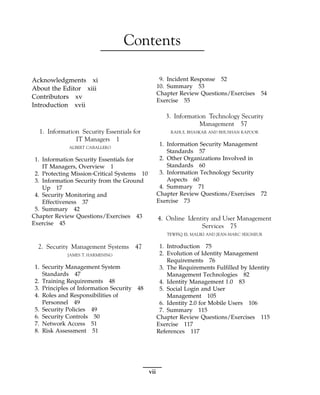
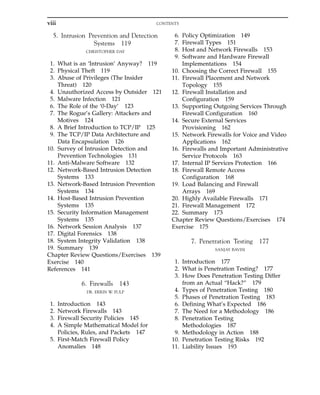
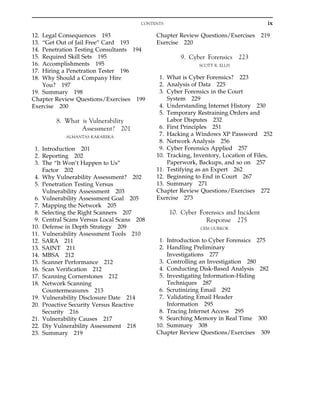





![cursed, nor his posterity deprived of the priesthood, for nothing. It must be
that the spirits taking those dark bodies, and passing through the
experiences ordained for them, have done something to merit their fate.
"Whatsoever a man soweth, that shall he also reap." This principle applies
to the spirit life, no less than to the mortal life.
Shem's and Japheth's Blessing.—From Shem came Abraham, the Father
of the Faithful; and from Japheth sprang the Gentiles, the founders of the
most civilized and enlightened nations of modern times, including Great
Britain and the United States of America. Let me add, here, that the term
"Gentile" is not an opprobrious epithet, as some suppose. It comes from
"Gentilis," signifying "of a nation," and is used in sacred history to
designate the people that were not of Israel. Ham, through Canaan, was the
progenitor of the negro race, long held in slavery in this and in other Gentile
countries. The Ethiopian also served the Semite, just as Noah had predicted.
The Tents of Shem.—How Japheth has "dwelt in the tents of Shem," is
partly shown by the history of Palestine, which has long been dominated by
the Gentiles, particularly the Turks, who still possess it. Japheth's
remarkable blessing has also been realized in the history of our own
country, America, the land of Joseph, which the Gentiles now inhabit, and
where, according to the Book of Mormon, they are to assist in gathering
Israel and building the New Jerusalem. It is their privilege to share, if they
will, in all the blessings promised to the chosen people. The Gentiles who
receive the gospel, and are faithful to its requirements, shall be as the seed
of Abraham (Abraham 2:9-11). "The tents of Shem" may be interpreted to
mean the lands of Israel, the homes of the people of God, who are lineally
descended from Shem, through Abraham.
Another Parallel.—"As it was in the days of Noah, so it shall be also at the
coming of the Son of Man." For this, his own rendering of Matt. 24:41, the
Prophet Joseph finds another fulfilment thus:
"He [Jehovah] continued to him [Noah] the keys, the covenants, the power
and the glory with which he blessed Adam at the beginning; and the
offering of sacrifice, which also shall be continued at the last time; for all
the ordinances and duties that ever have been required by the Priesthood,
under the directions and commandments of the Almighty in any of the](https://image.slidesharecdn.com/8231-250604000213-e5a947c7/85/Managing-Information-Security-Second-Edition-John-R-Vacca-50-320.jpg)
![CHAPTER VI.
Moses and Aaron
"The sons of Moses, and also the sons of Aaron shall offer an acceptable
offering and sacrifice in the house of the Lord, which house shall be built
unto the Lord in this generation, upon the consecrated spot, as I [the Lord]
have appointed;
"And the sons of Moses and of Aaron shall be filled with the glory of the
Lord, upon Mount Zion in the Lord's house, whose sons are ye; and also
many whom I have called and sent forth to build up my church;
"For whoso is faithful unto the obtaining these two priesthoods of which I
have spoken, and the magnifying their calling, are sanctified by the Spirit
unto the renewing of their bodies;
"They become the sons of Moses and of Aaron and the seed of Abraham,
and the church and kingdom, and the elect of God."—(D. and C. 84:31-34.)
Israel and the Exodus.—The principal events of the Mosaic dispensation
were the exodus from Egypt and the establishment of Israel as an
independent nation, under the leadership of their great prophet and
lawgiver, Moses. Both these events foreshadowed greater ones, namely: the
world's deliverance from the bondage of sin and death, and the
establishment upon earth of the Kingdom that shall stand forever.
The Passover.—The exodus was commemorated by the Feast of the
Passover, instituted to perpetuate in the minds and hearts of the children of
Israel their deliverance from slavery, and at the same time to foreshow the
mightier redemption of which that exodus was typical. The Passover was
kept as follows: On the night before the departure out of Egypt, each
Israelitish household, obedient to God's command through Moses, took a
lamb "without blemish," and slew it, sprinkling the blood upon the posts](https://image.slidesharecdn.com/8231-250604000213-e5a947c7/85/Managing-Information-Security-Second-Edition-John-R-Vacca-55-320.jpg)